
This Gigantic Science Museum In Arizona Is Unlike Anything Else In The World
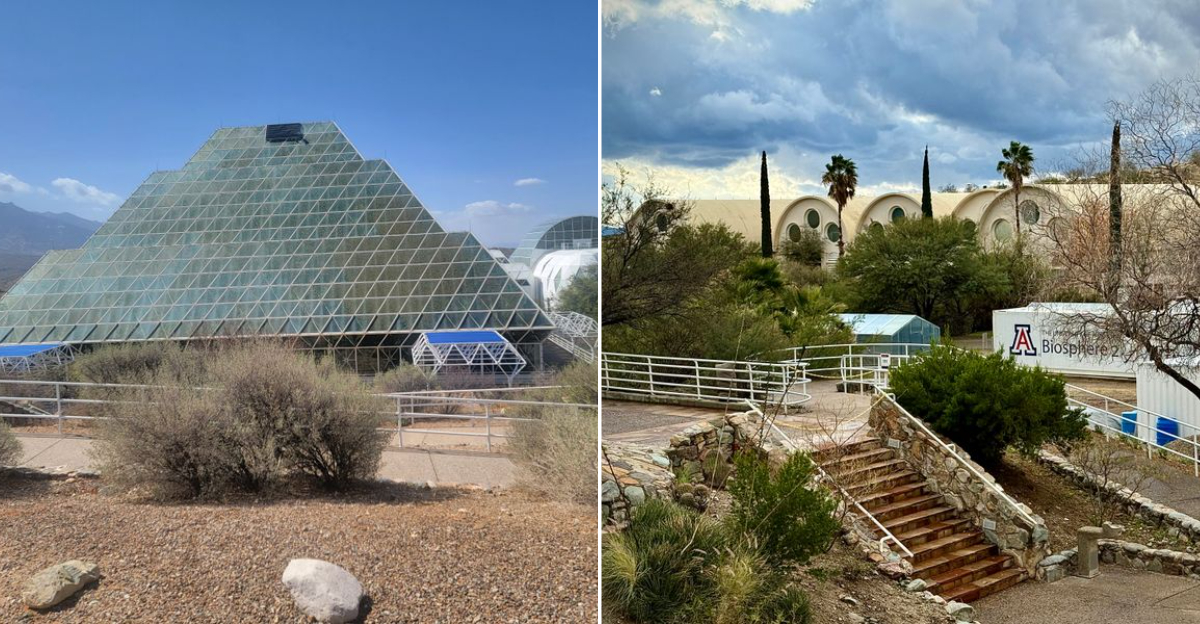
I used to think domes full of plants were just for fancy botanical gardens or sci-fi movie sets. Then I visited this place in Arizona, and my brain did a full-system reboot.
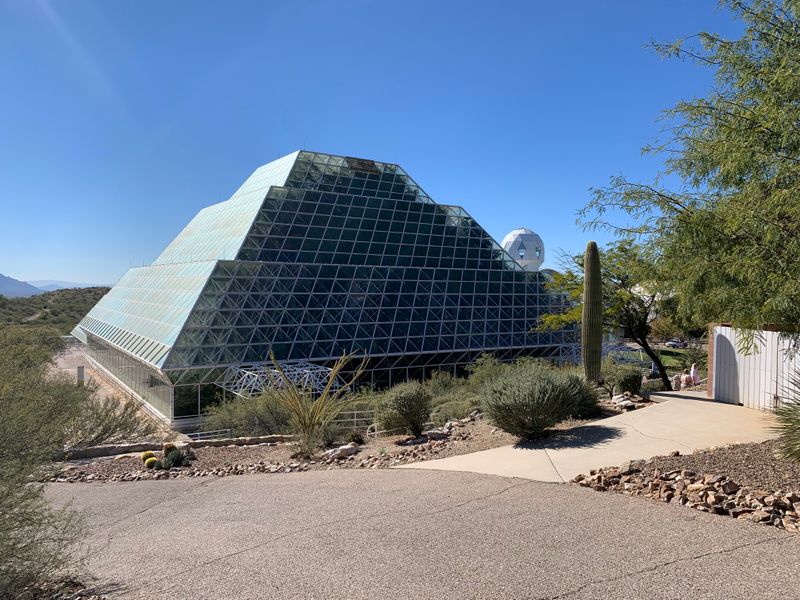
This isn’t your typical museum where you shuffle past dusty displays behind glass. Instead, I walked through living, breathing ecosystems housed under massive glass pyramids that rise dramatically against the desert sky.
This three-acre enclosed world was designed to mimic Earth itself, and visiting it feels like stepping onto another planet without ever leaving Arizona.
The Original Sealed Experiment That Made History
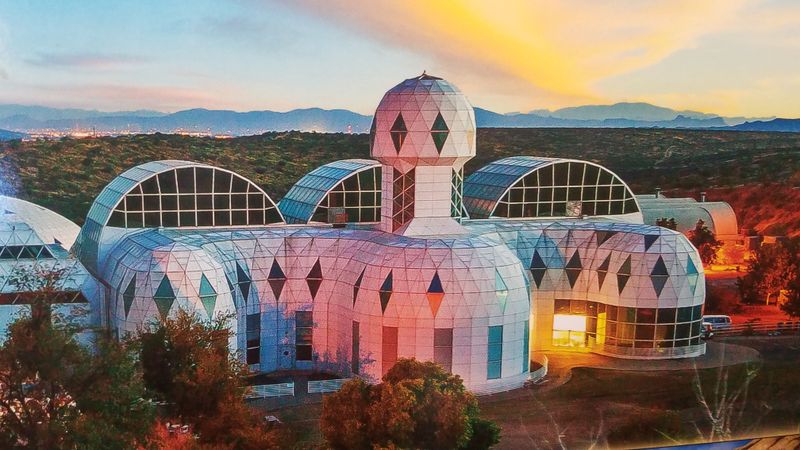
Back in 1991, eight brave souls locked themselves inside this massive glass structure for two whole years. I couldn’t stop thinking about that as I walked through the same spaces they once called home.
They grew their own food, recycled their air and water, and tried to prove humans could create self-sustaining colonies for space exploration.
The experiment didn’t go perfectly-oxygen levels dropped, and they struggled with food shortages. But that’s exactly what made it groundbreaking.
Failure taught scientists more about Earth’s delicate balance than success ever could have.
Standing in the kitchen where the original crew prepared meals from crops they harvested themselves gave me chills. These weren’t astronauts in some distant future; they were real people who volunteered to be guinea pigs for humanity’s boldest dreams.
The whole experience felt surreal, like I’d stumbled into a time capsule from a science fiction novel that actually happened.
Today, the University of Arizona runs cutting-edge climate research here, building on those early lessons about our planet’s fragility.
Walking Through Five Distinct Biomes Under One Roof
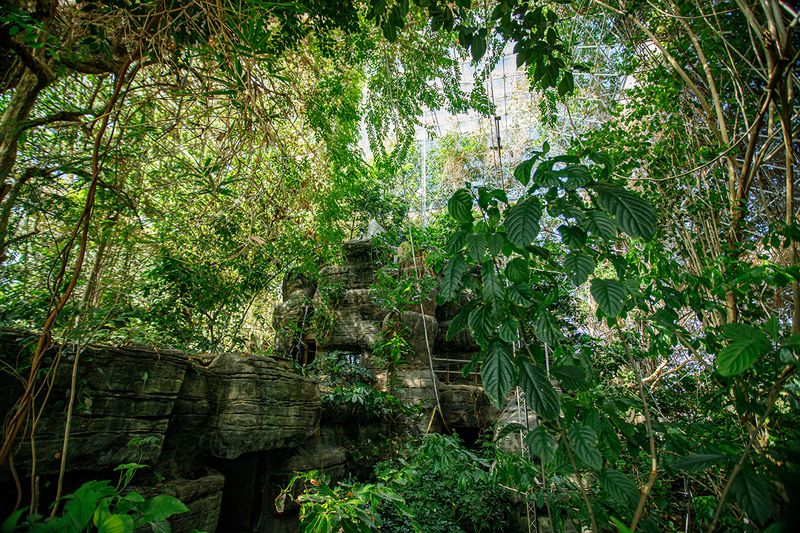
Imagine strolling from a tropical rainforest into an ocean, then wandering through a savanna before ending up in a desert—all within an hour. That’s exactly what I did at Biosphere 2, and my mind struggled to process the impossibility of it all.
The rainforest section hit me first with its wall of humidity. Towering trees stretched toward the glass ceiling while coffee plants and guava bushes crowded the pathways.
My glasses fogged up immediately, reminding me I’d just been standing in dry desert heat moments before.
Then came the mangrove wetland, where twisted roots disappeared into murky water. The ocean biome blew me away most—a genuine miniature sea complete with coral formations, though the underwater viewing area was unfortunately closed during my visit.
I pressed my face against the glass anyway, mesmerized by the engineering feat.
Each ecosystem transitions naturally into the next, creating this bizarre but fascinating collage of Earth’s climate zones. It’s like someone took scissors to the planet and pasted the best parts together.
The Lung That Literally Breathes For The Building
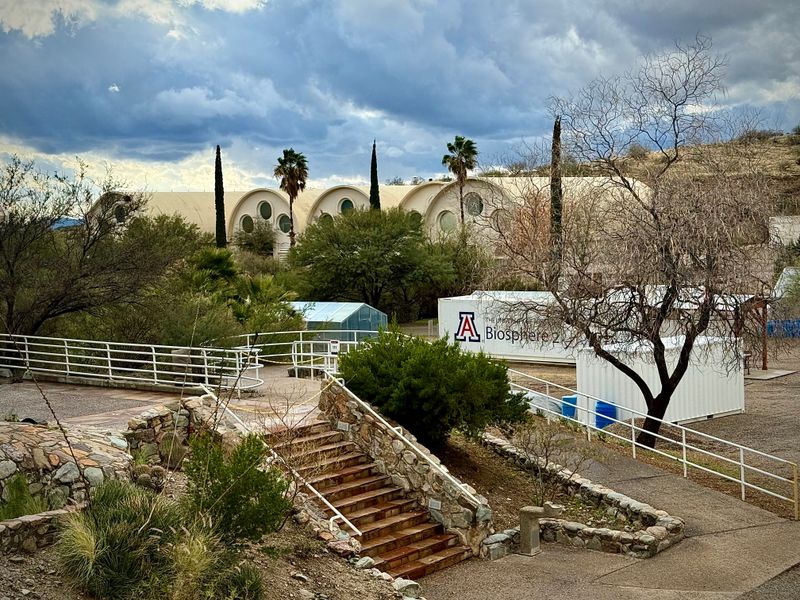
Here’s something that sounds completely bonkers until you see it with your own eyes: Biosphere 2 has lungs. Actual, mechanical lungs that expand and contract to keep the building from exploding.
When I took the behind-the-scenes tour (totally worth the extra twelve bucks), I descended into this cavernous space beneath the main structure.
There, floating on a cushion of air, sat a sixteen-ton steel disk that rises and falls like a giant diaphragm. As temperatures change inside the biosphere, air expands and contracts, and without these lungs, the pressure would shatter all that glass.
Watching this massive disk move up and down felt oddly organic, like I’d shrunk down and crawled inside some colossal creature’s chest cavity. The engineering brilliance made my brain hurt in the best way possible.
My guide explained how the original designers faced an impossible puzzle: seal an environment completely while allowing for atmospheric pressure changes.
Their solution became one of the facility’s most innovative features, proving that sometimes the biggest challenges inspire the coolest solutions.
Self-Guided Audio Tour Through Your Smartphone
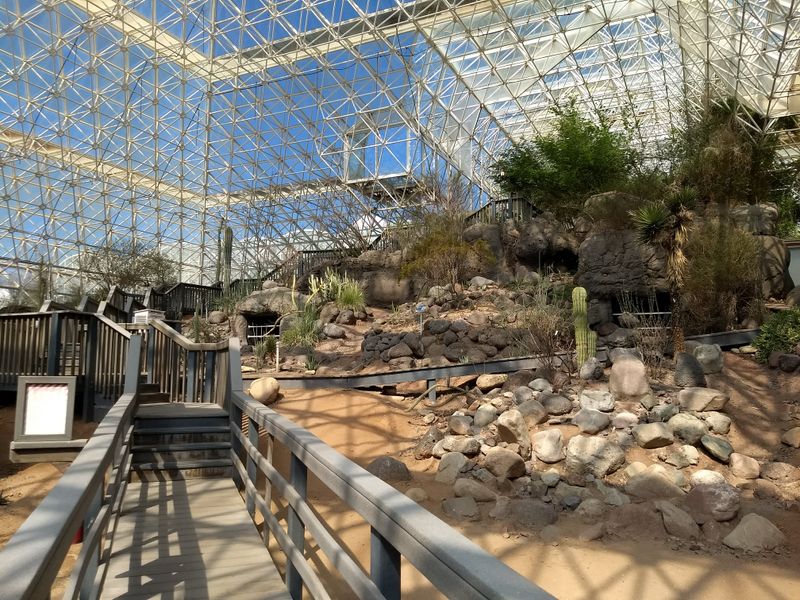
Gone are the days of following a tour guide with a flag while trying to hear over chattering crowds. At Biosphere 2, I downloaded their app and plugged in my earbuds, instantly becoming the master of my own adventure.
Fair warning: download everything before you arrive. The app requires about a gigabyte of media, and the WiFi inside can be spotty.
I learned this the hard way when I tried downloading on-site and spent thirty minutes watching progress bars crawl forward.
Once loaded, though, the experience flowed beautifully. Each numbered station triggered videos and audio explanations that brought the science to life.
I could pause whenever something caught my eye, rewind when I missed information, or skip ahead if a topic didn’t grab me.
The arrows painted on the floor kept me from getting lost in the labyrinth of ecosystems. Some folks prefer human guides who can answer questions on the spot, and I get that.
But I loved setting my own pace, lingering in the rainforest humidity while other visitors hurried past to cooler zones.
Living Quarters Where The Crew Actually Survived
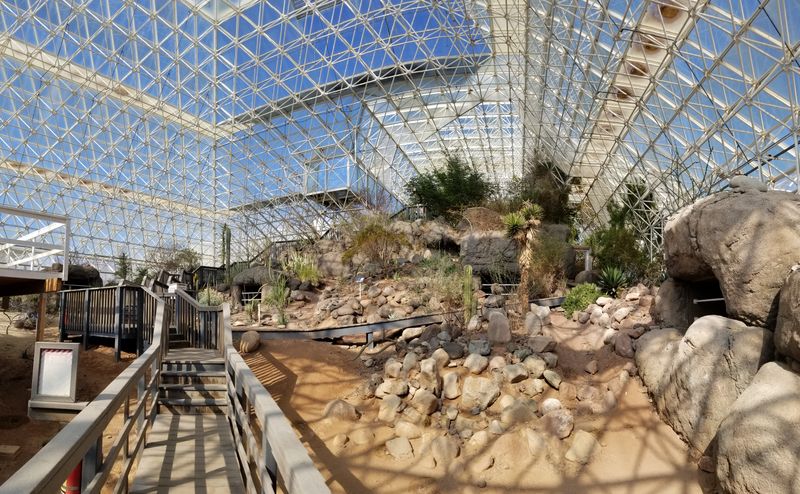
Stepping into the original crew’s living space felt like walking onto a retro movie set, except everything was heartbreakingly real. The kitchen where I stood wasn’t a replica-this was where eight people actually cooked, ate, and tried to maintain their sanity for 730 days.
The quarters looked surprisingly normal at first glance. Small bedrooms, a communal kitchen, a tiny theater for entertainment.
But then reality sank in: these folks couldn’t step outside for two years. No pizza delivery, no emergency grocery runs, no escaping roommates who got on their nerves.
I tried imagining what that psychological pressure must have felt like.
When oxygen levels dropped dangerously low, they couldn’t just bail out. When food ran short and they had to ration calories, they couldn’t cheat with a secret candy bar stash.
The staff member stationed in this area during my visit was fantastic, answering questions with genuine enthusiasm. She shared stories about how the crew dealt with conflicts and celebrated small victories, making the whole experiment feel intensely human rather than just scientifically significant.
Ongoing Climate Research That Matters Right Now
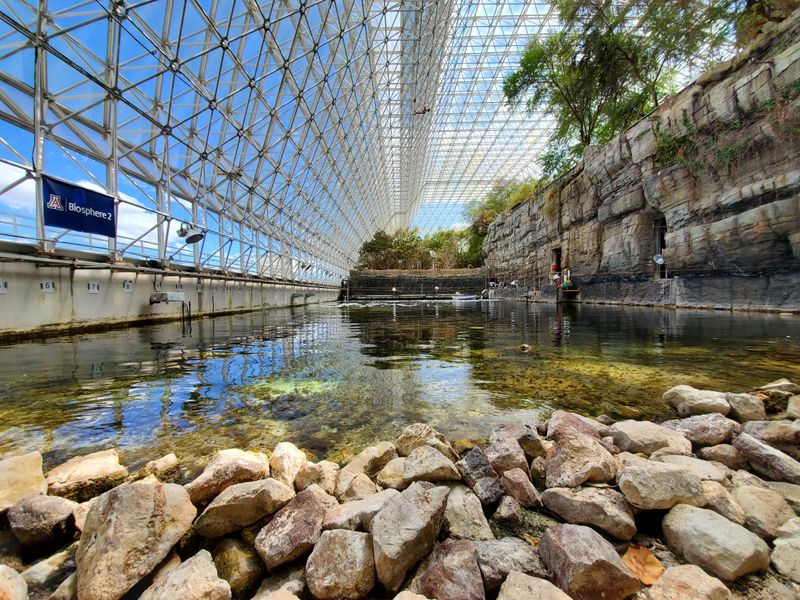
Most people visit Biosphere 2 for its quirky history, but the coolest part is what’s happening today. The University of Arizona transformed this relic of 1990s ambition into a powerhouse for climate science that you literally cannot replicate anywhere else on Earth.
Because the facility can isolate entire ecosystems, researchers conduct experiments impossible in natural settings. They’re studying how rising temperatures affect coral reefs, how drought impacts desert plants, and how different soil compositions respond to climate change.
I watched scientists tending experimental plots on terraced hillsides called the LEO slopes, manipulating rainfall and temperature to predict future environmental scenarios.
What struck me most was the urgency behind this work. These aren’t abstract academic exercises—the data collected here informs real-world conservation strategies and climate policy decisions.
Seeing active research in progress made my visit feel less like tourism and more like witnessing history unfold.
The biosphere evolved from a controversial experiment into an invaluable tool for understanding our planet’s fragile systems, proving that even flawed beginnings can lead to remarkable second acts.
Perfect Day Trip From Tucson With Desert Views
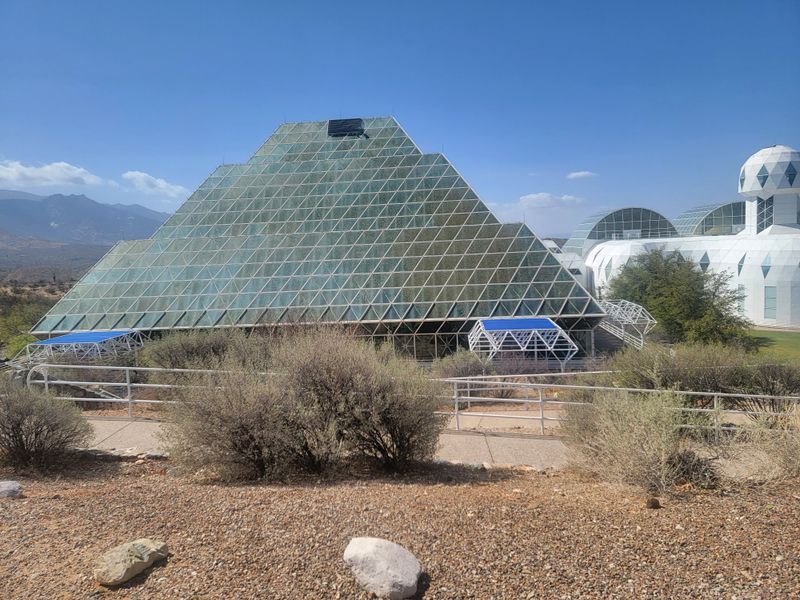
Getting to Biosphere 2 became part of the adventure itself. The facility sits about thirty miles north of Tucson, tucked into the foothills with stunning desert vistas stretching in every direction.
I left Tucson around 8:30 in the morning, giving myself plenty of time to enjoy the scenic drive through classic Sonoran Desert landscape. Saguaro cacti stood like sentinels along the roadside while the Santa Catalina Mountains provided a dramatic backdrop.
Arriving right when doors opened at 9 AM was brilliant strategy on my part. I beat the school groups that descended around lunchtime, turning tight corridors into chaotic obstacle courses.
The early morning also meant cooler temperatures before the biosphere’s humidity and greenhouse effect cranked up the heat.
Budget about two to three hours for a thorough visit, longer if you add the behind-the-scenes lung tour. I spent nearly four hours wandering, photographing, and soaking up information.
Pack water and snacks-the café options are limited, though the outdoor areas provide pleasant spots for picnicking with those incredible desert views surrounding you.
Worth Every Penny Despite The Ticket Price
Let’s talk money because I know that twenty-seven dollar adult admission makes some folks hesitate. I’ll admit, I winced slightly when buying my ticket, wondering if a glorified greenhouse justified the cost.
Spoiler alert: it absolutely did.
Where else can you experience five ecosystems, learn about humanity’s boldest environmental experiment, witness cutting-edge climate research, and explore architectural marvels all in one afternoon?
The value becomes obvious once you’re inside, surrounded by the sheer audacity of what humans built here.
Military discounts knock a few bucks off, and kids’ tickets run about fifteen dollars. The extra twelve for the lung tour initially felt like a cash grab, but after descending into that mechanical wonderland, I’d happily pay it again.
Compare this to similarly priced attractions like major zoos or science centers in other cities, and Biosphere 2 holds its own. Sure, it’s not perfect-some areas remain closed, and app glitches occasionally frustrate.
But supporting this facility means funding important research while experiencing something genuinely unique that exists nowhere else on our planet.