
This Glass Chapel In Arkansas Looks Like It Was Built Inside The Forest
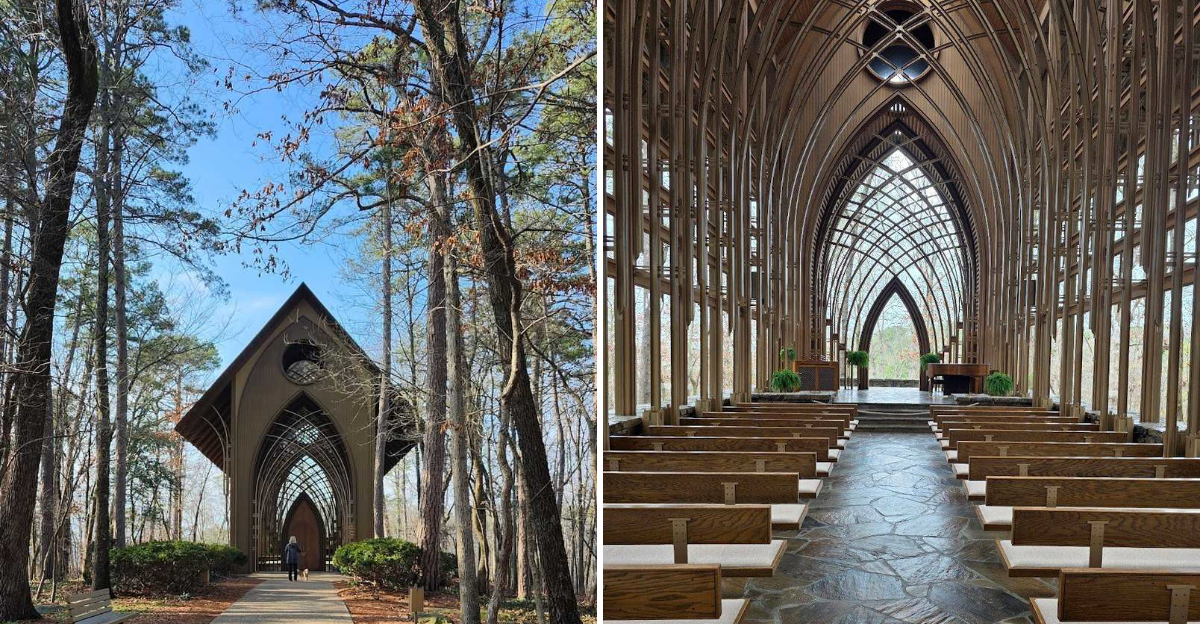
You ever see a place and instantly want to stop everything. No phone, no talking, just look.
This is that kind of place. Before you even reach the door, it already feels different.
In northwest Arkansas, this glass chapel rises through the trees with clean steel lines and walls that almost disappear into the light. Everyone who visits seems to have the same reaction.
It feels bigger than expected, but also calmer. Sunlight spills across the space while the forest stays fully in view, like the building decided not to shut anything out.
Sit for a bit and you will notice it. Time slows down without trying.
The trees move, the light shifts, and somehow you feel part of it instead of separate from it. You look around, then look again.
It does not get old. It pulls you in quietly and keeps you there longer than you planned.
Hidden Woodland Setting
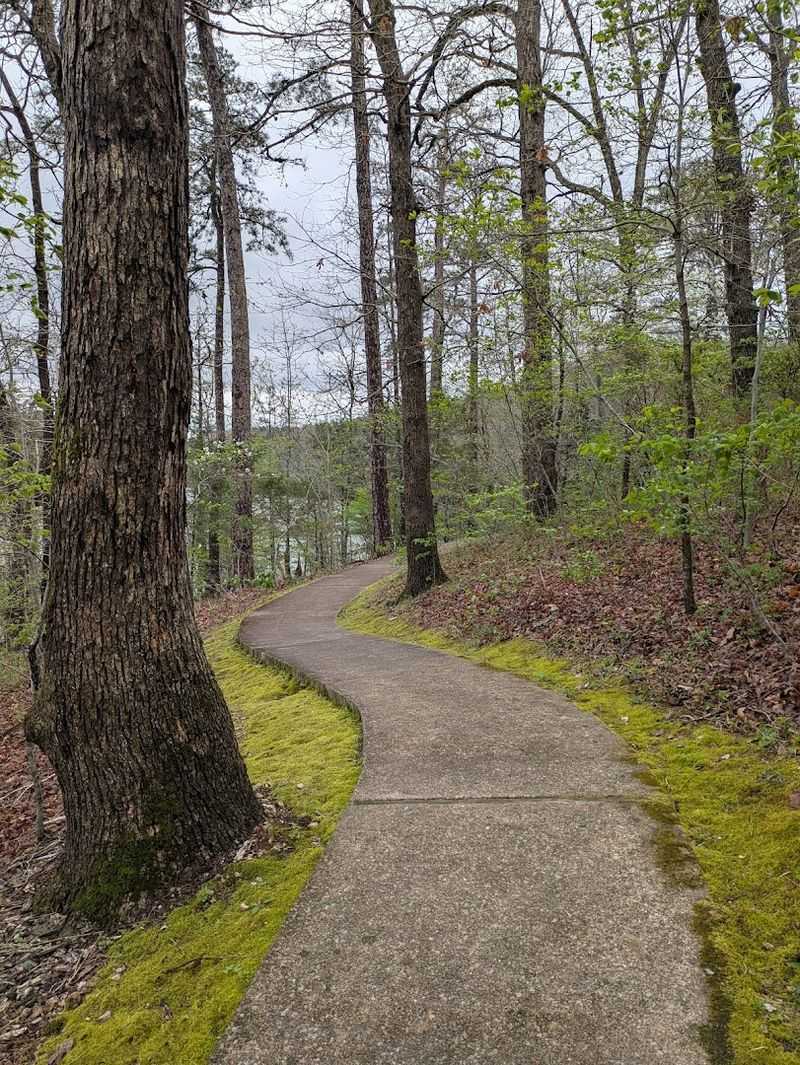
You almost feel like the forest is keeping a secret as you walk the short paved path from the parking lot toward the chapel.
The trees grow thick and close along the trail, and the air carries that particular kind of quiet that only old woods seem to hold onto.
I remember my first approach feeling less like a walk and more like a slow reveal, the kind where you keep expecting something to appear around the next bend.
Situated on a wooded hilltop overlooking Lake Norwood, the property includes a quarter-mile nature trail that loops through the surrounding landscape.
Squirrels crossed the path ahead of me, completely unbothered, as if they had long ago decided this spot belonged to them.
The setting feels intentional, like the architects understood that arriving through a forest would make the chapel itself land with even more impact.
Every season shifts the mood here, from the bare branches of winter to the layered greens of summer, and the trail rewards slow walkers who pay attention to the small details.
You will find the full experience waiting at Mildred B. Cooper Memorial Chapel, 504 Memorial Dr, Bella Vista, AR 72714.
Soaring Glass Architecture
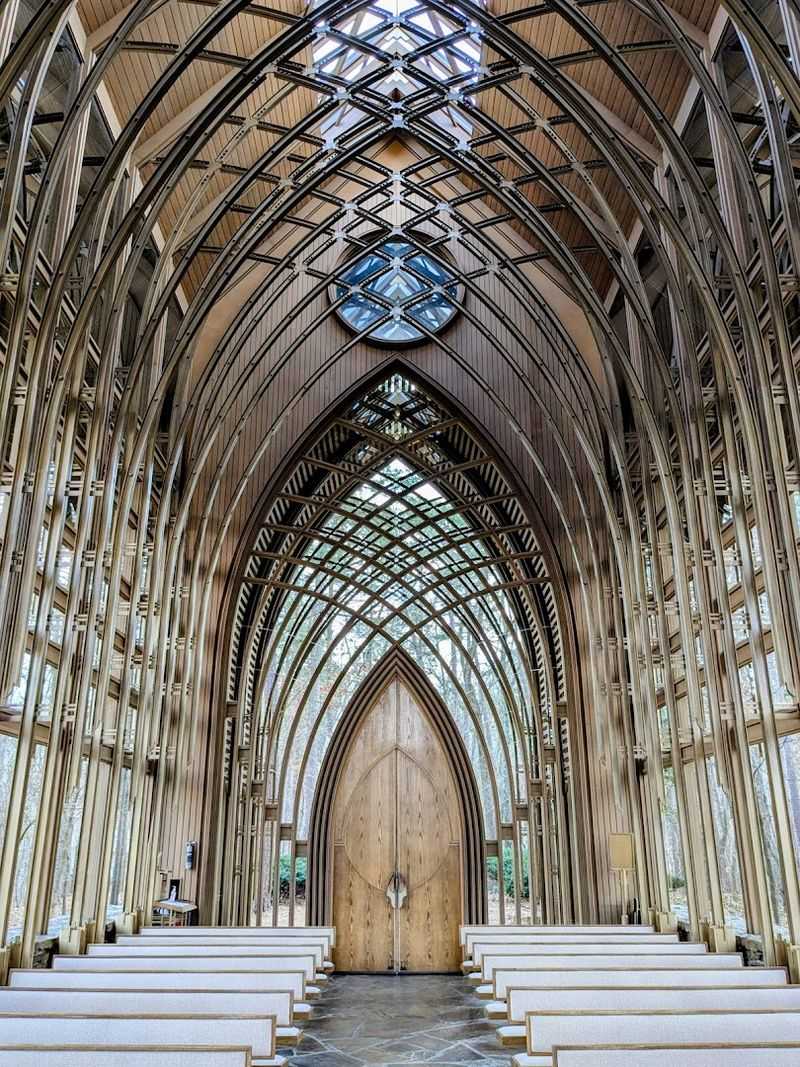
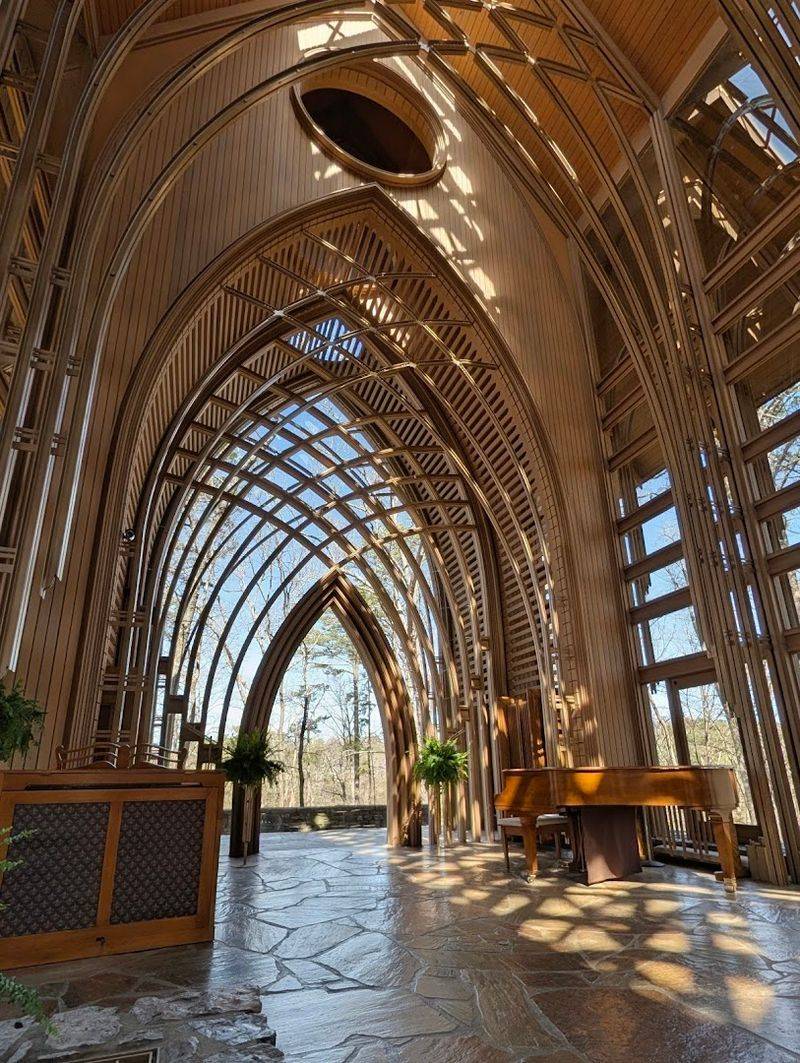
Thirty-one tons of steel and 4,460 square feet of glass sound like the specs for a skyscraper, but here they form a chapel that feels almost weightless.
Arkansas architect E. Fay Jones, working alongside partner Maurice Jennings, completed the structure in 1988, and the design draws from Gothic arch traditions while feeling completely original.
Standing inside for the first time, I had to remind myself to close my mouth, because the vertical lines of the steel arches pull your eyes upward in a way that feels both architectural and almost spiritual.
The chapel measures roughly 65 feet long, 24 feet wide, and about 50 feet tall, dimensions that create a soaring interior without ever feeling cold or cavernous.
Jones had apprenticed under Frank Lloyd Wright, and that Prairie School sensibility shows in how the structure seems to grow from its stone foundation rather than sit on top of it.
The glass panels do not just let in light; they dissolve the boundary between inside and outside so completely that the surrounding pines become part of the interior experience.
Few buildings manage to feel both grand and intimate at the same time, but this one pulls it off with quiet confidence.
Light Filtering Through Pines
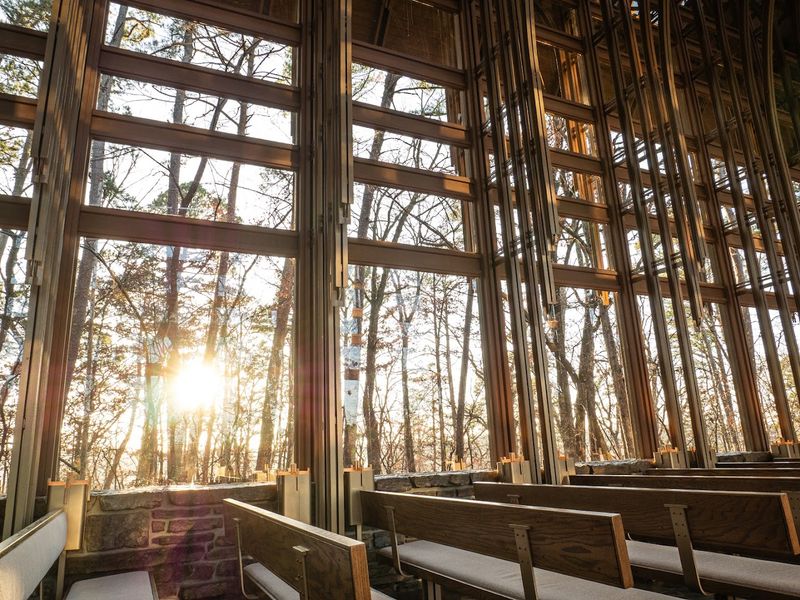
Photographers who have shot weddings here talk about the light the way musicians talk about a perfect acoustic hall: it just works, every single time.
The glass walls allow sunlight to enter from multiple directions, and as the pine branches outside sway, the interior fills with shifting, dappled patterns that no lighting designer could replicate on purpose.
I visited on a bright morning in late spring, and the effect was genuinely hard to describe without sounding like I was exaggerating.
One reviewer who photographs weddings professionally called the lighting coming in an absolute must for photos, and after spending time inside, I understood exactly what they meant.
The chapel is fully enclosed and air-conditioned, which means the visual drama of all that natural light comes without the physical drama of standing in Arkansas summer heat.
Morning visits tend to catch the sharpest angled light as it cuts through the eastern pines, while afternoons bring a softer, warmer glow that wraps around the steel arches.
Sitting quietly on one of the wooden pews and watching the light move across the floor felt like watching a slow, unhurried performance that nobody had choreographed but everyone appreciated.
Stonework And Lake Views
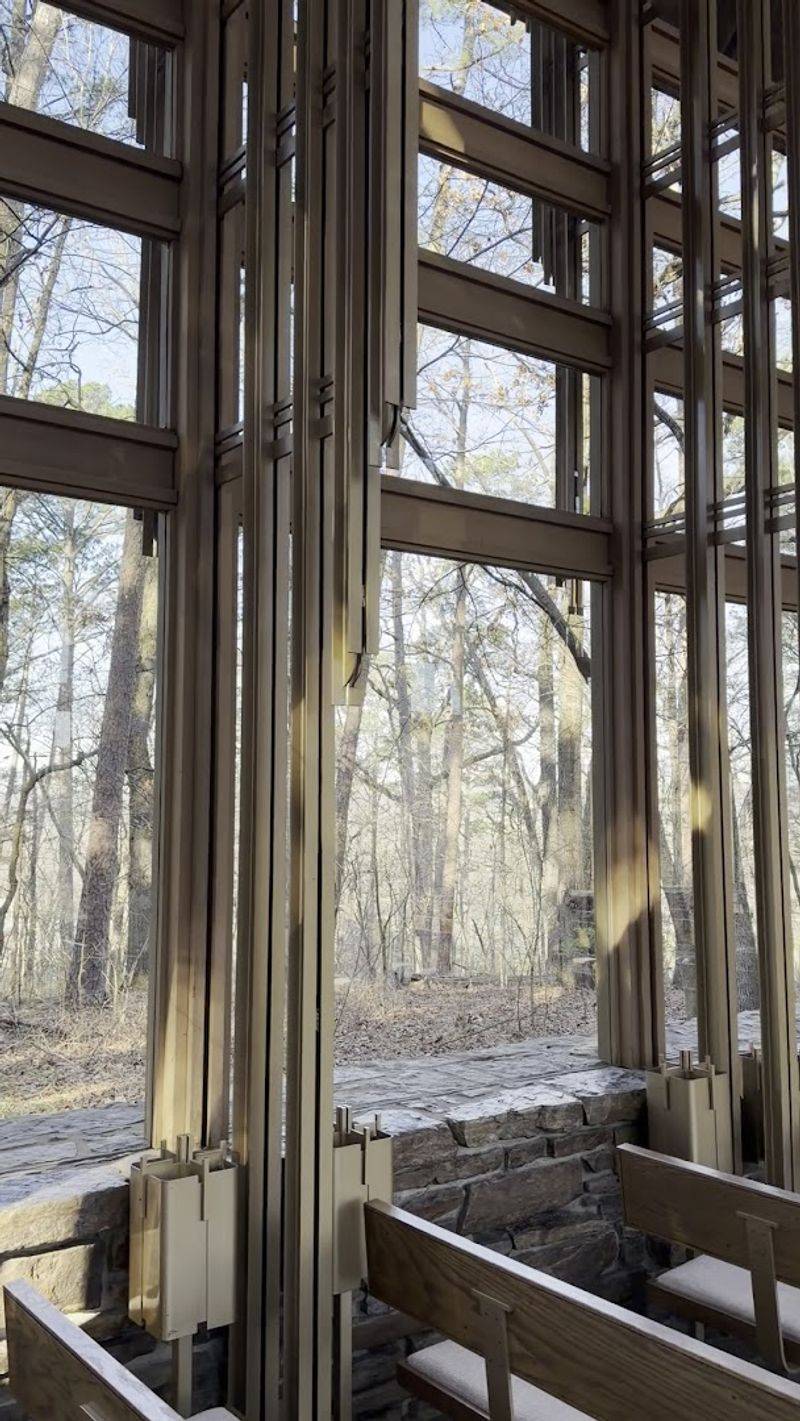
The stone foundation of the chapel does something clever: it anchors the entire glass and steel structure to the earth in a way that makes the building feel rooted rather than placed.
That contrast between rough, natural stone below and sleek transparent glass above gives the chapel a layered visual character that rewards a slow walk around the exterior.
I spent a good twenty minutes just circling the building, noticing how the stonework catches moss and shadow differently depending on the angle.
Lake Norwood sits below the hilltop, and on clear days the water is visible through the trees from certain points along the nature trail, adding a reflective, glassy counterpoint to the chapel itself.
The grounds are maintained with careful attention, and the transition from stone path to wooded trail feels deliberate and unhurried.
Visitors who take the full quarter-mile loop will find spots where the lake appears and disappears between the pines in a way that feels almost playful.
The combination of hewn stone, still water, and surrounding forest gives the property a grounded, timeless quality that purely modern materials rarely achieve on their own.
A Sanctuary In The Forest
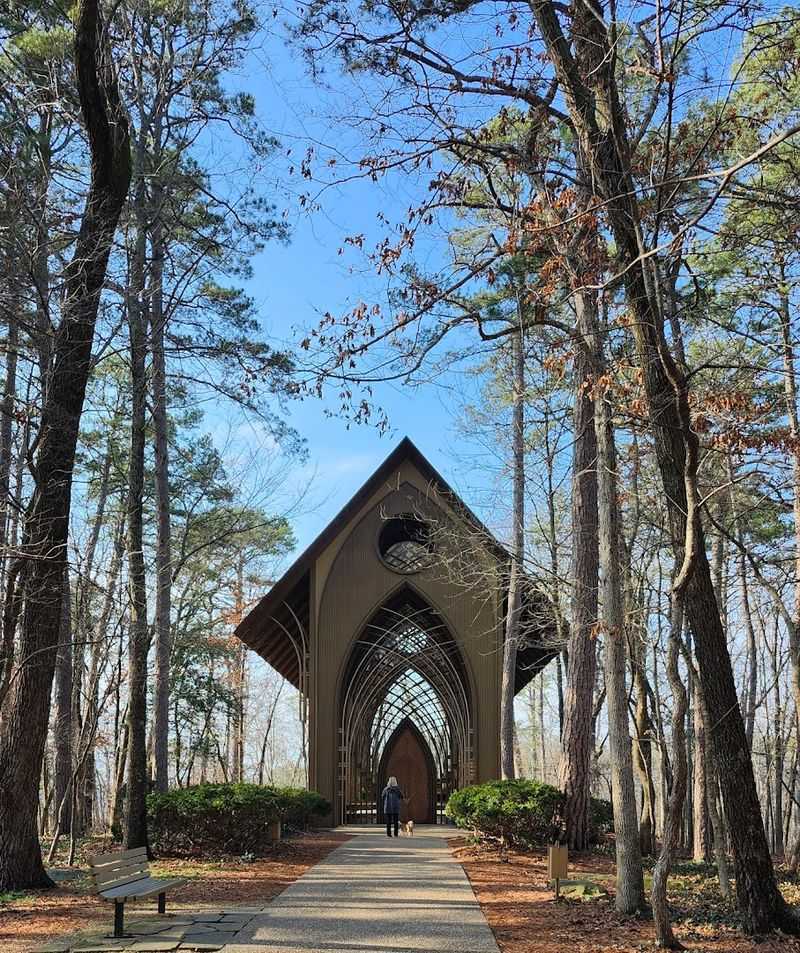
Not every beautiful building invites you to simply sit and breathe, but this one does, and that openness is part of what makes it memorable.
The chapel is open to the public every day from 9 a.m. to 5 p.m., welcoming visitors who come for meditation, reflection, or just a few minutes of genuine quiet away from the road.
I arrived on a Tuesday afternoon with no particular agenda, settled into a pew near the center, and stayed far longer than I had planned.
The chapel was commissioned by John A. Cooper Sr. to honor his wife, Mildred Borum Cooper, and that origin story gives the space a quality of devotion that lingers even when no ceremony is taking place.
The acoustics are surprisingly warm for a glass-heavy structure, and the Baldwin piano and Hammond electric organ housed inside suggest that music belongs here as naturally as sunlight does.
Concerts and cultural events are held here alongside weddings and memorial services, which means the chapel functions as a living community space rather than a preserved artifact.
Leaving felt genuinely reluctant, the kind of departure where you pause at the trailhead and look back one more time.
A Setting For Wedding Vows
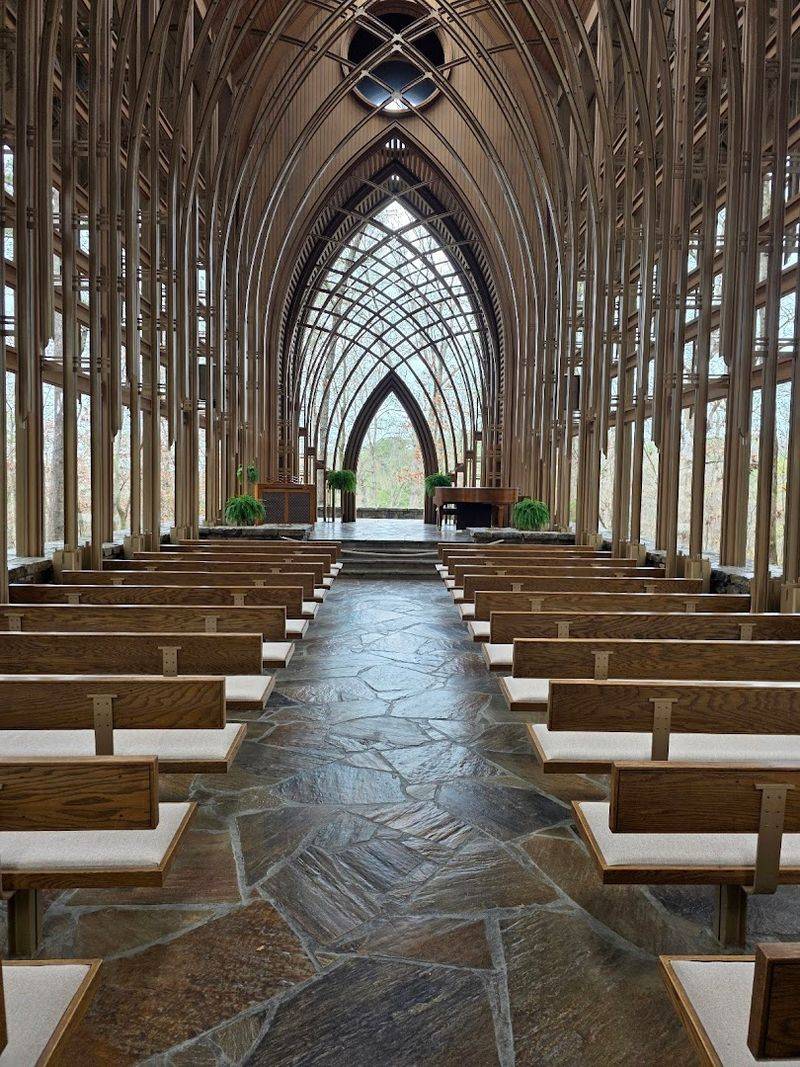
Couples who have said their vows here tend to describe the experience in terms that go well beyond the usual wedding venue checklist.
The chapel seats up to 120 guests, which keeps ceremonies feeling personal and close rather than sprawling, and the Bluetooth sound system means couples can curate their own soundtrack without complicated audio setups.
One bride described the chapel as seeming unreal, and reading through the reviews, that word comes up again and again from people who have stood at the altar and looked out through all that glass at the surrounding pines.
Some couples choose to include personal touches in their ceremonies, which can make the setting feel even more meaningful and reflective of their story together.
The staff is often noted in visitor feedback for helping the planning process feel manageable, especially for couples organizing the event from out of state.
A rehearsal option is available and often recommended by past couples, particularly those who want to feel comfortable navigating the space before the main event.
Reservations are required for ceremonies, and planning ahead is encouraged to secure preferred dates and times throughout the year.
Nature Framing Every View
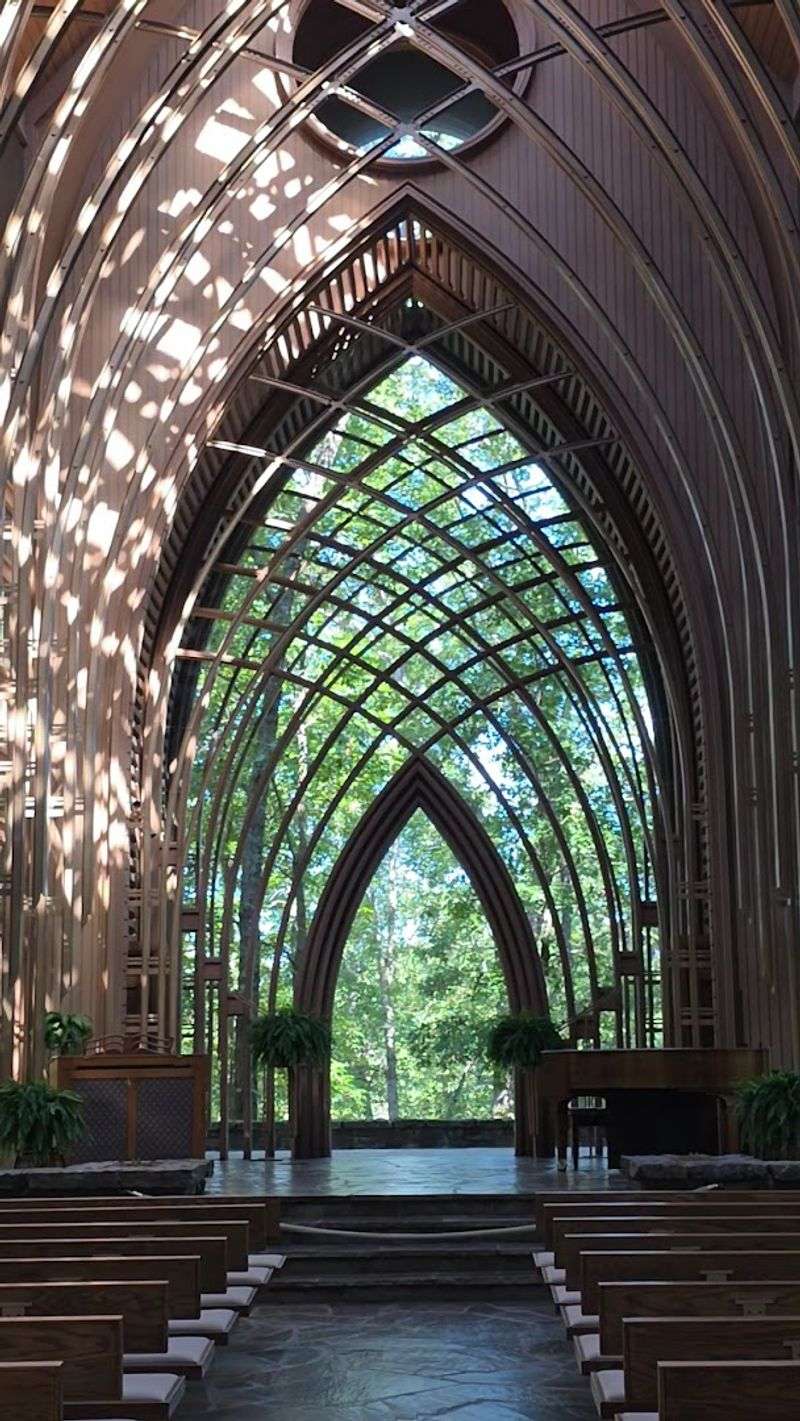
Every seat in the house comes with a view, and that is not a figure of speech here.
The glass walls wrap around the interior so completely that no matter where you sit, the forest is part of what you see, shifting and moving with the wind while you remain still inside.
I noticed that the experience changes depending on the season, something multiple long-time visitors and photographers confirm enthusiastically in their accounts of returning visits.
Spring brings a burst of green so vivid it almost looks filtered, while autumn layers the view with amber and rust tones that turn the glass walls into something resembling a living painting.
Winter strips the deciduous trees to bare branches, which actually sharpens the Gothic lines of the steel arches against the sky in a way that feels strikingly graphic and clean.
The design philosophy behind this, rooted in E. Fay Jones’s training and his belief in integrating architecture with its natural environment, ensures that the building never competes with the landscape but instead converges with it.
Sitting inside while a light rain moved through the pines outside was one of the more quietly memorable moments I have had in any building, anywhere.
Why Visitors Remember It
A strong overall rating across hundreds of visitor reviews is the kind of detail that makes you curious, and then you go and see why it leaves such an impression.
What keeps coming up in visitor accounts is not just the architecture or the setting but the combination of both, the way the building and the landscape seem to have agreed on a shared purpose.
Photographers return here repeatedly because the space gives them something different every time, depending on the season, the hour, and the quality of the light through the pines.
Casual visitors who stop by simply out of curiosity often report staying longer than expected, pulled in by a quality of stillness that is genuinely hard to manufacture.
The chapel is handicap accessible, with paved paths from the parking area, and the staff maintains the glass with a consistency that leaves visitors remarking that it always looks freshly cleaned no matter the weather.
The chapel itself closes at 5 p.m., and private events occasionally limit interior access during scheduled times.
Everything about the experience, from the walk through the trees to the final glance back at the glass catching the afternoon light, stays with you longer than most places do.