
This Grand New York Library Is A Must-See For Architecture Lovers
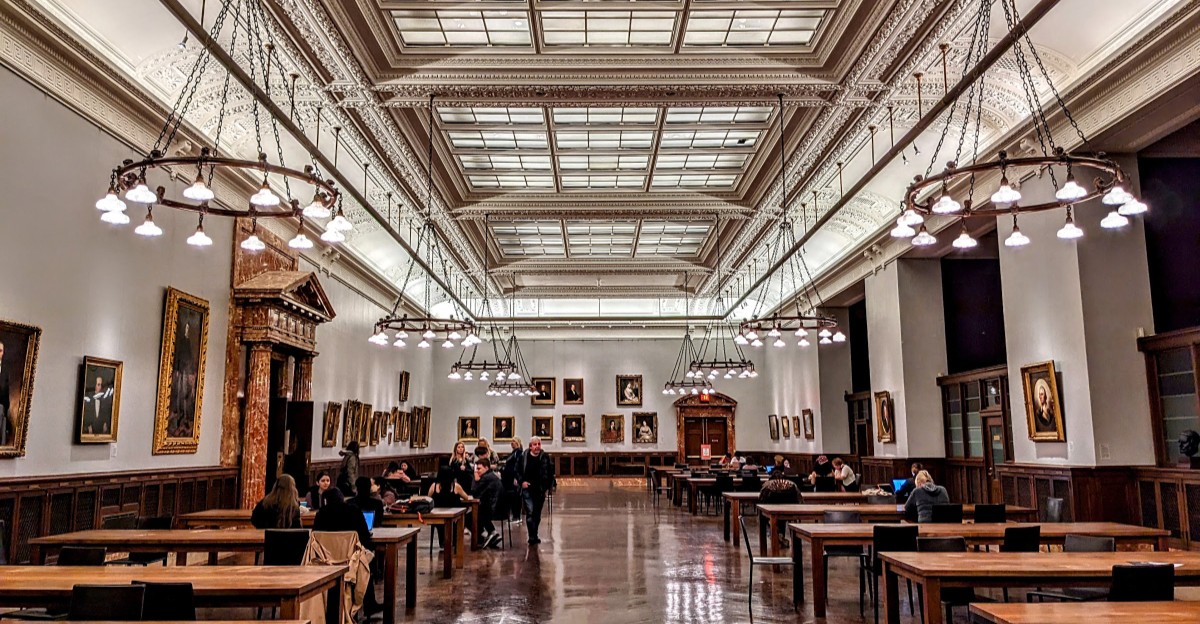
What if a library had a little more drama than the average Broadway entrance? Welcome to the kind of place where reading a book almost feels like a side quest.
Marble staircases rise beneath enormous arches, gilded details catch the light, and the famous lions outside look like they’ve been guarding the city’s secrets since forever.
Then comes the Rose Main Reading Room, a vast, glowing hall of lamps, long tables, and painted ceilings that could easily make someone forget they came in just to return a book.
There’s something almost magical about a building that makes you instinctively lower your voice before anyone asks you to.
Maybe it’s the grandeur. Maybe it’s the history.
Or maybe New York simply decided its library deserved a little cinematic flair.
Either way, this is one place where “just browsing” can turn into a full afternoon of looking up, looking around, and wondering how a building got to be this beautiful.
A Beaux-Arts Showstopper That Never Goes Out Of Style
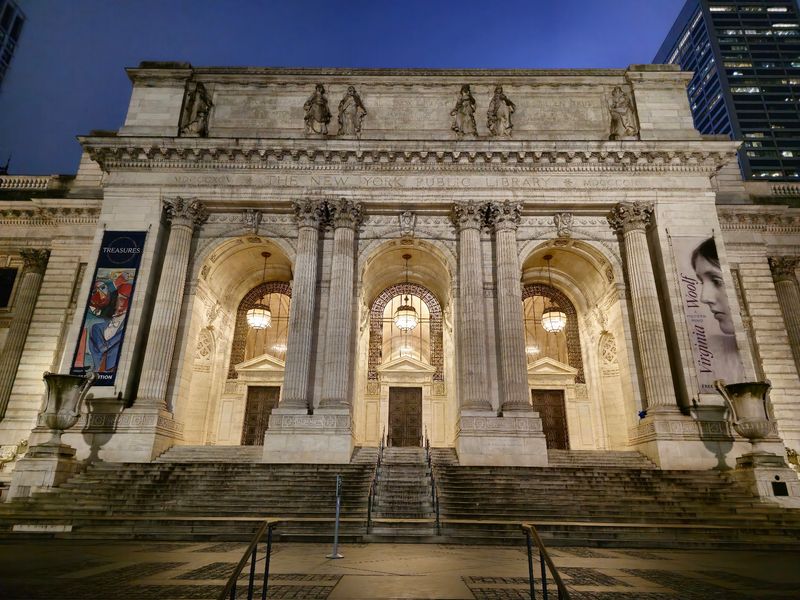
Some buildings whisper, but Stephen A. Schwarzman Building sings opera.
The library is a shining example of Beaux-Arts design, a fancy style that grew out of a famous art school in Paris. Think symmetry, grand arches, and columns that look like they belong in ancient Rome.
Two architects won a design contest in the late 1800s to create this landmark. Their goal was bold.
They wanted more than a place for books, they wanted a monument that showed New York was ready to stand beside the great cities of Europe.
Construction took more than a decade, and the doors finally opened in 1911. At the time, it was the largest marble building ever built in the United States.
Talk about a grand entrance into the world!
The beauty of Beaux-Arts style is in its order. Everything has a place, and every space leads gracefully into the next.
Rooms feel balanced, like a well-written song with a steady beat.
Many experts call this building one of the finest Beaux-Arts structures in America. Once you stand in front of it, you will understand why.
Classic never looked so good.
Patience And Fortitude, The Coolest Cats On Fifth Avenue
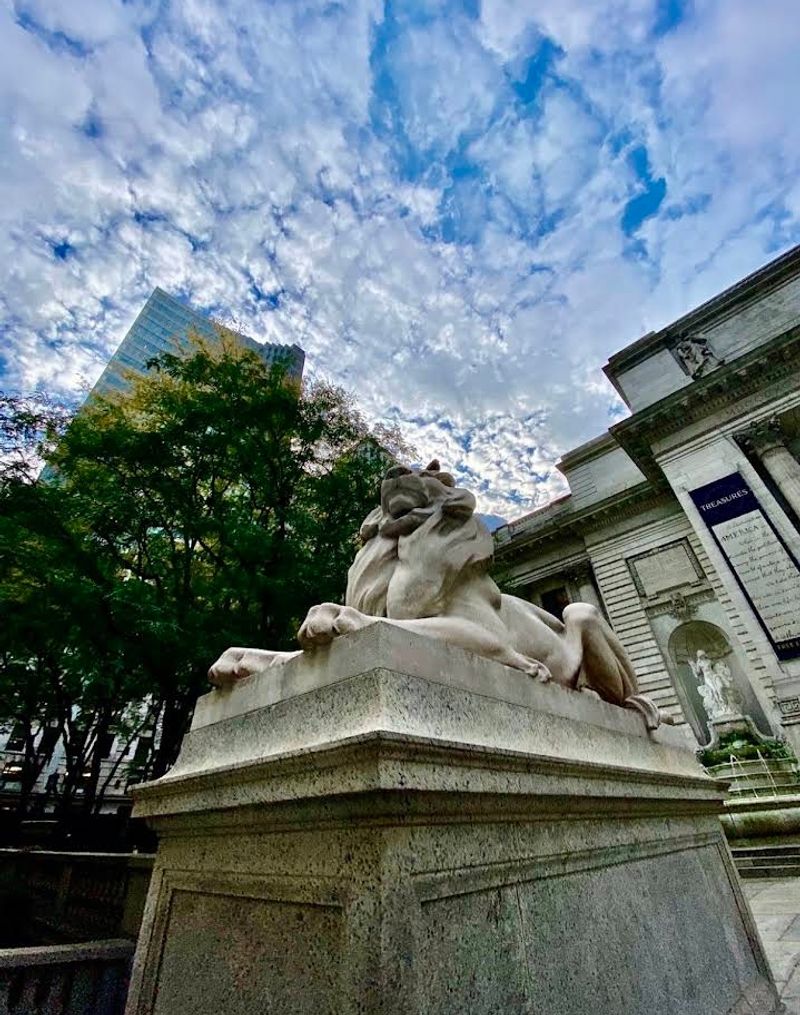
Meet the most photographed felines in Manhattan, and they never need a nap. Proudly perched at 476 Fifth Avenue, right where the avenue meets 42nd Street, two marble lions greet every visitor.
Their names are Patience and Fortitude, and they have held their posts since 1911.
Carved from pink Tennessee marble, the lions first had different nicknames honoring the library’s founders. During the Great Depression, the city’s mayor renamed them.
He believed New Yorkers needed patience and fortitude to get through tough times, and the names stuck.
Patience sits on the south side of the steps. Fortitude watches from the north side.
Together, they have become symbols of the city’s strong and hopeful spirit.
Here is a cheerful detail. During the holidays, the lions often wear giant wreaths around their necks.
They look festive, fancy, and totally ready for photos.
Plan to snap a picture with both lions before heading inside. Early mornings bring softer light and smaller crowds.
They might be made of stone, but these two have more personality than most celebrities in town.
Astor Hall Makes One Unforgettable First Impression
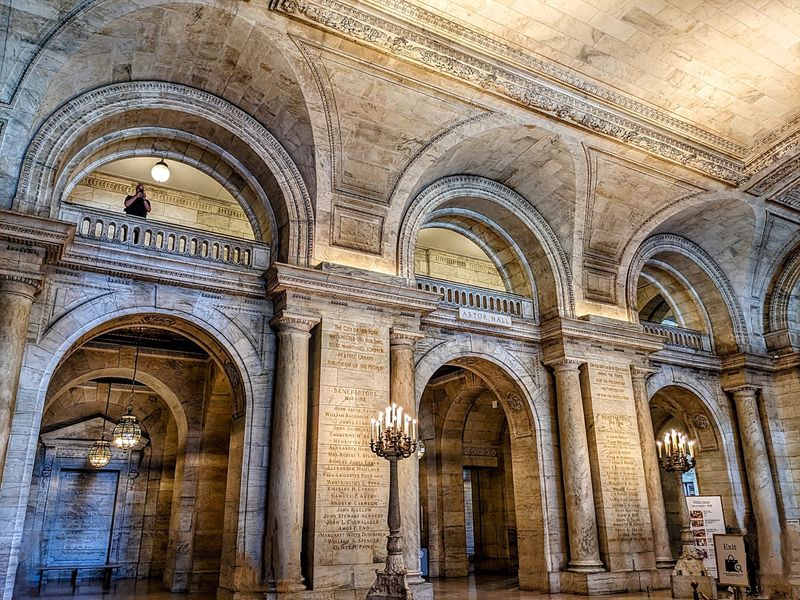
Step through the front doors and get ready for your jaw to drop. Astor Hall is the grand lobby, and it wastes no time showing off.
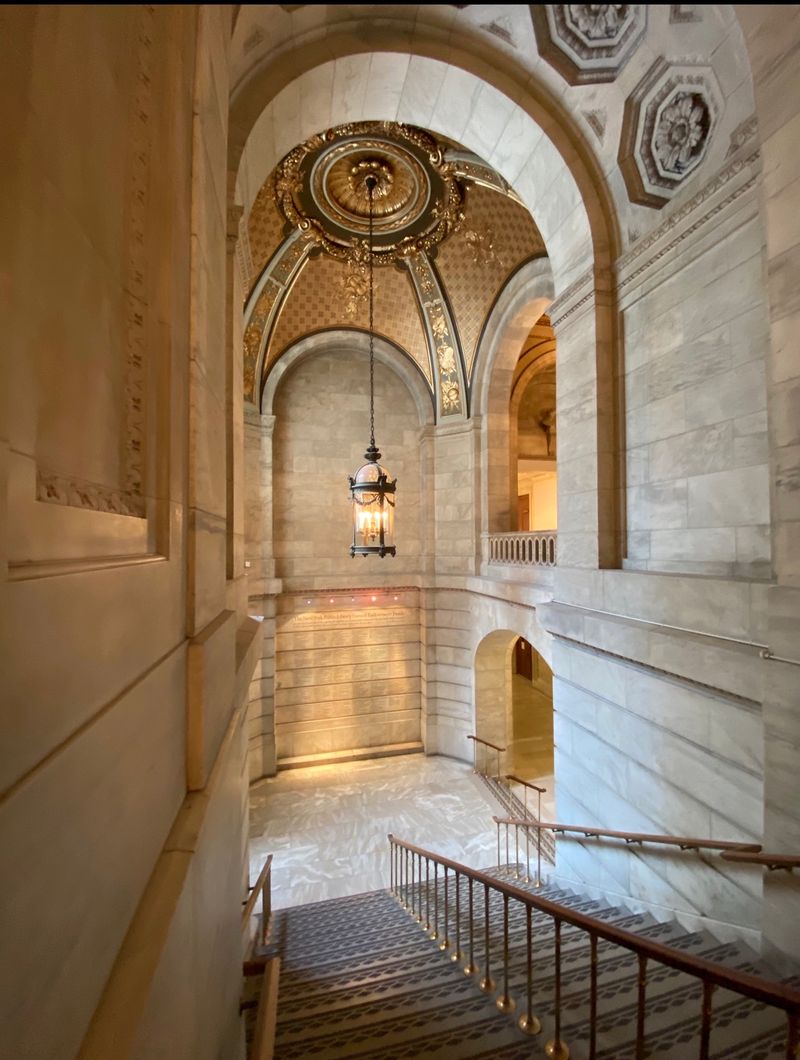
Gleaming white marble covers nearly every surface, from the floors to the soaring vaulted ceiling.
The architects designed this space as a royal welcome. It feels a bit like walking into a palace, minus the crowns and capes.
Sounds echo softly off the stone walls, giving the hall a calm and magical feel.
Look closely between the arches. You will spot names carved into the marble, honoring early supporters who helped create the library.
These carvings are quiet reminders that the building began as a gift to the public.
Grand staircases rise on both sides, inviting you to explore upper floors. Each step feels like part of a story that keeps unfolding.
Photographers love this spot for its symmetry and glowing light.
Astor Hall is even an official interior landmark in New York City. That means its design is protected for future visitors.
Few lobbies can claim that kind of honor, and this one wears it beautifully.
The Rose Main Reading Room Puts Skies Above Your Books
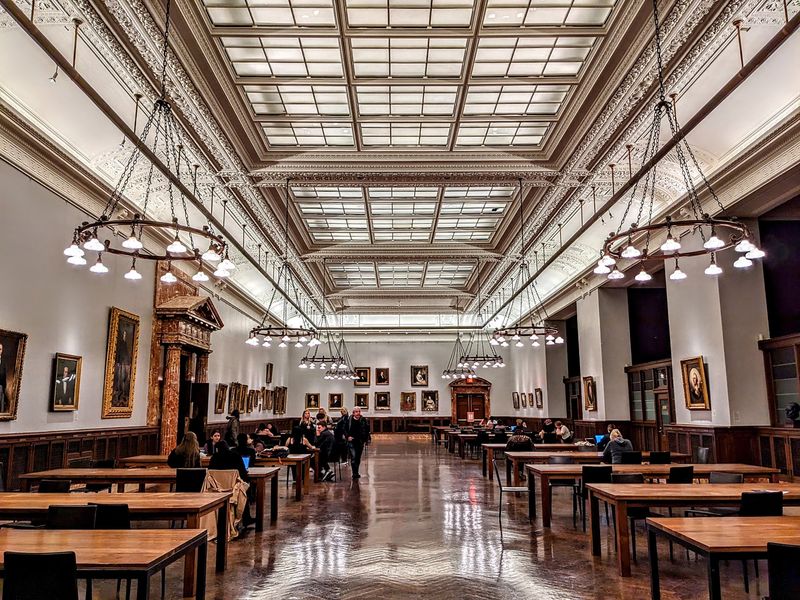
Imagine reading under a sky full of fluffy clouds without ever stepping outside. That is the everyday magic of the Rose Main Reading Room.
Its ceiling rises 52 feet high and features painted murals of bright skies.
Size matters here, and this room delivers. It stretches about 297 feet long and 78 feet wide, close to the length of two city blocks.
Even more impressive, no columns hold up the middle of the room.
Long wooden tables run in neat rows across the floor. Classic brass lamps glow on each one, adding a cozy touch.
Huge windows let natural light pour in, while chandeliers sparkle overhead.
The room serves as a working space for researchers and writers. Visitors may have limited access at certain times, so checking the library website before you go is a smart move.
Free tours sometimes offer a peek inside.
Many famous books were researched at these very tables. The quiet focus in the air feels almost contagious.
It is the kind of place that makes you want to write your own masterpiece on the spot.
A Library Built Where A Giant Reservoir Once Stood
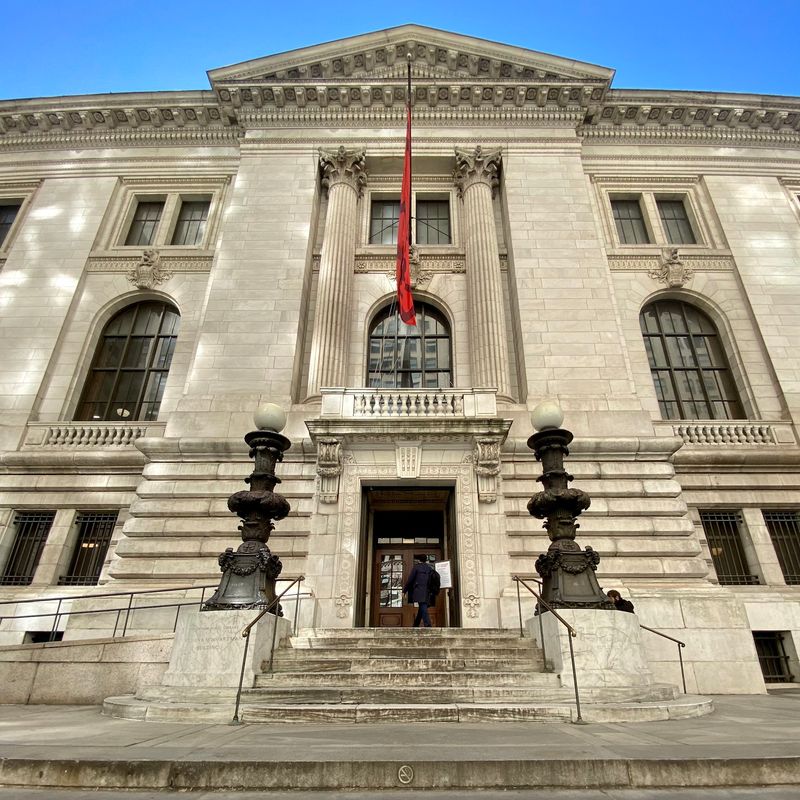
Long before books arrived, this spot held something very different: water, and lots of it. The library sits on the site of the old Croton Reservoir.
That massive stone structure once stored fresh water for the growing city.
The reservoir looked like an Egyptian-style fortress with thick, sloping walls. New Yorkers loved strolling along its top for scenic views.
It was a popular hangout spot back in the 1800s.
When the city chose this location for the library, the reservoir had to go. Crews spent about two years taking it apart and preparing the ground.
That is a lot of heavy lifting before the first marble block even arrived.
Here is the clever part. Some stones from the old reservoir were reused in the library’s foundation.
You can still spot bits of these historic stones on lower levels of the building.
This smart recycling links two important chapters of city life. One kept people refreshed, and the other feeds curious minds.
Old stones, new purpose, and a pretty awesome plot twist in the story of Manhattan.
Gottesman Hall Hides Treasures Worth Traveling For

Ready for a treasure hunt without the map and shovel? Gottesman Hall is home to the Polonsky Exhibition of The New York Public Library’s Treasures.
It showcases items spanning about 4,000 years of human history.
The collection is wonderfully surprising. Visitors can see a Gutenberg Bible, one of the first major books printed with movable type.
Nearby, the original stuffed animals that inspired Winnie-the-Pooh sit in their own display.
There is plenty more to discover too. Rare manuscripts, historic maps, and illuminated texts fill the cases.
Each object comes with helpful notes explaining its story.
The hall itself deserves a long look. Its carved oak ceiling and arched windows create a warm, elegant setting.
Light dances across the room, making the exhibits feel even more special.
Admission to the exhibition is free, which makes it a sweet deal for budget travelers. Plan at least an hour so you can explore without rushing.
Pooh Bear fans, consider this your sign to finally say hello to the real thing.
Every Lamp, Chair, And Table Was Part Of The Plan
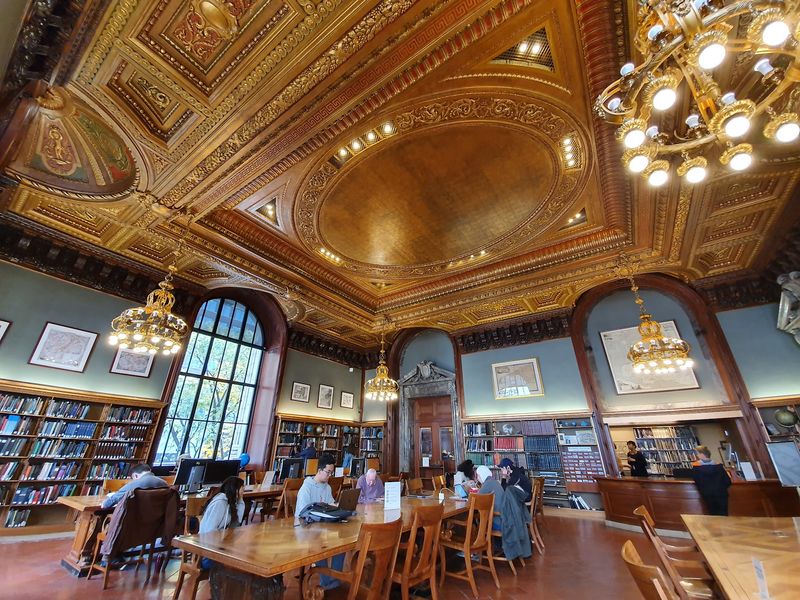
Talk about commitment to a theme. The architects behind this library did not stop at walls and ceilings.
They also designed much of the furniture, lighting, and even small details inside the building.
Tables, chairs, lamps, and chandeliers were all part of their master plan. Even items like door hardware and wastebaskets got the designer treatment.
Nothing was left to chance.
Why go so far? The goal was harmony.
When every piece matches the overall style, the building feels like one giant work of art instead of a random collection of parts.
As you wander, try a little detail game. Notice how lamp shapes echo the curves of nearby arches.
Look at the carvings on the wooden furniture and how they connect to patterns in the ceilings.
This level of care is rare, even among famous buildings. It shows how much love went into creating a space for the public.
Next time someone says details do not matter, just point them toward a brass lamp glowing on a century-old table.
Marble On A Mind-Blowing Scale
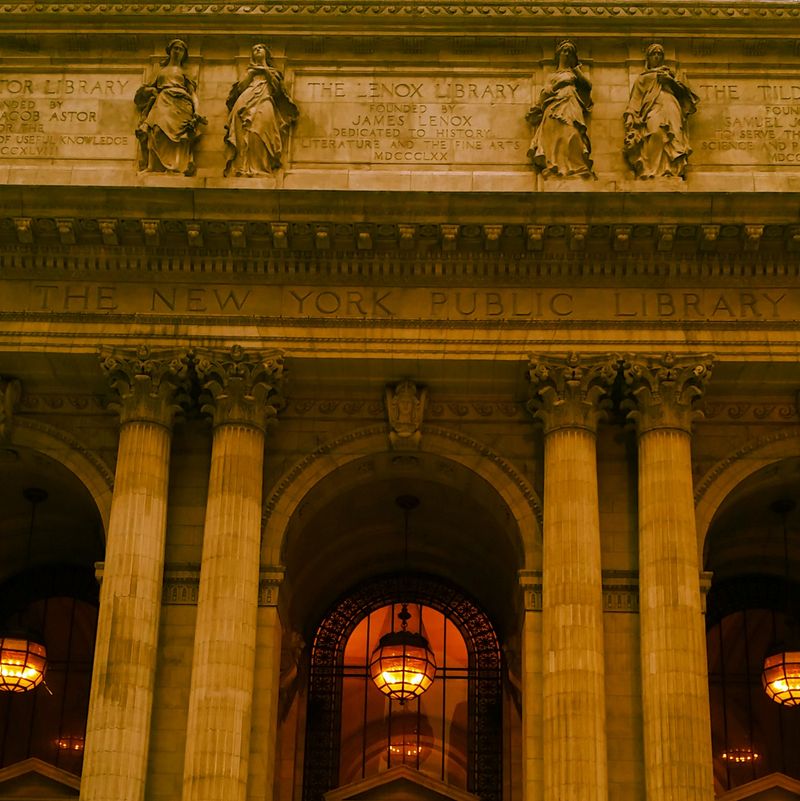
Numbers can be boring, but these ones are seriously impressive. Building this library required roughly 530,000 cubic feet of marble.
Most of it came from quarries in Vermont.
The outer marble walls are about a foot thick. That is sturdy enough to make any fortress jealous.
Reports from the era noted this project used far more marble than other famous city buildings combined.
Look up above the grand columns along Fifth Avenue. Carved figures sit on the attic wall, representing subjects like history, romance, and philosophy.
They act like silent mascots for the knowledge waiting inside.
Stately Corinthian columns frame the entrance, topped with leafy carved details. Wide steps spread out below, giving people a friendly place to sit and watch the city go by.
Many visitors enjoy a snack break right there.
Bryant Park sits right behind the building, adding green space to the scene. Walk around the outside before or after your visit for different angles.
This marble giant looks dazzling from every side, especially when golden afternoon light hits the facade.
A Fresh Chapter For A Timeless Landmark
Even a classic needs a glow-up now and then. Over recent years, the library has gone through thoughtful renovations.
The goal was to welcome more visitors while keeping its historic charm.
Architecture firms worked carefully to respect the original Beaux-Arts design. Spaces once used for storage or behind-the-scenes work have opened to the public.
That means more rooms for exploring, learning, and relaxing.
Upgrades include accessible entrances, improved building systems, and refreshed exhibition areas. There are also cozy spots for grabbing a coffee and a charming gift shop full of bookish souvenirs.
Special library cards sometimes make fun keepsakes too.
Visiting is easy to plan. The building usually opens at 10 AM most days, with shorter hours on Sunday and closures on Monday.
Checking the official website before you go helps you catch current exhibits and tours.
This blend of old and new keeps the library lively and relevant. It honors its past while making room for future dreamers.