
This Haunted Road Trip Through Washington Ghost Towns Feels Like A True Adventure
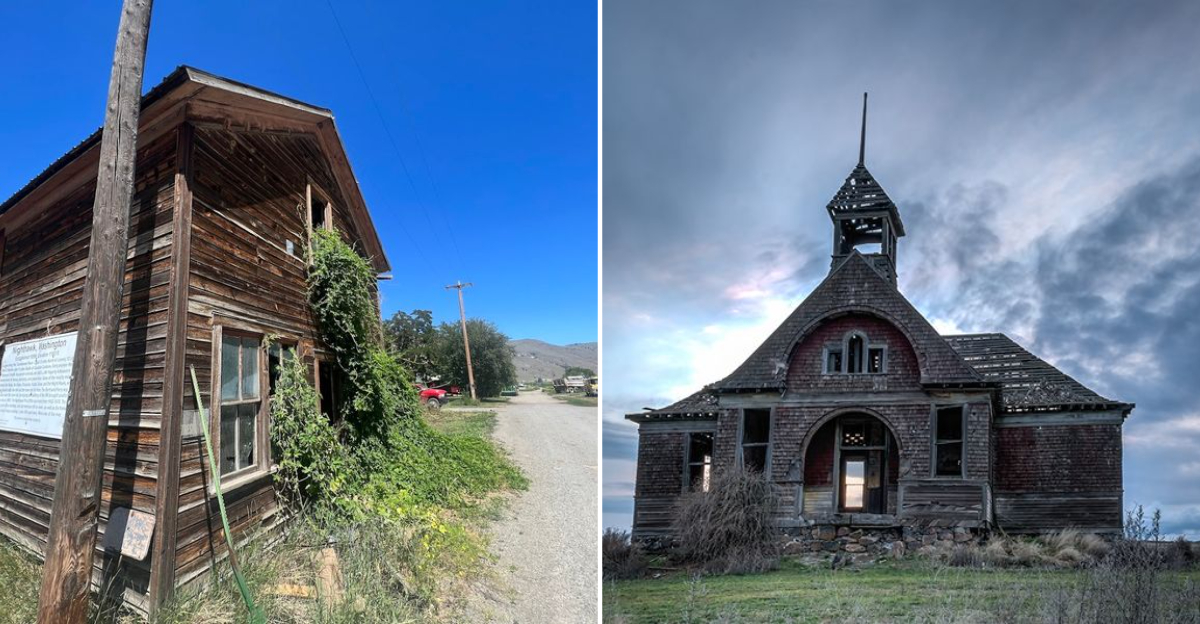
Washington State is full of places where history stopped mid-sentence, and the silence that followed has never quite left.
It started as a simple “let’s see what’s out there” text to a friend who loves a good scare, and quickly turned into a full‑blown quest for the most unsettling backroads the Pacific Northwest can throw at us. Washington really becomes the perfect backdrop for a story that feels ripped from a dime‑store horror novel.
The moment the car rolls past the last mile‑marker, the road transforms into a time‑worn ribbon, winding through towns that have long since traded their shop windows for cobwebs.
The chill that slides down my spine isn’t just cold air, it’s the feeling that somewhere, some prospector is still polishing his gold watch. Hold onto your seat; the adventure is about to get delightfully eerie.
Pack your camera, lace up your boots, and get ready for an adventure through places that history almost forgot.
1. Claquato, Lewis County

One of the oldest standing buildings in all of Washington State waits quietly on a hillside in Claquato, Lewis County. Founded in the 1850s as a lumber town, Claquato had real promise until its founder suffered a fatal mill accident in 1864.
Without strong leadership, and then bypassed entirely by the railroad, the town simply stopped growing and the people slowly moved away.
What remains today is the original Methodist church, believed to be the oldest standing building in Washington, and a historic cemetery with weathered stones that lean slightly in the wind.
Walking through the grounds feels like stepping into a sepia photograph. The church still stands sturdy, which is remarkable given its age, and the cemetery holds names of early settlers who built their lives here when Washington was barely a territory.
Plan to arrive in the morning when the light filters through the surrounding trees and makes the whole scene feel almost dreamlike.
2. Melmont, Pierce County

Hidden beneath a thick canopy of Pacific Northwest forest near Mount Rainier National Park, Melmont is the kind of place that feels like the trees are slowly reclaiming what once belonged to them.
Founded in 1900 as a coal mining community, the town thrived briefly before the railroad switched from steam power to diesel and electric in 1918, cutting off Melmont’s main reason to exist.
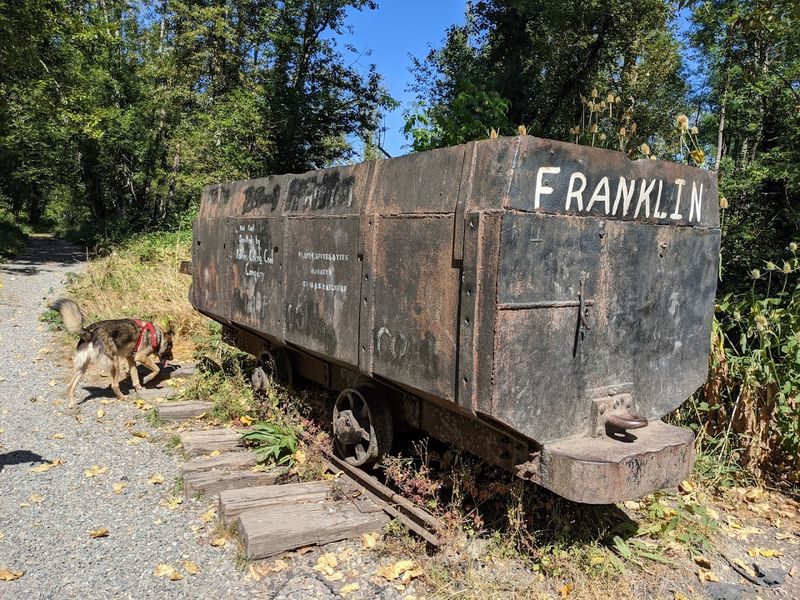
Fires in the 1920s finished what the railroad started, and today a six-mile round-trip trail follows an old rail grade through the forest.
Along the way, hikers find a bridge foundation, a small explosives storage shack, crumbling foundations, and rusting vehicles that have been swallowed by moss and vines. The trail is accessible and well worth the effort for anyone who enjoys history mixed with a slightly unsettling atmosphere.
Bring sturdy shoes and a fully charged camera, because Melmont rewards the curious traveler with haunting images around every bend.
3. Lester, King County

Somewhere near Stampede Pass in King County, tucked into a forest that looks like it belongs in a horror film, sits the quiet remnant of Lester. Established in 1892 as a Northern Pacific Railroad town, Lester once served steam engines and passengers crossing the Cascades.
It was a working, breathing community built entirely around the rhythm of the railroad. When steam engines were phased out and rail traffic faded, the town lost its purpose almost overnight.
The station was eventually demolished, and most residents moved on. What lingers today is a lone remaining structure surrounded by towering evergreens, a setting so cinematic and lonely that it almost feels staged.
The forest has a way of pressing in close here, and on foggy mornings the atmosphere shifts into something genuinely eerie. Lester is not heavily visited, which makes it feel like a personal discovery rather than a tourist stop, and that feeling is worth the drive alone.
4. Molson, Okanogan County

Near the Washington-Canada border in Okanogan County, Molson is one of those rare ghost towns that actually wants you to visit.
It originated as a gold mining boom town in 1896, but most of the mines turned out to be disappointments, and the town nearly vanished before a railroad revival in 1905 gave it a second life. By the 1930s, even that chapter had closed.
Today, Molson operates as an open-air museum with preserved pioneer buildings including a restored one-room schoolhouse, an old bank, and a collection of vintage farm machinery spread across an open field.
The Molson School Museum inside has a restored classroom and historical displays that bring the frontier era back to life in a surprisingly personal way.
The wide sky and dry landscape of the Okanogan Highlands give the whole scene a dusty, frontier atmosphere that feels completely authentic. Molson is a genuinely fascinating stop and one of the most photogenic ghost towns on this entire road trip.
5. Bodie, Okanogan County
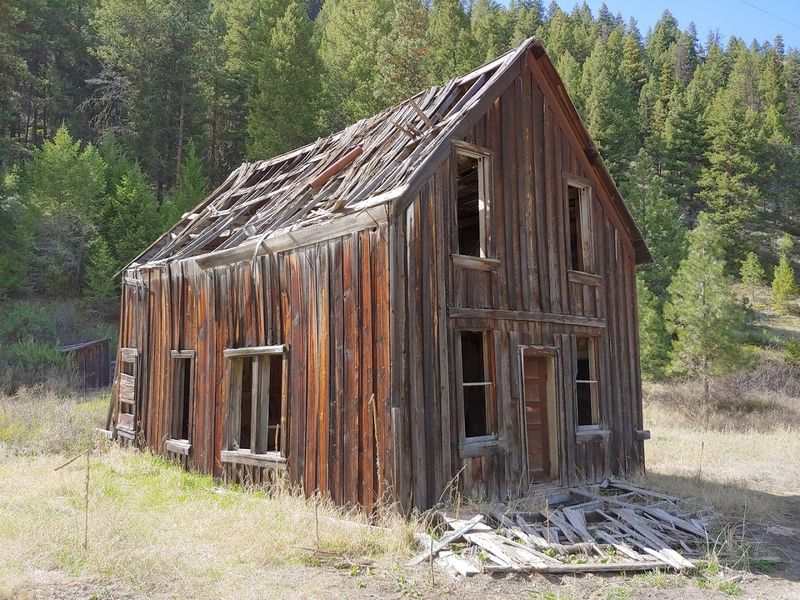
Stark, weathered, and sitting in one of the more remote corners of Okanogan County, Bodie is the kind of ghost town that rewards travelers who are willing to go slightly off the beaten path.
Founded in the late 1880s near Bodie Creek, this small mining outpost produced high-grade ore for several decades before plummeting gold prices made continued operation impossible. By 1934, it was completely abandoned.
Several original log structures still stand at the site, their timber darkened and cracked from over a century of harsh winters and dry summers. There are no crowds here, no gift shops, and no interpretive signs.
Just old wood, open sky, and the faint sense that someone might have walked through not long ago.
Bodie pairs well with a visit to nearby Molson, making for a full day of ghost town exploration through the Okanogan Highlands. The remoteness is part of the appeal, so check road conditions before heading out.
6. Liberty, Kittitas County
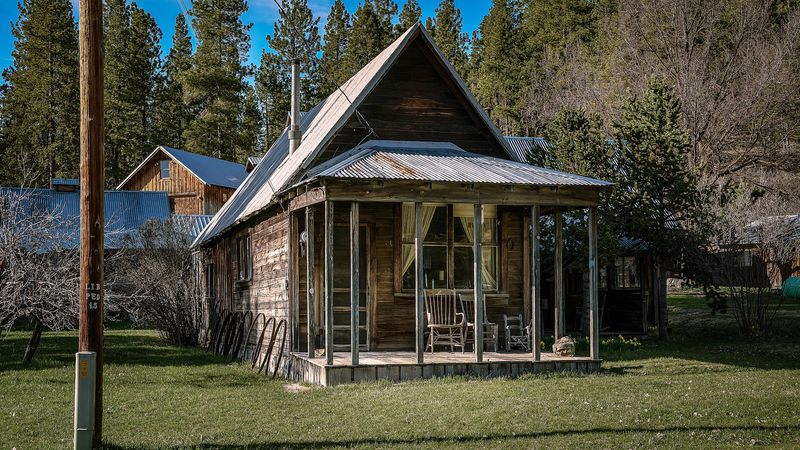
Liberty holds a remarkable title: it is considered the oldest placer gold mining town in Washington State, with roots stretching back to the 1870s gold rush.
Located in Kittitas County, it was added to the National Register of Historic Places in 1974, which says a lot about how well its history has been preserved. Unlike most ghost towns, Liberty is not entirely abandoned.
A small number of residents still live and even mine here, giving it the unusual status of a living ghost town. Walking through Liberty feels like wandering through a place that exists slightly outside of normal time, with preserved log cabins, rusting mining equipment, and old machinery sitting openly in the mountain valley landscape.
The combination of real history, genuine relics, and a handful of actual inhabitants makes Liberty one of the most layered and interesting stops on this road trip. It is historic, unusual, and quietly alive in a way that other ghost towns simply are not.
7. Govan, Lincoln County

About 50 miles west of Spokane along Highway 2, the tiny remnant of Govan stands in Lincoln County like a place that time simply decided to leave behind.
Originally a ranching community and railway stop in the late 1800s, Govan began its decline when farming patterns shifted and transportation improvements made nearby towns more convenient. The construction of Highway 2 accelerated the town’s emptying out.
What makes Govan especially unsettling is its history. Local accounts describe a series of brutal, unsolved axe murders in 1902 involving a judge and his wife, followed by additional violence that shook the small community.
Remaining structures include an abandoned schoolhouse reportedly haunted by a former teacher’s ghost, an old post office, and a handful of empty buildings surrounded by wind and thick silence. The schoolhouse alone is worth a photograph, even if you keep the engine running.
8. Sherman, Lincoln County

About 15 miles northeast of Govan, Sherman is another agricultural settlement in Lincoln County that thrived during the farming boom of the 1880s and 1890s before quietly disappearing.
Wheat prices fell, transportation improved, and nearby towns pulled residents away until Sherman became little more than a cluster of aging structures in a wide open field.
What remains has a deeply personal and reflective quality. The old schoolhouse and church still stand, their walls worn and their windows long since emptied of glass.
The cemetery nearby holds cracked gravestones with names and dates that tell small, quiet stories of families who worked this land and expected to stay.
Sherman does not announce itself loudly. There are no signs pointing you toward it, no parking lots, and no visitor centers. That is precisely what makes it so affecting.
Standing in the silence between those old buildings, with the wind moving through the dry grass, feels like a genuinely private moment with history.
9. Monte Cristo, Snohomish County

Getting to Monte Cristo requires effort, and that effort is absolutely part of the experience.
Deep in the Cascade Mountains near Darrington in Snohomish County, this former gold and silver mining town is accessible only via a four-mile hike from a trailhead off Highway 2, making the eight-mile round trip a genuine adventure before you even arrive.
Monte Cristo was abandoned in the early 1900s after difficult terrain, repeated flooding, avalanches, and ore that proved less rich than originally hoped made continued operation unworkable.
What remains are old buildings, rusted equipment, and faded signage that feel completely out of place in such a wild mountain setting.
Reports of unexplained sounds, including the distant clanging of picks and shovels when no one is working, and apparitions of miners near the old structures, have followed this location for years. Monte Cristo has an atmosphere that is genuinely difficult to shake long after the hike back out.
10. Black Diamond Cemetery, King County
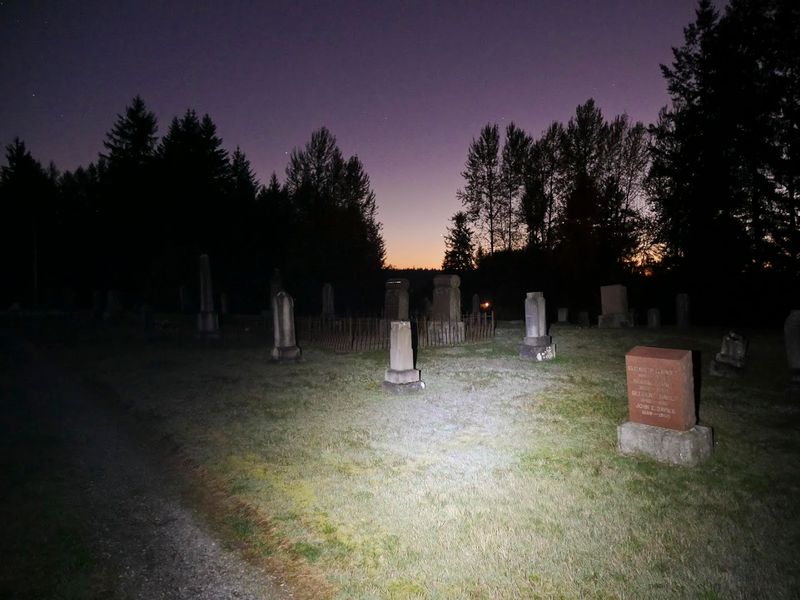
The town of Black Diamond in King County was built on coal, and the cemetery at its edge carries the weight of that history in every stone.
Considered one of Washington’s most haunted locations, this burial ground holds the remains of miners and their families from the early twentieth century, many of whom worked in dangerous underground conditions that claimed lives with grim regularity.
Visitors and investigators over the years have reported ghostly figures resembling miners moving between the headstones, mysterious lights that appear without explanation, and the sound of phantom footsteps on paths that are visibly empty.
The Washington State Ghost Society has documented electronic voice phenomena and photographic anomalies at the site during formal investigations.
Even setting aside the paranormal reports, the cemetery itself is a moving and historically significant place. The headstones tell stories of immigrant families, young workers, and a community shaped entirely by the coal industry beneath their feet. A visit here leaves a lasting impression.
11. Nighthawk, Okanogan County

Just along the Similkameen River in Okanogan County, Nighthawk is named after the nearby mine that gave the whole town its identity. At its peak in the early 1900s, this was a genuinely busy supply and mining hub with hotels, a railroad depot, and the full energy of a frontier boomtown.
Then the mines shut down as operating costs rose and metal values fell, and Nighthawk went quiet. What makes Nighthawk stand out among Washington ghost towns is how much original infrastructure actually survived.
The old Nighthawk hotel, the original schoolhouse, a mining office, and sections of an old mill are still standing, many of them dating back to 1903. The buildings lean and creak, but they are remarkably present for structures of their age.
The setting along the river with dry hills rolling behind the town gives Nighthawk a cinematic quality that photographs beautifully. It sits in a remote but reachable part of the Okanogan Highlands, making it an ideal late-afternoon stop on a longer ghost town loop.
12. Tips For Visiting Washington Ghost Towns Safely
Before heading out on this road trip, a little preparation goes a long way. Several of these locations are in remote areas with limited or no cell service, so downloading offline maps through Google Maps or a similar app before you leave is genuinely important.
Some sites sit near private property, so checking current access conditions and respecting any posted boundaries keeps the experience safe and legal.
Bring plenty of water, a snack, and a charged battery pack for your phone or camera. Sturdy closed-toe shoes are a must, especially at hiking destinations like Monte Cristo or Melmont where trails can be uneven. A physical backup map is a smart addition to your pack.
Resist the urge to enter structures that look unstable, and never remove artifacts or disturb anything at these sites. These places survive because visitors treat them with care. The road trip itself is the adventure, and the stories belong to the landscape, not your backpack.