
This Haunted Waterfront Ruins In South Carolina Feel Like Something Out Of A Ghost Story
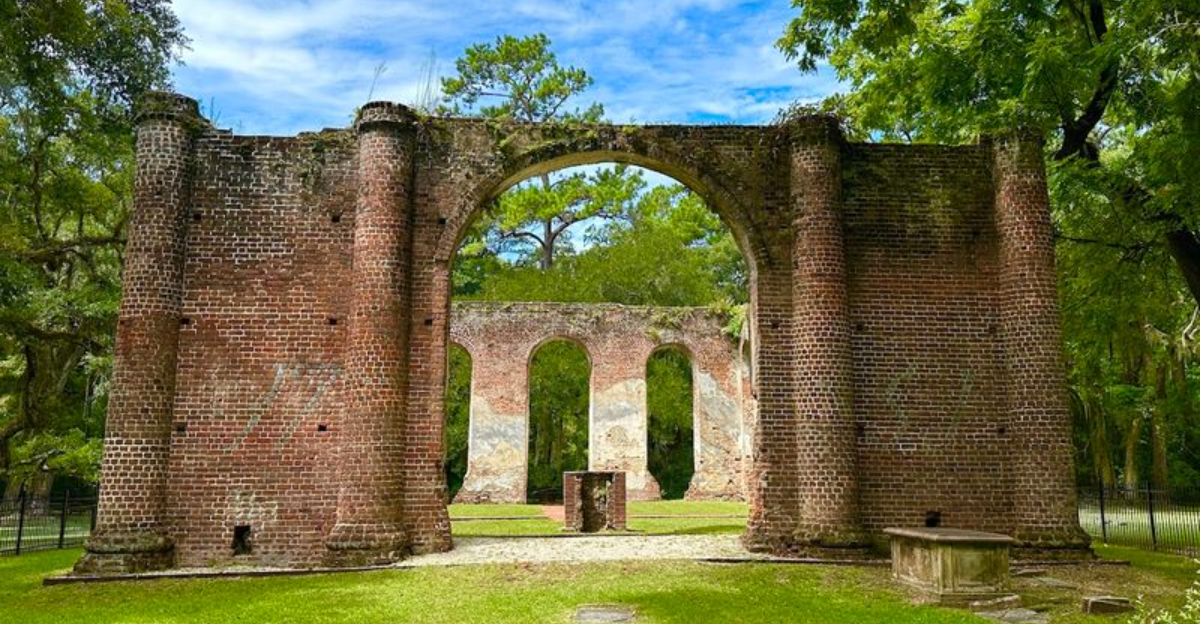
You don’t really prepare for a place like this in South Carolina. You just come around the bend and it’s there.
The road is quiet, shaded, easy to overlook. Then the trees open just enough, and the structure rises in front of you.
Tall columns, open sky where a roof should be, everything left exactly as time shaped it.
Some ruins in South Carolina feel preserved, but this one feels paused mid-story.
Nothing is hidden. The details are right in front of you.
Brick, stone, and space that tells you something important used to stand here.
People don’t rush through it. They walk slower, look longer, and speak a little quieter without being asked.
It’s not dramatic or staged.
It just sits there, letting you take it in at your own pace.
And the longer you stay, the more it starts to feel like you’re standing inside something that never fully left.
Built Before The United States Even Existed
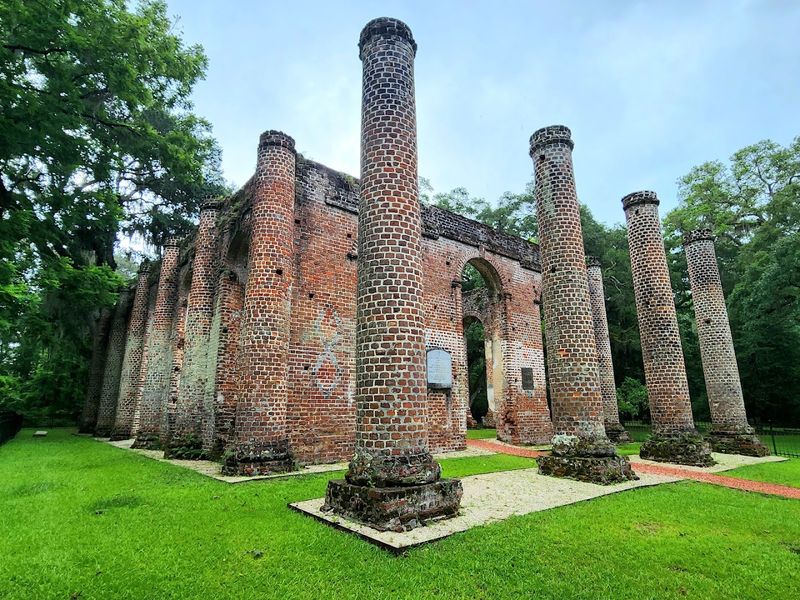
Most people visit places older than their grandparents, but Old Sheldon Church Ruins puts that in a whole new category. Construction on the original Prince William Parish Church began around 1745 and was completed by 1755, making it older than the United States itself.
That is not a small detail. When these walls were first raised, the American Revolution had not even been imagined yet.
Standing among the ruins today, that timeline feels almost impossible to wrap your head around. The Greek Revival columns were considered cutting-edge architecture for their era, and the craftsmanship that went into them was clearly built to last.
Even after surviving two separate burnings across two different wars, the bones of the structure still stand with quiet defiance.
Visiting a place this old feels less like a tourist stop and more like a conversation with history. The stones themselves seem to carry the weight of every generation that has passed through.
Burned Twice And Still Standing
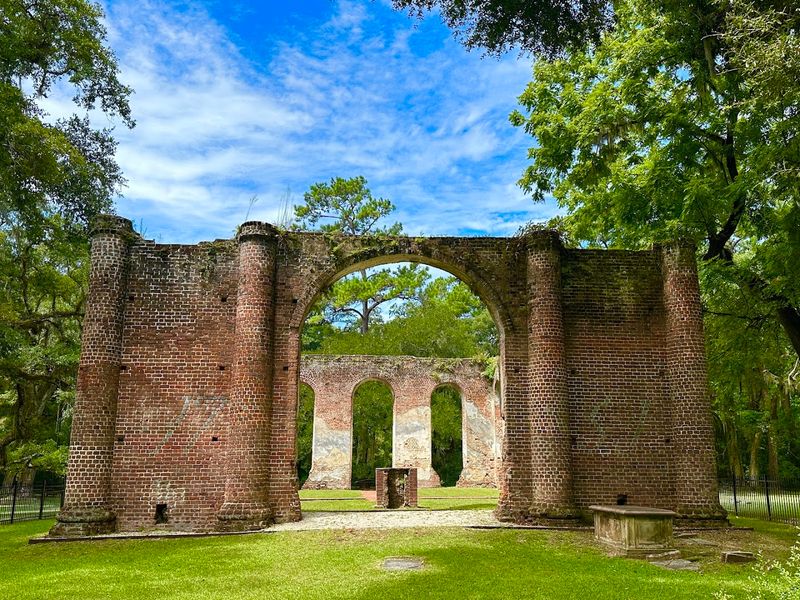
Not many structures can claim they survived two separate burnings during two separate wars, but Old Sheldon Church Ruins wears that badge with quiet resilience. The first burning came during the American Revolution in 1779, when British troops torched the church as they swept through the South Carolina lowcountry.
The community rebuilt, restoring hope along with the walls.
Then came the Civil War, and in 1865, Union forces burned it again, leaving only the shell that visitors see today. Rather than rebuild a third time, the congregation chose to preserve the ruins as a monument to perseverance.
That decision turned tragedy into something strangely beautiful.
Walking through the roofless nave with sunlight filtering through empty window frames, it is easy to feel the echoes of both conflicts pressing against the old bricks. Few places in South Carolina carry as much layered history packed into a single set of standing walls as this one does.
The Spanish Moss Effect That Feels Supernatural
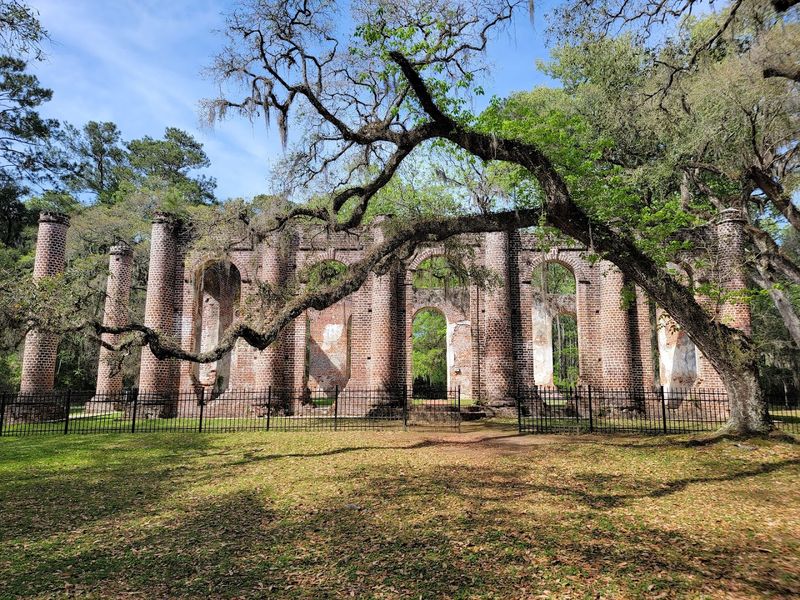
Few natural details transform a landscape quite the way Spanish moss does, and at Old Sheldon Church Ruins, the effect is almost theatrical. The massive live oaks surrounding the ruins are draped in thick curtains of the silvery-gray plant, creating a canopy that filters light into soft, shifting patterns across the ground.
On overcast days, the atmosphere borders on genuinely unsettling in the best possible way.
Spanish moss is not actually a moss at all. It belongs to the bromeliad family, making it a relative of the pineapple, which is one of those facts that sounds made up but is completely true.
It absorbs moisture and nutrients from the air rather than the trees it hangs from, so it causes no harm to its hosts.
At this site, the moss seems to have grown with intention, framing the ruins like a natural stage set. Every photograph taken here looks like it belongs in a Southern gothic novel.
A Graveyard That Dates Back To The 1700s
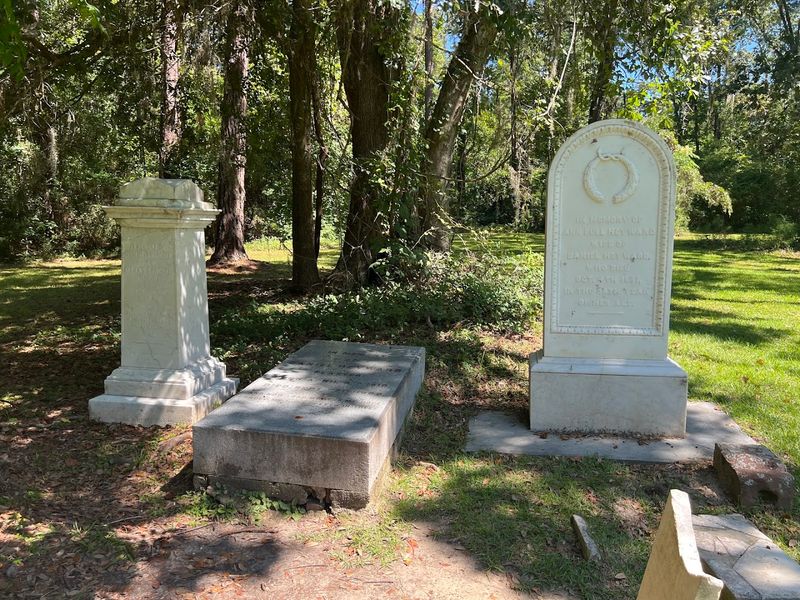
Scattered across the grounds of Old Sheldon Church Ruins are gravestones that tell stories stretching back to the mid-1700s. Some markers are so worn by time and weather that the inscriptions are nearly impossible to read, while others remain surprisingly legible, bearing names and dates that predate the founding of the country.
Walking among them feels like reading a fragmented history book written in stone.
Many of the graves belong to prominent lowcountry families who played significant roles in colonial and Revolutionary-era South Carolina. The Bull family, one of the most influential in the region, has strong connections to this site.
Seeing family names repeated across multiple generations of headstones gives a powerful sense of how long this community has been rooted here.
Visitors are encouraged to treat the cemetery with respect, which means staying on paths and not touching the fragile older markers. The grounds are well-maintained, and the quiet surrounding the graves adds a solemn, reflective quality to the entire visit.
The Ghost Stories That Keep People Talking
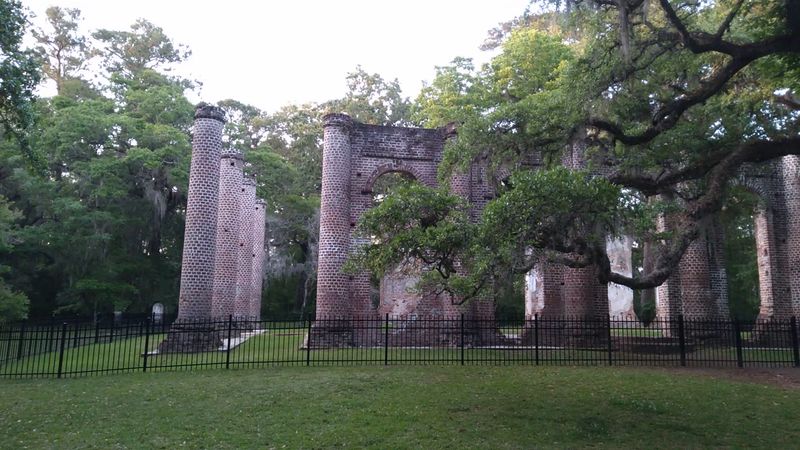
Places with this much history and this many layers of tragedy tend to attract ghost stories, and Old Sheldon Church Ruins is no exception. Local legends suggest that the spirits of those buried on the grounds have never fully departed, and plenty of visitors report an unexplainable feeling of being watched while wandering the ruins.
Whether you believe in the supernatural or not, the atmosphere here makes those stories feel very plausible.
Some visitors have shared accounts of hearing faint sounds with no clear source, particularly near the older section of the cemetery. Others describe a sudden drop in temperature even on warm South Carolina afternoons.
These kinds of experiences are common enough at the site that they have become part of its local reputation.
Even the most skeptical visitor tends to lower their voice instinctively while walking through the ruins. There is something about the place that quietly demands a certain reverence, as though the past is still very much present here.
Greek Revival Architecture That Survived The Centuries
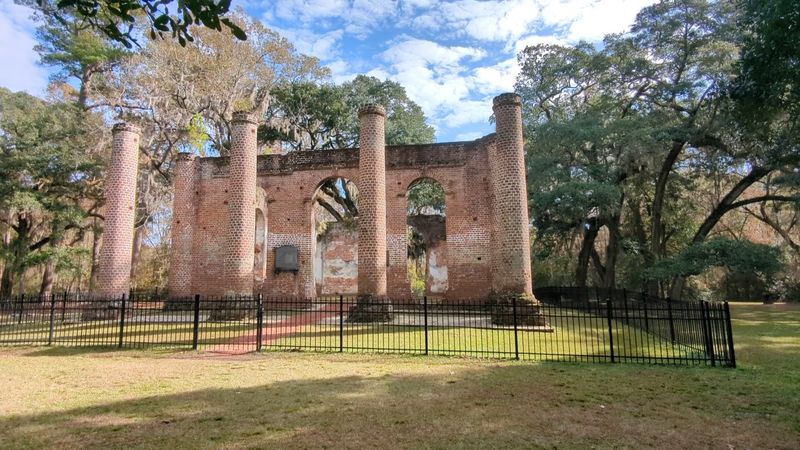
Long before Greek Revival architecture became fashionable across the American South, the builders of Prince William Parish Church were already working in that style. The tall brick columns that still stand today were a bold design choice for a rural South Carolina congregation in the mid-1700s.
Their proportions and craftsmanship remain impressive even in their partially destroyed state.
The style draws from ancient Greek temple design, emphasizing symmetry, clean lines, and imposing columns that project stability and permanence. It is quietly ironic that a style meant to communicate lasting strength now stands as a monument to the fragility of human structures against the forces of war and time.
Architects and history enthusiasts who visit often note how well-constructed the original building must have been, given that it withstood two separate fires well enough to leave substantial ruins behind. The columns, in particular, have become the iconic image of the site and appear in countless photographs taken by visitors each year.
A Free Visit With A Surprisingly Peaceful Picnic Spot
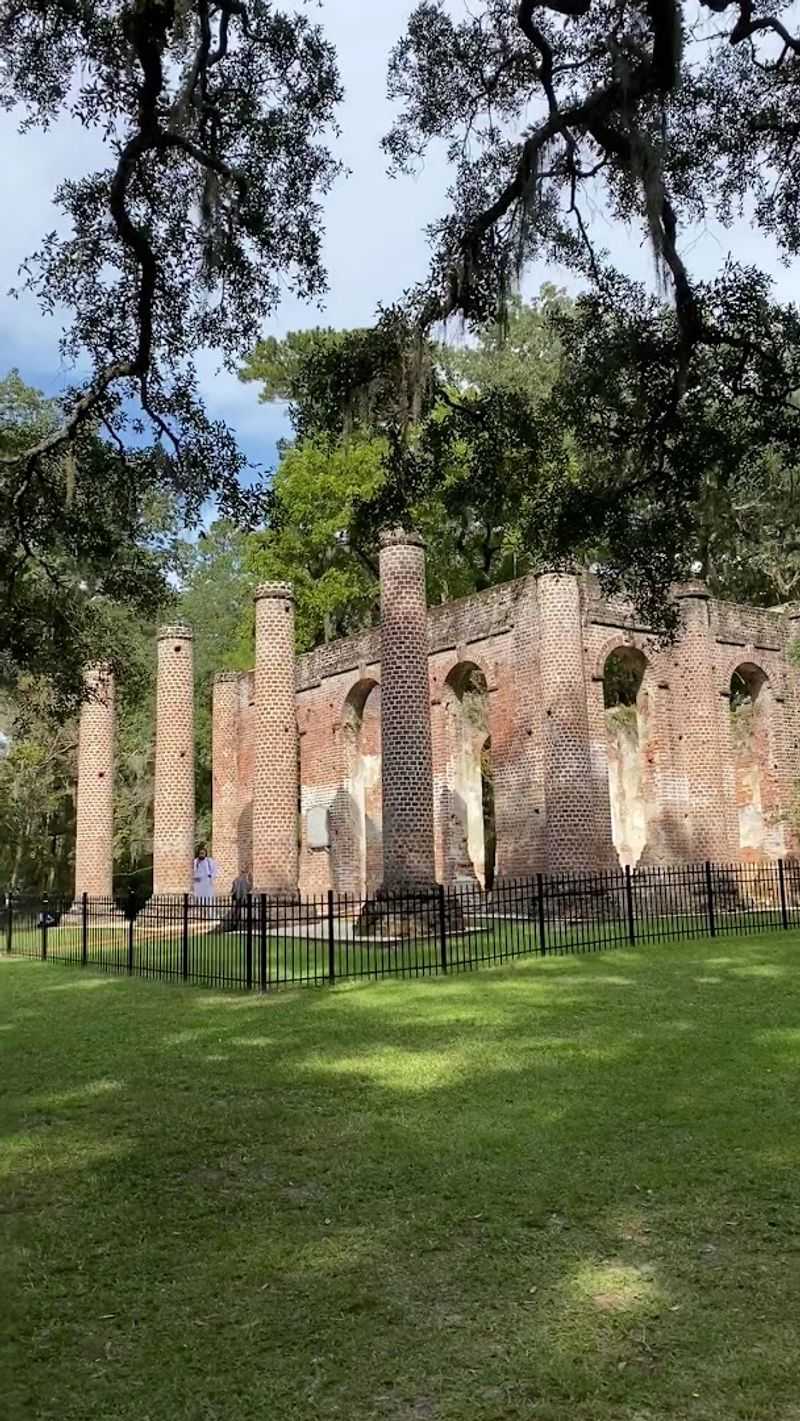
One of the most pleasant surprises about visiting Old Sheldon Church Ruins is that admission is completely free. There are no ticket booths, no entry fees, and no timed reservations required.
You simply pull into the parking area across Old Sheldon Church Road in Yemassee, SC 29945, cross the road carefully, and walk right in.
The grounds include several picnic tables tucked beneath the shade of the enormous oak trees, making it a genuinely lovely spot to stop for lunch during a road trip. The combination of cool shade, historical surroundings, and near-total quiet creates an atmosphere that feels far more special than any roadside rest stop.
Visitors traveling between Savannah and Charleston frequently mention this site as one of the best unplanned stops they have ever made. Packing a simple lunch and spending an unhurried hour here costs nothing and leaves you with memories that feel far more meaningful than a rushed visit to a crowded paid attraction would.
The Working Hand Pump That Connects You To The Past
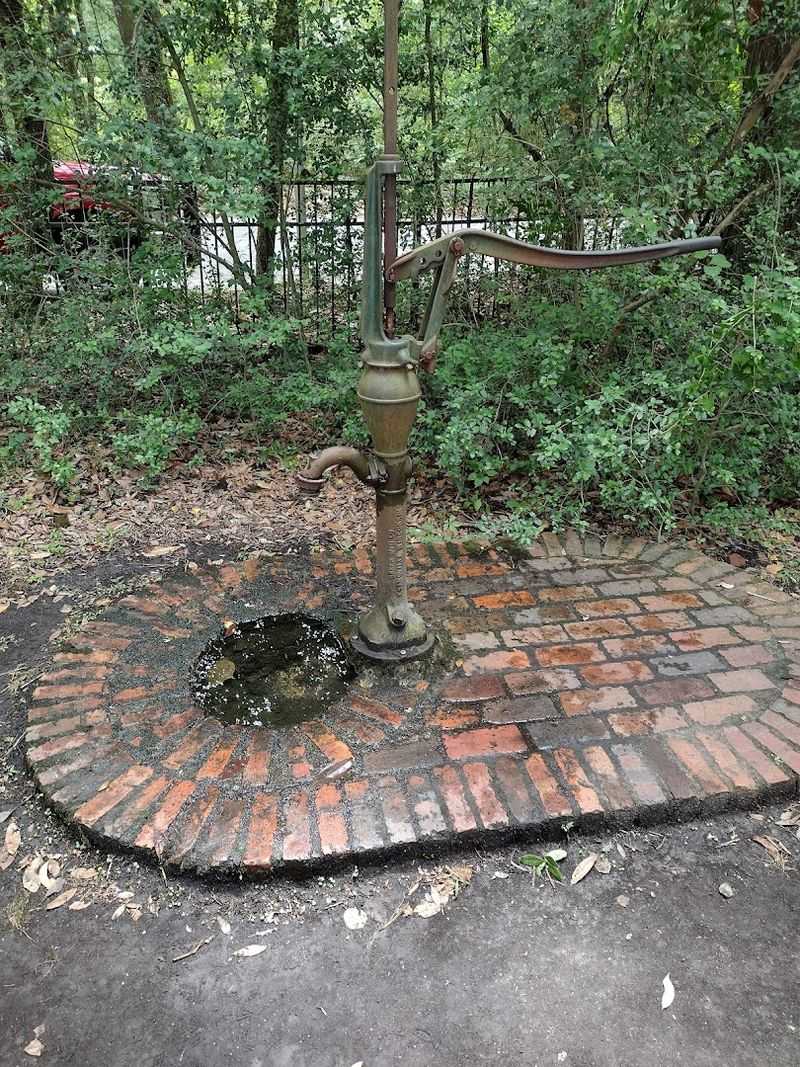
Just inside the entrance gate of Old Sheldon Church Ruins, a hand-operated water pump still works exactly as it did generations ago. Visitors can press down on the handle and watch actual water flow up from the ground, which sounds like a small thing until you are standing there doing it and realize that families attending church here more than 170 years ago did the exact same motion to water their horses.
For younger visitors especially, this pump becomes an unexpected highlight of the trip. There is something deeply tactile and connecting about using a tool that has not changed in centuries, and it gives kids a hands-on moment that no museum exhibit can replicate quite as effectively.
Parents traveling with children consistently mention the pump in their reviews as a standout memory. It transforms an abstract history lesson into something physical and immediate, which is exactly the kind of experience that makes a historical site stick in the memory long after the visit ends.
The Gated Interior And Why It Had To Be Locked
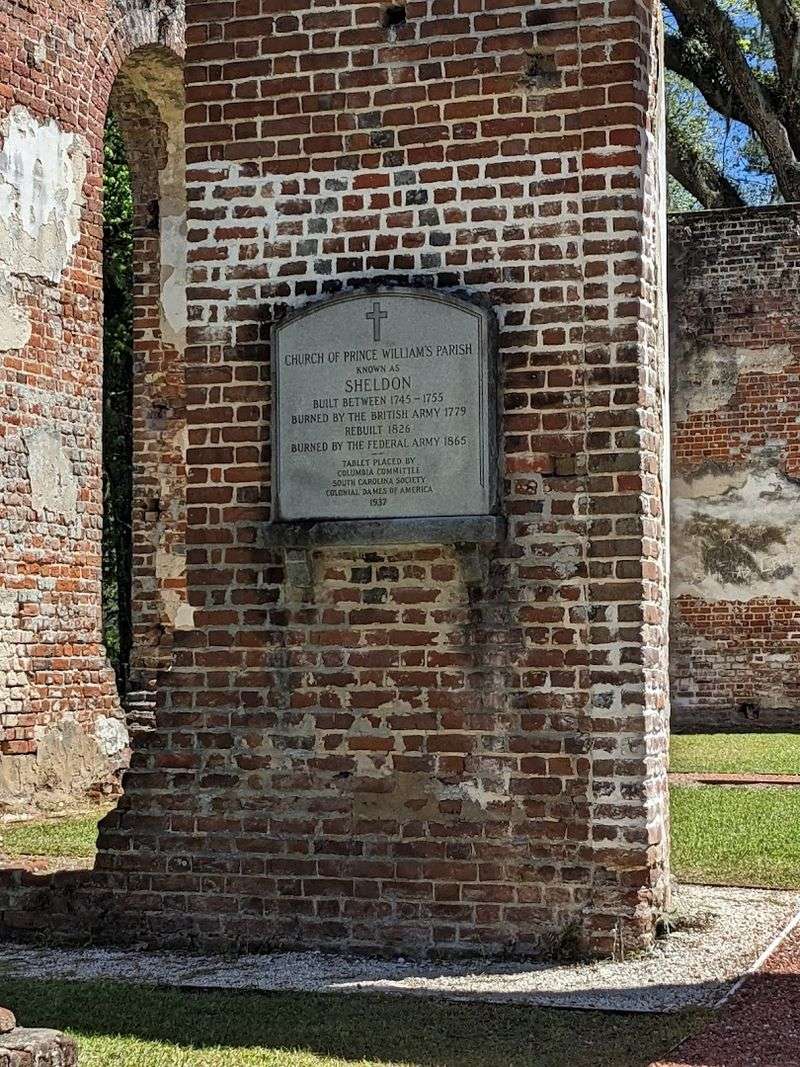
Visitors who arrive hoping to walk freely through the interior of Old Sheldon Church Ruins may find the gate locked, and the reason behind that change is both frustrating and understandable. Graffiti was sprayed on some of the historic walls by visitors who clearly had no respect for the significance of what they were marking.
In response, the site began locking the inner gate to protect what remains.
It is a genuinely disappointing development for anyone who cares about preservation, because walking through the roofless nave surrounded by standing columns was one of the most powerful parts of the experience. Occasionally, when a groundskeeper is present, they have been known to open the gate and even share a detailed history of the site with visitors, which several reviewers describe as an unexpectedly wonderful bonus.
Even with the gate closed, the ruins are fully visible from all sides, and the exterior walkway still offers striking views of the columns, arches, and graveyard that make this place so visually compelling and historically rich.
Practical Tips For Planning Your Visit
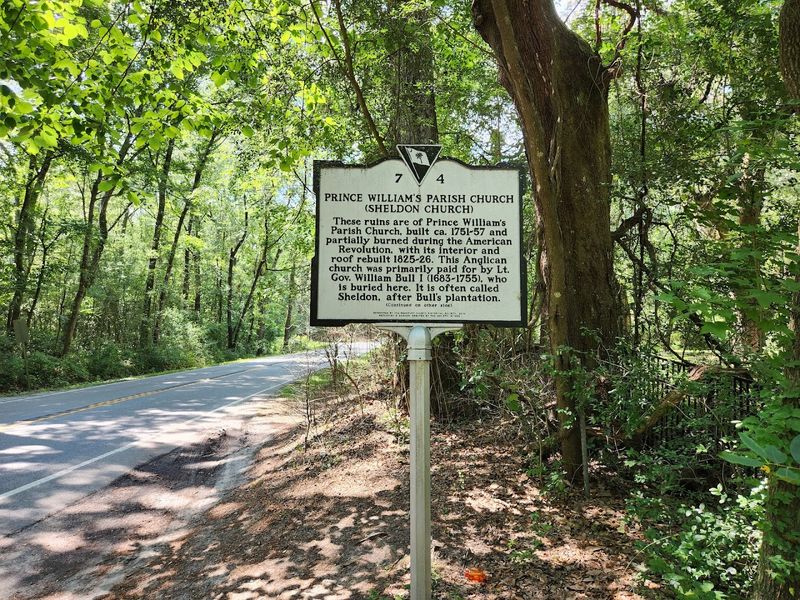
Getting the most out of a trip to Old Sheldon Church Ruins starts with knowing a few practical details before you arrive. The parking lot is located across the road from the site entrance, and it is easy to miss at first glance.
The road itself moves faster than the posted speed limit suggests, so crossing carefully with children or pets on a leash is strongly recommended.
The site is best visited on weekday mornings when foot traffic is lightest and the quiet of the grounds feels most pronounced. Evening visits are also popular since the ruins are well-lit after dark, offering a completely different and even more atmospheric experience than a daytime trip provides.
Mosquito repellent is a genuine necessity during warmer months, and comfortable walking shoes help since some paths are uneven. A wheelchair-accessible ramp is available at the entrance for those who need it.
You can reach the site by phone at +1 843-522-1712 for any questions before making the drive out.