
This Heavenly 1-Mile Arizona Trail Feels Like Stepping Onto Another Planet (Perfect For Your February Adventures)
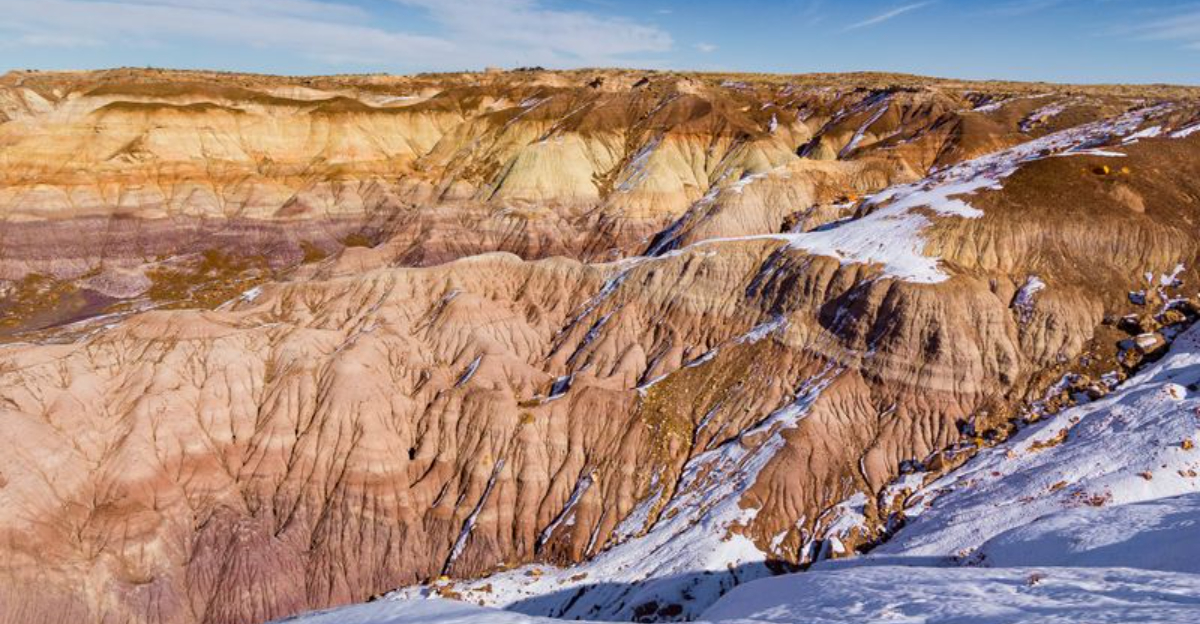
My brain struggle to process what my eyes were seeing. The landscape around me looked like something out of a science fiction movie, with layers of purple, blue, and gray clay hills stretching in every direction.
This one-mile loop delivers an experience that defies everything you think you know about desert hiking. Ancient petrified wood scattered along the path reminds you that this alien-looking terrain was once a lush forest 225 million years ago.
The paved trail winds down into a badlands basin where the Chinle Formation creates striped hills that seem painted by an artist with an otherworldly palette. I found myself stopping every few steps just to take in the surreal beauty surrounding me.
Trust me when I say this short hike will completely reshape your idea of what Arizona looks like.
A Descent Into Another World
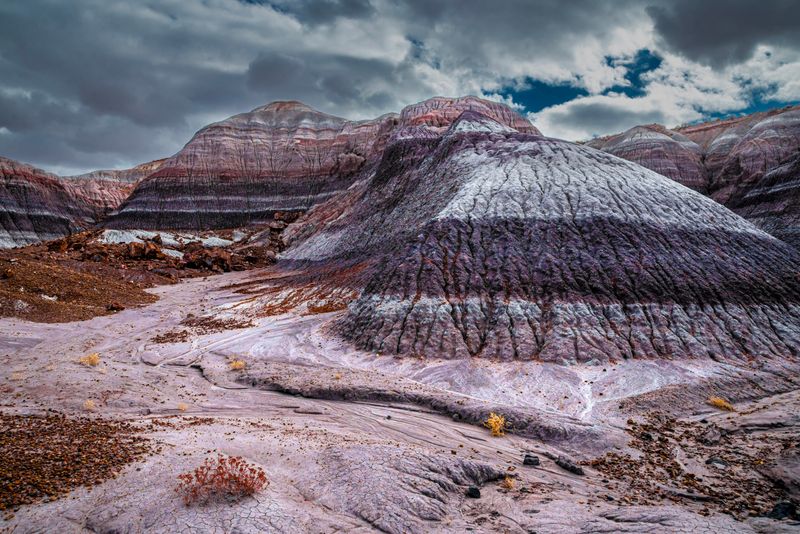
Starting at the trailhead, I watched the landscape transform with each step down the paved path. The trail begins with a gentle descent that offers sweeping views of the badlands stretching out like a frozen ocean of colorful waves.
What struck me most was how the elevation change completely alters your perspective of the formations around you.
At the top, you see the broad strokes of purple and gray hills, but as you descend about 110 feet into the basin, those distant shapes become towering walls of layered clay that seem to close in around you.
The zigzagging path takes you deeper into what feels like a canyon carved by an extraterrestrial sculptor. I noticed how the pavement makes this otherworldly experience accessible to almost everyone, though some sections definitely get your heart pumping on the way back up.
The wind picks up as you move lower, whistling through the formations and adding to the eerie sense that you’ve left Earth behind. Every switchback revealed another jaw-dropping Blue Mesa Trail vista that made me grateful I brought my camera along for this cosmic journey.
Colors That Defy Explanation
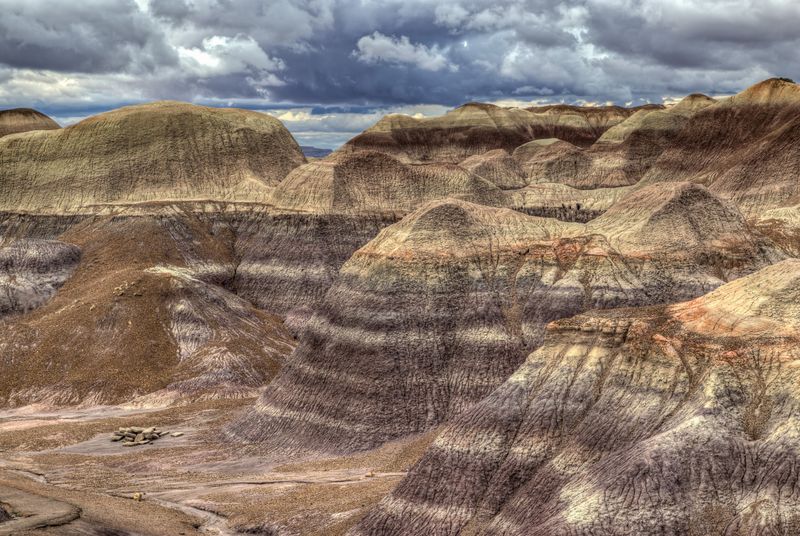
Nothing prepares you for the riot of colors splashed across these ancient hills. The Chinle Formation clay creates bands of purple, lavender, blue, gray, and even hints of white that look like someone took a paintbrush to the entire landscape.
I spent at least ten minutes just staring at one hillside, trying to count the different color layers stacked on top of each other. The hues shift depending on the light, with early morning and late afternoon bringing out the deepest purples and most vivid blues.
What makes these colors even more remarkable is their origin story. These clays formed from volcanic ash that settled in ancient river systems millions of years ago, and different minerals created the rainbow effect we see today.
Standing among these striped formations at , I felt like I was inside a natural art gallery where erosion had carved away everything except the most beautiful parts.
The contrast between the colorful hills and the scattered pieces of petrified wood creates a visual experience that photographs simply cannot capture fully.
It’s located in Arizona’s Petrified Forest National Park near the small community of Holbrook.
Petrified Wood Treasures Along The Path
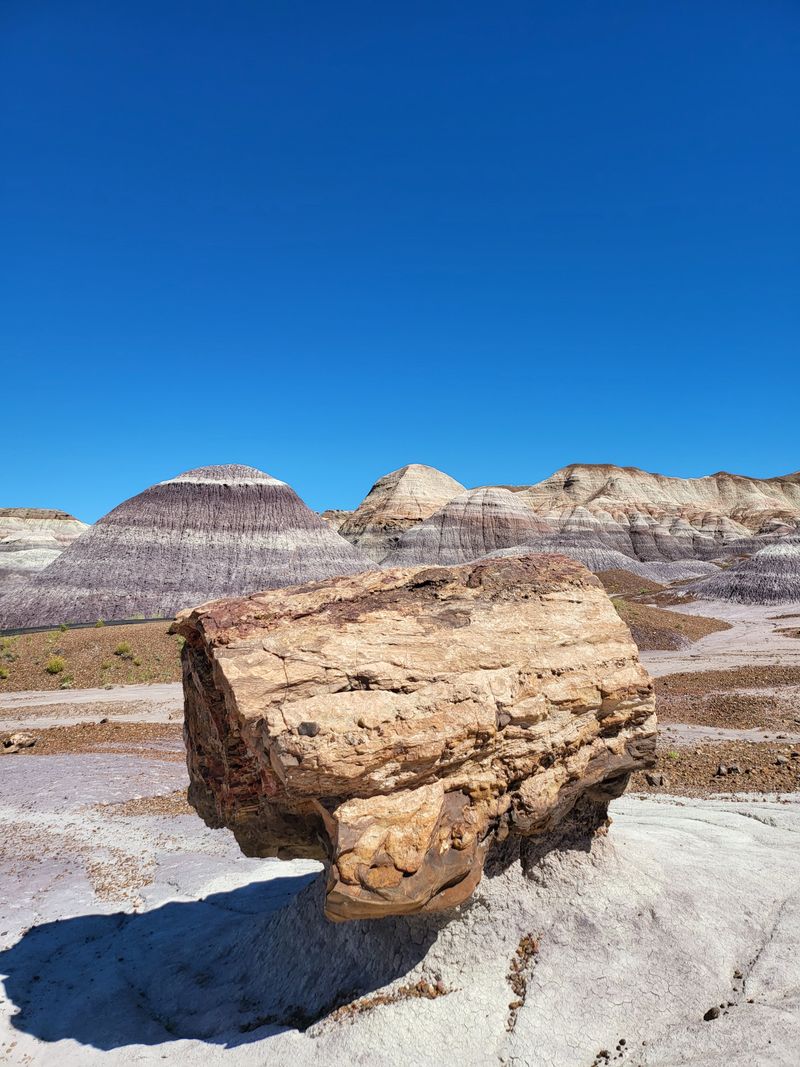
Scattered along the trail like forgotten sculptures, chunks of petrified wood remind you of this area’s incredible prehistoric past. I counted at least a dozen significant pieces within easy viewing distance, each one a tree trunk that turned to stone over 225 million years.
One particularly impressive log sits propped up on a display mount near the trail, letting you examine the crystallized wood grain up close without bending down. The colors in the petrified wood range from deep reds and oranges to creamy whites and grays, creating their own miniature rainbow effect.
What fascinated me most was realizing these were once towering trees in a lush forest that would have looked nothing like the barren landscape around me now.
The trail takes you past several spots where smaller fragments of petrified wood are embedded in the ground, looking like ordinary rocks until you notice the telltale wood grain patterns.
Rangers remind visitors that removing even tiny pieces is illegal and damages this irreplaceable prehistoric record, so I satisfied myself with dozens of photos instead of souvenirs.
The Loop That Brings You Back
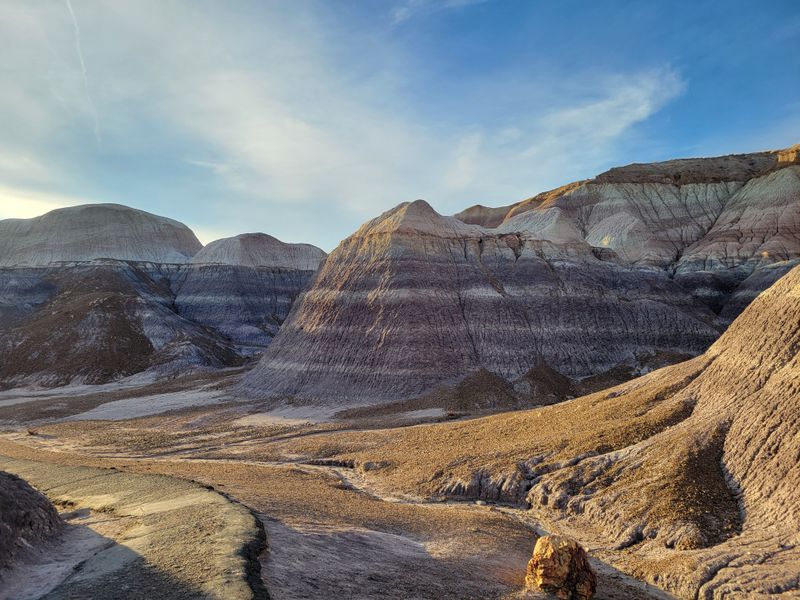
After descending into the heart of the badlands, the trail forms a loop that lets you experience the formations from every angle. I loved how this design means you never retrace your steps, so every moment offers something new to discover.
The loop portion runs along the basin floor, where you feel completely surrounded by the towering clay hills on all sides. This section gave me that canyon-like sensation that several reviewers mentioned, even though technically these are eroded hills rather than carved walls.
Walking the loop, I noticed how the formations change character depending on which direction you face. Some hills show sharp, jagged erosion patterns, while others display smooth, flowing curves that look almost melted.
The trail surface remains paved throughout the entire loop, which I appreciated when the wind kicked up dust and debris around me.
After completing the circle, you face the climb back up to the parking area, which honestly felt steeper than the descent but gave me time to process the alien landscape I had just walked through.
Weather And Timing Considerations
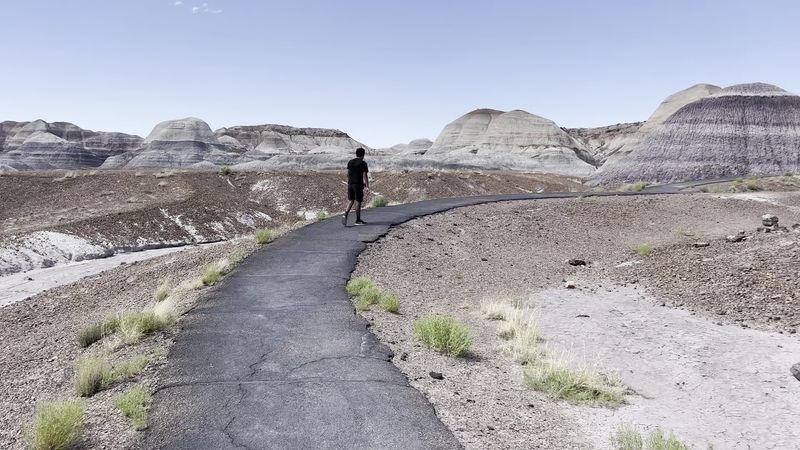
Timing your visit to Blue Mesa can mean the difference between a magical experience and a miserable one. I learned quickly that this trail offers absolutely zero shade, leaving you completely exposed to whatever weather decides to show up.
Spring and fall emerge as the sweet spots for hiking here, with temperatures that make the climb back up feel manageable rather than punishing.
Summer visits require early morning starts before the heat becomes dangerous, and I watched the temperature climb past 100 degrees by mid-morning during my August visit.
Winter brings its own challenges, with unexpected cold snaps and occasional snow that can make the clay surfaces treacherous. The wind deserves special mention because it can howl through these formations at any time of year, strong enough to nearly knock you off balance.
I found sunset particularly stunning, with the low angle light bringing out colors in the formations that disappear during midday. Just remember that the park closes at specific times, and rangers patrol to ensure everyone leaves before dark, so plan accordingly for those golden hour photos.
Essential Hiking Preparations
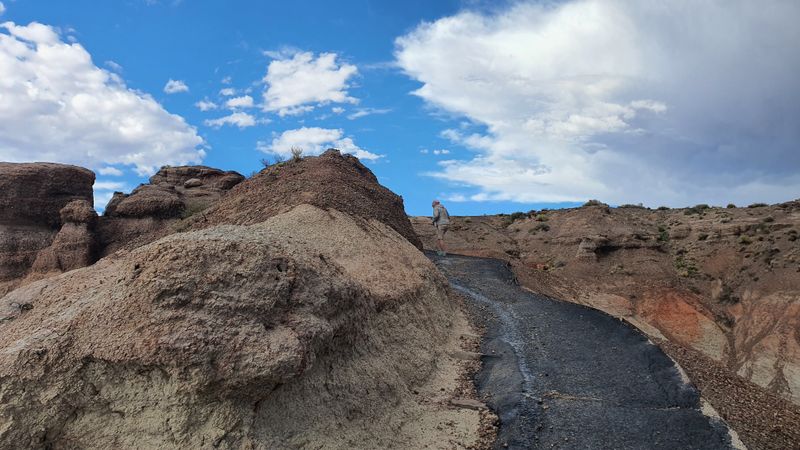
Every review I read before visiting mentioned water, and I cannot emphasize this enough after experiencing the trail myself. The exposed nature of the hike combined with the reflective clay surfaces creates a heat trap that drains your water supply faster than you expect.
I carried two large water bottles for this one-mile walk and finished both by the time I returned to my car. Sunscreen becomes equally critical, as the sun bounces off those light-colored clay formations and hits you from multiple angles at once.
The paved surface makes footwear less critical than on other desert trails, but I still recommend closed-toe shoes with good grip for the steeper sections.
A hat with a brim protected my face and neck from the relentless sun, and I wished I had brought sunglasses with better UV protection.
The clay becomes slippery when wet, so check weather forecasts and avoid the trail during or immediately after rain.
I also suggest bringing a small backpack to keep your hands free for balancing on the steeper portions and for grabbing your camera when those perfect photo moments appear around every bend.
Why This Trail Stands Apart
Out of all the stops in Petrified Forest National Park, Blue Mesa consistently ranks as visitors’ favorite for good reason. The combination of accessibility, dramatic scenery, and that genuine sense of walking on another planet creates an experience that lingers in your memory long after you leave.
What sets this trail apart from other desert hikes is how dramatically different it looks from anything else in Arizona. I have hiked throughout the state, and nothing else delivers this specific blend of colors, formations, and prehistoric evidence in such a compact, manageable distance.
The fact that the entire experience takes only 30 to 45 minutes means even travelers on tight schedules can fit it in without rushing. Yet I found myself wanting to linger, sitting on the benches at the overlook viewpoint near the trailhead just to soak in the surreal landscape one more time.
This trail proves that sometimes the most memorable hiking experiences come in small packages, and that Arizona holds surprises that go far beyond the Grand Canyon everyone expects to see.
Wildlife Encounters in the Badlands
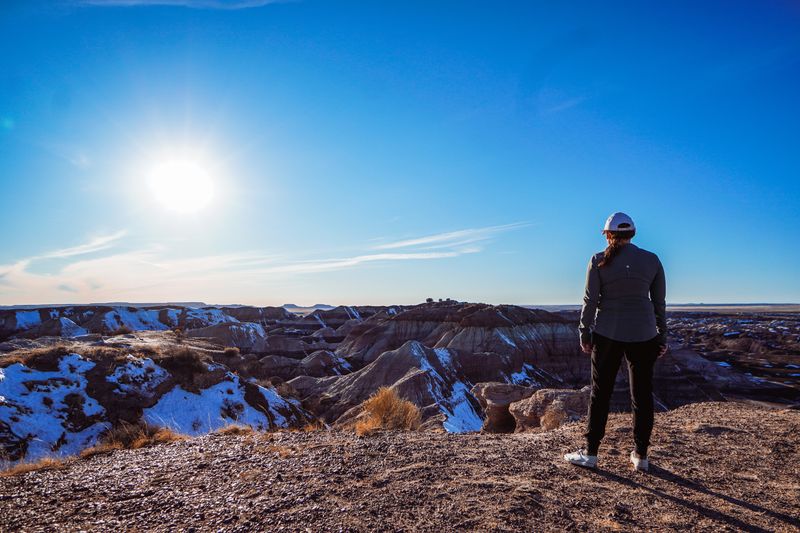
Keep your eyes peeled for the surprising amount of life that thrives in this seemingly barren landscape. Lizards dart between rocks, their scales catching the sunlight as they hunt for insects along the trail edges.
Ravens and hawks circle overhead, riding thermal currents above the colorful formations.
Early morning hikers often spot jackrabbits and occasionally even pronghorn antelope grazing near the trailhead area. The resilience of these creatures adapting to such harsh conditions adds another layer of wonder to your journey.
Their presence reminds us that even the most alien-looking places on Earth support remarkable biodiversity and natural balance.
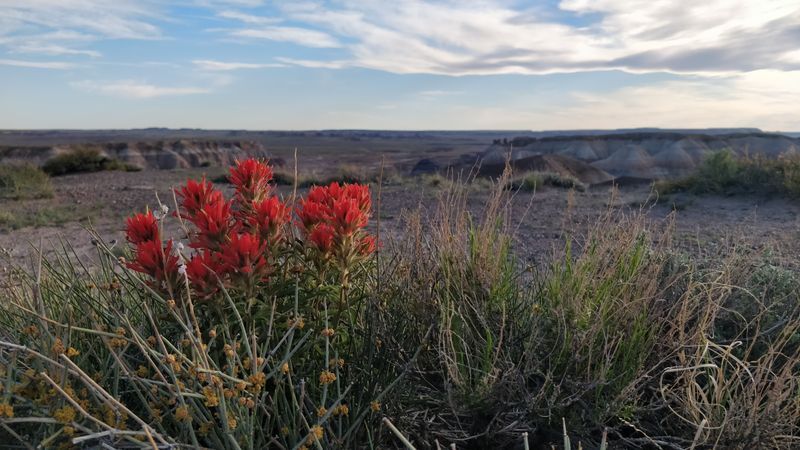
Desert wildflowers also make fleeting appearances, adding unexpected bursts of color among the rocks. Tiny insects and pollinators go about their work, unnoticed by most, yet essential to the ecosystem’s survival.
Every step along the trail reveals subtle signs of life, making the hike feel like both an adventure and a nature lesson.