
This Hidden Arizona Canyon Town Is So Underrated, Even Most Locals Haven’t Found It
Hidden deep within the Grand Canyon lies Supai, Arizona’s most elusive village—a place so remote that even many Arizonans have never set foot there.
Accessible only by foot, horseback, or helicopter, this canyon town feels like it exists outside of time.
With no roads leading in, Supai remains a world apart, where turquoise waterfalls crash against red cliffs and mail still arrives by mule.
Visiting isn’t just a trip—it’s a journey into a hidden paradise that most travelers never even discover.
The Last Mail-By-Mule Town In America
Mail carriers on four legs? You bet! Supai boasts the distinction of being the only place in America where mail still arrives by mule train. When my letter to a local lodge took an extra week to arrive, I learned why – each piece of mail journeys down steep canyon walls in leather pouches strapped to sturdy mules.
This isn’t some tourist gimmick either. The postal service has delivered mail this way since 1896, traveling eight miles into the canyon several times weekly. During flash floods, these reliable animals become even more crucial.
The blue postal boxes standing against red rock walls create one of the most photogenic post offices you’ll ever see. Want a unique souvenir? Send yourself a postcard with the special Mule Train Mail postmark!
Gateway To The Breathtaking Havasu Falls
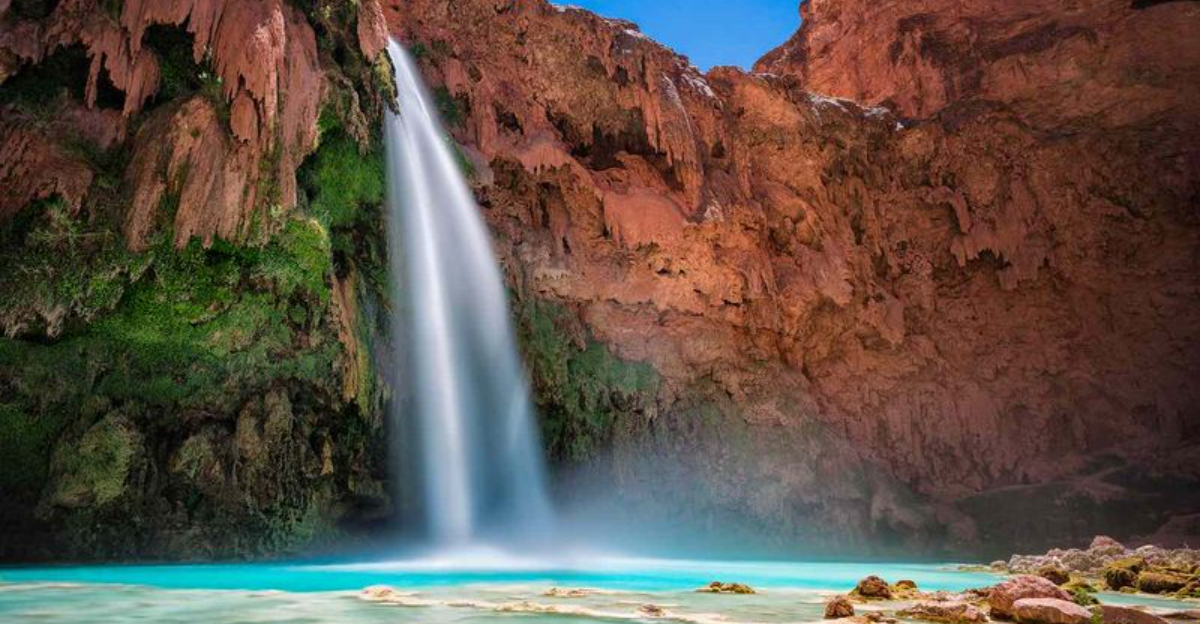
Turquoise waters cascading over rusty red cliffs create nature’s most perfect contrast at Havasu Falls. My jaw literally dropped when I rounded that final bend on the trail and first glimpsed this 100-foot waterfall emptying into crystal-clear pools below.
The vibrant blue-green color comes from high calcium carbonate content in the water. Surprisingly, this same mineral creates the travertine pools perfect for swimming after your long hike in. Unlike the crowded attractions at Grand Canyon National Park, here you might share this paradise with just a handful of other adventurous souls.
Word of warning though – permits to visit are extremely limited and often sell out within minutes when released each February. Plan ahead or risk missing this bucket-list destination!
Indigenous Heritage Of The Havasupai Tribe
“People of the blue-green waters” – that’s what Havasupai means, and no name could be more fitting for the indigenous stewards of this land. During my stay, a tribal elder named Robert shared stories passed down through generations about how his ancestors have lived continuously in this canyon for over 800 years.
Farming techniques here have remained largely unchanged for centuries, with families growing peaches, corn and squash in the fertile canyon soil. Their traditional homes, once made entirely of juniper bark and canyon materials, now blend modern conveniences with historical designs.
Community gatherings still feature ancient dances that echo through the canyon walls. Visitors who respect tribal customs are sometimes welcomed to witness these cultural treasures that few outsiders ever see.
An Adventure That Requires An 8-Mile Hike Or Helicopter Ride
Blisters the size of quarters covered my heels after trekking the infamous trail to Supai. “Nobody mentioned the last mile would be through deep sand!” I laughed to my hiking buddy as we finally spotted the village’s first buildings. That challenging journey is precisely what keeps this place so pristine.
Switchbacks zigzag through layers of ancient rock formations, dropping 2,000 feet into the canyon. Helicopter rides offer a quicker alternative (just 10 minutes versus 4+ hours hiking), but weather cancellations are common. Pack mules can carry your gear for an additional fee.
The trail itself becomes a time machine – each layer of rock represents millions of years of Earth’s history. Fossils occasionally peek out from canyon walls, reminding visitors they’re walking through one of geology’s greatest showcases.
Where Time Slows Down In The Canyon
Cell phones become paperweights in Supai – there’s virtually no signal here. I found myself checking my watch less and the sky more, noticing how shadows danced across canyon walls as the sun traveled overhead. Without digital distractions, conversations with strangers at the village café quickly turned into friendships.
The single general store stocks only essentials, and electricity remains limited despite recent solar upgrades. Residents gather on porches during golden hour, a daily ritual that visitors naturally join. Children play traditional games in dirt streets while elders watch from handmade chairs.
Nightfall brings darkness so complete that stars seem close enough to touch. The Milky Way stretches horizon to horizon, putting on a celestial show that made me realize why ancient peoples considered this place sacred ground.