
This Hidden Arkansas Cave Trail Leads To An Underground Waterfall
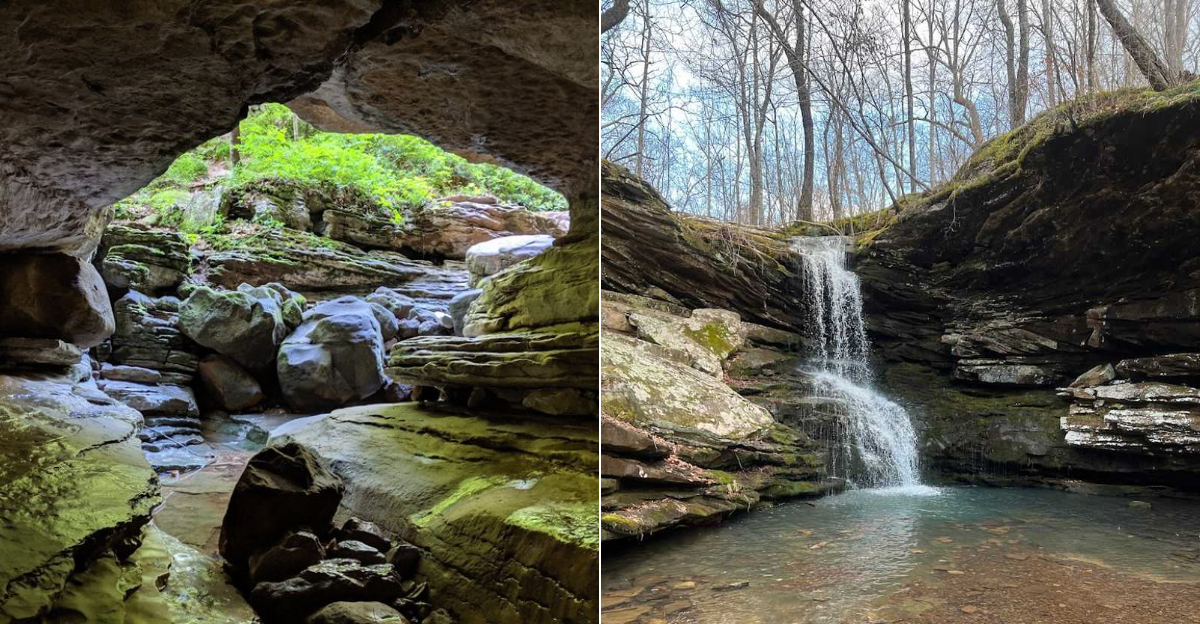
I’ll be honest, when I started down this trail in Arkansas I wasn’t expecting anything dramatic. Just another pleasant Ozark hike.
Gravel under my boots, cool air in the trees, a small stream winding beside the path. For the first stretch, it felt exactly like that.
Quiet woods. A gentle climb. Nothing that hinted at what was waiting farther ahead. Then the scenery started to shift.
Tall rock walls appeared along the trail. The sound of water echoed somewhere up the hollow.
A dark opening in the bluff came into view, the kind that makes you slow down and take a closer look. Of course I had to step inside.
A few careful steps into the cave and there it was. Water spilling down the rock inside the cavern, echoing through the chamber in the dim light.
At that moment I knew this hike had turned into something special.
A Quiet Path Few Travelers Ever Notice
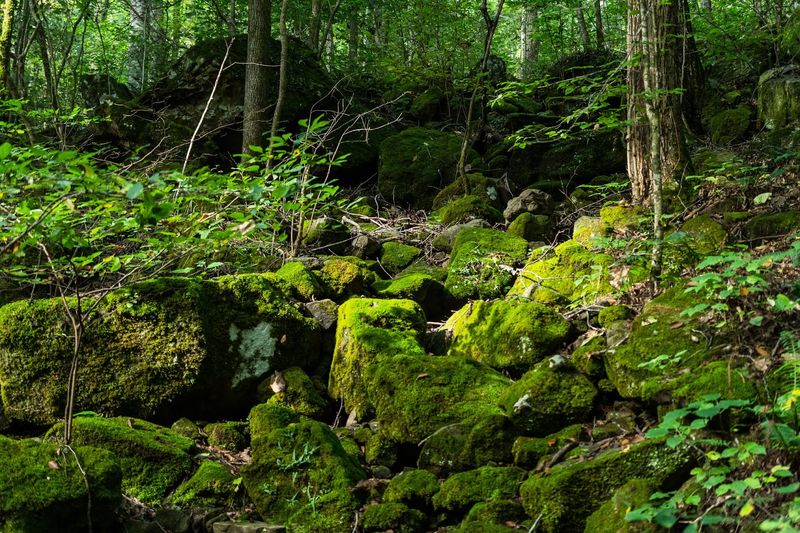
Most people driving through Newton County, Arkansas barely notice the small sign pointing toward the trailhead, and honestly, that seems to suit this place just fine.
The path begins gently, following a clear, shallow creek that babbles alongside the trail like it has somewhere important to be.
I remember stepping onto the trail and immediately feeling the temperature drop a few degrees thanks to the thick canopy of sycamore, oak, and cedar trees overhead.
The route stretches about two miles round trip, making it manageable for most hikers, including families with older kids who enjoy a little adventure without a brutal elevation gain.
What strikes me most about this opening stretch is how hushed everything feels, even on a weekend morning when a handful of other visitors are present.
The sound of the creek does most of the talking, and the soft, packed dirt underfoot makes the walking feel almost effortless.
The trailhead sits along Hwy 43 South near Ponca, AR 72670, and this peaceful starting point marks the beginning of the Lost Valley Trail.
Forested Steps That Slowly Reveal Something Unusual
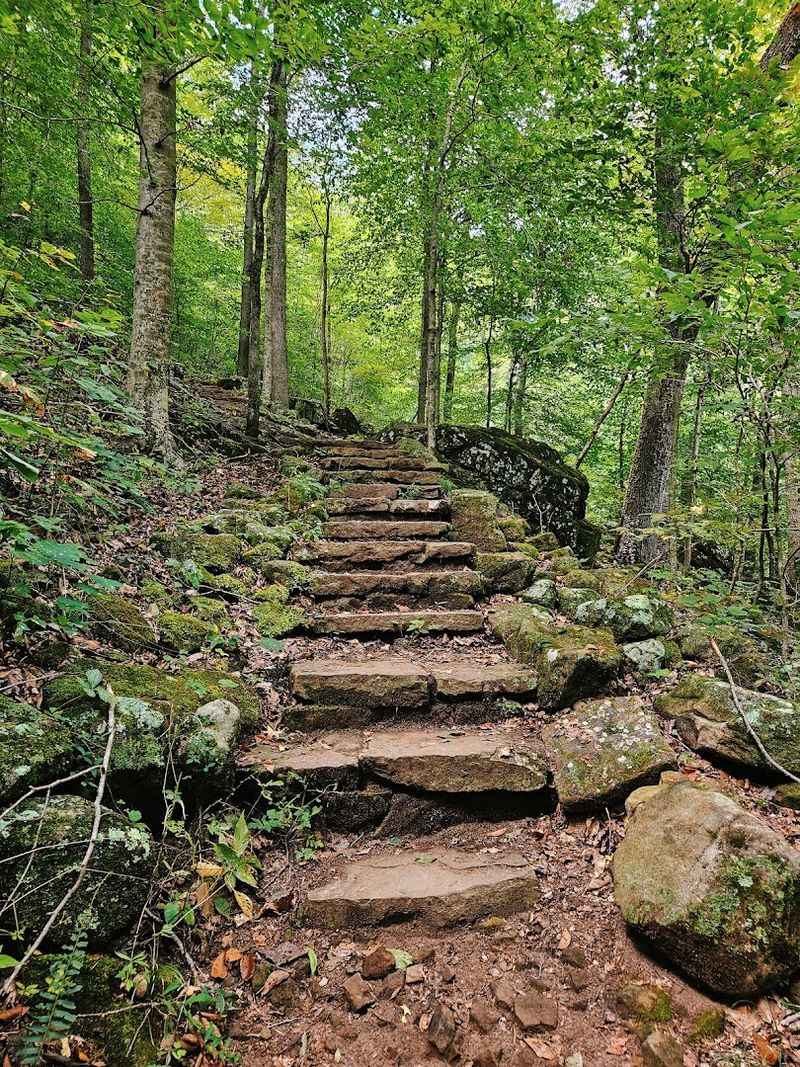
Somewhere around the first quarter mile, the trail starts hinting that it has more up its sleeve than a standard woodland stroll.
The terrain shifts subtly, with flat creek-side walking giving way to rockier ground where large, moss-covered limestone boulders begin crowding the path on both sides.
I noticed the creek bed growing narrower here, and the canyon walls on either side started rising with a quiet authority that made me feel noticeably smaller.
The vegetation changes too, with ferns appearing in thick clusters along the base of the rocks, and the light filtering down in slanted, golden shafts that make every photograph look almost too good to be true.
There are a few natural steps formed by exposed tree roots and flat stones, and navigating them adds a playful, puzzle-like quality to the walk that keeps your eyes and feet equally engaged.
I passed a small natural arch along this section, which is easy to miss if you are moving too quickly or staring at your phone instead of the scenery around you.
The forest here earns its beauty honestly, layering detail upon detail until the whole scene feels richly constructed by centuries of patient geology.
The Moment The Landscape Starts To Change
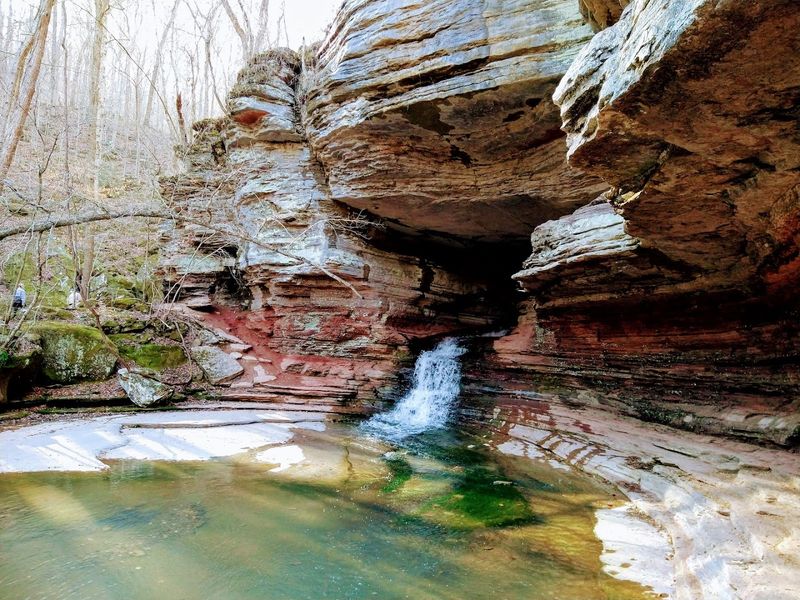
There is a specific point on the Lost Valley Trail where the mood of the whole hike shifts, and it happens fast enough to catch you off guard.
The canyon walls close in noticeably, and the creek, which had been a gentle companion, suddenly picks up energy as it squeezes through a tighter channel carved by centuries of moving water.
I stopped walking here for a moment just to absorb the change, because the bluffs on either side of me had grown tall enough to frame a narrow strip of sky above, giving the whole scene a dramatic, almost theatrical quality.
The light behaves differently in this section of the trail, arriving at steep angles that create deep shadows along the rock faces while illuminating the creek surface in bright, shifting patterns.
Wildflowers cling to the base of the bluffs in unexpected bursts of color, and the air carries a noticeably cooler, damper edge that signals something underground is nearby.
Every step here feels deliberate, like the trail is pacing the reveal carefully, building toward something it knows will genuinely impress.
Standing in that narrowing canyon, I understood why Lost Valley has earned a loyal following among hikers who appreciate atmosphere as much as destination.
A Narrow Opening Beneath The Rock Walls
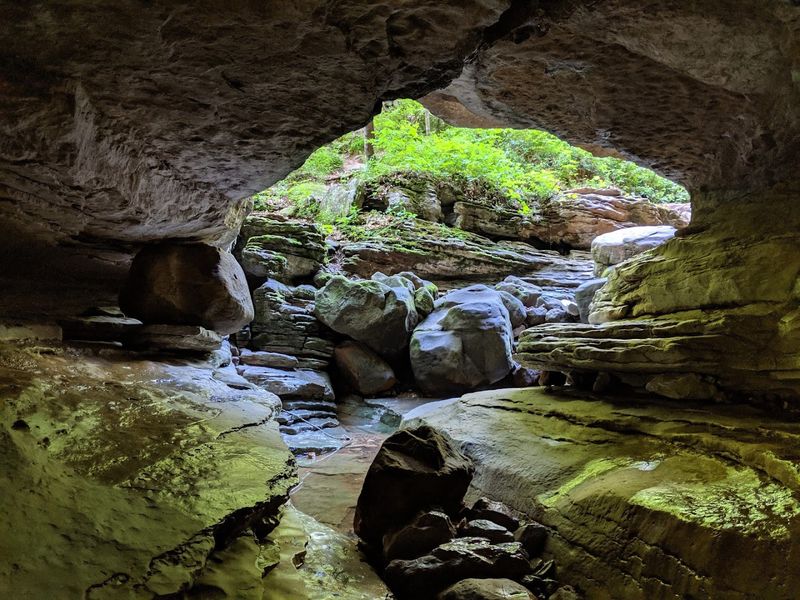
Nothing quite prepares you for the moment when the trail reaches a bluff where a narrow opening in the rock invites curious hikers to duck inside. Those willing to keep exploring can squeeze through a low opening at the base of the bluff.
I crouched down to peer inside, and the cool, damp air that rolled out of that opening was like a greeting from another world entirely.
The entrance is tight enough that most adults need to duck and turn sideways, which gives the whole experience an immediate sense of genuine discovery rather than a polished tourist attraction.
Inside, the ceiling rises in places to allow more comfortable movement, and your eyes begin adjusting to the dim light that filters in from the entrance behind you.
I brought a small headlamp, which I strongly recommend, because the deeper sections of the cave rely entirely on whatever light you carry with you.
The walls are slick with moisture in spots, and the floor is uneven with smooth, rounded stones that require careful footing and a bit of patience.
What the cave lacks in polish it more than makes up for in raw, unfiltered character, the kind of place that makes you feel genuinely lucky to have found it and earned your way inside.
The Surprising Sound Echoing From Underground
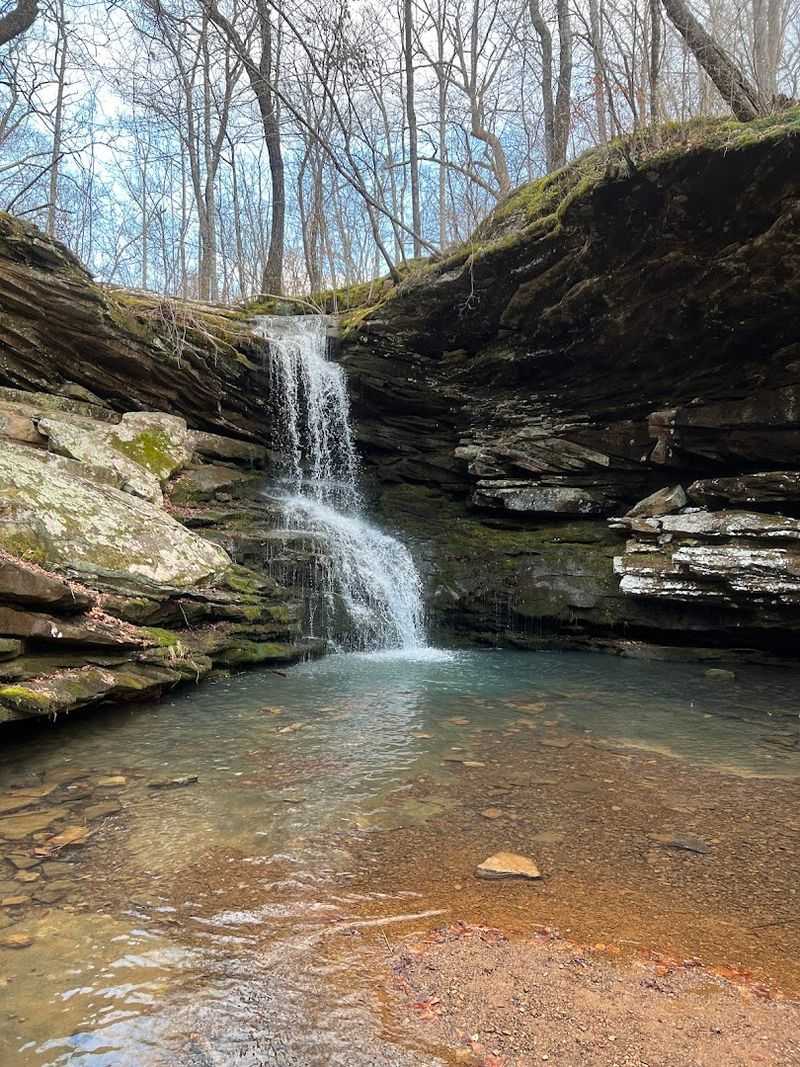
Before you actually see anything remarkable inside the cave, you hear it, and that sound is what stops most first-time visitors in their tracks.
A low, steady rumble builds as you move deeper into the cave, bouncing off the limestone walls in a way that makes it difficult to pinpoint exactly where it is coming from.
I remember pausing and listening carefully, trying to separate the sound from the dripping of water off the cave ceiling, and slowly realizing that what I was hearing was far too consistent and forceful to be a simple drip.
The acoustics inside the cave amplify the sound beautifully, and the effect is genuinely disorienting in the best possible way, like the rock itself is whispering something urgent and ancient.
Sound carries differently underground than it does in open air, and the cave at Lost Valley makes this point in a way that no description fully captures until you experience it firsthand.
I noticed other hikers around me going quiet at this same point, all of us leaning slightly forward with the same mix of curiosity and anticipation.
That shared moment of silent listening, surrounded by stone and shadow, turned out to be one of the most memorable parts of the entire hike for me.
A Waterfall Hidden Deep Inside The Cave
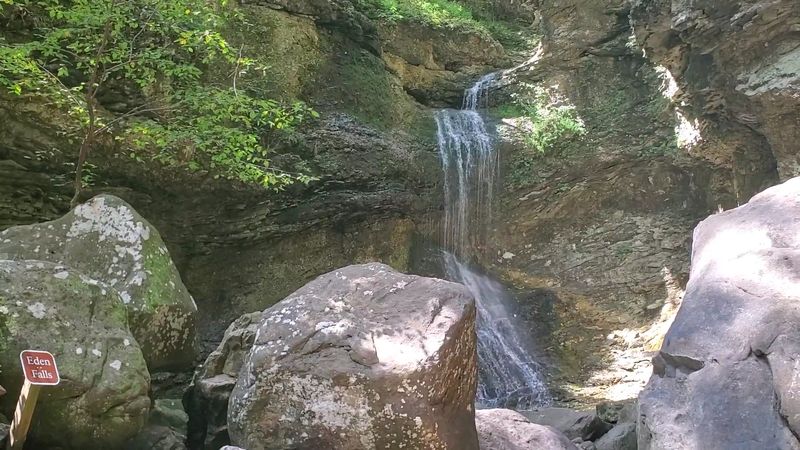
Rounding a corner inside the cave, I came face to face with something I genuinely did not expect to find in the Arkansas Ozarks: a waterfall tumbling down a limestone wall in complete darkness.
The waterfall is called Eden Falls, and it drops roughly thirty feet from a crack in the cave ceiling, creating a mist that coats everything nearby in a fine, cool spray.
Standing in front of it, with only my headlamp cutting through the darkness, felt like one of those travel moments you mentally bookmark immediately and revisit for years afterward.
The pool at the base of the falls is shallow and clear, and the sound of the water hitting the rock below echoes through the cave in a deep, satisfying roar that fills the entire space.
During wet seasons, the falls run with impressive force, and during drier months they soften to a more delicate trickle, but they are present year-round according to locals I spoke with near the trailhead.
The cave ceiling above the falls is draped with small stalactites, and the overall scene has a hushed, sacred quality that makes conversation feel almost inappropriate.
Finding Eden Falls felt less like checking a box on a hiking list and more like stumbling into a secret that the mountain had been keeping very deliberately.
Why This Secret Trail Feels Unlike Anywhere Else
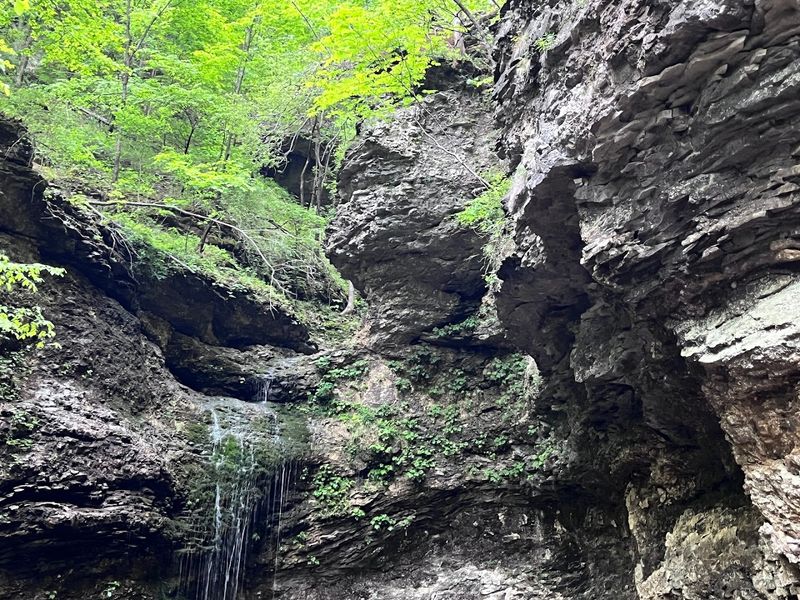
After climbing back out of the cave and blinking in the afternoon sunlight, I tried to figure out what makes Lost Valley feel so different from other trails I have walked across the country.
Part of the answer is the variety packed into such a short distance, because not many two-mile trails deliver a creek walk, a canyon, a natural arch, a cave entrance, and an underground waterfall all in one outing.
Ponca itself plays a role in the experience too, sitting in one of the most sparsely populated corners of Arkansas with a community of roughly thirty residents, which means the surrounding landscape remains beautifully undeveloped and quiet.
The trail sits within the Buffalo National River corridor, a federally protected area that keeps commercial development at a respectful distance from the natural features that make this region so appealing.
I also think the lack of crowds contributes significantly to the atmosphere, because the trail never felt crowded during my visit, even with a few other hikers present throughout the morning.
There is a humility to Lost Valley that I find refreshing, no gift shop, no entrance fee, no guided tour script, just a trail, a cave, and a waterfall waiting patiently for whoever shows up curious enough to look.
Leaving Ponca that afternoon, I felt the particular satisfaction of having visited a place that rewards effort with something genuinely worth the trip.