
This Hidden Arkansas Forest Museum Is A Masterpiece Itself
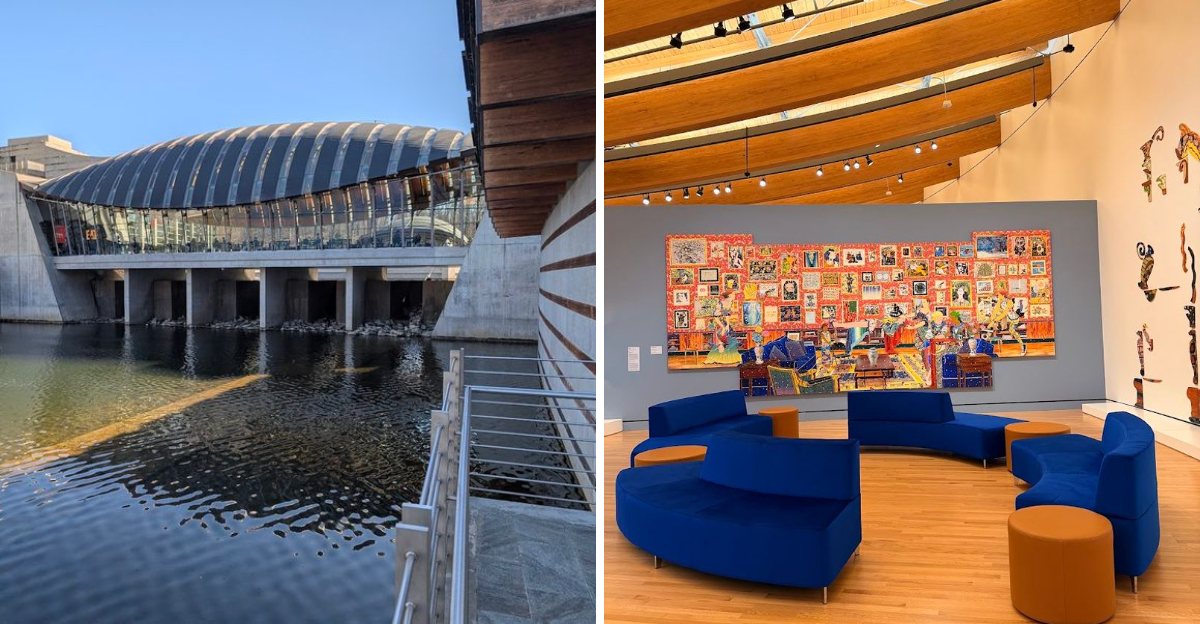
In a lush Ozark forest in northwest Arkansas, there is a museum so visually striking it almost outshines its own collection. I had seen photos before.
Still, nothing prepared me for the real thing. You expect something quiet. Maybe even a little underwhelming. Instead, it delivers scale, atmosphere, and detail at every turn.
The setting pulls you in fast and keeps your attention longer than planned. Free admission makes it easy to step in.
Staying longer happens naturally. The galleries impress, but the setting carries equal weight.
Think forest trails, reflective water, and architecture influenced by Frank Lloyd Wright working together in one place. It does not feel like a typical museum visit.
It feels like a place you settle into, slow down in, and take in fully. This article highlights the reasons people keep talking about it long after they leave.
A World Class Museum Hidden Deep In The Arkansas Forest
Nobody warned me that I would need a moment just to catch my breath at the entrance, and I mean that in the best possible way.
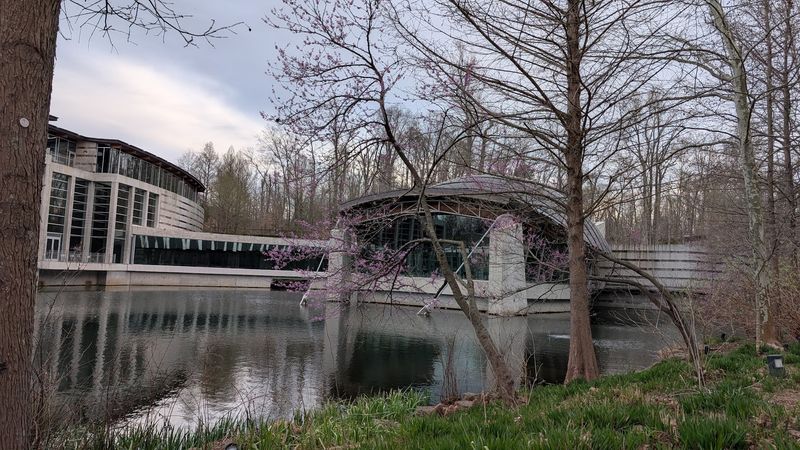
Walking down into the museum from the forested hillside above, the copper-roofed pavilions slowly reveal themselves through the trees, sitting low and calm beside a glassy spring-fed pond.
The scene feels almost too peaceful to be real, like someone tucked a world-class institution into the woods on purpose, just to see how long it would take people to find it.
What makes this place so quietly powerful is that it never announces itself loudly, and yet the scale of what is inside is genuinely impressive by any global standard.
Grandma Moses hangs near Georgia O’Keeffe, Jackson Pollock commands a wall, and Norman Rockwell’s Rosie the Riveter stands proud in a gallery that hums with quiet energy.
The museum earns its exceptional reputation from thousands of visitors not through flash or spectacle, but through a rare combination of access, beauty, and depth that very few cultural institutions manage to pull off.
All of this extraordinary experience lives at Crystal Bridges Museum of American Art at 600 Museum Way, Bentonville, AR 72712.
The Vision That Brought Art Into The Wilderness
Few museums in the world owe their existence to one person’s stubborn belief that great art should never be locked behind a paywall.
Alice Walton, heir to the Walmart fortune, spent years quietly acquiring some of the most significant works in American art history before deciding that a small Arkansas city deserved a world-class home for all of it.
Her vision was not just about collecting paintings; it was about making culture genuinely accessible to people who might never afford a flight to New York or a ticket to a major metropolitan museum.
The Walton family contributed land in the Ozark forest and supported the museum with resources that allowed free general admission to become a permanent policy, backed by major philanthropic funding from Walmart.
That decision changed everything about who gets to experience great American art, and the impact showed up fast, with over 288,000 students visiting through free school programs alone in the museum’s early years.
Bentonville, a city most people associated entirely with retail logistics, suddenly had a cultural institution drawing visitors from every corner of the globe.
The boldness of that original vision still echoes in every free ticket handed to every first-time visitor who walks through those doors.
Architecture That Merges Glass, Steel, And Forested Hillsides
Architect Moshe Safdie faced a challenge that most designers would find terrifying: build something spectacular without upstaging one of the most beautiful natural settings in the American South.
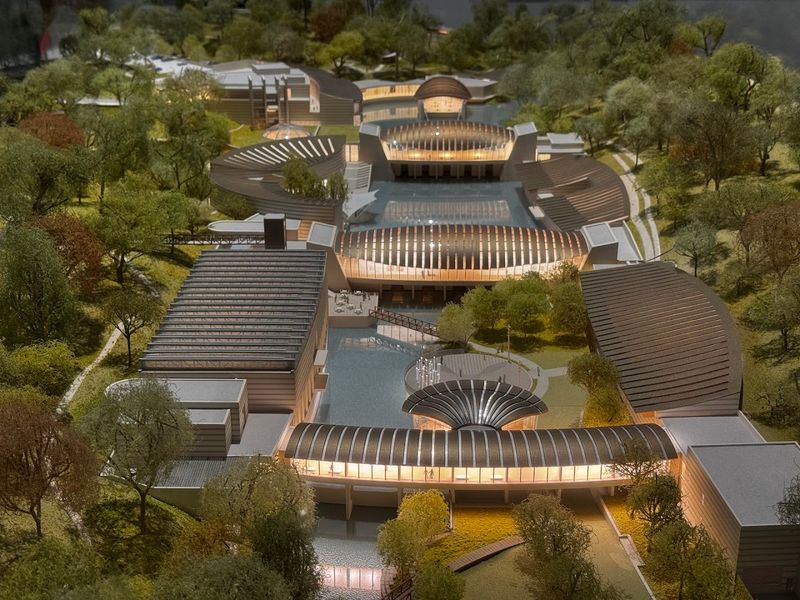
His solution was to let the land lead, designing eight interconnected pavilions that step gently down a forested hillside rather than imposing a rigid shape onto the terrain.
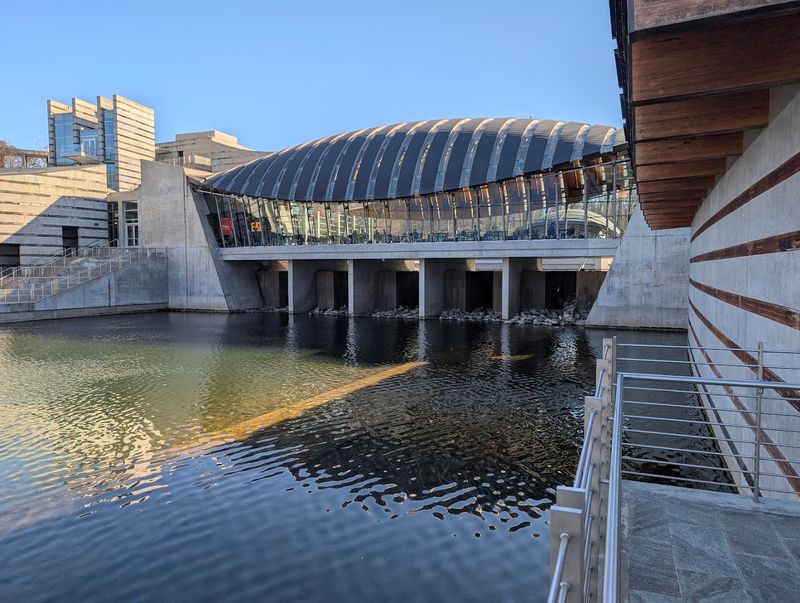
Copper roofing and red cedar banding wrap the exterior in materials chosen specifically to age alongside the surrounding trees, growing more textured and warm as the years pass.
Glass walls blur the line between gallery and forest, so a visitor standing in front of a nineteenth-century landscape painting can look up and see an actual Ozark hillside framing the view outside.
The total footprint reaches over 200,000 square feet, yet the building never feels overwhelming because it spreads horizontally across the land rather than stacking upward like a conventional urban museum.
Steel bridges span the spring-fed pond at the heart of the complex, and walking across them feels like moving through a piece of structural art rather than simply crossing from one wing to another.
Every material choice, every roofline angle, every window placement reflects a deliberate conversation between human craft and natural landscape.
A Design That Turns Light, Water, And Space Into Art
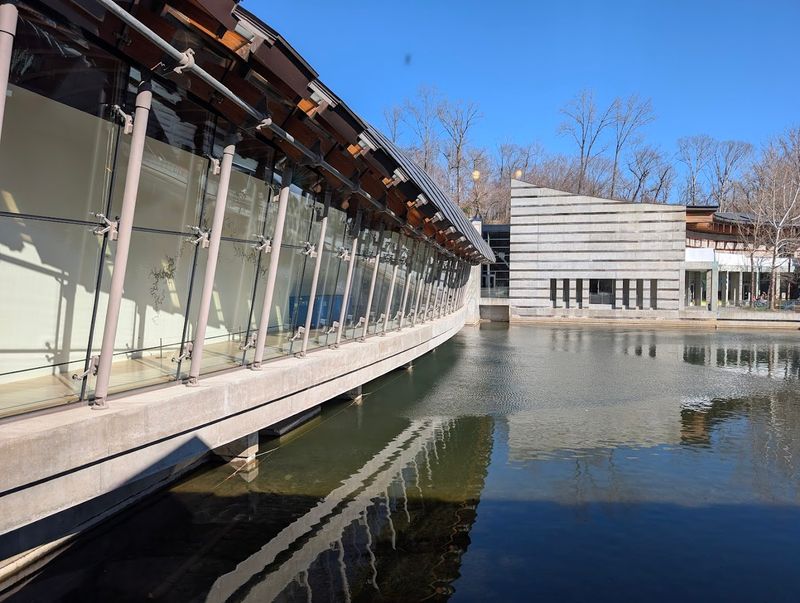
Standing inside the main gallery corridors on a clear morning, the light does something remarkable that no artificial lighting system could ever replicate.
Natural sunlight filters through the glass walls at shifting angles throughout the day, landing differently on every painting and sculpture depending on the hour, the season, and the weather outside.
The spring-fed pond at the center of the complex is not just a landscaping feature; it is a living design element that reflects the pavilions back onto themselves, creating a doubled image that changes constantly with the wind and light.
Safdie’s floor plans open up at unexpected moments, revealing courtyard views and forest sightlines that break the rhythm of traditional gallery movement and invite visitors to pause and look outward.
Space itself becomes a curatorial tool here, with rooms scaled to match the emotional weight of the works inside them, so an intimate portrait gets an intimate room and a sweeping landscape gets the full-height ceiling it deserves.
Even the transition areas between galleries carry their own quiet beauty, with polished concrete and warm wood guiding visitors smoothly from one era of American art to the next.
The whole building breathes in a way that makes every visit feel slightly different from the last.
A Remarkable Collection Spanning Centuries Of American Creativity
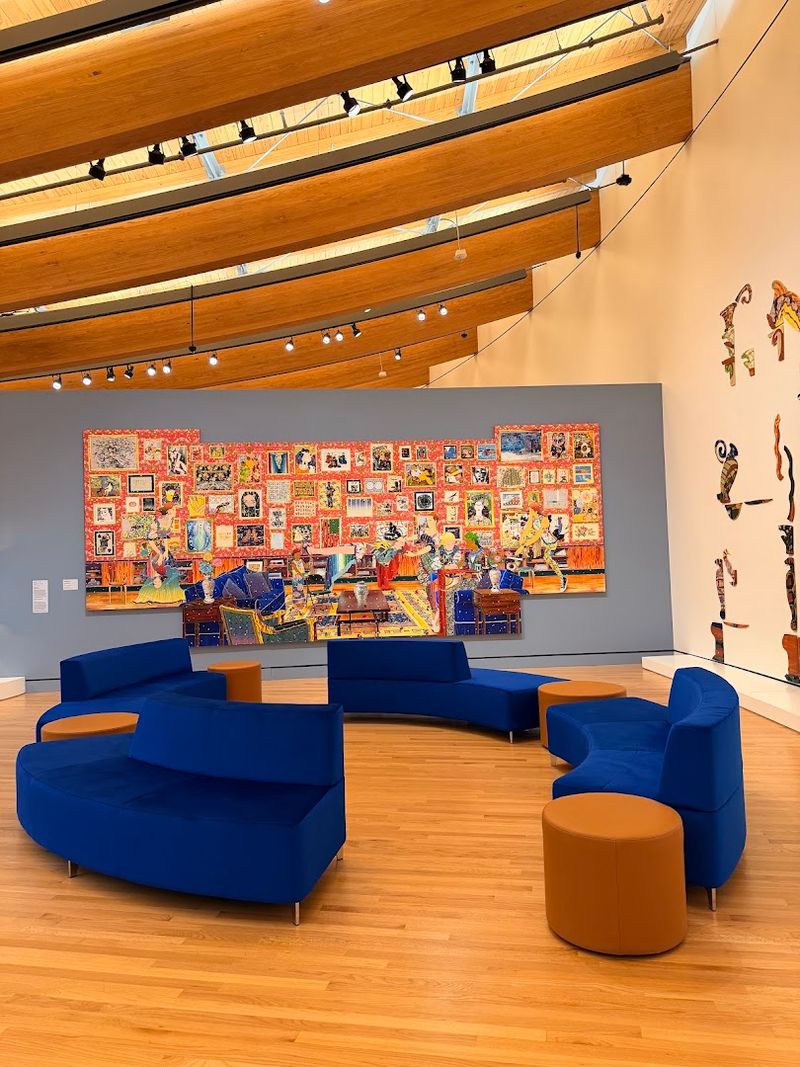
Five centuries of American creativity hang, stand, and breathe inside these pavilions, and the range of what the collection covers is staggering once you start moving through the galleries.
Colonial-era portraits give way to Hudson River School landscapes, which lead into Gilded Age realism, and then the collection pivots sharply into twentieth-century modernism without ever feeling like a jarring leap.
Asher B. Durand’s Kindred Spirits, once considered a national treasure too significant to leave New York, now lives here in Arkansas, and seeing it in person delivers a quiet shock that no art history textbook can prepare you for.
Norman Rockwell’s Rosie the Riveter commands its own wall with a confidence that makes the surrounding room feel slightly smaller, while Georgia O’Keeffe’s Jimson Weed/White Flower No. 1 radiates a stillness that stops foot traffic cold.
Contemporary works by artists representing diverse American experiences round out the collection with energy and provocation, keeping the galleries from feeling like a history lesson and more like an ongoing conversation.
A Frank Lloyd Wright-designed Usonian house, the Bachman-Wilson House relocated from New Jersey in 2015, sits on the museum grounds and lets visitors step directly into one of the twentieth century’s most influential architectural styles.
The collection rewards slow looking far more than speed-walking.
Scenic Trails And Outdoor Installations That Expand The Experience
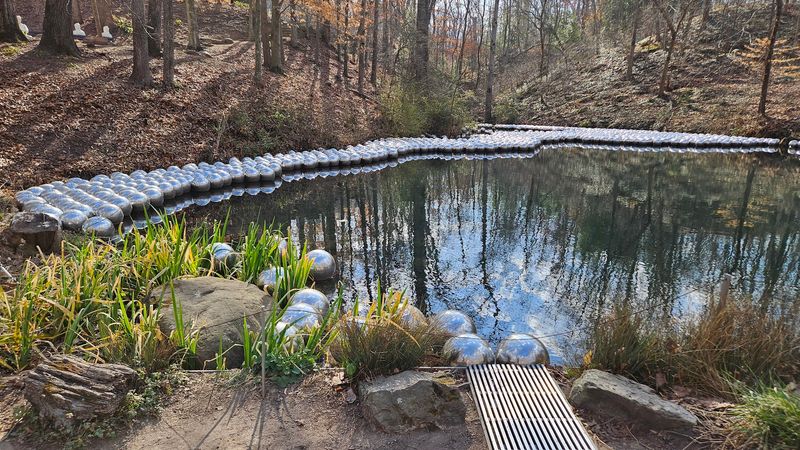
Stepping outside the galleries into the museum’s 120-acre Ozark forest felt like the experience doubling in size without warning.
More than five miles of walking and biking trails wind through the property, connecting native plant gardens, creek crossings, and open meadows in a route that takes the better part of an afternoon to cover properly.
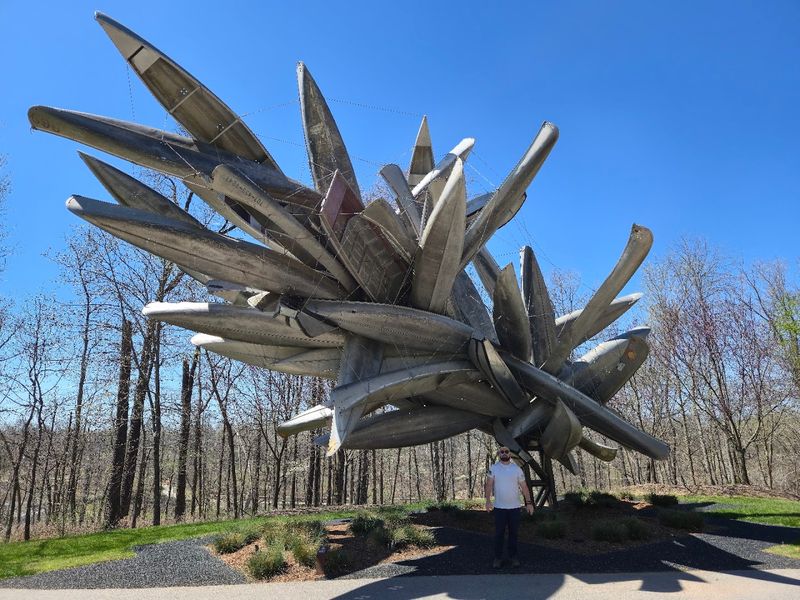
Scattered throughout the trail network, large-scale outdoor sculptures emerge from the trees in ways that feel discovered rather than installed, as if the forest grew around them naturally over time.
One visitor described a temporary nighttime light installation as stepping into another world, with glowing trees, immersive projections, and sound design that transformed a familiar trail into something closer to a dream sequence.
The trails connect directly to Bentonville’s broader trail system, so cyclists and hikers can extend their adventure well beyond the museum grounds into the surrounding hills and neighborhoods.
Regular visitors recommend arriving on a cooler day since the paths offer limited shade in certain stretches, which is genuinely useful advice for anyone planning a summer visit to northwest Arkansas.
Whether you spend one hour or four on those trails, the combination of curated nature and outdoor art leaves a specific kind of calm that indoor galleries alone cannot quite produce.
The Story Behind Its Unexpected Location And Global Recognition
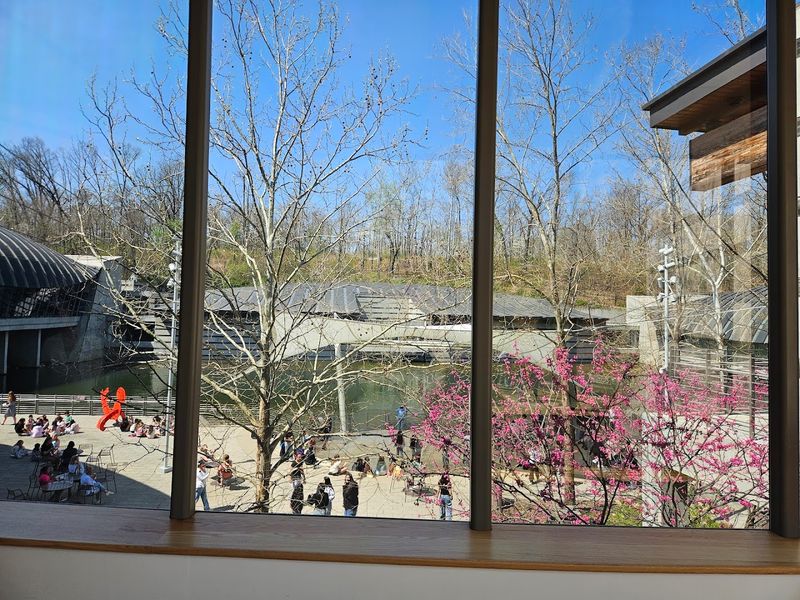
Bentonville is the kind of town that travelers historically passed through rather than stopped in, best known as the corporate home of the world’s largest retailer and not much else on the cultural map.
That changed dramatically when Crystal Bridges opened in November 2011, drawing immediate international attention and forcing a rapid reassessment of what a mid-sized American city could offer the art world.
Major publications ran features questioning how a museum of this caliber ended up in northwest Arkansas, and the honest answer is that it took a combination of enormous personal wealth, genuine civic ambition, and a refusal to accept that world-class culture belongs only in world-class cities.
The museum’s strong reputation across thousands of reviews reflects a sustained quality that is difficult to maintain over years, and the planned 114,000-square-foot expansion set to debut in 2026 signals that the institution has no intention of slowing down.
The Momentary, a satellite contemporary arts venue that opened in February 2020 inside a converted cheese factory, expanded the cultural footprint of Bentonville even further into performing arts, culinary experiences, and artist residency programs.
What began as a surprising headline has become a genuine destination, drawing visitors from Canada, Europe, and beyond who make the trip specifically for this museum.
Bentonville earned its spot on the cultural map, and it intends to keep it.
Why Visitors Leave Inspired By Both Art And Setting
Something specific happens to people when they spend a full day here, and the reviews from thousands of visitors describe it in remarkably similar language: they leave feeling genuinely restored.
The combination of free admission, rotating special exhibitions, a restaurant serving dishes like spiced catfish with purple Arkansas rice, a coffee bar, and a library stocked with art history books means the museum functions as a complete cultural day rather than a single-purpose stop.
Families arrive expecting to stay an hour and find themselves still wandering trails two hours later, pulled forward by one more sculpture around the next bend or one more gallery wing they had not noticed on the map.
Couples, school groups, solo travelers, and lifelong art skeptics all seem to find something that speaks to them specifically, which is the hallmark of a collection curated with genuine breadth and care rather than narrow prestige.
The museum is open most days of the week with extended evening hours on select days, so planning ahead is worth a quick check at crystalbridges.org or a call to 479-418-5700.
Parking requires patience on busy weekends, and first-timers should note that the entrance sits several floors below street level, so following the signage carefully saves real confusion.
Every person I spoke with after their visit used the same word without prompting: inspired.