
This Hidden Arkansas Natural Wonderland Feels Like Another World
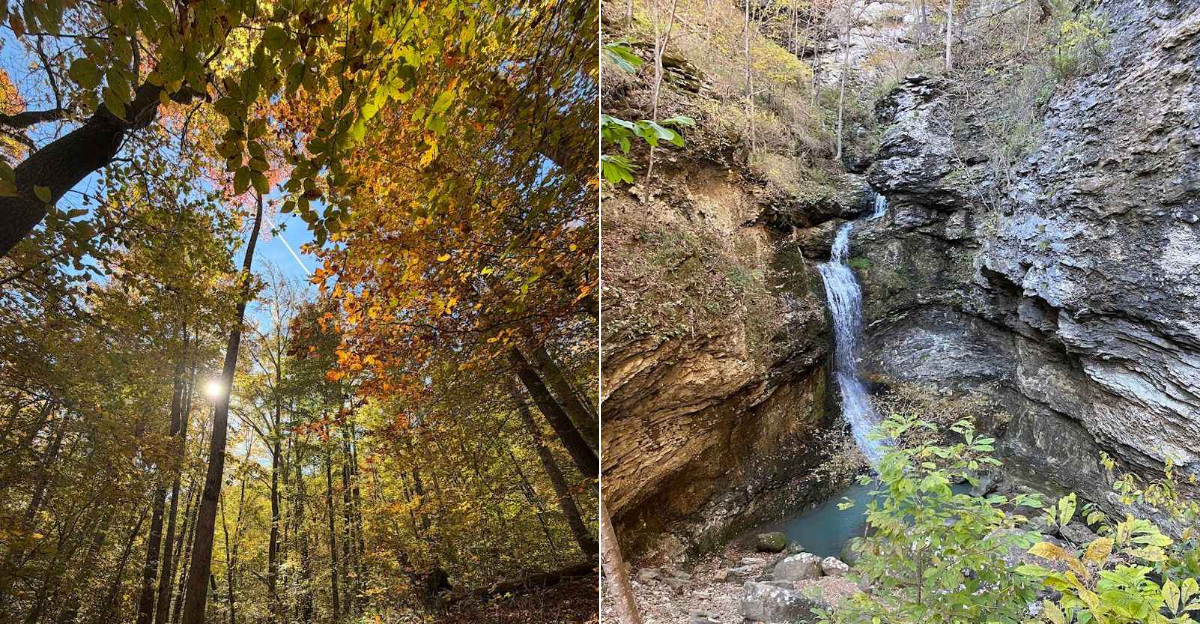
The first time I walked this trail, I had to stop for a second and take it in. The path followed a small creek, and the sound of water stayed with me the whole way.
Cool air drifted through the trees, carrying that damp limestone smell you only get in the Ozarks. Cliffs started rising on both sides of the valley.
Moss covered the rocks, and ferns grew wherever there was a little shade and moisture. It already felt different from most places I hike in Arkansas.
Then the trail turned a corner and the view opened up. Water slid down a tall rock wall and disappeared into a cave below.
The whole place echoed with the sound of the falls. I stood there longer than I expected.
Arkansas has plenty of beautiful scenery, but spots like this make the landscape feel almost unreal.
A Scenic Trail Through Lush Forest
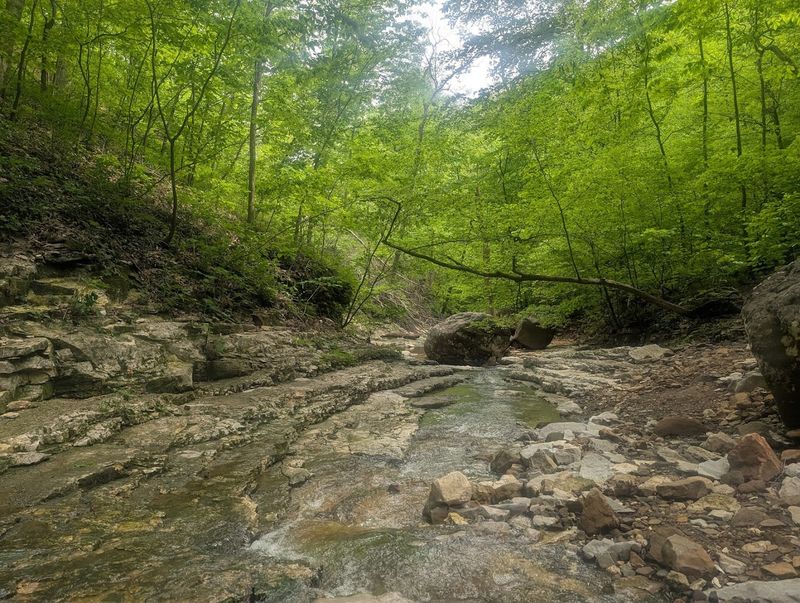
Walking into this trail for the first time, I immediately felt the air change, cooler, quieter, and carrying the faint scent of damp earth and cedar.
The path winds gently along a creek corridor, with towering hardwoods forming a natural canopy overhead that filters sunlight into shifting green patterns on the ground below.
Sycamore, oak, and elm trees crowd the trail edges, their roots weaving across the path in ways that keep you paying attention to each step.
The creek runs alongside most of the route, and the sound of moving water becomes a constant companion that makes the whole walk feel almost meditative.
I noticed that the trail surface changes from packed dirt to flat limestone slabs as you move deeper into the valley, giving the hike a subtle variety that prevents it from ever feeling monotonous.
Families with young children manage this trail comfortably, and solo hikers find it equally rewarding at a slower pace.
The round trip covers roughly two miles, making it accessible without being too short to feel satisfying.
This entire experience begins at Lost Valley Trailhead near Ponca, a small but remarkable starting point for one of Arkansas’s finest short hikes.
Towering Rock Bluffs and Natural Formations

Nothing quite prepares you for the moment the trees thin and a massive wall of layered rock suddenly fills your entire field of vision.
The bluffs along this trail rise dramatically from the valley floor, their faces streaked with rust, gray, and cream-colored bands of sedimentary rock that record millions of years of geological history in plain sight.
I spent a solid ten minutes just standing there, tilting my head back and tracing the horizontal lines across the rock face like reading a very old, very patient book.
Patches of fern and moss cling to ledges and crevices, softening the hard edges of the stone with bursts of living green.
Some sections of the bluff overhang the trail slightly, creating natural shelters where the ground stays dry even after rain.
The scale of these formations is genuinely humbling, and photographs never quite capture how tall and solid they feel when you are standing directly beneath them.
Geologists would have a field day here, but even a casual visitor with zero science background can feel the weight of deep time pressing down from above.
The bluffs are one of those sights that quietly rearrange your sense of proportion and remind you how small a single afternoon really is.
A Waterfall Hidden Deep In The Valley

There is a particular kind of joy that comes from hearing a waterfall before you can see it, and this trail delivers that experience in full.
Eden Falls sits at the back of the valley, tucked behind a curve in the canyon that keeps it hidden until you are practically standing in front of it.
The falls drop roughly 50 feet over a limestone ledge, cascading down the rock face as light filters through the canyon walls above. I visited after a stretch of rainy weather, and the flow was powerful enough to create a fine mist that settled on my jacket and hair within seconds of getting close.
Even during drier months, the falls maintain enough flow to be genuinely impressive rather than the disappointing trickle you sometimes find at overhyped waterfall destinations.
A shallow pool collects at the base, and the smooth wet rocks around it reflect the falls in broken, shimmering fragments.
The canyon walls on either side rise steeply, giving the whole scene an enclosed, almost theatrical quality that makes it feel private even when other hikers are nearby.
Honestly, reaching this waterfall felt like the trail had been saving its best card for last.
A Cave That Feels Like Stepping Into Another World
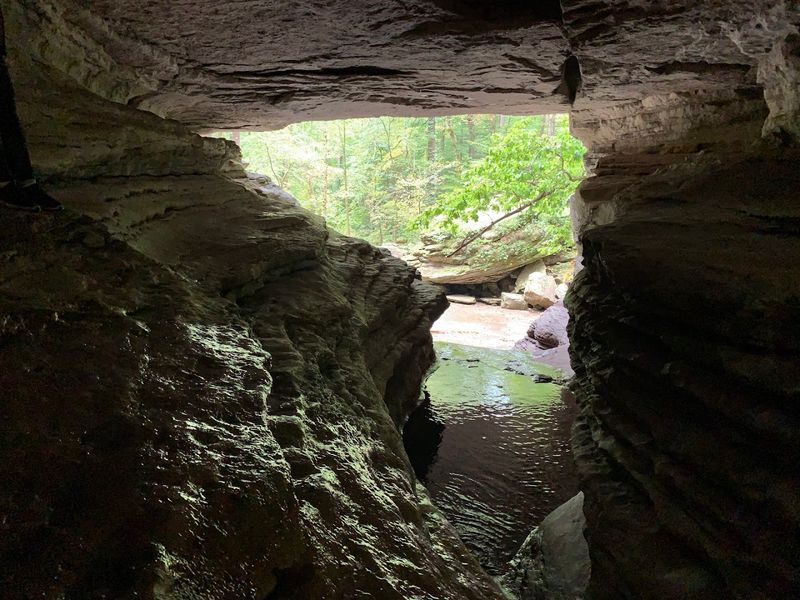
Behind Eden Falls, tucked into the rock face itself, there is a cave passage that most visitors do not even realize exists until someone points toward it.
I squeezed through the entrance with a small flashlight and found myself inside a narrow corridor of smooth, wet limestone that curves back roughly 200 feet into the hillside.
The ceiling drips steadily, the floor is slick with mineral deposits, and the air inside carries a coolness that feels almost refrigerated compared to the warm trail outside.
At the far end, a small natural opening called a blowhole releases a steady breath of cold air, which was so unexpected the first time I felt it that I actually took a step backward.
The cave requires some crouching and careful footing, so wearing sturdy shoes with grip is genuinely important rather than just a suggestion.
Headlamps work better than handheld flashlights here because you will want both hands free for balance on the uneven floor.
The formations inside are modest compared to commercial show caves, but the rawness of the space, completely unlit and unimproved, gives it a character that polished tourist caves simply cannot replicate.
Crawling back out into daylight after the cave feels like a small, satisfying reentry into the ordinary world.
Wildlife, Wildflowers, And Quiet Natural Beauty
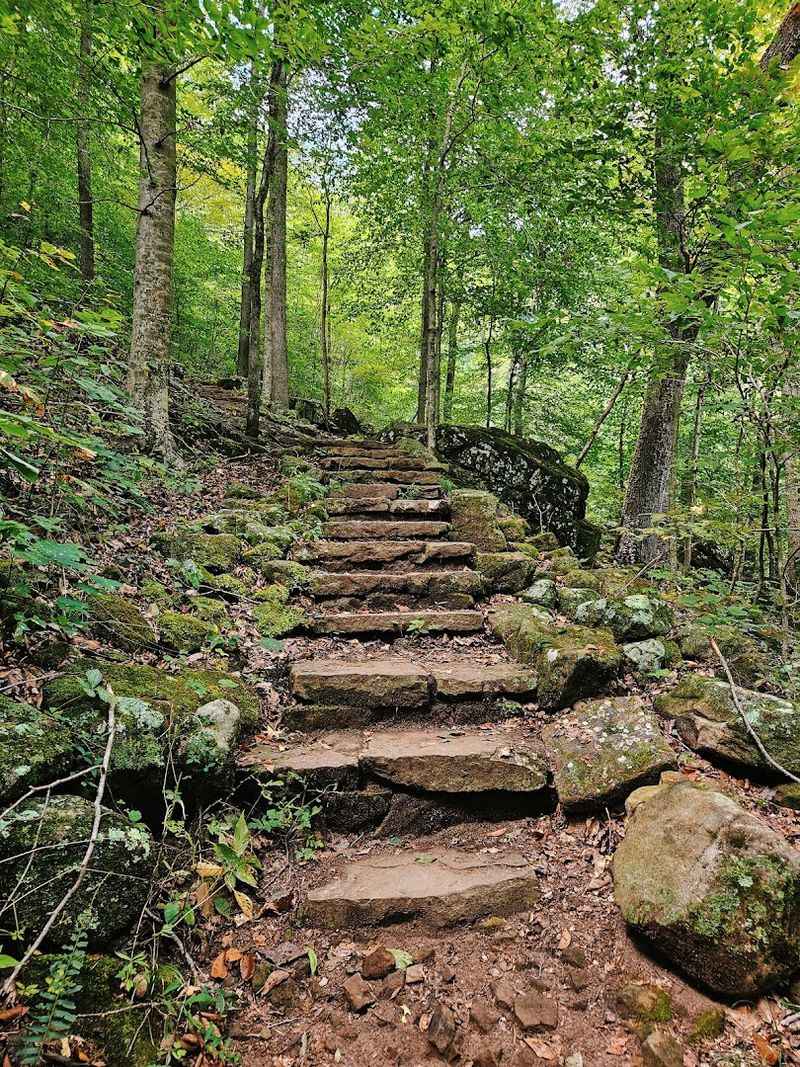
Slow down on this trail and the valley starts to reveal itself in small, unhurried details that faster hikers walk straight past.
On my last visit I counted three different species of wildflowers within the first quarter mile, including patches of wild ginger and trillium tucked into the shadier sections beneath the bluffs.
Spring is when the floral display peaks, with blooms appearing in waves from late March through May as different species take their turn along the creek corridor.
White-tailed deer are common sightings here, particularly in the early morning hours before the trail gets busy with other visitors.
I once watched a deer stand completely still in the creek for nearly a minute, apparently unbothered by my presence on the bank ten feet away.
Birdsong fills the canopy throughout most of the year, and patient observers with binoculars can spot warblers, woodpeckers, and the occasional great blue heron working the creek shallows.
Box turtles cross the path regularly in warmer months, and the creek itself holds crawdads visible in the clear, shallow water if you crouch down and look carefully.
The whole ecosystem here operates at its own calm frequency, and spending time in it has a way of resetting whatever noise you carried in from the outside world.
The Best Seasons To Experience The Landscape
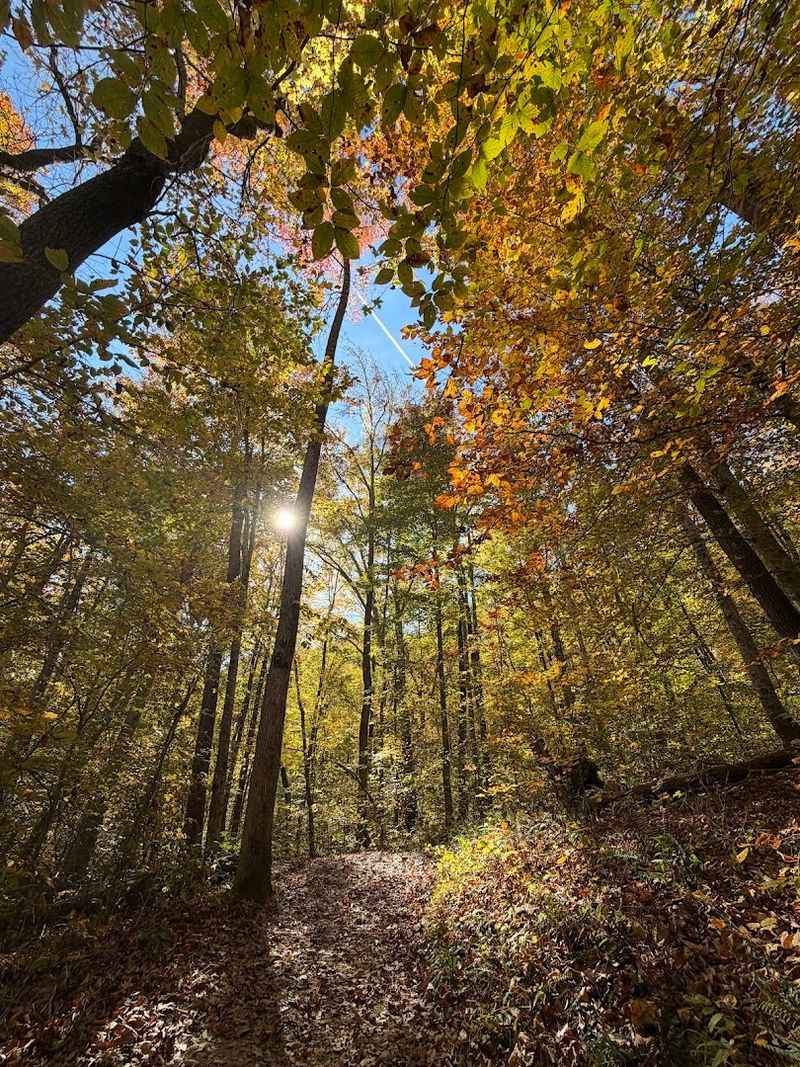
Timing a visit here can genuinely transform the experience, because this valley wears each season with a completely different personality.
Spring is my personal favorite window, roughly mid-March through May, when the creek runs full from snowmelt and rain, the wildflowers are performing their annual show, and the canopy is just leafing out in that electric, almost neon shade of new green.
Fall runs a close second, with the hardwoods turning the valley into a patchwork of amber, orange, and deep red that peaks somewhere around mid-October in this part of the Ozarks.
Summer brings lush, full canopy that keeps the trail shaded and several degrees cooler than the surrounding open countryside, which makes it a practical retreat during Arkansas heat.
Creek levels drop in late summer, which actually makes the cave more accessible and the rock formations easier to explore without getting your feet soaked.
Winter visits are surprisingly rewarding for those willing to layer up, since the bare trees open long views through the valley that foliage completely blocks the rest of the year.
Ice formations sometimes cling to the bluffs and waterfall ledge during cold snaps, creating a quiet, frozen version of the landscape that feels like a completely different trail.
Whatever month you land on, arriving early in the morning almost always guarantees a more peaceful experience than showing up at midday.
Why This Natural Wonderland Leaves Visitors Amazed

Most short trails in the country offer one or maybe two memorable features, and then they are done.
What makes this valley so disarming is the way it keeps stacking surprises, a forest walk that becomes a creek crossing, then a bluff wall, then a hidden waterfall, then an actual cave, all within two miles of relaxed hiking.
I have taken friends here who described themselves as people who do not hike, and watched every single one of them forget that claim somewhere around the first bluff.
The trail is genuinely accessible to a wide range of fitness levels, which means it does not gatekeep its rewards behind hours of strenuous effort.
There is also something quietly special about a place that has remained relatively low-profile despite being located in a region that draws outdoor visitors from across the country.
The Buffalo National River designation protects the surrounding landscape, which means the trail environment stays clean, wild, and largely undeveloped in the best possible sense.
Visitors consistently describe a feeling of having discovered something personal here, even knowing that others have walked the same path.
That sense of private wonder, earned through a short walk rather than a grueling expedition, is exactly what makes this corner of northwest Arkansas worth every mile of the drive to get here.