
This Hidden Arkansas Trail Leads To A Lake View That Feels Unreal In 2026
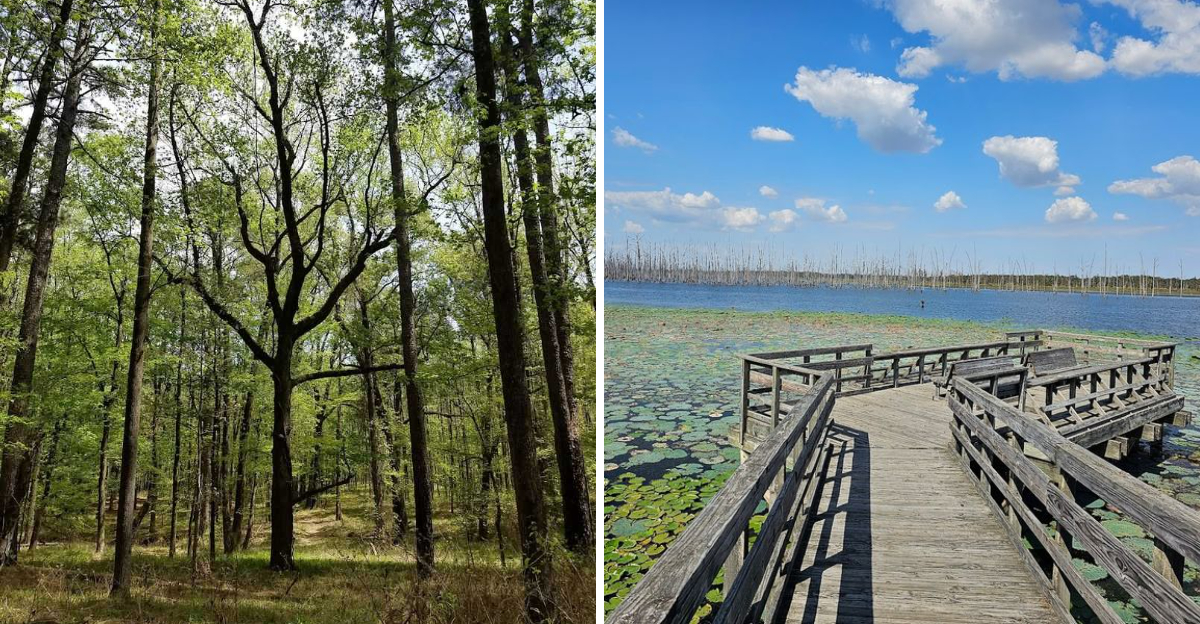
My plan was simple. Follow the trail for a bit, then head home before the afternoon got away from me.
The lake had other ideas.
The path winds through pine-covered hills in southeast Arkansas before it reaches a shoreline that feels too quiet for a regular day. Bald cypress trees rise from the edge, and the water spreads out in front of you with the kind of calm that makes you stand still.
I kept looking around, trying to figure out why more people were not talking about this place. Maybe that is part of the charm.
It does not need noise to be memorable.
A few lily pads floated near the bank, and the whole scene felt like a reward for taking the trail on a free afternoon.
Keep reading, because this is the kind of view that turns a short hike into a story you keep telling.
A Quiet Trail Above The Delta
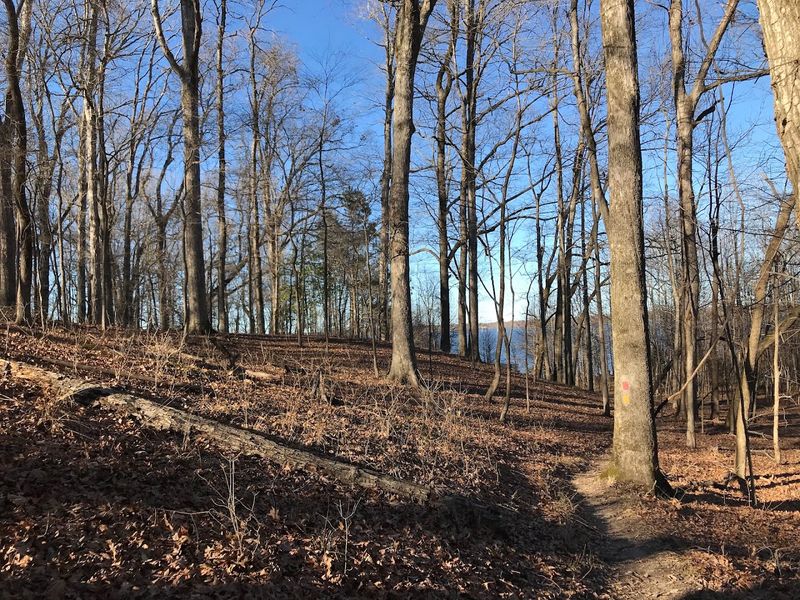
The trail begins quietly, slipping into the trees as if it would rather let the lake surprise you later.
I stepped onto the path on a weekday morning when the air still carried a cool edge, and the forest closed in around me in the best possible way.
The Cane Creek Lake Trail stretches 15.5 miles through terrain that sits right at the boundary where the rolling West Gulf Coastal Plain gives way to the flat alluvial lands of the Mississippi Delta.
That geographic meeting point is not just a cartographic curiosity but a lived experience you feel underfoot, as the trail shifts between gentle slopes and low, water-edged flats.
Hikers and mountain bikers both use this route, which means the path is well-worn and generally easy to follow, though a few stretches still carry that satisfying sense of wildness.
I passed through stretches of tall pine and mixed hardwood that muffled every sound from the outside world, leaving only birdsong and the soft crunch of my own footsteps.
By the time the trees thinned and the first glimmer of lake appeared ahead, I already understood why people keep coming back to Cane Creek State Park at 50 State Pk Rd, Star City, AR 71667, especially on quiet, unhurried mornings like this one.
Lake Views Framed By Forest
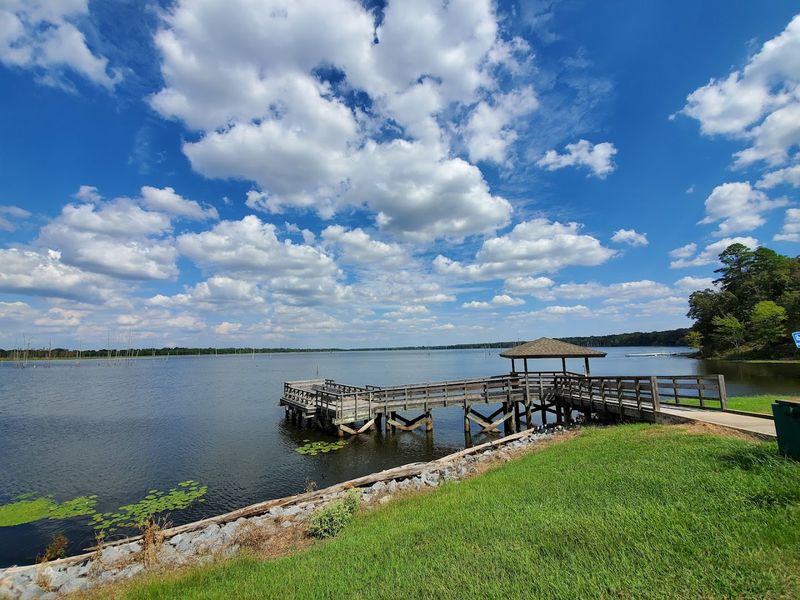
Nothing quite prepares you for the moment the trees pull back and the full spread of Cane Creek Lake appears in front of you like a painting someone forgot to hang indoors.
The lake covers 1,675 acres, and from the trail edge, that size becomes genuinely impressive rather than just a number on a park brochure.
Tall snags rise from the shallows like natural sculptures, and clusters of bald cypress stand in the water with their knobby roots poking above the surface in quiet defiance of ordinary tree logic.
Water lilies and lotus blossoms drift across the calmer bays, adding splashes of color that shift depending on the season and the angle of the light.
I found myself stopping far more often than I planned, pulling out my phone for photos that never quite captured what my eyes were actually seeing.
The forest framing the water creates a natural border that makes the lake feel both contained and enormous at the same time, which is a trick only nature seems to pull off convincingly.
Visitors who arrive expecting a modest pond are consistently caught off guard by a view that rewards every step it took to reach it.
Where Pine Slopes Meet Still Water
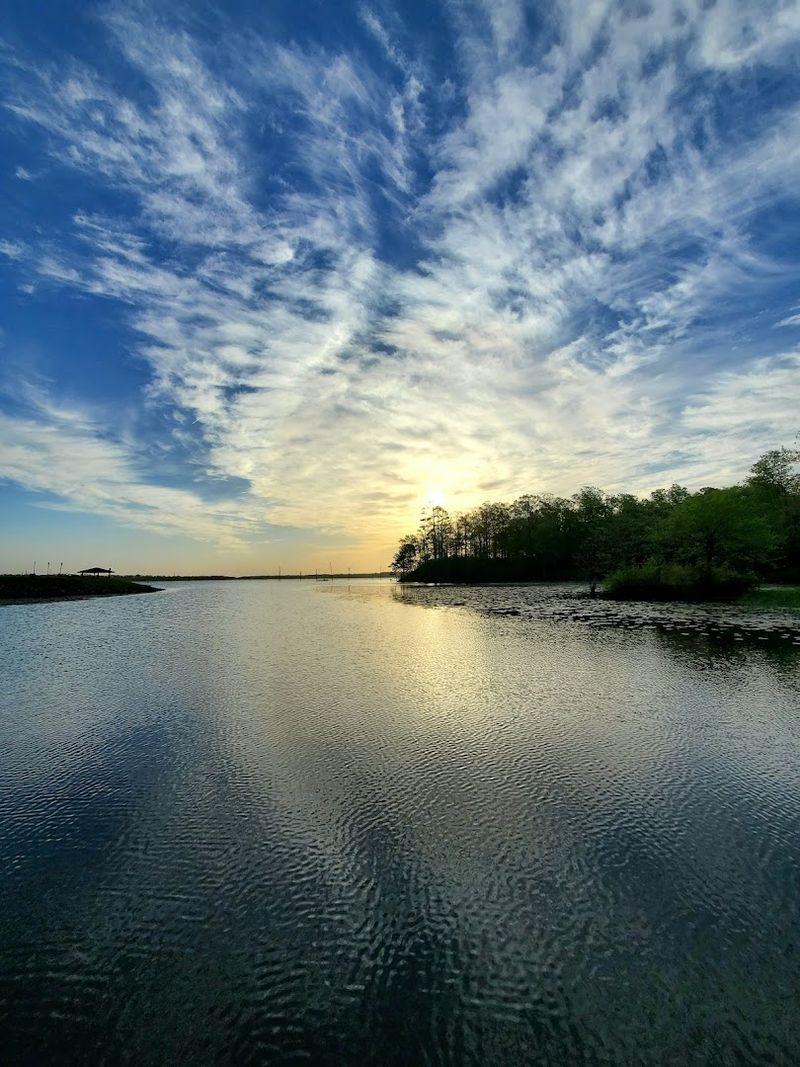
Few natural transitions feel as satisfying as the one where a forested hillside runs right down to the edge of perfectly calm water, and this park delivers exactly that.
The terrain around the trail shifts gradually, moving from firmer pine-studded ground to softer soil near the lake margins where the boundary between land and water becomes pleasantly negotiable.
I noticed how the pine trees on the upper slopes gave way to cypress and water-tolerant hardwoods closer to the shoreline, a natural handoff that happens so smoothly you almost miss it.
The stillness of the water on a calm morning acts like a mirror, doubling the treeline and creating a reflected version of the forest that shimmers slightly with any passing breeze.
This is the kind of scenery that backpacking guides describe in enthusiastic terms but that you have to stand inside to fully believe.
The Cane Creek Lake Trail Camping Shelters are reached after mile six by heading east another half mile, and overnight campers need a permit from the visitor center.
A morning on a hillside above still water, with pines nearby, can change your entire idea of what a good start to the day can feel like before you even pack up again.
A Hidden Bench With A Wide Open View
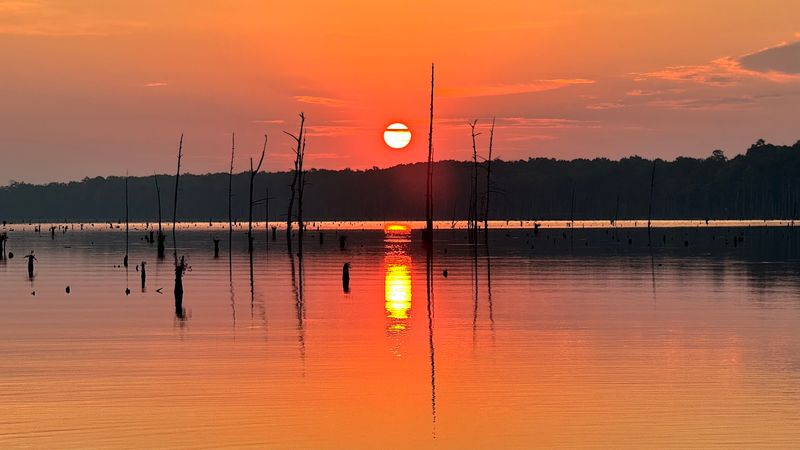
Along the Delta View Trail, the path curves and suddenly the view opens wide over the water. Stopping feels less like a choice and more like a physical requirement.
The Delta View Trail runs 2.5 miles, making it accessible to a broad range of visitors who may not be ready to tackle the full 15.5-mile route.
At roughly the one-mile mark, the trail rewards hikers with a fantastic view of Cane Creek Lake, the kind that makes the short walk feel more than worth it, even before you reach the shoreline again.
A bench positioned near this overlook turns a scenic pause into a proper rest, the kind where you sit down meaning to stay for two minutes and find yourself still there twenty minutes later, just looking.
The view from this elevation shows the lake spreading wide beneath an open sky, with the forested far shore creating a clean horizon line that feels almost theatrical.
I watched a great blue heron glide low across the water from that bench, which felt like the park offering a small personal bonus for making the walk.
Some views earn their quiet reputation honestly, and this one does exactly that with every clear-sky visit in the park itself today.
Soft Hills Leading Toward The Lake
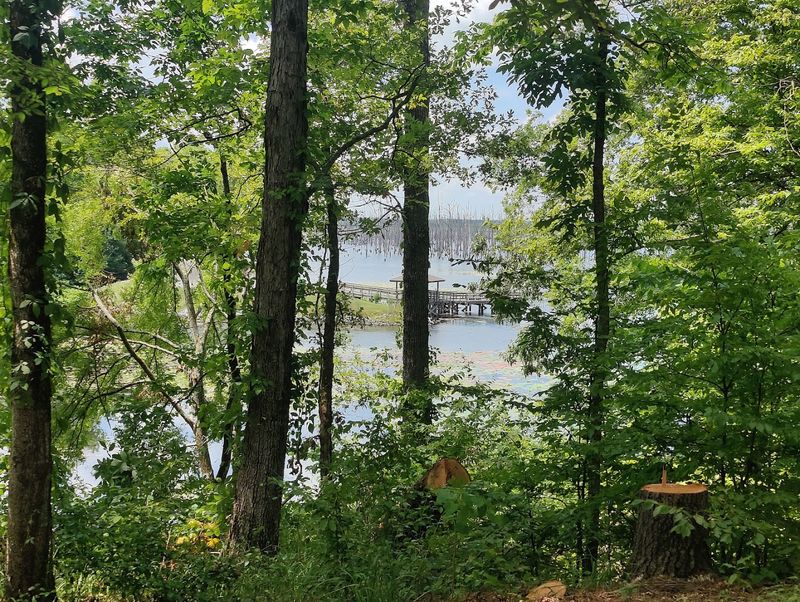
Rolling terrain is not something most people associate with southeast Arkansas, which makes the soft hills around this park a pleasant surprise for first-time visitors.
The West Gulf Coastal Plain influence gives the landscape a gentle undulation that keeps the trail interesting without turning every section into a cardiovascular event.
The downhill walk through those forested slopes creates a slow reveal effect, where the water appears in pieces between the trees before finally opening up into a full unobstructed view.
I found the downhill stretches particularly enjoyable in the early morning when the light was low and angled, casting long tree shadows across the trail and turning an ordinary walk into something that felt cinematic.
The hills also provide natural elevation changes that give hikers occasional elevated perspectives over the surrounding forest and water, which adds variety to a trail that could otherwise feel repetitive over its full length.
Mountain bikers tackle these same slopes with noticeably more enthusiasm than hikers, and watching someone navigate the steeper sections with skill adds a lively energy to the trail experience.
Every downhill curve that ends with a lake view is its own small reward, quietly stacking up across the miles as you keep going here.
Wildlife Paths Through The Trees
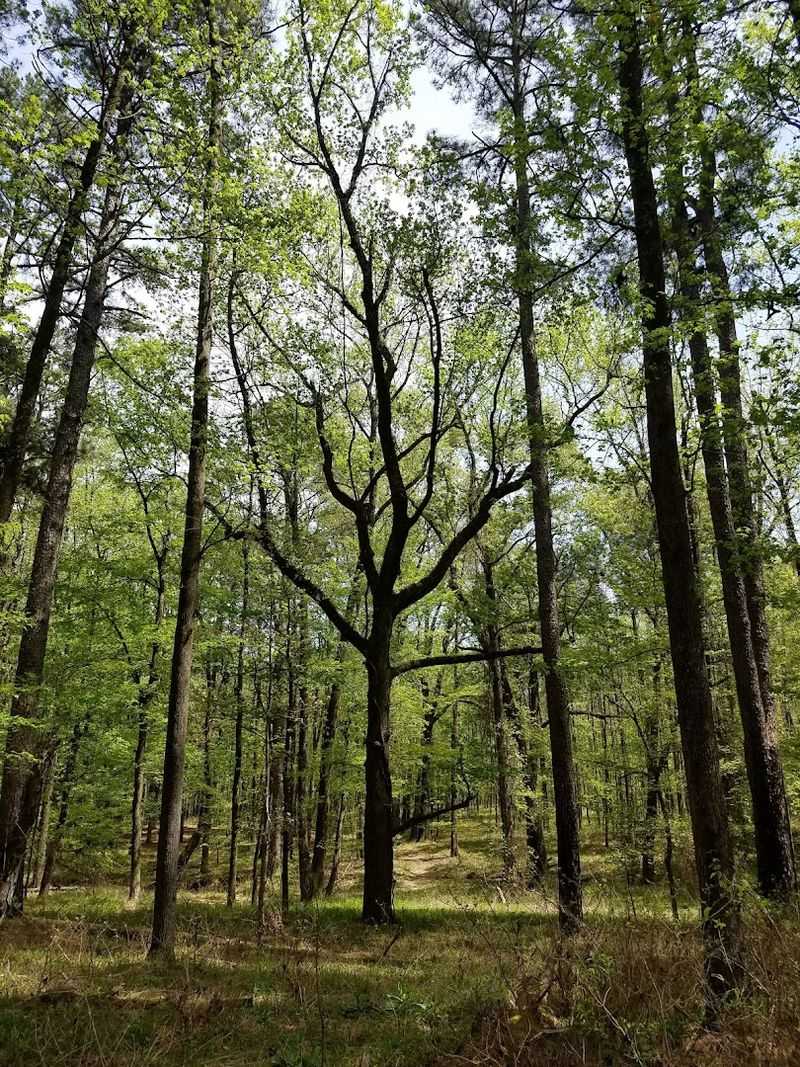
The trail at this park functions as both a hiking route and an unofficial wildlife corridor, and if you pay attention, the evidence of that is everywhere.
Bald eagles and a wide variety of birds may be encountered around the lake and trails, especially during the right season.
Along the kayak trail, beaver lodges add another sign that the lake is busy even when the surface looks calm nearby, too, quietly.
Bald eagles are a particular highlight in winter, when they may be seen perching or hunting around the park, which is the kind of detail that can turn a good hike into a memorable one.
The dense tree cover along the trail creates natural corridors that wildlife use just as readily as hikers do, which means moving quietly and keeping your eyes open pays consistent dividends.
Copperhead snakes may be present in this part of the state, so staying on the marked path and watching where you step is practical advice rather than unnecessary caution.
Birdwatching here requires no special equipment beyond patience, as the variety of species drawn to the lake and forest edge is impressive for a park of this size.
Every step through these trees carries the quiet possibility of an encounter that no wildlife documentary could fully replicate.
A Calm Edge Between Two Landscapes
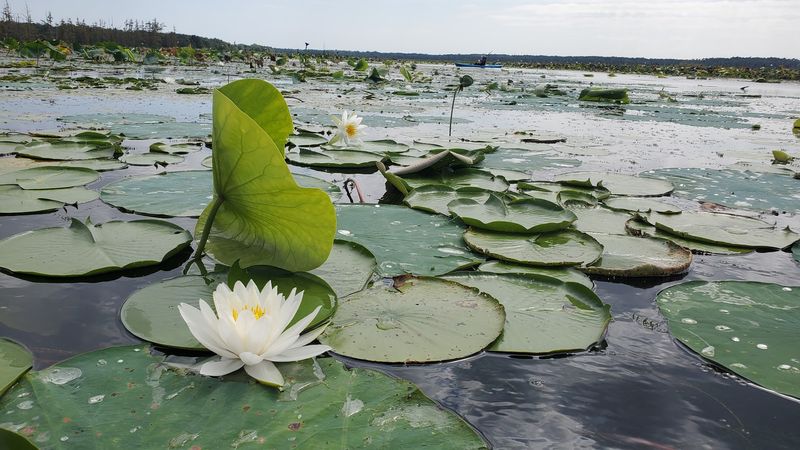
At this ecological boundary, two very different sides of Arkansas seem to meet at the same fence line, and somehow, they fit together beautifully. The park sits at the convergence of the West Gulf Coastal Plain and the Mississippi Delta alluvial lands, and that transition is not just a geological footnote but a living, visible feature of the landscape.
On one side, the terrain carries the firmer character of upland pine forest with its sloped ground and denser canopy, while the other side flattens into the water-edged, cypress-studded world of the Delta.
The trail follows this transition zone, so you experience both ecosystems in a single outing, which is an unusual opportunity that most parks simply cannot offer.
The plant life shifts noticeably as you move between zones, with the understory changing from pine-adapted shrubs to the water-tolerant vegetation that thrives in the low, wet margins near the lake.
Cane Creek Lake itself borders Bayou Bartholomew, recognized as the world’s longest bayou, which adds a layer of geographic significance to an already compelling natural setting.
Few trails place you so precisely at the seam between two distinct worlds while still feeling like a single coherent journey.
Golden Light Over Cypress Waters
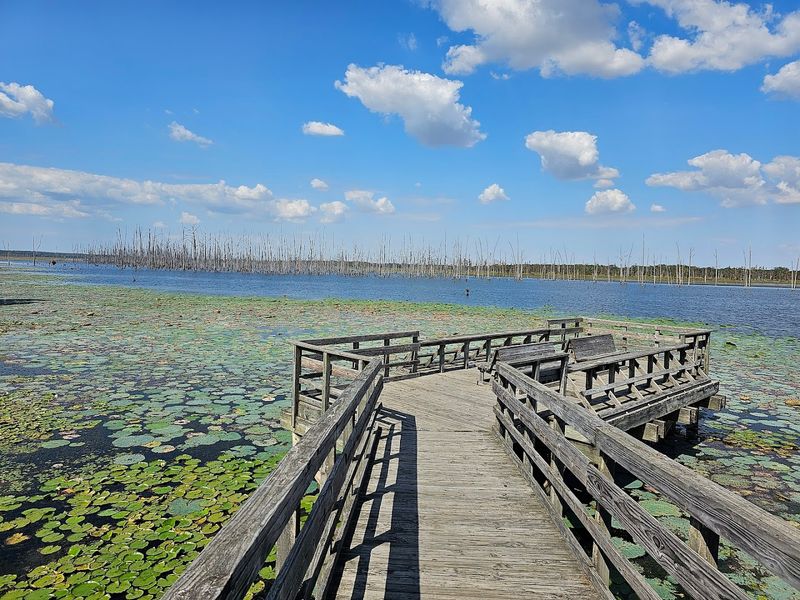
Late afternoon at Cane Creek Lake is the kind of scene that makes you feel personally grateful to whoever decided to protect this land as a state park.
As the sun drops toward the western treeline, the light turns warm and horizontal, catching the surface of the water and the rough bark of the cypress trunks in a way that shifts the entire mood of the landscape.
The bald cypress trees standing in the shallows become silhouettes against the glowing water, and the lily pads that cover the quieter bays take on a deep green that almost glows in the low light.
I sat near the fishing dock one evening and watched the colors change from gold to amber as the sun finished its descent, and I was not the only visitor who had clearly planned the day around that exact moment.
The marked kayak trail offers a water-level version of this experience, allowing paddlers to move through stands of cypress and lily pad fields with the golden light filtering down around them from all sides.
Campers and casual walkers seem to arrive at the same unspoken agreement that the last hour of daylight here is not to be wasted indoors.
Some places earn their reputation at sunrise, but this one absolutely belongs to the golden hour if the weather cooperates that evening.