
This Hidden Bookstore In Michigan Is A Must-Visit For Anyone Who Loves Books
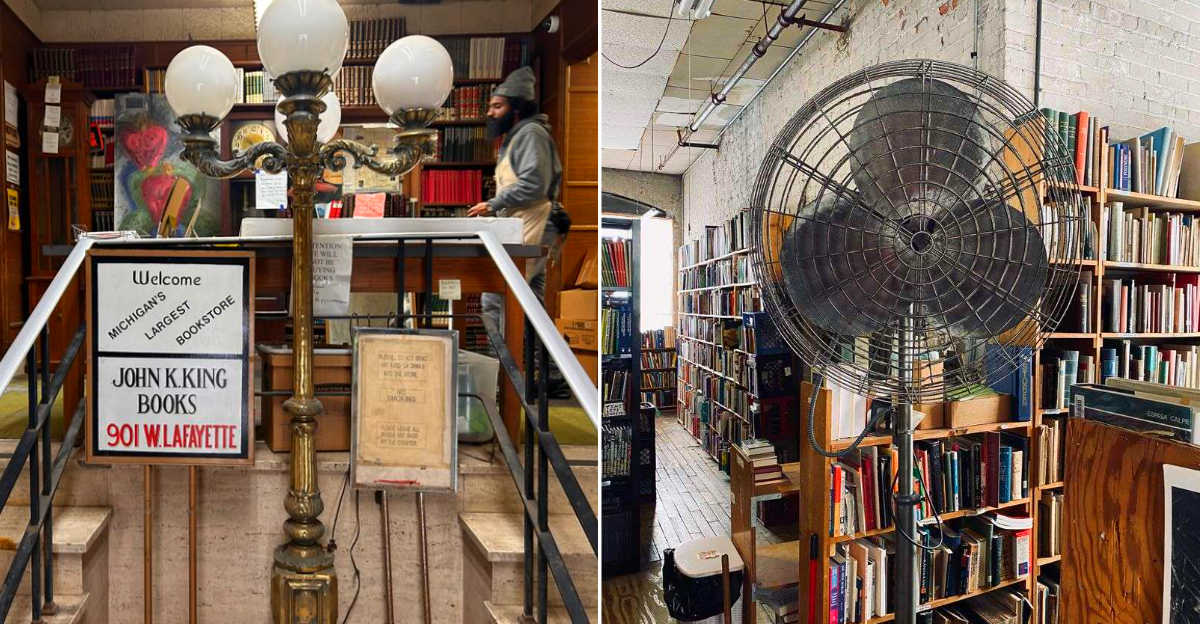
I remember the first time I felt the sheer weight of a million stories; it wasn’t in a library, but inside a towering brick monolith in Detroit that smelled faintly of vanilla and industrial history. Tucked inside a former glove factory at 901 W Lafayette Blvd, John K.
King Used & Rare Books feels like the city has handed you a skeleton key to its quiet, paper-bound heart.
The building doesn’t just house books; it breathes them, with four floors of wooden shelves that form a complex navigation exercise for the curious soul. You will hear the building’s internal rhythm before you truly understand its scale; the rhythmic sigh of an old elevator and the soft machinery of pages rustling in the breeze.
If you love wandering for the sake of pure discovery, you must clear an entire afternoon to let the stacks set your pace.
This is one of the best bookstores in Michigan because it rejects the polished, predictable curation of modern retailers for something far more wild and rewarding. Exploring this Detroit landmark allows you to discover where to find rare books in Michigan while getting lost in a labyrinth that rewards patience over speed.
You will find that the local literary scene is best understood through the dust-moted aisles where a map is a necessity and every light switch is a portal to a new era.
The true reward of a visit to John K. King is the realization that no matter how much you find, there is always another shelf waiting in the shadows.
Find Your Bearings With The Map

The first true thrill at John K. King Used & Rare Books isn’t the sight of a first edition, but the moment you are handed a physical map at the front desk.
You grip the paper and immediately feel like an explorer with a reliable compass, ready to tackle the four-story industrial maze ahead of you.
Floors are organized by subject with a utilitarian logic that reflects the building’s factory past, turning a simple shopping trip into a grand expedition. You notice how the edges of your day start to stretch as you realize just how many miles of shelving await your inspection.
A local detail involves the manual light switches found at the end of many aisles, allowing you to illuminate only the history you wish to see.
Staff in aprons appear with a gentle, practiced precision the moment they sense a visitor has lost their way among the sprawling categories. You should take a quick, bird’s-eye lap of each floor before you begin the deep burrowing process that defines the experience.
Marking promising corners and starring specific sections on your map will save you from the inevitable “where was that book?” heartbreak later in the day. Time has a habit of vanishing here, swallowed by the sheer density of the printed word and the quiet gravity of the shelves.
When you finally descend the stairs, your map will likely be covered in scribbled notes and call numbers. It becomes a personal artifact of your journey through the stacks, a paper trail of the curiosities that caught your eye.
Listening To The Building
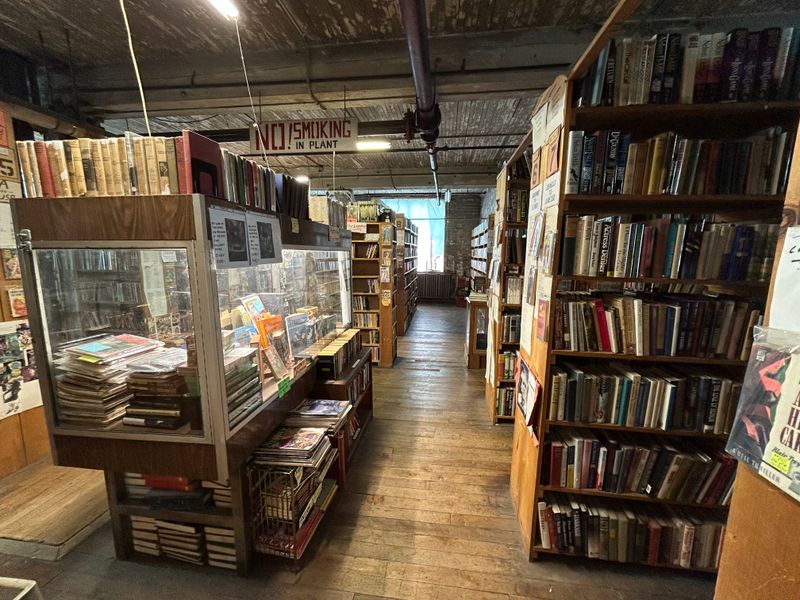
Footfalls announce your presence across wooden floors that creak with the rhythmic reliability of polite, aging stagehands. The soundscape of the building asks you to lower your voice and heighten your attention, creating a meditative atmosphere that is rare in the city center.
Radiators click in the winter and elevator doors sigh with a heavy, metallic finality that echoes through the open bays. You notice how the dust mists glow inside the afternoon light, turning every aisle into a cinematic pocket of Detroit’s industrial memory.
Before books claimed this space, hats were manufactured here, and the structure carries that factory muscle in its exposed brick and practical bones.
History gives the stacks a working rhythm that feels far more substantial than a standard retail environment. You should move slowly and notice how the acoustics shift dramatically between the wide-open floor plans and the narrow, light-starved aisles.
If a particular section feels crowded, simply sliding one row over often reveals a quiet zone where you can browse in total solitude. Patience is the primary currency here, and the building rewards it with moments of profound, paper-scented peace.
The creak of the floor becomes a comforting companion as you move from “Art” to “Zoololgy.” By the time you reach the third floor, the hum of the city outside feels like a distant memory from a different century.
Heat, Layers, And Summer Strategy

July inside the stacks can feel like a sauna filled with stories, as the summer warmth accumulates on the upper floors of the un-air-conditioned factory. The air begins to taste of sun-baked paper and aged glue, creating a sensory experience that is as intense as it is nostalgic.
You should bring a bottle of water, dress in light layers, and plan your ascent through the building with the temperature in mind. The factory’s tall windows and sturdy construction were designed for ventilation, not climate control, which leads to significant temperature swings.
Staff members remain remarkably calm and helpful despite the heat, often steering weary browsers toward the breezier corners near the fans.
A visitor habit involves starting at the very top floor while your energy is fresh, then slowly working your way downward as the afternoon peaks. Scheduling brief breaks by the larger windows allows you to reset your senses and catch a glimpse of the Detroit skyline.
The finds become sharper and your focus stays clearer when you aren’t fighting the building’s internal climate. It is a rugged way to shop, but the lack of modern comforts only adds to the authenticity of the “hidden gem” experience.
By the time you reach the relatively cool basement, you’ll feel like you’ve earned every treasure in your basket. The heat is simply part of the price of admission for one of the world’s most unique literary destinations.
Ask The Aprons
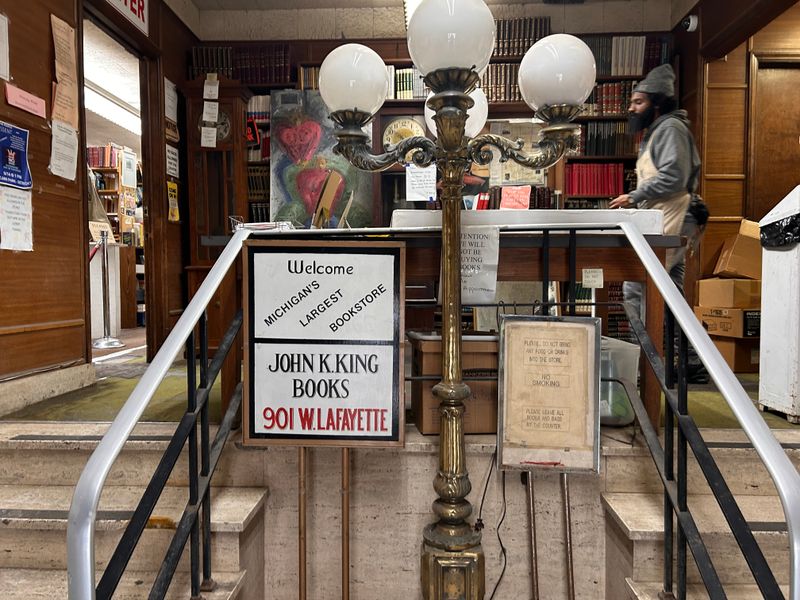
The staff members in their signature aprons act as living, breathing indexes for a collection that would baffle even the most sophisticated digital search engine. If you ask a precise question, you can watch them mentally triangulate your request across four floors and several decades of inventory.
Their knowledge significantly shortens the distance between a vague curiosity and a life-changing discovery. This is a Detroit institution where the culture of helpfulness feels earned through years of navigating the same labyrinth you are currently exploring.
Guidance here is part high-level scholarship and part warm, old-school hospitality.
You should bring a list of titles, but don’t be afraid to describe the “mood” or the cover color of a book you remember from years ago. They have a remarkable ability to translate your hunches into specific shelf addresses, often leading you to a book you didn’t even know you were looking for.
This human element is what keeps the store from feeling overwhelming; there is always a guardian of the stacks nearby to help you find your way home. Their pride in the building’s reputation is palpable in every interaction.
A five-minute conversation with an “Apron” can save you two hours of aimless wandering. They are the keepers of the flame, ensuring that no book remains lost for long.
Turn On The Aisle Lights
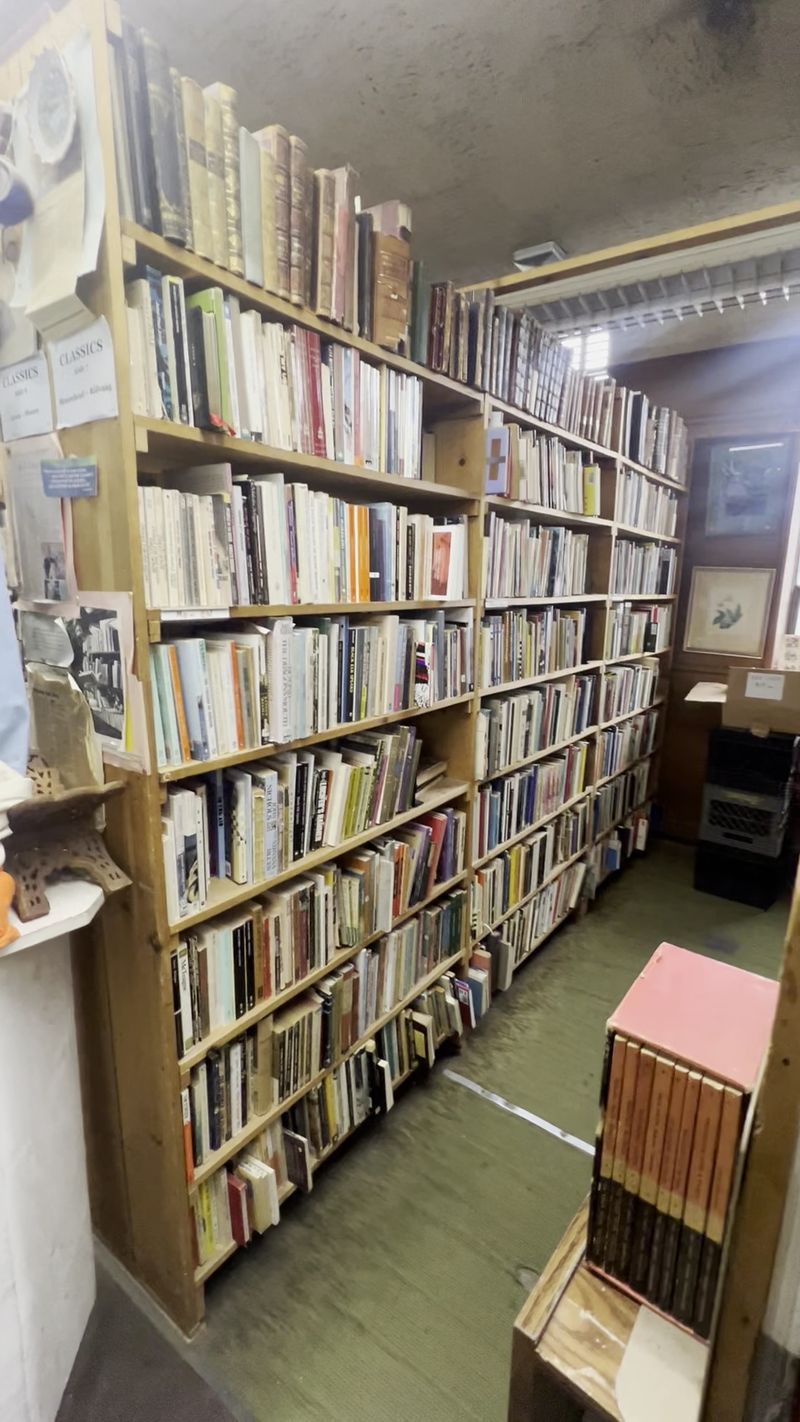
Some aisles wait in a state of gentle, perpetual gloom until the moment you arrive to claim them. Light switches sit at the ends of the rows, often small and easy to miss, but flicking them on is a fundamental part of the John K.
King ritual.
As the bulbs hum to life, the spines of thousands of books shimmer into sudden, brilliant legibility. This detail reflects the building’s pragmatic industrial design, where electricity follows utility rather than performing for a crowd.
You illuminate only what you intend to use, a philosophy that makes the browsing experience feel deeply personal.
Adopt a rhythm of flicking the lights on as you enter a row and off as you leave to preserve the building’s unique atmosphere. This practice helps other browsers see which sections are occupied and keeps your own path through the store intentional.
You will find yourself browsing more carefully when each row becomes your own temporary, private reading room. The contrast between the dark aisles and your lit path makes every discovery feel like a spotlighted event.
It is a small, tactile interaction with the building that makes you feel like an active participant in its history. The click of the switch is the sound of a new world opening up before you.
Chasing The Obscure
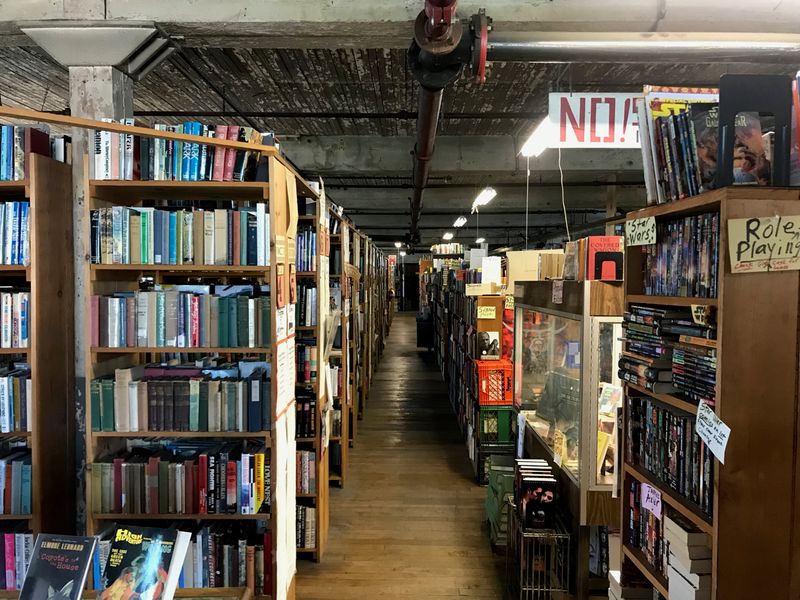
Not every shelf in this massive factory sparkles with a recognizable title or a pristine dust jacket on first glance. You will pass multiple copies of strange, forgotten manuals, outdated fashion guides, and technical texts from decades that have long since faded.
That perceived clutter is actually the perfect camouflage for the treasure you are destined to find if you keep looking. Because the inventory flows from massive acquisitions and private donations, the store’s greatest strength is its sheer, uncurated breadth.
Obscurity finds a safe harbor here, waiting patiently for the one specific reader who actually needs an 1890s guide to steam engines.
The magic of the hunt depends entirely on your timing and your willingness to look beyond the obvious bestsellers. You should hunt with keywords in mind rather than just author names, exploring adjacent categories where misfits often nap.
Accept that today’s near miss might become tomorrow’s perfect hit as the inventory is constantly being replenished. Serendipity is the real manager of the store, and it teaches a brand of patience you probably didn’t know you owned.
The most valuable finds are rarely the ones you planned to buy. They are the ones that jump off the shelf and demand your attention while you were looking for something else entirely.
Rare Room Mindset
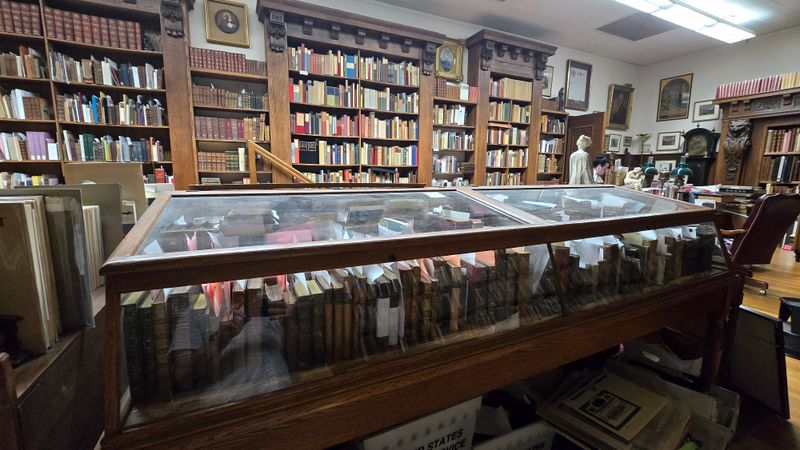
When you step into the sections containing rare and antiquarian volumes, the entire mood of the building shifts into something more reverent. You encounter pages as thin as autumn leaves and leather bindings that have survived centuries of handling and travel.
Respect is the only correct starting point when dealing with books that cost more than a used car or carry the signature of a historical giant. Detroit’s own history echoes loudly in these shelves, where local prints and rare maps of the Great Lakes often make an appearance.
The specialized staff in the Rare Room can outline the provenance and condition of each piece with scholarly steadiness.
Their calm presence keeps your excitement productive, ensuring that these delicate artifacts are handled with the care they require. You should always ask before handling a volume and be prepared to use a book cradle if the staff offers one.
Photographing the spines for your personal reference is encouraged, but avoid taking photos of the fragile pages themselves. If a particular volume truly sings to you, request a temporary hold while you walk a lap of the floor to confirm your decision.
Exuberance in book collecting always ages better when it is paired with a bit of quiet, calculated care. In this room, you aren’t just a shopper; you are a temporary steward of a piece of history.
Logistics That Save Time
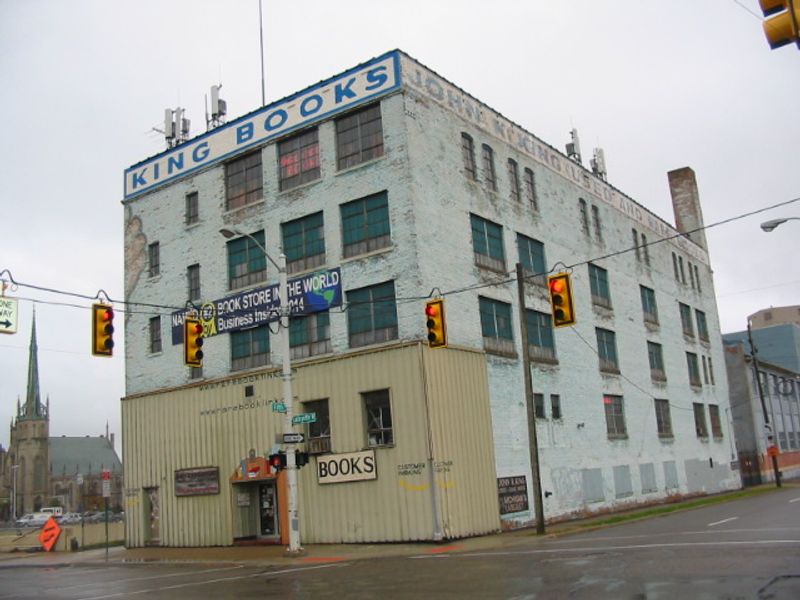
Check the store’s hours before you set out, as the schedule is a bit unconventional: they are closed on Sundays and have shorter hours on Mondays. Parking is located in a small lot between the building and the freeway, which is convenient but fills up quickly during peak Saturday hours.
Bags must be checked at the front counter, so you should pack light and keep your valuables in your pockets. The layout spans four massive floors, and while an elevator is available, the experience generally requires a lot of stair-climbing and standing.
Discipline in your logistics is the only way to protect your energy for the long haul of the afternoon.
You should bring a small notebook and a pen to keep track of call numbers, floor levels, and prices as you move through the building. Marking the locations of restrooms and water fountains on your map will prevent unnecessary trips back to the ground floor.
Wearing comfortable, broken-in shoes is perhaps the single most important piece of advice for a first-time visitor. You will cover far more ground without feeling the fatigue, allowing you to stay focused on the hunt.
By planning your “exit strategy” and knowing where the checkout is located, you can manage your budget and your time with ease. A little preparation turns a potential ordeal into a smooth, successful expedition.
Seasonal Light, Winter Quiet
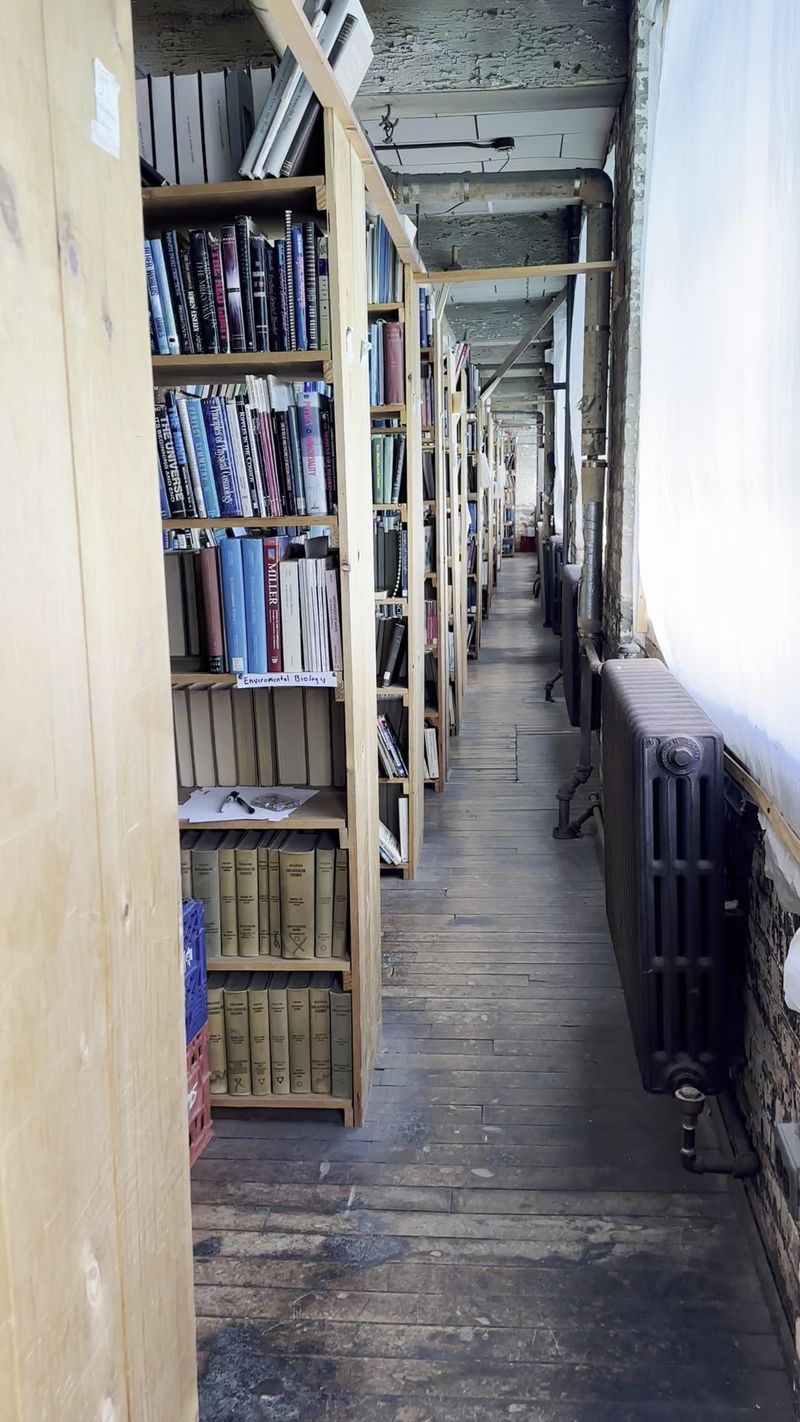
On a cold Michigan afternoon, the low winter light pours through the factory windows at an angle that softens the entire interior. Your breath steadies, the spines of the books seem to glow with a warm inner light, and your hands learn the cold, smooth temperature of cloth bindings.
The building absorbs the winter quiet like a calm companion, offering a sanctuary from the grey slush of the Detroit streets outside. Regulars treat the store as a form of seasonal shelter, a place to slow down and reflect while the city exhales frost.
The conversation in the aisles drops to a low hush, and the act of browsing becomes something deeply meditative.
Local steadiness gives the stacks a heartbeat that feels even more pronounced when the world outside is frozen. You should plan for longer, more deliberate visits during the winter months when the building’s “factory heat” creates a cozy, industrial nest.
Take frequent stretch breaks near the windows to soak in the pale sunlight before diving back into the tight, shadowy aisles. The quiet becomes a tool for focus, sharpening your intuition until the right book practically taps you on the shoulder.
There is no better place in the city to disappear for a few hours when the snow begins to fall. The books feel like they are huddling together for warmth, and you are invited to join them.
Exit Through The Totes

At the checkout counter, the signature canvas totes hang like practical, heavy-duty souvenirs for the battle-hardened book hunter. They carry the shop’s iconic industrial outline in graphic form, serving as a silent promise that you will eventually return to fill them again.
You leave the building with a portable memory of the afternoon and the distinct sense that you have left a great deal of business unfinished. John K.
King has earned its legendary status by making every visit feel consequential and every find feel earned.
People travel from across the globe to measure their lives by the hours spent among these subjects.
That persistence of character is what shapes the unique culture of the store and its devoted community of readers. You should buy the tote bag if you plan on becoming a regular, keeping your map and your receipts tucked inside for your next trip.
Next time, you will arrive as a veteran explorer, your map already folded to the right floor and your mind open to whatever the stacks decide to reveal. You don’t just shop at John K.
King; you become a part of its ongoing story.