
This Hidden Corner Of New Mexico Preserves The Remains Of A Community Most Americans Have Never Heard Of
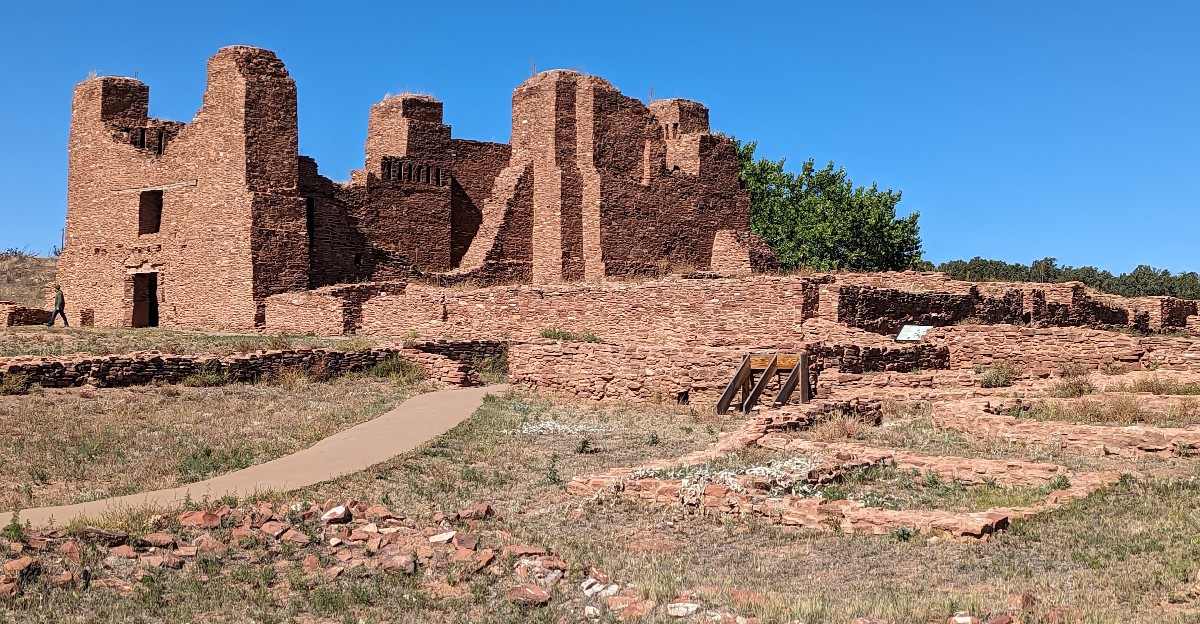
Two historic mission churches rise from a lonely New Mexico hilltop, surrounded by ruins that hint at a village far busier than the landscape suggests. It’s hard not to wonder what happened here.
Long before the missionaries arrived, this place was already part of a trading world that stretched across the region. Today, its weathered walls stand in near silence, with hardly a crowd in sight.
I find something haunting about places that once buzzed with life and now barely make a sound. Especially when so much of their story is still written in stone.
Most travelers pass through New Mexico without ever finding this hill. The people who built it left behind quite a mystery, and the desert isn’t exactly rushing to explain it.
A Pueblo That Was Once A Busy Trading Crossroads
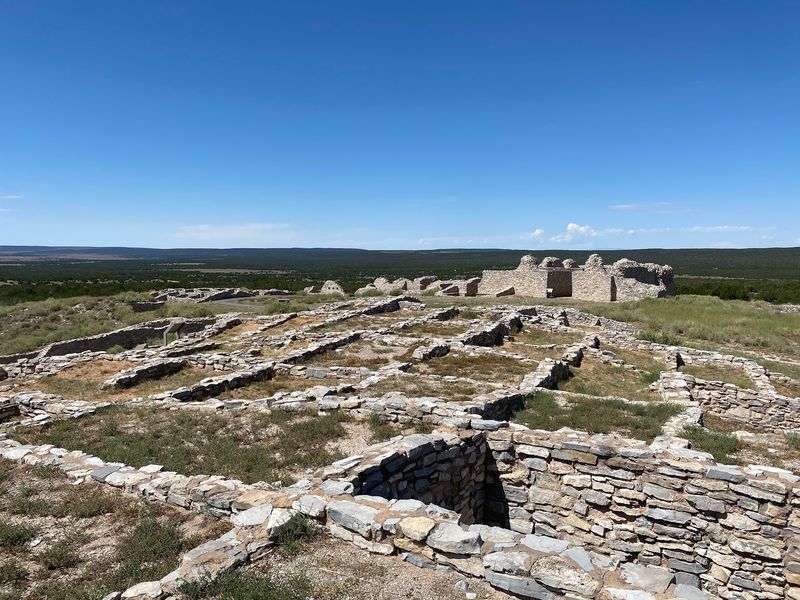
Salt was a big deal here, and that tells you a lot. The Salinas Pueblo Missions National Monument – Gran Quivira Unit and Visitor Center protects a pueblo that sat near valuable salt lakes in central New Mexico.
Pueblo people living here traded salt and other goods with Plains groups for centuries. That made this hilltop a true meeting point between very different cultures and ways of life.
The village grew large over time. Archaeologists have found that it held hundreds of rooms, built from local gray limestone stacked by hand.
Think about that for a second. No trucks, no cranes, and no hardware store down the road.
Every stone got there through serious human effort.
Spanish missionaries arrived in the 1600s and added their own buildings to the community. The mix of Pueblo life and European influence shaped everything that happened next.
By around 1672, the pueblo had been abandoned. Drought, famine, disease, and conflict all played a part in that sad chapter.
Knowing this story first makes the ruins feel much more personal. You are not just looking at rocks.
You are looking at the remains of a real neighborhood where families once lived, worked, and traded.
Two Historic Mission Churches Leave Their Mark
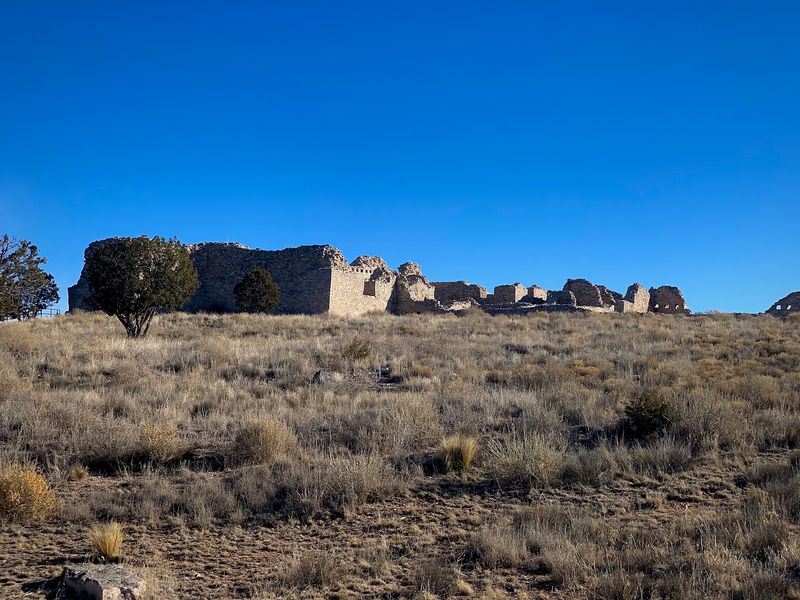
Gran Quivira holds the remains of two Spanish mission churches. The larger one, known as San Buenaventura, was started in the 1600s and never fully finished.
Its thick limestone walls still rise high above the ground. Standing next to them gives you a real sense of how ambitious this building project was.
The smaller church, San Isidro, came earlier. Less of it remains, but it still helps tell the story of how the mission grew over time.
Both churches sit close to the pueblo homes. That closeness says a lot about how Spanish and Pueblo life overlapped every single day.
Photographers, take note. The gray stone looks striking against the open New Mexico sky, especially when the light hits the walls at an angle.
Take a slow lap around the bigger church before moving on. Look at how the stones were layered and how the doorways are shaped.
Small details like that make the whole place feel less like a textbook and more like somewhere real people built with their own hands.
You Get To Walk Right Through The Ruins
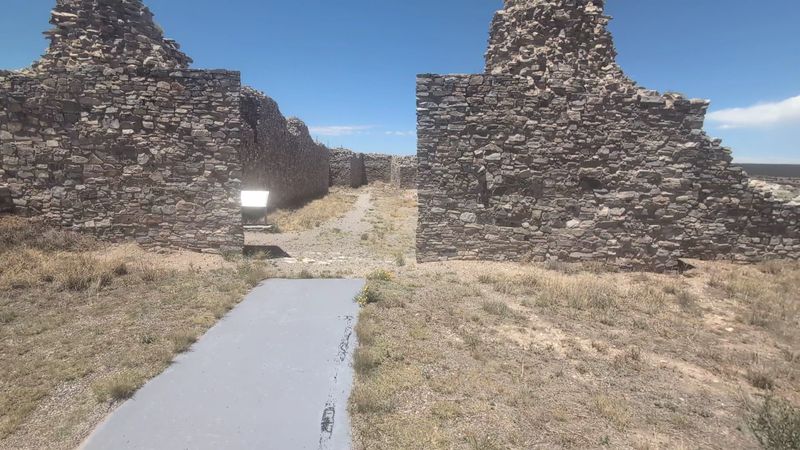
Velvet ropes are nowhere to be found on the main loop. A paved trail winds around and through the ruins, so you can get close to the old walls and room outlines.
The paved trail makes the ruins more accessible, including for wheelchair users and visitors with strollers. However, some sections have noticeable slopes, so people with limited mobility should plan accordingly.
Signs along the way explain what you are seeing. They point out house blocks, church areas, and other spots that might otherwise look like random piles of stone.
Reading them as you go is a smart move. The ruins start making a lot more sense once you know what each section once held.
Wear sturdy shoes, bring water, and don’t rush. The hilltop can feel breezy, so a light jacket helps in cooler months.
One rule matters most here. Stay on the trails, don’t climb the walls, and leave every pottery piece or artifact exactly where you find it.
These ruins have lasted for centuries, and the next visitor deserves the same view you got.
Start Inside The Small Visitor Center First
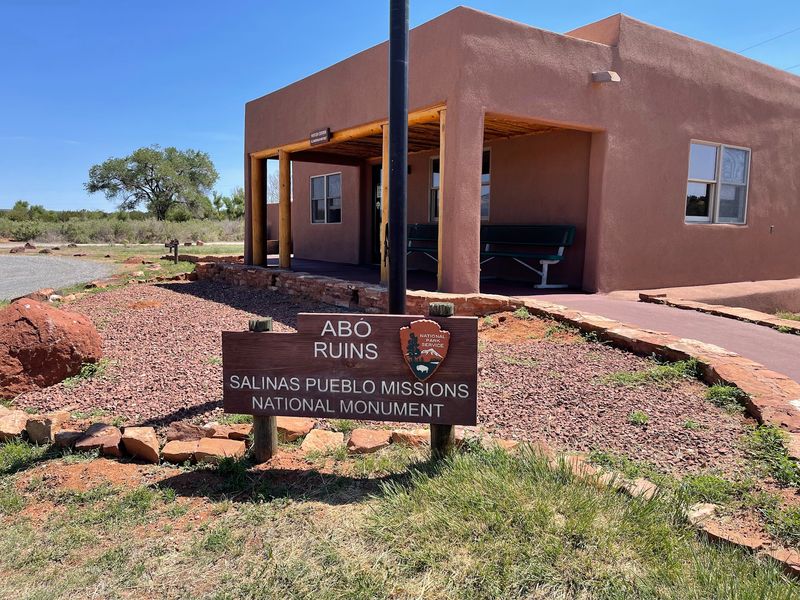
Rangers here know their stuff. Stopping at the visitor center before the trail gives you context that turns a nice walk into a memorable one.
The center offers exhibits about the pueblo, the people who lived there, and the mission period. It’s compact, so you won’t spend your whole day inside.
Park staff can answer questions and point you toward the best route through the site. They can also explain how this unit connects with the other two parts of the monument.
Passport stamp collectors, get your booklet ready. The front desk has cancellation stamps for National Park Passport fans.
The Gran Quivira visitor center follows a seasonal schedule. During summer, it is generally open Thursday through Monday from 9 a.m. to 5 p.m., with Tuesday and Wednesday closures.
Winter hours are 9 a.m. to 4 p.m. daily.
Restrooms are available at the site, which is a relief out here. You are a long way from the nearest convenience store.
Bookstore purchases may be card-only, while donations may require cash. Bringing both covers your bases.
Spend a few minutes inside, then head out the door with a better map in your head and a few fresh questions to answer on the trail.
Getting There Is Part Of The Adventure
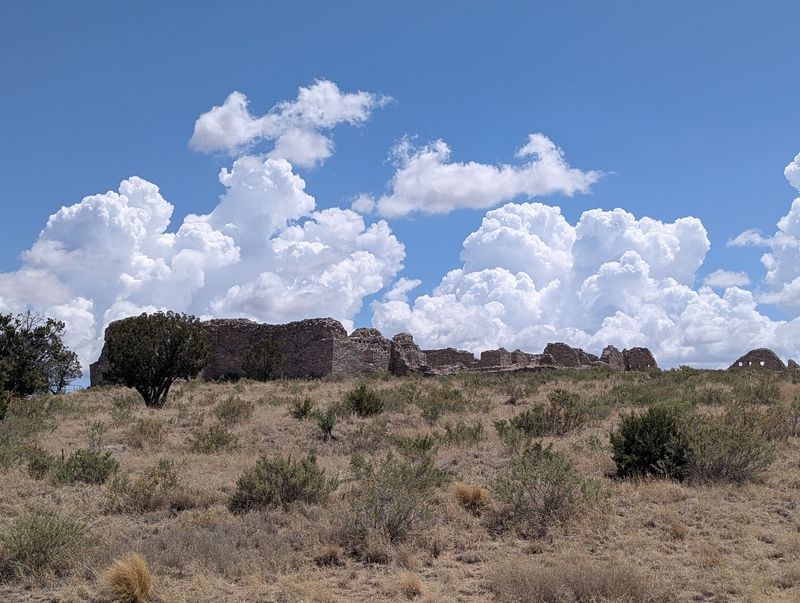
Remote is the right word for this spot. The site sits at 4030 Quivera Flats Road, Mountainair, NM 87036, though it’s actually a good drive south of Mountainair itself.
Roads out here cross wide, open country with few towns along the way. That emptiness is part of the charm, but it also means planning ahead.
Fill your gas tank before leaving town. Pack snacks and plenty of water too, since food options near the ruins are basically nonexistent.
GPS apps sometimes get confused near the site. Follow the signs to the main parking lot rather than trusting a random dirt road suggestion.
The drive itself is pretty in a quiet, big-sky way. Grasslands, distant hills, and long stretches of road set the mood before you even arrive.
Leashed dogs are generally welcome on the grounds. Just keep them on the trails and away from the fragile walls.
Give yourself plenty of daylight. Arriving early means cooler temperatures in summer and more time to explore without watching the clock.
Plus, there’s something satisfying about reaching a place this far out and realizing the trip was completely worth it.
Free Admission Makes This An Easy Yes
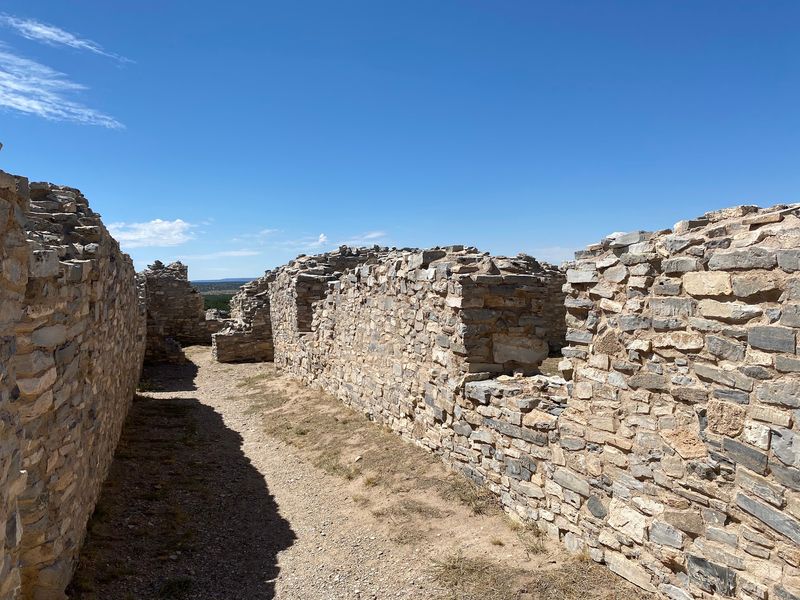
Good news for your wallet. Entry to the Salinas Pueblo Missions National Monument – Gran Quivira Unit and Visitor Center costs nothing.
That makes it a fantastic stop for families, students, and road-trippers on a budget. You can see centuries of history without paying a single entrance fee.
Kids often enjoy the freedom of walking among real ruins. Seeing actual walls from the 1600s beats a picture in a history book any day.
Turn the visit into a little game. Have younger travelers find the tallest wall, count doorways, or spot the different churches on the map.
The Junior Ranger program is another fun option at many National Park Service sites. Asking at the desk is a quick way to find out what’s available.
Picnic tables near the parking area make lunch easy. Bring your own food, since there’s no café waiting for you.
Free doesn’t mean careless, though. Treat the site with respect so it stays beautiful for everyone.
A free visit with a picnic, a short walk, and a mountain of history is a pretty great deal, especially in a part of New Mexico many people never think to visit.
The Hilltop Views Steal The Show
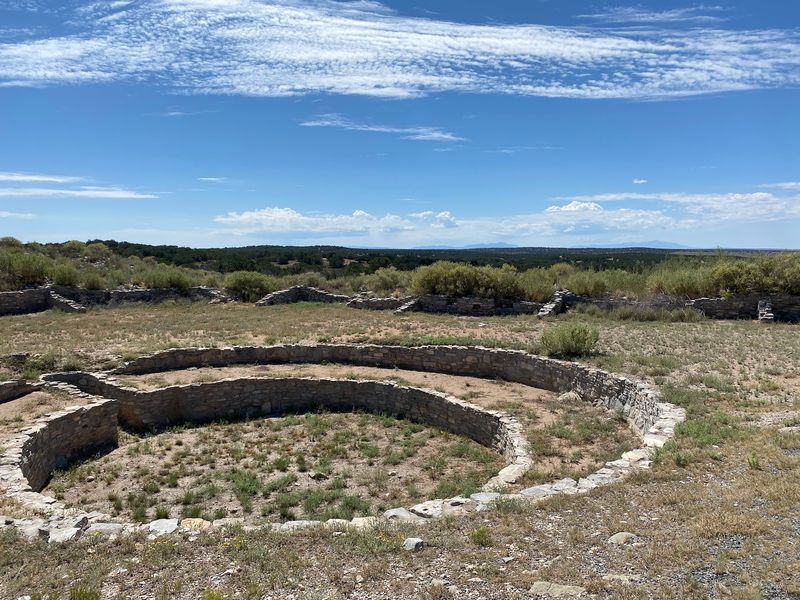
Location, location, location. The pueblo builders picked a hilltop, and the view still pays off today.
From the ruins, the land stretches out in nearly every direction. Grasslands, scattered trees, and faraway hills fill the horizon.
It’s easy to see why a hilltop made sense for a busy village. You could spot travelers coming from far away, which helped in a place built around trade.
Take a moment to stop walking and just look. The quiet up there is real, and the breeze often carries nothing but the sound of grass.
Cameras love this spot. The gray walls in the front and endless land behind them make for dramatic photos without much effort.
Weather can change the mood completely. Bright blue skies feel cheerful, while gathering clouds make the ruins look moody and mysterious.
Wind is common on the hill, so secure your hat. Sunscreen is smart too, since shade is pretty limited along the trail.
A few extra minutes soaking in the view might end up being your favorite memory from the whole trip, right up there with the towering church walls.
Save Room In Your Day For The Other Two Units
One stop is great. Three stops tell the full story.
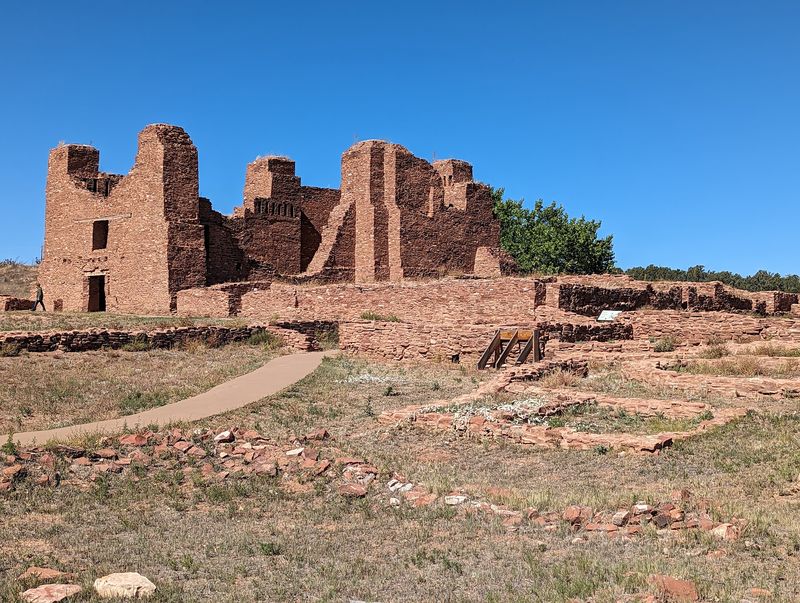
Gran Quivira is one of three units within Salinas Pueblo Missions National Monument. The other two are Abó and Quarai, each with its own mission church ruins.
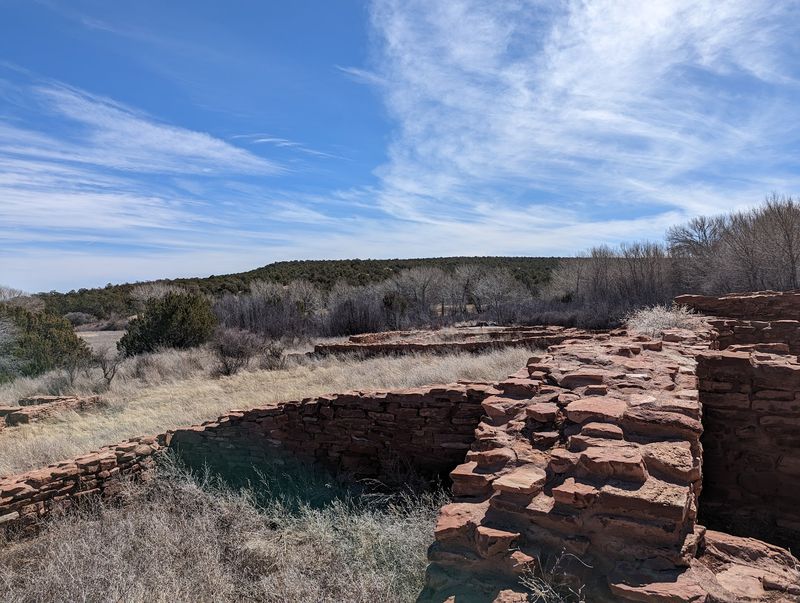
Each unit looks different, which keeps things interesting. Abó and Quarai feature reddish sandstone, while Gran Quivira stands out with its gray limestone.
The main monument headquarters and visitor center sit in Mountainair. Staff there can help you plan an efficient route between all three sites.
Visiting all three in one day is very doable with an early start. The drives between them cross scenic stretches of central New Mexico.
Some travelers like to finish at Gran Quivira because of its hilltop setting. Others start there because it’s the farthest south.
Either way works.
Comparing the sites side by side adds a lot of meaning. You start noticing how each community used local materials and responded to its own challenges.
By the end of the day, the Salinas region stops feeling like scattered ruins and starts feeling like a connected web of towns with a shared, fascinating past.
Stars Take Over After The Gates Close
Darkness is a feature here, not a flaw. Salinas Pueblo Missions National Monument has been recognized as an International Dark Sky Park.
That means the night sky stays wonderfully free of city glow. On clear nights, the stars across this part of New Mexico can look almost unreal.
Keep in mind that the Gran Quivira grounds follow daytime hours. Plan any stargazing from a legal public spot nearby rather than trying to stay after closing.
Special ranger-led night programs sometimes happen at the monument. Checking the official park calendar is the best way to catch one.
Bring a warm layer even in summer. Desert nights can cool off fast once the sun drops.
A red flashlight helps protect your night vision. A simple star chart app can turn a nice evening into a full astronomy lesson.
There’s something fitting about looking at the same stars the pueblo residents once saw. Centuries have passed, yet that sky still feels close.
Spend the day among stone walls, then end it under a blanket of stars, and this quiet corner of the map suddenly feels unforgettable.