
This Hidden Florida UFO House Feels Like Something From Another Planet
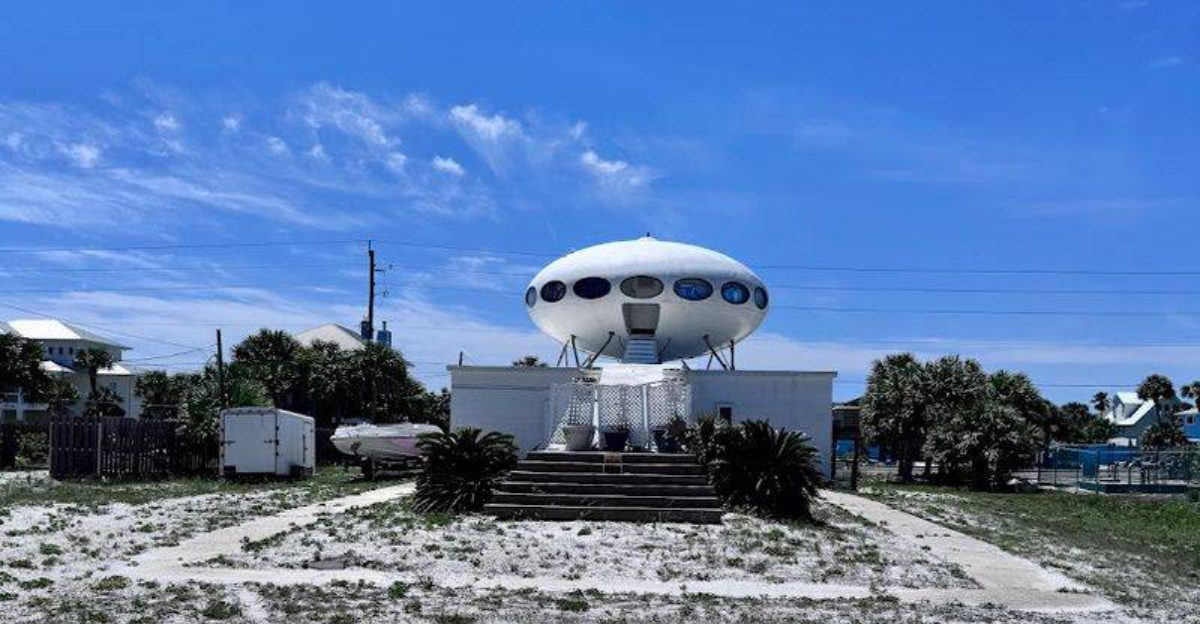
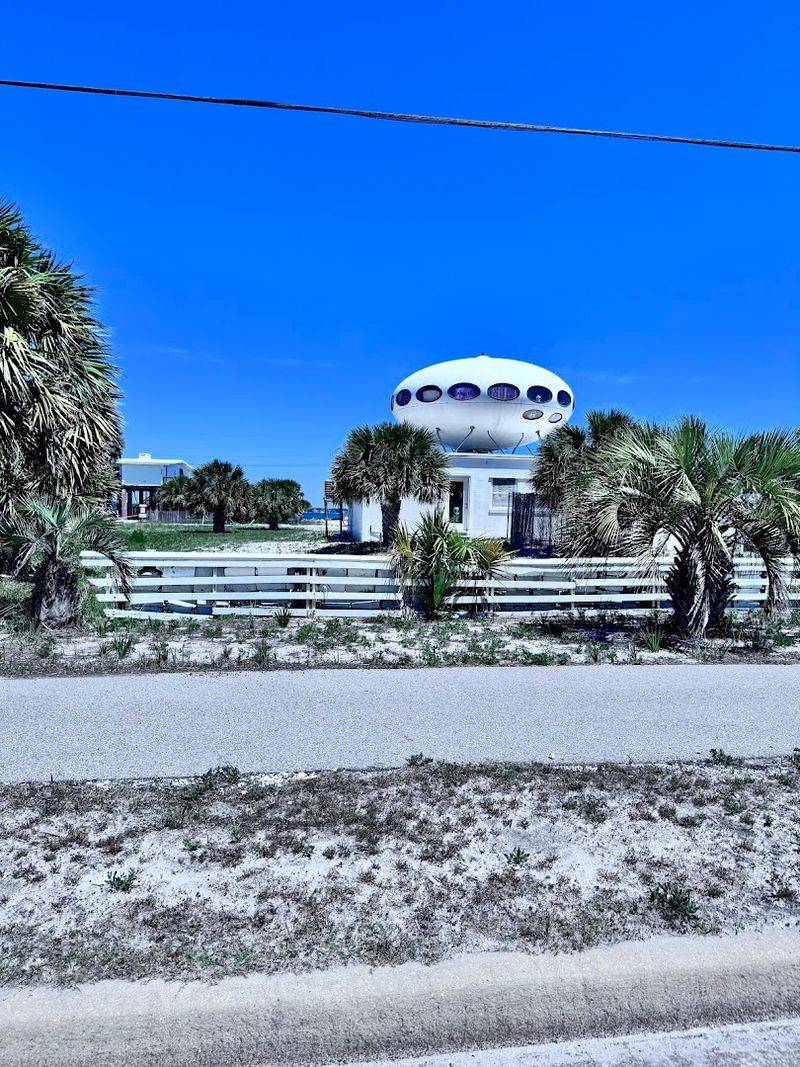
You can drive through Florida your entire life and still not expect to see what looks like a UFO parked beside the beach. Then suddenly, rising between the palm trees on Pensacola Beach, there it is, a giant futuristic pod balanced above the ground like something dropped straight out of a 1970s sci-fi movie.
This bizarre Florida house looks less like a home and more like it’s waiting for takeoff. The shape alone stops people in their tracks.
Oval walls, spaceship-style windows, elevated legs, and a design so wildly different from everything around it that it almost feels fake when you first see it in person. And somehow, it gets even stranger once you learn the story behind it.
What started as a futuristic housing concept decades ago has turned into one of the most fascinating architectural oddities anywhere in Florida, quietly attracting curious travelers, photographers, and road-trippers who cannot believe something this unusual actually exists. Honestly, it feels less like discovering a beach house and more like stumbling onto a forgotten piece of the future.
A Finnish Architect Dreamed It Up
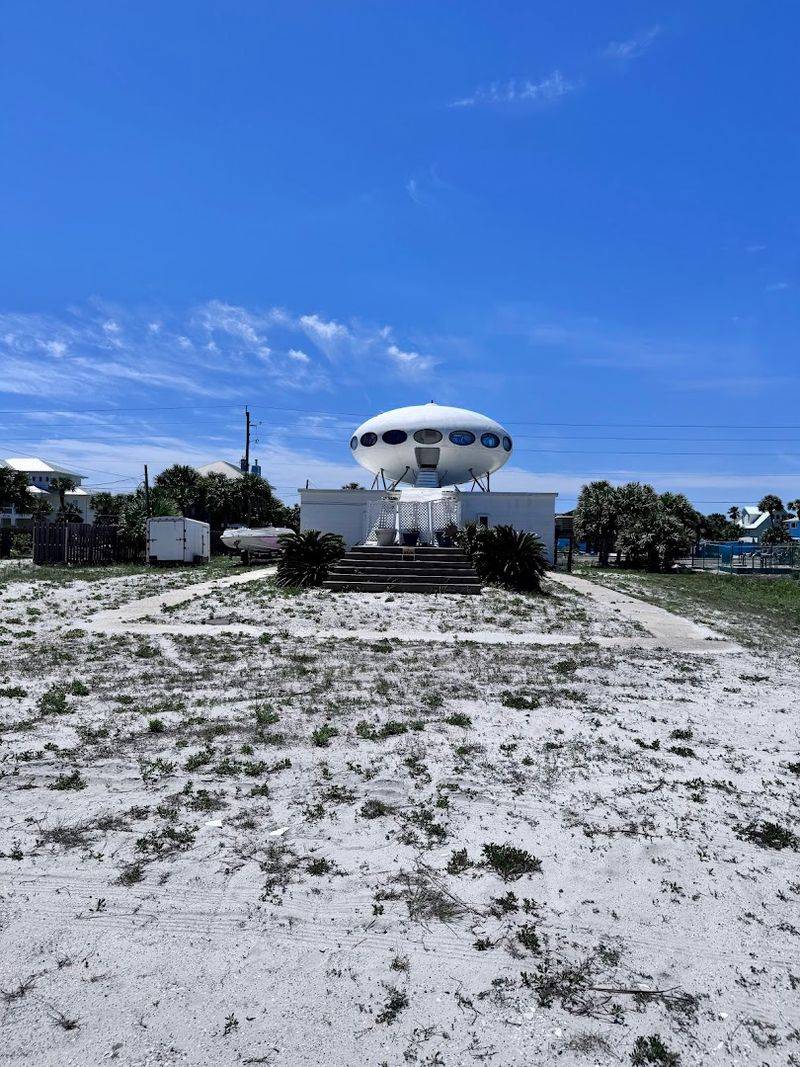
Most houses start with blueprints and lumber, but the Futuro House started with a ski trip problem. Finnish architect Matti Suuronen designed the original Futuro in 1968 as a portable ski cabin that could be dropped onto a mountainside by helicopter, assembled quickly, and heated fast enough for cold-weather comfort.
Suuronen was already a respected engineer, and his background in structural design pushed him toward fiberglass-reinforced polyester plastic as the primary building material, which was a bold and unconventional choice for a home at the time.
The result looked nothing like a ski cabin and everything like a spaceship, earning instant global attention and a reputation that outlasted the original production run by more than fifty years.
Only around one hundred Futuro units were ever built worldwide, making each surviving example a rare architectural artifact that collectors and historians actively track.
The UFO Shape Is Completely Intentional
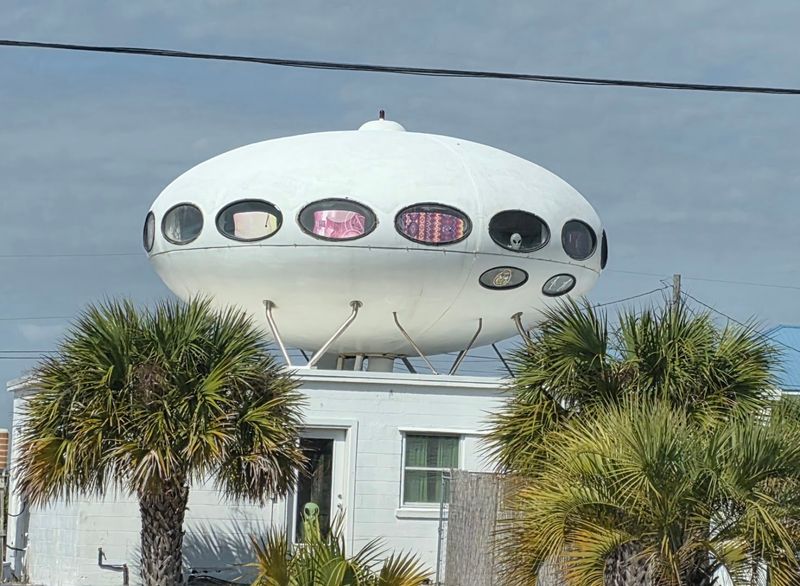
That flying saucer silhouette is not an accident or a quirky renovation, it is exactly what Suuronen intended from the very first sketch. The elliptical shell measures about eight meters in diameter and stands elevated above the ground on angled steel legs, giving it the unmistakable appearance of a craft that just touched down for a quick visit.
The oval form was chosen for structural efficiency, since a rounded shell distributes stress more evenly than a boxy frame, making it surprisingly strong despite its lightweight plastic construction.
A hatch-style entry door folds down from the belly of the pod, and the oval windows ringing the midsection add to the spacecraft aesthetic in a way that never gets old no matter how many times you walk around it.
Standing next to the Pensacola Beach Futuro for the first time, the shape genuinely makes your brain do a double-take, which is a feeling very few buildings in the world can deliver.
Only About 100 Were Ever Built Worldwide
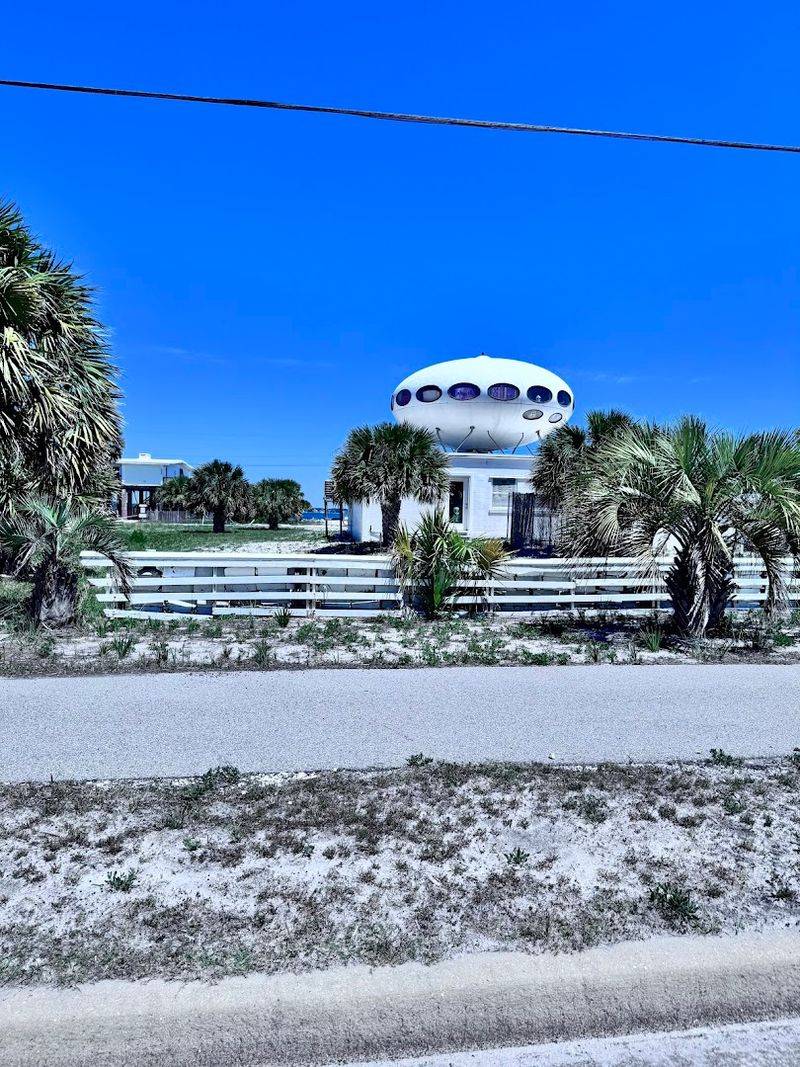
Scarcity is part of what makes the Pensacola Beach Futuro House so special, because the total global production run was remarkably small. Estimates place the number of completed Futuro units somewhere between ninety and one hundred, depending on the source, and not all of them survived the decades that followed their construction.
The 1973 oil crisis hit fiberglass production costs hard and essentially ended the Futuro’s commercial life before it ever gained real momentum, leaving behind a tiny population of these structures scattered across multiple continents.
Some have been lost to neglect, fire, or demolition, while others have been restored with impressive care by owners who recognized their historical and cultural value.
Finding one in a residential neighborhood along a Florida beach road, still standing and apparently well-maintained, feels like stumbling onto a piece of living design history that most people never get the chance to see in person.
The Interior Looks Like A Space Capsule
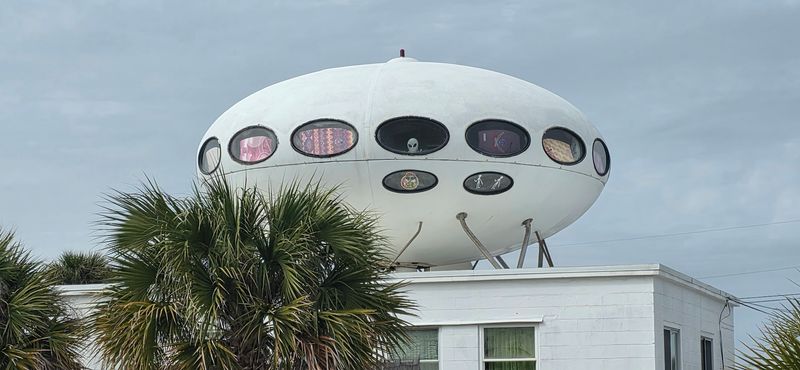
Stepping inside a Futuro House is not like walking into any other building, because the curved interior walls, built-in furnishings, and oval portholes create an environment that feels genuinely like the inside of a spacecraft. The original design included built-in sleeping pods, a central fireplace, and molded plastic seating that curved along the interior walls in one continuous sweep.
Everything was designed to be compact and efficient, with storage tucked into the curved spaces and furniture that served double duty wherever possible, reflecting the practical demands of a portable mountain retreat.
The circular windows positioned around the midsection of the shell allow natural light to filter in from multiple angles, giving the interior a surprisingly warm and bright atmosphere despite its unconventional shape.
Visitors who have seen the Pensacola Beach unit from outside often describe the interior design of Futuro Houses in general as something that makes you feel like you are waiting for a countdown rather than sitting down for breakfast.
Pensacola Beach Is One Of The Best Places To Spot One
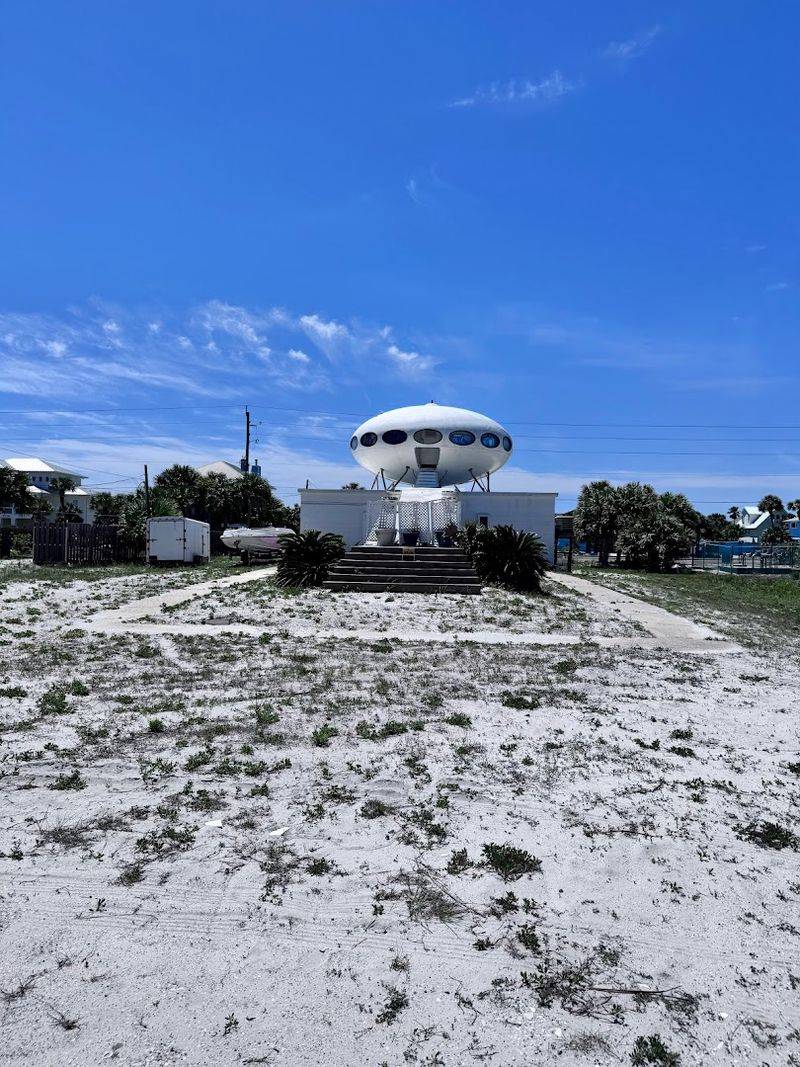
Of all the places on Earth where a Futuro House could end up, a Florida beach community is about as good as it gets for a curious traveler hoping to track one down. The Pensacola Beach unit sits at 1304 Panferio Dr, Pensacola Beach, FL 32561, positioned along a residential road that runs east from the main bridge onto the island, making it accessible and surprisingly easy to find once you know what you are looking for.
One reviewer noted that the key is to keep your eyes open while traveling east after crossing the bridge, and that the house rewards attentive observers with a view that stops you mid-scroll if you happen to be browsing photos later.
The beach setting adds a layer of surreal beauty to the already otherworldly structure, with the Gulf of Mexico light bouncing off the white fiberglass shell in a way that makes it glow on sunny afternoons.
A Friendly Greeter Waits At The Front Door
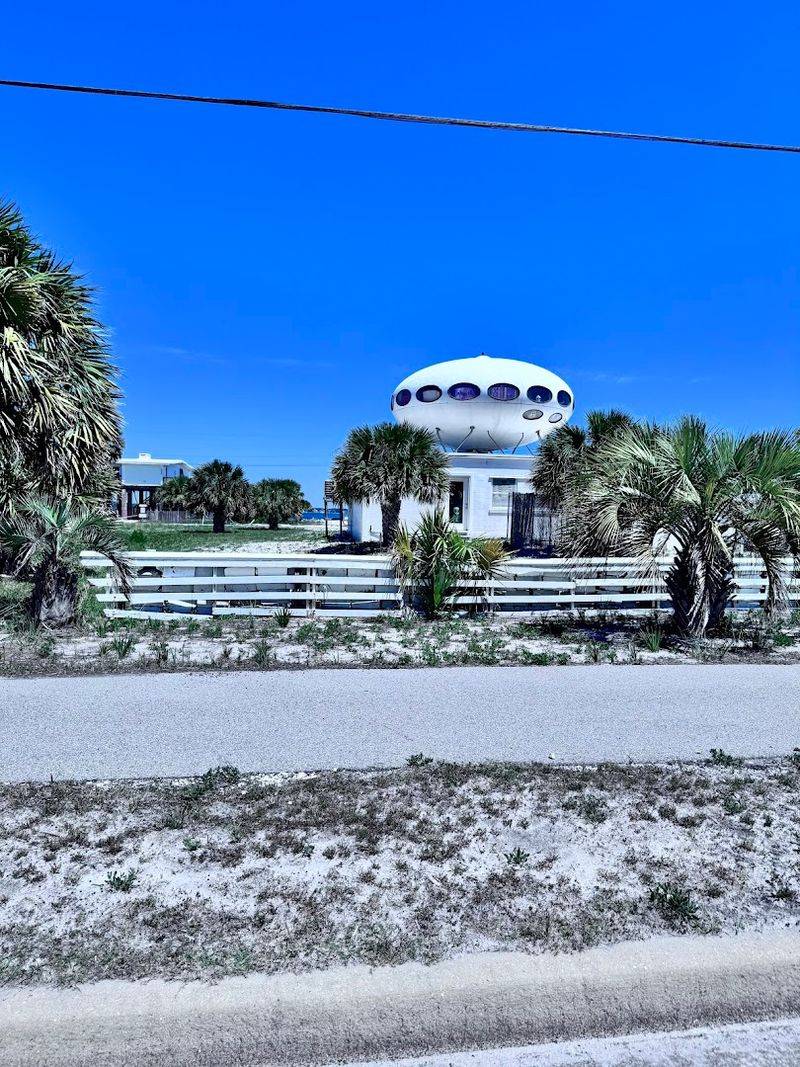
One of the most charming details about the Pensacola Beach Futuro House is a small but memorable touch that a local reviewer pointed out with genuine enthusiasm. According to that reviewer, there is a greeter waiting at the front door, a decorative figure or accent that the current owner has placed near the entry hatch to welcome passing visitors in a playful and unexpected way.
This kind of personal detail says a lot about the spirit of whoever calls this remarkable structure home, suggesting that they embrace the attention and enjoy sharing a little moment of delight with strangers driving by.
It also adds a layer of warmth to what could otherwise feel like a cold architectural curiosity, turning the stop into something that feels more like a brief encounter with a neighbor who has a great sense of humor.
That small greeter has become part of the local lore around the house, and it is worth slowing down long enough to spot it on your own.
It Carries A Perfect Five-Star Rating
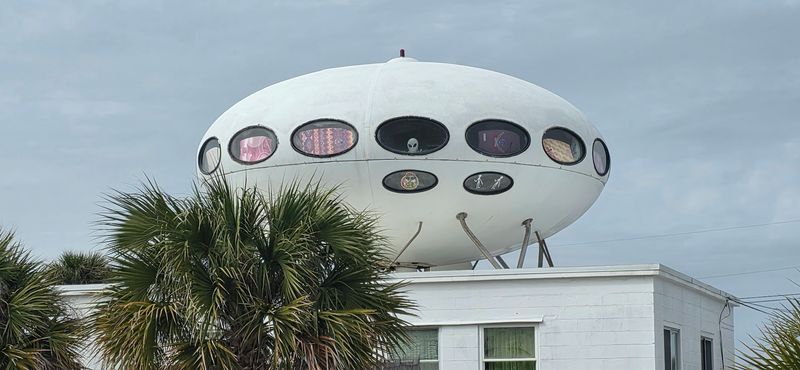
Not every landmark earns unanimous praise, but the Futuro House at Pensacola Beach has managed a perfect five-star rating from everyone who has taken the time to leave a review, which speaks volumes about the impression it leaves on visitors. The reviews are brief but enthusiastic, with one describing the experience of spotting it as something that rewards careful attention and a second simply confirming that the house delivers exactly the kind of wow factor that makes a detour worthwhile.
For a structure that is essentially a drive-by attraction rather than a ticketed destination, that level of consistent enthusiasm is a meaningful signal that the experience holds up in real life, not just in photographs.
There is something satisfying about finding a place that lives up to its reputation without needing elaborate presentation or marketing to make an impact.
The Futuro House earns its stars simply by existing exactly as it is, unfiltered and unapologetically strange in the best possible way.
The Oil Crisis The Futuro’s Commercial Future
Timing is everything in business, and the Futuro House had the misfortune of arriving on the market just a few years before one of the most disruptive economic events of the twentieth century changed everything. The 1973 global oil crisis sent petroleum product prices through the roof, and since fiberglass-reinforced polyester plastic is a petroleum-derived material, the cost of producing Futuro units jumped dramatically almost overnight.
What had been an ambitious commercial project with genuine mass-market potential suddenly became economically unviable, and production effectively stopped before the design could reach anything close to widespread adoption.
This abrupt halt is the main reason so few Futuro units exist today, and it also explains why the ones that do survive carry such significant value among architectural historians and design enthusiasts around the world.
In a different timeline, Futuro Houses might be as common as ranch-style homes, but the oil crisis turned them into accidental rarities that now feel all the more precious because of it.