
This Hidden Ghost Town Beneath South Carolina’s Lake Marion
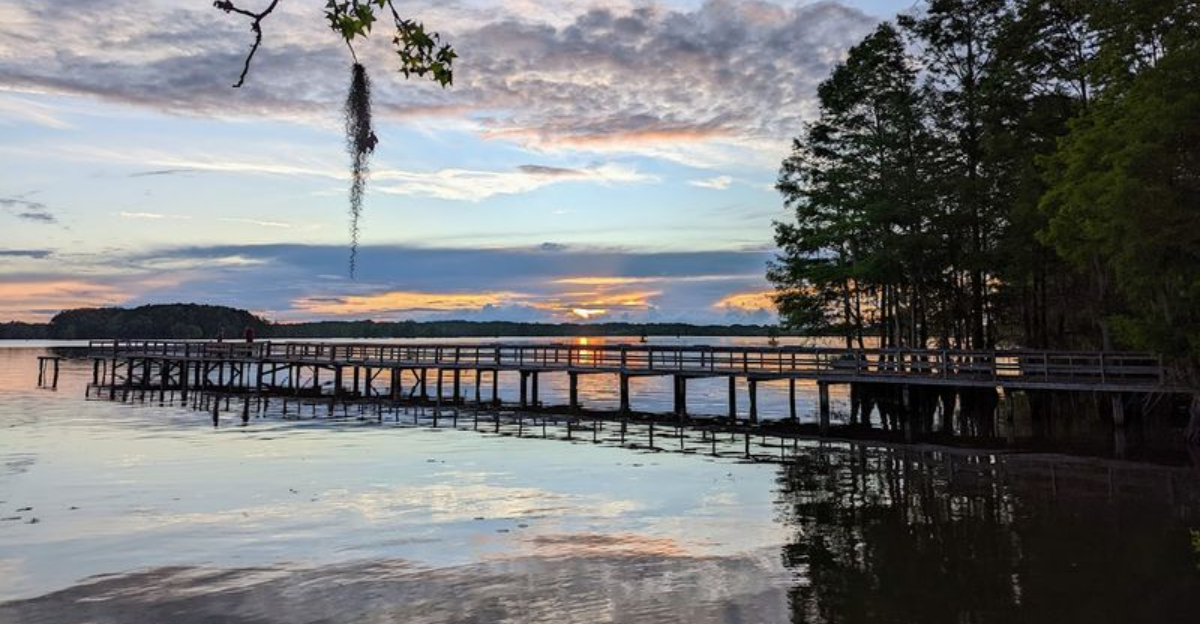
The surface looks calm, almost empty, and that’s what makes it easy to miss.
You stand by the water in South Carolina thinking it’s just another lake. Then you realize there’s more beneath it than anyone can see.
Not everything in South Carolina’s landscapes is gone when it disappears, some of it is just hidden in plain sight.
Below that still, dark water sits something that used to be alive. Homes, paths, pieces of a place that didn’t vanish, just sank out of view.
You don’t see it directly, but you feel it. In the quiet.
In the way people pause a little longer when they hear the story.
It changes how you look at the lake. What seemed simple starts to feel layered.
It’s not just water anymore.
It’s something holding onto what came before.
And that’s what makes it impossible to look at the same way again.
A Plantation Swallowed By Rising Waters
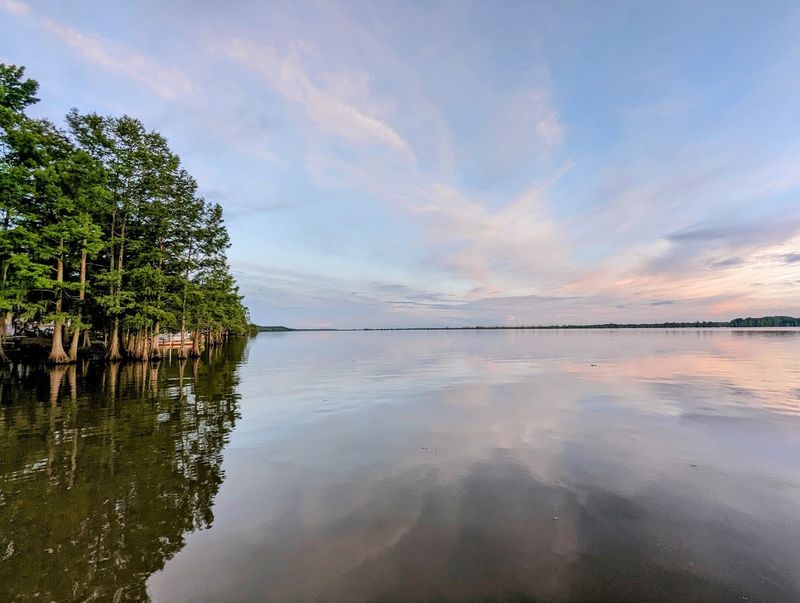
Few stories in South Carolina history are as quietly haunting as the deliberate flooding of Elliott’s Plantation. When the Santee Cooper hydroelectric project launched in the early 1940s, thousands of acres of farmland, forests, and settlements were intentionally submerged to create Lake Marion and Lake Moultrie.
Elliott’s Plantation sat directly in the path of those rising waters. Families who had worked that land for generations were given relocation assistance and told to move on.
Homes, barns, and outbuildings were left standing as the water crept higher.
The project was one of the largest public works efforts in the American Southeast at the time, designed to bring electricity to rural communities. But for the people of Elliott’s Plantation, progress came with a steep personal cost.
Their community essentially vanished beneath the surface, becoming part of the lake bed that anglers and boaters now cross without a second thought.
The Origins Of Elliott’s Plantation
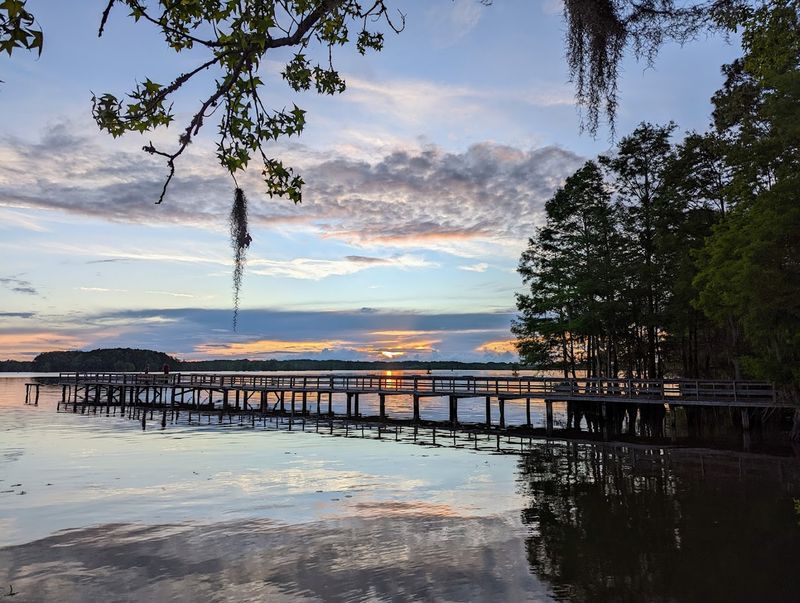
Long before Lake Marion existed, Elliott’s Plantation was a working agricultural property rooted in the colonial and antebellum history of South Carolina’s Lowcountry region. The land sat in what is now Clarendon County, an area shaped by rice cultivation, timber, and the labor of enslaved people.
Plantations like this one were central to the regional economy for well over a century. The Elliott family name appears in historical records connected to land grants and property ownership in the area, making this one of many such estates that dotted the landscape along the Santee River corridor.
Understanding its origins matters because it adds layers of meaning to the flooding. This was not just farmland.
It was a place where generations of people, free and enslaved alike, had lived, worked, and built lives. That layered history now rests quietly beneath the water, largely unseen but not entirely forgotten.
How The Santee Cooper Project Changed Everything
The South Carolina Public Service Authority, better known as Santee Cooper, launched one of the most ambitious infrastructure projects the state had ever seen in 1939. The plan was to dam the Santee and Congaree rivers to generate hydroelectric power for communities that still lacked reliable electricity.
Construction crews worked for years to reshape the landscape, ultimately flooding roughly 160,000 acres to form Lake Marion and Lake Moultrie. The scale of the effort was staggering, involving thousands of workers and the relocation of entire communities.
Elliott’s Plantation was among the properties absorbed by this massive undertaking. The flooding transformed the region economically, bringing power to rural South Carolina homes and eventually supporting a fishing and tourism industry that continues today.
But the human cost was real. Families lost land their ancestors had farmed for generations, and the physical evidence of their lives disappeared beneath the new lakes.
What Still Lies Beneath Lake Marion
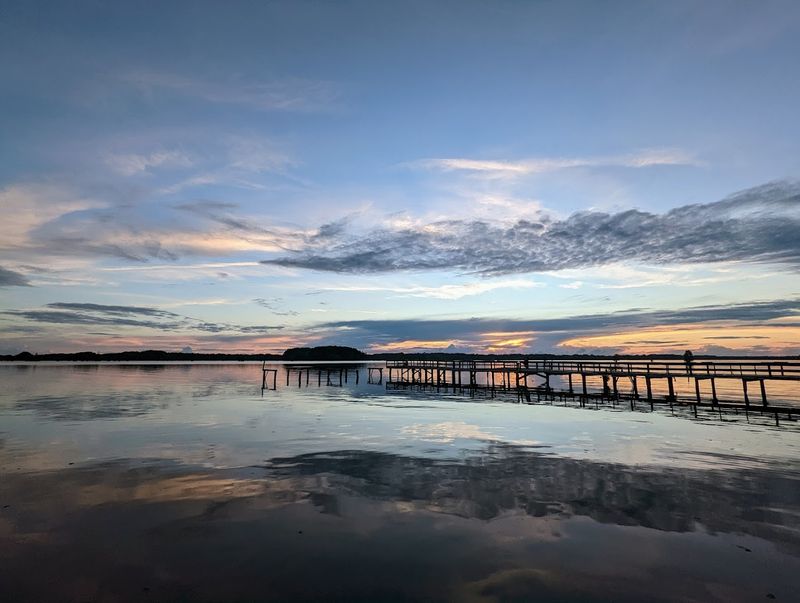
One of the most fascinating aspects of Lake Marion is what remains hidden beneath its surface. Because the flooding happened relatively quickly and the cleared land was not fully stripped, thousands of tree stumps, old building foundations, and remnants of former roads still exist on the lake bed.
Divers and fishermen have long known about these underwater structures. The submerged stumps in particular create ideal habitat for bass, crappie, and catfish, which is one reason Lake Marion developed a reputation as one of South Carolina’s top fishing destinations.
At Elliott’s Plantation specifically, the underwater landscape reflects the layout of a working property from a century ago. Foundations suggest where structures once stood, and the general contours of the land are still recognizable to those who study old survey maps.
It is a strange kind of time capsule, one you cannot walk through but can imagine clearly if you know where to look.
Elliott’s Landing And Campground Today
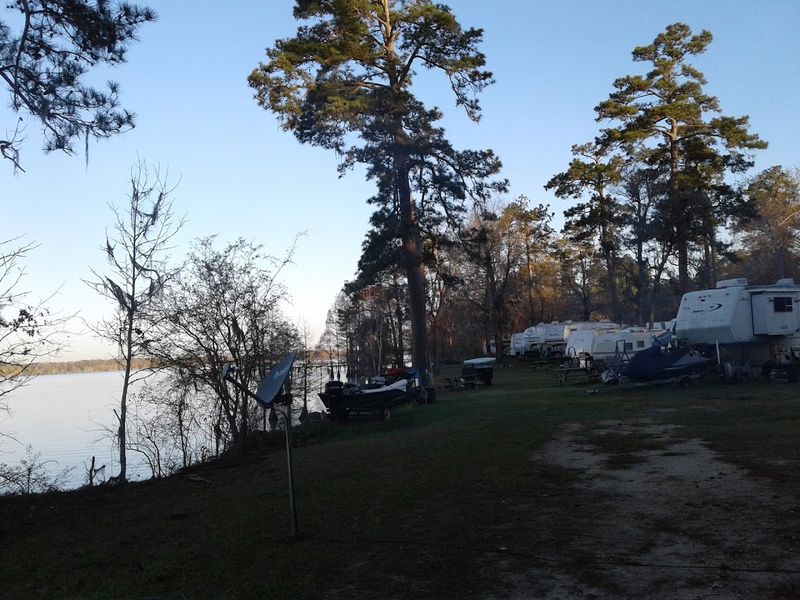
The name Elliott’s lives on today through Elliott’s Landing and Campground, located at 2010 Elliott’s Landing Rd in Rimini, SC 29125. This family-run operation sits right on the edge of Lake Marion and serves as a gateway for visitors who want to experience the lake and its layered history firsthand.
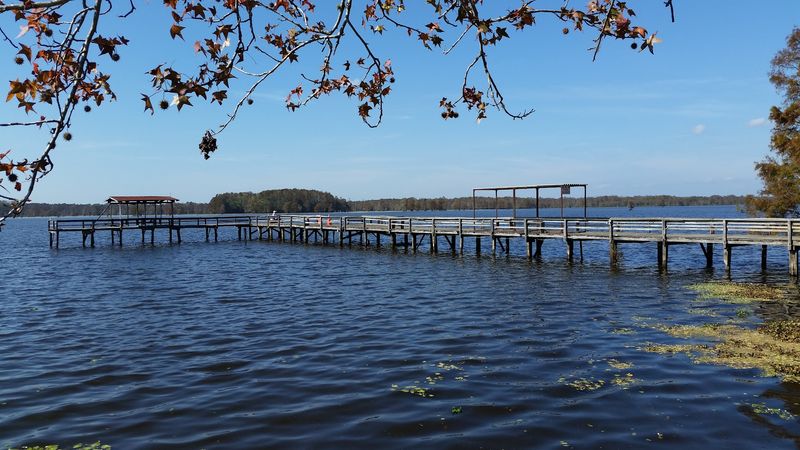
The campground offers cabins, RV hookups, a boat ramp, and a fishing pier stretching out over the water. The owners, known for their warm hospitality, also run a small camp store stocked with fishing gear, tackle, and basic supplies.
Visitors often describe the atmosphere as quiet and genuinely welcoming, the kind of place where conversations happen naturally between strangers who share a love of the outdoors. The setting is remote enough to feel like a real escape, yet accessible enough for a weekend trip.
The campground carries that Elliott name forward, keeping a small but meaningful connection to the land’s past alive.
Fishing Above A Ghost Town
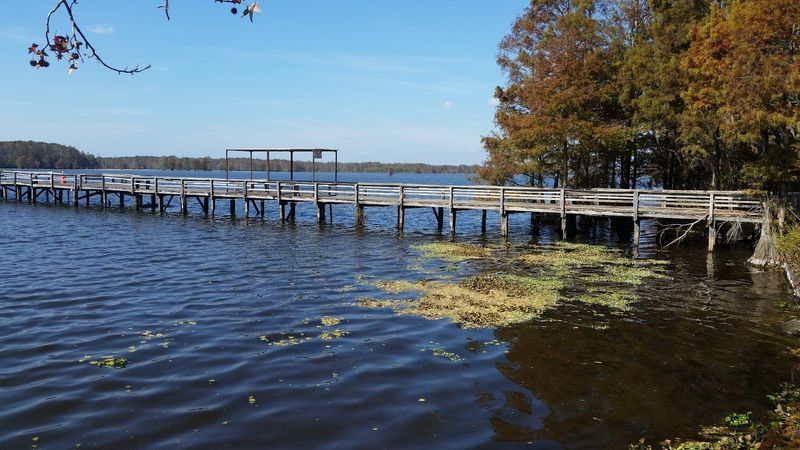
There is something quietly surreal about fishing on Lake Marion when you know what lies beneath. Anglers sitting on the pier at Elliott’s Landing are essentially casting their lines above the ruins of a community that existed before most of their grandparents were born.
Lake Marion is famous throughout South Carolina for its exceptional fishing, particularly for largemouth bass, crappie, catfish, and striped bass. The submerged timber and old structural remnants create perfect underwater cover, concentrating fish in ways that open water simply cannot match.
Experienced anglers know to target the areas around old tree lines and foundation edges for the best results. The campground’s 300-foot fishing pier gives non-boaters direct access to deeper water where larger fish tend to hold.
For many visitors, the combination of great fishing and the eerie backstory of what sits below the surface makes a trip to this part of Lake Marion genuinely unforgettable.
The Communities That Disappeared Along With Elliott’s Plantation
Elliott’s Plantation was not alone in its fate. When Lake Marion filled in the early 1940s, dozens of communities across the Santee River basin were similarly submerged or dramatically altered.
Small farming settlements, family cemeteries, churches, and rural homesteads all disappeared beneath the rising water.
Historians estimate that thousands of families were displaced during the Santee Cooper project, many of them African American farming families who had worked the land since Reconstruction. Compensation was offered, but it rarely reflected the true value of the land or the cultural loss involved.
Some local families managed to relocate to nearby towns like Summerton, Manning, and Pinewood, carrying their memories and family histories with them. Others scattered further across the state.
The flooding effectively erased an entire layer of rural South Carolina culture in a matter of years, a fact that local historians and descendants have worked to document and preserve ever since.
Old Cemeteries And The Effort To Preserve Them
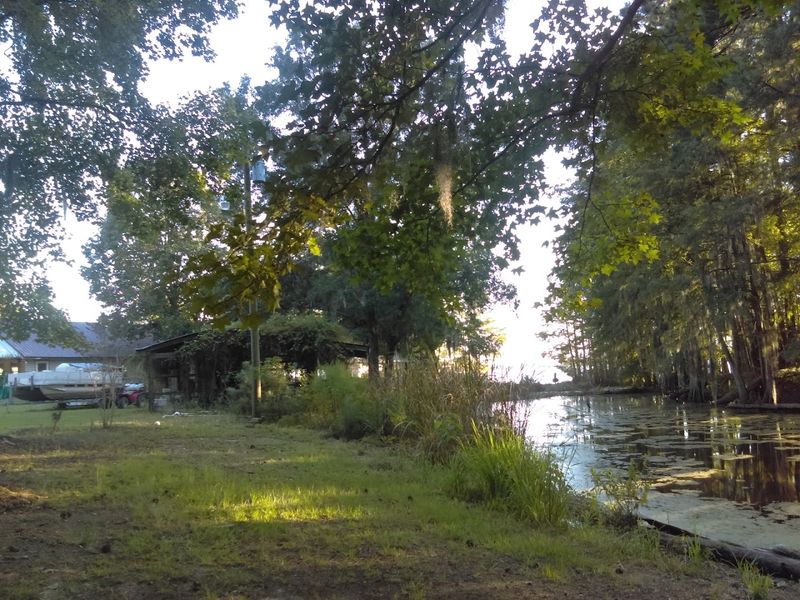
One of the most poignant legacies of the Santee Cooper flooding involves the cemeteries that once served the communities around Elliott’s Plantation and the broader Lake Marion basin. Some burial grounds were relocated before the waters rose, but others were not fully addressed, leaving graves in areas that became permanently flooded or inaccessible.
Preservation efforts have continued for decades, with local historical societies and descendants working to identify, document, and in some cases physically relocate remains to higher ground. The work is slow and emotionally heavy, but it represents an important act of historical respect.
South Carolina’s State Historic Preservation Office has been involved in various documentation efforts over the years, helping to map and record sites before they are lost entirely. For families with roots in the Elliott’s Plantation area, these cemeteries represent the last tangible link to ancestors who lived, farmed, and built community on land that no longer exists above water.
Why Lake Marion Became A Tourism Destination
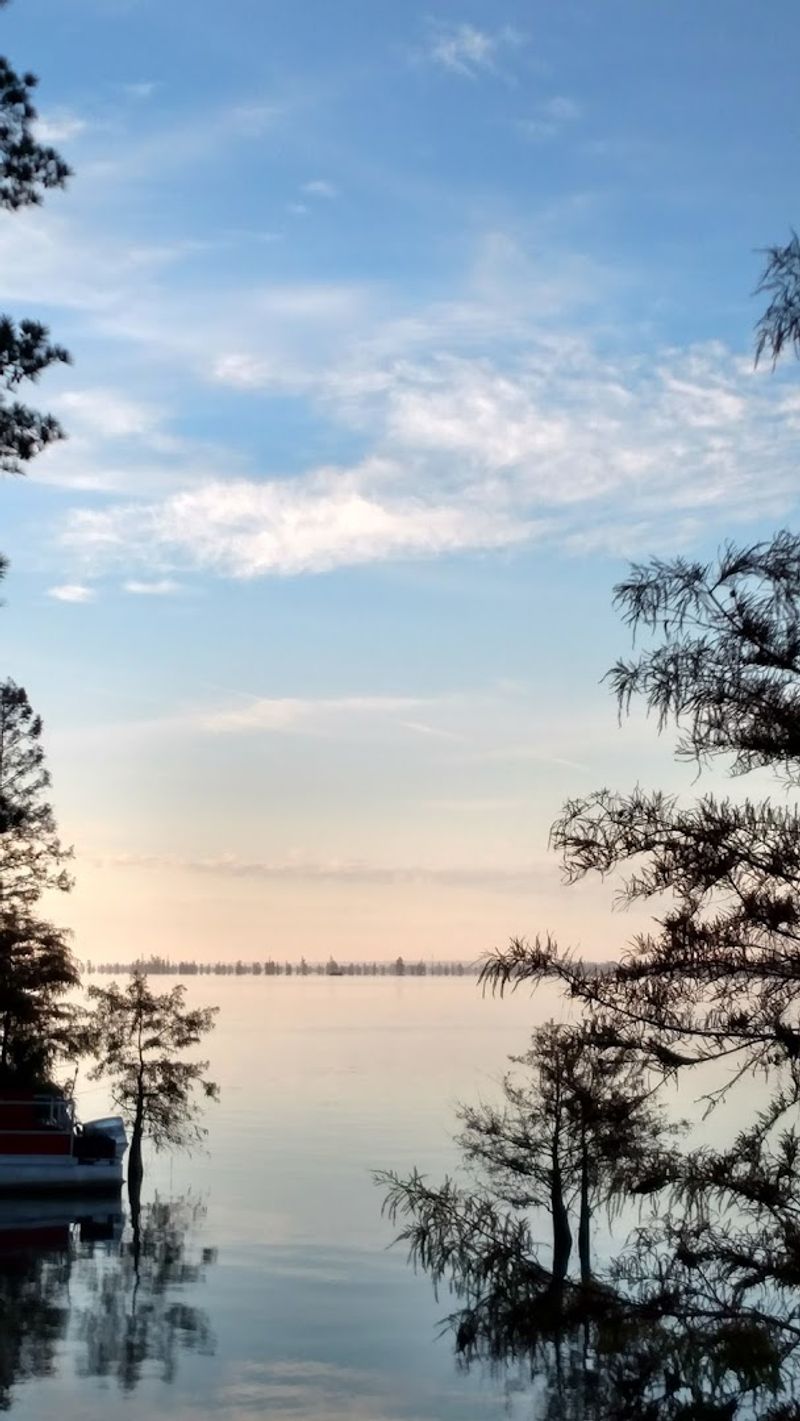
Despite its complicated origin story, Lake Marion eventually became one of South Carolina’s most beloved recreational lakes. Covering roughly 110,000 acres, it is one of the largest lakes in the eastern United States and draws visitors for fishing, boating, camping, and wildlife watching throughout the year.
The lake’s cypress-lined shores and shallow backwater areas create a distinctive visual character that feels unlike the manicured reservoirs found in many other states. Great blue herons, ospreys, and wood ducks are common sights, and the lake is part of a broader ecosystem that supports significant biodiversity.
Tourism infrastructure grew gradually over the decades, with campgrounds like Elliott’s Landing serving as anchor points for visitors exploring the area. The combination of natural beauty, excellent fishing, and the quiet intrigue of the lake’s hidden history gives Lake Marion a personality that rewards curious travelers.
It is a place where the past and present coexist in genuinely interesting ways.
Visiting Elliott’s Landing: What To Expect
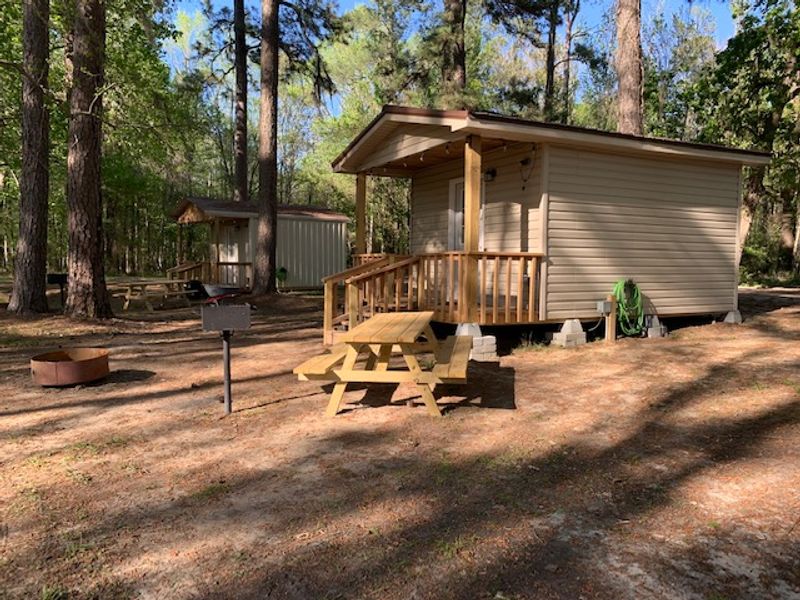
Planning a visit to Elliott’s Landing and Campground means embracing a genuinely rustic experience. The campground sits in a remote stretch of Rimini, South Carolina, and the road leading in can be rough, so arriving prepared matters more here than at most developed campgrounds.
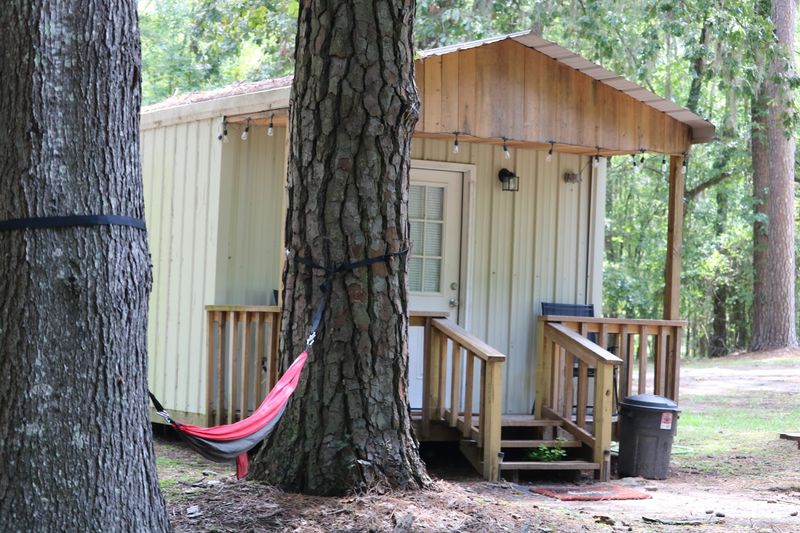
Cabins at the property come equipped with basic amenities like bunk beds, a mini fridge, microwave, and air conditioning. The bathhouses are old-school campground style, so packing your own toiletries and expecting a no-frills setup will serve you well.
The nearest significant shopping options are roughly 25 to 35 minutes away, so stocking up before arrival is strongly recommended.
The real reward is the setting itself. Waking up a short walk from the lake, spending the day fishing from the long pier, and ending the evening in the game room with pool tables and arcade games creates a particular kind of laid-back joy that polished resorts rarely manage to replicate.
Call ahead at (803) 452-5336 before relying on GPS navigation.