
This Hidden Idaho Mountain Town Is So Underrated, Even Most Locals Haven’t Discovered It
Craving an escape that truly feels like an escape? Not just another well-marketed destination, but a place where the noise of the world genuinely fades, replaced by the whisper of pines and the rush of pristine rivers.
Forget the national park queues and the bustling resort towns. Island Park, tucked away in Idaho’s majestic mountains, offers a rare kind of solace. It’s a sanctuary for the soul, a sprawling wilderness playground so authentically untouched, so subtly spectacular, that it has managed to remain an enigma.
Even those born and raised in the Gem State often haven’t fully unveiled its quiet, rugged charm. Your ultimate hidden mountain getaway awaits.
1. America’s Longest Main Street
Stretching an impressive 33 miles along US Highway 20, Island Park boasts what locals proudly call the longest main street in America. This unique layout means businesses, cabins, and attractions are spread out through gorgeous forested corridors rather than clustered in a traditional downtown.
The expansive design creates a different kind of mountain town experience where you’ll need to drive between destinations. What you lose in walkability, you gain in privacy and breathing room.
Each turn in the road reveals another hidden lodge, fishing spot, or trailhead waiting to be discovered.
2. Gateway To Yellowstone Without The Crowds
While tourists jam the more famous western entrances to Yellowstone National Park, Island Park offers a peaceful alternative just 30 minutes from the park’s west entrance. Savvy travelers use this quiet town as their base camp for exploring America’s first national park.
The drive from Island Park to Yellowstone takes you through spectacular scenery without the bumper-to-bumper traffic found at other access points. Local accommodations typically cost less than those in more touristy West Yellowstone.
You’ll find yourself sharing insider tips with fellow travelers rather than fighting for parking spots.
3. Henry’s Fork Fly Fishing Paradise
Anglers worldwide speak in reverent tones about Henry’s Fork of the Snake River, which flows through Island Park. This legendary waterway offers some of the most technical and rewarding fly fishing in North America, with rainbow and brown trout that grow to trophy sizes.
I still remember my first time casting on Henry’s Fork. The morning mist was rising off the water as a massive rainbow trout rose to my fly. My hands shook as I played that beautiful fish for what felt like hours before releasing it back to the crystal-clear waters.
Local fly shops provide expert guides who know exactly where the big ones hide.
4. Harriman State Park’s Hidden Treasures
Harriman State Park sits like a secret jewel within Island Park, encompassing 11,000 acres of wildlife refuge donated by the railroad-wealthy Harriman family. Unlike more developed state parks, Harriman preserves a working cattle ranch alongside pristine wilderness.
Miles of trails wind through meadows where trumpeter swans, moose, and elk roam freely. Cross-country ski trails transform the park in winter, offering silent journeys through snow-covered forests.
The historic Railroad Ranch buildings remain largely unchanged since the early 1900s, giving visitors a glimpse into Idaho’s ranching heritage while surrounded by natural splendor.
5. Mesa Falls’ Thundering Beauty
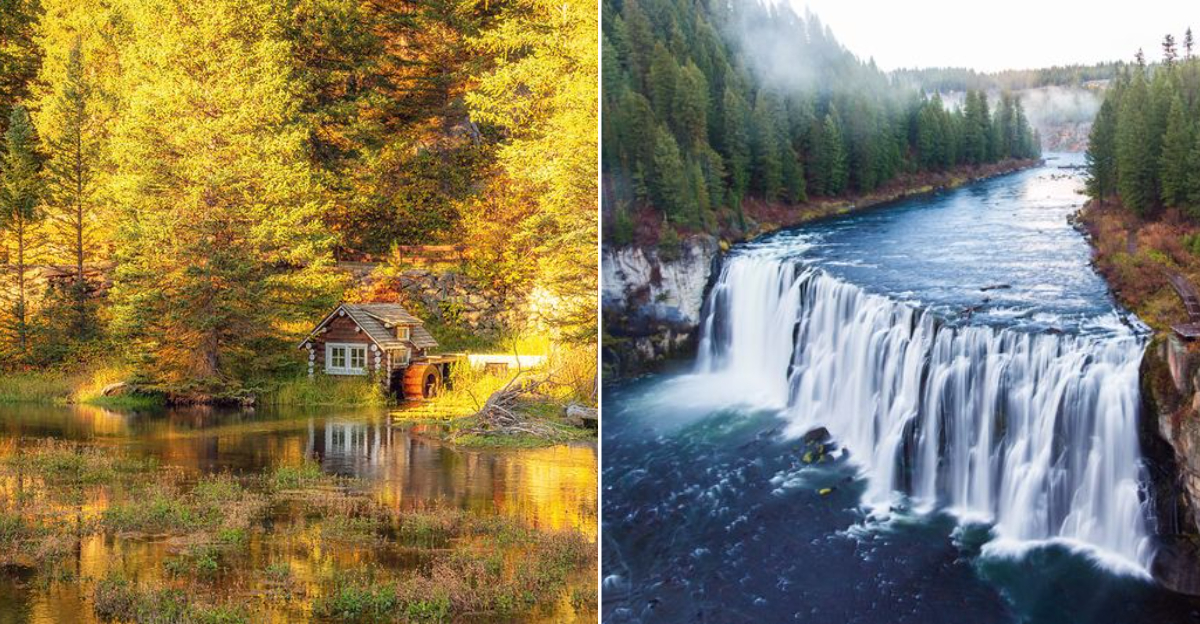
Upper and Lower Mesa Falls showcase nature’s raw power as the Henry’s Fork plunges over ancient volcanic cliffs. The Upper Falls drops 114 feet with such force that the ground trembles beneath your feet when standing on the viewing platform.
Unlike many western waterfalls that diminish by late summer, Mesa Falls maintains its impressive flow year-round thanks to consistent spring water sources. The historic Mesa Falls Lodge, built from massive logs in 1915, provides a charming spot to enjoy the view.
Rainbows frequently form in the mist, creating perfect photo opportunities that capture the magic of this often-overlooked natural wonder.
6. Winter Wonderland For Snowmobile Enthusiasts
When winter blankets Island Park with its thick snow cover, the area transforms into one of America’s premier snowmobiling destinations. Over 500 miles of groomed trails connect Island Park to West Yellowstone and the surrounding mountains, creating an extensive network that draws riders from across the country.
The area receives an average of 200+ inches of snow annually, ensuring reliable conditions throughout the winter season. Local rental shops cater to beginners and experienced riders alike.
I’ve spent countless winter weekends racing through powder-filled meadows and along ridge lines with views stretching all the way to the Tetons on clear days.
7. Big Springs’ Crystal Clear Waters
Big Springs creates a magical scene where 120 million gallons of crystal-clear water bubble up from underground each day, forming the headwaters of Henry’s Fork. The water remains a constant 52 degrees year-round, creating an otherworldly effect as steam rises from the surface during cold weather.
Massive trout swim lazily in the springs, protected from fishing but perfect for photography. The historic Johnny Sack Cabin, hand-built by a German immigrant in the 1930s, stands nearby as a testament to frontier craftsmanship.
Visitors often spot moose wading in the shallows, especially during early morning or evening hours.