
This Hidden Michigan Bridge Looks Ordinary Until You Walk Beneath It
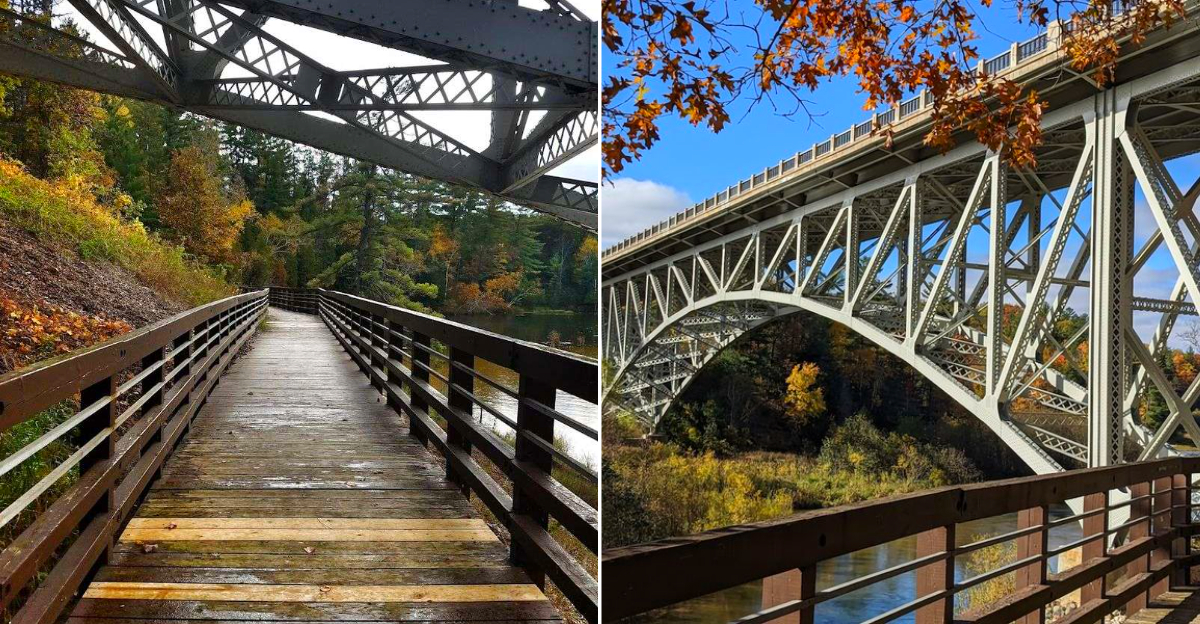
Picture yourself driving across an ordinary-looking stone bridge, never suspecting the wonder waiting just below. Most people roll right past without a second glance, but those who stop and explore discover something remarkable.
A narrow staircase carved into the hillside descends over a hundred steps toward the water, revealing a secluded riverbank that feels worlds away from the road above. Sunlight filters through the tree canopy overhead while the gentle current sweeps past smooth stones.
It is the kind of spot that makes you forget your schedule entirely. You could spend an entire afternoon wading in the shallows, or simply sitting on the rocks listening to nothing but birdsong and moving water.
The bridge itself dates back to the thirties, built from local stone with an elegance that still draws admiration from anyone who pauses long enough. This hidden gem is one of the most unforgettable roadside surprises in Michigan.
The Reveal From Below
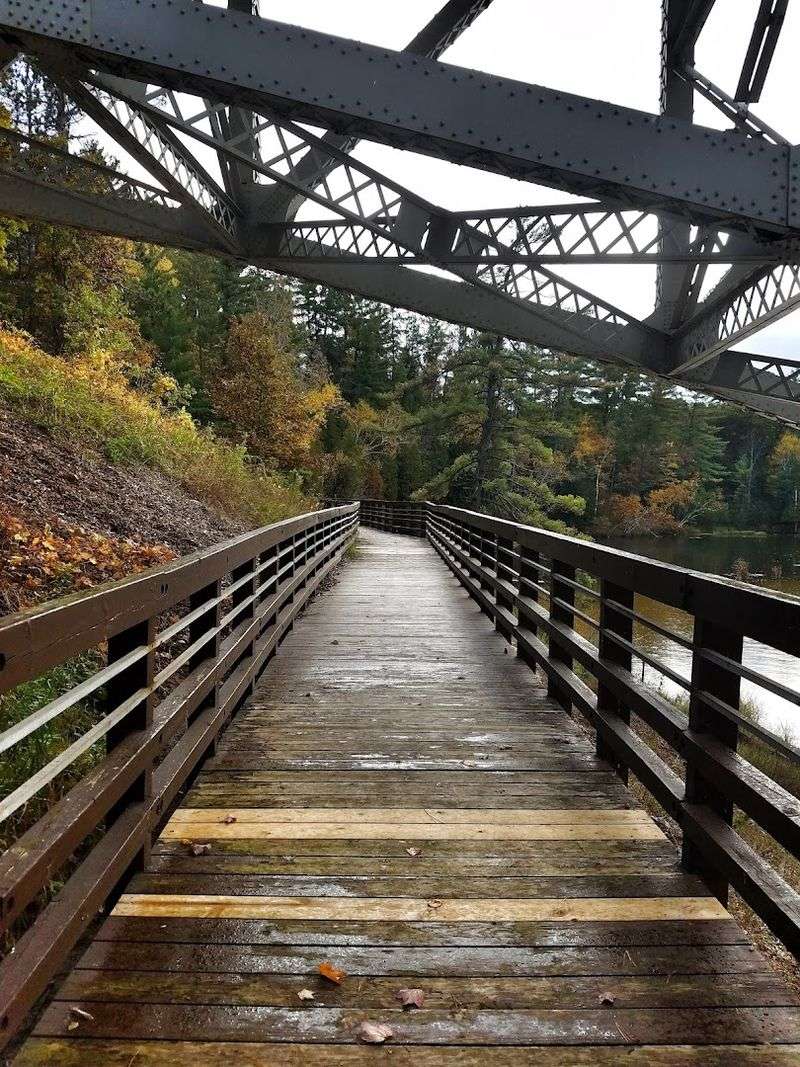
From the road, Cooley Bridge reads as a practical crossing over the Pine River Valley, not a secret worth pulling over for. Then the stairway beside the roadside park changes the whole story. A few steps down, the bridge stops being background infrastructure and starts acting like sculpture.
Completed in 1934 by the Wisconsin Bridge Company, it is a cantilevered deck truss, one of Michigan’s rarest truss types. The main span stretches 300 feet, and the full bridge runs 613 feet.
That scale feels different underneath, where the steel frames your view and makes the ordinary approach above seem almost misleading.
Follow M-55 Until The Forest Drops Away
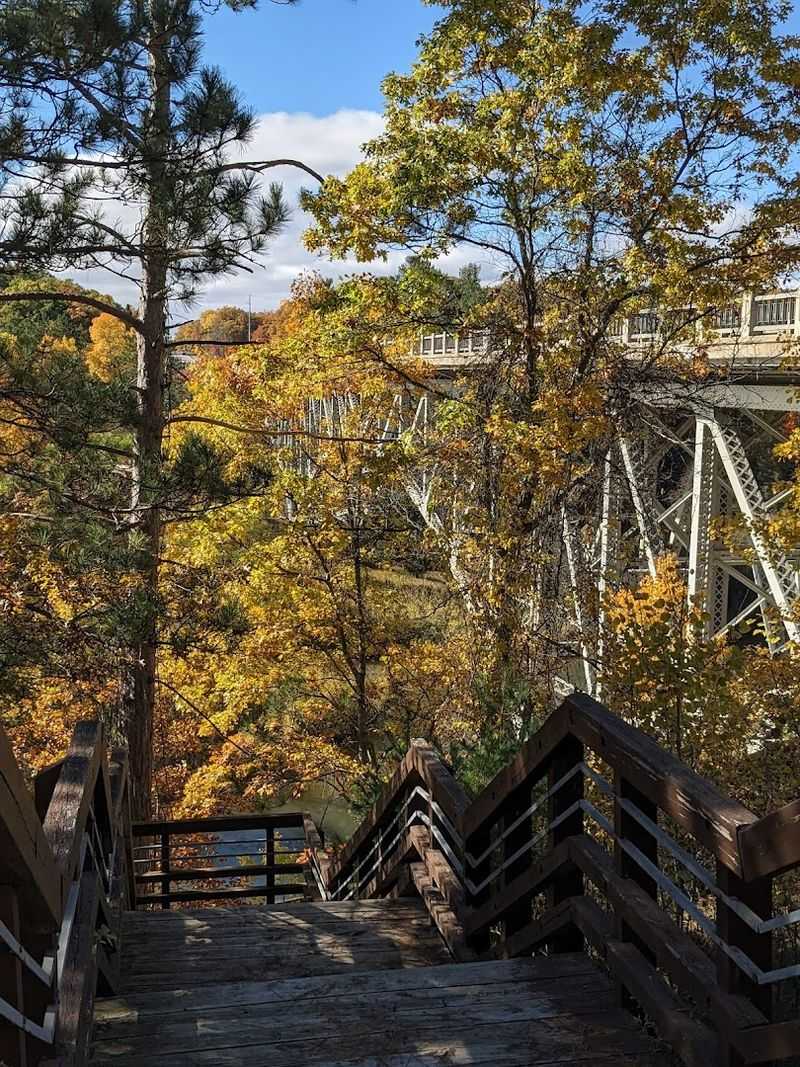
Cooley Bridge carries M-55 over the Pine River near Wellston, Michigan. Since there is no numbered street address, search for Cooley Bridge Roadside Park and keep your route centered on M-55.
From Wellston, follow M-55 east through the Manistee National Forest. Travelers arriving from M-37 should turn west onto M-55 and continue until signs for the bridge and roadside park appear.
The turnoff arrives quickly among the trees, so slow down as navigation shows the river getting close. Pull into the roadside parking area rather than stopping on the bridge, then follow the stairway down to the viewing area.
Read The Steel
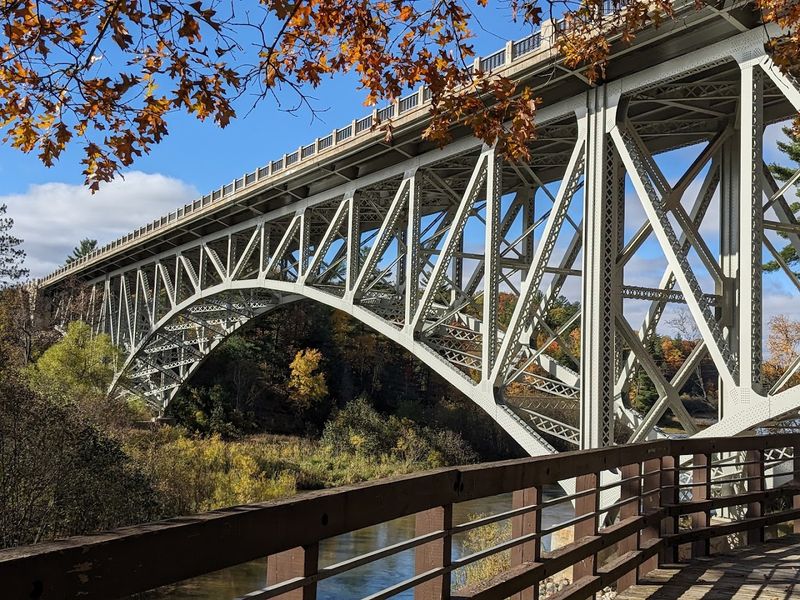
Underneath, the bridge’s built-up beams, V-lacing, and lattice work become the real attraction. From above, you cross a road bridge; from below, you stand inside a remarkably elegant piece of steel engineering.
The geometry is crisp, repetitive, and strangely calming, like a giant industrial drawing suspended over the river valley.
That beauty was recognized early. Cooley Bridge received an American Institute of Steel Construction Class C award for Most Beautiful Bridge in 1935, though some sources list 1936, and a plaque on the bridge notes the honor.
Bring your eyes, not just your camera, because the best surprise here is how slowly the details start to register. Look closely at the riveted joints, shadowed cross-bracing, and shifting patterns of light across the steel.
Each angle reveals another layer of craftsmanship, turning a quick roadside stop into a quiet study of proportion, durability, and early twentieth-century bridge design.
Follow The Valley
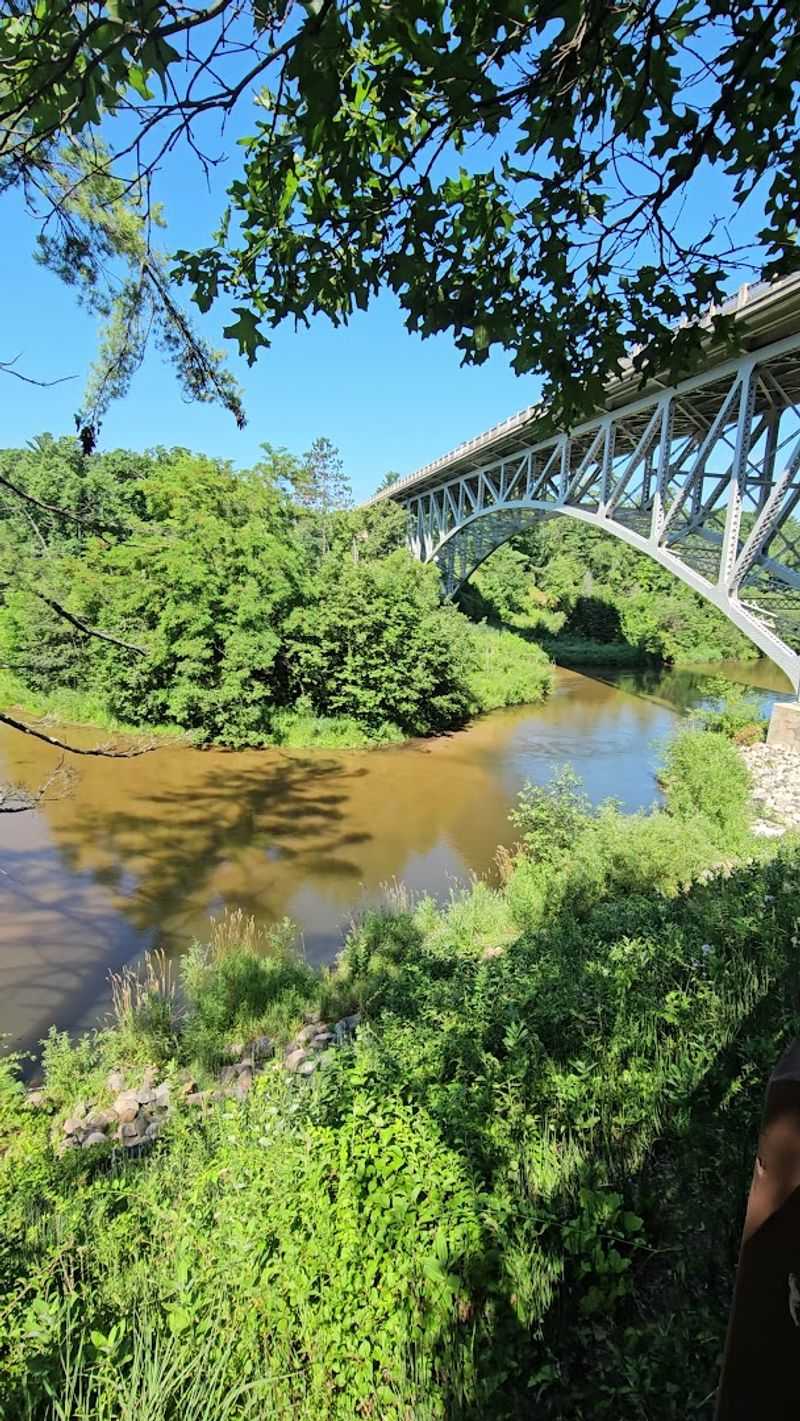
The setting does at least half the work. Cooley Bridge spans the Pine River Valley, and the views around it soften the steel without diminishing it.
Trees, moving water, and open air keep the structure from feeling severe, which is probably why the bridge photographs so well in every season.
At ground level, the river becomes part of the composition rather than a backdrop. You notice how the truss lines guide your gaze outward, then back to the valley walls and sky.
If you like places where engineering and landscape hold an unusually balanced conversation, this is one of the more satisfying short stops in northern Michigan.
Choose Your Season
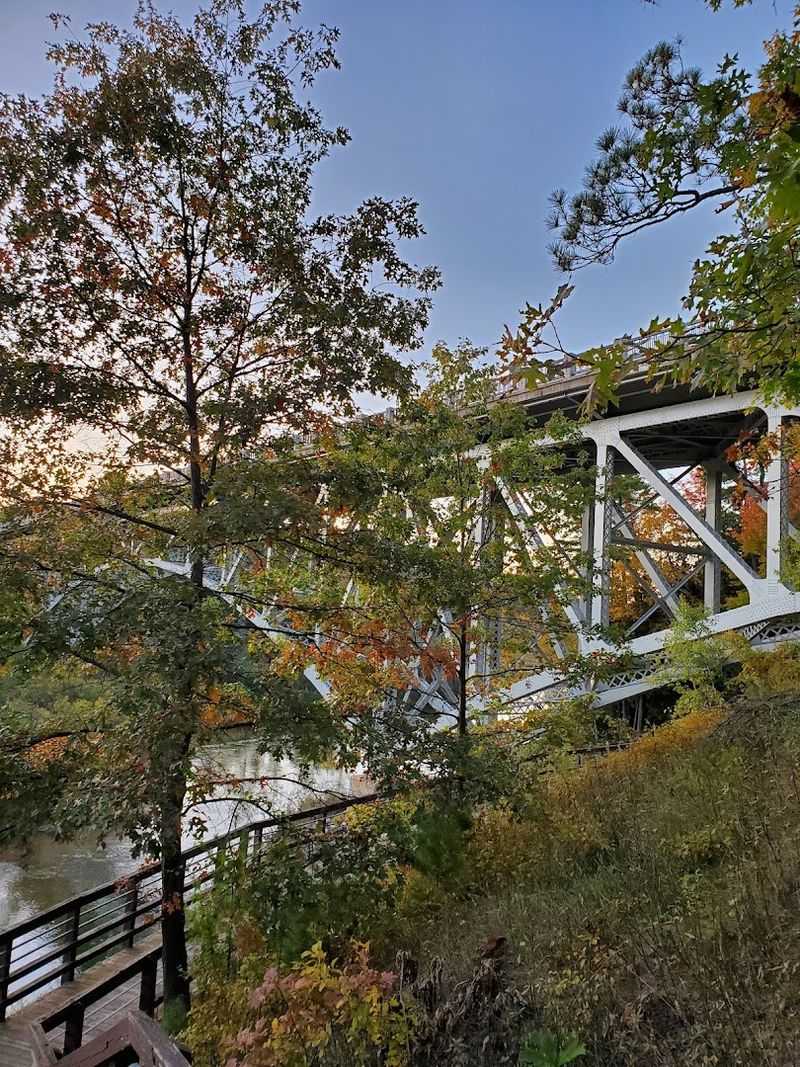
Autumn suits this bridge almost suspiciously well. The steel stays cool and controlled while the valley turns warm around it, so the contrast makes every line look sharper.
Even on a brief visit, the scene can feel more composed than many larger, more advertised scenic pull offs.
That said, there is no bad season for understanding why this landmark matters. Bare branches in colder months expose the structure cleanly, while summer greens make the underside feel hidden until you step into it.
If timing is flexible, early or late daylight gives the truss a little extra depth and makes the river corridor feel especially calm. After rain, the woods deepen in color, and mist sometimes settles low enough to soften the valley without hiding the bridge.
Winter snow can be striking, tracing the beams and emphasizing how lightly the structure seems to span the landscape.
Use The Roadside Park
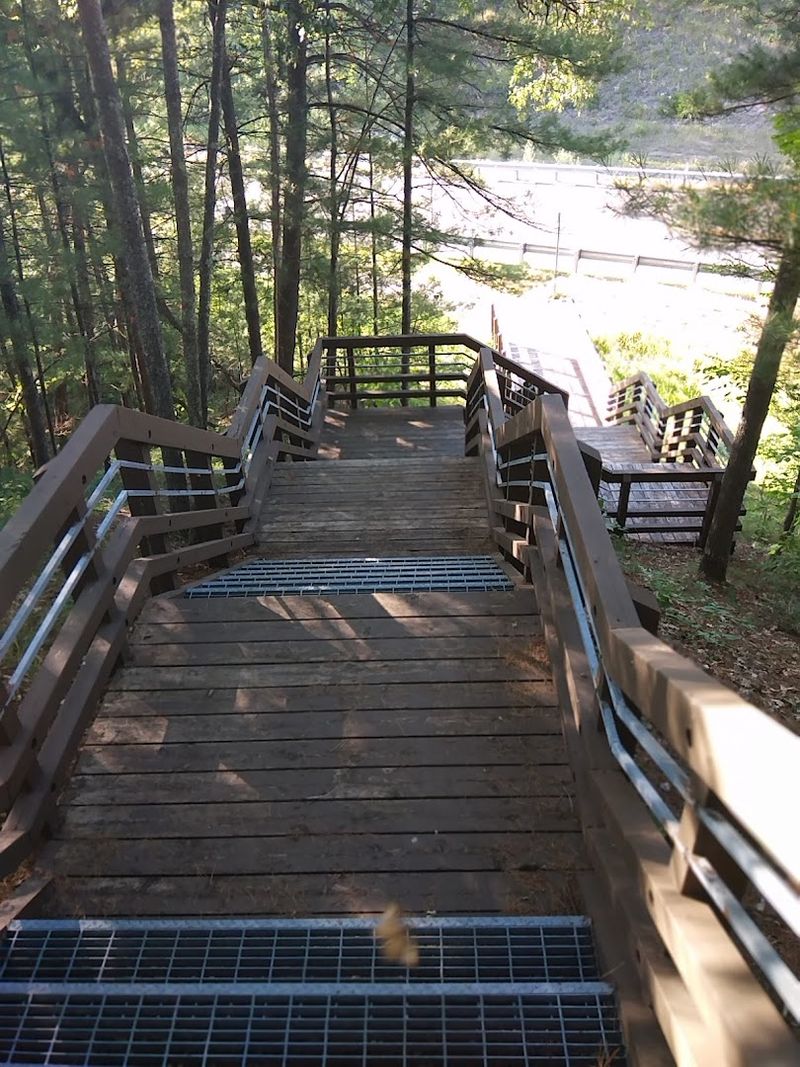
One reason Cooley Bridge works so well as a detour is that the logistics are unusually simple. It is a historical landmark in Wellston, open 24 hours, with a roadside park area that makes stopping straightforward.
Parking, a short approach, and a clear stairway mean you do not need a full afternoon to see the essential view.
The park has practical extras, including grills and a restroom, which gives the place a slightly old fashioned public outing feel. That matters because the bridge rewards a pause more than a rushed glance.
Stop long enough to walk beneath it, look both directions through the truss, and let the site shift from roadside curiosity into memorable destination.
Listen To The Split Soundscape
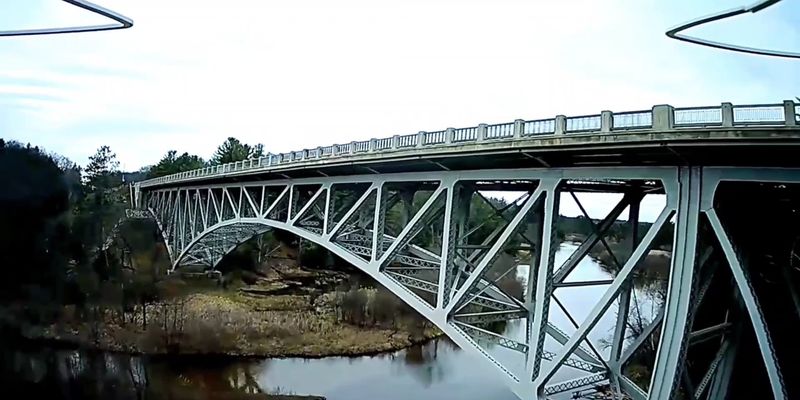
The oddest part of visiting is the split personality of the place. Traffic moves across the deck above, often fast enough to remind you this is still a working road bridge, yet the space below feels unexpectedly separate.
That contrast is part of the appeal, because it turns an active crossing into a quiet lesson about how different a structure can feel from two vantage points.
Stand still for a minute and the experience settles. Sound ricochets through the steel, the river softens the edges, and the truss starts to feel less massive than rhythmic.
It is a good reminder that ordinary infrastructure often hides its most interesting face where almost nobody thinks to look. A passing vehicle briefly shakes the air overhead, then the quiet returns almost immediately.
Watch how light slips through the lattice, breaking into narrow bands across the ground and giving the hidden underside a surprisingly cinematic sense of movement below.
Notice The Preservation
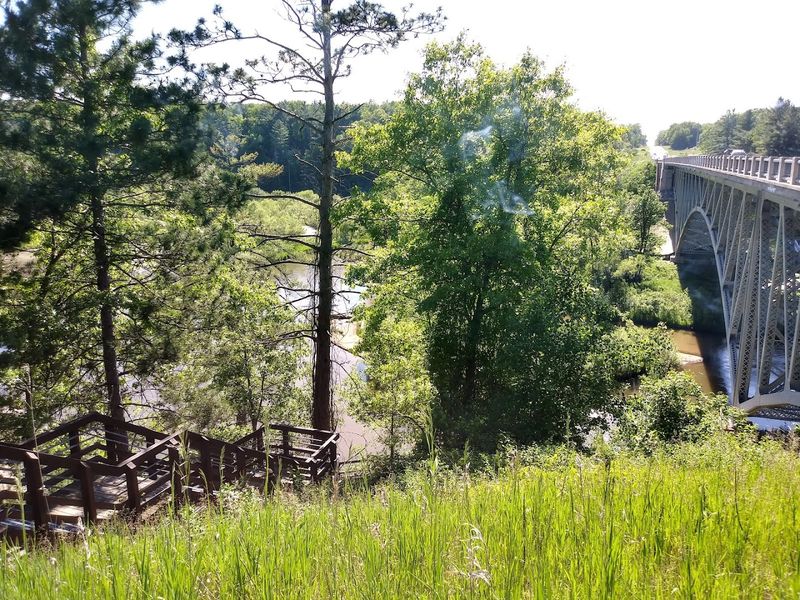
What impresses me most is not only the rarity of the design, but how well the bridge has been preserved as a historic landmark. Many older spans survive in pieces or in neglect; this one still feels legible.
You can read its engineering clearly, almost as if the builders expected future visitors to come study the workmanship from below.
That idea may not be far off, since the dedicated stairway suggests the underbridge view mattered from the beginning. Cooley Bridge was not simply built to carry vehicles across the valley.
It was also presented as something worth noticing, which gives the visit a pleasing sense of continuity between 1930s ambition and present day curiosity.
Photograph The Geometry
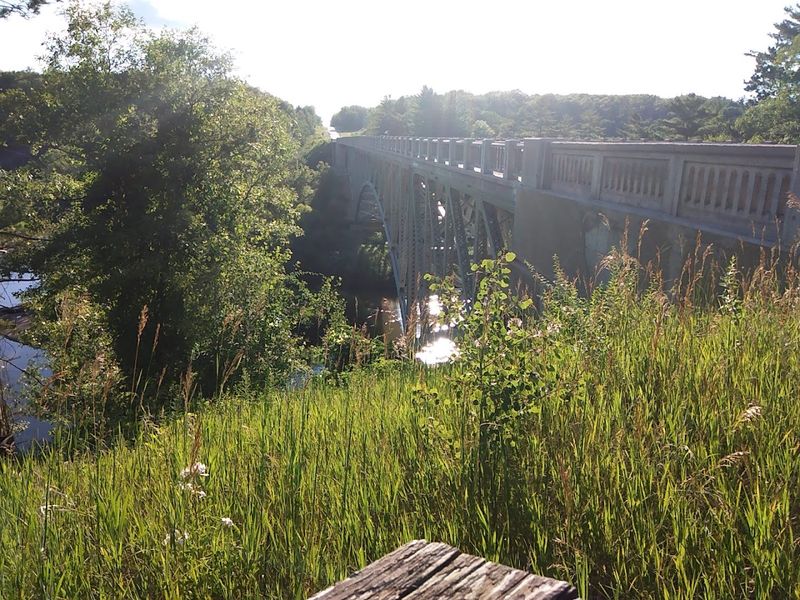
If you bring a camera, the obvious shot is not always the best one. Wide views are useful for showing the full truss, but the real character often lives in repeated diagonals, riveted joints, and the way light catches the lacing underneath.
Even a phone does well here if you slow down and let lines lead the frame.
I would start beneath the main span, then turn outward toward the Pine River Valley for contrast. The bridge looks strongest when the structure and landscape share the image instead of competing for it.
Morning or late afternoon usually gives the steel more definition, while overcast light can be excellent for detail because it reduces glare and keeps the tones even.
Treat It As A Real Stop
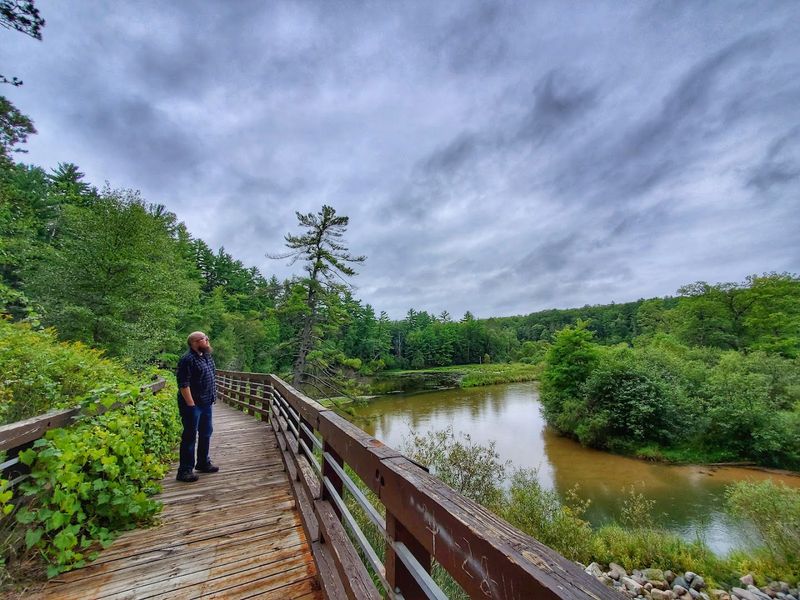
Cooley Bridge is ideal for travelers who like small places with a big reveal. This is not a museum, a long hike, or an all day destination, and that compactness is part of its charm.
In less time than a meal stop, you can move from roadside anonymity to a genuinely memorable view under an award winning historic bridge.
The trick is giving the visit a few unhurried minutes instead of treating it like a checkbox. Walk down, look up, and notice how the deck truss gathers the valley into a kind of frame.
When a place this modest changes character so completely with a shift in perspective, it tends to stay in your mind.
Leave With A New Eye
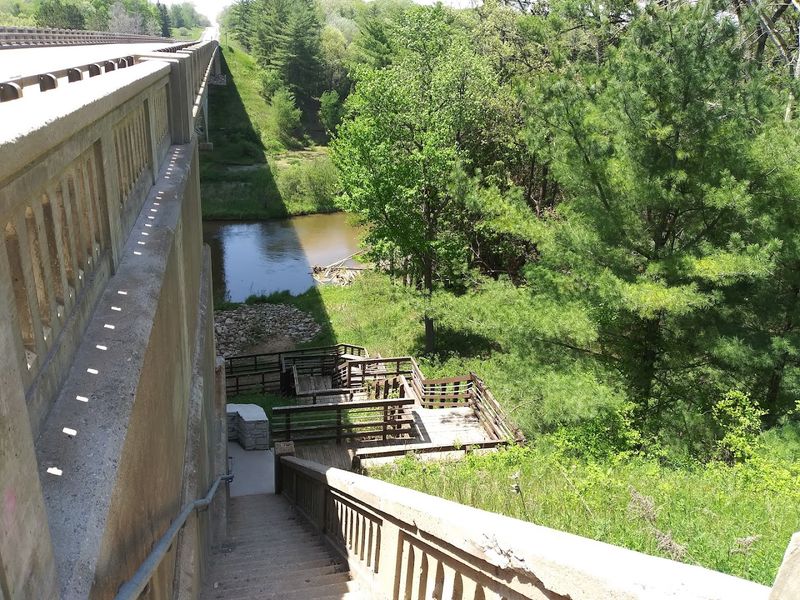
The best way to approach Cooley Bridge is with modest expectations and a little patience. It does not announce itself with dramatic signage or obvious spectacle from the road.
Its gift is subtler: a rare 1934 cantilevered deck truss that reveals its beauty only after you make the small effort to stand beneath it.
That makes the experience feel earned in a satisfying, old Michigan way. Use the stairs carefully, respect the active roadway above, and give yourself time to read the plaque and study the steel.
You leave with more than a photo, because the place quietly recalibrates how you look at bridges, roadside parks, and the hidden intelligence of designed landscapes.