
This Hidden Michigan Garden Feels Like A Monet Painting With Water Lilies And Goldfish
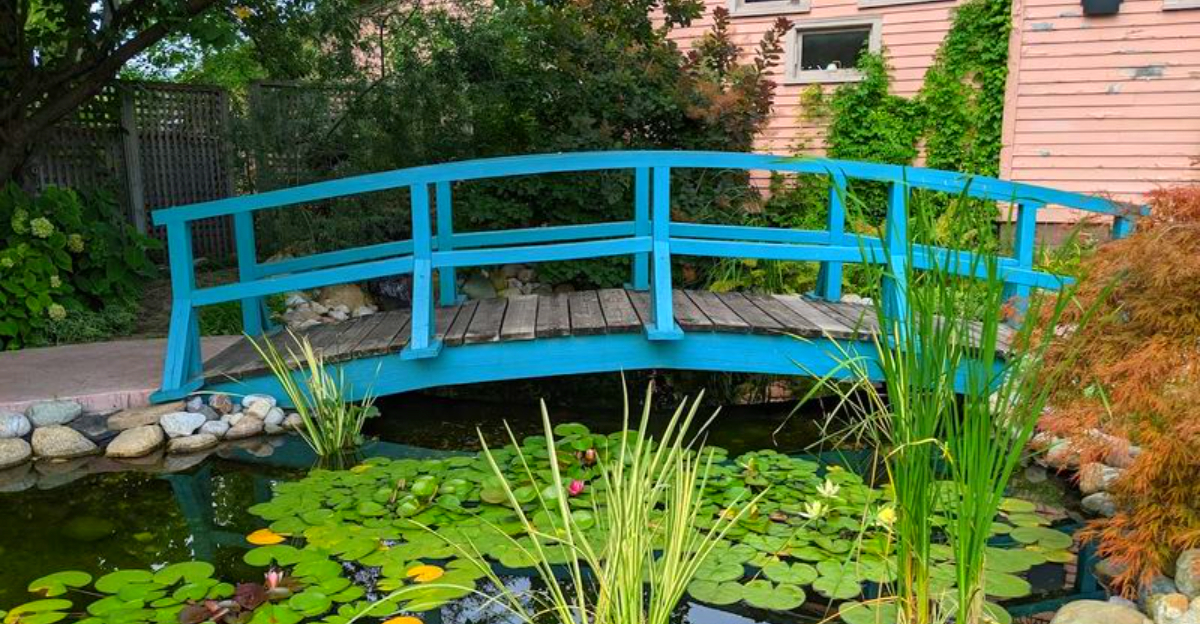
Some gardens arrive with fountains, plaques, and the confidence of a wedding venue. This little downtown Muskegon pocket does something sneakier.
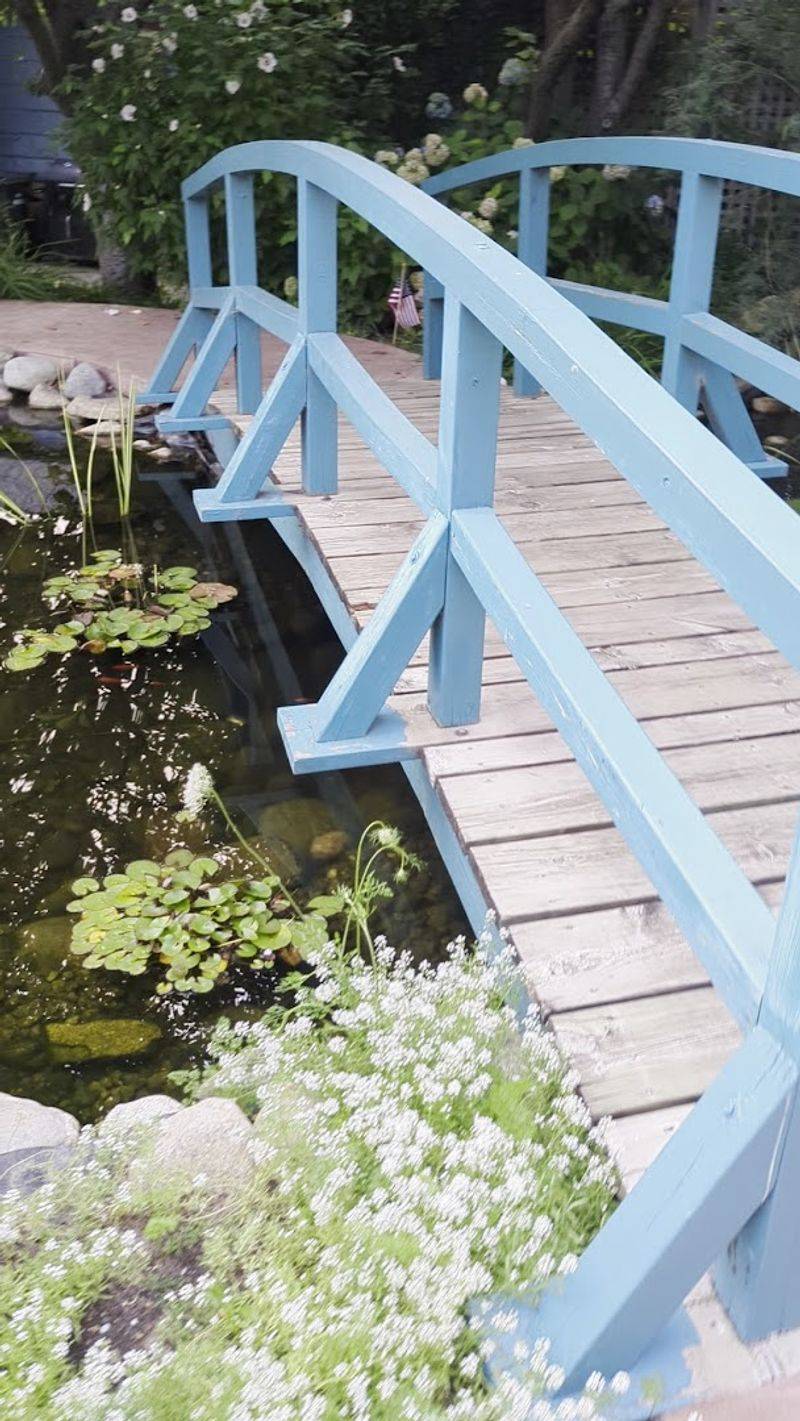
It waits until you round the corner, then suddenly there’s a pond, water lilies, goldfish doing tiny royal laps, benches placed exactly where your rushing brain needs to surrender, and a bridge that makes everyone briefly consider becoming more poetic.
Muskegon garden walks, hidden Michigan parks, Monet-inspired scenery, water lilies, goldfish ponds, Japanese-style bridges, and peaceful downtown stops make this small landmark feel quietly magical.
I like that it began as a vacant lot, because you can still feel the miracle of someone insisting on beauty where convenience might have won.
Do not speed through it. Stand there. Let the colors rearrange your afternoon. This is not a grand attraction; it is a pocket-sized pause, and sometimes that is the travel memory that sticks hardest long after leaving town.
Go Expecting Intimacy, Not Scale
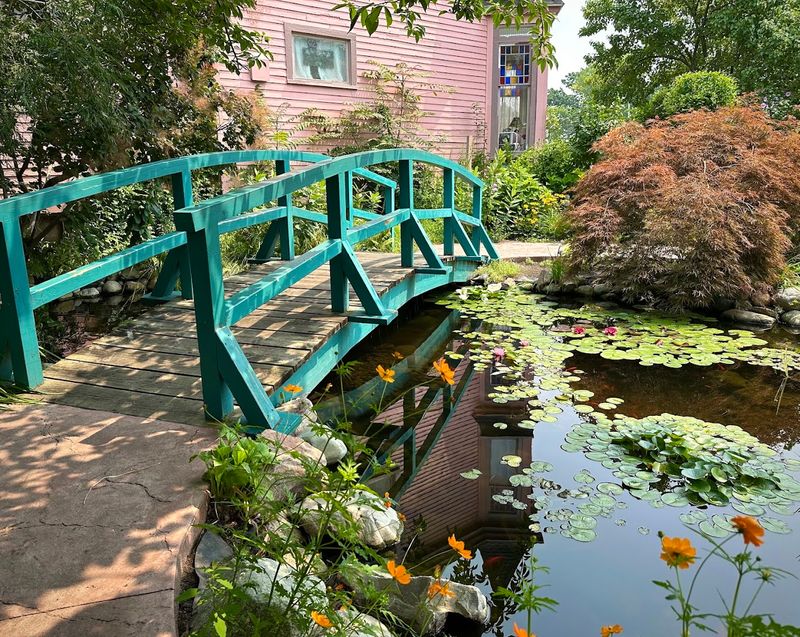
The first useful adjustment is mental: this is a pocket park, not a sprawling botanical garden. Its charm comes from compression, with the bridge, pond, flowers, and seating gathered into a scene you can take in almost at once. That smallness is not a flaw, just the whole point.
Because it was created from a vacant lot, the garden feels like an act of civic imagination made visible. The Monet reference is clear without pretending to be France transplanted to Muskegon. You get a respectful nod to Giverny, filtered through local weather, volunteer care, and downtown scale.
If you arrive wanting spectacle, you may leave too quickly. If you arrive ready to look closely, the place opens up beautifully.
Getting There Feels Like Finding A Small Downtown Secret
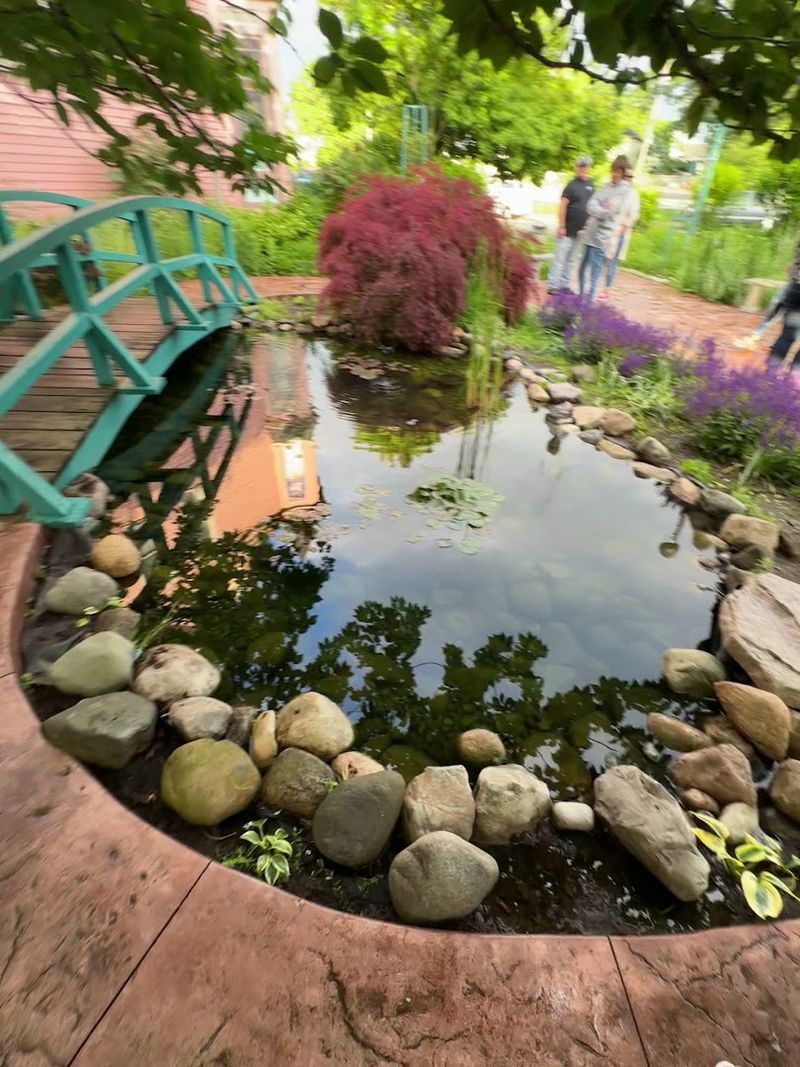
Monet Garden of Muskegon sits at 470 W. Clay Ave, Muskegon, MI 49440, tucked into downtown near the corner of Clay and Fifth Street. It is a small walk-through pocket garden, so the arrival feels more like discovering a quiet pause than reaching a major attraction.
Use Clay Avenue as your guide, then slow down once you are near Fifth Street. The garden is compact enough that you could miss it if you are expecting something grand.
It works best as an easy add-on to a downtown Muskegon walk. Stop by when you want a short, pretty break with benches, flowers, and a little bit of calm between bigger plans.
Use The Bridge As A Viewpoint, Not Just A Photo Spot
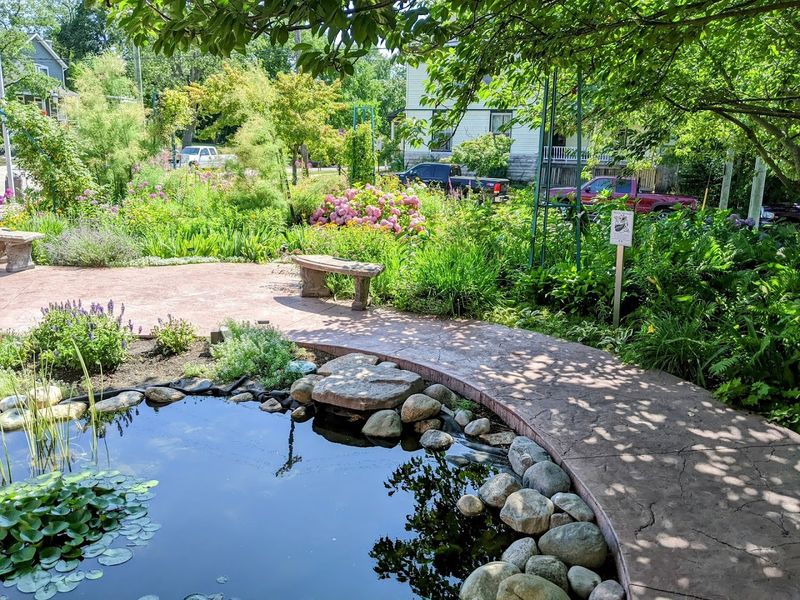
The Japanese-style bridge is the garden’s most recognizable feature, and yes, it photographs well. But it works even better as a viewing platform, because from there the pond, flowers, and paths line up into a compact composition. You can see how carefully the site was arranged to create depth inside a very small footprint.
The bridge references Monet’s famous garden at Giverny, yet it does not feel like stage scenery. In Muskegon, the structure reads as a local landmark with an art-historical wink. That balance keeps the place from becoming kitsch.
For the best experience, cross slowly and look down as often as ahead. The details under the railings are half the pleasure.
Time Your Visit For Late Spring Through Summer

Season matters here more than size. Late spring and summer bring the fullest color, the liveliest pond surface, and the most convincing sense that the garden is leaning into its Monet inspiration. When flowers are active and the water lilies are visible, the whole place feels more complete.
That does not mean other seasons are worthless. A compact garden can look especially crisp in cooler months, and regulars do stop by year-round. Still, if this is your first visit, I would not overcomplicate it. Go when growth is doing some of the storytelling for you.
Bloom timing always varies, of course, because this is a real garden rather than a fixed display. That unpredictability is part of its honesty.
Take Advantage Of The Easy Parking And Open Hours
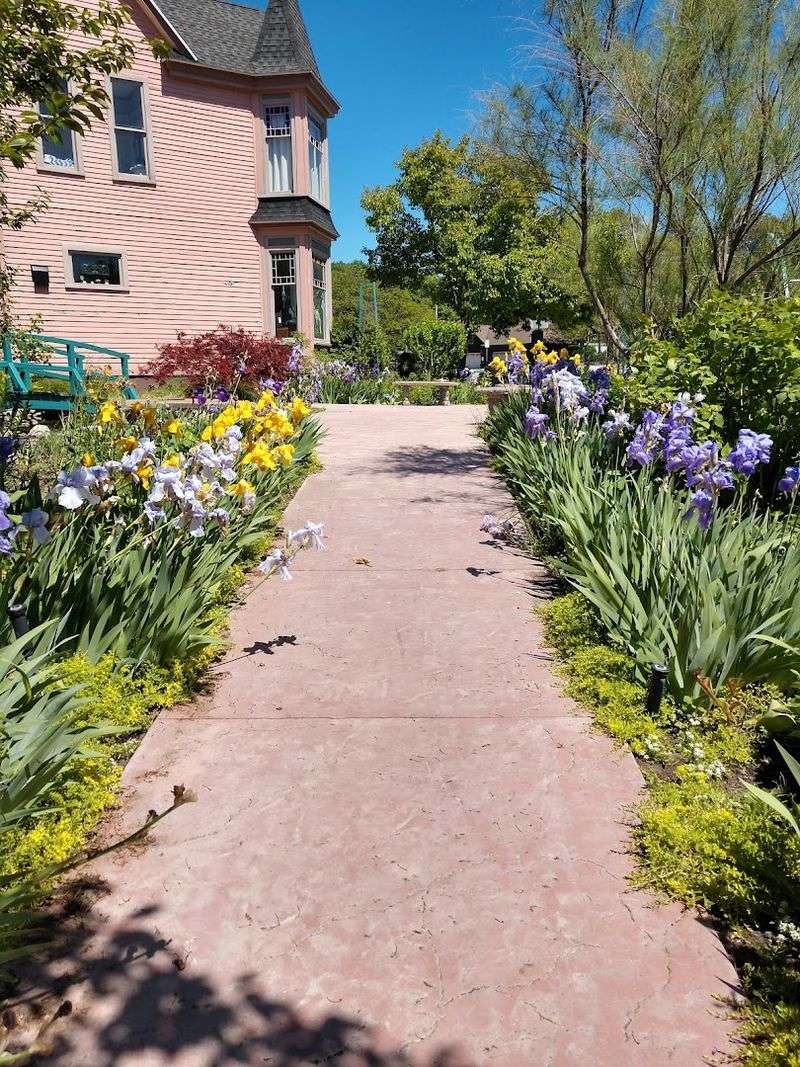
One practical reason this garden is easy to recommend is that it asks so little from you. Parking is available in front, the site is free, and the garden is open 24 hours, which removes the usual scheduling drama that can creep into urban sightseeing. You can fit it into a museum day, a downtown stroll, or a quick detour.
That accessibility changes the mood of a visit. Instead of planning around tickets, lines, or timed entry, you simply arrive and step in. The result feels more neighborly than touristic, which suits a volunteer-maintained community space.
If you are moving through downtown Muskegon on foot or by car, this is an unusually low-effort stop with a very high charm return.
Notice The Volunteer Fingerprints Everywhere
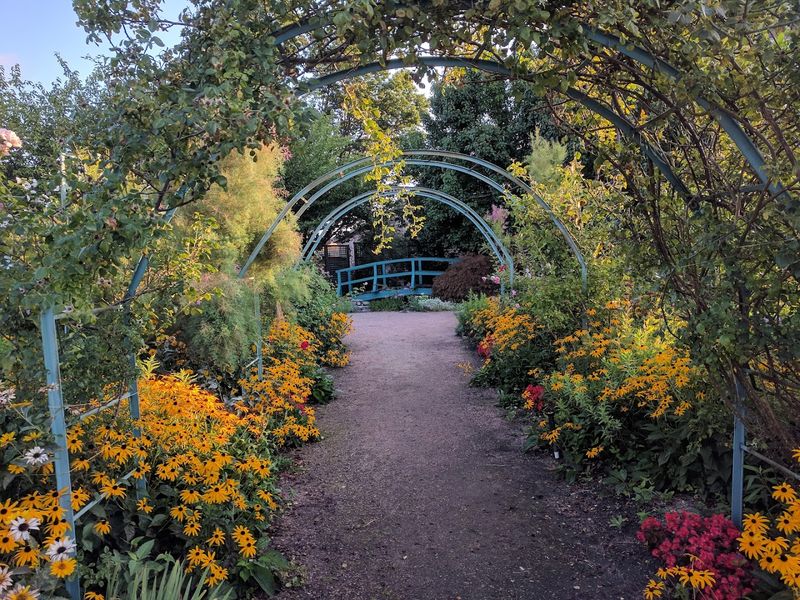
The garden is maintained by volunteers from the Lakeshore Garden Masters, and that fact explains a great deal. The place does not feel institutional or overproduced. It feels tended, watched, and repeatedly adjusted by people who want downtown Muskegon to have a beautiful pause built into it.
You can sense that care in the neat planting beds, the overall order, and the way the garden reads as welcoming rather than ornamental from a distance. Volunteer stewardship gives it a kind of moral texture. It is lovely, yes, but also civic in the best sense.
I find that knowledge deepens the visit. You are not just admiring flowers. You are seeing what sustained local attention can make possible on a very small patch of ground.
Look For Butterflies As Well As Blooms
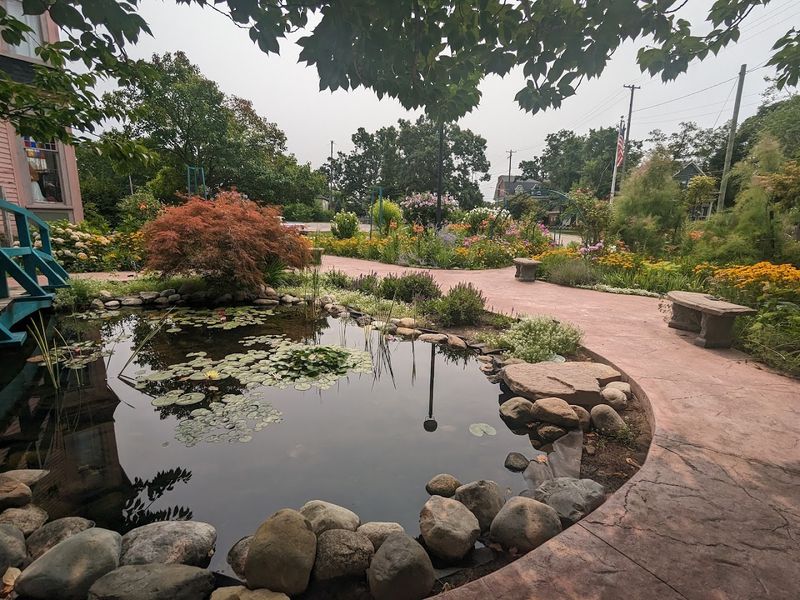
Flowers are the obvious draw, but the garden is also recognized as a butterfly waystation, which adds another layer to the experience. That status turns a pretty stop into a small habitat, and it changes how you read the plantings. They are not only decorative. They are working.
Watching butterflies move through a downtown setting creates a pleasing little contradiction. Traffic and buildings remain nearby, yet the garden keeps producing moments of softness and attention. It is one of the clearest examples I have seen of how compact urban spaces can still feel ecologically purposeful.
If you tend to rush through floral displays, try following movement instead of color. Butterflies slow your eyes in a different, more alert way.
Sit On A Bench And Let The City Recede
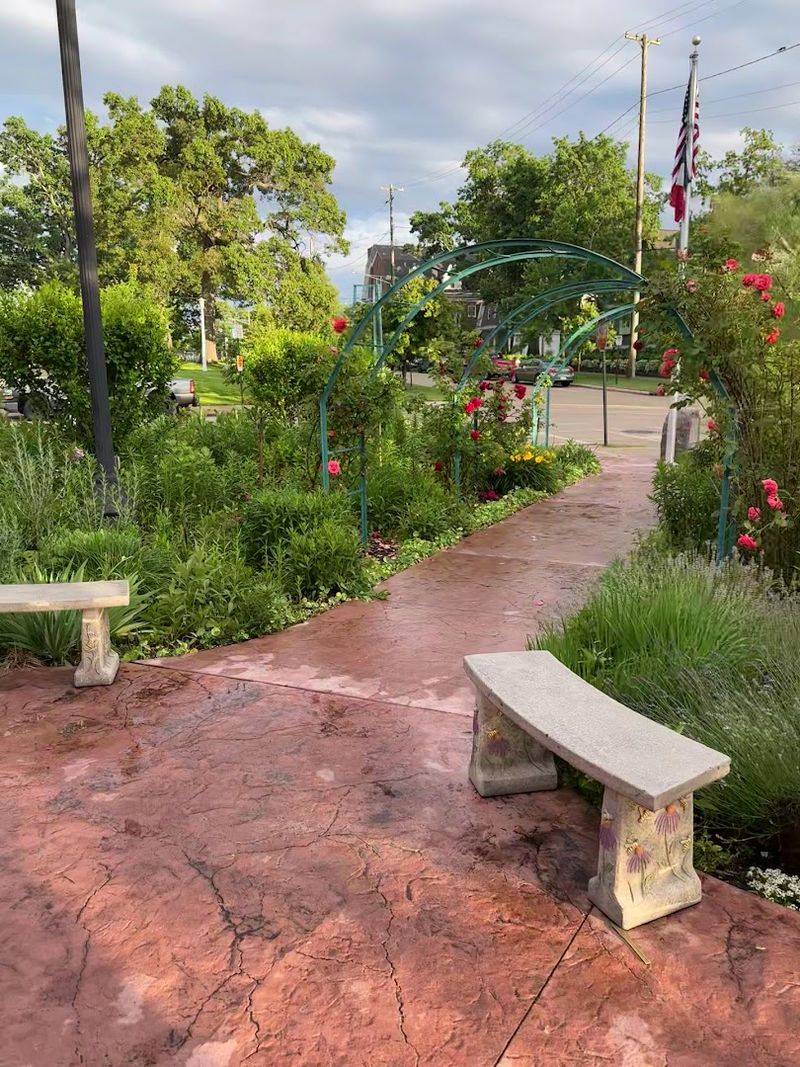
Benches matter here more than you might think. In a garden this compact, sitting down shifts you from observer to participant, because the space starts organizing itself around your line of sight. The bridge frames one angle, the pond claims another, and nearby plantings begin to read like a sequence rather than a blur.
What impressed me most was how effectively the garden edits out the city without actually hiding it. You remain downtown, but the scale of the place encourages quieter behavior almost immediately. Voices drop. Movements slow.
Even a short pause feels intentional.
If you only circle the path and leave, you miss the garden’s best trick. It is designed not just to be seen, but to settle you.
Come Back After Dark For The Lighting
After dark, the garden takes on a different personality. Illumination adds shape and contrast, making the bridge, pond, and surrounding plantings feel a little more theatrical without losing their calm. It is still the same small park, but the mood becomes hushed and slightly more dreamlike.
Night visits work especially well here because the site is open around the clock. You do not need a special event or seasonal program to see it in another register. You simply arrive when daylight has flattened and the lighting can do its quieter work.
Use normal city awareness, of course, but do not dismiss an evening stop. Some places become generic after sunset. This one becomes more composed.
Pair It Mentally With Downtown Culture, But Keep Focus Here
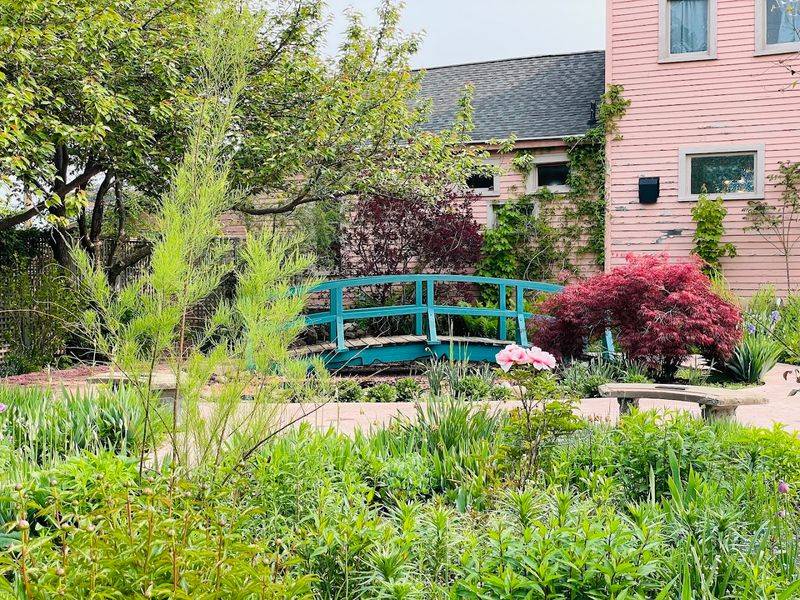
The garden sits comfortably within downtown Muskegon, and that setting shapes the experience even when you stay focused on this single site. It feels like a cultural pause button: small enough to slip into an ordinary day, distinctive enough to reset your attention before you continue on foot. That urban placement is part of the appeal.
Because the park is so compact, there is no need to overprogram your visit. Let it be a concentrated encounter instead of trying to stretch it into something larger than it is. The surrounding city gives the garden context, while the garden gives the city relief.
My advice is simple: treat it like a carefully written short story. Read it slowly, then carry the atmosphere with you afterward.
Respect It As A Real Place, Not A Theme Set
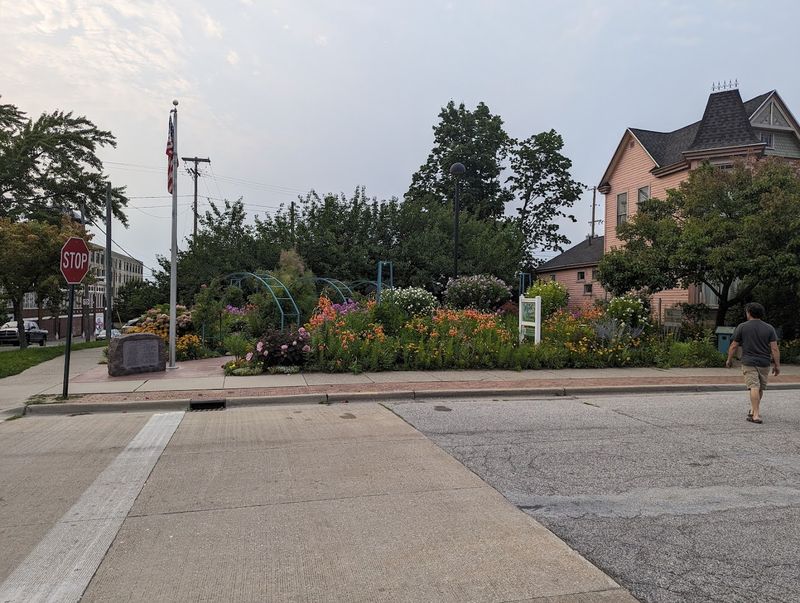
The final tip is about attitude. This garden is inspired by Monet, but it is not trying to counterfeit Giverny or flatten Muskegon into a postcard idea of France. It works best when you meet it as a local community landmark with artistic reference points, not as a replica to be judged for exactness.
That distinction matters because the garden’s strengths are real and specific: a volunteer-made transformation, a public walk-through design, a tiny pond with lilies and goldfish, and a surprising degree of serenity at street level. Those are substantial achievements in their own right.
If you come looking for fidelity to a painting, you may nitpick. If you come looking for grace in a city block, you will probably leave satisfied.