
This Hidden Mississippi Smokehouse Behind A Gas Pump Leaves Delta Favorites In The Dust
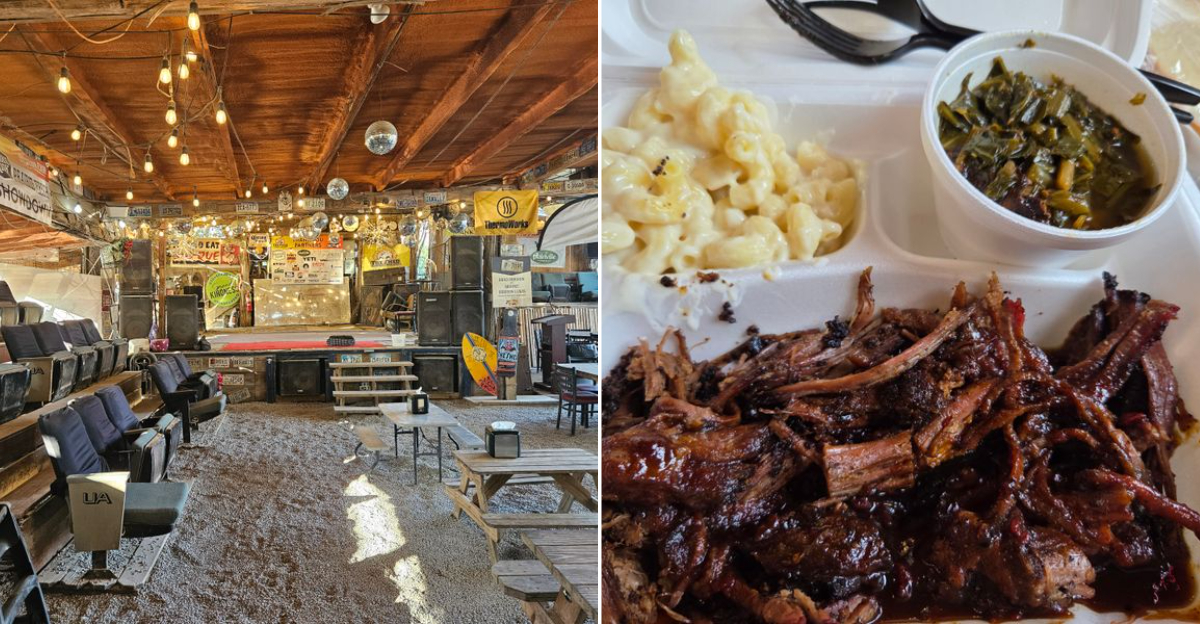
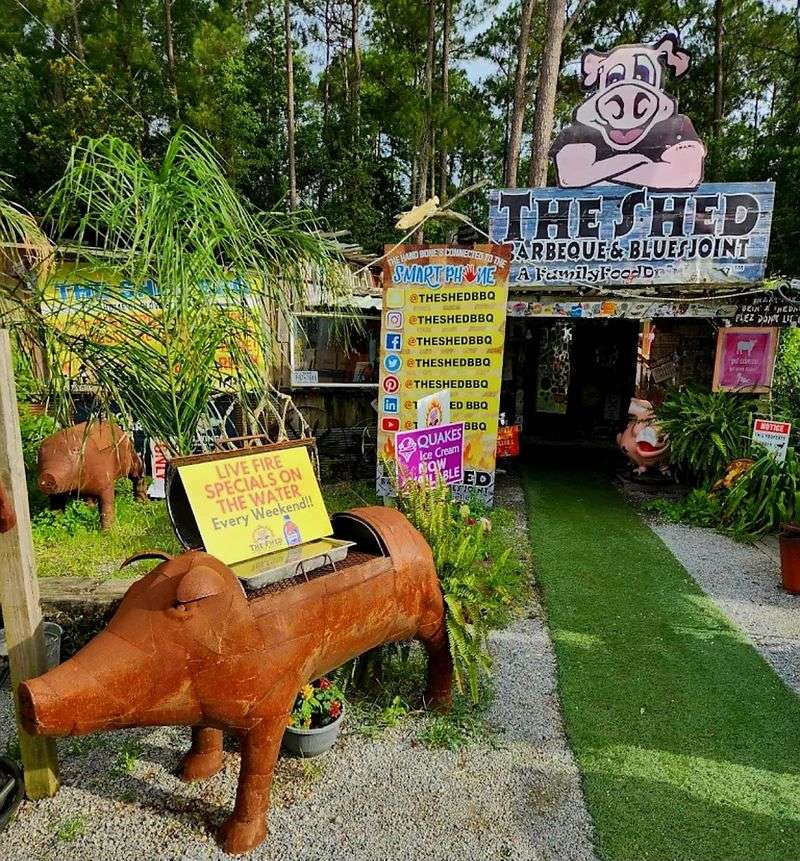
Tucked just behind an unassuming gas pump in Ocean Springs, The Shed BBQ & Blues Joint at 7501 MS-57, Ocean Springs, Mississippi, feels less like a restaurant you planned to visit and more like a place you’re genuinely lucky to have stumbled upon, the kind of spot where the surroundings barely hint at what’s waiting once the smoke, music, and mismatched structures come into view.
The vibe is proudly quirky and eclectic, stitched together from reclaimed wood, hand-painted signs, open-air stages, and a general sense that creativity here has always mattered more than polish, while the barbecue itself arrives with a confidence that explains why many visitors end up quietly rethinking their Delta favorites after the first bite.
You might come drawn by the promise of live blues drifting through the afternoon, or by the unmistakable aroma of pork and ribs that settles into the air long before you reach the counter, or simply by curiosity about a place that looks so casually improvised yet so sure of itself.
Once you settle in, it becomes clear that the rustic, shack-like atmosphere isn’t an aesthetic choice so much as a reflection of how the place grew, organically, over time, shaped by cooks, musicians, and regulars rather than concepts or trends.
The Shed doesn’t ask you to rush or manage the experience.
It invites lingering, listening, and eating with both hands, letting smoke, sauce, and sound take their turn.
These ten tips are here to help you navigate that rhythm thoughtfully, so you can make the most of a visit that’s memorable not because it tries to be, but because it simply knows exactly what it is.
The Atmosphere
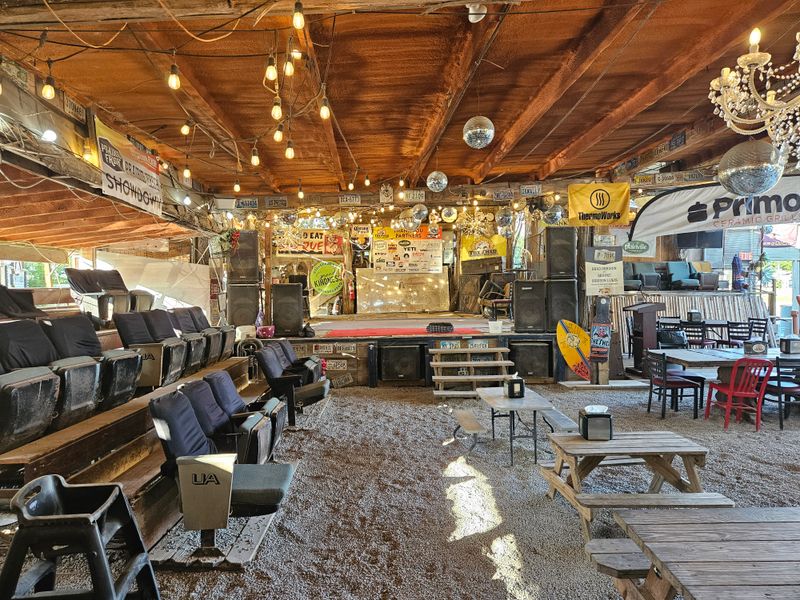
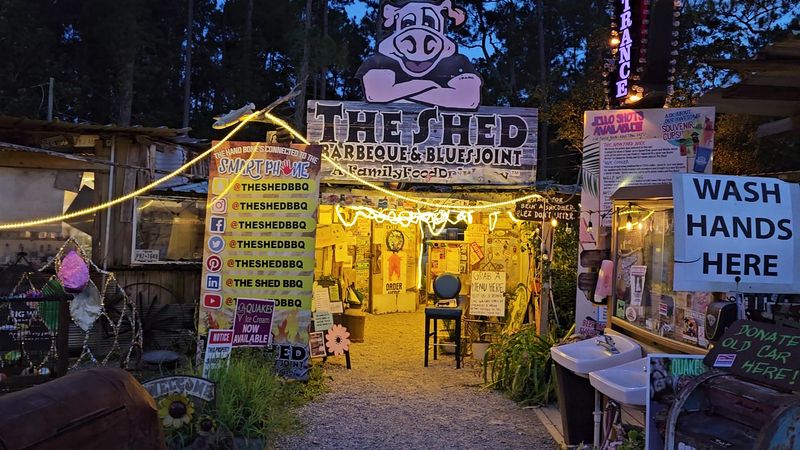
Stepping onto the gravel and wood walkways feels like crossing into a space where rules have been rewritten by habit and personality rather than design plans or branding decks.
String lights hang at angles that suggest they were added when needed rather than measured, while weathered boards, salvaged signs, and open sheds create small pockets of comfort that reward drifting instead of sitting still.
Smoke curls through the air without apology, mixing with laughter, guitar riffs, and the low murmur of conversations that don’t feel hurried or overly aware of the clock.
Nothing matches perfectly, yet everything belongs, giving the sense that the place has been assembled slowly by people who valued expression and usefulness over symmetry or polish.
Time stretches differently here, especially once live music starts and plates pile at long tables shared by strangers who stop feeling like strangers after a few bites.
Dusty boots, picnic tables, and hand-built stages blend into a landscape that feels fully lived in rather than themed or rehearsed.
That looseness is exactly what allows visitors to relax immediately, letting the surroundings dissolve self-consciousness and replace it with an easy, deeply Southern sense of welcome.
Signature Sauces
Sauce bottles line up like opinions rather than options, each one clearly developed to say something specific rather than simply coat meat for sweetness or heat.
Spicy mustard brings sharpness and tang that cuts straight through rich pork, while the vinegar-based sauce leans bright and bracing, pulling smoke forward instead of burying it.
House sauce lands squarely in the middle, balancing sweetness, acidity, and spice in a way that works across ribs, pulled pork, and chopped brisket without taking control of the bite.
Experimentation is quietly encouraged, with diners mixing sauces deliberately rather than flooding plates, learning quickly that restraint brings more range than excess.
Heat builds gradually rather than suddenly, which makes it easier to taste the meat underneath rather than feel distracted by spice alone.
Bottles pass from table to table without ceremony, reinforcing the idea that these sauces are part of the shared culture rather than guarded secrets.
Finding the right combination becomes part of the experience, turning each plate into a personal calibration rather than a fixed recipe.
Live Blues Music
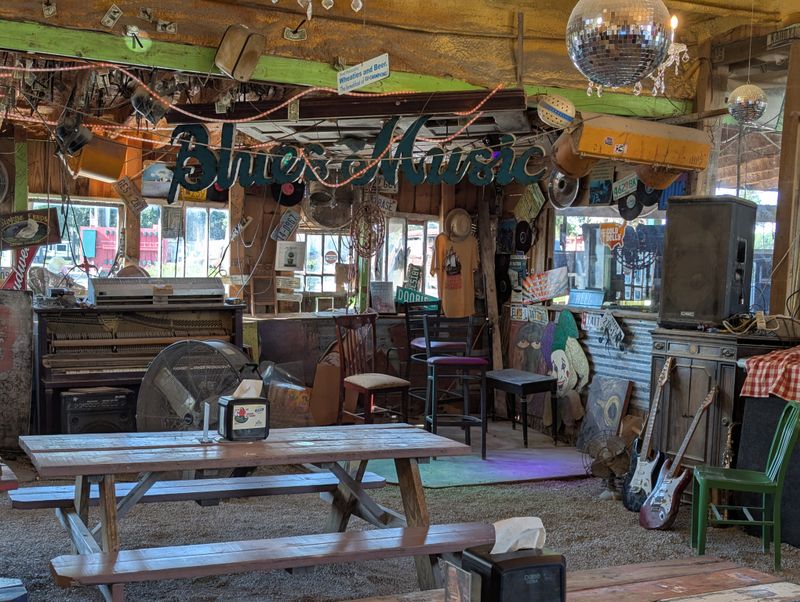
Music drifts through the space as naturally as smoke, sometimes front and center on a small stage and sometimes barely noticed until a guitar line slips into your awareness.
Performances feel conversational rather than performative, with musicians playing to the room instead of above it, allowing eating, talking, and listening to coexist easily.
Afternoons carry an easy, rambling sound that suits slow meals, while evenings tend to tighten rhythmically as crowds grow and energy lifts.
Tables closest to the stage shake slightly with bass notes, while quieter edges let you enjoy the music as atmosphere rather than event.
Genres stay rooted in blues but stretch and bend depending on who is playing, keeping repeat visits from ever feeling predictable.
Schedules matter less than presence, because stumbling into a set often feels more rewarding than arriving with a strict plan.
The music becomes part of the seasoning, subtly altering how food tastes and how long people choose to stay without either feeling forced.
The Ribs
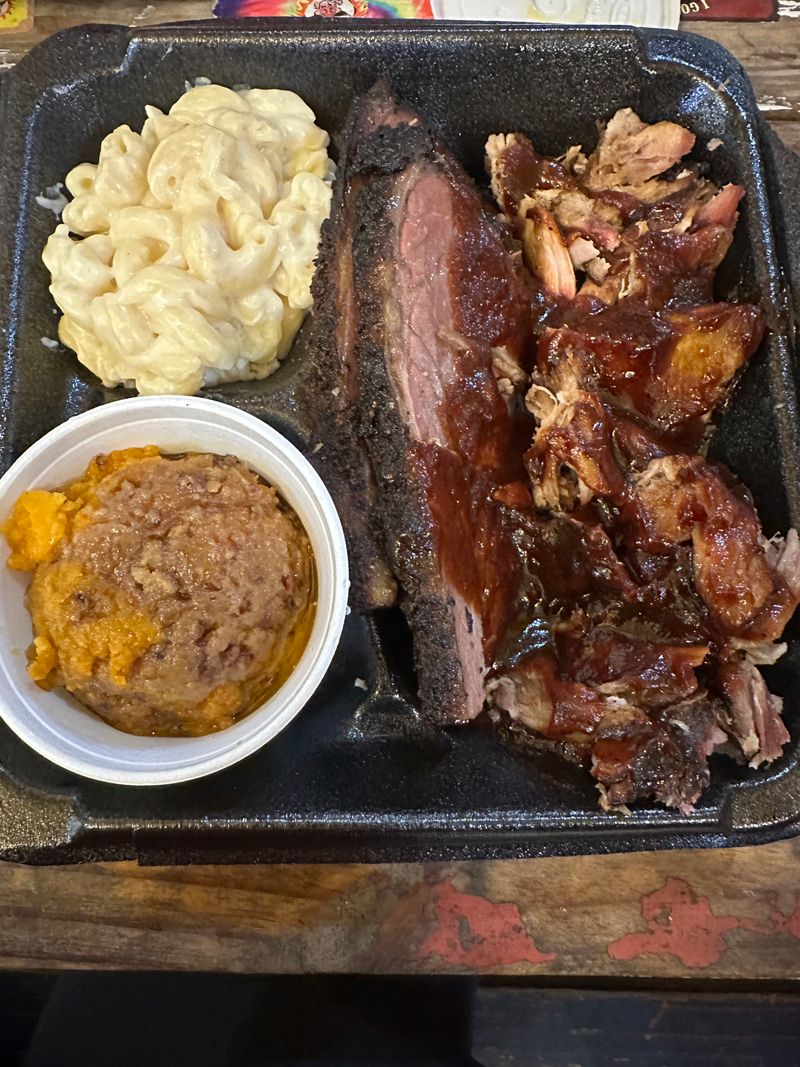
What arrives on the tray looks unapologetically generous, with bones peeking through lacquered surfaces that signal long hours of smoke and patient heat rather than shortcuts or heavy-handed sauce.
Texture tells the real story here, because the meat loosens cleanly from the bone without collapsing into mush, holding together just enough to reward a slow bite instead of a mindless pull.
Smoke sits deep in the meat rather than clinging to the exterior, which means each bite stays flavorful even before sauce ever enters the conversation.
Sauce choices feel optional instead of required, an important distinction that separates confident barbecue from attempts to cover flaws.
Sides like slaw and cornbread work as quiet support rather than competition, providing relief between bites without stealing attention.
Plates disappear quickly during busy hours, not because portions are small but because people instinctively pace themselves faster than they intended.
That combination of tenderness, restraint, and smoke explains why many first-time visitors quietly reconsider what they thought great Southern ribs were supposed to taste like.
Playground And Outdoor Seating
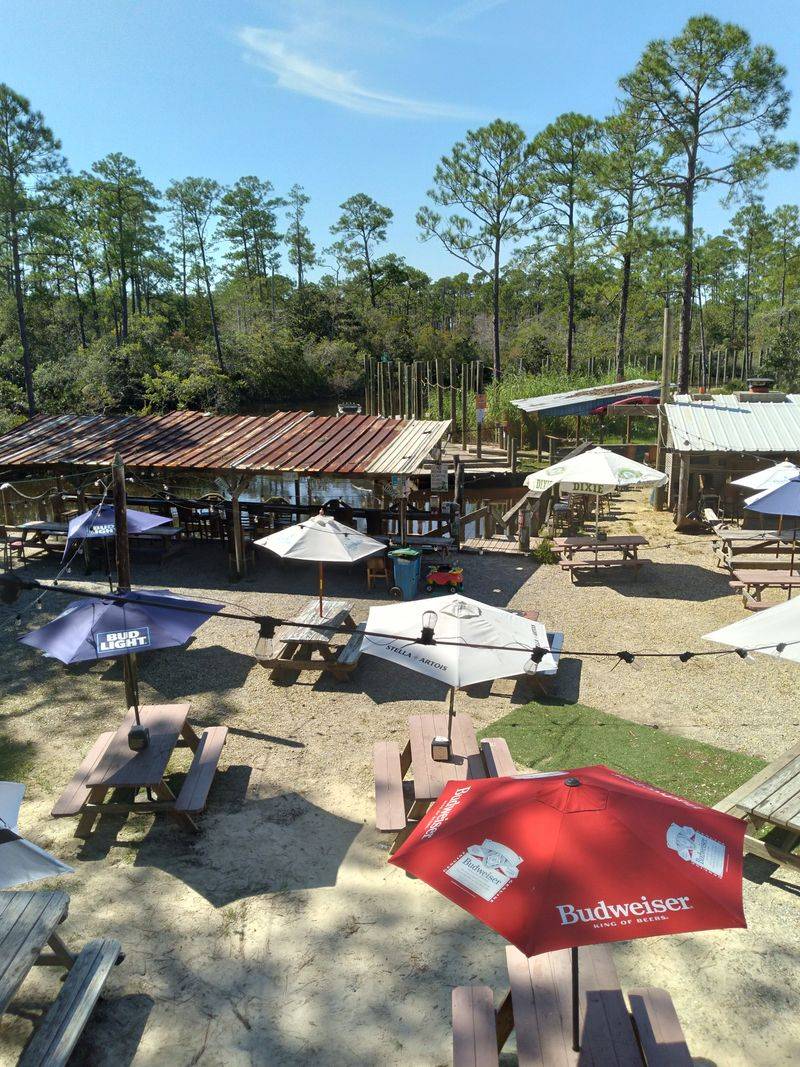
Outside seating stretches across uneven ground in a way that feels organic rather than planned, with picnic tables scattered wherever shade, airflow, and conversation seem to work best.
Children drift naturally toward the playground area, which removes the tension from family meals by letting noise and movement exist without apology.
Adults tend to linger longer outdoors, partly because plates feel heavier inside warm air and partly because music carries better under open sky.
Dust, sunlight, and breeze become part of the meal, making the experience feel closer to a backyard gathering than a restaurant visit.
Tables often fill communally, with strangers sharing space and occasionally passing napkins, sauces, or casual recommendations across the wood.
Even during peak hours, turnover feels unforced, because no one seems eager to rush away once they’ve settled in.
That openness turns a meal into an afternoon, allowing time to stretch well beyond eating without ever feeling like you’re overstaying your welcome.
Pet-Friendly Policies
Dogs appear almost as regularly as families, lounging under tables or wandering quietly on leashes as if they’ve always belonged in the scene.
Water bowls placed without fanfare signal that animals are expected guests rather than tolerated exceptions.
Outdoor seating layouts make space easy to manage, so pets rarely feel crowded or in the way, even during busy stretches.
Owners relax faster knowing their companions are accounted for, which subtly changes the pace and mood of the table.
Interactions stay respectful, with staff and diners acknowledging animals gently instead of turning them into distractions.
That easy coexistence reinforces the shed-like philosophy of the place, where life is allowed to be present rather than hidden or managed away.
Leaving with a full stomach and a tired, content dog somehow feels like the most complete version of a good Southern afternoon.
Rustic Decor
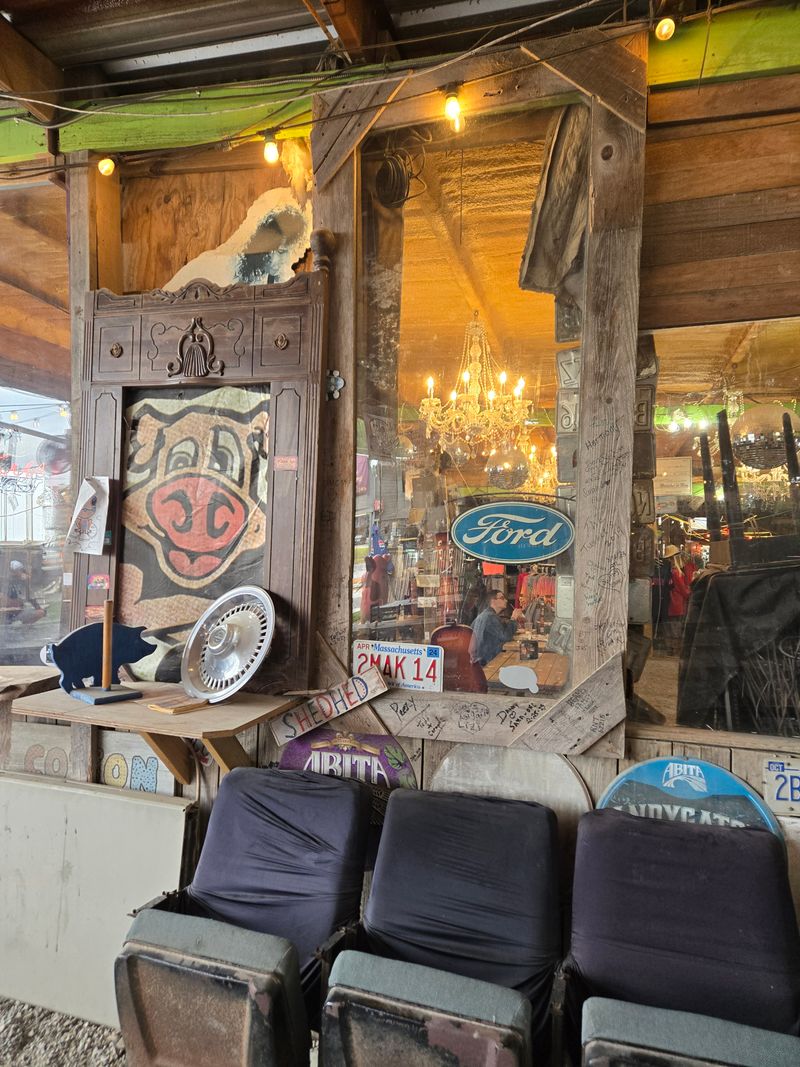
Walking through the space feels like flipping through a scrapbook assembled over years rather than seasons, where every painted sign, salvaged plank, and odd decorative flourish suggests a story that mattered enough to keep rather than replace.
Nothing appears to match on purpose, yet the longer you sit with it, the clearer it becomes that cohesion comes from accumulation rather than design, from letting objects earn their place through use and familiarity.
Walls double as memory boards, holding up jokes, tributes, and reminders of events that likely felt small when they happened but grew into identity over time.
Light behaves differently here, bouncing off weathered surfaces and filtered through gaps in construction, creating a glow that feels lived-in instead of staged.
It encourages wandering between bites, because there is always another corner worth noticing, another detail that didn’t register the first time you passed it.
This kind of environment slows people down almost without permission, nudging them to stay present rather than scan for exits or checks.
By the time plates are cleared, the setting itself has quietly become part of the meal, inseparable from the food and the mood.
The Brisket
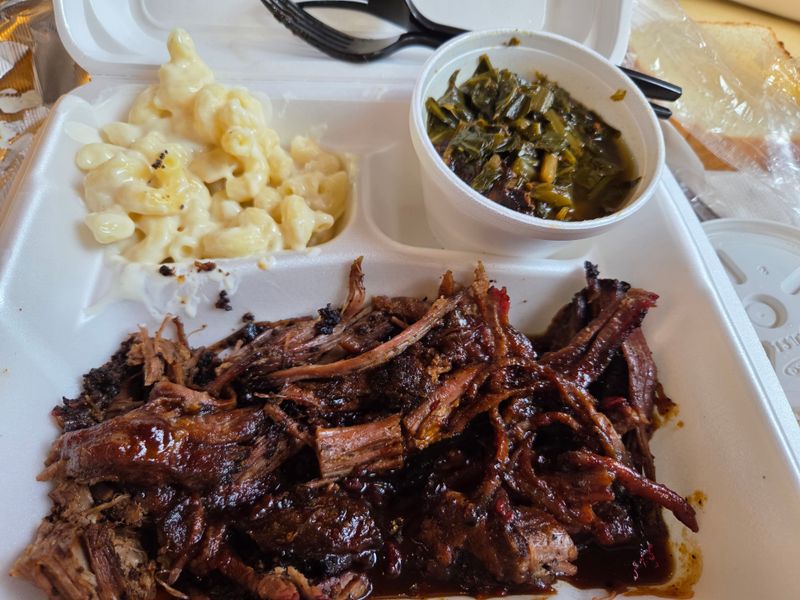
Slices arrive marked by a clear smoke ring that reads like proof of patience, signaling long hours of attention rather than rushed production.
Each piece holds together firmly enough to require an intentional bite, then relaxes immediately under pressure, balancing structure and tenderness in a way few places manage consistently.
Seasoning favors restraint, allowing the natural richness of the beef and the smoke to do most of the work rather than burying flavor under spice.
When sauce is added, it complements rather than corrects, enhancing without drowning the meat’s own character.
Fat is rendered carefully instead of trimmed away, contributing moisture and depth without leaving the plate greasy or heavy.
Pickles and bread play an important supporting role, resetting the palate and making room for the next bite instead of competing for attention.
After finishing, the impression that lingers is less about intensity and more about balance, which is often the harder thing to achieve in barbecue.
Sweet Potato Casserole
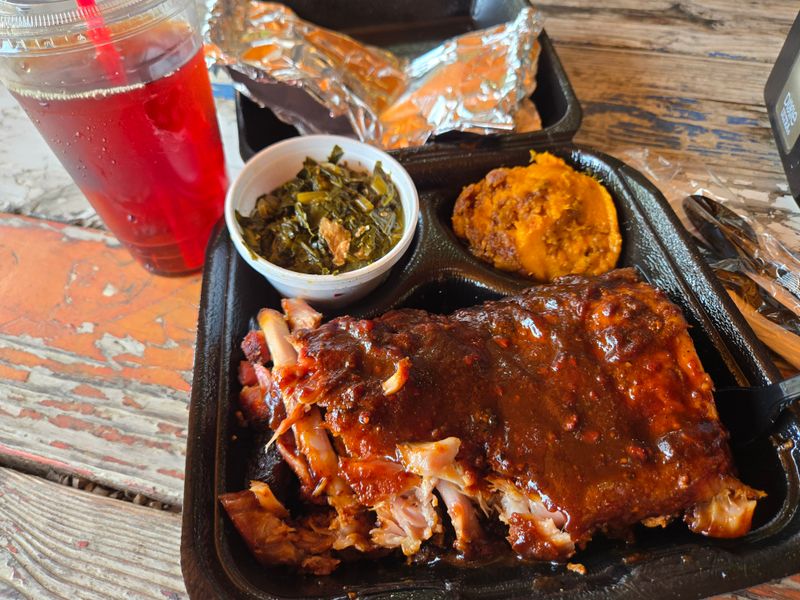
What looks at first like a side dish behaves more like a quiet statement of intent, showing how comfort food can still feel thoughtful when handled with care.
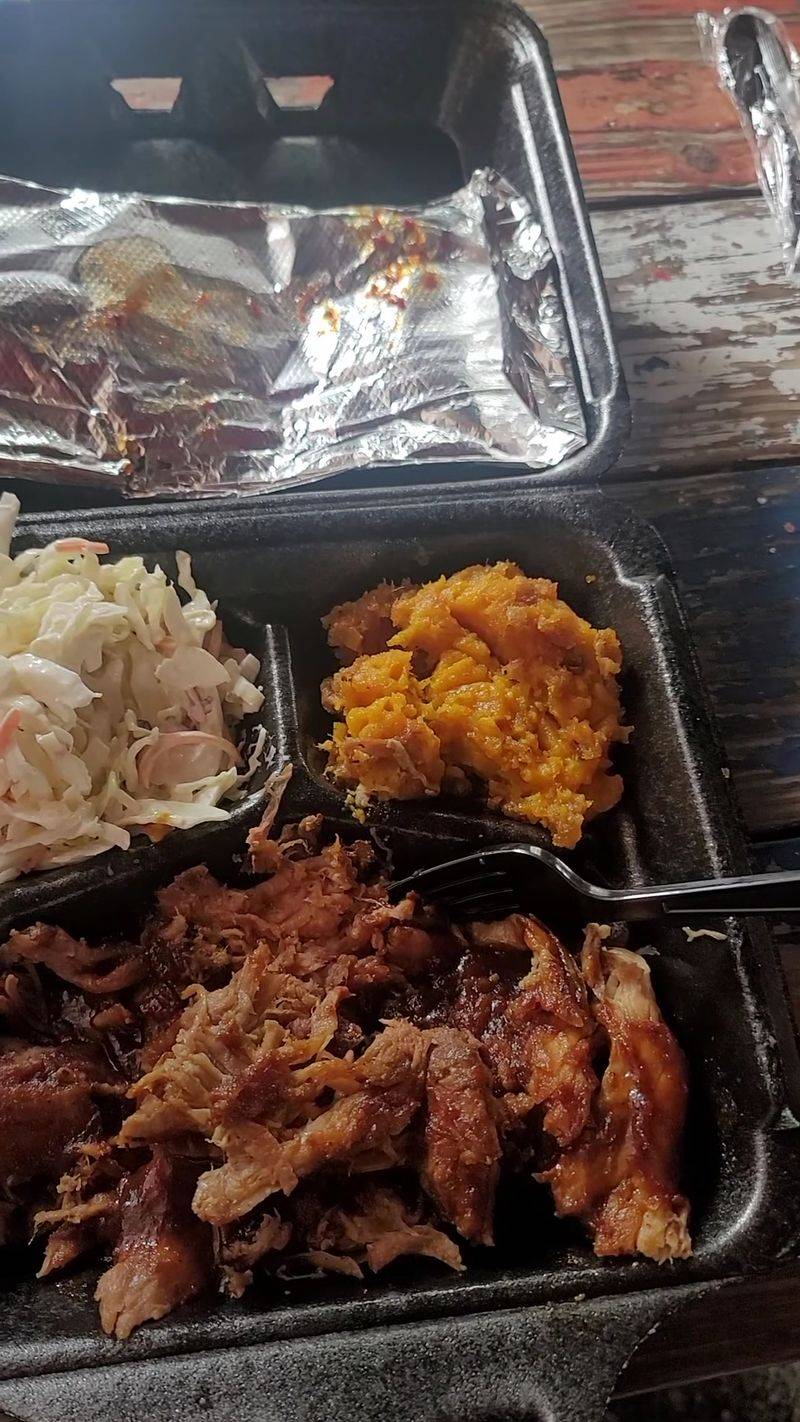
The texture lands somewhere between whipped and structured, soft enough to yield easily but firm enough to hold its shape on the fork.
Sweetness is present but controlled, never tipping into dessert territory, which makes it versatile alongside ribs, brisket, or pulled pork.
The topping adds contrast rather than dominance, contributing crunch and warmth instead of overwhelming the potatoes beneath.
Spice whispers instead of shouts, supporting the natural flavor rather than disguising it.
It tends to disappear faster than expected, often becoming the first empty dish at the table despite louder options nearby.
By the time plates are cleared, it’s the kind of side people mention again later, surprised by how much space it quietly claimed in the meal.
Friendly Staff
From the moment you step into the flow of ordering and seating, there’s an ease to the interactions that signals this is a place accustomed to first-timers, regulars, and curious wanderers all sharing the same space without friction.
Conversations at the counter move efficiently but never feel rushed, with explanations offered naturally when menus confuse or choices stall.
Questions are answered with familiarity rather than scripts, often shaped by what has been moving well that day or what the pit has been particularly proud of since morning.
It’s clear the staff understands the rhythm of the place, knowing when to linger for a second exchange and when to step back to keep the line moving.
Small gestures, like checking on tables without hovering or offering practical suggestions instead of upsells, make the experience feel grounded and sincere.
That confidence extends into problem-solving, where minor hiccups are handled calmly and without defensiveness, keeping the atmosphere intact even during busy stretches.
By the time you leave, the hospitality blends so seamlessly with the food and setting that it feels less like service and more like being briefly folded into someone else’s well-practiced routine.