
This Hidden Natural Wonder In South Carolina Feels Like Another World
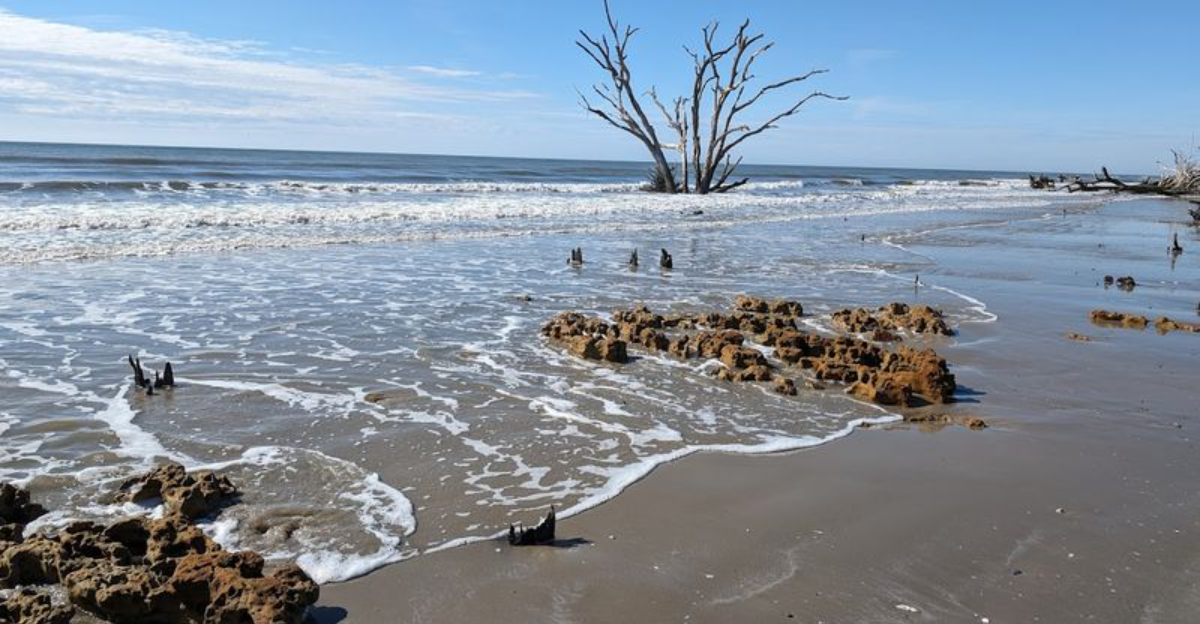
In South Carolina, there’s a beach that doesn’t look real until you’re standing on it. You’re driving through a quiet stretch of South Carolina, nothing but trees, soft light, and that feeling you might have taken a wrong turn.
Then the road opens, and everything shifts. The shoreline doesn’t look like something you expect here.
Sun-bleached trees rise straight out of the sand, twisted and scattered like a scene that never fully moved on. People slow down without being told to.
They stop mid-step, take it in, and look a little longer than usual. In South Carolina, most beach days mean crowds, umbrellas, and noise.
This feels completely different. The air is still, the space is open, and the moment stretches in a way that makes everything else fade for a second.
You don’t rush a place like this. You experience it.
And once you leave, it’s the kind of place South Carolina keeps bringing back to your mind.
The Legend Of Boneyard Beach
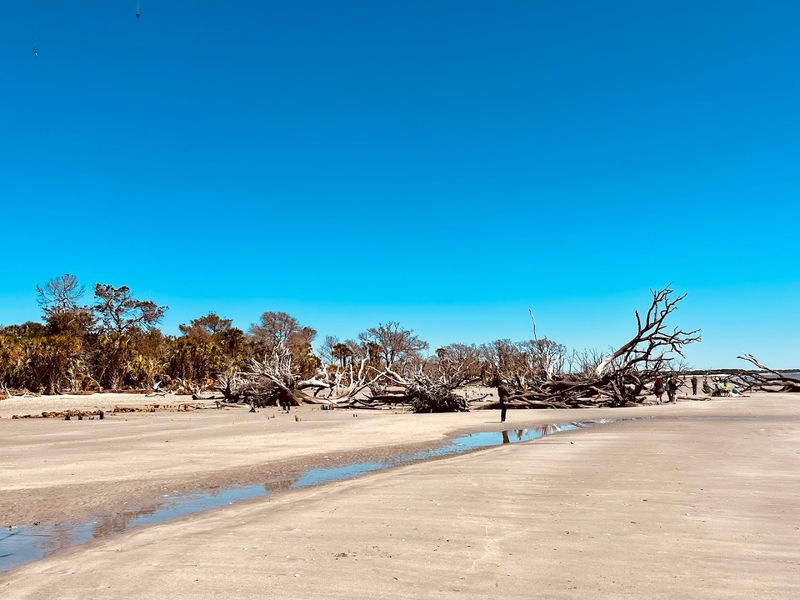
Few beaches in the entire country carry the kind of raw, dramatic beauty that Boneyard Beach delivers the moment you step out of the marsh trail onto the open sand.
The beach earned its striking name from the dozens of ancient trees that coastal erosion has slowly pulled from the earth, leaving their pale, twisted forms lying across the shore like natural sculptures no artist could replicate.
Botany Bay Road on Edisto Island, SC 29438, leads visitors to the trailhead, where a short half-mile walk through a marsh path brings you face to face with one of the most photographed coastlines in South Carolina.
The shoreline is constantly changing as erosion reshapes the land by roughly 1.5 inches each year, meaning every visit reveals a slightly different scene.
If you time your arrival around low tide, the exposed sand stretches wide and the full scale of the boneyard landscape becomes visible in a way that genuinely stops you mid-step.
A Free Park With A Day Use Pass
One of the most surprisingly pleasant facts about visiting Botany Bay is that entry is completely free, though you do need to fill out a quick Day Use P ass at the entrance before heading in.
A friendly volunteer typically greets arrivals at the gate, hands out a map of the property, and answers questions about trail conditions, tide times, and what to expect along the driving tour route.
The preserve is open from 5 AM to 7 P M on most days, but it is fully closed on Tuesdayss, so checking the schedule at https://public-lands-scdnr.hub.arcgis.com/pages/botany-bay-hp-wma before your trip is a smart move.
No entrance fee means no excuse to skip it, but the trade-off is that the preserve operates with minimal facilities, so there are no restrooms, no trash cans, and no food vendors on site.
Planning ahead with snacks, water, and a small trash bag of your own will make the whole experience far more comfortable and enjoyable.
The Self-Guided Plantation Driving Tour
Long before it became a protected preserve, this land was a working plantation, and the 6.5-mile self-guided driving tour lets visitors explore that layered history at their own pace.
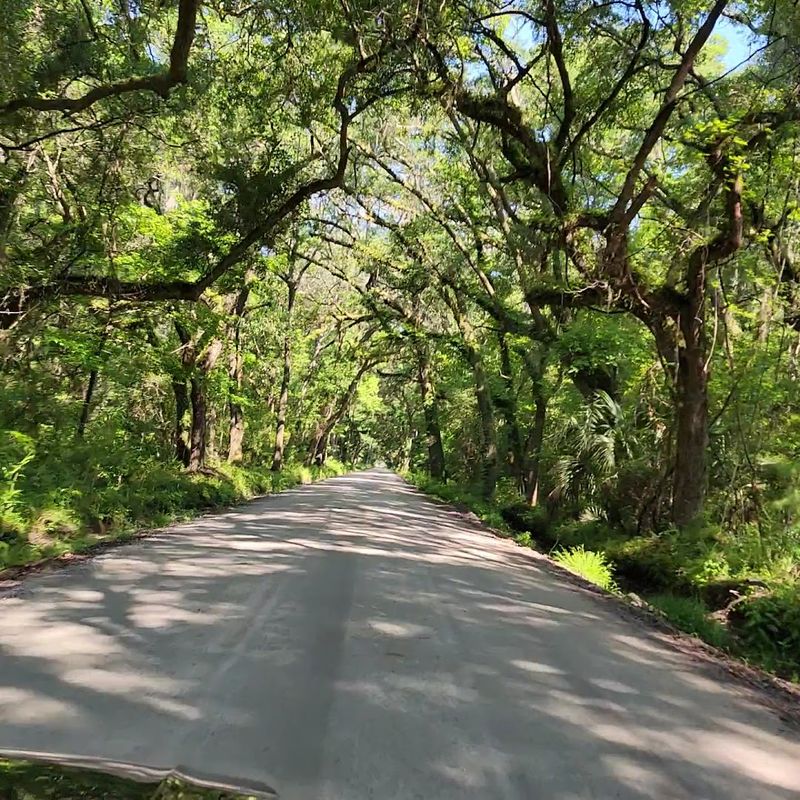
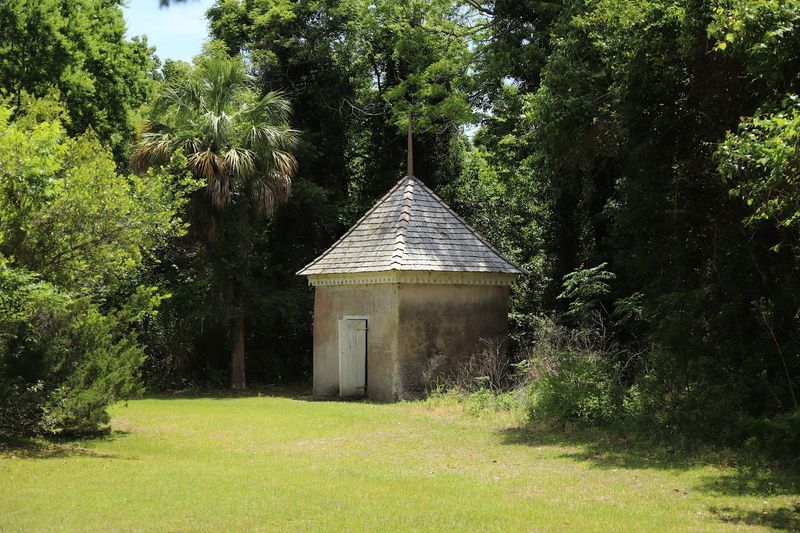
The tour winds through former agricultural fields, past ancient live oak allees, and by the ruins of the old plantation house, where you can park and walk among the remaining structure to get a real sense of what life looked like here more than two centuries ago.
An online guide available on the official B otany B ay website corresponds to numbered stops along the route, so downloading it before your visit means you get the full story behind each landmark without needing a ranger beside you.
K eep your eyes open along the driving route because alligator sightings are genuinely common, especially near the wetland edges and pond areas where they like to bask in the sun.
The combination of deep history and wild, untamed scenery makes this drive feel more like a time-travel experience than a simple road loop.
Wildlife That Will Stop You Cold
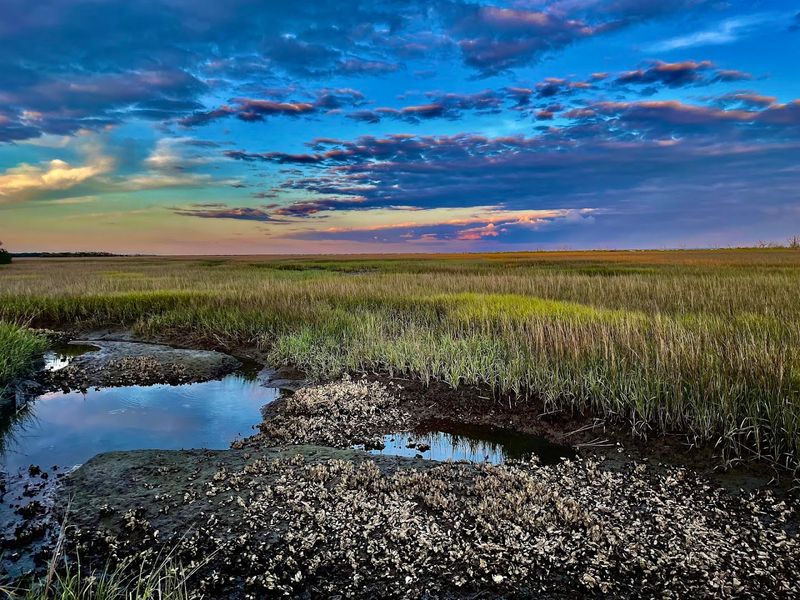
Botany Bay is not just a beach destination, it is a fully functioning wildlife habitat that supports an extraordinary range of species across its 3,363 acres of oceanside land.
Shore birds are everywhere near the bay access points, especially at low tide when exposed oyster beds attract herons, egrets, willets, and other coastal species that wade through the shallows with impressive patience.
Sea turtles nest along the beach during warmer months, and the preserve actively works to protect those nesting sites as part of its broader conservation mission.
Alligators patrol the freshwater areas throughout the property, which is part of why the driving tour feels more adventurous than a typical scenic loop through a park.
Birds, reptiles, marine life, and even white-tailed deer call this preserve home, and the relatively low visitor numbers compared to more famous parks means the animals here behave naturally and with far less disturbance than you might expect.
The Magic Of Spanish Mosd And Live Oak Trees
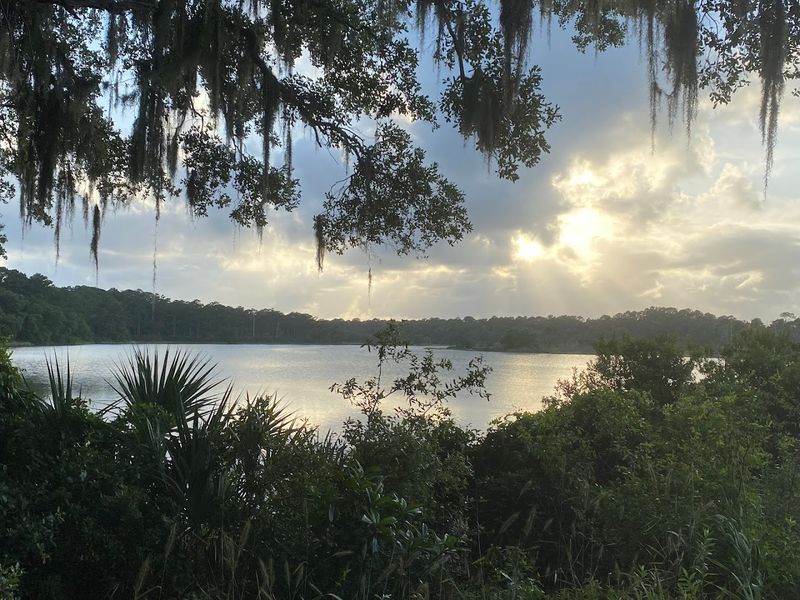
The drive into Botany Bay sets the tone for everything that follows, and that tone is nothing short of cinematic.
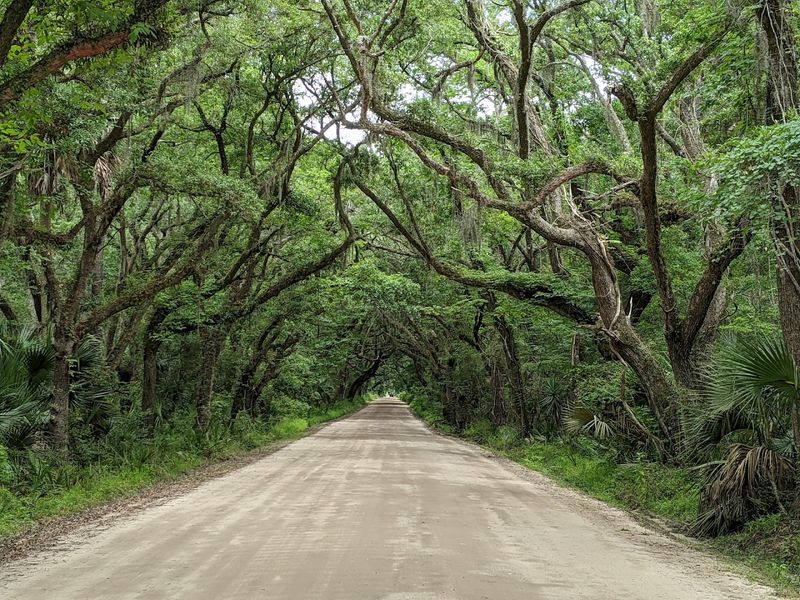
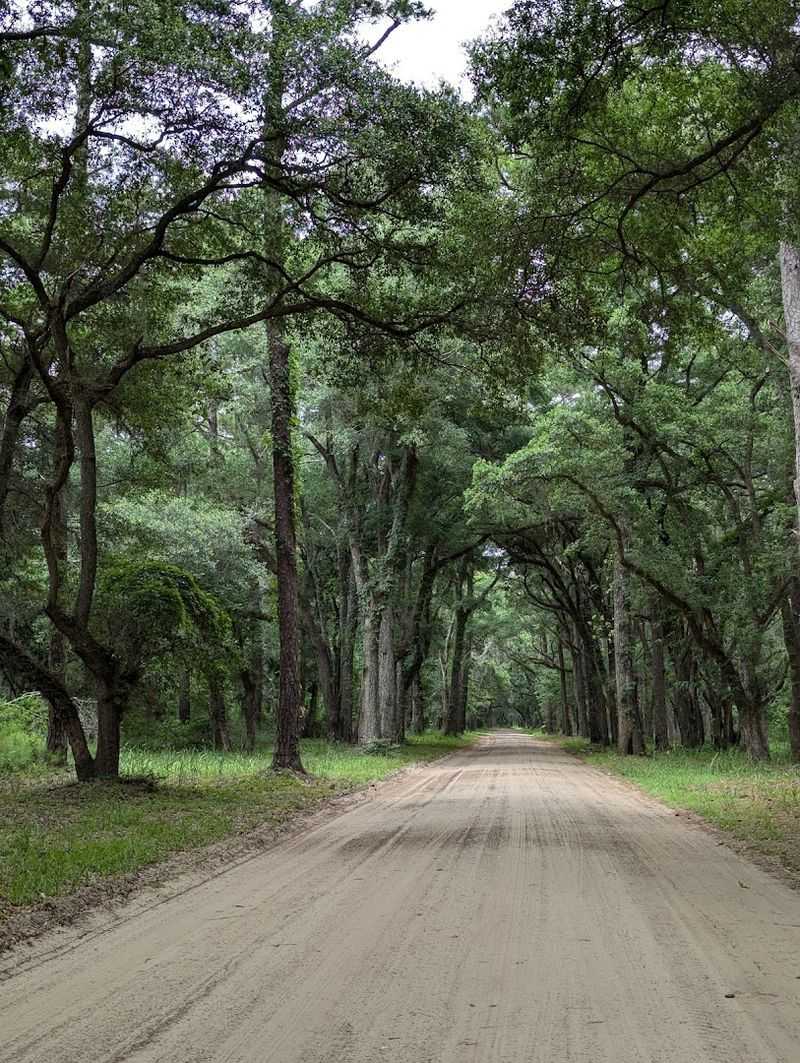
Towering live oak trees form a natural canopy over the entrance road, their thick, gnarled branches reaching across the lane and trailing long curtains of Spanish moss that sway gently in the coastal breeze.
This kind of scenery is deeply associated with the L owcountry region of South Carolina, but seeing it frame a dirt road leading into an untouched preserve feels particularly special compared to the manicured driveways of nearby historic estates.
Spanish moss is not a parasite, despite what many people assume. It is an epiphyte that draws moisture and nutrients from the air and rain without harming the trees it rests on.
The combination of these ancient trees and the soft, silver-green moss creates a light-filtering effect that makes even a cloudy day feel atmospheric, and photographers tend to burn through their camera storage before they even reach the beach.
Tide Time Is Everything Here
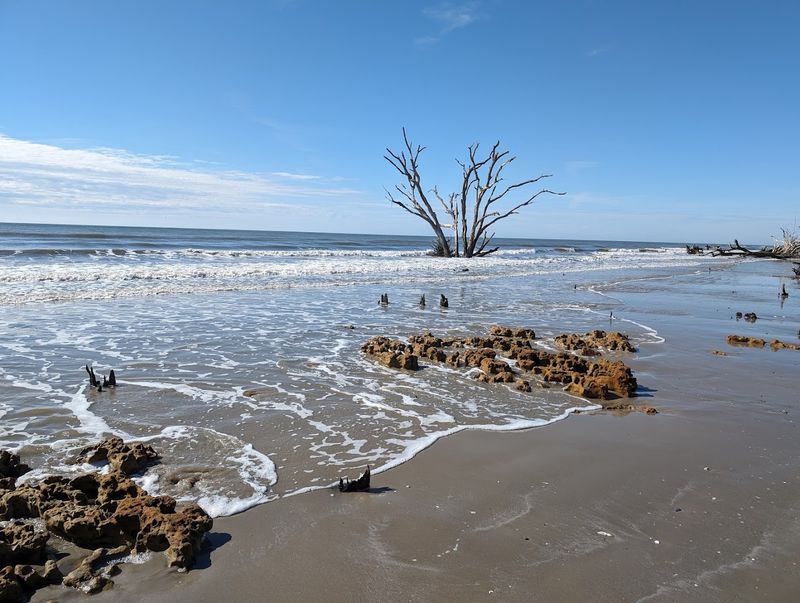
If there is one piece of advice that every experienced visitor to B otany B ay repeats without hesitation, it is this: check the tide chart before you go, and plan your arrival for low tide.
During high tide, coastal erosion has reduced the accessible beach area significantly, meaning the shoreline can become nearly impossible to walk along without getting wet up to your knees in seawater.
Low tide, on the other hand, reveals a wide stretch of dark, wet sand covered in an almost unbelievable number of shells, from whelks and conchs to sand dollars and oyster clusters that stretch across the exposed flats.
A riving about an hour before low tide gives you the best window to explore comfortably and take your time photographing the boneyard trees as the water retreats around them.
The National Oceanic and Atmospheric Administration offers free online tide charts for the Edisto Island area, and spending two minutes checking them before your visit will completely change the quality of your experience.
No Shell Collecting Allowed
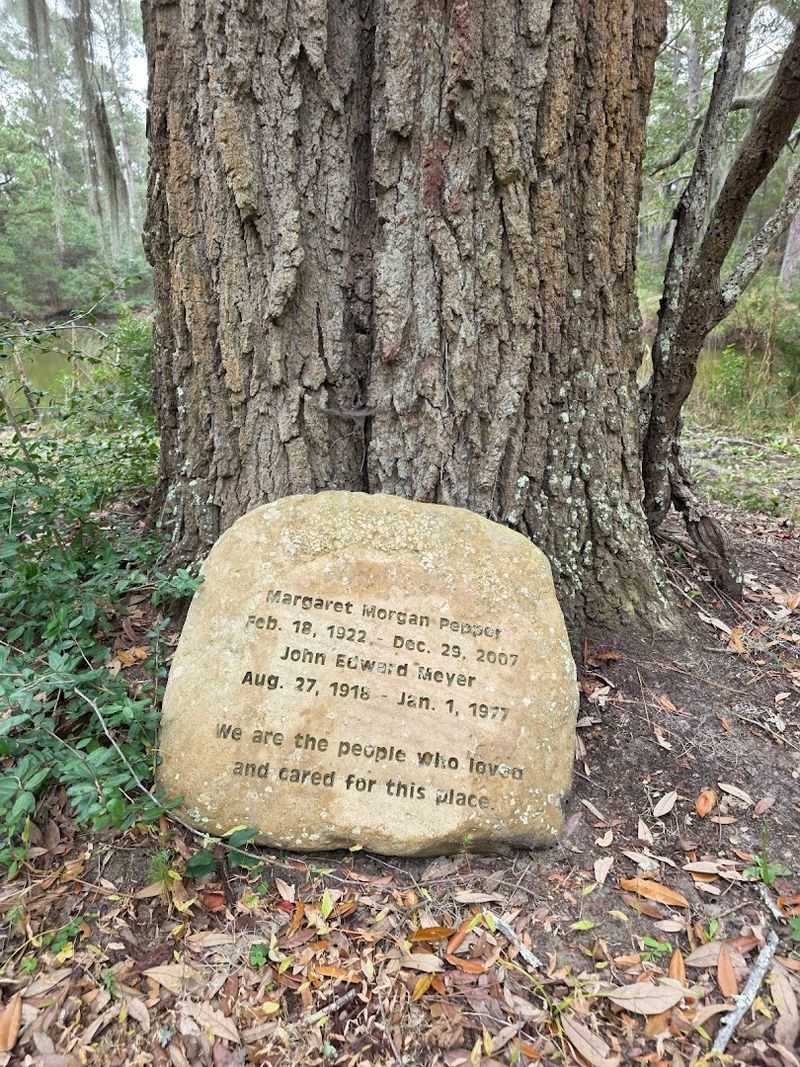
Walking along Boneyard Beach and spotting the most perfect whelk you have ever seen, then remembering you absolutely cannot take it home, is a very real and slightly painful part of the Botany B ay experience.
Because the preserve is a designated heritage site, removing shells, pottery shards, rocks, driftwood, or any natural or historical material from the property is strictly prohibited and comes with a fine of $470.
The rule exists for a good reason: the shells you see blanketing the shoreline are there precisely because no one has taken them, and that accumulation is part of what makes the beach look so strikingly different from any other coastline in the region.
Instead of pocketing your finds, the local tradition is to photograph them and then arrange them creatively on the branches and roots of the boneyard trees, turning the beach into a kind of communal natural art installation.
That small act of leaving something behind rather than taking it away actually adds to the magic of the place rather than diminishing it.
The Ruins And Roots Of Plantation History
Botany Bay carries a history that stretches back well over two centuries, and the preserve does not shy away from presenting that past to visitors in a thoughtful and educational way.
The property encompasses the remains of two former plantations, and the self-guided tour includes stops at structural ruins, old field boundaries, and interpretive signs that explain how the land was used, who worked it, and how it eventually became the protected space it is today.
On-site volunteers and occasional guest educators have been known to share artifacts and information about the N at-A merican communities that inhabited this coastal area long before European settlement, adding a deeper pre-colonial layer to the site’s already rich story.
One reviewer described a visit where a knowledgeable gentleman was sharing items related to indigenous history, various sea shells, and other fascinating details about the area’s past, which turned a simple walk into a genuine learning moment.
That kind of living history, delivered in the open air among the actual landscape where it happened, is something no museum exhibit can fully replicate.
Sea Oxeye, Salt Marsh, And Coastal Plants
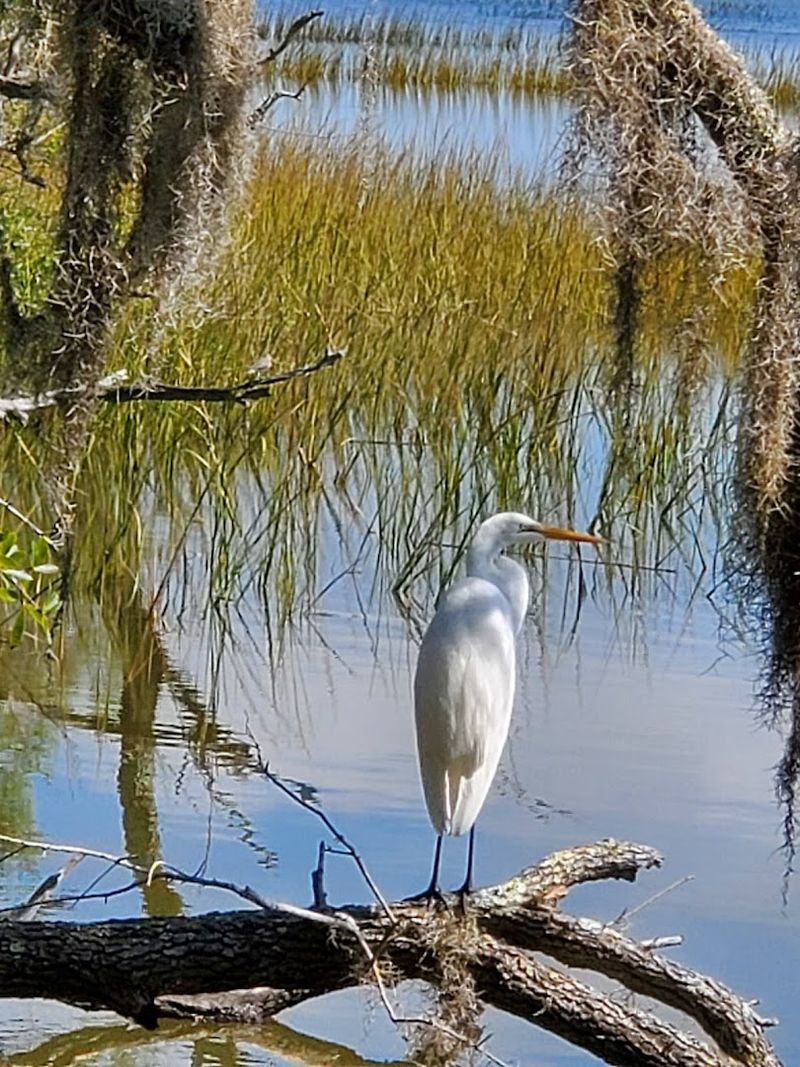
The half-mile trail from the parking area to B oneyard B each passes through a salt marsh landscape that rewards anyone who slows down long enough to actually look at what is growing around them.
Sea O xeye, a native coastal plant with small bright yellow flowers, lines much of the path and blooms vigorously in warmer months before dying back in the fall, leaving behind a more sparse and sculptural arrangement of dried stems and seed heads.
The salt marsh itself is a critical coastal ecosystem, filtering water, stabilizing shorelines, and providing habitat and nursery grounds for countless fish, crustaceans, and bird species that depend on this environment to survive.
The smell along the path is something visitors consistently mention, a layered mix of pluff mud, pine resin, and ocean salt that is unmistakably L owcountry and oddly comforting once you learn to associate it with the beauty surrounding it.
P ay attention to the plants on both sides of the trail and you will notice subtle seasonal changes that make each visit feel slightly different from the last.
Planning Your Visit The Smart Way
Get-up to Botany Bay Heritage P reserve and Wildlife Management Area requires a bit of advance planning, but none of it is complicated once you know what to expect.
The preserve sits at B otany B ay Road, E disto Island, SC 29438, and G – Maps has a habit of announcing your arrival before you actually reach the parking lot, so continue down the road past where the app tells you to stop and follow the signs to the actual lot at the end.
The roads inside the preserve are unpaved and can get rough after heavy rain, so a vehicle with decent ground clearance is helpful, and driving slowly is both polite and practical given the wildlife that can appear on the road at any moment.
D – not bring your dog onto the beach, as it is not permitted, and leave extra time to take the full driving tour on your way out rather than rushing past the plantation stops.
You can reach the preserve by phone at (843) 844-8957 if you need current conditions before making the drive out to E disto Island.