
This Hidden Washington Canyon Oasis Looks Like It Belongs On Another Planet
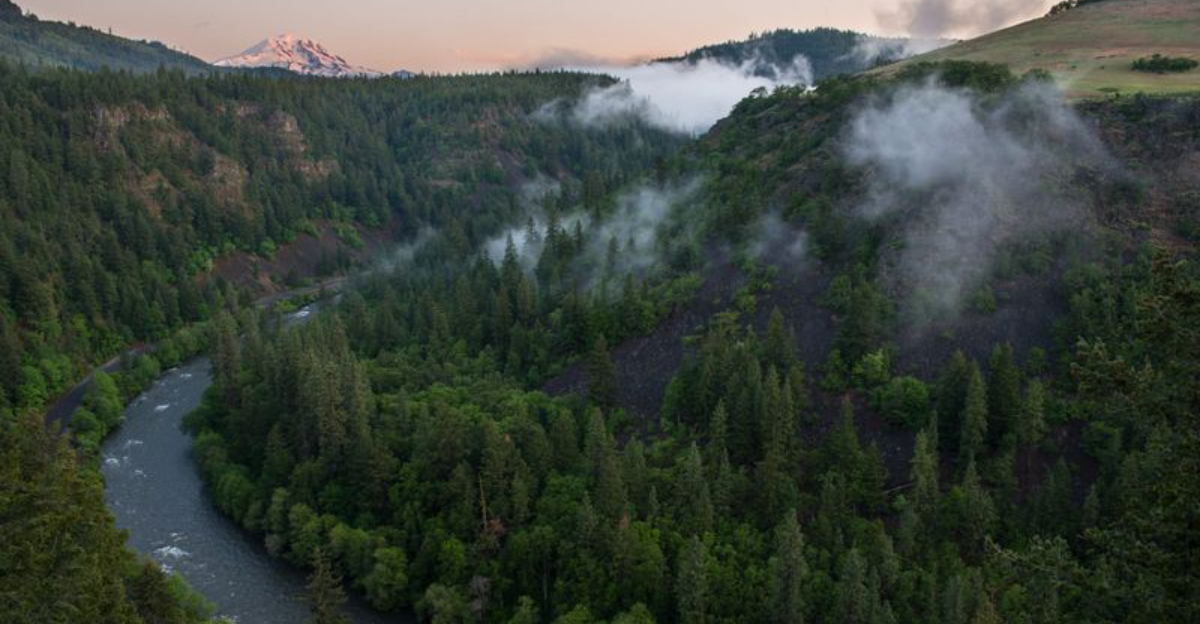
I thought I’d seen every kind of beauty the Pacific Northwest had to offer—until I found myself standing at the edge of Klickitat Canyon on a blazing August afternoon.
The air shimmered with heat, the horizon rippled like glass, and before me stretched a landscape so raw and otherworldly it felt closer to Mars than to Seattle.
Hidden deep in Washington’s high desert, this canyon is a place where time slows, silence speaks, and nature still holds the upper hand.
A Hidden Canyon Tucked Deep In Washington’s Wild Heart
Finding Klickitat Canyon requires determination and a good map, because your phone signal will vanish faster than my enthusiasm for early morning hikes. Located in south-central Washington near the tiny town of Klickitat, this geological wonder hides between rolling wheat fields and sagebrush plains.
Most people zoom past on Highway 97, completely unaware that paradise waits just off the beaten path. The Columbia Land Trust protects over 2,000 acres here, keeping development at bay and nature thriving.
Getting there involves bumpy gravel roads that make your car rattle like a tambourine, but trust me, every jostled filling is worth it. Once you arrive, the modern world disappears completely, replaced by ancient stone walls and river music that drowns out every worry.
Where Basalt Cliffs Rise Like Ancient Cathedrals
My jaw actually dropped when I first saw these cliffs—something I thought only happened in cartoons. These basalt columns, formed millions of years ago by cooling lava flows, shoot skyward like nature’s skyscrapers, some reaching heights of 300 feet.
The hexagonal columns fit together like a giant’s puzzle, creating patterns that seem too perfect to be accidental. Geologists get downright giddy explaining how the Yakima Basalt flows created this landscape during the Miocene epoch.
Morning light paints these walls in shades of copper and charcoal, while afternoon sun creates shadows so dramatic they could win photography awards. Standing beneath them feels humbling in the best possible way, reminding you that humans are pretty small potatoes in the grand scheme of things.
A Desert Oasis Along The Klickitat River
The Klickitat River slices through this desert landscape like a liquid emerald necklace, bringing life to an otherwise parched environment. I’ve dipped my toes in these waters on sweltering July days, and the refreshing coldness makes you yelp with delight.
Cottonwood trees cluster along the riverbanks, their leaves shimmering silver-green in the breeze and providing precious shade for exhausted hikers. The contrast between the arid canyon walls and this ribbon of water creates an ecosystem that supports incredible biodiversity.
Native fish species, including steelhead and salmon, migrate through these waters seasonally, following routes their ancestors traveled for millennia. Watching the river’s current dance over smooth river rocks becomes surprisingly meditative, better than any meditation app I’ve ever downloaded and subsequently ignored.
Trails That Lead Through Silence And Sunlight
Walking these trails feels like stepping into a Western movie, minus the tumbleweeds and gunfights. The paths meander through sagebrush-dotted hillsides, offering views that stretch for miles across the Columbia River Gorge region.
Spring transforms the canyon into a wildflower wonderland, with lupines, balsamroot, and Indian paintbrush splashing color across the tan landscape. Trail difficulty ranges from easy riverside strolls to more challenging climbs that’ll have your calves screaming for mercy.
What strikes me most is the profound quiet—no traffic noise, no honking horns, just wind whispering through grass and the occasional hawk’s cry. Pack plenty of water because the desert sun shows zero mercy, and shade is scarcer than my patience during rush hour traffic back in civilization.
Wildlife Thriving In A World Untouched By Time
Spotting a bighorn sheep scaling impossible cliff faces makes you question everything you know about physics and fear. These sure-footed athletes share the canyon with mule deer, coyotes, bobcats, and over 100 bird species that call this place home.
Golden eagles soar overhead on thermal currents, scanning for prey with eyes sharper than any high-definition camera. I once watched a family of river otters play in the shallows, completely unbothered by my presence, reminding me that we’re visitors in their living room.
Rattlesnakes sun themselves on warm rocks, so watch where you step and give them respectful distance—they were here first, after all. The absence of human development means wildlife behaves naturally, offering glimpses of behavior that’s increasingly rare in our overdeveloped world.
The Story Of Preservation And The Columbia Land Trust
Without the Columbia Land Trust’s vision and hard work, this canyon might’ve become another subdivision or industrial site. Since 1990, this nonprofit has protected over 30,000 acres across the Columbia River region, including these precious Klickitat lands.
Their conservation efforts focus on preserving habitat for threatened species while maintaining public access for recreation and education. Funding comes from grants, donations, and partnerships with landowners who value conservation over quick development dollars.
Supporting organizations like this matters more than ever as wild spaces shrink faster than my savings account. You can volunteer for habitat restoration projects, donate funds, or simply spread the word about why places like Klickitat Canyon deserve protection for future generations who’ll need nature’s healing powers just as much as we do.
A Photographer’s Paradise Of Light And Shadow
My camera practically caught fire from overuse during my first visit—every angle revealed another jaw-dropping composition. The interplay between harsh desert sunlight and deep canyon shadows creates contrast that makes photographers weep with joy.
Golden hour transforms the basalt walls into glowing sculptures, while blue hour brings out mysterious, moody tones that feel otherworldly. Sunrise shoots require painful early wake-ups, but watching light gradually paint the canyon walls makes losing sleep totally worthwhile.
Bring a wide-angle lens for capturing the canyon’s grand scale and a telephoto for wildlife and detailed cliff textures. Star photography here is absolutely spectacular thanks to minimal light pollution, revealing the Milky Way in all its glory and making you feel simultaneously insignificant and connected to something vast.
Visiting Responsibly: How To Keep Klickitat Wild
Leave No Trace isn’t just a cute slogan—it’s survival strategy for fragile ecosystems like this one. Pack out everything you pack in, including that orange peel you think will biodegrade quickly (it won’t, and wildlife shouldn’t eat it anyway).
Stay on established trails to prevent erosion and protect cryptobiotic soil crusts, those dark bumpy patches that take decades to form and seconds to destroy. Respect seasonal closures designed to protect nesting birds and other vulnerable wildlife during critical breeding periods.
Camp only in designated areas, keep noise levels down, and leave what you find so others can discover the same treasures. This canyon’s otherworldly beauty depends on visitors who care enough to minimize their impact, ensuring that future adventurers can experience the same magic that took your breath away.