
This High-Altitude Colorado Lake Has Shockingly Blue Water You Have To See
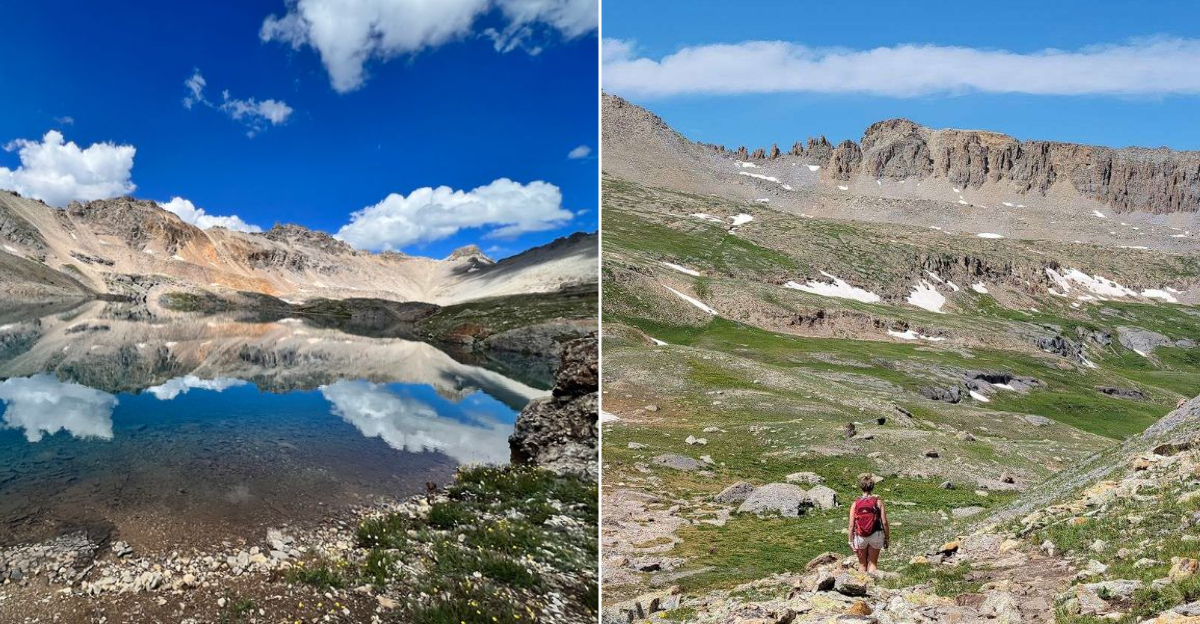
Some hikes do not just reward effort, they completely rewrite your idea of what mountain water can look like. High in the rugged San Juan Mountains, this demanding route climbs toward a basin so vivid it almost feels unreal when it finally comes into view.
Colorado scenery can be dramatic in plenty of ways, but this trail saves its knockout moment for hikers willing to earn every breathless step. The climb is steep, exposed, and serious enough to remind you that altitude always gets a vote, so slow pacing matters just as much as sturdy shoes.
Then the blue appears, sharp against rock, sky, and alpine silence, and suddenly every switchback feels justified. It is not an easy stroll or a casual roadside stop.
It is Colorado’s high-country magic at full volume, the kind of view that stays bright in your memory long after the descent.
The Road To The Trailhead: A Vehicle Reality Check
Before your boots even touch the trail, the road leading to Columbine Lake Trailhead on Forest Road 820 is already testing your commitment. This is not a casual parking lot situation, and the approach deserves its own honest conversation before you pack your snacks and drive three hours from Denver.
Visitors consistently note that low-clearance sedans and minivans face a real challenge getting all the way to the trailhead. The road is generally manageable, but the final stretch involves loose rock, deep potholes, and in spring or early summer, a river ford that can run a foot deep or more.
An AWD or 4WD vehicle is the smart call, and arriving early is non-negotiable.
Parking near the trailhead is limited to roughly six spots, and they fill up fast, especially on weekends. Many hikers park near the bridge or where Ophir Pass Road splits and walk the extra half mile or so to the trailhead.
That small adjustment adds steps but saves a lot of stress.
Pro Tip: Approach from the south via Ophir Pass Road if you want to avoid the river crossing. Sedan drivers should plan to park well before the trailhead and factor the extra mileage into their total hiking time.
The First Two Miles: Where The Trail Earns Its Reputation
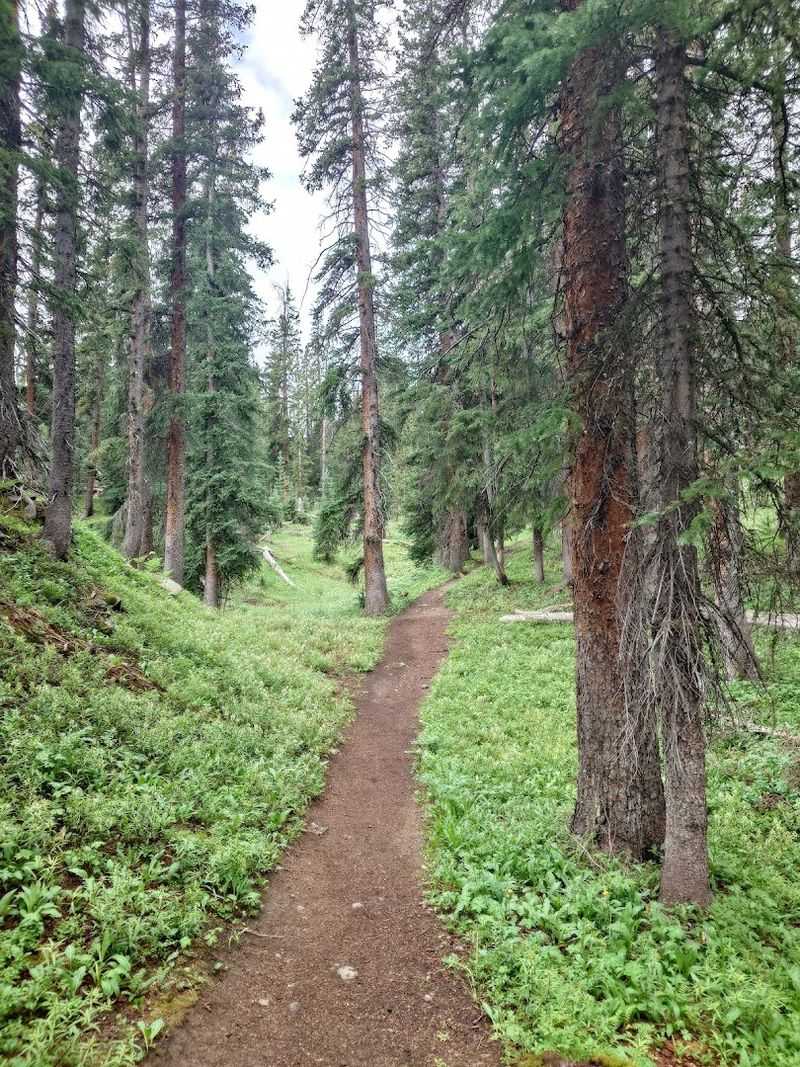
Nobody who has hiked Columbine Lake will pretend the first two miles are a casual warm-up. The trail launches into a series of roughly 15 switchbacks through a forested lower section, gaining elevation at a pace that makes most hikers recalculate their life choices somewhere around the fourth turn.
The shade from the trees is genuinely welcome during this stretch, but there is no water access along the lower forested section, so carrying enough from the start matters. Experienced hikers report a pace of about one mile per hour on this opening climb, which is not a criticism of anyone’s fitness level.
It is simply the math of gaining several thousand feet in a short distance at altitude.
Hiking poles are strongly recommended here, particularly for the descent when knees tend to register their complaints loudly. The trail itself is well-maintained and easy to follow, so navigation is not the challenge.
The challenge is purely the sustained uphill grind that continues with little mercy until the tree line opens up.
Best For: Hikers who are physically fit and comfortable with sustained steep climbing. This opening section is the honest price of admission for everything beautiful waiting above.
Above The Tree Line: When The Views Become Unreasonable
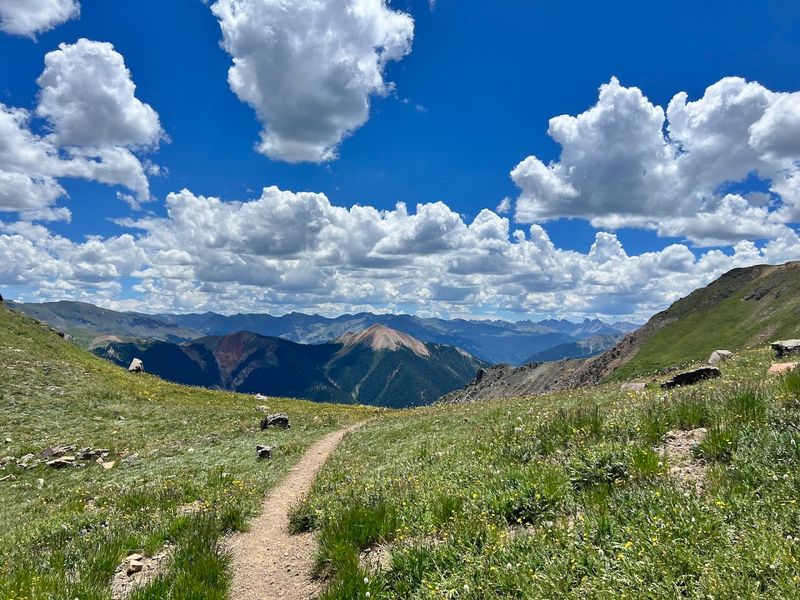
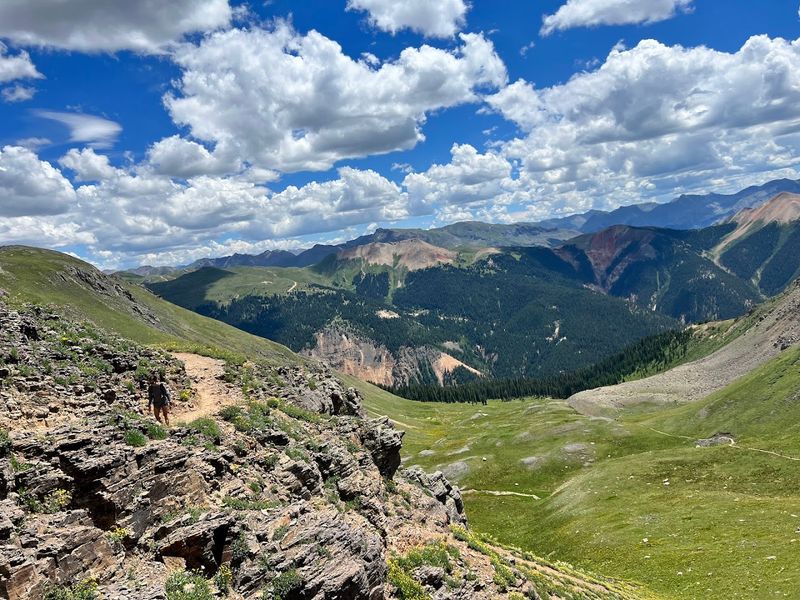
Clearing the tree line on the Columbine Lake Trail is one of those hiking moments that genuinely stops you mid-step. The forest releases you into a fully exposed alpine world where the views stretch in every direction and the sky feels about twelve feet closer than it should.
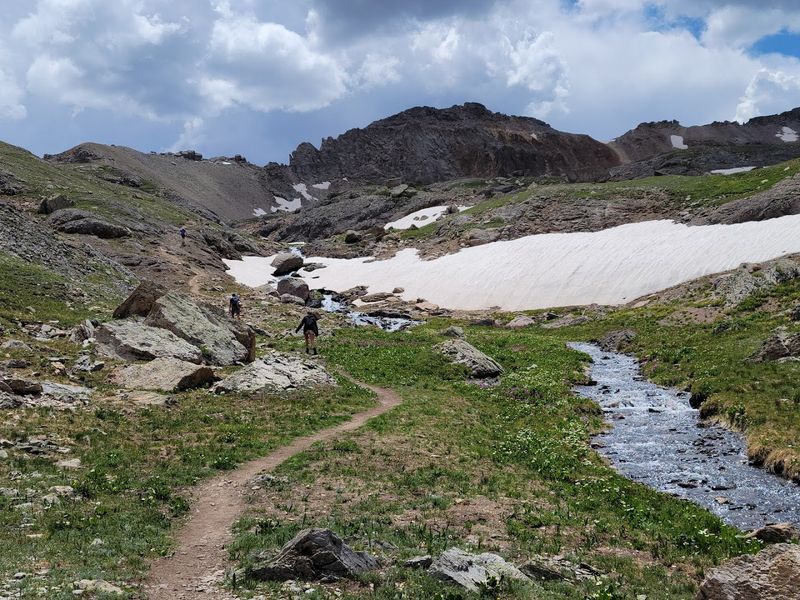
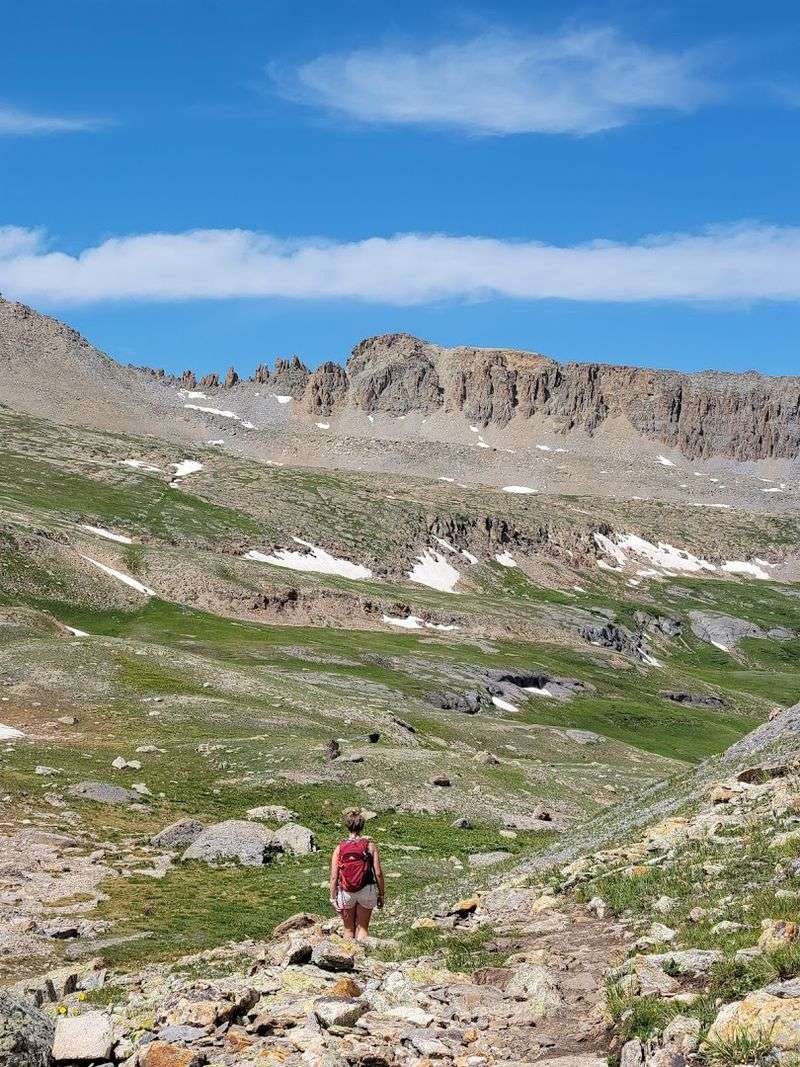
This second half of the trail trades shade for spectacle. The path runs through open terrain with loose rocks scattered throughout, though visitors note that nothing feels dangerously technical.
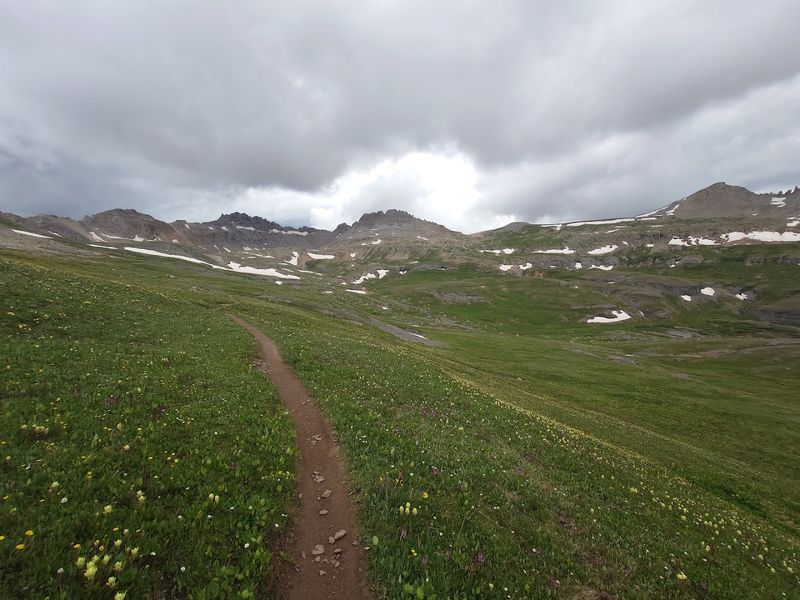
What it does feel like is relentlessly beautiful, with mountain views that expand with every upward step and wildflowers dotting the slopes during peak summer months.
Multiple false peaks test your patience in the best possible way, each one promising the lake is just over the next ridge before revealing another stretch of glorious trail.
The saddle section between the tree line and the final push to the lake is described by many visitors as equally brutal and gorgeous, which is honestly the most honest two-word summary of this entire hike.
Why It Matters: Most of the trail above tree line is fully exposed, meaning afternoon thunderstorms can build quickly at this elevation. Starting early in the morning is the single most important planning decision you can make for this hike.
Columbine Lake Itself: That Blue Is Not A Filter
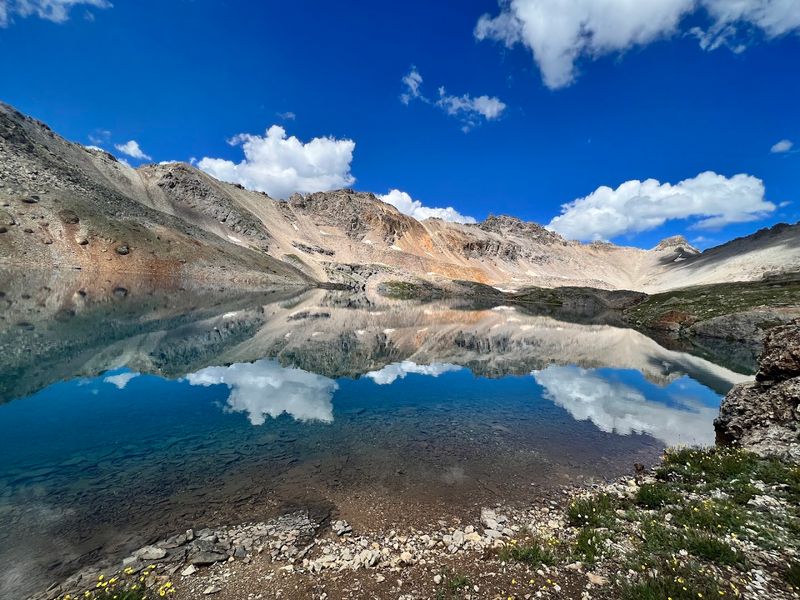
After roughly four miles of climbing, Columbine Lake appears, and every hiker who has ever muttered something unkind about switchbacks immediately goes quiet. The water is that specific shade of blue that looks like someone cranked the saturation slider in a photo editor, except it looks exactly like that in person too.
Sitting at approximately 12,500 feet, the lake is crystal clear and surrounded by rocky alpine terrain that frames it like a painting nobody deserves to see for free.
Visitors consistently describe it as more beautiful in person than in photographs, which is a rare and meaningful compliment for any natural landmark.
The wildflowers visible during summer visits add color to an already overwhelming scene.
Spending 30 to 45 minutes at the lake is a reasonable estimate for most groups, though lingering longer is an easy trap to fall into. Dogs are welcome on the trail, and the area near the lake offers alpine streams and snowfields well into summer, providing water for four-legged hikers who need it.
The lake is genuinely the payoff that justifies every difficult step of the approach.
Quick Verdict: Visitors regularly call this the most beautiful lake they have seen in Colorado, ranking it above other well-known alpine lakes in the same region. That is not a small claim in a state full of stunning water.
How Long This Hike Actually Takes: Planning Your Day Honestly
One of the most useful things visitors have shared about Columbine Lake Trail is the honest range of completion times, because this hike does not fit neatly into a single schedule.
Total round-trip distance runs approximately 7 to 8 miles depending on where you park, with experienced and fast-paced hikers completing it in around three hours and more typical groups taking five to eight hours.
That range matters enormously for planning. An eight-hour hike at altitude means an early start is not just a good idea but a genuine safety consideration.
Colorado afternoon thunderstorms are a real risk above tree line, and starting before sunrise or at first light gives you the best chance of reaching the lake and descending before weather builds.
Factor in time at the lake, snack breaks, and the extra walking distance if you park below the trailhead. Visitors who parked near the Ophir Pass Road split added roughly a mile each direction to their total.
Bringing more water than you think you need is standard advice, but at this elevation it deserves emphasis. Altitude affects hydration and energy in ways that can sneak up on even fit hikers.
Planning Advice: Build your day around a five to six hour window minimum. Arriving at the trailhead area before 7 a.m. on weekends is a strong strategy for both parking and weather safety.
Who This Hike Is For And Who Should Think Twice
Columbine Lake Trail is not a hike that benefits from vague encouragement. Being clear about what it demands is the kindest thing anyone can do for a visitor planning their trip.
The trail gains approximately 2,500 to 3,000 feet of elevation over roughly four miles, mostly on sustained steep terrain with loose rock and full sun exposure above tree line.
Hikers who are reasonably fit, comfortable with long uphill efforts, and prepared for altitude will find this one of the most rewarding trails in Colorado. Families with older children who have hiking experience and the physical stamina for a full day on steep terrain can absolutely do this trail.
It is not technically difficult in terms of route-finding or scrambling, just relentlessly uphill for a significant distance.
Visitors with low-clearance vehicles, those who are new to high-altitude hiking, or anyone planning a casual afternoon outing should recalibrate expectations significantly. The road access alone filters out a portion of visitors before the trail even begins.
Dogs are welcome but need plenty of water, especially above tree line where the sun is direct and shade disappears entirely.
Who This Is Not For: Casual day-trippers without proper footwear, water, or physical conditioning for sustained steep climbing at altitude. Hiking boots with good traction are strongly recommended over trail runners or sneakers.
Making The Most Of Your Visit: Gear, Timing, And The Small Details
Getting the most out of a Columbine Lake hike comes down to a handful of practical decisions made before you leave the parking area. Layers are essential because the temperature at 12,500 feet can shift dramatically even on a summer day, and the exposed upper trail offers no shelter from wind or weather.
Hikers who arrived in shorts and a t-shirt have found themselves wishing for a jacket at the lake more times than anyone wants to admit.
Hiking poles consistently come up in visitor accounts as a genuine help, particularly on the steep descent where knees absorb significant impact on loose rock. Good traction footwear matters too, especially if any snowfields remain on the upper trail, which can persist well into July.
Starting early solves multiple problems at once: parking availability, afternoon weather risk, and the general benefit of having the upper trail to yourself in the morning light.
The trail is open 24 hours, which means early morning starts are entirely possible and genuinely rewarded.
Weekday visits offer noticeably fewer crowds than weekends, and post-peak season visits in September or October can deliver stunning fall color in the lower forested section alongside cooler temperatures.
Insider Tip: Pack more snacks than you think you need. Altitude suppresses appetite early but the energy demand on this trail catches up with you fast, and a proper snack at the lake makes the descent feel entirely different.