
This Historic Detroit Michigan Church Was Once Known As The Church Of The Grottos
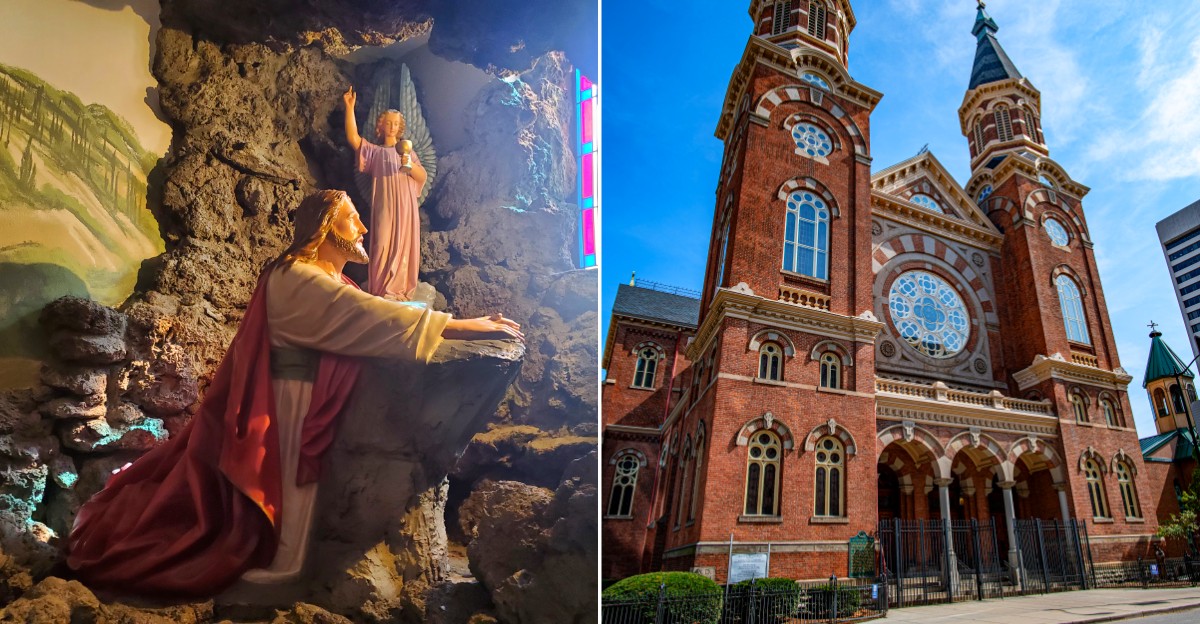
A downtown church with real flowing water inside, plus a full replica of a famous French shrine? That’s not a theme park. It’s a working parish with three handmade grottos.
A pastor named Father Joseph Wuest built them in the early 1900s. One shows the Garden of Gethsemane. Another recreates a baptism scene, water and all.
I love that this Michigan landmark once had a nickname built entirely around those grottos. I also like that the third one still hosts a weekly Mass at its own altar.
The building around them is just as bold. Think twin spires, granite columns, and a carved oak altar older than the walls holding it. I can’t imagine passing those red brick towers without wondering what’s waiting inside. So what does a church famous for grottos actually look like today?
The Formal Name Is A Mouthful, So Everyone Shortened It
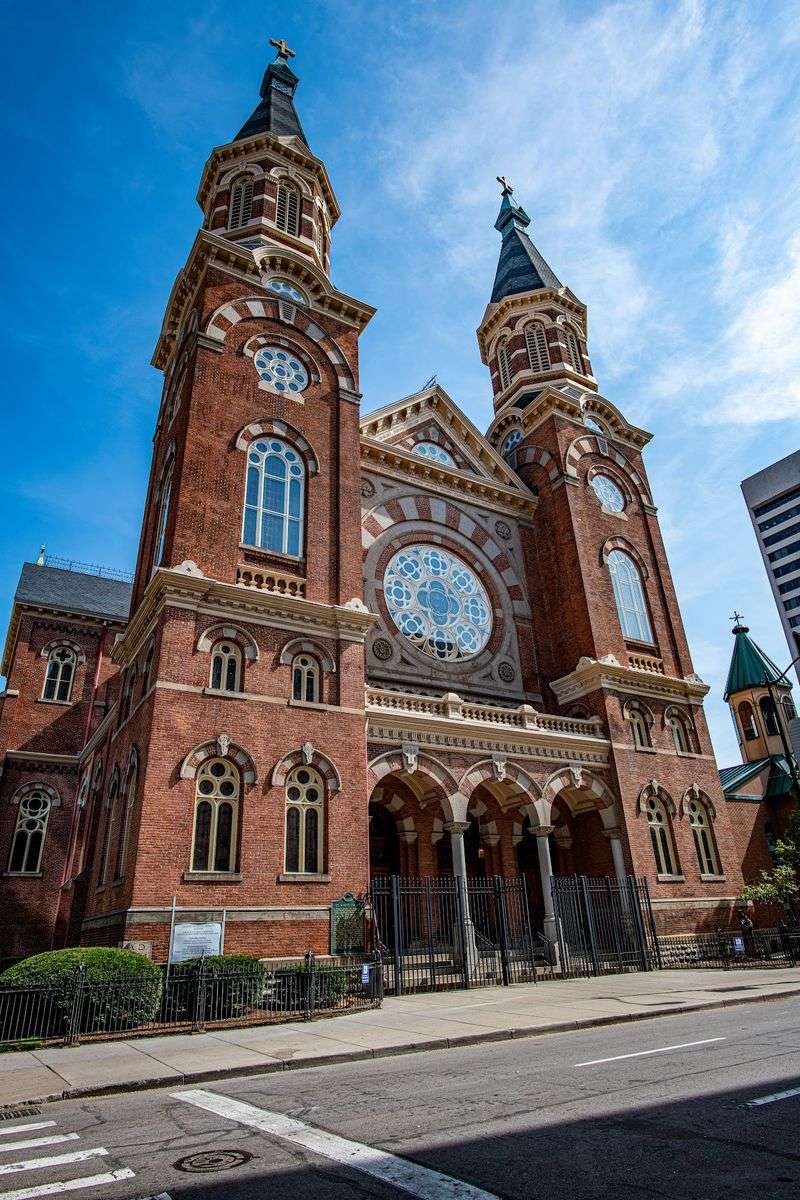
Officially, this place is the Church of the Immaculate Conception of the Blessed Virgin Mary. Try saying that three times fast while giving someone directions.
No wonder people settled on Old St. Mary’s. The word Old helps tell it apart from other St. Mary’s parishes in the Detroit area.
And honestly, Old fits. The parish was founded in 1834 by Father Martin Kundig, making it the third-oldest Roman Catholic parish in Detroit.
It started as a home for German-speaking Catholic immigrants. In fact, it was Detroit’s first German Catholic church.
The first church building was consecrated on June 29, 1843. It stood on land donated by Antoine and Monica Beaubien, a gift that shaped this corner of Michigan for generations.
So when you hear someone casually say Old St. Mary’s, remember the full name hiding behind it. It’s a bit like a friend who goes by a nickname but has a very fancy birth certificate.
Knowing that backstory makes a visit feel richer. You’re not just seeing a pretty building. You’re stepping into nearly two centuries of city history.
Monroe Street Leads Into The Old Church
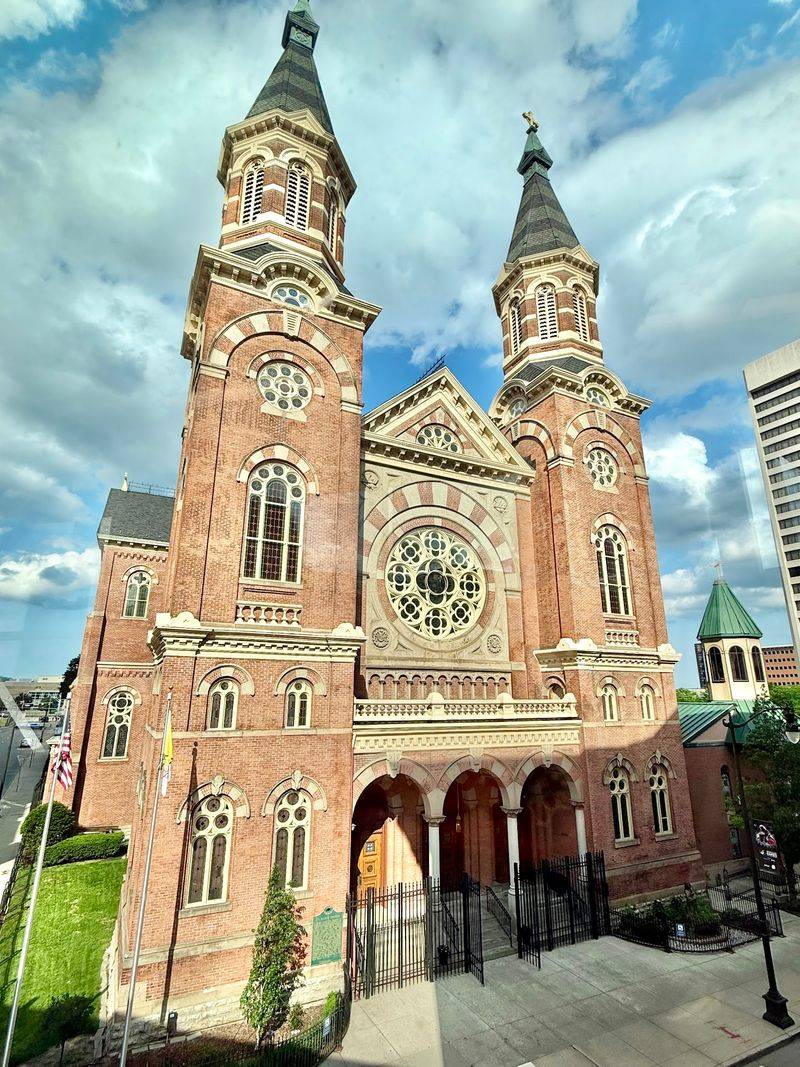
Old St. Mary’s Catholic Church stands at 646 Monroe Street in Detroit, Michigan, within the city’s Greektown area. Approach the district from downtown and use Monroe Street for the final stretch.
The historic church rises among Greektown’s street-level businesses, with its prominent masonry exterior marking the destination. Its celebrated grottos are inside, so they are not visible from the sidewalk.
Approach the main church entrance on Monroe Street during public access hours or arrange a tour with the parish. Follow posted parking regulations and avoid assuming visitor parking is available during every service.
Those Twin Spires Were Designed By A Parishioner
Peter Dederichs had a pretty great commute to work. The German-born and German-trained architect was also a member of the parish he designed.
The cornerstone for the current building went down in 1884. Construction wrapped up in 1885, replacing the original church with something much grander.
The style is often described as Pisan Romanesque or Venetian Renaissance. Either way, it’s an exuberant creation that refuses to blend in.
Red brick in different tones gives the outside a striped, lively look. Plenty of limestone trim adds sharp contrast against all that warm color.
Look up at the facade and you’ll spot two towers topped with spires. Between them sits a large rose window, the kind of detail that rewards a long stare.
The church follows a Latin Cross plan. From above, the building actually forms the shape of a cross.
Take a moment on the sidewalk before heading in. The exterior gives you a preview of the care waiting inside, and it makes a great photo against the Detroit skyline.
Granite Columns Traveled All The Way From Maine
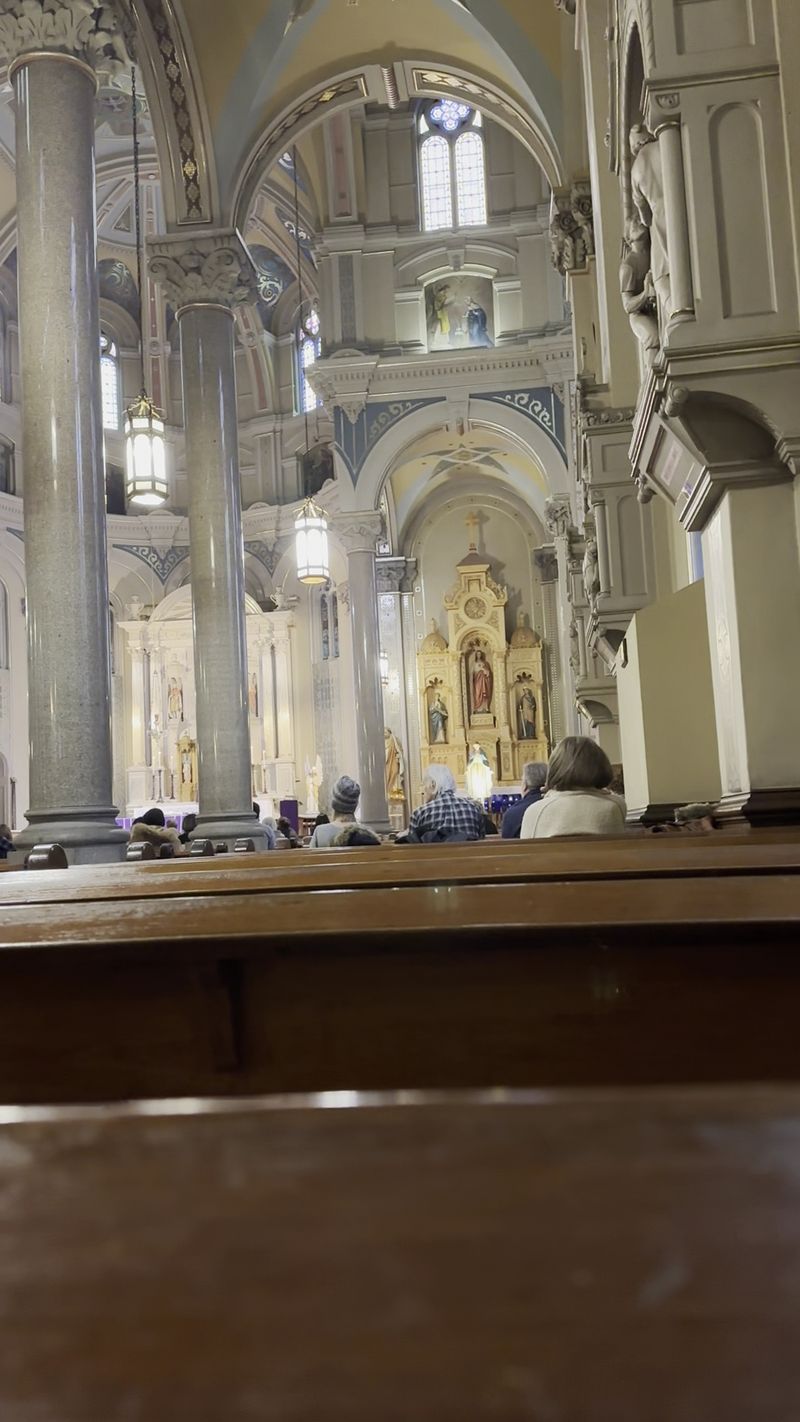
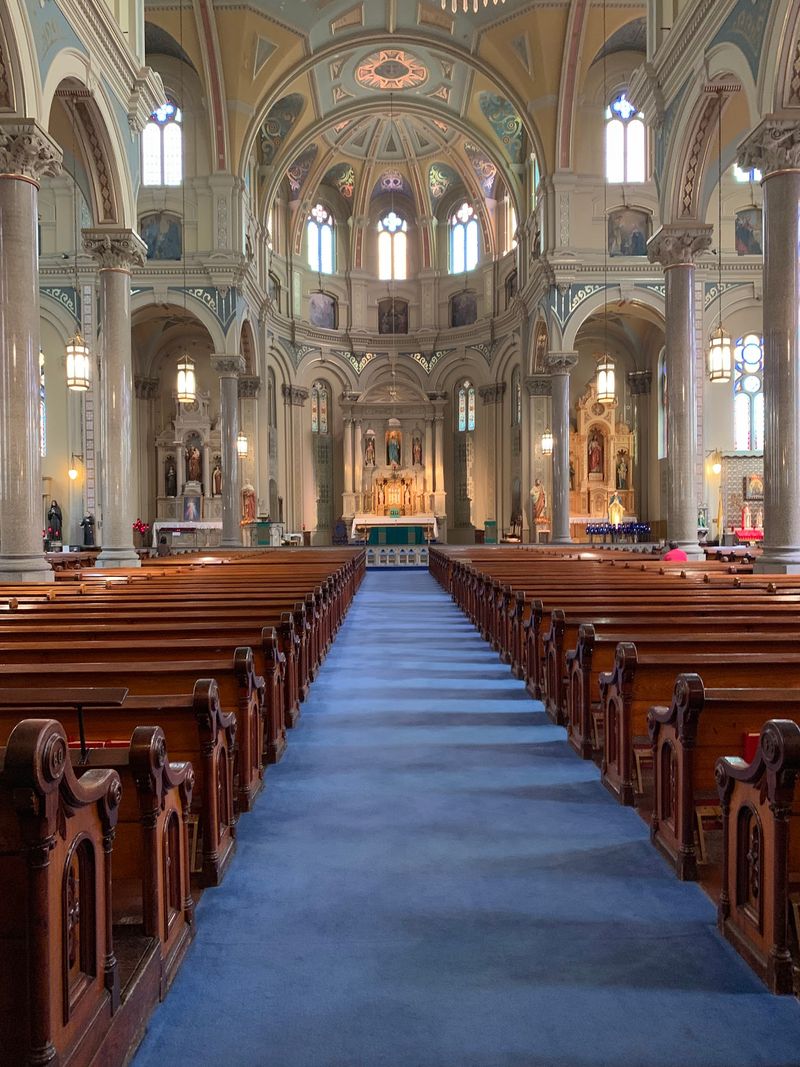
Polished granite columns line the inside of Old St. Mary’s Catholic Church, and they came a long way. They arrived from Portland, Maine, in 1884.
That’s quite a road trip for some very heavy stone. Those columns separate the side aisles from the nave, giving the space a stately rhythm.
The interior follows a basilica plan with transepts. It can seat 1,200 people, so you’ll never feel cramped.
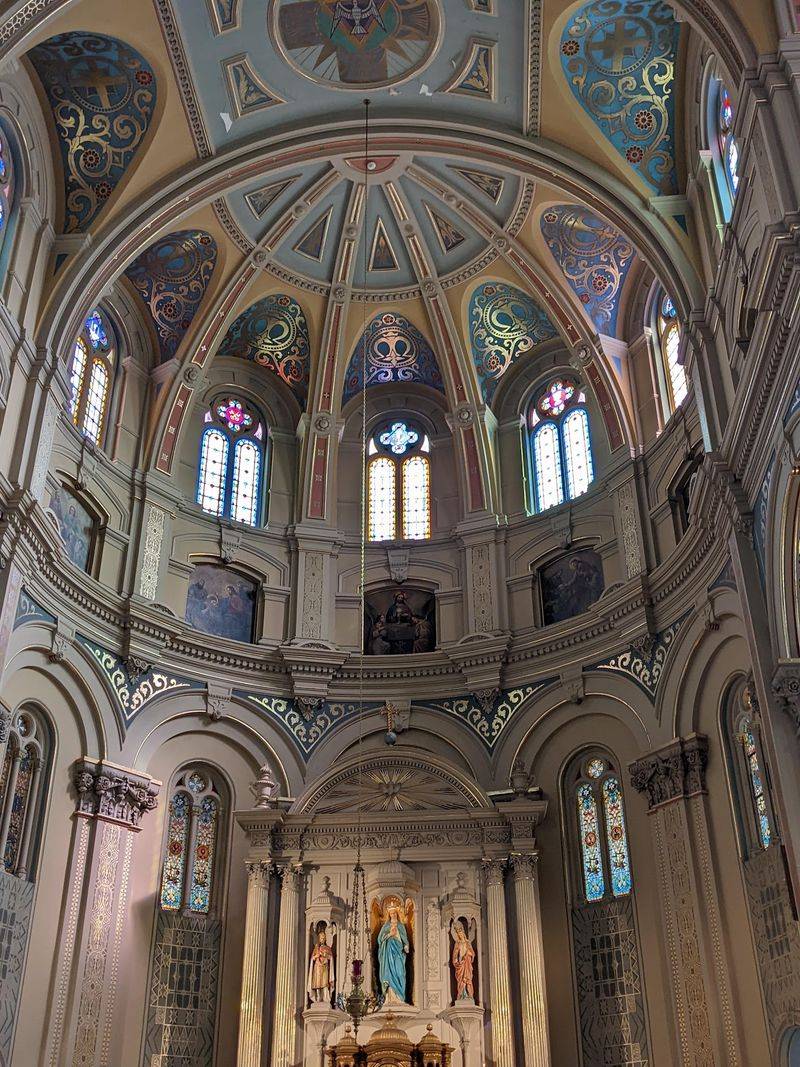
High above, the upper clerestory displays paintings of the fifteen mysteries of the rosary. The domed apse behind the main altar holds paintings showing the seven sacraments.
Original frescos have been carefully preserved over the years. In 1986, the interior got a lively refurbishing to celebrate the building’s centennial.
Here’s a helpful tip. Bring your neck’s best stretching skills, because the best details sit way above eye level.
Walk slowly along the aisles and let your eyes travel from the columns up to the ceiling. Every level adds a new layer of color and story, and you’ll keep noticing small things you missed the first time around.
An Oak Altar Older Than The Building Itself
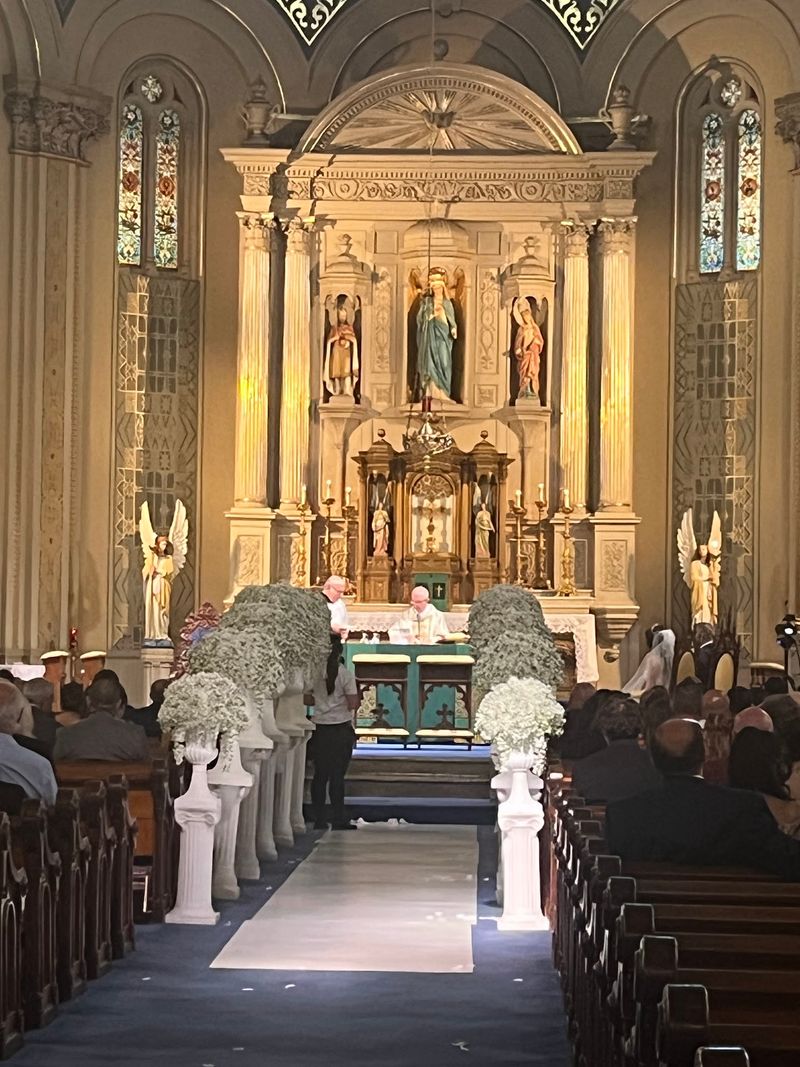
Here’s a fun puzzle. The towering main altar dates back to 1855, which means it’s about thirty years older than the current church.
Made of oak, the altar features double columns in the Corinthian style. It rises tall, drawing every eye toward the front of the church.
At its center stands a statue of Mary. She’s flanked by likenesses of King Wenceslaus of Bohemia and Queen Elizabeth of Hungary.
Why those two royals? They reflect the heritage of the original German-speaking parishioners who built this community.
That detail tells you a lot about the people who came before. They wanted their faith and their roots to share the same spotlight.
Behind the altar, the domed apse adds even more drama with its sacrament paintings. The combination feels layered, like a family album carved in wood and paint.
When you visit, stand back a bit from the altar first. Then move closer to catch the carving work. Both views matter, and you’ll appreciate how much skill went into something built before the Civil Era reshaped America.
Your Ears Get A Treat Here Too
Great buildings often sound as good as they look. At Old St. Mary’s, the acoustics help explain why musical concerts and the choir draw so much attention.
The choir has been active for over a century. That’s a lot of rehearsals and a whole lot of high notes bouncing off those painted walls.
A historic organ adds its own rich voice to the mix. Pair it with the choir, and the sound fills the space from floor to dome.
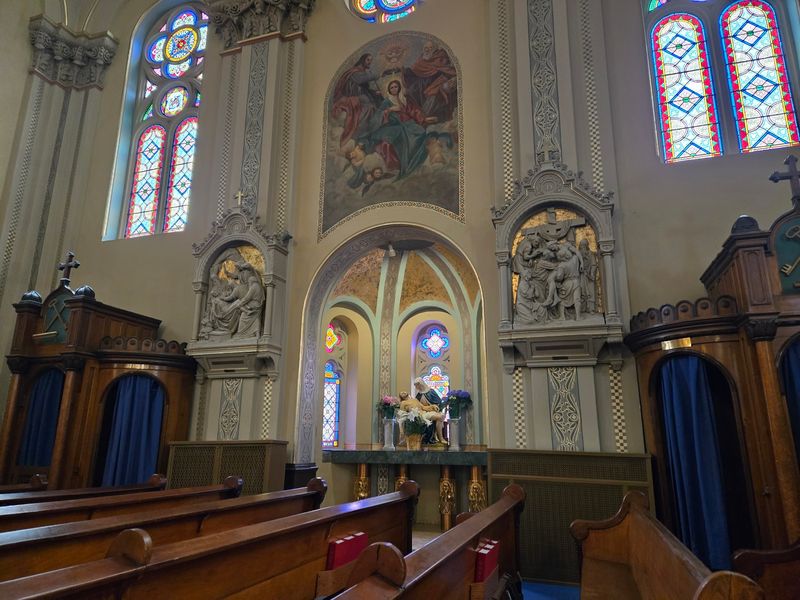
Old-school traditions also continue here. The old wooden confessionals are still in use.
Mass is also held at a communion rail. For many Catholics, that’s a rare sight these days.
If you enjoy sacred music, attending a Mass or concert is the best way to hear the building at its fullest. Recordings rarely capture how sound moves in a space this size.
Even non-Catholic visitors can appreciate the experience. Sit toward the middle, close your eyes for a moment, and let the music do the work. It’s a simple, peaceful break from a busy downtown day.
Planning A Visit? Timing Matters A Lot
Spontaneous trips are fun, but a little planning goes a long way here. Old St. Mary’s Catholic Church sits at 646 Monroe Street, Detroit, Michigan 48226.
Hours are limited, so check before you go. Weekdays typically run from late morning until early afternoon, with longer hours on Saturday.
Sunday opens earlier in the morning. Still, schedules can change around holidays and special events.
Keep in mind that this is an active parish first. Regular Mass, confession, and adoration take place throughout the week.
If you’re mainly sightseeing, be thoughtful during worship times. Quiet footsteps and silenced phones show respect for those praying.
Photos are tempting, and who could blame you. Just wait for a calm moment so you don’t interrupt anyone.
A smart move is arriving shortly after the doors open. That gives you time to explore the grottos, admire the altar, and soak in the details before services begin.
Wear comfortable shoes too. Between the long aisles and three grottos, you’ll cover more ground than you expect inside one Michigan church.
The Neighbors Include Michigan’s Oldest Surviving School Building
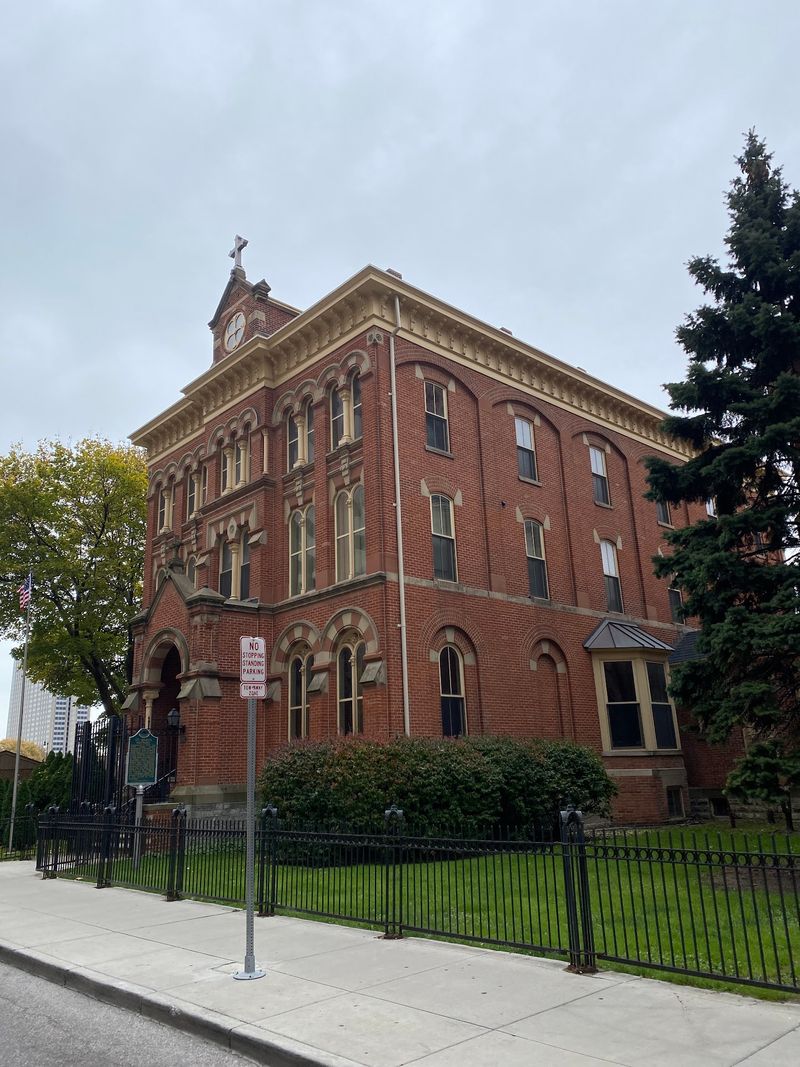
Most churches have a parking lot next door. Old St. Mary’s has a piece of education history instead.
The former school building was built in 1868 and 1869 by Pius Daubner. It’s considered the oldest surviving school structure in Michigan.
Today, it serves as a community center. So the building still brings people together, just without spelling tests.
The rectory is another historic neighbor. It was built in 1876 and designed by Julian Hess.
Since 1893, the parish has been staffed by the Holy Ghost Fathers, also known as the Spiritans. That’s well over a century of steady leadership.
The parish also played an important role in starting Catholic parishes for Black and Mexican communities in Detroit. Its reach stretched far beyond its original German roots.
Take a short walk around the complex when you visit. Seeing the church, rectory, and school together helps you understand how a whole community once lived, learned, and worshipped on this block. It’s like a mini history tour without a ticket booth.
Greektown Makes A Perfect Before Or After Stop
Few churches share a block with so much energy. Old St. Mary’s sits right in the heart of Detroit’s lively Greektown district.
Restaurants and nightlife surround the area. That makes it easy to pair a peaceful visit with a satisfying meal nearby.
The contrast is part of the charm. Outside, the neighborhood buzzes, and inside, the grottos and paintings invite calm reflection.
Tourism sites list the church as a must-see in Detroit. Once you see the spires peeking over Monroe Street, you’ll understand why.
The congregation itself reflects downtown life. Business professionals, government and court employees, and travelers all fill the pews.
That mix gives the place a welcoming, everyday feel. It’s grand, but it’s also clearly part of the neighborhood.
Plan your day with a little breathing room. Explore the church first while your energy is fresh, then wander Greektown for lunch or dinner.
You’ll leave with a full stomach and a head full of history. For a single afternoon in Michigan, that’s a pretty great trade.