
This Historic Florida Oak Has Seen Generations Of Secret Meetings And Cultural Evolution
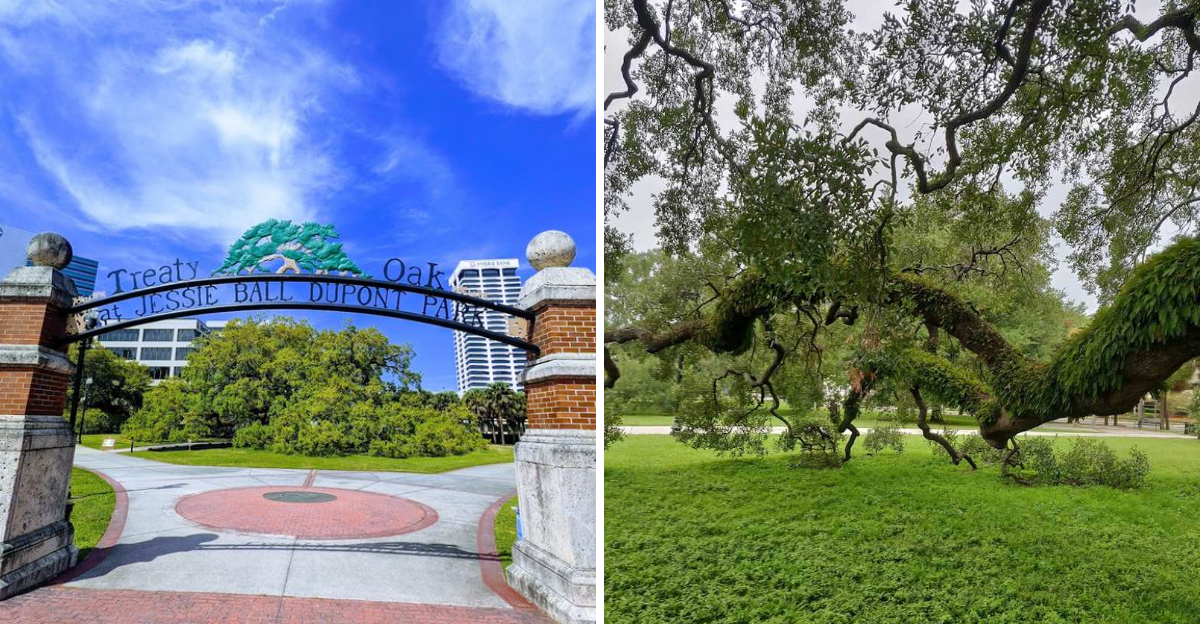
There are places in Florida that feel older than the stories people tell about them.
This is one of them.
Hidden in the middle of Jacksonville, there is a tree so massive it does not look real at first. Its branches stretch out like a living cathedral, casting shadows that feel almost deliberate.
Most people walk past without realizing what they are standing next to.
But this tree has been here for more than 250 years. Long before the city grew around it.
Long before anyone thought to stop and look up.
The trunk alone is wider than most rooms. The branches reach so far they need wooden supports just to hold themselves up, creating natural tunnels you can walk through.
I have come back here more times than I can count. And every time, it feels a little different.
Like the place remembers more than it shows.
A Quarter Millennium Of Silent Witness
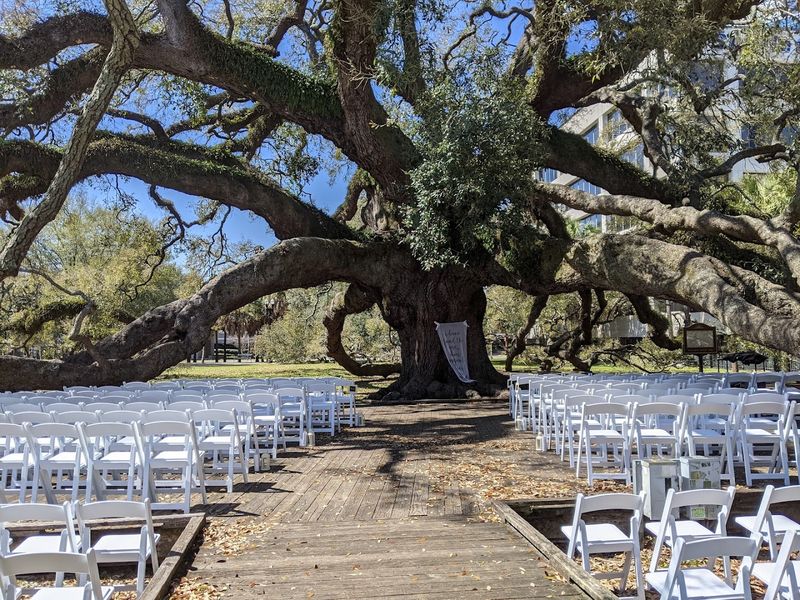
Standing beneath Treaty Oak’s canopy, I can’t help but wonder about the Timucuan peoples who likely gathered in this exact spot centuries before Jacksonville even existed. This Southern live oak germinated around 1770, making it older than the United States itself.
The tree witnessed Spanish colonial rule, British occupation, and the birth of Florida statehood, all while quietly growing its massive 25-foot trunk. Scientists estimate the oak weighs over 50 tons, with a root system spreading twice as wide as its visible canopy.
When I press my palm against the deeply furrowed bark, I’m touching the same surface that provided shade for Native American councils, pioneer families, and Civil War soldiers. The oak survived hurricanes, droughts, and urban development that consumed the wilderness around it.
Now protected within Jessie Ball DuPont Park at 1207 Prudential Dr, Jacksonville, FL 32207, this natural elder continues adding rings to its ancient core, storing memories in wood that outlasts human memory.
The Secret Meeting Ground Legend
Local folklore whispers that Treaty Oak earned its name from clandestine negotiations held beneath its sheltering limbs, though historians debate which treaties actually took place here. Some accounts claim Timucuan leaders met Spanish explorers under these branches, while others insist early American settlers signed land agreements in the oak’s shade.
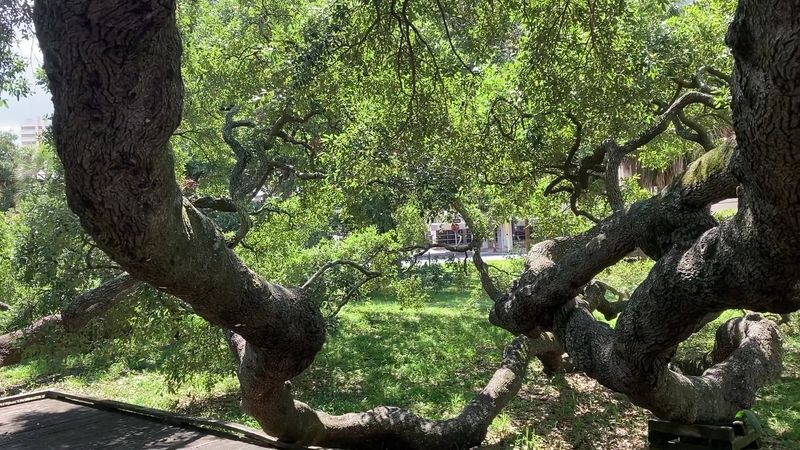
What I find fascinating is how the tree’s physical structure naturally creates intimate spaces perfect for private conversations. Those massive horizontal branches form rooms within rooms, areas where small groups could gather away from prying eyes.
During my visits, I’ve watched modern families claim these same natural alcoves for picnics and quiet talks, unknowingly echoing centuries of human behavior. The oak’s architecture invites secrets, with its twisted limbs creating visual barriers and its thick canopy muffling sounds from the outside world.
Whether actual treaties were signed here or not, the tree has certainly witnessed countless personal agreements, promises, and life-changing conversations throughout its long existence.
Architectural Marvel Of Nature’s Engineering
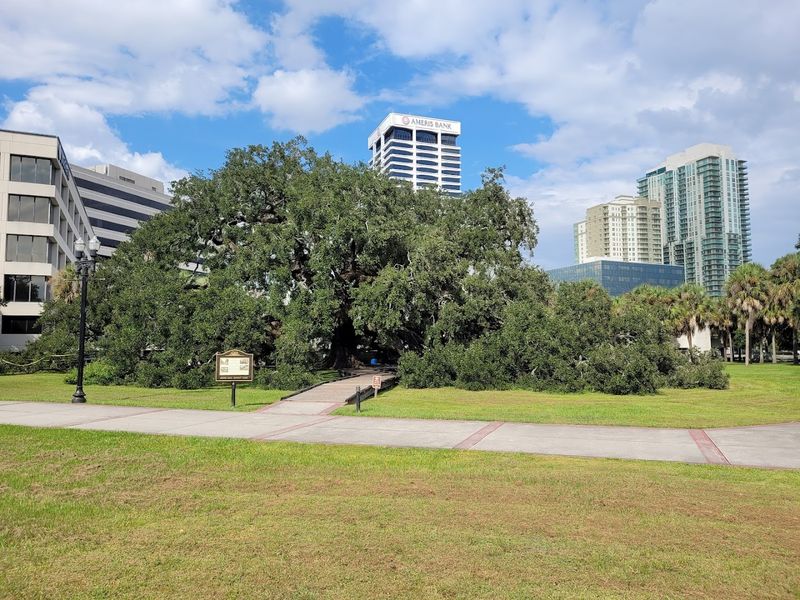
Walking the perimeter of Treaty Oak feels like exploring a living sculpture that defies every rule of tree growth I thought I knew. The branches don’t just spread outward, they dive toward the ground, touch down, then rise again in defiant loops that seem to ignore gravity.
City arborists installed wooden support structures under several limbs, not because the tree is weak, but because these horizontal giants extend so far they need help bearing their own magnificent weight. I’ve counted at least fifteen major branches, each one thick enough to be a substantial tree trunk on its own.
The oak’s crown spreads across nearly an acre, creating a natural pavilion that stays remarkably cool even during Jacksonville’s brutal summer afternoons. Botanists explain that live oaks evolved this growth pattern to survive coastal storms, keeping their mass low and distributed rather than reaching skyward.
Standing underneath, I feel like I’m inside a wooden cathedral where the columns grew themselves into position over centuries.
Cultural Crossroads Through Centuries
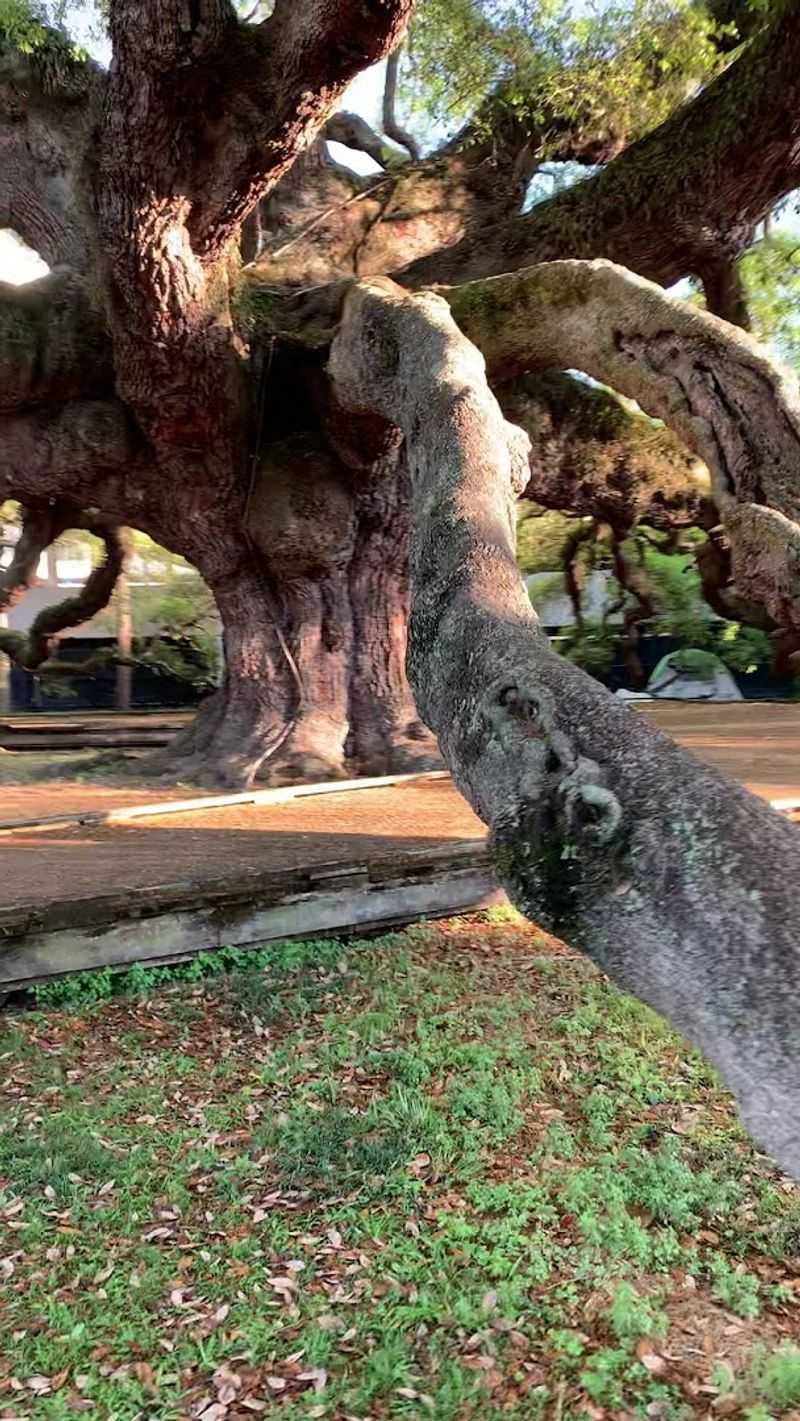
Every culture that passed through Jacksonville left its mark on Treaty Oak’s story, creating layers of meaning that shift depending on who’s telling the tale. Native American oral traditions speak of the tree as a sacred gathering point long before Europeans arrived with their concept of written treaties.
During the 19th century, the oak became a landmark for riverboat captains navigating the St. Johns River, visible from the water and marking safe harbor. I’ve read accounts of newly freed families meeting under its branches during Reconstruction, using the tree as a rallying point for community building.
By the 20th century, the oak transformed into a symbol of environmental preservation when developers threatened to clear the land for construction. Local activists fought to protect this living monument, eventually succeeding in creating the park that surrounds it today.
Each generation reimagines what Treaty Oak represents, but the tree itself remains constant, offering shade and shelter to whoever needs it regardless of their origin story or cultural background.
A Living Classroom For Generations
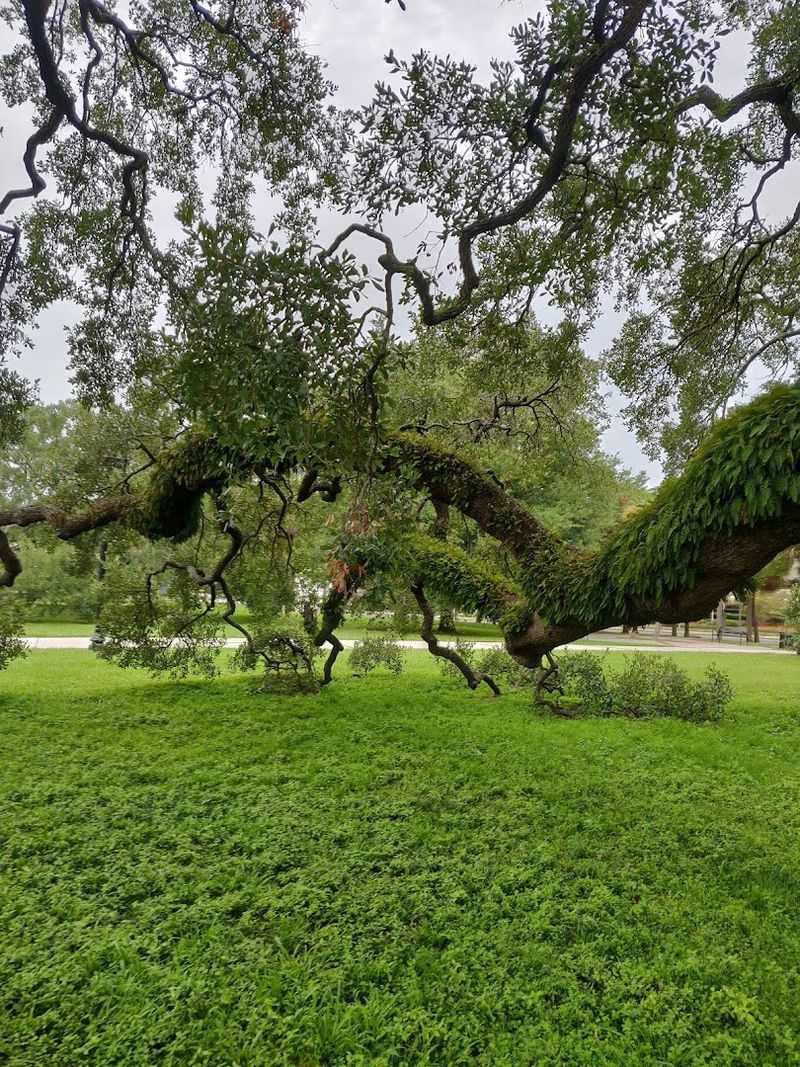
Teachers have been bringing students to Treaty Oak for decades, using the tree as a hands-on textbook that teaches biology, history, and environmental science in one outdoor classroom. I’ve watched school groups arrive with notebooks and measuring tapes, their excitement building as they realize they’re studying something truly ancient and alive.
The oak offers lessons in ecosystem dynamics, hosting countless species of birds, insects, and epiphytic plants within its branches and bark crevices. Kids learn about photosynthesis at a scale they can actually see and touch, observing how those massive limbs produce enough leaves to shade nearly an acre of ground.
Local educators tell me they use Treaty Oak to discuss topics ranging from Native American history to urban planning, conservation ethics to climate resilience. The tree survived hurricanes that destroyed buildings, demonstrating natural engineering principles better than any textbook diagram.
I’ve overheard countless “aha” moments from young visitors who suddenly grasp geological time when they calculate how many of their lifetimes would fit into the oak’s single existence.
Photography Magnet And Social Media Star
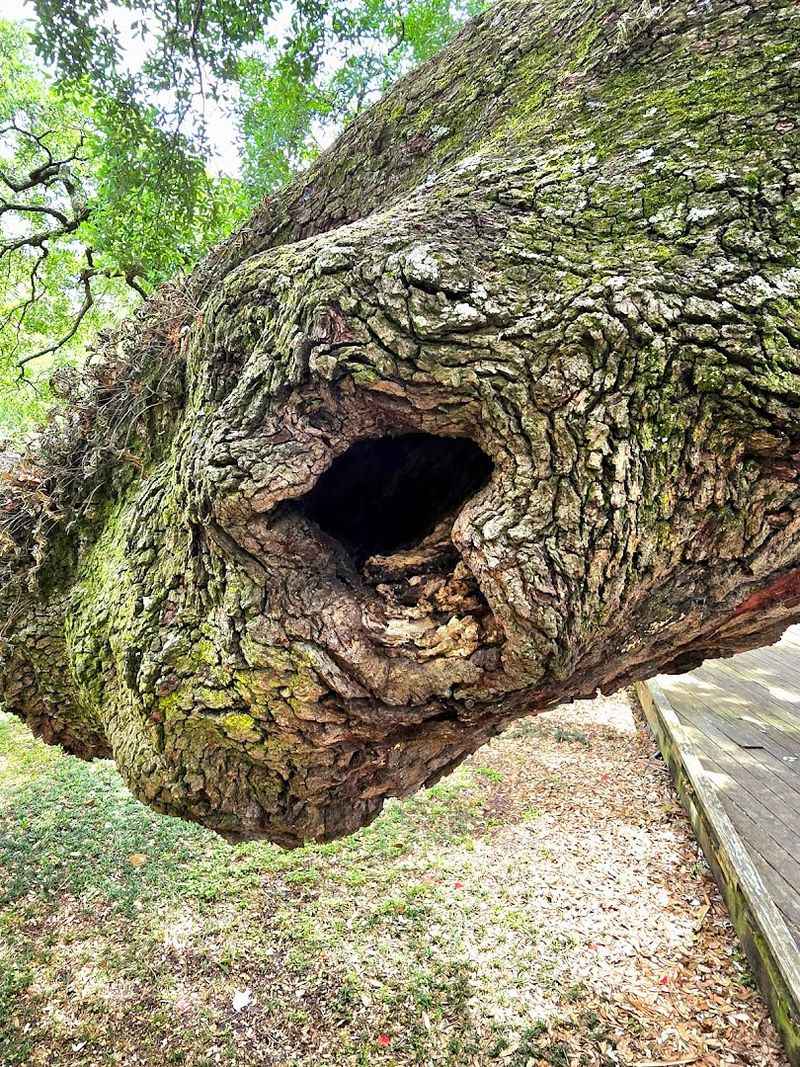
Treaty Oak has become Jacksonville’s most photographed natural landmark, and I completely understand why after attempting to capture its full majesty through a camera lens. The tree’s dramatic branching pattern creates endlessly varied compositions depending on where you stand, what time of day you visit, and which season you choose.
Morning light filters through the canopy in golden shafts that photographers call “god rays,” while late afternoon sun creates deep shadows between the horizontal branches that look almost supernatural. I’ve seen engagement photos, senior portraits, fashion shoots, and even small film productions using the oak as their backdrop.
Social media has amplified the tree’s fame, with visitors from around the world adding it to their Jacksonville bucket lists after seeing images online. The challenge of photographing something so three-dimensionally complex in a two-dimensional medium keeps photographers returning repeatedly, each trying to capture the feeling of standing beneath those ancient limbs.
Despite thousands of photos posted annually, I’ve never seen two that look quite the same.
Urban Oasis In Downtown’s Heart
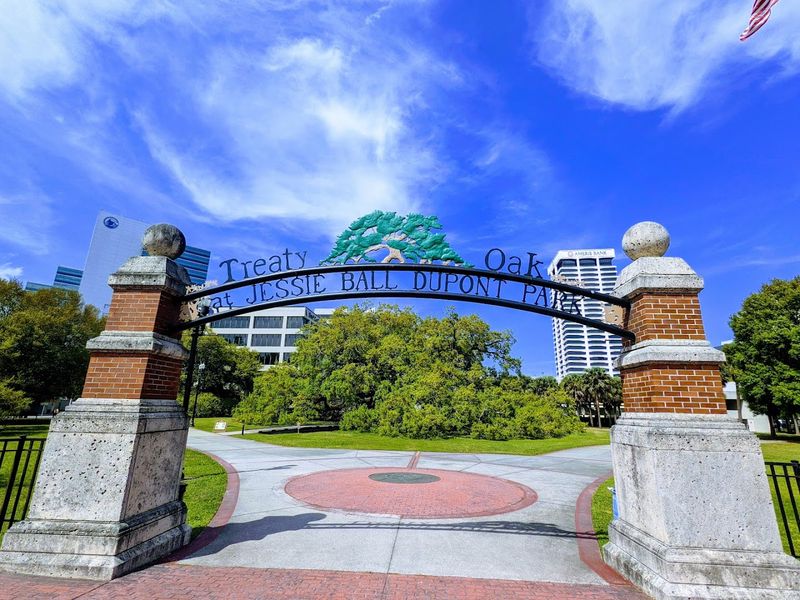
Finding Treaty Oak tucked into the San Marco neighborhood feels like discovering a portal to wilderness that somehow survived Jacksonville’s urban expansion. The surrounding streets hum with traffic, office buildings rise just blocks away, yet stepping into Jessie Ball DuPont Park transports you to a quieter realm where the tree’s presence dominates everything.
Office workers escape here during lunch breaks, spreading blankets on the grass beneath branches that filter the harsh Florida sun into dappled patterns. I’ve joined them countless times, grateful for this green refuge where the temperature drops noticeably once you enter the oak’s shade.
The park operates from 7 AM to 7 PM daily, offering downtown residents and workers a rare opportunity to connect with nature without leaving the city center. Parking challenges on Prudential Drive remind visitors that this pocket of tranquility exists within urban constraints, making the experience of the ancient tree even more precious.
The contrast between the oak’s patient, centuries-long growth and the rapid development surrounding it creates a meditation on time, permanence, and what we choose to preserve.
The Climbing Tree That Welcomes Adventurers
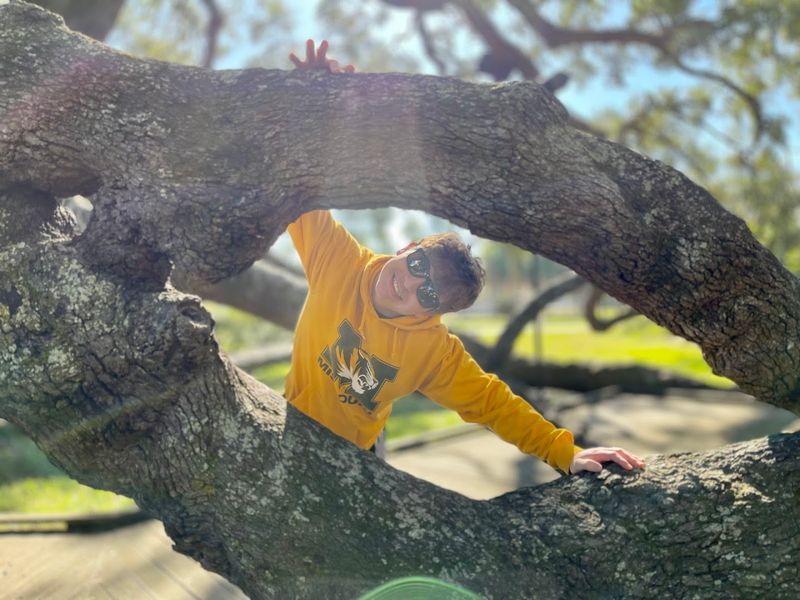
Unlike most historic landmarks that you can only observe from a respectful distance, Treaty Oak invites physical interaction in a way that makes it feel less like a museum piece and more like a generous friend. Those low, sweeping branches practically beg to be climbed, and park rules allow careful exploration that lets kids experience the tree rather than just looking at it.
I’ve watched children as young as five scramble onto limbs as thick as their bodies, their faces glowing with the thrill of climbing something so ancient and substantial. Parents hover nearby, but the tree’s horizontal growth pattern makes it surprisingly safe, with branches wide enough to walk on and natural handholds everywhere.
The tactile experience of touching bark that’s been growing since before American independence creates a connection that purely visual appreciation can’t match. Teenagers sprawl along upper branches with books, couples carve initials into imagination rather than wood, and everyone leaves with splinters of memory embedded deeper than any photograph could capture.
This accessibility makes Treaty Oak democratic in a way that transforms it from monument to community member.
Guardian Of Jacksonville’s Future
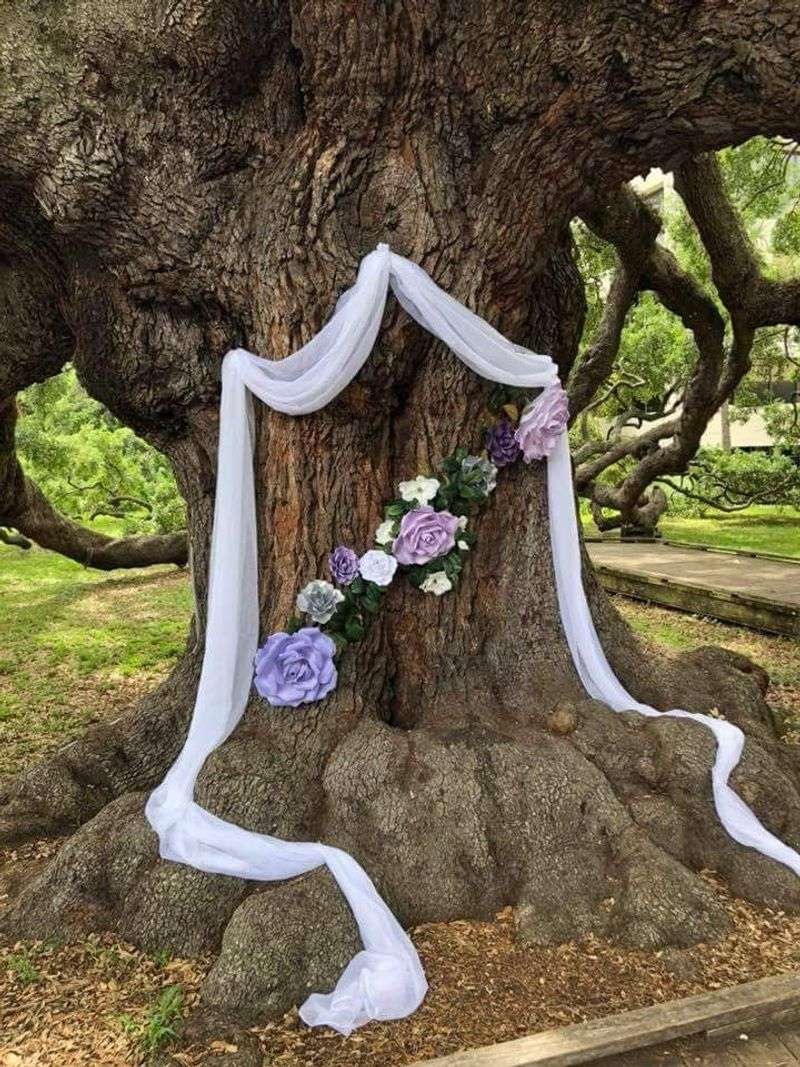
Treaty Oak’s survival into the 21st century represents an ongoing commitment by Jacksonville to protect its natural heritage even as the city grows and changes. City arborists monitor the tree’s health constantly, treating it for pests, adjusting support structures, and managing the soil chemistry to ensure optimal growing conditions.
Climate change presents new challenges that the oak’s ancestors never faced, with shifting rainfall patterns and rising temperatures testing even this resilient species’ adaptability. I’ve spoken with the park maintenance staff who treat their work as a sacred trust, understanding they’re caring for something irreplaceable that future generations deserve to experience.
The tree has become a symbol of what Jacksonville chooses to value, a living argument for preservation over development and long-term thinking over short-term gain. Young saplings from Treaty Oak’s acorns grow in gardens across the city, spreading its genetic legacy even as the parent tree ages.
Standing beneath those branches at 1207 Prudential Dr, I feel connected to both past and future, reminded that some things matter more than progress measured in buildings and profit.