
This Historic Mission In Arizona Has The Look Of A Desert Castle
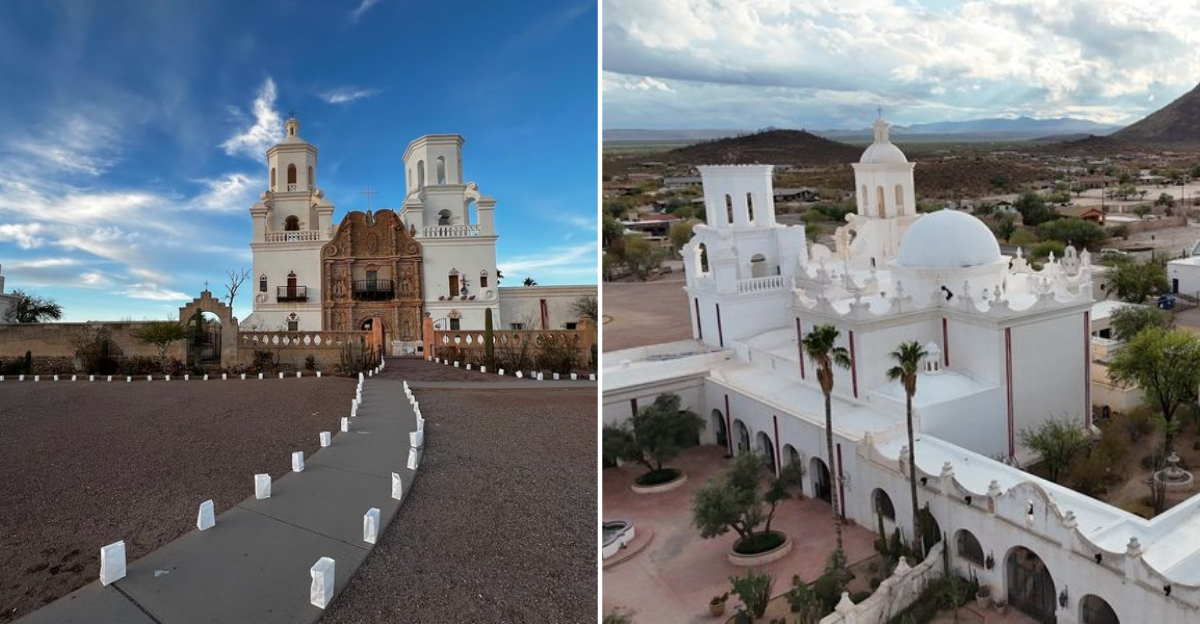
If you told me I had accidentally wandered onto a movie set in the middle of the 18th century, I would have believed you instantly. That’s the magic of this place, it feels entirely untethered from the frantic pace of the modern world.
As I approached, the intricate carvings and twin bell towers rose from the landscape with the regal presence of a desert castle, standing defiant against the harsh elements.
I’ve visited many monuments across Arizona, but there is an undeniable soul here-a colorful energy that hums beneath the ornate plasterwork. It’s a sensory experience where history isn’t just displayed in glass cases, but felt in the very shadows stretching across the nave.
Come along as I explore this breathtaking sanctuary of faith and artistry.
The Founding Story That Started It All
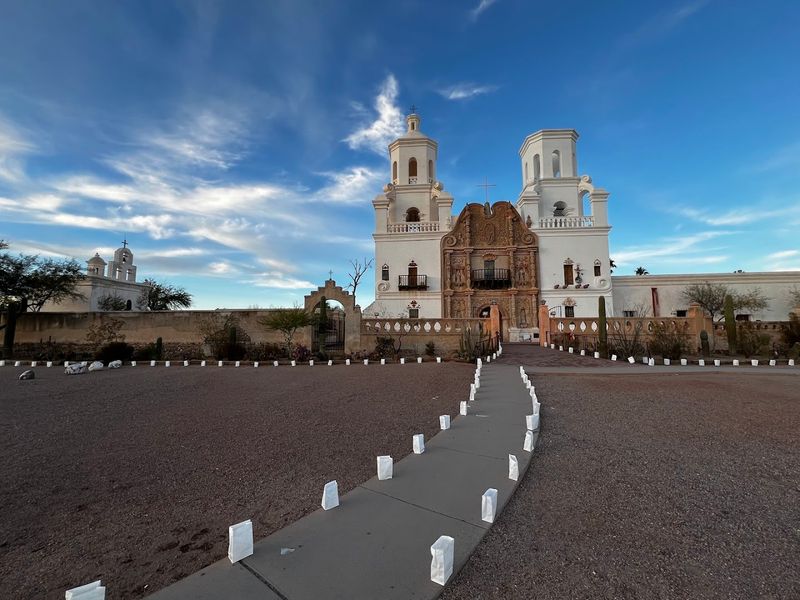
Back in 1692, a determined Jesuit priest named Father Eusebio Francisco Kino made his way through the rugged Sonoran Desert to establish a mission among the O’odham people living near the Santa Cruz River.
The community he visited was called Wa:k, and his arrival marked the beginning of a relationship between European missionaries and the indigenous people that would shape this corner of Arizona for centuries.
Father Kino built the original church in 1700, but an Apache raid in 1770 destroyed that structure. After the Jesuits were expelled from the region in 1767, the Franciscans stepped in and took over the mission’s operations.
Construction on the current church began in 1783 under Father Juan Bautista Velderrain and was completed in 1797, making it the oldest intact European building in Arizona.
The founding story of San Xavier del Bac is a layered, complicated, and deeply human tale of faith, resilience, and cultural exchange that continues to resonate with every visitor who walks through its doors.
Architecture That Earns The Castle Comparison
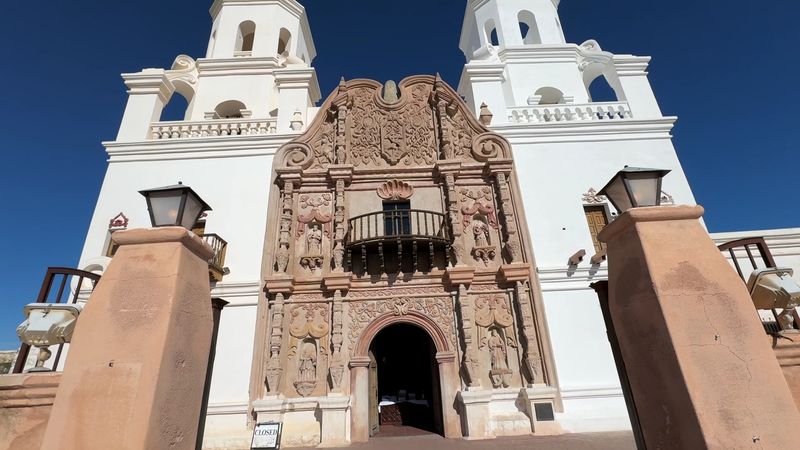
Standing in the parking lot and looking up at San Xavier del Bac for the first time, you might genuinely wonder if you have stumbled onto a movie set.
The brilliant white stucco exterior, the ornate carved decorations, and the dramatic twin towers rising against the desert sky give the mission a presence that feels more like a fortress or a castle than a typical church.
The architecture blends Moorish and Byzantine influences in a way that was rare and bold for its time. The building is designed in the shape of a Latin cross, with a central nave leading to the sanctuary and transepts on each side housing smaller chapels.
A large dome crowns the transept crossing, supported by graceful arches and squinches that distribute the weight beautifully. One of the towers was never fully completed, and historians still debate why, adding a small mystery to the already fascinating structure.
Every angle of this building rewards a slow, careful look.
Interior Art That Will Stop You In Your Tracks
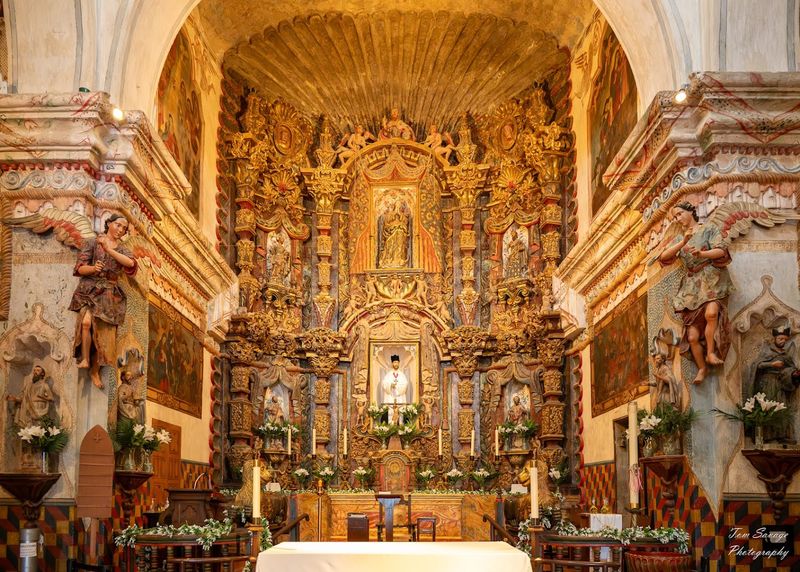
Walking through the front doors of San Xavier del Bac is like stepping into a different world entirely. The interior is packed with intricate paintings, vibrant frescoes, hand-carved wooden statues, and gilded altarpieces that cover nearly every surface from floor to ceiling.
The craftsmanship is extraordinary, especially when you consider that much of this work was completed in a remote desert location in the late 1700s.
Artisans brought in from Mexico created the elaborate decorations using local materials and traditional techniques. The colors have held up remarkably well over the centuries, partly because of ongoing restoration efforts.
Figures of saints, angels, and biblical scenes fill the walls and niches, creating a visual experience that is both overwhelming and deeply moving.
Even visitors who have no connection to the Catholic faith tend to stand quietly in the nave, just taking it all in. The interior of this mission is genuinely one of the most impressive artistic spaces in the American Southwest.
A Living Community, Not Just A Museum
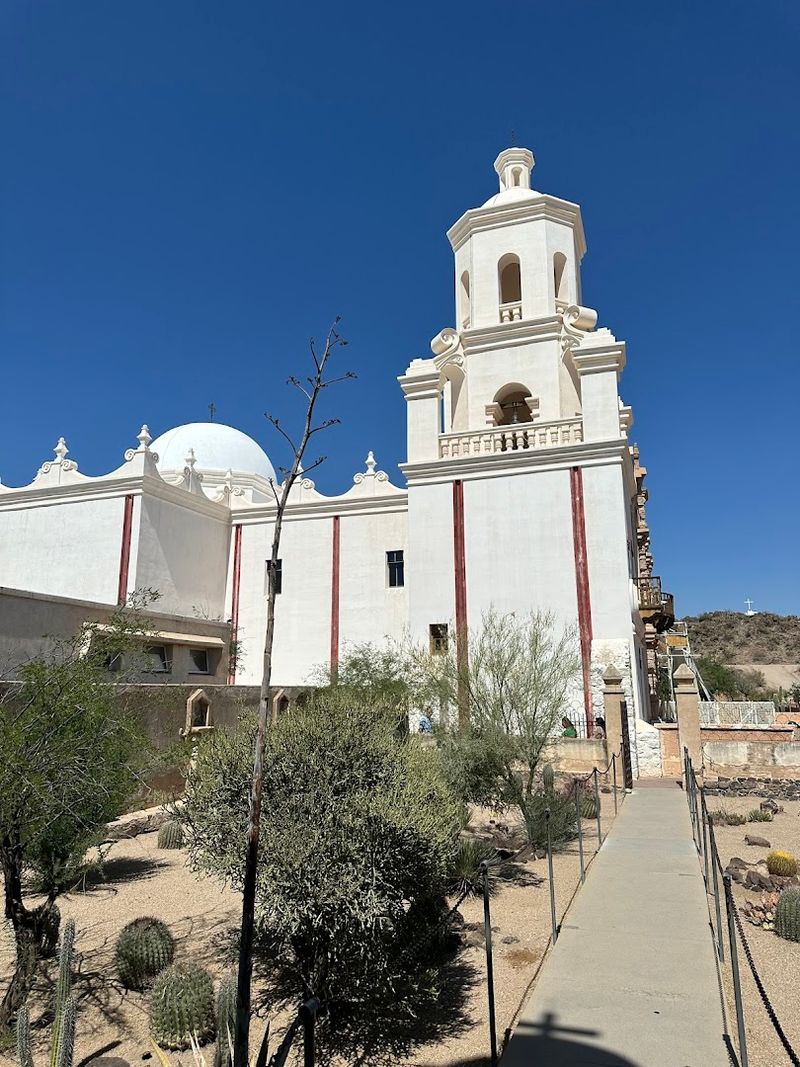
What sets San Xavier del Bac apart from most historic landmarks is the fact that it is still very much alive. The mission continues to function as an active parish church for the Tohono O’odham community, holding regular masses and special religious celebrations throughout the year.
This is not a preserved relic behind glass; it is a working, breathing place of worship that has served the same community for over 300 years.
The Tohono O’odham people have a deep and layered relationship with the mission that goes far beyond the building itself. Their traditions, language, and identity are woven into the fabric of this place in ways that a quick visit can only begin to hint at.
Attending a mass or arriving during a feast day celebration gives visitors a much richer sense of what the mission means to the people who call it home. Roughly 200,000 visitors come each year, but the community remains at the center of everything that happens here.
The Desert Setting That Makes Everything Feel Dramatic
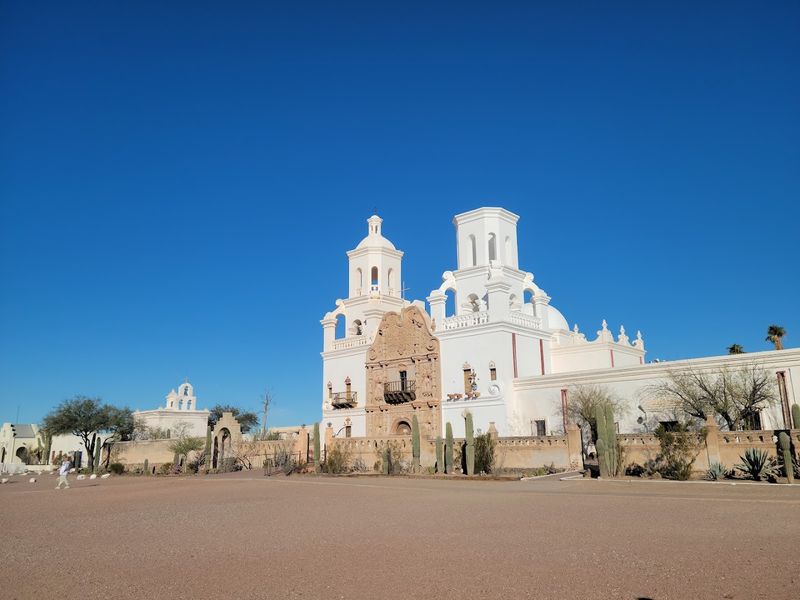
You cannot fully appreciate San Xavier del Bac without thinking about where it sits. The mission rises from the flat Sonoran Desert floor about 10 miles south of downtown Tucson, surrounded by saguaro cacti, scrubby desert brush, and the wide open sky that defines this part of Arizona.
The contrast between the gleaming white structure and the warm, dusty landscape around it is striking at any time of day.
Morning light gives the white stucco a soft golden glow, while late afternoon turns the whole scene into something that looks painted. Sunset visits are especially rewarding, when the shadows lengthen and the building seems to float against a sky turning shades of orange and pink.
The Santa Cruz River, though often dry, runs nearby and was the reason this location was chosen in the first place. The setting reminds you that this mission was built not just for spiritual reasons but also as a practical anchor in a challenging and beautiful landscape.
Restoration Efforts That Keep History Standing
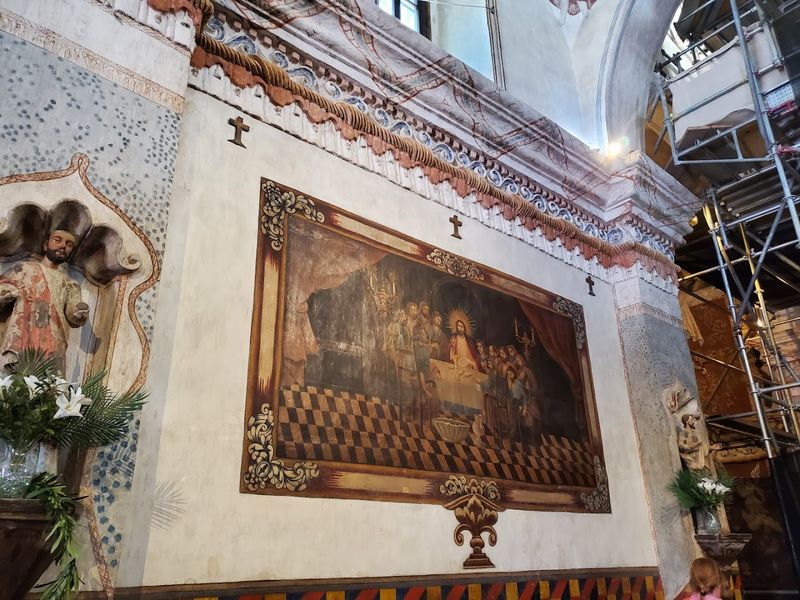
Keeping a 200-plus-year-old building standing in the desert is no small task. San Xavier del Bac has benefited from serious, ongoing conservation work that has helped preserve both its structure and its remarkable interior artwork.
A major international restoration project launched in the 1990s brought together conservators from the United States, Mexico, and Europe to carefully stabilize and clean the frescoes, statues, and painted surfaces inside the church.
The project became a model for how to approach historic preservation in active religious sites, balancing the needs of a worshipping community with the demands of careful conservation.
Work continues in phases, and visitors can sometimes see conservators at work inside the building, which adds a fascinating behind-the-scenes layer to any visit.
The effort to maintain San Xavier del Bac reflects a shared commitment between the Tohono O’odham Nation, the Catholic Church, and preservation organizations to keep this extraordinary place intact for future generations. History, it turns out, needs regular maintenance.
Planning Your Visit To The White Dove Of The Desert
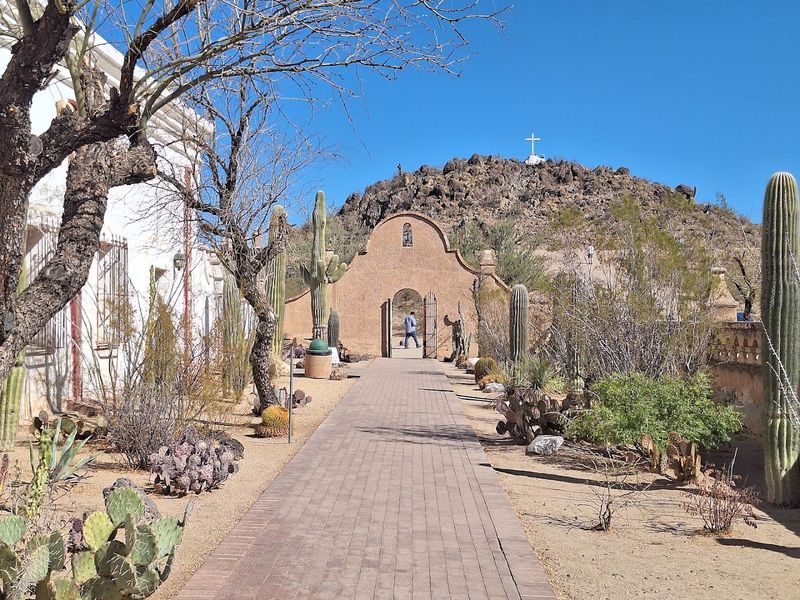
Getting to San Xavier del Bac is straightforward from Tucson. The mission is located at 1950 W. San Xavier Rd., Tucson, AZ 85746, and is easily accessible by car from Interstate 19.
The drive south from downtown takes about 20 minutes and passes through the reservation, giving you a sense of the landscape before you arrive.
The mission is open to the public daily, though it closes during active church services, so checking the schedule ahead of time is a smart move. Entry is free, though donations are warmly welcomed and help support ongoing restoration.
A small gift shop and food vendors outside the church sell traditional Tohono O’odham foods like fry bread and bean dishes, which are absolutely worth trying.
Comfortable shoes are helpful since the grounds include outdoor pathways and a small hill with a shrine that offers a great view of the mission from above.
Early morning or late afternoon visits tend to be cooler and less crowded, making the experience feel even more personal.
The Legends And Mysteries That Keep Visitors Guessing
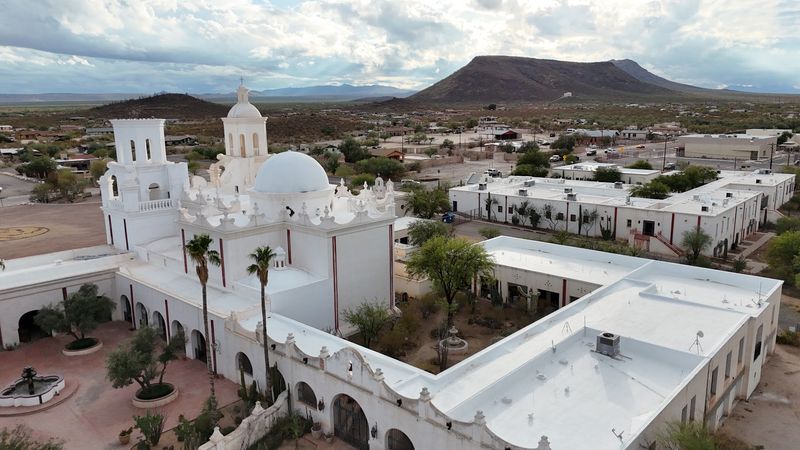
Few buildings come with as many whispered stories as San Xavier del Bac, and that mystery is honestly part of its charm. One of the most talked-about legends involves the mission’s second tower, which was never completed.
Some say construction stopped to avoid paying a completion tax to the Spanish crown, while others believe the builders simply ran out of funds.
Nobody knows for certain, and that unanswered question has fascinated visitors for generations. There is also a beloved tradition involving a small reclining figure of Saint Francis inside the church.
Locals say if you can lift the statue, your wish will be granted. The mission’s long history gives these stories even more staying power, blending documented past with the kind of lore people love to pass along in quiet voices.
It adds another layer of intrigue to a place already steeped in atmosphere. The statue tradition brings a lighter, more personal kind of wonder, turning an ordinary visit into something that feels a little more hopeful.
Together, these details help explain why San Xavier del Bac continues to feel so memorable long after people leave.