
This Historic Philadelphia, Pennsylvania Church Is Full Of Remarkable Architecture And Surprising Stories
Benjamin Franklin ran a lottery to help pay for a church steeple. That steeple then stood as the tallest structure in the American colonies for decades.
The story gets better from there. George Washington had a pew inside.
So did Betsy Ross, and fifteen signers of the Declaration of Independence worshipped under the same roof.
This remarkable place sits in Philadelphia, Pennsylvania, and it still holds services today. I like how it never became a roped-off relic.
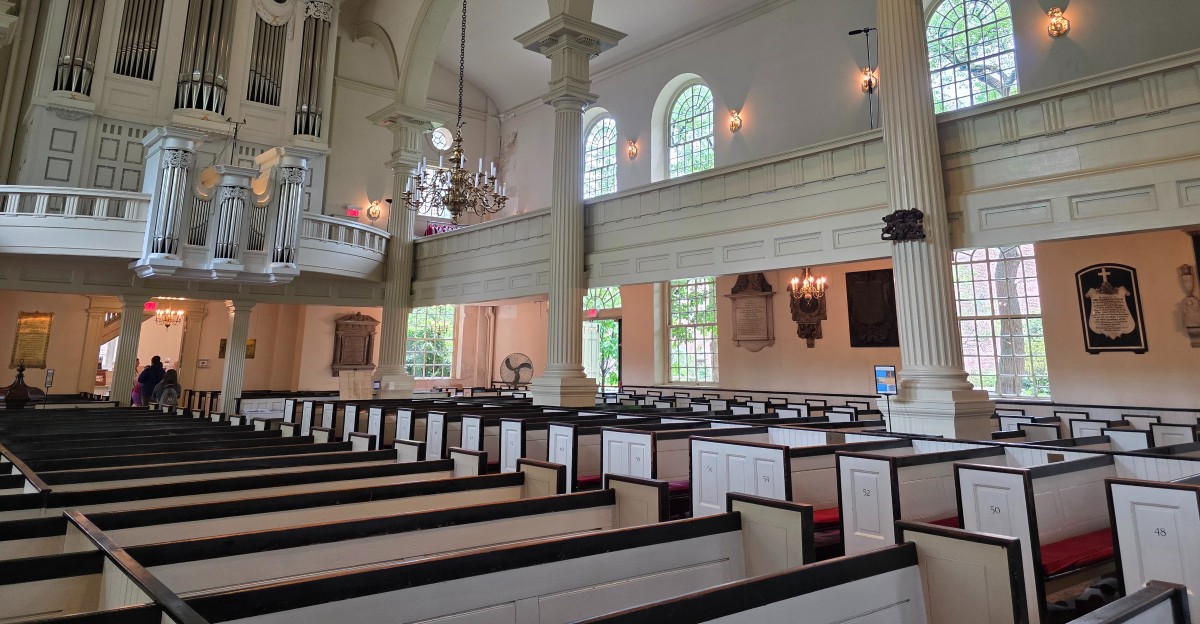
You can sit where the founders sat and look up at a chandelier glowing there since 1740.
I believe the best history feels close enough to touch. Here, it truly is.
So what else is hiding behind those old brick walls?
You Can Sit In The Same Pews As The Founding Fathers
Few churches can say a future president once claimed a regular seat.
Christ Church can, and it marks the spot with a brass plaque.
George Washington and his family worshipped here, using pews 56 and 58. Benjamin Franklin had pew 70, though he wasn’t exactly famous for perfect attendance.
The guest list keeps going. Betsy Ross attended, along with John Adams and Robert Morris, who helped finance the American Revolution.
In total, 15 signers of the Declaration of Independence came to services here. That’s a lot of important people sharing one sanctuary.
The best part is that you aren’t stuck behind a velvet rope.
Although the original box pews were altered or replaced in the 19th century, brass plaques identify the historic seating locations, and visitors can sit where these famous figures worshipped.
Founded in 1695, the parish was the first Church of England congregation in the Pennsylvania colony.
Its establishment followed a provision in the 1681 royal charter granted to William Penn by King Charles II.
Today it remains an active Episcopal parish, not a frozen museum. That living quality makes every plaque feel less like a display and more like a family story.
Bring a little imagination. Sitting in Washington’s historic pew location might be the closest most of us get to a presidential meeting.
Georgian Brickwork This Detailed Deserves A Slow Walk Around
Builders took their sweet time here, about 17 years. The current building went up between 1727 and 1744, and the patience shows.
Christ Church is a standout example of Georgian architecture. Its design drew from London churches tied to Christopher Wren and from James Gibbs’s St. Martin-in-the-Fields.
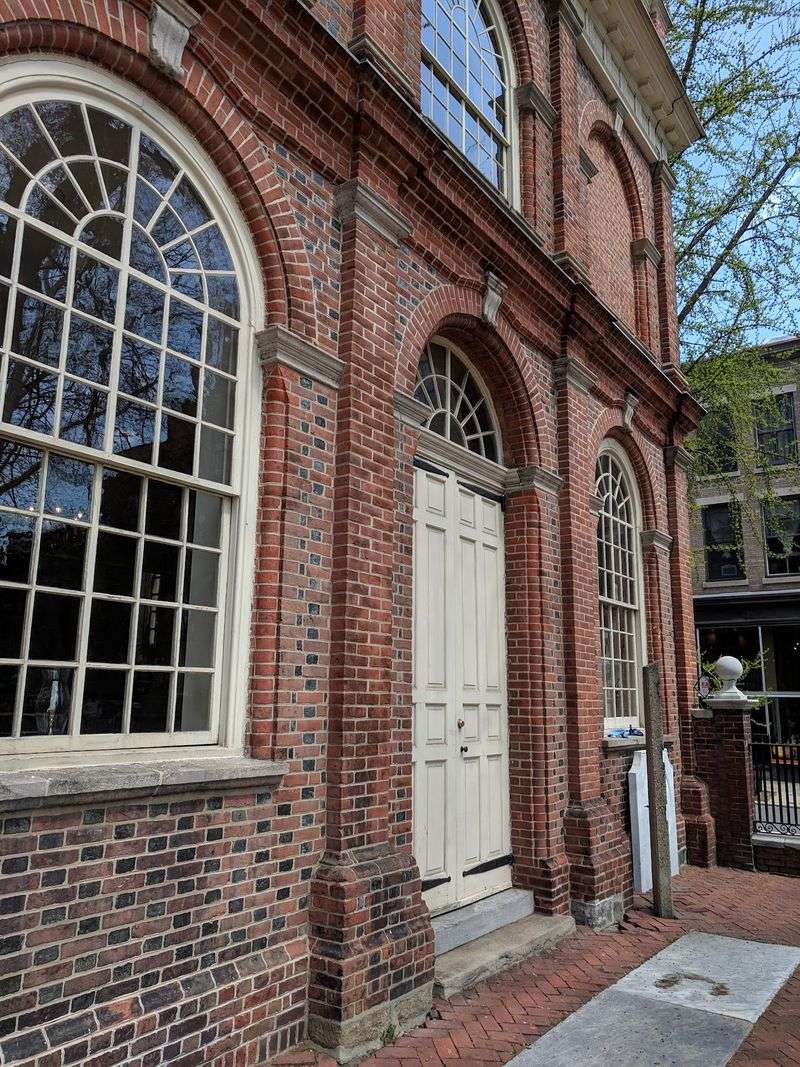
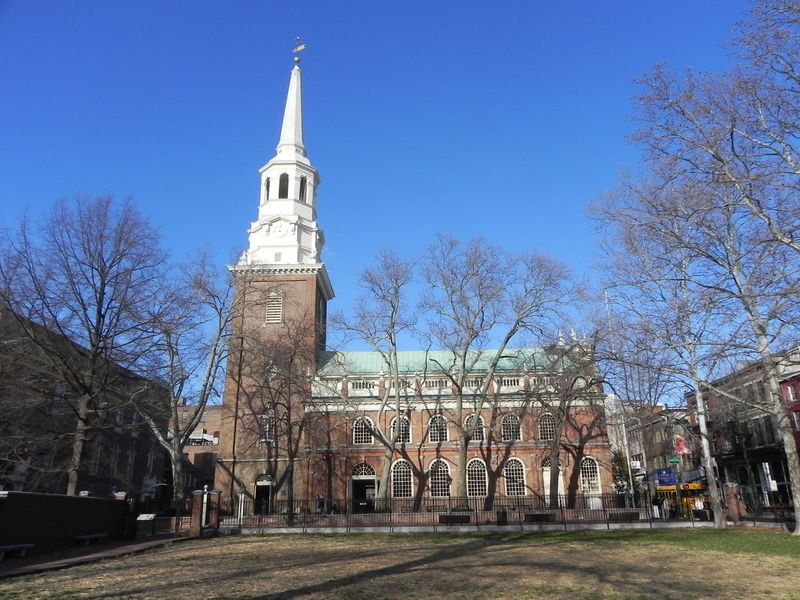
Look closely at the bricks. The two-story main body uses Flemish bond with glazed headers, which creates a subtle checkered pattern.
Molded bricks show up everywhere once you notice them. You’ll find them in the window frames, pilaster bases, and water tables.
The overall look feels balanced and calm. Tall arched windows line the sides in neat, symmetrical rows.
Up top, a heavy wooden balustrade runs along the roofline. Cast iron urns now sit on it, and the railing cleverly hides the slope of the gallery roofs.
That trick gives the building a clean, unified outline. It’s a smart design choice that most people never even spot.
Give yourself a few minutes to circle the outside before heading in. Old brick rarely looks this sharp, and the details reward anyone who slows down.
Look Up Or You Will Miss A King On The Wall
A British king still keeps watch over a church in the city of American independence.
That fact alone makes the east end worth a stop. A grand Palladian window dominates this side of Christ Church.
It pours light into the chancel and comes crowned by a carved keystone and medallions.
The flanking windows carry rich Ionic entablatures. Big spiral scrolls then connect the balustrade to the central pediments, a move borrowed from Italian Baroque churches.
Now for the surprise. Above that window sits a bas relief of King George II.
Yes, really. In a city famous for breaking away from Britain, the royal face stuck around.
A similar depiction was temporarily taken down during a wave of anti-British feeling in the 1790s. Philadelphia’s mood about kings was understandably complicated back then.
That small carving tells a big story. The church began under the Church of England, then became part of a brand-new nation.
Bring binoculars or a good camera zoom if you have one. The details sit high, and spotting the king feels like winning a tiny scavenger hunt.
A Medieval Font And A 1740 Chandelier Steal The Show Inside
Older than the church, older than the colony, and older than Columbus’s voyage.
The baptismal font here dates back to the 1300s. It came from All Hallows-by-the-Tower in London.
That’s the same church where William Penn, founder of Pennsylvania, was baptized.
So the font links this Philadelphia parish straight to Penn’s own beginnings. Pretty impressive for a stone basin.
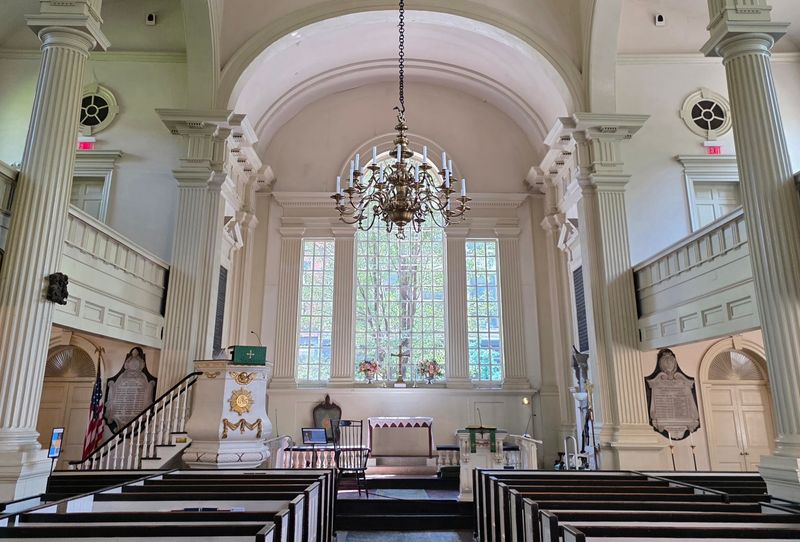
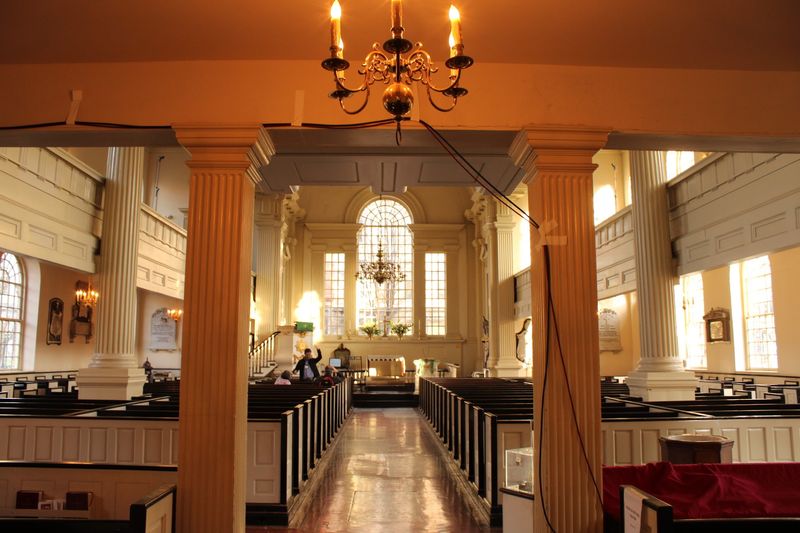
Then glance up. A historic brass chandelier has hung inside the church since the 18th century.
Parish records document its purchase in 1745.
Think about everything that light has seen. Revolution, new presidents, and generations of worshippers have passed beneath it.
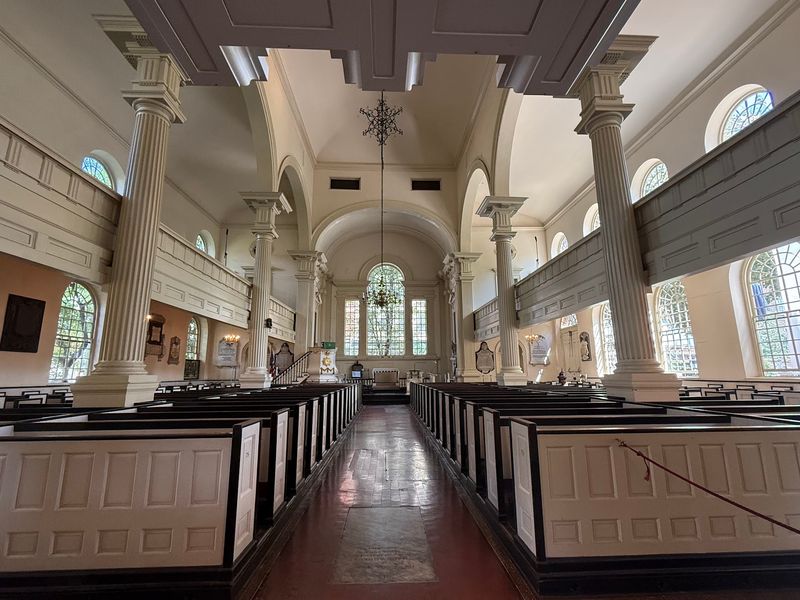
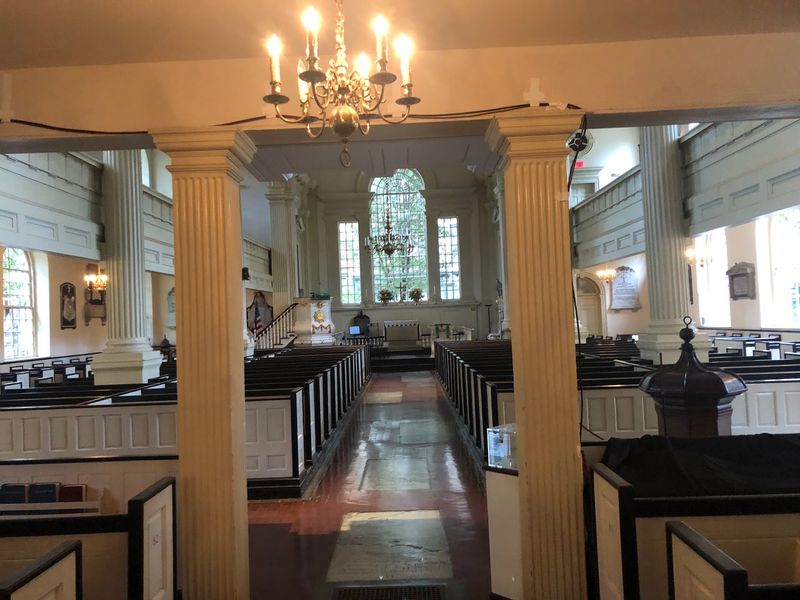
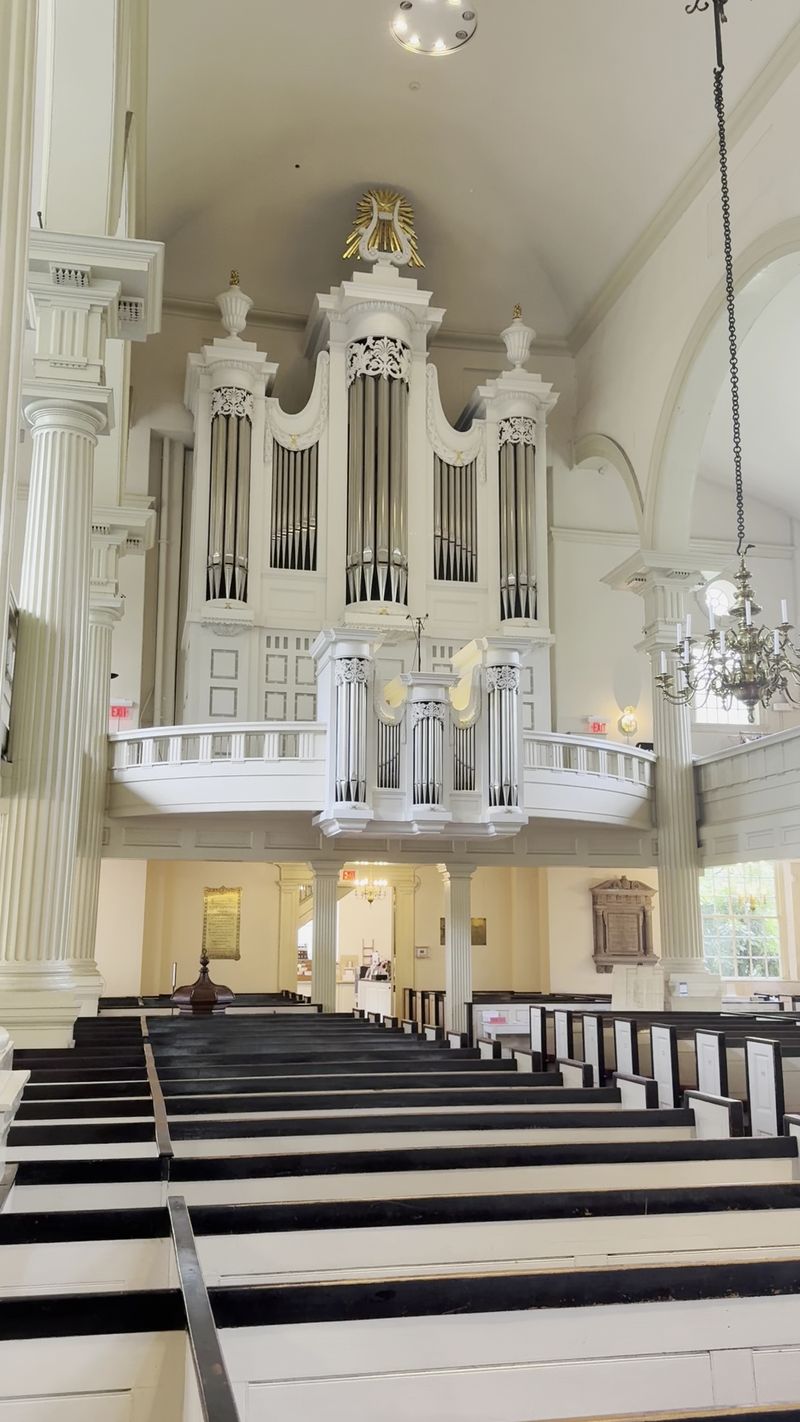
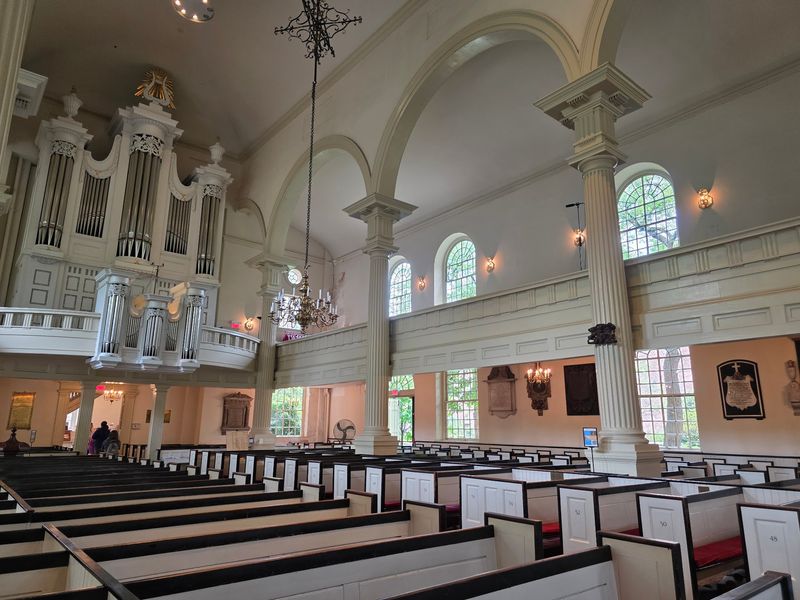
The room itself feels simple and elegant. Wooden box pews fill the floor while fluted columns add quiet grace.
Three widely spaced Doric columns rise from pedestals. They support side arches that carry a graceful elliptical plaster ceiling.
The space manages to feel grand and cozy at once. It’s bright, open, and peaceful without trying too hard.
Take a moment near the font before moving on. A 700-year-old object rarely sits this close to the public, and it deserves a second look.
Franklin Helped Fund A Steeple That Ruled The Skyline
Leave it to Benjamin Franklin to fund a church project with a lottery.
His idea helped pay for the steeple added in 1754. The result towered 196 feet into the air.
It held the title of tallest building in the future United States for 56 years.
Master builder Robert Smith supervised construction. He modeled the design on London’s St. Martin-in-the-Fields, keeping the family resemblance strong.
Picturing colonial Philadelphia helps here. Nearly every rooftop sat far below this spire, so it worked as a giant landmark for the whole city.
The steeple was rebuilt in 1908. Even so, its form stays true to the colonial original.
Today, taller buildings crowd the skyline. Still, the steeple remains one of the most recognizable sights in Philadelphia’s historic district.
Bells have rung from this tower for centuries. They’re part of the church’s long tradition of calling people to services.
Step back a block or so for the best view. Craning your neck right at the base works too, but your shoulders might file a complaint.
A Remarkable Journey Began With Absalom Jones
Some of the most powerful stories here aren’t about famous founders. One belongs to Absalom Jones, and it deserves a front-row seat.
Jones was once enslaved by Benjamin Wynkoop, a vestryman associated with Christ Church and St. Peter’s Church.
Through determination and years of hard work, Jones helped secure freedom for his wife and was eventually freed himself in 1784.
His path didn’t stop there. He helped establish the African Episcopal Church of St. Thomas and went on to become the first African American Episcopal priest, ordained by Bishop William White in 1802.
That’s a huge milestone in American religious history. It happened right here in Philadelphia, Pennsylvania, although Jones served a separate congregation rather than Christ Church itself.
The church doesn’t hide the harder parts of its past. Its history includes parishioners connected to slavery, and that truth sits alongside the celebrated names.
Honest history makes a visit richer. You get a fuller picture of the people who shaped early America.
Jones’s journey shows how the Episcopal Church’s story kept changing over time. It also shows how one person’s courage can open doors for many others.
Ask a guide about him during your visit. His story adds depth that no brass plaque alone can capture, and it often becomes the part people remember most.
Founders Rest Closer Than Most People Realize
Here’s a common mix-up. Benjamin Franklin isn’t buried at the church building itself.
His grave sits a few blocks away at the Christ Church Burial Ground, near 5th and Arch Streets. He rests there beside his wife, Deborah.
Four other signers of the Declaration share that ground. They are Benjamin Rush, Francis Hopkinson, Joseph Hewes, and George Ross.
Back at the church, more history lies close by. Signers James Wilson and Robert Morris are buried at Christ Church itself.
The church grounds also feature a garden. It offers a calm green pocket in the middle of busy Old City.
Planning both stops is easy. The two sites sit only a short stroll apart, so you can pair them in one outing.
Keep weather in mind for the burial ground. It may close during bad conditions because of walking hazards.
Seeing both places together tells the full story. You visit where these leaders worshipped, then where they were laid to rest, all within a few blocks of each other.
Plan Your Visit Around Tours, Hours, And Easy Old City Walking
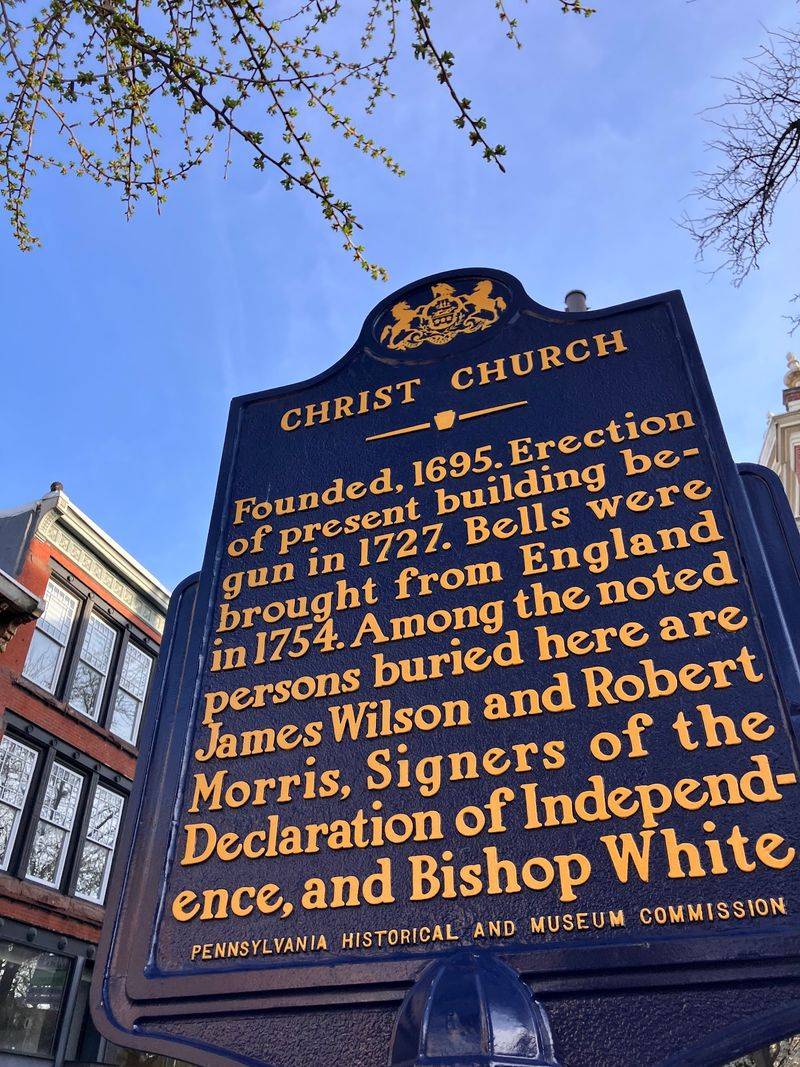
Good news for busy sightseers. A visit to Christ Church doesn’t eat up your whole day.
You’ll find it at 20 N American St, Philadelphia, PA 19106, in the heart of Old City. Independence-era landmarks sit all around, so it slots easily into a walking route.
Hours generally run from 11 AM to 5 PM most days. Sunday has a morning service window, with visiting hours resuming around midday.
Guided and self-guided options are available for a small fee. Tours typically last about 20 to 30 minutes.
A guided tour adds plenty of color. Docents share stories about the pews, the people, and the building that you’d likely miss alone.
Self-guided visitors can still explore at their own pace. That works well if you’d rather linger near the font or snap photos of the windows.
Families can make it a quick history lesson. Spotting famous names on pew plaques turns the visit into a fun hunt.
Check the schedule before heading over, especially on Sundays. Timing your stop right means you get the most out of this compact but packed landmark.
The Parish Still Buzzes With Worship, Arts, And Neighbors
History buffs sometimes forget one big detail. Christ Church is still very much a working parish.
Regular worship services take place on Sundays at 10 AM and Wednesdays at noon. People can attend in person or join by livestream.
The church describes itself as an LGBTQ+ welcoming and affirming parish. That open-door spirit is part of its modern identity.
Next door, the campus includes Neighborhood House. It opened in 1915 and features a 110-seat theater.
That small stage hosts arts events and performances. It’s a lively contrast to the colonial sanctuary just steps away.
The church also connects with the community through a farmers market. Fresh local goods and neighborly chatter fit right in with centuries of gathering here.
All this activity keeps the place from feeling like a time capsule. Old walls, new energy.
Pennsylvania has many historic sites, but few blend past and present so naturally. Christ Church manages it with ease, and that’s why it feels worth more than one quick photo.
Come for the founders. Stay for the living, breathing community still writing new chapters.