
This Historic River Site In Arkansas Tells A Powerful Tale
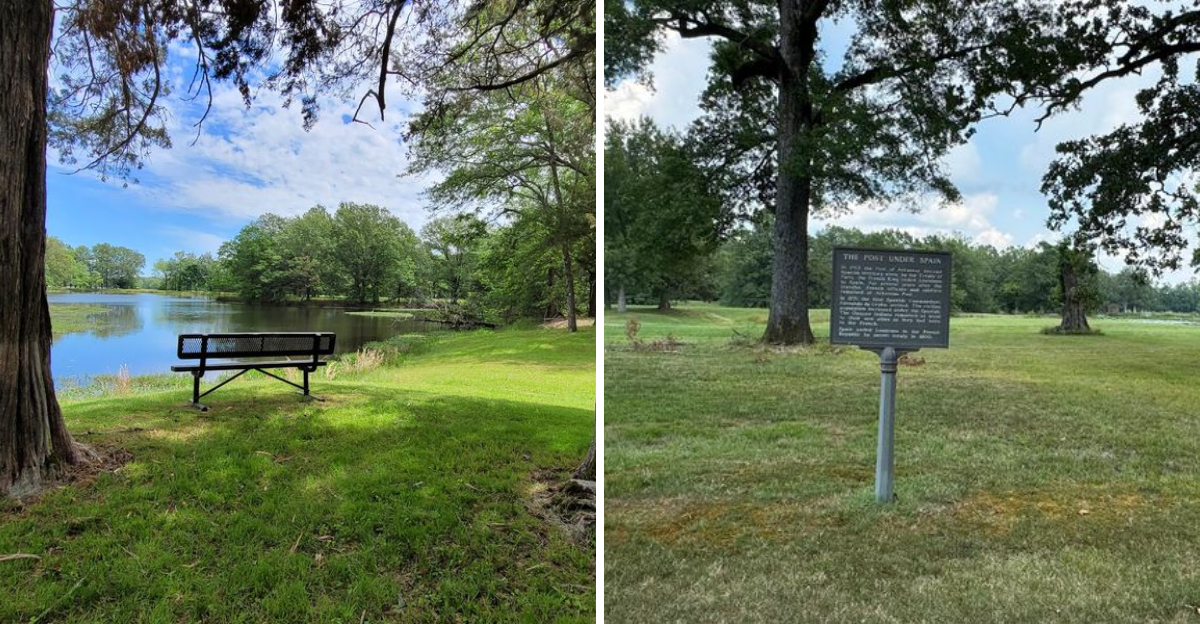
At first glance, this Arkansas setting feels calm enough to ignore. Smooth water, curved banks, quiet trees.
Maybe a rustle nearby. Then the realization hits. This place has been fought over for generations. French explorers moved through chasing control.
Spanish troops stepped in to hold it. Officials argued over land and power, again and again.
Then war arrived, loud and unforgiving. Civil War forces turned this same ground into something far more intense.
Now it’s silent. Almost too silent.
You stand there trying to match the calm view with everything that happened. It doesn’t quite line up.
That tension pulls you in. You want answers.
You want details. And they’re coming.
The next points break it down and show why this place mattered more than it seems, and why its past still feels close today.
Settlement Chasing A Restless River
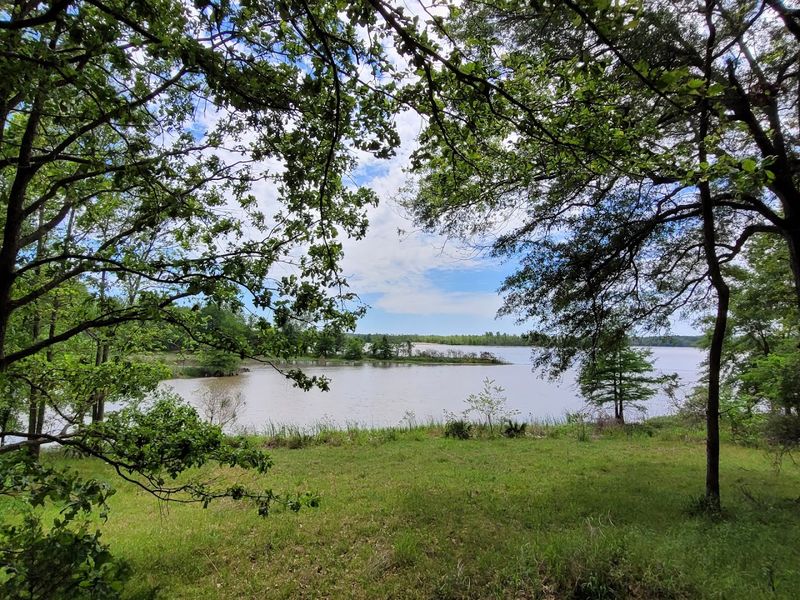
Back in 1686, a French explorer named Henri de Tonti helped establish a trading post on a muddy riverbank in what is now the American South, and the world has never quite been the same since.
He chose this spot because the river was a highway, a food source, and a defensive barrier all rolled into one natural feature.
Arkansas Post became the first permanent European settlement in the lower Mississippi Valley, predating New Orleans by more than three decades.
That is a fact that still surprises most visitors when they first read it on a park display.
The Quapaw people already called this land home, and they welcomed the French presence as a trading partnership rather than an invasion at first.
Tonti understood that controlling the river meant controlling commerce, communication, and power across a vast territory stretching hundreds of miles in every direction.
The settlement shifted locations multiple times as the Arkansas River changed course, forcing colonists to pack up and follow the water wherever it moved.
You can stand at Arkansas Post National Memorial at 1741 Old Post Road, Gillett, AR 72055 today and still feel that restless, watery energy all around you.
Coveted Outpost Fought Over By Rival Powers
Three different powers looked at this small patch of Arkansas riverbank and each one decided it was worth fighting over, which tells you something important about how valuable this location really was.
France held the post first, using it as a fur trading hub and a way to keep British ambitions from creeping too far westward.
Spain eventually took control of the region following the Seven Years War, and they brought their own architectural style and military strategy to the site.
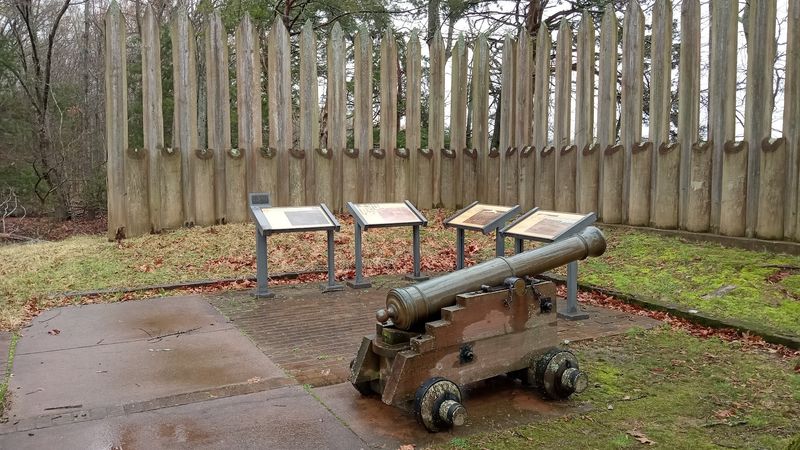
Spanish officials reinforced the post with stronger defenses, adapting it to their needs while maintaining its strategic position along the river.
In 1783, a dramatic event called the Colbert Raid unfolded here, marking the only Revolutionary War skirmish fought in what is now Arkansas.
British-allied forces attacked the post, and the Spanish defenders held their ground in a confrontation that most American history books barely mention.
Artifacts from that era still appear in exhibits at the memorial today, offering a tangible link to that overlooked chapter of history.
Walking past those displays on a quiet afternoon, it is hard not to feel the weight of all that international rivalry concentrated in one small, grassy field.
Frontier Community Pulled Into Relentless Conflict
Life at this remote outpost was never quiet for long, because geography has a way of turning ordinary places into unavoidable crossroads.
The community that grew around the post was a mix of French creoles, Spanish settlers, Quapaw traders, and American frontiersmen who arrived after the Louisiana Purchase of 1803.
That purchase transferred the entire territory to the United States, and suddenly this small settlement found itself inside a brand new country with very different ideas about land, trade, and governance.
Tensions between Native communities and American settlers increased steadily as the federal government pushed its expansion policies westward with growing aggression.
The town grew into a modest but active community with merchants, lawyers, and farmers all trying to carve out a living in the dense, humid lowlands.
Floods, disease, and the ever-shifting river made daily life unpredictable, and many settlers found themselves rebuilding from scratch more than once.
Despite the hardships, the community held together through shared commerce and the social bonds that form when people face constant uncertainty side by side.
Every layer of conflict and cooperation left behind artifacts that archaeologists are still carefully uncovering and studying at the memorial grounds today.
Fortress Rising Where The River Bends
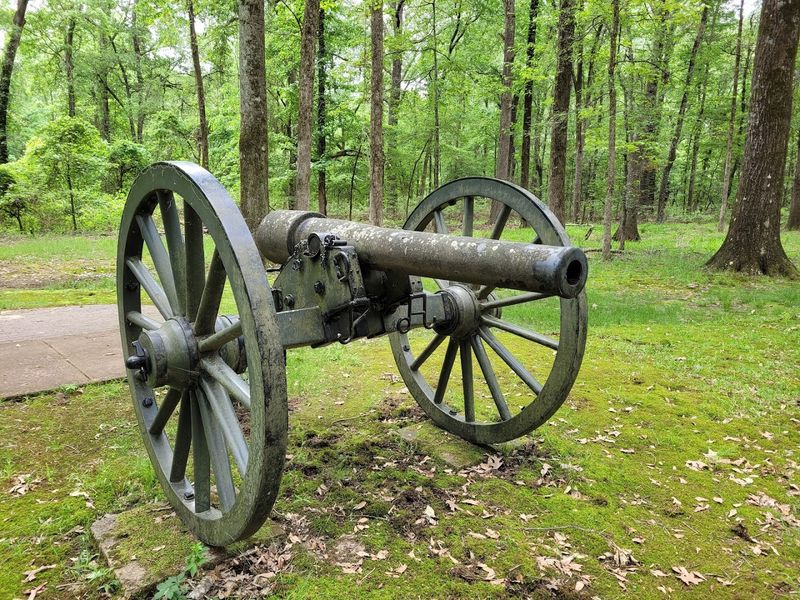
When the Civil War arrived in Arkansas, military planners immediately recognized that the old post site still held the same strategic value it always had, and they moved quickly to fortify it.
Confederate forces constructed Fort Hindman at the bend of the Arkansas River, building earthwork walls and mounting artillery to control river traffic heading toward Little Rock.
The fort was designed to be a serious obstacle, not a token defense, with thick earthen ramparts that could absorb cannon fire and protect the soldiers inside.
Soldiers from Arkansas and other Confederate states manned the walls through the cold, damp winter of 1862 and into early 1863.
The Arkansas River at this point narrows enough that shore batteries could effectively target any vessel attempting to pass without permission.
Union commanders understood this clearly and began planning a major combined operation to eliminate Fort Hindman before it could threaten their broader campaign in the western theater.
The fort represented Confederate Arkansas at its most organized and determined, a physical statement that the state intended to resist Union control with everything it had.
Today the original fort location sits partially beneath the river itself, swallowed by the same water it was built to command.
Coordinated Advance From Land And Ironclads
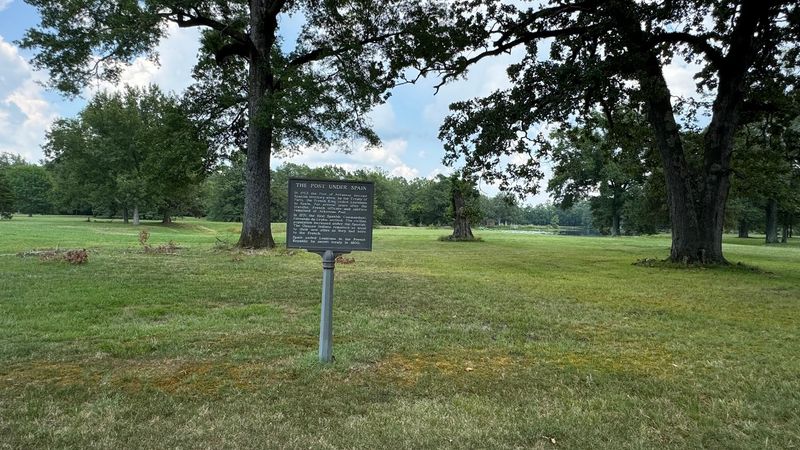
January 1863 brought one of the largest coordinated military efforts the western theater had seen up to that point, and Fort Hindman was directly in its path.
Union General John McClernand led a force of approximately 30,000 soldiers, supported by a squadron of ironclad gunboats commanded by Admiral David Porter.
Those ironclads were a major technological advantage of the Civil War, steam-powered vessels built to withstand enemy fire while returning sustained attacks.
The gunboats moved up the Arkansas River and began engaging Fort Hindman from the water while Union infantry advanced from multiple directions on land.
Confederate defenders resisted as best they could, but they faced overwhelming numbers and limited options.
The combined operation lasted roughly two days, with continuous artillery exchanges shaping the course of the battle.
Soldiers on both sides described the noise as constant and disorienting, echoing across the river and surrounding landscape.
The coordinated land and water attack demonstrated how effective joint operations along river systems could be during the war.
Sudden Surrender That Shifted Control Overnight
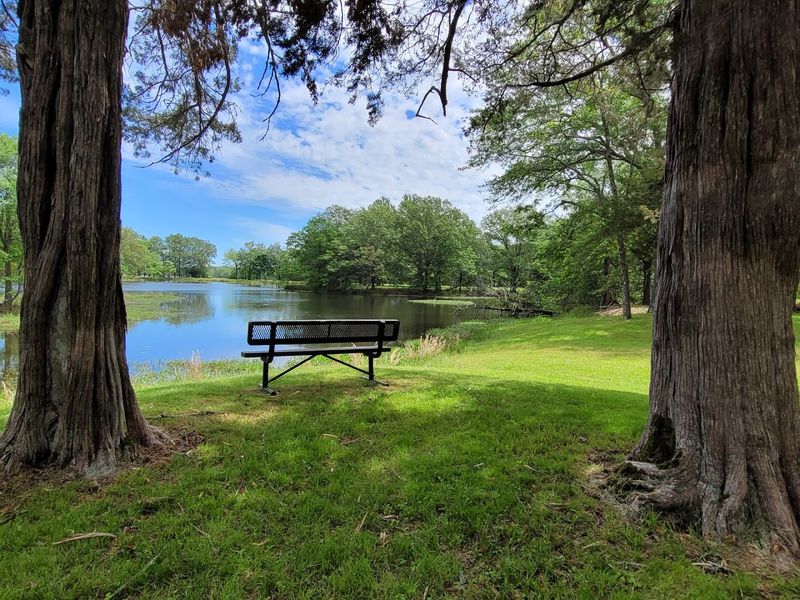
On January 11, 1863, white flags appeared above the walls of Fort Hindman, and the battle for Arkansas Post came to a remarkably swift conclusion.
Roughly 4,791 Confederate soldiers became prisoners of war in one of the largest single captures of the entire Civil War conflict up to that date.
The surrender happened so quickly that some Union commanders were genuinely surprised, having expected the Confederates to hold out far longer given the strength of their fortifications.
General Thomas Churchill, the Confederate commander, made the decision to surrender after it became clear that continuing the fight would result in complete destruction with no strategic benefit.
The Union victory gave Federal forces control of a significant stretch of the Arkansas River and removed a major threat to their supply lines and future operations.
News of the capture traveled quickly, boosting Union morale at a time when the broader war effort in the west was still grinding forward without a decisive breakthrough.
For the Confederate cause in Arkansas, the loss was a serious blow that made defending the rest of the state considerably more difficult going forward.
That single January morning reshaped the military map of Arkansas overnight, and the river bend never returned to Confederate hands again.
Town Slowly Swallowed By Water And Time
After the Civil War ended, Arkansas Post tried to rebuild itself as a functioning community, but the river had other plans and very little patience for human persistence.
Repeated flooding, combined with the arrival of railroads that bypassed the area entirely, drained the town of its population and economic purpose with quiet but relentless efficiency.
By the late 19th century, the once-busy settlement had shrunk to almost nothing, with residents relocating to towns that sat on higher, drier ground and had train station access.
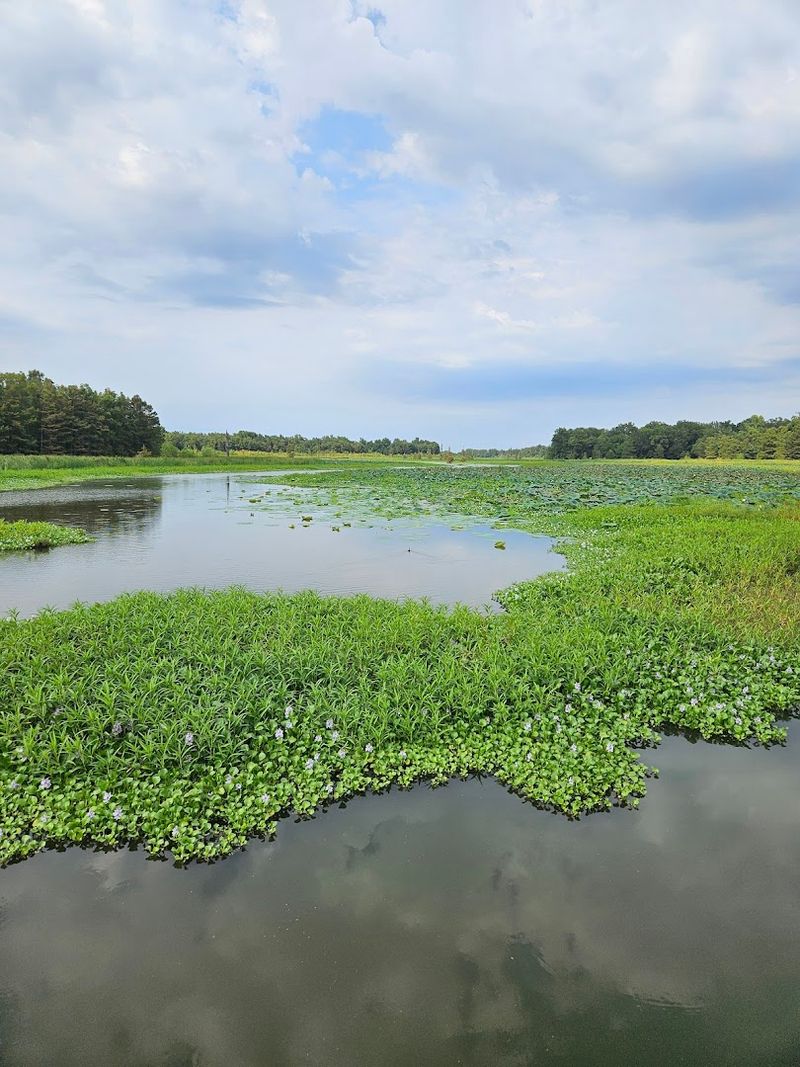
The Arkansas River itself continued shifting its course, leaving behind oxbow features that reshaped the landscape and reduced the site’s original strategic importance.
That oxbow lake is actually one of the most beautiful features of the memorial today, covered in water lilies and reflecting the sky on calm mornings.
Beneath the water and soil, archaeologists have found French colonial artifacts, Spanish military hardware, and Civil War-era objects all layered together like pages in a very old book.
The town that once housed politicians, soldiers, and traders essentially dissolved back into the landscape it had always been borrowing from.
Water and time proved to be far more patient adversaries than any army that ever marched against this place.
Quiet Landscape Where The Past Still Lingers
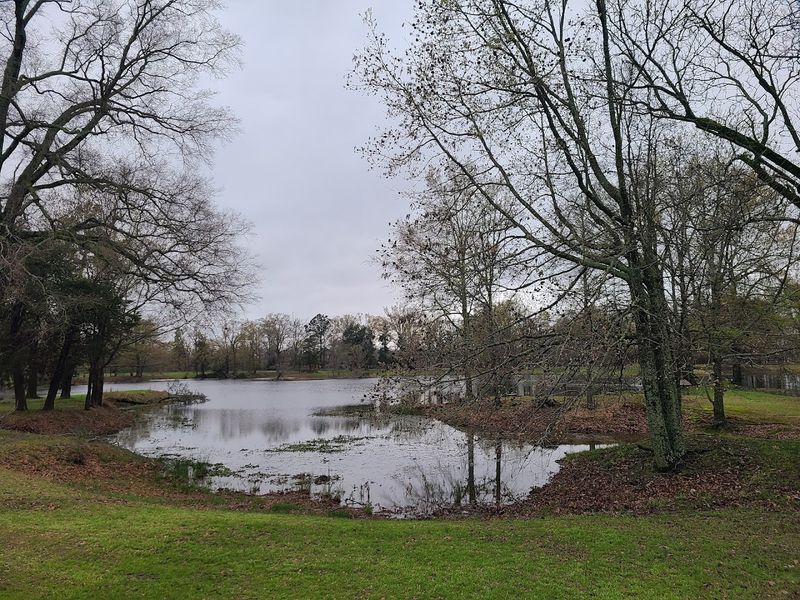
A clear morning visit feels like stepping into a painting where history and nature share the same space without competing for attention.
The memorial grounds include several walking trails that wind past the oxbow lake, through stands of hardwood trees, and along the edges of fields that were once fortified positions and colonial gardens.
Deer graze near the treeline without much concern for visitors, and armadillos shuffle through the leaf litter in that wonderfully awkward way they have.
Alligators are present in the waterways around the park, adding a certain prehistoric atmosphere that no museum exhibit could ever fully replicate.
The visitor center features well-designed exhibits covering over 300 years of history, and a 20-minute film called Arkansas Post: Echoes of the Past gives first-time visitors an excellent foundation before they explore the grounds.
The visitor center is open Thursday through Monday from 8 AM to 5 PM, and admission is free, which makes it one of the most rewarding and accessible National Park Service sites in the entire state.
Picnic areas sit right along the water, making a slow afternoon lunch feel like a genuinely special occasion.
Arkansas Post National Memorial holds more history per acre than almost anywhere else I have ever visited, and the quiet it offers makes that history feel deeply personal.