
This Iconic California Seafood Shack Is Worth Every Mile For Fresh-Off-The-Boat Seafood
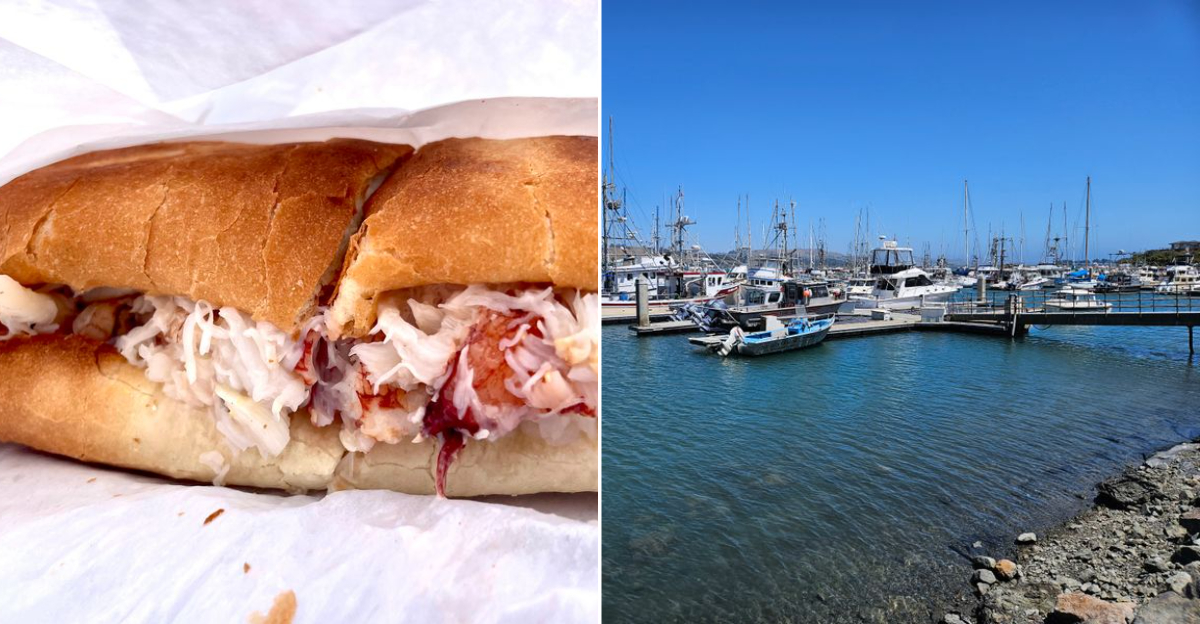
Salt rides the breeze and gulls skim the harbor before you even register the red-and-white shack at 1910 Westshore Road, and by the time you slow the car and step out, it already feels like you’ve synced your pace to the water rather than the clock.
Spud Point Crab Company keeps hours as steady as the tides, open daily from 9 AM to 5 PM, but the line starts forming well before most appetites expect it, made up of people who understand that some things are worth waiting for without complaint.
Boats rock gently in the harbor just a few yards away, and it’s impossible not to notice how close the food feels to its source, crab pulled from local waters, chowder made without distraction or excess, everything shaped by practicality rather than presentation.
The menu stays cheerfully simple, almost stubbornly so, and that restraint sharpens the experience instead of limiting it, letting sweet, bright crab and hot, briny soup speak clearly for themselves.
You balance a paper tray, feel the steam rise, and suddenly the wind, the cries of gulls, and the salt on your hands all feel like part of the meal rather than background noise.
What stays with me is how naturally it all fits together, the shack, the harbor, the food, and the waiting, none of it rushed, none of it pretending to be anything else.
If you want the essence of Bodega Bay distilled into a single stop, this is where you go, where patience is rewarded with warmth, sweetness, and the quiet sense that the ocean has briefly decided to take care of you.
Know The Line And Love The Payoff
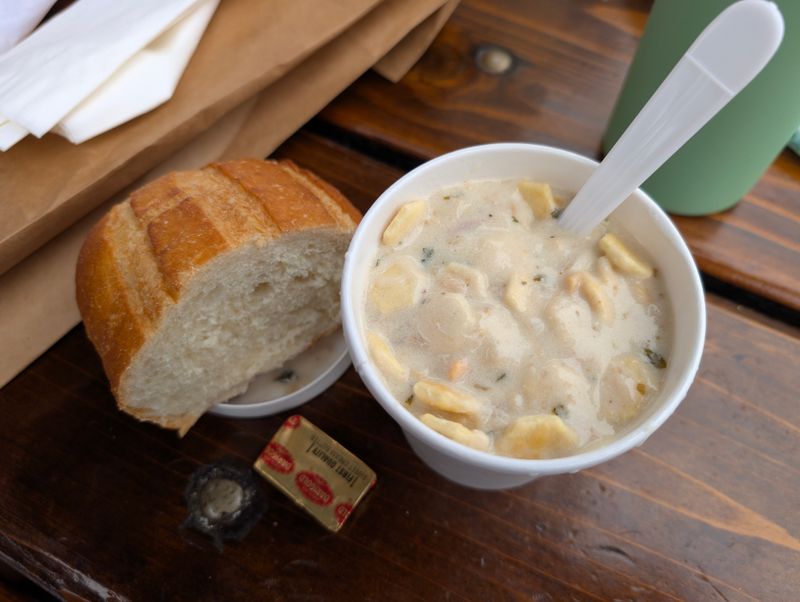
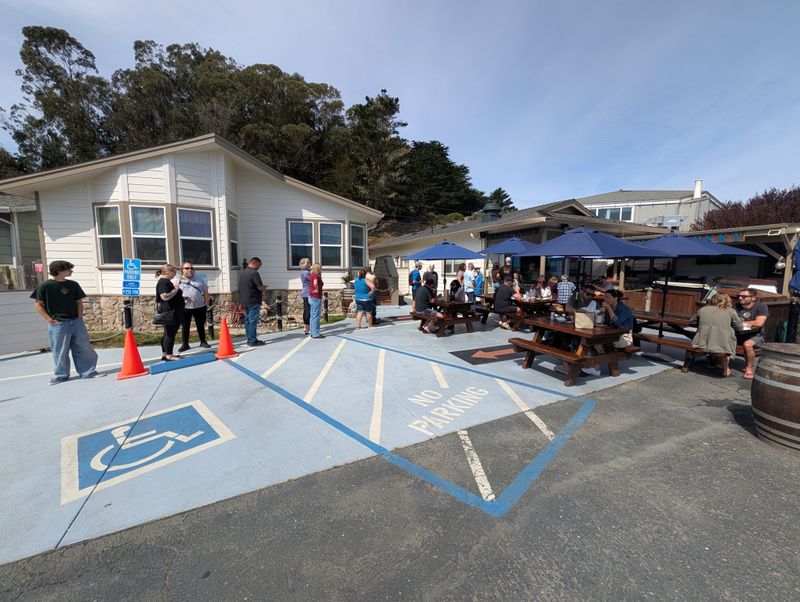
The line curling along the harbor is not a warning sign but a soft introduction, easing you into the pace of the place as steam lifts from chowder cups and the smell of warm crab and butter rides the salt-heavy air.
What looks like waiting quickly turns into orientation, as anglers, families, and road-trippers fall into an unspoken rhythm of patience, conversation, and shared anticipation shaped by windbreakers and gull cries.
Standing there with the bay in full view recalibrates hunger into attentiveness, sharpening the senses so the meal arrives as something earned rather than merely served.
By the time you reach the order window, the menu’s brevity feels comforting, a signal that the kitchen knows exactly what it wants to do and has no interest in distraction.
Choosing chowder alongside a crab sandwich creates a measured balance, offering warmth, sweetness, and texture without pushing the appetite into excess or fatigue.
The wait also guarantees proper timing, ensuring that heat, texture, and aroma align in a way fast service never could, especially in a place where weather and breeze actively shape flavor perception.
When you finally sit down facing the water, the line dissolves from memory, replaced by the quiet certainty that patience just improved the meal in every possible way.
Crab Sandwich Done Right

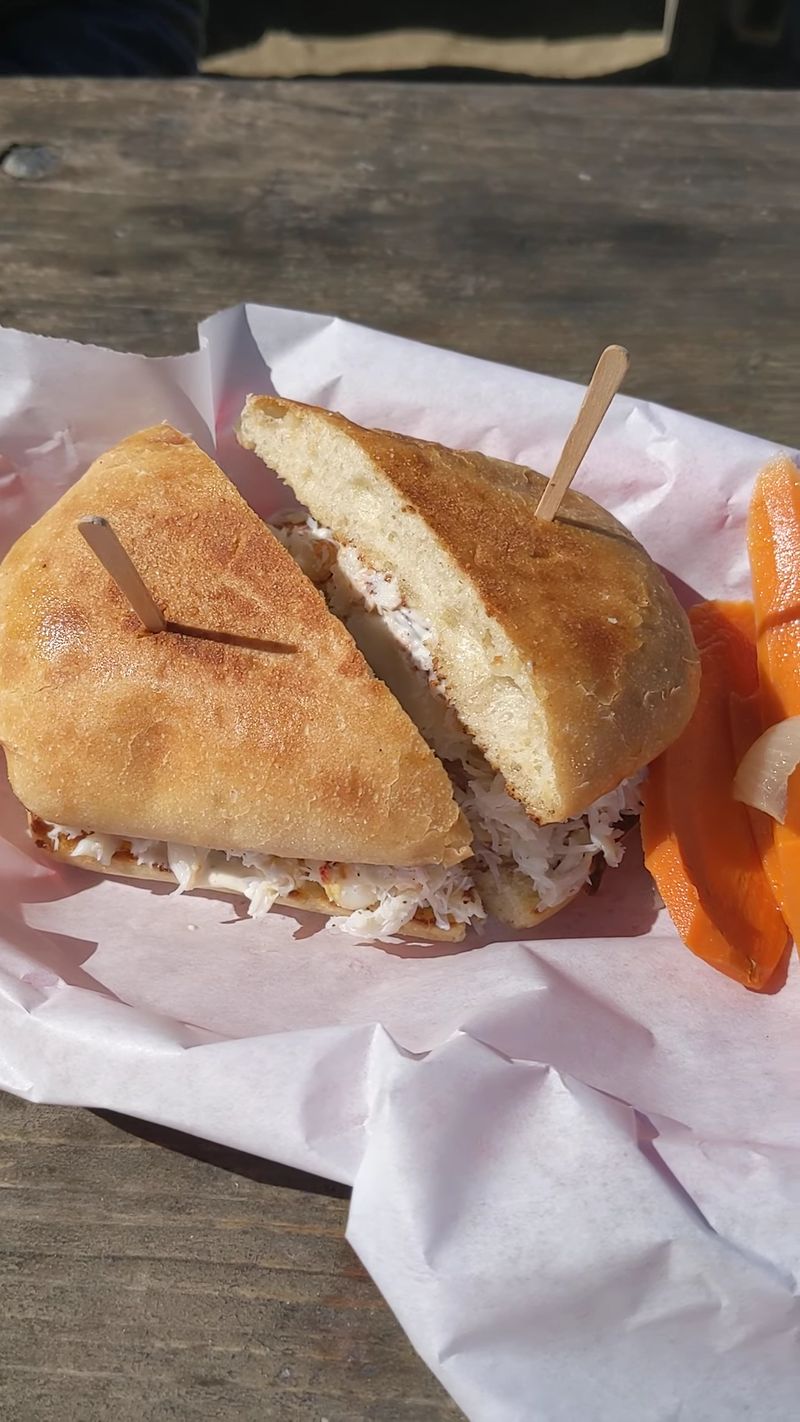
The crab sandwich arrives looking almost modest, yet the first bite immediately clarifies its intent, delivering clean sweetness supported by just enough dressing to bind without concealing the character of the meat.
Large flakes of Dungeness crab hold their shape instead of collapsing, allowing each mouthful to separate gently and register texture as clearly as flavor.
Nothing here feels churned, compressed, or overhandled, which preserves the crab’s natural delicacy and keeps the experience light despite the richness.
That restraint reflects a deeper philosophy rooted in fishing culture, where freshness is protected rather than embellished and the ingredient sets the terms.
Eating the sandwich outdoors reinforces this clarity, as the proximity to water sharpens sweetness and keeps the palate alert instead of weighed down.
Extra napkins become essential once warmth loosens the pile and juices begin to run, especially when the breeze encourages confident, unhurried bites.
By the final mouthful, the sandwich feels less like a composed dish and more like a direct translation of the harbor itself.
Chowder That Earns Its Reputation

The chowder announces itself first through aroma, releasing a plume of steam that smells of clams, butter, and the faint mineral edge of the sea before the spoon ever touches the bowl.
Its texture lands precisely between creamy and structured, with potatoes holding their edges and clams remaining tender rather than rubbery or lost.
Seasoning stays disciplined throughout, allowing pepper and herbs to support instead of dominate, so the flavor never drifts into heaviness.
What gives this chowder its staying power is consistency rather than novelty, delivering the same calm confidence bowl after bowl across seasons.
Locals return not to be surprised but to be reassured, checking that the balance still holds and finding comfort when it does.
The experience lingers long enough that buying a portion to take home feels almost inevitable once the last spoonful is gone.
Reheated gently later, it carries the mood of the shoreline back with it, proving that some foods retain a sense of place even far from the water.
Timing The Tides Of Appetite

Arriving earlier in the day changes the entire experience, because morning light sharpens the bay’s colors, steadies the staff’s rhythm, and places you in a calmer window when decisions feel thoughtful rather than rushed.
When the kitchen is operating at this measured pace, every motion looks intentional, from ladles dipping smoothly into chowder pots to trays sliding across the counter without hesitation or wasted movement.
Choosing to eat before peak hunger hits allows flavors to unfold gradually, so sweetness, salinity, and warmth register clearly instead of competing for attention.
Sharing a half crab alongside chowder works especially well in this window, because the contrast between hot and chilled textures feels refreshing rather than heavy.
Early timing also rewards you with better seating options, which matters more than expected when wind direction, sun angle, and table orientation quietly influence comfort.
Watching the harbor wake up while eating creates a sense of alignment, as if the meal belongs to the moment rather than interrupting it.
By the time the line thickens and the afternoon energy shifts, you are already leaving satisfied, carrying the sense that you caught the place at its most honest hour.
The Family Behind The Counter
The sense of continuity here is not performative, but embedded in how orders are taken, questions answered, and food handed over with practical warmth instead of rehearsed charm.
Knowing that the same family who fishes these waters also shaped the menu reframes the experience, turning each dish into an extension of daily work rather than a curated concept.
That lineage shows itself in restraint, particularly in how nothing is oversold or upsold, and recommendations are delivered with the quiet confidence of people who trust the product completely.
When you order whole crab in season, the simplicity of its presentation feels deliberate, allowing texture, sweetness, and temperature to communicate without interference.
Interactions at the counter stay brief but sincere, focused on clarity and efficiency rather than storytelling, which somehow makes the story stronger.
This is hospitality shaped by routine rather than performance, where pride is expressed through consistency instead of flair.
As you eat, the awareness that this food comes from lived knowledge settles in, deepening appreciation without asking for acknowledgment.
Sourdough And Butter, Small But Mighty

The supporting elements on the tray quietly do more work than expected, especially the sourdough roll, which balances softness and structure in a way that respects the crab’s delicate strands.
Warm butter melts just enough to coat the bread without soaking it, creating a subtle richness that amplifies flavor instead of stealing focus.
That balance keeps every bite intact, preventing collapse while allowing juices to settle naturally into the crumb.
Lemon plays an equally disciplined role here, offering brightness that lifts sweetness without flattening the crab’s ocean character.
Together, these small components form a system of support, ensuring the main ingredient stays legible from first bite to last.
Visitors who rush past these details often miss how much intention lives in them, mistaking simplicity for absence rather than control.
Once noticed, however, the bread, butter, and citrus become inseparable from the memory of the meal itself, anchoring it in texture as much as taste.e appetite to the line. The second pass somehow tastes better, maybe because anticipation got seasoned by the breeze.
When Crab Season Shifts The Mood

When crab season settles in, the entire atmosphere tightens into a shared alertness, as conversations in line drift toward pots, tides, and weather windows, and the air itself seems heavier with steam, shell, and anticipation.
The presence of fresh crab reshapes behavior, slowing movements and sharpening attention, because everyone understands that what is being served is temporary, conditional, and entirely dependent on the sea’s cooperation.
That awareness feeds directly into flavor perception, making sweetness feel brighter and texture feel more vivid, as if scarcity itself were seasoning the plate.
You notice it in how people eat, quieter now, cracking shells deliberately, pausing between bites as though to confirm that what they’re tasting is real and fleeting.
The shack becomes less of a destination and more of a checkpoint in a larger working rhythm, where fishing schedules quietly dictate the menu rather than the other way around.
There is no announcement when the season peaks, just a subtle shift in confidence, as trays come out fuller and smiles linger a second longer before the next order is called.
By the time you finish eating, you realize the mood itself was part of the meal, folding weather, labor, and timing into a single, edible moment.
Minimal Menu, Maximum Clarity
A short menu here does not signal limitation but focus, removing decision fatigue and forcing attention onto execution rather than choice.
With only a handful of items to consider, ordering becomes intuitive, guided more by appetite and environment than by fear of missing out.
Each option exists because it earns its place, not because it fills space, and that clarity translates into confidence both at the counter and on the tray.
There is relief in knowing that nothing is decorative or redundant, that every item has been tested against the same standards of freshness and restraint.
This simplicity speeds the line without cheapening the experience, because efficiency is built on familiarity rather than haste.
The absence of novelty frees the palate to notice subtle shifts in texture, temperature, and seasoning that would otherwise be buried under variety.
By the end of the meal, the menu feels complete rather than small, as though anything more would dilute the point instead of enhancing it.
Savoring With The Bay As Your Tablecloth

Eating beside the water changes posture, pace, and expectation, encouraging longer pauses between bites as eyes drift toward boats rocking gently against their lines.
The picnic tables may be plain, but the setting does more than decoration ever could, adding salt air, moving light, and distant engine hum as unspoken accompaniments.
Food tastes cleaner outdoors here, partly because the breeze keeps aromas fresh and partly because the environment demands attention rather than distraction.
You become aware of how the temperature of chowder shifts with each spoonful, cooling just enough to reveal sweetness without dulling richness.
Crab eaten in this setting feels less like a dish and more like a direct extension of place, as if it belongs outside rather than under a ceiling.
The absence of ceremony encourages presence, letting you focus on texture, warmth, and sound instead of presentation.
When you finally stand up, brushing crumbs from the table and napkins from your lap, it feels less like leaving a meal and more like stepping out of a scene that will continue without you.
Take-Home Strategy For Later Cravings
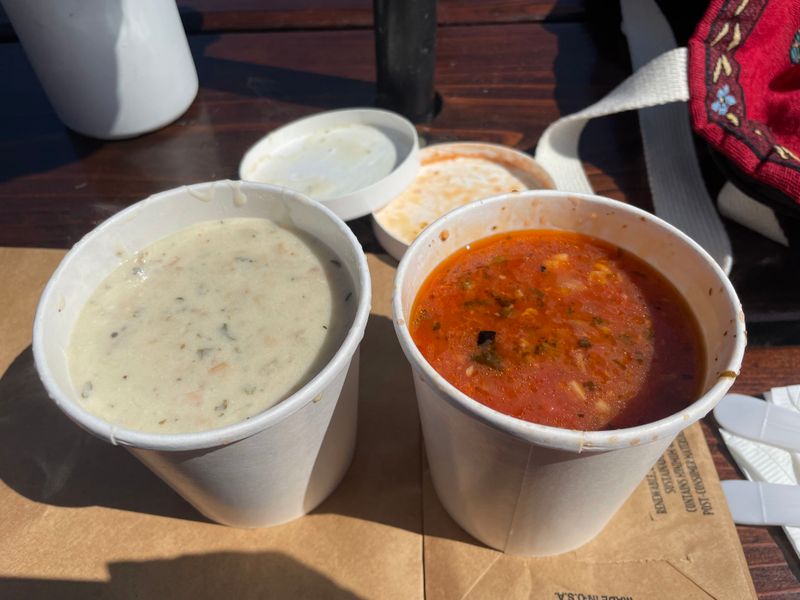
Buying chowder to take home feels less like an add-on and more like extending the experience beyond the shoreline, especially when you realize how well it carries the mood of the place once the wind and gulls are no longer present.
Packed carefully and reheated slowly, the soup opens back up with the same aromas of clam, butter, and quiet pepper, reminding you that restraint travels better than excess.
Gentle stovetop warming preserves texture, keeping clams tender and potatoes intact, while rushing it risks flattening what made the bowl special in the first place.
A small squeeze of lemon added at the end restores brightness and mimics the dockside air that shaped the original bite.
Eating it later, perhaps as evening fog returns or the temperature drops, reconnects you to the earlier moment without feeling like a pale imitation.
The memory of the bay fills in what the room cannot provide, supplying context to every spoonful.
In that sense, the take-home chowder works as a quiet echo rather than leftovers, carrying place forward instead of closing the chapter.