
This Iconic South Carolina Bridge Delivers The Best Views In Charleston
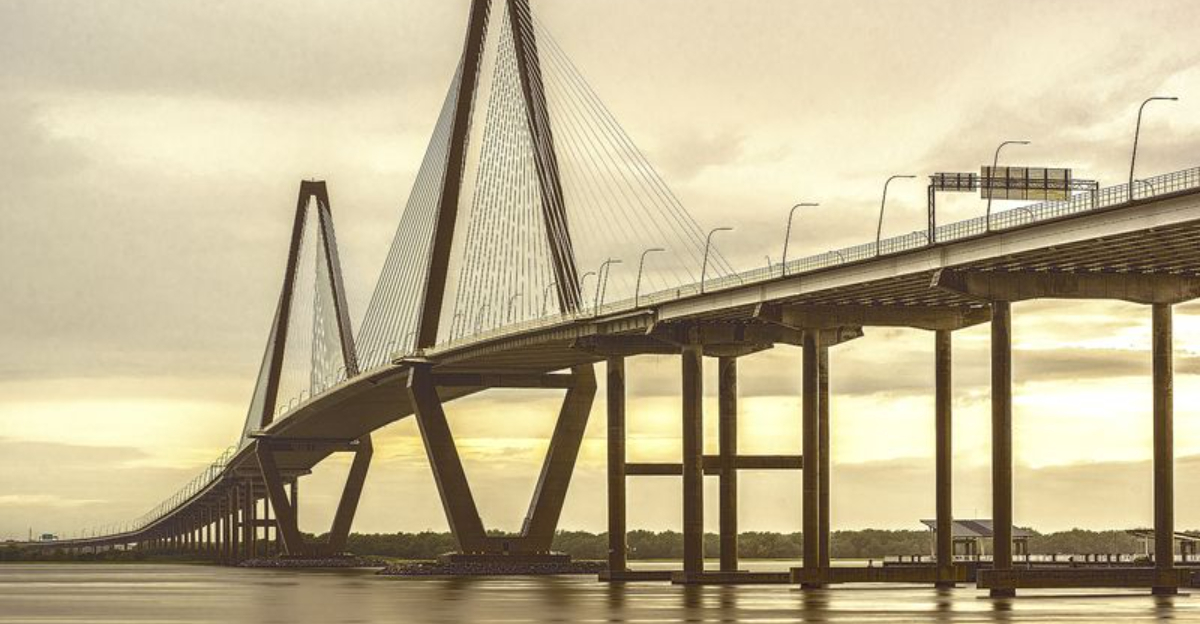
Not many bridges become attractions in their own right. South Carolina’s Arthur Ravenel Jr. Bridge managed to do exactly that.
The first thing people notice is the scale. Towering cables stretch toward the sky.
Massive pillars rise above the Cooper River. From a distance, the bridge looks less like a piece of infrastructure and more like something designed for a futuristic skyline.
Then come the views.
Charleston’s church steeples appear on one side. Mount Pleasant unfolds on the other.
Boats drift across the water far below while the harbor stretches toward the Atlantic Ocean.
The experience changes with the weather. Sunrise paints the cables gold.
Sunset turns the river into liquid copper. On foggy mornings, the upper towers seem to disappear into the clouds, making the entire structure look almost unreal.
It is easy to understand why locals are so proud of it.
Part landmark. Part engineering marvel.
Part postcard-worthy viewpoint. The Arthur Ravenel Jr. Bridge has become one of South Carolina’s most recognizable sights and one of the most memorable crossings in the South.
A Bridge Built On Legacy
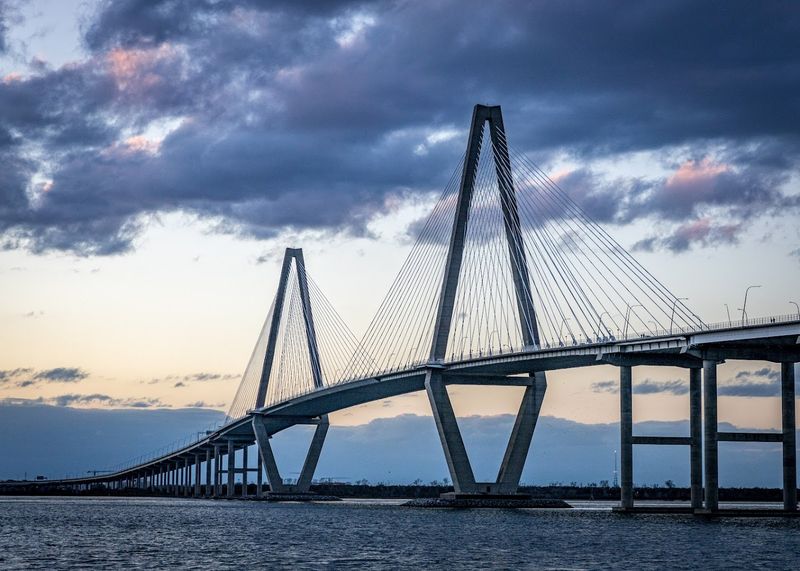
Arthur Ravenel Jr. served South Carolina for decades, championing infrastructure projects that would connect communities and boost the Lowcountry economy.
When this bridge opened in 2005, it became the longest cable-stayed span in the Western Hemisphere, a title that honored his vision for progress rooted in tradition. I remember reading about Ravenel’s insistence that the bridge be beautiful, not just functional, and standing beneath those diamond-shaped towers, I see exactly what he meant.
The design nods to Charleston’s historic architecture while embracing cutting-edge engineering, blending old and new in a way that feels uniquely Southern. Every time I cross, I think about the generations of travelers who used the old Grace and Pearman bridges, and how this structure carries their stories forward.
The bridge stands as a monument to public service, a reminder that infrastructure can inspire as much as it transports.
Two Historic Spans Replaced
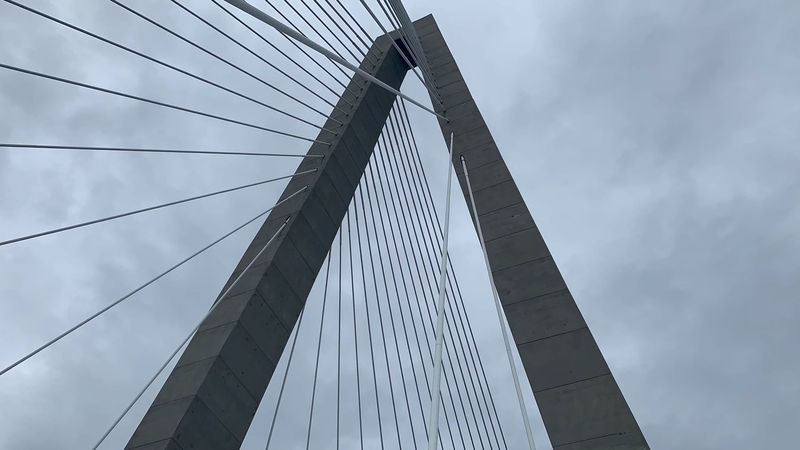
Before the Ravenel Bridge appeared, the Grace Memorial Bridge and the Pearman Bridge carried traffic across the Cooper River for more than seven decades.
These narrow, steep cantilever truss bridges terrified some drivers with their tight lanes and sharp inclines, yet they became beloved symbols of Charleston’s grit and charm. I talked to a local who remembered white-knuckling the steering wheel every morning commute, praying no trucks would squeeze past in the opposite lane.
When both bridges were demolished in 2007, thousands gathered to watch the implosions, cameras ready to capture the end of an era. The rubble was repurposed into an artificial reef offshore, giving marine life a new home and divers a piece of history to explore.
Standing on the Ravenel now, I imagine those old spans beside me, ghosts of steel that shaped Charleston’s identity for generations.
Cable-Stayed Engineering Marvel
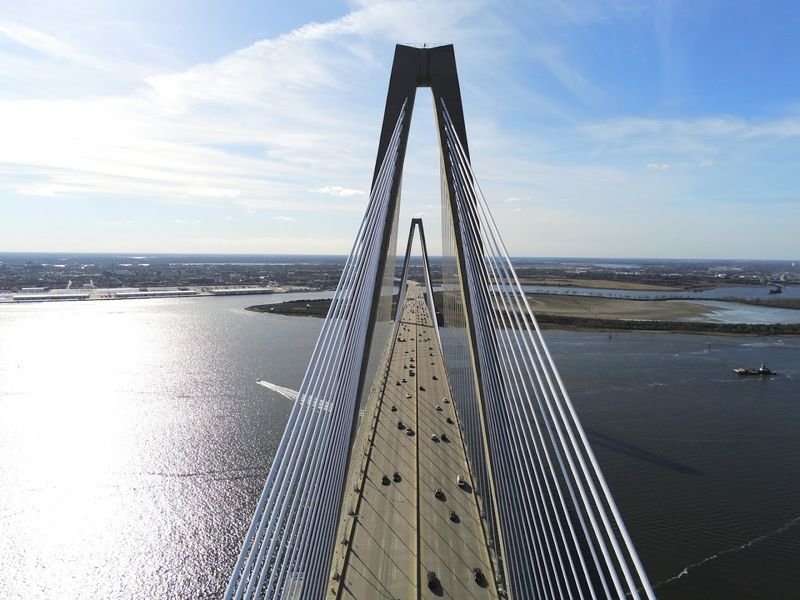
Cable-stayed bridges use towers and angled cables to support the deck, creating a structure that’s both strong and graceful.
The Ravenel’s two diamond-shaped towers soar 575 feet above the water, each one anchoring 128 individual cables that fan out like harp strings. I walked the pedestrian path one afternoon, watching those cables slice through the sky, and marveled at how something so massive could feel so delicate.
Engineers designed the bridge to withstand hurricane-force winds, earthquakes, and even ship collisions, embedding resilience into every bolt and beam. The deck spans 1,546 feet between the towers, allowing massive container ships to pass beneath without interruption.
At night, the cables glow with LED lights that shift colors for holidays and special events, turning the bridge into a piece of public art. This engineering approach honors Charleston’s maritime heritage while preparing the city for centuries of future growth.
A Pedestrian And Cyclist Paradise
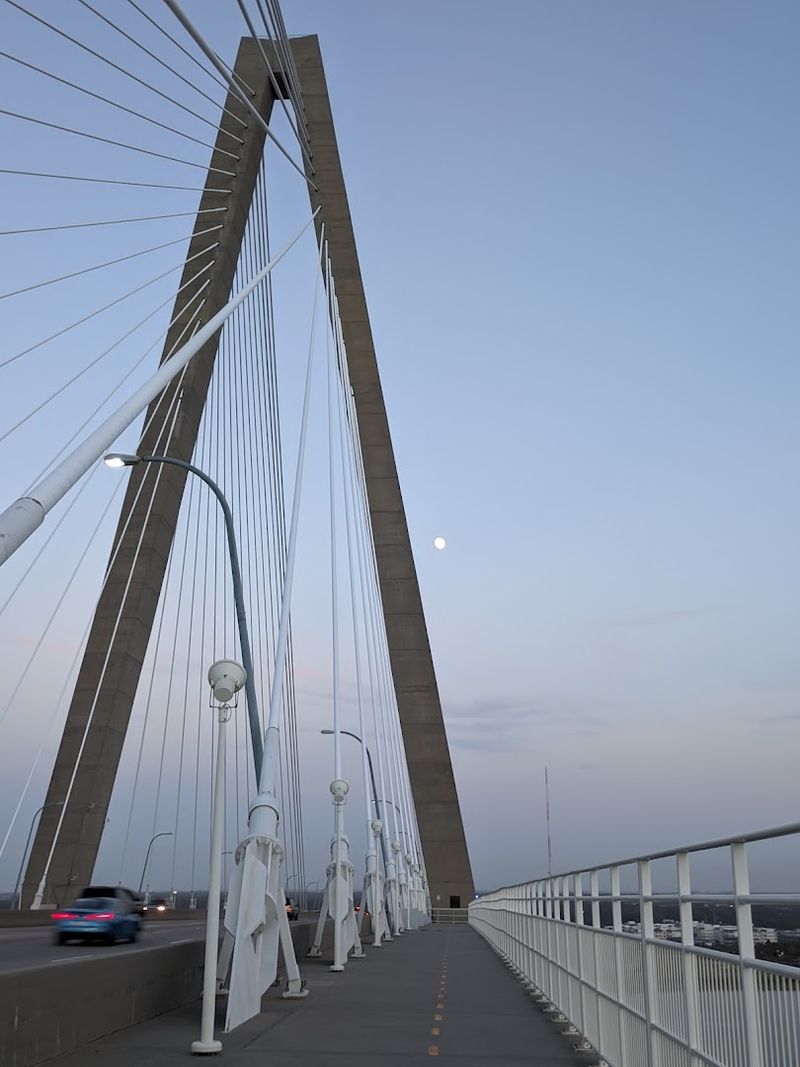
The bridge includes a dedicated 12-foot-wide path for walkers, runners, and cyclists, separated from vehicle traffic by a barrier that makes the journey feel safe and serene.
I joined the steady stream of fitness enthusiasts one Saturday morning, climbing the gentle incline as the sun painted the harbor gold. The path rises 186 feet at its highest point, offering panoramic views of Charleston Harbor, Fort Sumter, and the Battery without a single car horn interrupting the experience.
Locals call it “Pea Island” in a playful nod to the bridge’s official name, and the path has become a community gathering spot where neighbors meet, train for races, and celebrate sunrises together. Mile markers along the route help track progress, and benches at the summit invite you to pause and soak in the scenery.
Crossing on foot transforms the bridge into something intimate, a place where history and health intersect with every step.
Views That Capture Lowcountry Magic
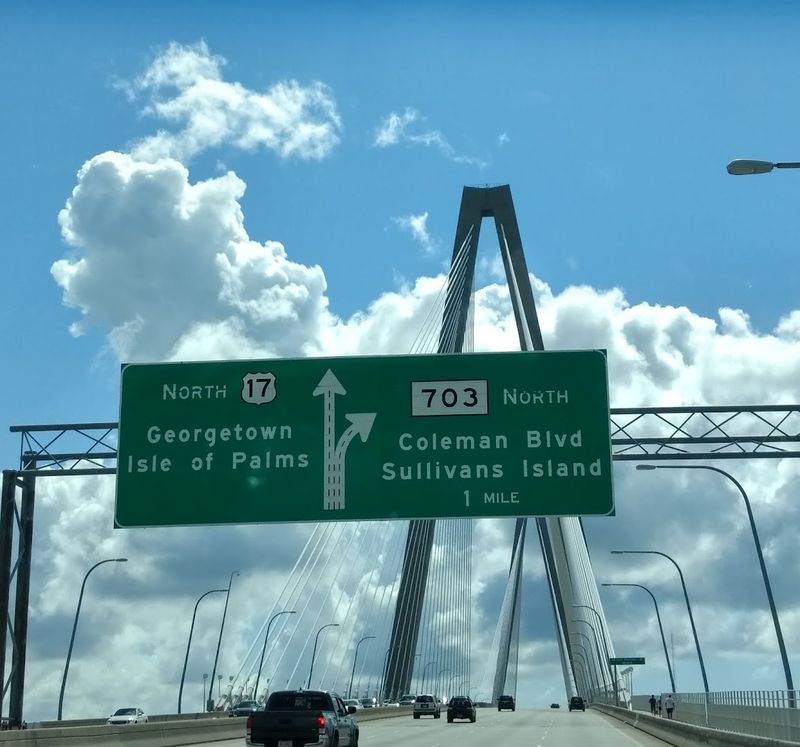
Few vantage points in the Lowcountry rival the perspective you gain from the Ravenel’s summit, where land, water, and sky converge in a single sweeping glance.
I’ve watched container ships glide beneath me like toys, their wakes spreading across the Cooper River in perfect V-shapes that catch the afternoon light. To the east, Sullivan’s Island and the Atlantic Ocean stretch toward the horizon, while the west reveals Charleston’s church steeples and historic rooftops clustered along the peninsula.
Sunrise here paints the marshes in shades of pink and orange, and sunset turns the harbor into liquid copper, each moment offering a new reason to slow down and stare. Photographers camp out at dawn and dusk, tripods ready to capture the bridge silhouetted against dramatic skies.
Every crossing feels like a chance to see Charleston the way early explorers did, vast and beautiful and full of possibility.
A Runner’s Annual Pilgrimage
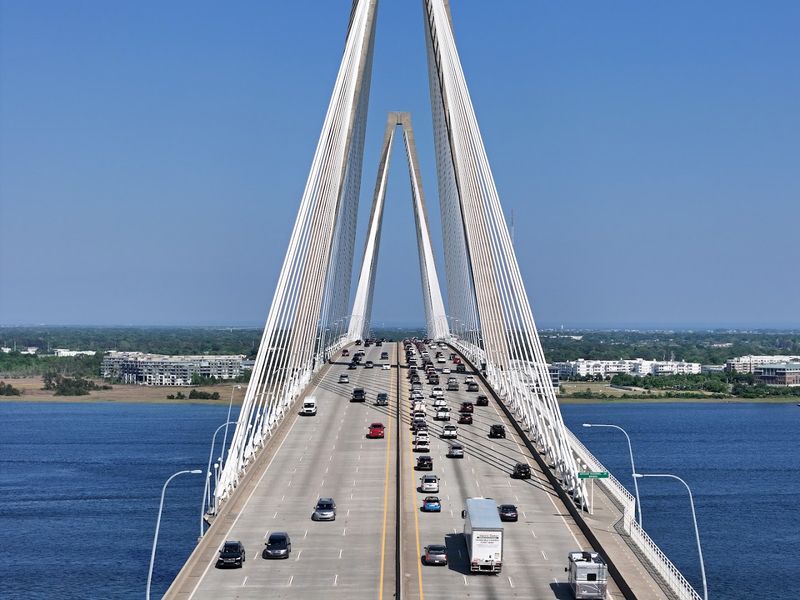
Every spring, the Cooper River Bridge Run transforms the Ravenel into the centerpiece of the largest 10K race in the United States, drawing more than 40,000 runners from around the globe.
I joined the crowd one April morning, shuffling toward the starting line as the sun crept over Mount Pleasant, and felt the collective energy of thousands ready to tackle the bridge’s incline. The race began in 1978 on the old Grace Bridge, but the Ravenel’s wider lanes and pedestrian path made the event safer and more accessible, allowing it to grow into a Charleston tradition.
Spectators line the route, cheering strangers by name and handing out water and high-fives with equal enthusiasm. Crossing the summit feels like a shared victory, a moment when the entire city celebrates movement, community, and the bridge that connects them.
This annual pilgrimage turns the Ravenel into more than infrastructure; it becomes a symbol of perseverance and joy.
Lighting That Honors Moments
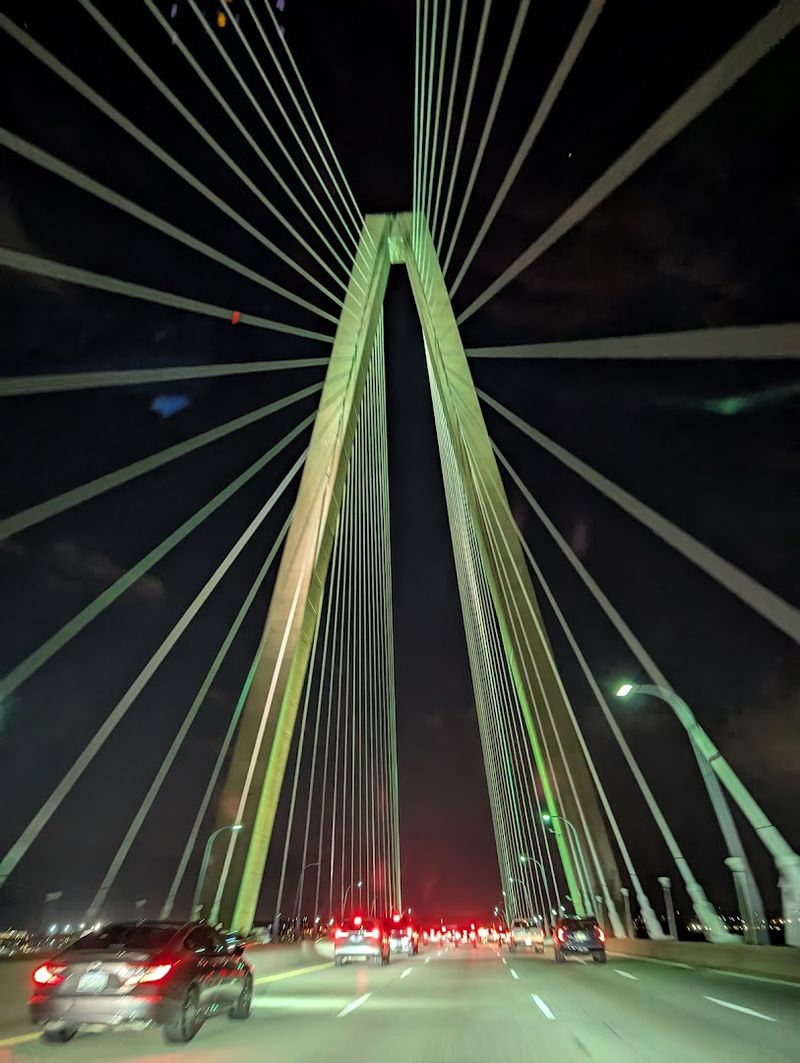
The bridge’s LED lighting system can display virtually any color, allowing Charleston to mark holidays, raise awareness for causes, and celebrate milestones with a simple switch.
I’ve seen the cables glow pink for breast cancer awareness, blue and gold for college football rivalry week, and red, white, and blue for Independence Day, each configuration turning the bridge into a beacon visible for miles. The system was installed in 2010, and locals quickly embraced it as a way to unite the community around shared values and events.
On quiet nights, the lights often shift through a soft rainbow gradient, casting reflections across the Cooper River that ripple and dance with the current. Photographers flock to Waterfront Park and Patriot’s Point to capture long-exposure shots of the illuminated span, turning the bridge into Charleston’s most photogenic landmark.
This nightly display reminds everyone that the Ravenel isn’t just a crossing; it’s a canvas for the city’s heart.
Connecting Communities Across Water
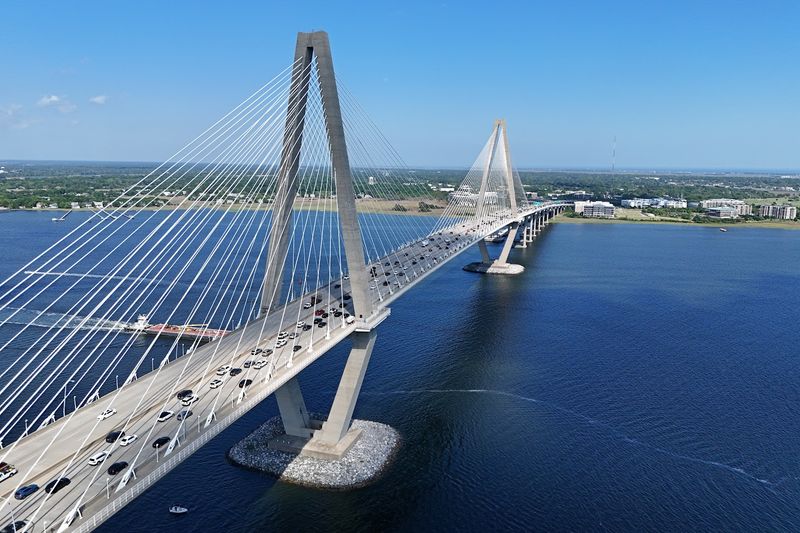
The bridge links downtown Charleston on the peninsula with Mount Pleasant and the barrier islands beyond, erasing the geographic divide that once made commuting a daily adventure in patience.
I remember the first time I drove from Sullivan’s Island into the city for dinner, marveling at how a trip that would have taken an hour on the old bridges now felt effortless and quick. The Ravenel handles more than 80,000 vehicles daily, carrying workers, tourists, and locals across the Cooper River with eight lanes that ease congestion and improve safety.
Before this bridge, families on opposite sides of the river felt worlds apart, but now neighbors gather for dinners, kids attend schools across the water, and businesses thrive on the easy connection. The span also supports emergency services, allowing ambulances and fire trucks to respond faster when seconds matter.
This physical link strengthens social bonds, proving that infrastructure shapes community in ways we notice every single day.
A Symbol Of Charleston Resilience
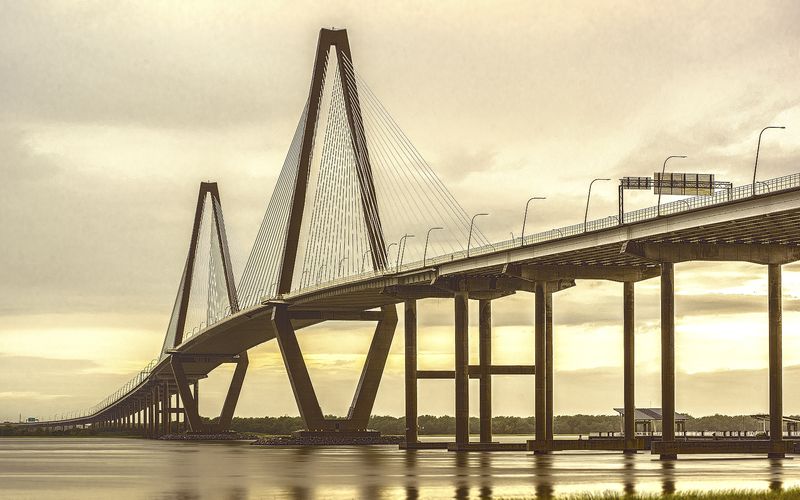
Charleston has survived hurricanes, earthquakes, wars, and floods, and the Ravenel Bridge embodies that same stubborn determination to endure and adapt.
Engineers built the structure to withstand a magnitude 7.3 earthquake, learning from the devastating 1886 quake that rattled the city and reshaped its building codes forever. I’ve crossed during tropical storm warnings when the wind howled and rain blurred the windshield, and the bridge never flinched, steady as the oaks that line Charleston’s historic streets.
The design also accommodates rising sea levels, with clearance and flexibility that anticipate decades of environmental change. Locals point to the bridge as proof that Charleston can honor its past while preparing for an uncertain future, blending tradition with innovation in a way that feels distinctly Lowcountry.
Every time I see those towers, I think about the generations who will cross them, carrying forward the resilience that built this city.
Timeless Views, Modern Journey

Crossing the Ravenel feels like stepping into a postcard where past and present coexist without conflict, where modern engineering frames centuries-old landmarks in perfect harmony.
I always slow down near the summit, stealing glances at St. Michael’s steeple rising above the rooftops, a white spire that’s guided sailors since 1761 and now shares the skyline with this 21st-century marvel. The bridge doesn’t compete with Charleston’s history; it enhances it, offering perspectives that help visitors and locals alike appreciate the city’s layered beauty.
Whether you cross at dawn when the harbor mist clings to the water, or at twilight when the city lights flicker on one by one, the experience feels both brand new and deeply familiar. This blend of old and new defines Charleston, a place where progress respects tradition and every journey across the Cooper River carries echoes of those who came before.
The Ravenel stands as proof that moving forward doesn’t mean leaving the past behind.