
This Idaho Road Is One Of America’s Most Underrated Scenic Drives
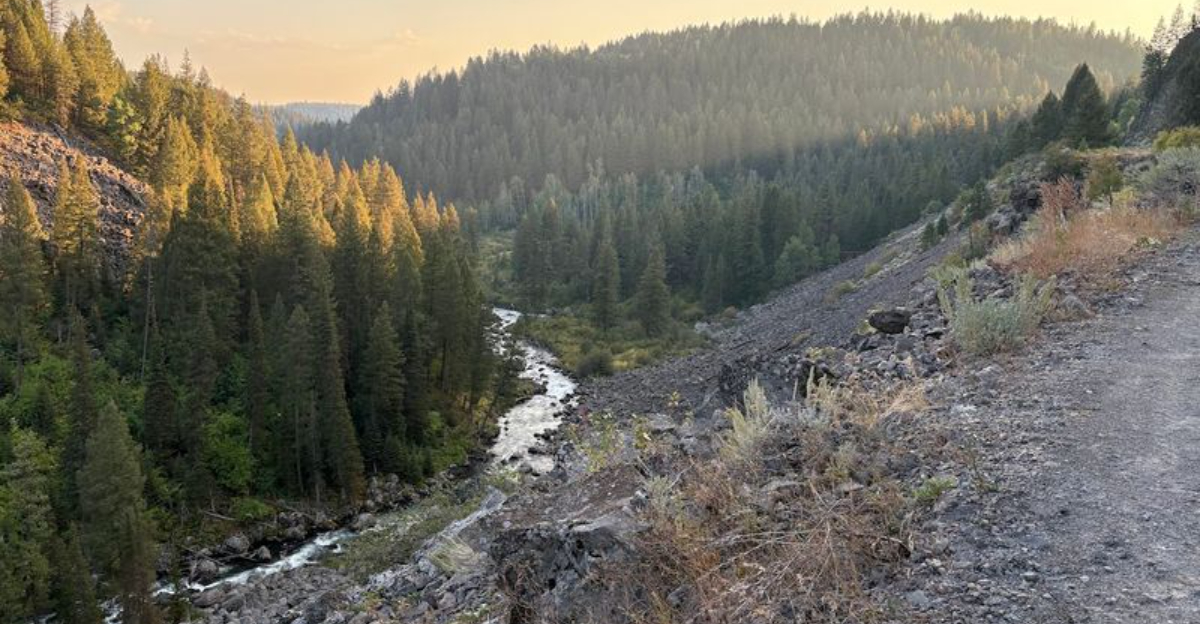
Somewhere in Idaho, there’s a road that feels like it was designed to slow people down. Not because it’s difficult.
Not because it’s dangerous. Because every few miles, it gives you another reason to stop.
A wall of trees opens up. A waterfall appears through the mist.
A mountain view suddenly makes you forget about the destination completely. The funny thing is, thousands of people drive across Idaho without realizing one of the state’s most memorable journeys is hiding in plain sight.
It doesn’t have the crowds of the famous routes. It doesn’t need them.
It’s the kind of drive where the road itself becomes the attraction, where every turn feels like a little reward. And by the time it ends, you’re not thinking about where you went.
You’re thinking about how you almost missed it.
Where The Journey Begins
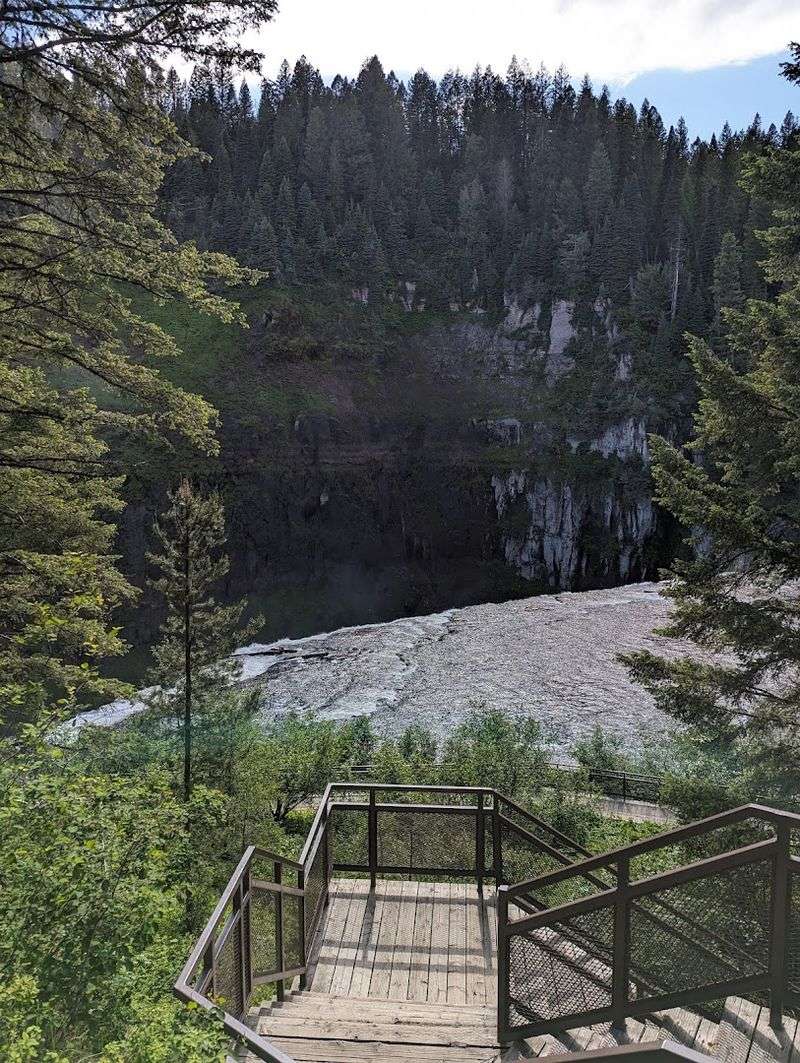
Rolling out from Ashton and curving north toward Island Park, the Mesa Falls Scenic Byway wastes absolutely no time showing off.
From the very first mile, vast farmlands stretch out in every direction like a patchwork quilt stitched together by someone with incredible taste. The road feels unhurried and wide open, the kind of drive that instantly loosens your shoulders.
What makes this byway genuinely special is the way the scenery shapeshifts around you. One moment you are gliding past potato fields that put Idaho firmly on the agricultural map.
The next, towering pines of the Caribou-Targhee National Forest close in around you like a green curtain being drawn for the main act. The transition is seamless and surprisingly theatrical.
Geologically speaking, every inch of this landscape was shaped by supervolcanic eruptions happening over a million years ago.
That ancient drama is baked into the basalt cliffs, canyon walls, and river valleys you encounter along the way. The byway is open from spring through fall, making it a warm-weather treasure.
Pack snacks, charge your camera, and resist the urge to rush because this road rewards those who take it slow.
The Star Of The Show
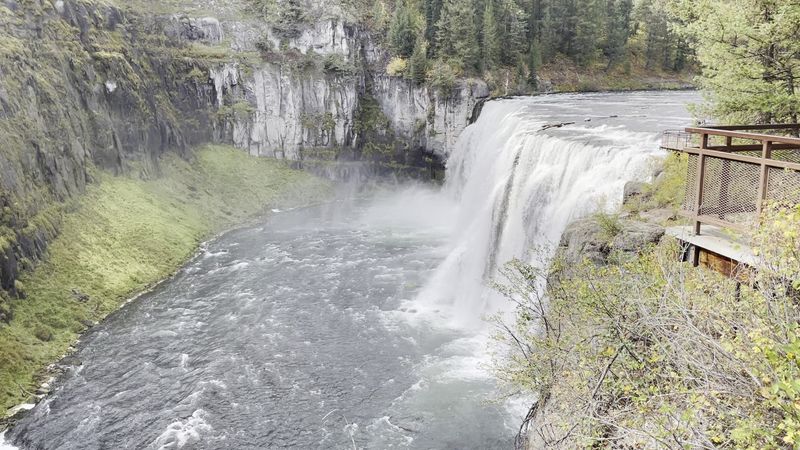
Some waterfalls politely trickle. Upper Mesa Falls absolutely roars.
Plunging 114 feet and spreading across a dramatic 200-foot width, this cascade is the kind of natural spectacle that makes you feel genuinely small in the best possible way.
It commands attention the moment you hear it before you even see it.
What sets this waterfall apart from nearly every other in the region is its untouched status. Upper Mesa Falls remains one of the last major waterfalls on the entire Snake River system that has never been altered by human hands.
No dams, no diversions, no interference. Just raw, ancient water doing exactly what it has done for thousands of years.
Well-maintained viewing platforms and walkways bring you remarkably close to the action. On sunny mornings, rainbows materialize in the mist like a bonus gift from the universe.
Ospreys and bald eagles frequently cruise the thermals overhead, adding an almost cinematic quality to the experience.
The basalt rock formations framing the falls were born from supervolcanic activity over a million years ago, giving the scene a primordial weight. Standing here feels less like sightseeing and more like witnessing something sacred.
The Panoramic Perspective
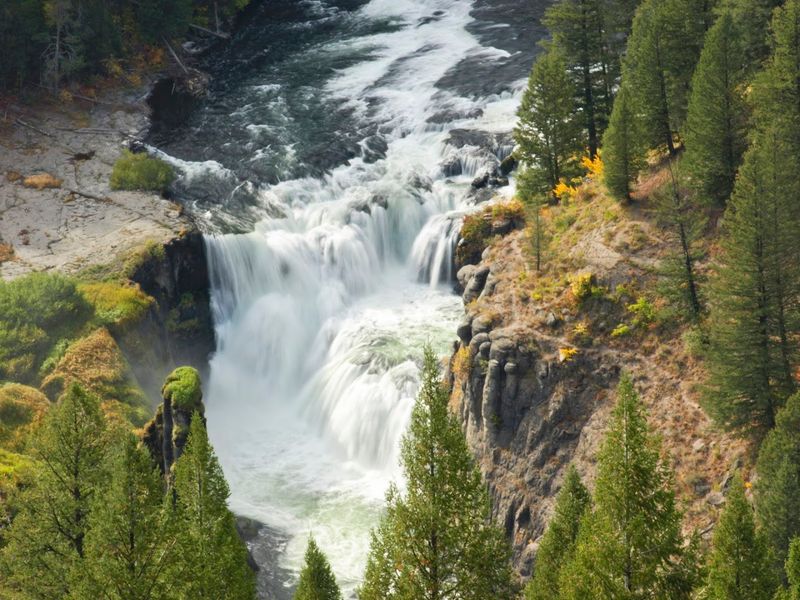
Just downstream from its famous sibling, Lower Mesa Falls brings a completely different energy to the experience. At 65 feet tall, it is smaller but no less striking, and the Grandview Overlook frames it within a sweeping, wide-angle view that feels almost cinematic.
This is where you exhale and just take it all in.
The overlook itself has a wonderfully layered history. It was originally constructed by the Civilian Conservation Corps back in the 1930s, meaning the very platform you stand on carries nearly a century of awe-struck visitors before you.
That kind of continuity is quietly moving. The Henry’s Fork of the Snake River cuts powerfully between towering basalt columns far below, a geological drama playing out in slow motion.
Getting here requires only a short, paved walk, making it accessible and genuinely enjoyable for almost anyone.
A nature trail also branches off for those wanting a longer, more immersive look at the lower falls from a different angle. The basalt formations you see here tell the same ancient volcanic story as Upper Mesa Falls, but from a broader vantage point.
Sometimes the best view is the one that steps back and shows you the whole picture.
History Hiding In Plain Sight
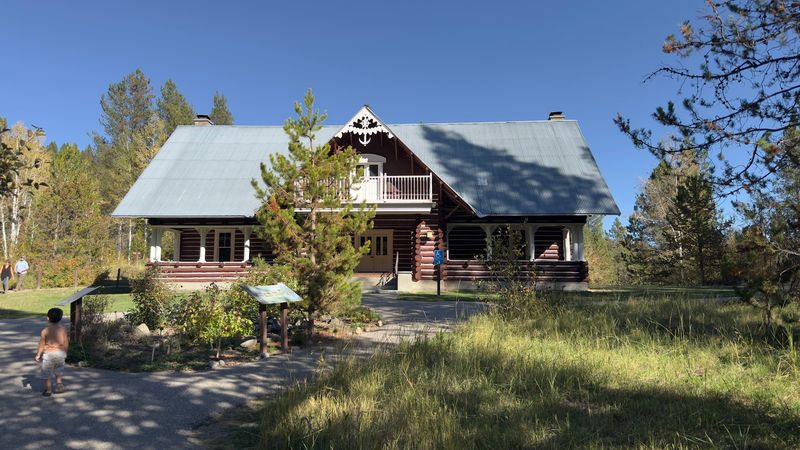
Tucked right beside the falls and wrapped in the kind of character that only a century of stories can create, the Mesa Falls Visitor Center is genuinely one of the most charming stops on the entire byway.
Housed inside the historic Big Falls Inn, a log building dating to around 1915, this place has lived many lives. It has been a power company office, a hotel, a cafe, and even a dance hall at various points in its colorful past.
Today, the beautifully restored inn welcomes visitors as an interpretive center packed with fascinating exhibits.
You can explore the geological history of the falls, trace the route of the old Yellowstone Highway, and get a real sense of how this remote corner of Idaho shaped the lives of those who passed through it. The building itself earned a well-deserved spot on the National Register of Historic Places.
What makes this stop particularly rewarding is how it deepens your connection to the landscape around you. Knowing the why and how behind what you are seeing transforms a pretty view into something genuinely meaningful.
The center is open seasonally, typically from May through October, so timing your visit matters. Plan ahead and give yourself at least an hour to wander and absorb everything this remarkable little building has to offer.
Where Three Rivers Become One
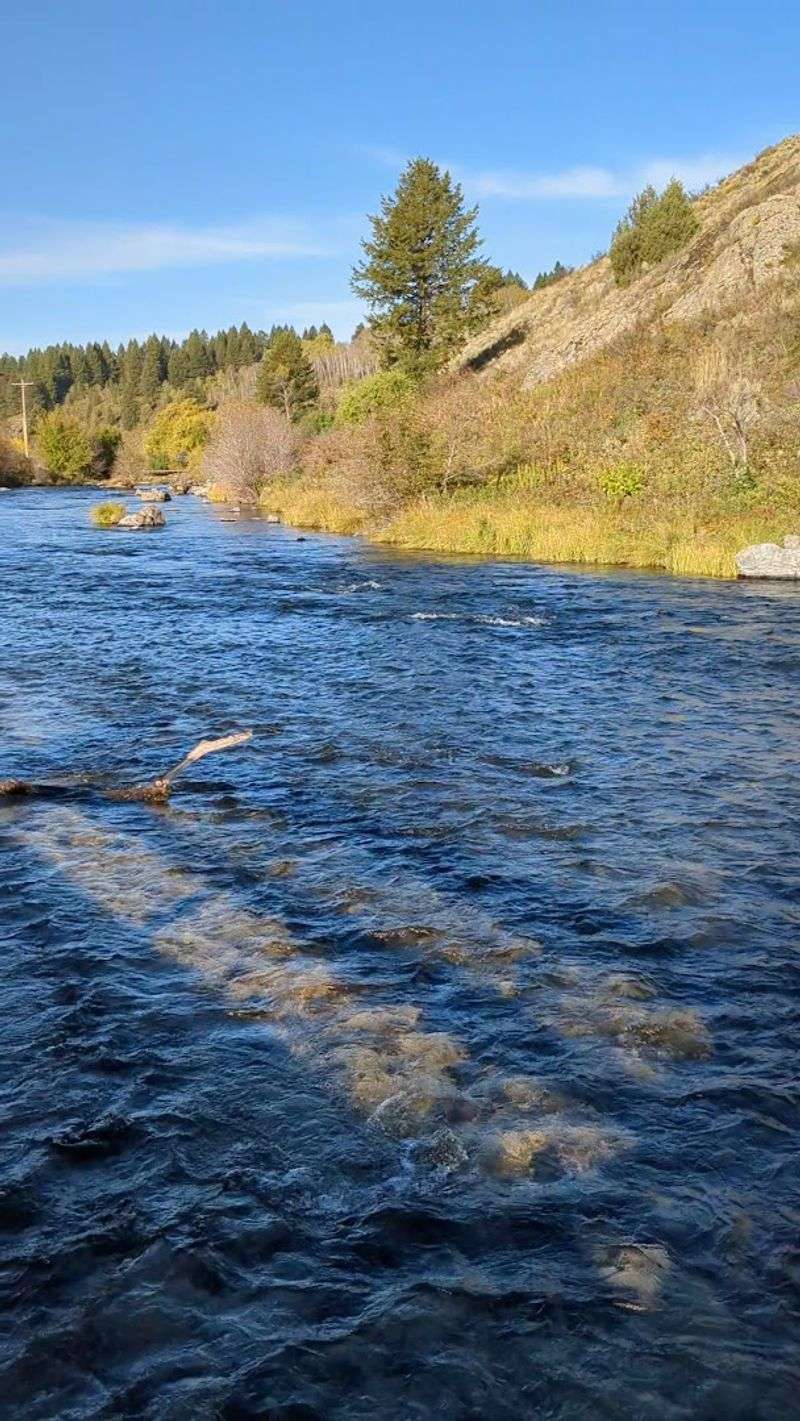
There is something almost meditative about the Warm River area, a soft-spoken stretch of the byway that sneaks up on you with its quiet beauty.
This is where the Warm River meets Robinson Creek and the Henry’s Fork of the Snake River, creating a confluence known as Three Rivers Canyon. The result is a lush, shaded pocket of Idaho that feels genuinely off the beaten path.
Ponderosa pines tower overhead, their cinnamon-scented bark warming in the afternoon sun while the water rushes below with a steady, calming sound. This area is a favorite among fishing enthusiasts, and for good reason.
The cold, clear waters here support a thriving ecosystem that makes every cast feel worthwhile. The Warm River Forest Service Campground nearby offers a simple, no-frills overnight option for those who want to wake up to birdsong instead of traffic.
One particularly sweet detail is the Fred and Berta Lewies Memorial Trout Feeding Site, a quirky little spot where you can watch trout dart and swirl in the crystal-clear current. It sounds simple, and it is, but there is something unexpectedly delightful about it.
The Warm River area is proof that not every highlight needs to be dramatic to leave a lasting impression on you.
Wildlife Theater On the Henry’s Fork
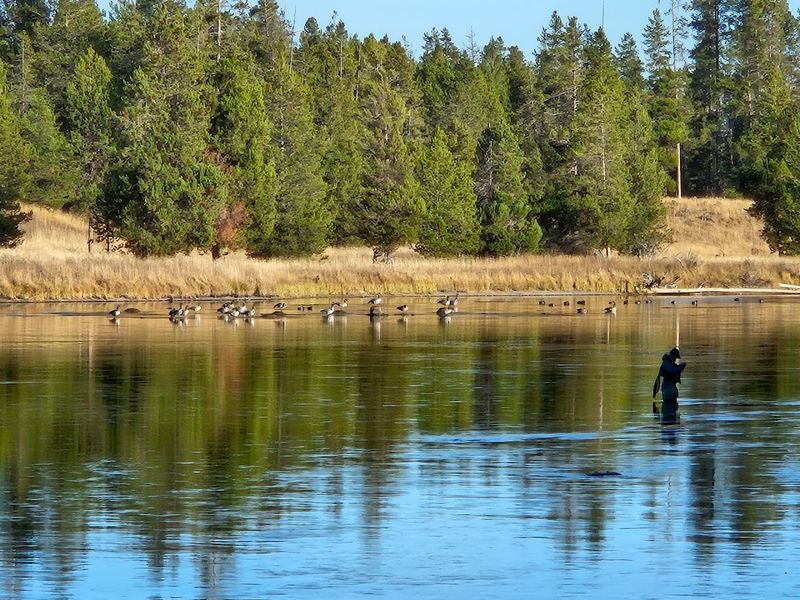
Calling Harriman State Park a side dish feels like calling a five-course meal a snack. Situated just a short drive from the main byway, this 11,700-acre wildlife refuge sits within the Greater Yellowstone Ecosystem and operates at a scale that is genuinely humbling.
The landscape is sweeping, the wildlife is abundant, and the whole place carries a sense of preserved wildness that is increasingly rare.
Originally known as the Railroad Ranch, the property served as a private retreat for prominent families connected to the Union Pacific Railroad before being gifted to the state of Idaho.
That history gives the park a fascinating dual identity, part wilderness sanctuary, part living heritage site. The original historic buildings still stand and are beautifully maintained throughout the grounds.
Wildlife sightings here are practically guaranteed.
Moose wade through the shallows, elk graze in open meadows, and the elegant trumpeter swan, once nearly gone from North America, has made a remarkable comeback along the Henry’s Fork. The park offers 22 miles of trails suitable for hiking, mountain biking, and horseback riding.
Fly fishing on these waters is legendary, drawing anglers from across the globe. Harriman is the kind of place that resets your sense of what wild truly looks like.
Trails, History, And Year-Round Adventure
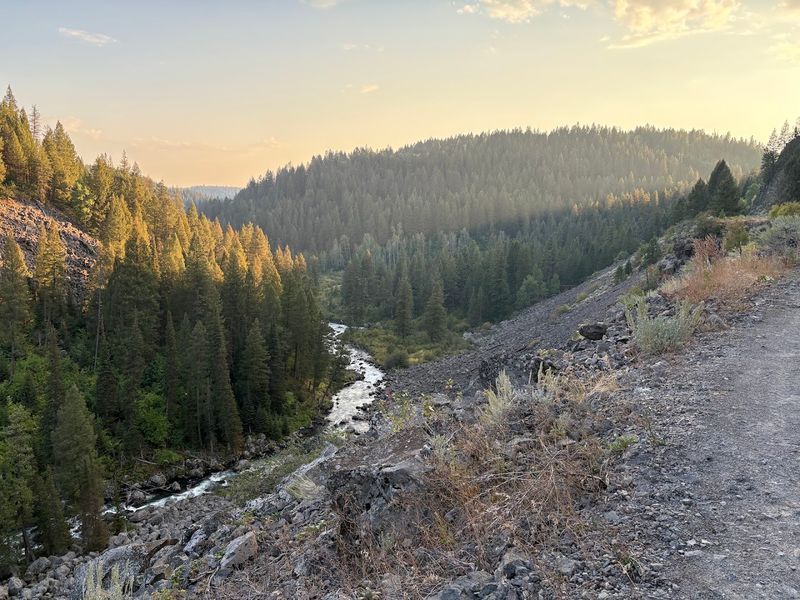
Bear Gulch sounds like the name of a rugged cowboy novel, and honestly, it lives up to that energy. Once home to an old ski area, this spot has reinvented itself into a year-round trailhead that caters to hikers, cyclists, snowmobilers, and cross-country skiers alike.
It is the kind of place that does not care what season you show up in because it always has something worth exploring.
The Canyon Rim Trail is the crown jewel here, a nine-mile roundtrip route that guides hikers through gorgeous forested terrain toward Upper Mesa Falls.
The trail rewards patience with sweeping canyon views and the distant sound of rushing water growing louder with every step.
Another notable path follows the historic Union Pacific Railroad grade, now a multi-use trail that stretches all the way to the Montana border and carries a quiet, nostalgic weight as you walk it.
Winter transforms Bear Gulch into something entirely different.
Highway 47 closes at the first significant snowfall, but that is exactly when snowmobilers take over. The area connects to an extensive network of over 500 miles of groomed snowmobile trails, making it a beloved winter destination.
Bear Gulch proves that great adventure does not have an off-season when the right landscape is involved.
The Sweetest Starting Point
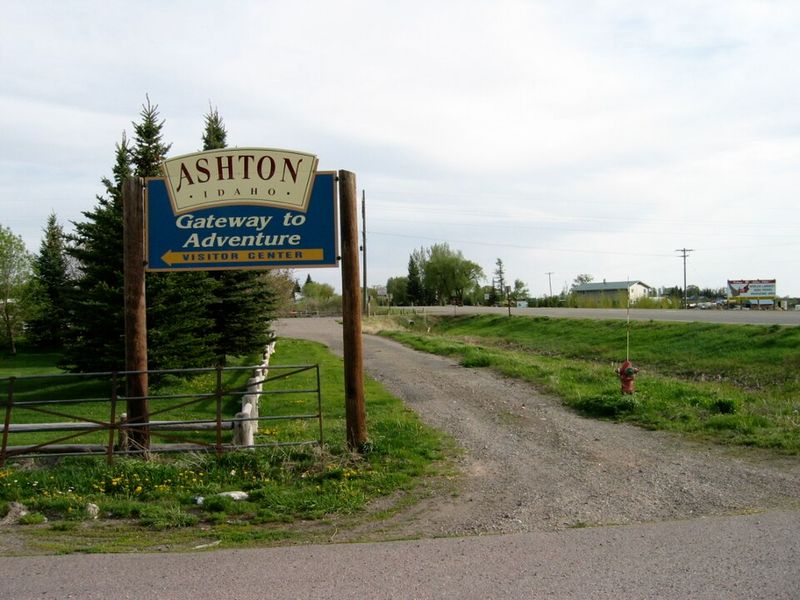
Every great road trip needs a proper launchpad, and Ashton, Idaho, is exactly that. Sitting at the southern gateway of the Mesa Falls Scenic Byway, this small but spirited town proudly holds the title of seed potato capital of the world.
That is not just a fun fact, it is a window into the agricultural soul of eastern Idaho, a region where the land is genuinely celebrated and respected.
Ashton is practical and charming in equal measure. You will find fuel, food, and lodging here before heading north into the wilds of the byway.
The moment you turn onto Route 47 from town, the farmlands open up in every direction, offering an immediate and satisfying sense of departure from the everyday. It is one of those rare places where the journey genuinely begins the second you arrive.
For a slice of classic Americana before you hit the road, the Frostop Drive-In on Main Street is a beloved local institution worth a stop. The Henry’s Fork Foundation also maintains a presence here, offering resources and insights into the broader ecosystem you are about to explore.
Ashton is the kind of town that feels like a warm handshake before a grand adventure. Are you ready to take that first turn onto the byway?