
This Illinois Cave Lets You Walk Underground Past Ancient Rock Formations And Cool Off All Summer
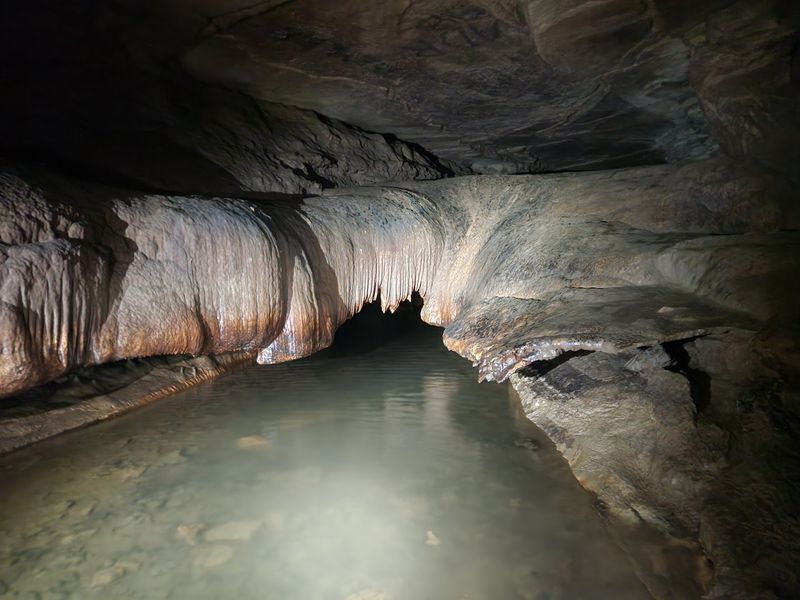
Tucked beneath the rolling farmland of Monroe County, Illinois Caverns State Natural Area offers something genuinely hard to find in the Midwest: a publicly accessible, state-managed natural cave where the temperature hovers around 58 degrees no matter how brutal the summer gets outside. About 35 miles south of St. Louis, this permit-based site draws curious travelers willing to trade a paved tourist attraction for something wilder and more rewarding.
The passages are ancient, the formations are extraordinary, and the experience demands real preparation.
Illinois Caverns Offers a Cool but Rugged Summer Adventure
Monroe County, Illinois, sits quietly in the southwestern corner of the state, and most people passing through on their way to St. Louis have no idea what lies beneath it. Illinois Caverns State Natural Area, located near the small city of Waterloo, occupies a roughly 118-acre state-owned tract and contains one of the most substantial publicly accessible cave systems in the state.
IDNR’s Illinois Caverns page notes that approximately six miles of passages have been mapped inside the cave, a figure that reflects the system’s full surveyed extent rather than any standard visitor route.
That distinction matters. Six miles is a geological and scientific measurement, not a suggested itinerary.
Visitors do not follow a single paved corridor from one end to the other; they explore a substantially wild, unimproved cave on a permit basis, moving through passages that vary in character and accessibility. Calling Illinois Caverns a “commercial tour” or an “easy family walk” would misrepresent it entirely.
What makes the site genuinely unusual is its combination of scale, formation diversity, and public access. Monroe County contains more than 100 recorded caves, but Illinois Caverns stands apart as the only cave in Illinois to have been commercially operated in the past, and it now functions as a state-managed natural area with permit-based self-guided exploration.
For travelers seeking an underground experience that goes beyond a scripted, railed walkway, that background matters. The cave rewards preparation and curiosity, and it offers a markedly different kind of summer outing than anything available above ground within a comparable drive of St. Louis.
Why the Cave Stays Near 58 Degrees
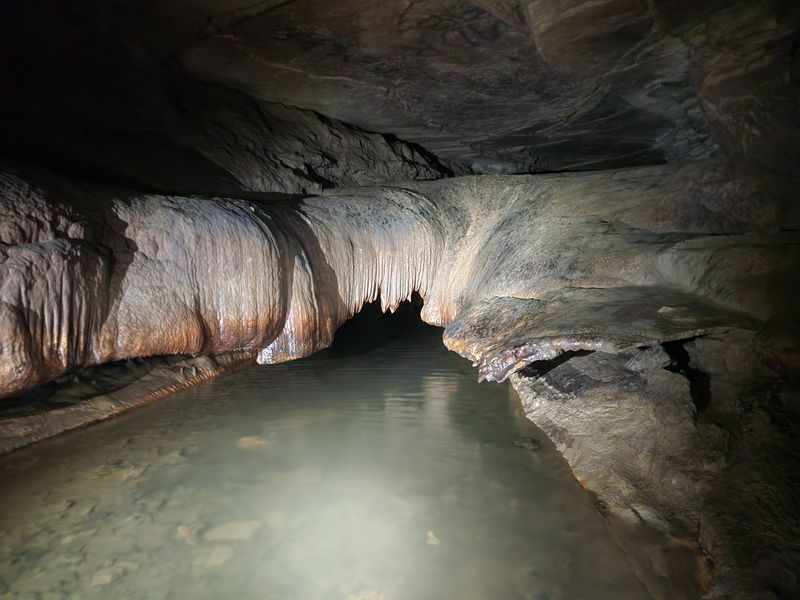
Step past the cave entrance on a humid August afternoon and the temperature shift is immediate. Outside, Monroe County can sit in the upper 80s or low 90s for weeks at a time.
Underground, the air holds at approximately 58 degrees Fahrenheit throughout the year, a figure IDNR uses to describe the cave’s relatively constant climate. That consistency is not a coincidence; it reflects the way deep rock insulates underground spaces from seasonal swings at the surface.
Bedrock at depth responds to average annual temperatures rather than daily or monthly highs and lows. The surrounding limestone acts as a thermal buffer, keeping the cave cool in summer and relatively mild in winter.
The result is an underground environment that feels sharply cooler than the surrounding landscape during a summer visit, which is a real and tangible appeal for anyone who has spent time outdoors in southern Illinois in July or August.
That said, 58 degrees is not warm, and the word “cool” carries different meanings depending on context. Visitors who arrive sweaty from a hot parking lot will feel immediate relief, but the cave’s temperature becomes a different matter once they have been underground for a while, especially if their clothing is wet from mud or water contact.
Exertion can offset the chill temporarily, but rest stops in damp passages can leave people feeling cold quickly. The cave’s climate is genuinely refreshing during a summer visit, not a guaranteed comfort throughout the entire outing.
Packing a light layer is a practical step, not an overreaction, even on the hottest summer day.
Ancient Limestone and Younger Cave Passages
The rock surrounding Illinois Caverns is genuinely ancient. The Illinois State Museum’s karst cave exhibit explains that Mississippian limestone formed roughly 340 million years ago, when Illinois lay beneath a warm, shallow sea teeming with marine life.
Carbonate-rich sediments accumulated on the seafloor over millions of years, eventually compressing into the thick limestone beds that now underlie much of southwestern Illinois.
The cave passages themselves are considerably younger. A peer-reviewed study by Illinois State Geological Survey and University of Illinois-affiliated researchers, published in Carbonates and Evaporites, estimated the onset of cave development at Illinois Caverns and nearby Fogelpole Cave at approximately 120,000 to 164,000 years before present.
That estimate draws on passage dimensions, erosion rates, sediment analysis, and dated speleothems rather than a single direct measurement. The bedrock, in other words, is hundreds of millions of years old; the hollow spaces carved through it are far younger.
The process that created those spaces is ongoing in a geologic sense. Slightly acidic groundwater, carrying dissolved carbon dioxide, seeps through cracks and bedding planes in the limestone, slowly dissolving the rock along preferred pathways and widening passages over thousands of years.
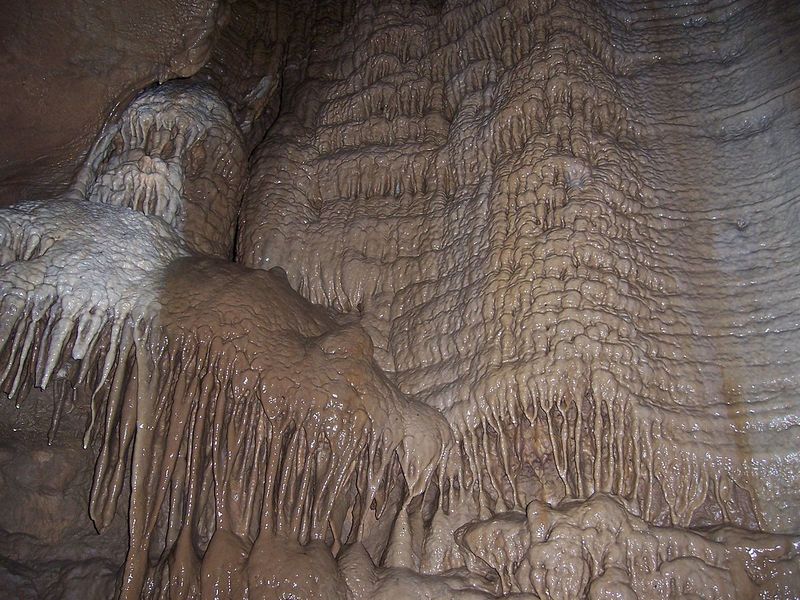
Where that same mineral-laden water drips and evaporates inside the cave, it deposits calcium carbonate in the opposite direction, building formations rather than removing rock.
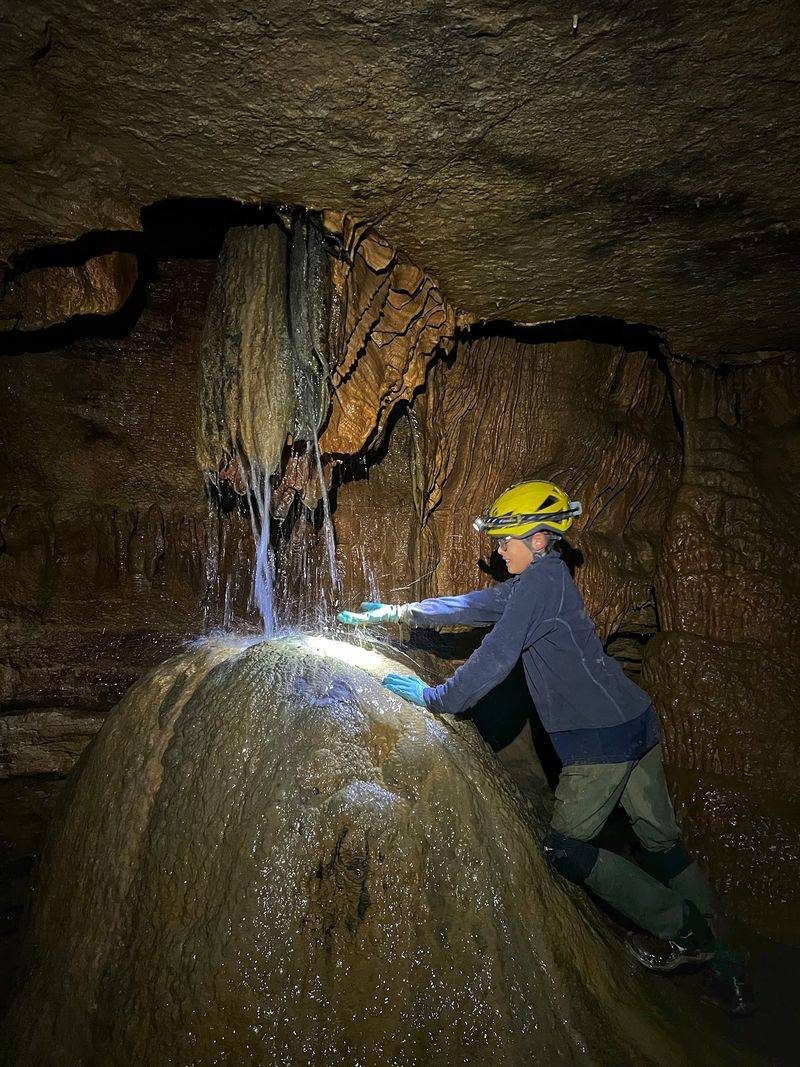
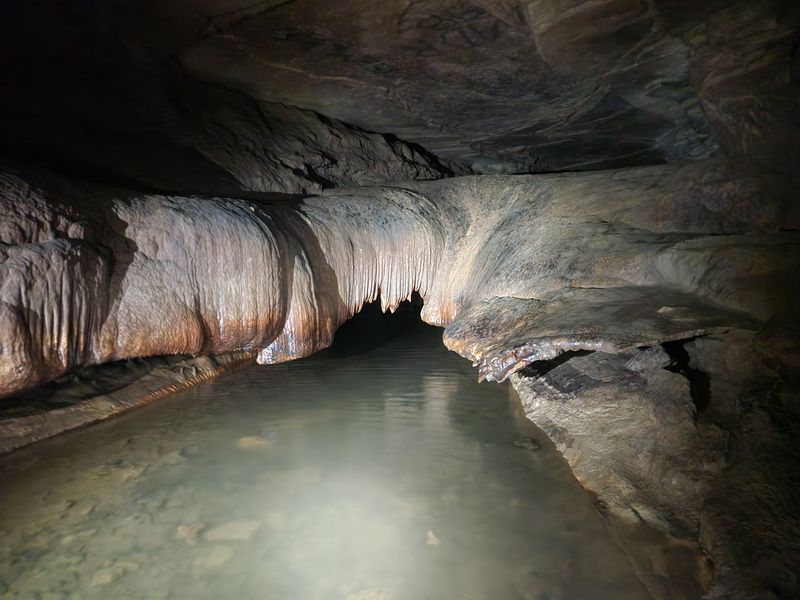
Illinois Caverns contains stalactites hanging from the ceiling, stalagmites rising from the floor, flowstone draped across surfaces, rimstone dams ringing shallow pools, and slender soda straws, which are hollow tubes of calcium carbonate that form drop by drop. Some of these formations are still growing, continuing to accumulate mineral deposits wherever water moves through the cave today.
Their individual ages vary and are not necessarily tied to the age of the limestone that surrounds them.
Expect a Wild Cave, Not a Leisurely Walk
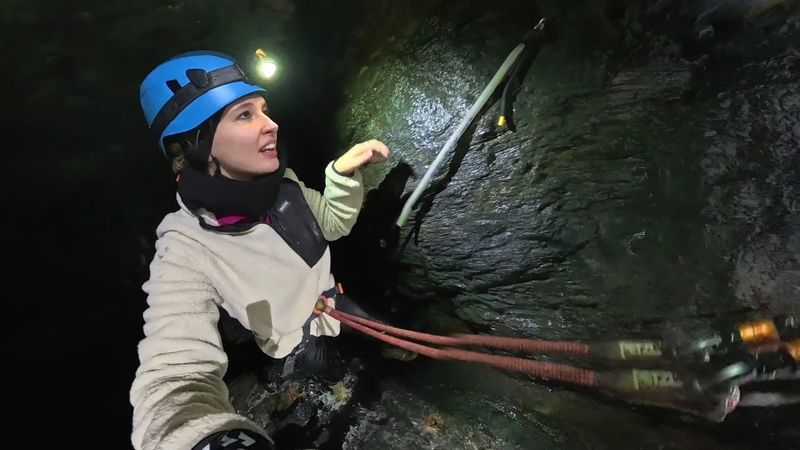
Photographs of cave formations can make underground exploration look serene and effortless. The reality at Illinois Caverns is more physical.
IDNR’s Illinois Caverns visitor spotlight describes the site as an unimproved cave where visitors should expect wet and muddy conditions, and the cave exploration permit calls it a “substantially wild, unimproved cave system.” Those phrases are not boilerplate; they describe an environment without paved paths, handrails, installed lighting, or guided narration.
Mud is a constant companion in many sections. Water seeps through the ceiling, pools on the floor, and coats surfaces that look solid.
Passages vary in height and width, and some areas require visitors to crouch, duck, or maneuver carefully around formations and irregular rock. There is no single standard route through the cave, no posted difficulty rating, and no accessibility designation that applies across all passages.
What the cave does offer, for those who arrive ready for it, is an encounter with a genuinely unaltered underground landscape. Formations appear where geology placed them rather than where a lighting designer installed a spotlight.
The silence, the cool air, and the scale of the passages create an atmosphere that no commercial cavern can fully replicate. Visitors who treat the experience as a rugged outdoor activity rather than a sightseeing stroll tend to come away with a much richer impression of what the cave actually contains.
Arriving physically prepared and mentally ready for variable conditions is the single most important step toward making the visit worthwhile.
Arrange the Permit, Group, and Required Gear
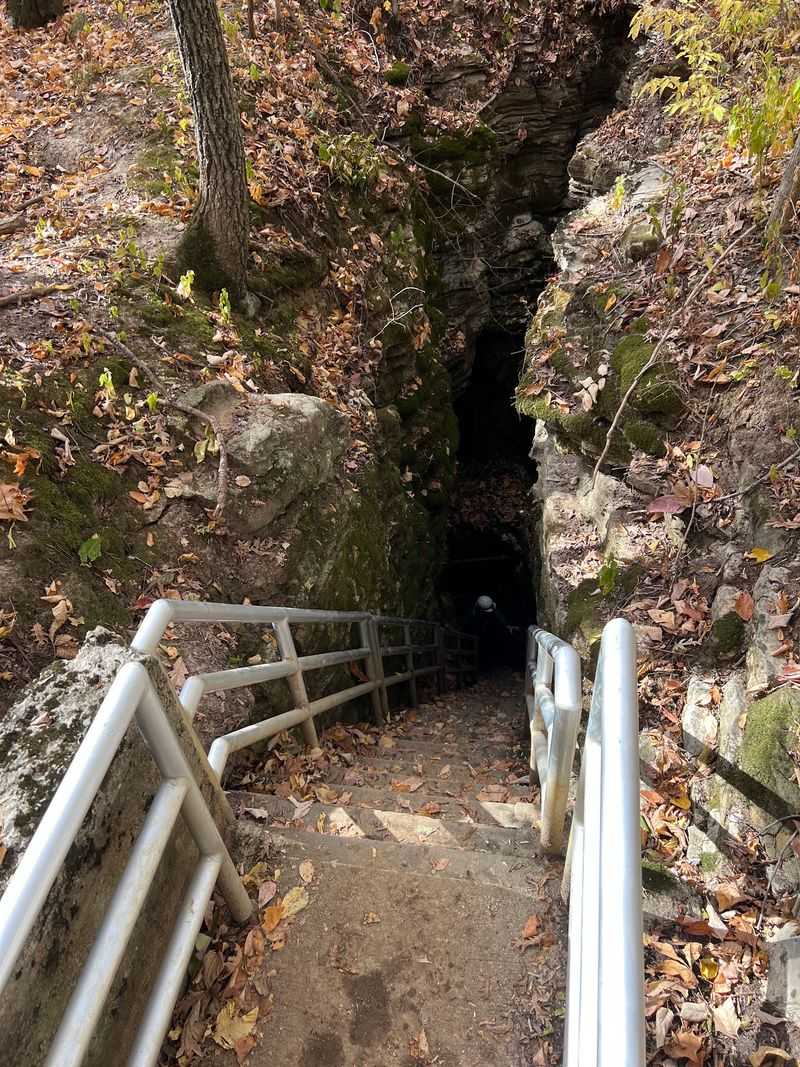
Getting into Illinois Caverns requires more advance planning than a typical state park visit. A permit is mandatory, and visitors must enter the cave in a group of at least four people.
Solo exploration is not permitted under any circumstances. The IDNR cave exploration permit outlines these requirements clearly, and groups of 25 or more must preregister before arriving.
For anyone organizing a youth outing, the permit specifies a ratio of one adult leader for every five minors.
The group minimum exists for good reason. In an unimproved cave with variable conditions, having multiple people present creates a basic safety net.
If someone is injured, becomes disoriented, or loses light, other group members can provide assistance or go for help. No ranger or guide accompanies visitors through the passages, so the group itself is the primary support system underground.
Equipment requirements are specific and non-negotiable. IDNR’s visitor guidance requires each person to carry three separate battery-powered light sources.
That number accounts for the real possibility of a light failing underground where natural light is completely absent. Hard hats or plastic protective headgear are required to guard against contact with low ceilings and protruding rock.
Footwear must have treaded soles and must fully enclose the foot, meaning sandals and open-toed shoes are out entirely.
Protective clothing should cover the body adequately for wet and muddy conditions. Old clothes that can be thoroughly washed afterward are the practical choice.
Visitors who arrive in good hiking clothes they are unwilling to soil will find themselves hesitating at exactly the moments when the cave is most interesting. Bringing a change of clothes to leave in the car is a small logistical step that makes a noticeable difference at the end of the visit.
Check Access, Hours, and Safety Conditions
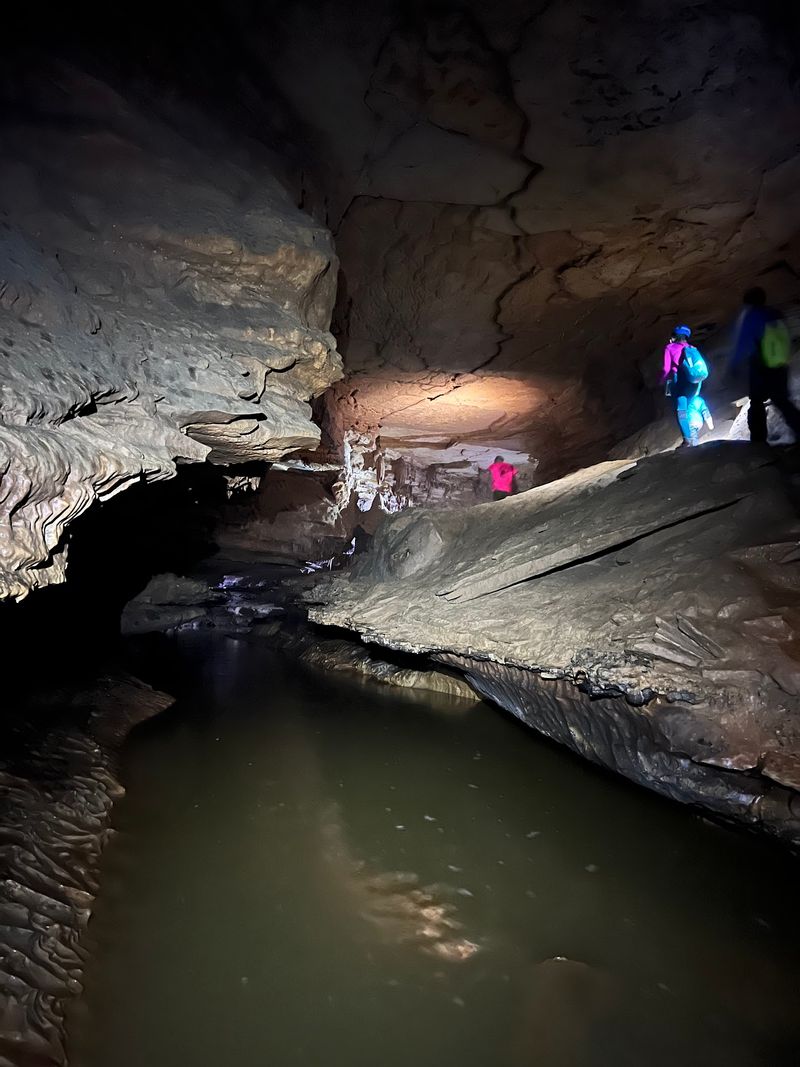
Planning a trip to Illinois Caverns means treating access information as something to verify the day before departure, not just once when the idea first comes up. The cave generally operates during a seasonal window running from April through October, but hours and availability within that window can shift.
IDNR’s current visitor guidance posts operating hours as Thursday through Sunday, 9 a.m. to 4 p.m., during the active season, with a firm rule that no visitors may remain inside the cave after 3 p.m. Arriving at 3:30 and expecting to explore is not a workable plan.
Beyond the posted schedule, IDNR retains the authority to close Illinois Caverns whenever conditions inside the cave are deemed unsafe. Heavy rain, flooding, or other environmental factors can make passages impassable or dangerous on short notice.
IDNR’s current closures page is updated regularly and should be consulted before any trip. A visit that looked fine a week out can change quickly, and a long drive from St. Louis to a closed gate is a frustrating and avoidable outcome.
Water inside the cave deserves specific attention. The cave permit warns that cave water contains high levels of bacterial coliform and should not be consumed under any circumstances.
Visitors should also avoid exposing open wounds or cuts to cave water. The cave is not a recreational swimming destination; standing water in passages is a hazard to navigate around, not a feature to wade through for fun.
Carrying sufficient drinking water from outside the cave is a basic preparation step that eliminates any temptation to rely on what is available underground.
Protect the Formations and Cave Life
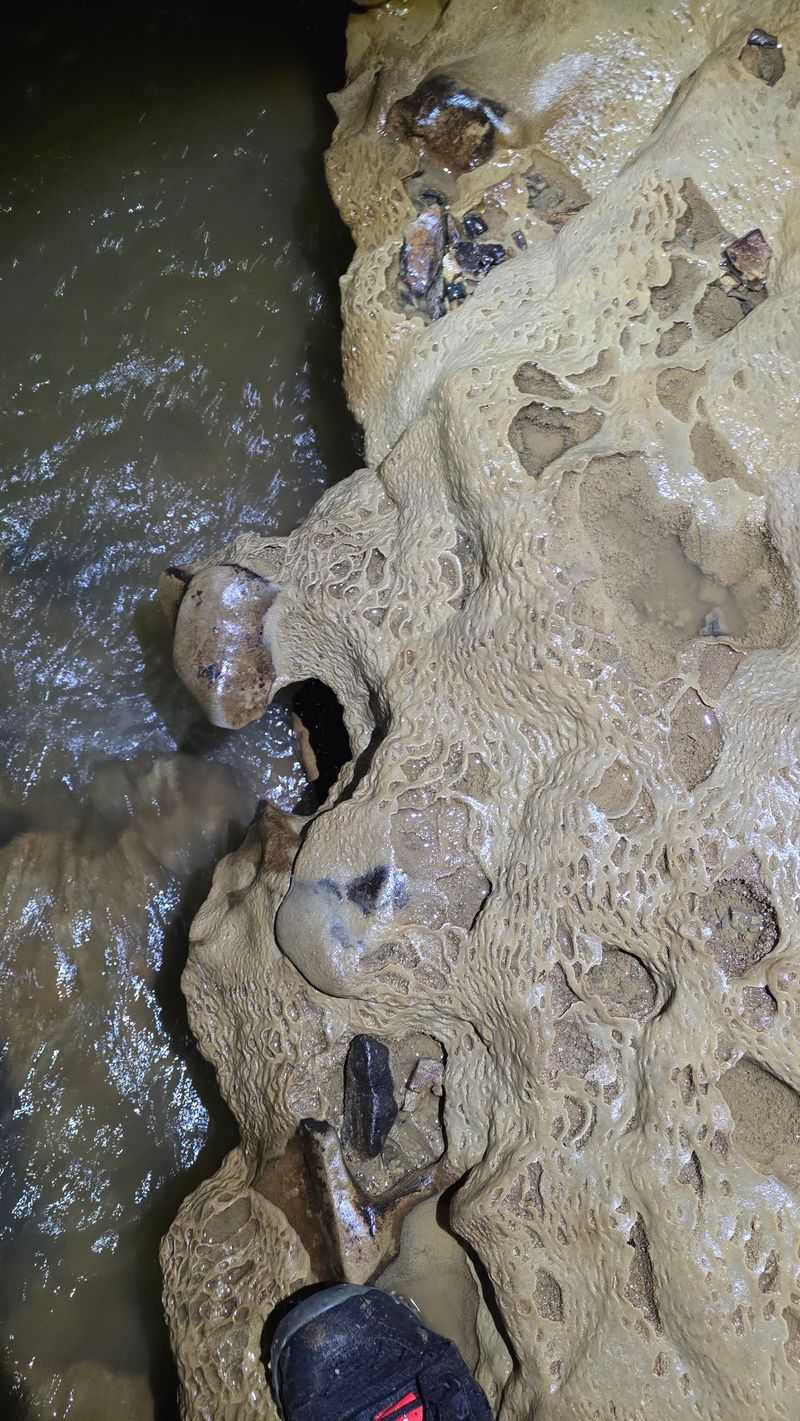
Touching a stalactite feels like a minor act, but the oils from human skin can disrupt the thin film of mineral-laden water that allows formations to continue growing. Illinois State Geological Survey cave conservation guidance is direct on this point: do not touch formations, do not remove natural material, do not smoke inside the cave, and do not disturb cave inhabitants.
These are not suggestions based on etiquette; they reflect the fragility of a system that took thousands of years to develop and can be damaged in seconds.
The Illinois Cave Protection Act backs that guidance with legal force. Illinois law prohibits damaging, disturbing, or removing cave resources and interfering with cave life without written permission.
Violations are not minor infractions.
IDNR describes Illinois Caverns as home to cave-adapted invertebrates, cave salamanders, and several bat species. Bats in particular face a serious ongoing threat from white-nose syndrome, a fungal disease that has killed millions of bats across North America.
The fungus can travel on clothing, footwear, and equipment that has been used in an infected cave, which means that gear worn at Illinois Caverns should be thoroughly cleaned before it is taken into any other cave. IDNR’s bat resources explain the scope of white-nose syndrome in Illinois and underscore why decontaminating gear between cave visits is a concrete conservation action, not just a precaution.
Respecting the cave’s ecology is part of what makes future visits possible for everyone who comes after.
Choose Preparation Over Convenience
Illinois Caverns rewards a specific kind of visitor: someone willing to do the homework, gather the gear, form a group of at least four, confirm current access conditions, and accept that the cave will be muddy, cool, and entirely on its own terms. For that visitor, the experience of moving through passages carved in ancient limestone, past growing mineral formations, in air that holds steady near 58 degrees while the rest of Illinois bakes, is genuinely memorable.
Before making the drive, confirm the current season, hours, and permit process through IDNR’s Illinois Caverns page, review the permit requirements, and check IDNR’s current closures page the day before departure. Arrive with three lights per person, proper headgear, and footwear you are comfortable getting filthy.
The cave does not bend to convenience, and that is precisely what makes it worth the trip.