
This Illinois Covered Bridge Still Lets You Walk Its Wooden Planks Over A Quiet Creek
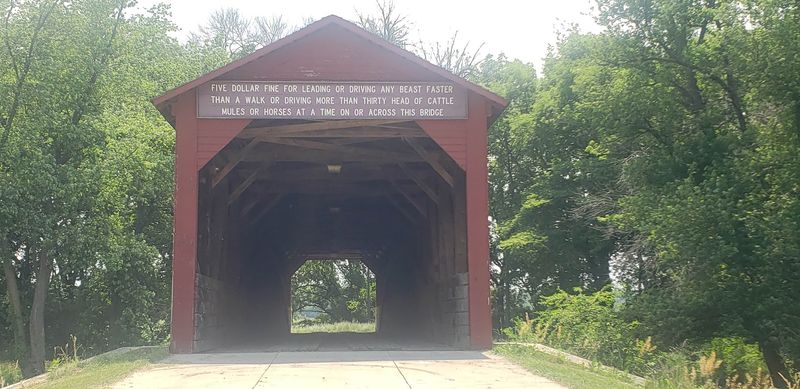
Tucked away in Henderson County, a wooden covered bridge built in 1866 still stands over Henderson Creek, and recent tourism reporting says you can walk across it. The Oquawka Wagon Bridge has outlasted the wagon traffic it was built for and now offers visitors a rare chance to step inside a piece of living Illinois history.
Whether you have half an hour to spare on a road trip or you are hunting for a genuinely different kind of afternoon outing, this bridge is worth knowing about.
The likely destination is Oquawka Wagon Bridge
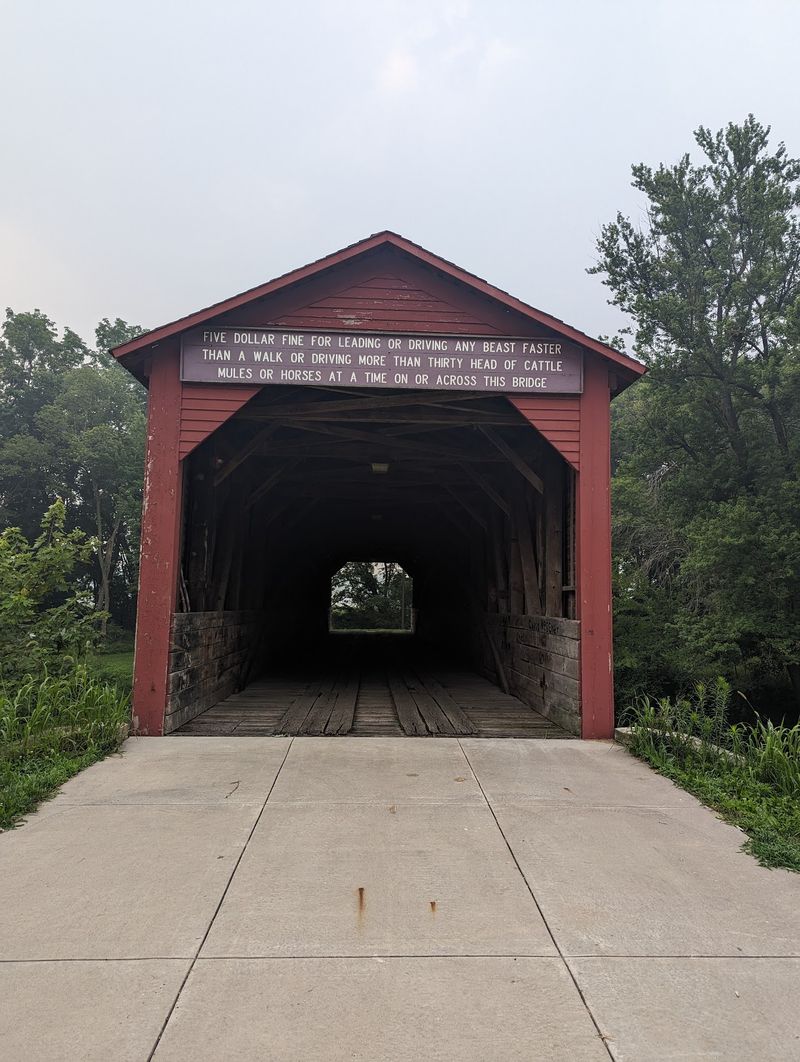
The bridge behind the descriptive premise is most likely the Oquawka Wagon Bridge, a historic wooden covered bridge that spans Henderson Creek in Henderson County, Illinois. You may also see it labeled as the Allaman Bridge or the Henderson County Covered Bridge, depending on which map, article, or road-trip guide you are reading.
Knowing all three names matters because different sources use different labels, and searching by only one of them can leave you empty-handed.
According to the National Park Service record for the Oquawka Wagon Bridge, the structure dates to 1866 and carries a National Register of Historic Places listing, confirming it as a genuine historic landmark rather than a modern decorative replica. That distinction matters when you are deciding whether a stop is worth the detour.
Recent tourism and preservation reporting, including coverage from Illinois Country Living, describes the bridge as closed to vehicle traffic but available for pedestrians, with a nearby parking and picnic area. That is the practical core of the walkable-bridge premise.
However, those descriptions come from tourism and preservation sources rather than a current bridge-specific official status page, so treat the access as reported and subject to change rather than guaranteed.
The Oquawka Wagon Bridge is also not the only Illinois covered bridge where pedestrians can cross. Illinois Times specifically identifies the Sugar Creek Covered Bridge near Glenarm as another pedestrian-accessible example with parking and picnic facilities.
Mentioning that context is not a reason to skip Oquawka. It simply means you should plan your visit around confirmed, current information rather than assuming exclusivity.
Where to find the bridge south of Oquawka
Finding the Oquawka Wagon Bridge starts with the right search terms. The National Park Service places it approximately 2.5 miles south of Oquawka in Henderson County, spanning Henderson Creek.
That geography is your most reliable anchor point, and the NPS listing gives the bridge its official coordinates and identification number (75000660) if you need to cross-reference a map.
Some tourism sources associate the bridge with the nearby community of Gladstone, which sits in the same general area. That label is not wrong, but it can create confusion if you are navigating by a map that uses the Oquawka reference point.
Using the bridge’s full proper name, Oquawka Wagon Bridge, or its alternates, Allaman Bridge or Henderson County Covered Bridge, in your search will return more consistent results than searching by town name alone.
From a visitor planning standpoint, think of this as a short roadside stop rather than a trailhead. Illinois Country Living’s coverage of the bridge describes it as a site with nearby parking, which means you are not hiking in from a distant lot.
The drive through Henderson County’s agricultural landscape is itself a pleasant part of the experience, especially in fall when the tree canopy along the creek corridor changes color. Before you set your GPS, verify current road conditions because rural Henderson County roads can be affected by seasonal weather, and some access roads near creek crossings may be unpaved or subject to closures after heavy rain.
What the 1866 structure adds to the visit
A covered bridge from 1866 is not just a scenic backdrop. It is a working artifact from a time when the ability to cross a creek without washing out a wagon wheel was genuinely consequential for rural Illinois communities.
The Oquawka Wagon Bridge was built by Jacob Allaman and Frisby Sloan and is associated with transportation history, as the National Park Service record documents. That construction attribution is meaningful because it ties the bridge to specific craftsmen rather than leaving it as an anonymous relic.
The National Register of Historic Places listing confirms the bridge’s significance as a historic structure. It does not, however, mean the bridge is untouched or entirely original since 1866.
Historic covered bridges routinely undergo repairs and restorations over their lifetimes, and the sources reviewed establish the bridge’s historic status without supporting an unchanged-since-1866 claim. What the listing does tell you is that the structure has been evaluated and found to retain enough historic character to merit federal recognition.
Calling the Oquawka Wagon Bridge rare is accurate, but the word needs a little context. IDOT’s annual report material has referenced five state-owned covered bridges in Illinois, and other historic examples exist as well.
The Oquawka bridge is not the oldest of that group either. IDOT’s 2025 reopening notice for Little Mary’s River Covered Bridge identifies that structure, built in 1854, as the oldest of Illinois’s remaining covered bridges.
Oquawka’s 1866 date still makes it a genuinely old surviving example, and walking through it puts you inside a structure that predates the automobile by several decades.
The pedestrian crossing is the main experience
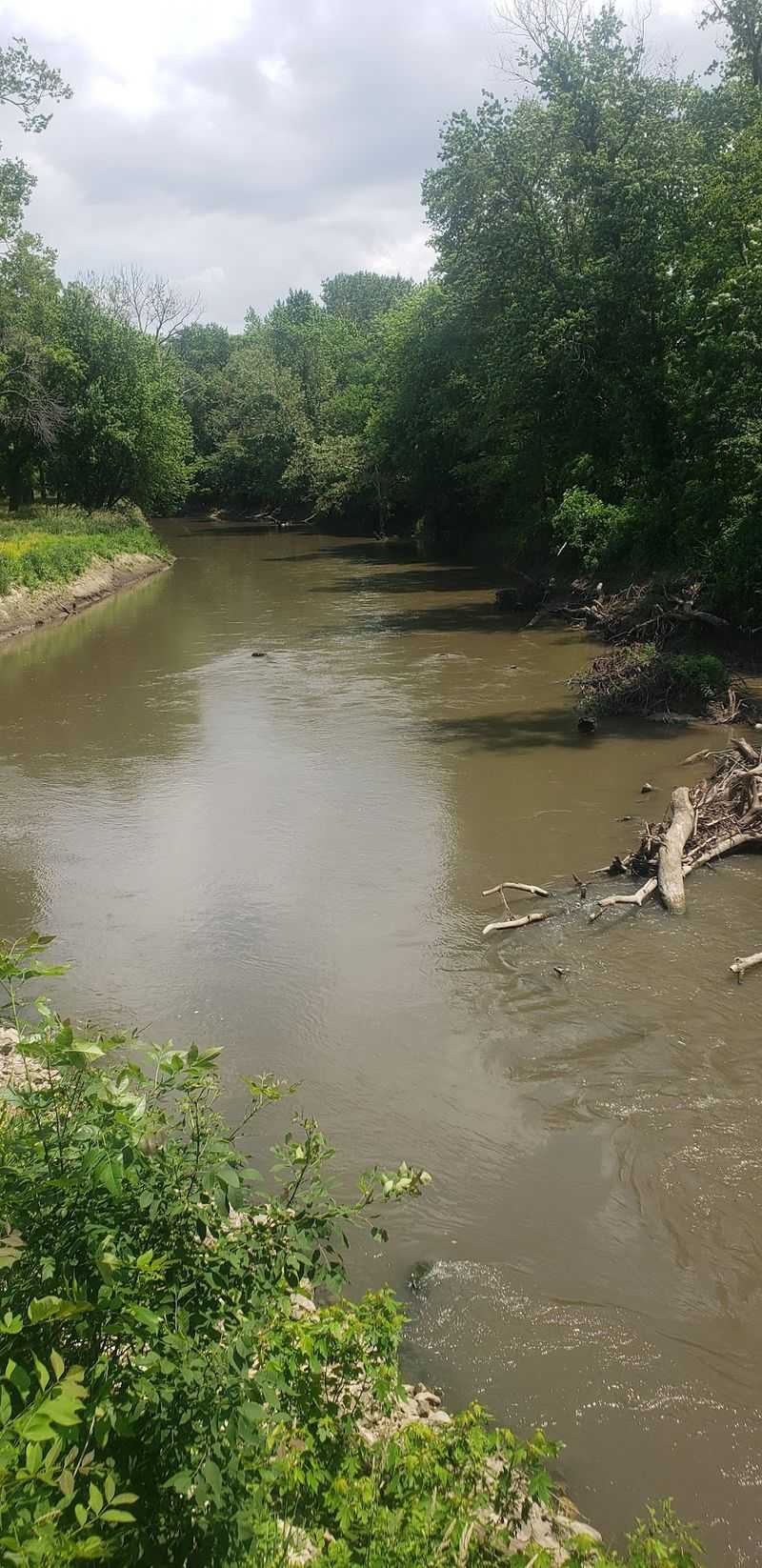
Leaving the car and stepping into the bridge is the moment that makes the stop worthwhile. Once you are inside the covered span, the wooden structure frames the view of Henderson Creek below and the tree-lined banks on either side.
That framing effect, open ends of the bridge acting like windows onto the landscape, is part of what gives covered bridges their particular atmosphere and why photographers and road-trippers seek them out.
Illinois Country Living’s reporting on the bridge describes it as a pedestrian crossing over Henderson Creek, with the wooden covered structure as the central feature of the visit. The surface underfoot is part of the historic wooden bridge itself, though a current site-management source has not specifically confirmed the exact flooring material as of this writing, so describing what you will find beneath your feet in detail goes beyond what the available reporting verifies.
Whether the crossing feels peaceful or lively on a given day depends on factors no article can predict: how many other visitors are there, what the weather is doing, and what season you choose. Illinois Times describes the bridge’s setting as appealing for a fall visit, when the surrounding landscape adds color to the scene.
Summer visits bring shade from the covered structure itself, which can be a genuine relief on a warm afternoon. The crossing is brief, measured in steps rather than minutes, but the experience of standing inside a National Register-listed covered bridge and looking out at the creek below is the kind of moment that tends to stay with people longer than the walk itself.
Plan the stop around the nearby picnic area
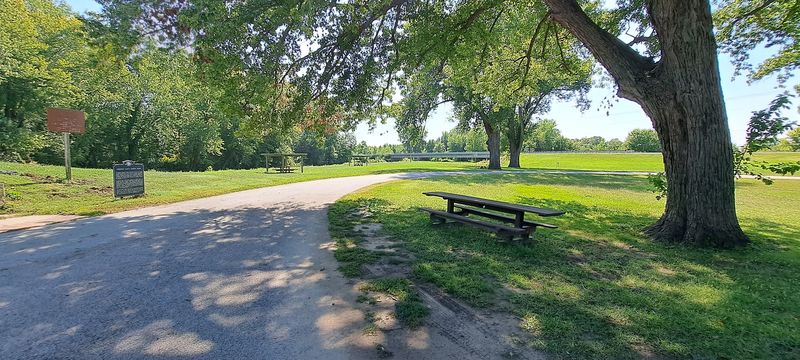
The crossing itself takes only a minute or two, but the stop does not have to end there. Illinois Country Living and Illinois Times both describe a nearby parking and picnic area as part of the site’s amenities.
That picnic area is what turns a 90-second crossing into a half-hour stop, or longer if you bring lunch and want to sit with the scenery for a while.
Calling the stop a half-hour detour is an editorial estimate, not an official timetable. The actual length of your visit depends on how long you spend photographing the bridge exterior and interior, whether you use the picnic area, and how much time you take just standing and looking at the creek from the bridge.
Some visitors will be back in the car in fifteen minutes. Others will linger considerably longer.
One boundary worth drawing clearly: the evidence from available sources supports a nearby parking and picnic area, not unrestricted access to the creek bank or permission to picnic directly beneath the bridge. Whether the picnic area is positioned with a view of the water or set back from the creek is something the available reporting does not pin down precisely.
Avoid treating the site as a swimming hole, wading spot, or fishing destination. No authoritative source located in the research behind this article confirms those activities are permitted at the Oquawka bridge site, and encouraging them without that confirmation would be misleading to visitors and potentially unsafe.
Check conditions before you make the crossing
Before driving out to Henderson County, take a few minutes to check current road and site conditions. Rural roads in this part of Illinois can be affected by seasonal weather, and roads near creek crossings are sometimes unpaved or subject to temporary closures after heavy rain or flooding.
Illinois DNR guidance for Delabar State Park, which is located in the same general area of Henderson County, notes that weather and natural conditions can affect road and facility access and recommends checking ahead before visiting. While Delabar State Park is not the bridge’s managing authority, the general principle applies to the bridge site as well.
The pedestrian access described in tourism and preservation reporting should be treated as subject to change. The National Park Service’s historic record documents the bridge’s significance but does not function as a current access or hours page.
No bridge-specific official status page was located in the research for this article, so confirmed hours and current-day access should be verified with the responsible local or county authority before you make the trip.
Once you are at the site, follow closure signs without exception. Use the designated parking and approach the bridge by the established path.
Stay on the bridge surface and the established ground-level areas around it. Do not climb on the historic timber framing, walk on the roof structure, or lean over railings.
Supervise children closely, especially near the creek edge. Do not enter Henderson Creek, whether for wading, swimming, or any other purpose, as no source reviewed here confirms those activities are authorized at this site.
Preservation-minded coverage of the bridge frames it as a site to appreciate on foot, not to interact with physically beyond the designated crossing. If the weather is severe or the creek is running high, skip the visit and plan for another day.
A brief bridge visit, not a guaranteed retreat
The Oquawka Wagon Bridge offers something specific and genuinely uncommon: a chance to walk through a surviving 1866 covered bridge, look out at Henderson Creek from inside a National Register-listed structure, and spend a few quiet minutes somewhere that most Illinois day-trippers have never been. That is a reasonable reason to go.
It is not, however, a promise of solitude, a guaranteed peaceful retreat, or a confirmed water-recreation destination.
Illinois Country Living and other sources describe the Oquawka bridge as one of Illinois’s surviving historic covered bridges, and the NPS record gives it the documentation to back that up. The bridge is not Illinois’s only walkable covered bridge, and current access conditions should be confirmed before you set out.
Check with local or county authorities, watch for any posted closures, and plan accordingly. A short detour to a 159-year-old covered bridge is worth the preparation it takes to do it right.