
This Illinois Fall Drive Winds Past Rolling Bluffs, Apple Orchards, And Little River Towns

Northwestern Illinois quietly pulls off one of the Midwest’s best autumn surprises, threading together historic small towns, pick-your-own apple orchards, and some of the most dramatic river bluffs in the state. A one-day route from Galena to Savanna follows U.S. 20 and Illinois Route 84 through countryside that shifts from rolling inland farmland to steep Mississippi River cliffs by late afternoon.
Apple harvest can open as early as late August, while fall foliage usually peaks closer to mid-October, so the timing you choose shapes the whole experience. Plan ahead, and this northern corridor delivers a genuinely memorable autumn day.
Follow a northern Great River Road corridor from Galena to Savanna
A strong starting point for understanding this drive is knowing what it actually is: a proposed one-way day-trip sequence along a focused northern segment of a much longer network. Illinois’ Great River Road stretches for more than 550 miles through the state, connecting communities from the Wisconsin border all the way south.
The Galena-to-Savanna corridor covers only a portion of that network, but it packs in a surprising variety of scenery and stops for a single day.
The sequence moves roughly southwest from Galena, picking up U.S. 20 toward Elizabeth, with a pause at Long Hollow Scenic Overlook along the way. From Elizabeth, the route continues to Hanover before turning south on Illinois Route 84 toward Mississippi Palisades State Park near Savanna.
Each leg has a distinct character, and understanding that progression helps set realistic expectations before you leave home.
The landscape changes noticeably as the day unfolds. Galena sits in gently hilly Jo Daviess County, surrounded by countryside that feels more like inland rolling farmland than a riverside setting.
Elizabeth and Hanover bring orchards and small-town stops into the picture. The bluff scenery that many people associate with the Great River Road arrives later, near Savanna, where the terrain rises sharply above the Mississippi.
Treating this as a corridor rather than a loop also matters: the drive runs one way, so plan your return trip separately or account for backtracking time.
Because the Great River Road is a network of marked roads rather than one uninterrupted riverside lane, the specific highways here are principally U.S. 20 and Illinois Route 84. Illinois tourism materials treat the Galena-area stops as one chapter of a much longer journey, which is exactly how a day-tripper should approach it too.
Begin in Galena’s historic downtown and countryside
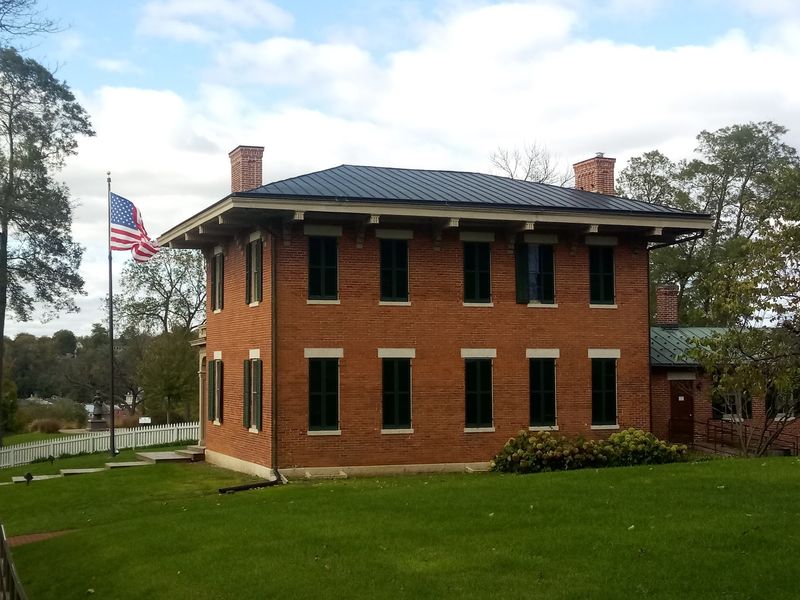
Galena earns its reputation as a starting point for good reason. The town’s compact historic downtown sits in a narrow valley carved by the Galena River, and its 19th-century brick storefronts look much as they did when the town was one of the most prosperous places in the Midwest.
Arriving early gives you time to grab coffee or breakfast at one of the local cafes before the road opens up.
As a major anchor on Illinois’ Great River Road, Galena offers more than just a pretty streetscape. The surrounding Jo Daviess County countryside rolls with gentle ridges and wooded hollows that set the visual tone for the first part of the drive.
Galena itself sits several miles inland from the Mississippi, so the landscape here reads as scenic hilly countryside rather than dramatic river bluff country.
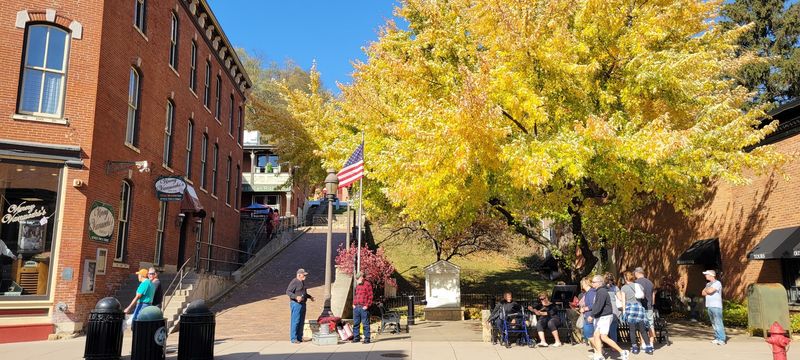
Heading out of town on U.S. 20 eastward, then looping back west toward Elizabeth, the road passes through farmland and wooded stretches that feel genuinely rural. Autumn color begins showing in the tree lines and fence rows well before the route reaches the Mississippi bluffs.
Use the Galena departure as a chance to top off the gas tank, check your phone for any road updates, and settle into a pace that leaves room for stops rather than rushing toward the next destination.
Long Hollow overlooks rolling Jo Daviess County
Roughly two miles west of Elizabeth on U.S. Highway 20, a signed turnoff leads to Long Hollow Scenic Overlook at 2905 U.S.
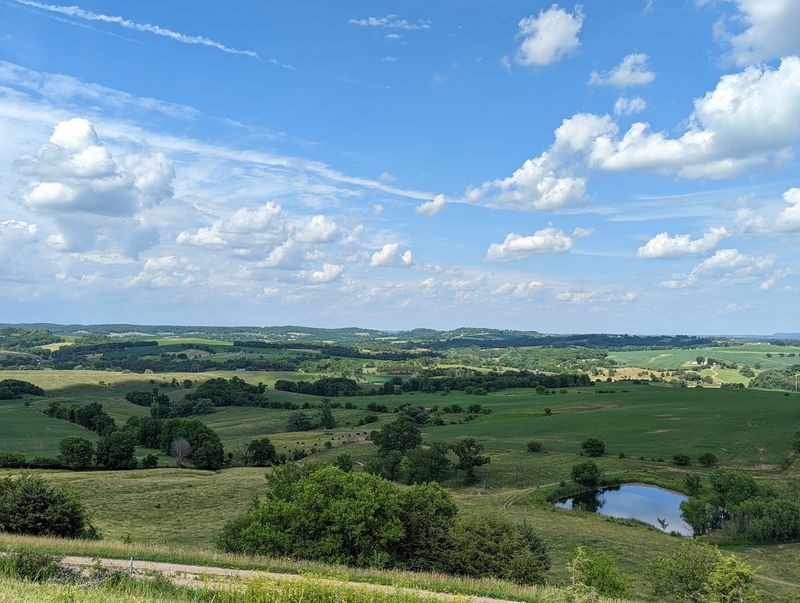
Highway 20. The view from the overlook sweeps across the rolling countryside of Jo Daviess County, revealing a patchwork of farm fields, wooded ridges, and open pasture that stretches toward the horizon.
The site is listed as open year-round and includes picnic tables, shelters, restrooms, and wheelchair-accessible facilities, making it a practical rest stop as well as a scenic one.
A few things worth clarifying about what Long Hollow actually shows you: the view is inland rolling countryside, not a Mississippi River panorama and not a verified bluff landscape in the geologic sense. That distinction matters because the dramatic river-bluff scenery this drive eventually reaches comes much later, near Savanna.
Long Hollow is genuinely beautiful, but its appeal lies in the wide, open sweep of the county’s gentle ridges rather than in any riverside drama.
Use the designated parking area and overlook platform rather than pulling off on the road shoulder. The site is designed for exactly the kind of pause this drive calls for, and the picnic facilities make it a logical spot to eat a packed breakfast or just stretch your legs before continuing toward Elizabeth.
In autumn, the tree lines bordering the farm fields add warm color to the view, and the cooler morning air tends to keep the distant ridgelines crisp and clear. Take the time to look slowly across the whole sweep of the valley rather than glancing and moving on.
Elizabeth brings apples into the itinerary
After Long Hollow, the Elizabeth area introduces a completely different kind of stop. Dittmar Farms and Orchard runs a pick-your-own operation that advertises more than 15 apple varieties across a late-August-through-October season.
That window is wide by design, because different cultivars ripen at different times, and no single visit guarantees every variety will be available.
Illinois Extension notes that northern Illinois orchards commonly roll out varieties week by week from late summer through fall, which means the selection you find in early September differs from what you would pick in mid-October. Check Dittmar’s website or social-media harvest calendar before leaving home to confirm current hours and what is actually ripe.
Showing up with an expectation of a specific variety and finding it already finished for the season is an easy disappointment to avoid.
When you do pick, technique matters for quality. Apples that are ready to harvest separate cleanly from the branch with the stem still attached.
Rolling or gently twisting the fruit works better than pulling straight down, which can damage the spur and affect future crops. Once you have picked apples, keep them cold, either in a cooler or refrigerator, to preserve their texture and flavor.
Illinois Extension’s harvesting and storage guidance explains that temperature is the single biggest factor in how long a picked apple holds its quality. A morning at the orchard can easily become one of the most tactile and satisfying parts of the entire day trip.
Hanover adds another farm-and-food pause

From Elizabeth, the route continues to Hanover, a small river town that offers one more agricultural pause before the drive shifts toward the bluffs. Orchard Landing advertises apples, pumpkins, cider doughnuts, and other farm products, giving the stop a slightly different flavor from the pick-your-own experience at Dittmar’s.
Where Elizabeth leaned into the orchard itself, Hanover leans into the farm-market atmosphere.
Cider doughnuts alone can justify the detour for some travelers, and pairing them with a drive along the Apple River valley heading toward the Mississippi adds a satisfying sense of momentum to the afternoon. Keep in mind that product availability at any farm market depends on the season and the specific harvest week, so not every item advertised for the fall season may be on hand during every visit.
A quick check of Orchard Landing’s current hours and offerings before departure is worth the two minutes it takes.
Hanover itself is a compact town, and the stop here does not need to be long. The value is in the layering: after rolling inland countryside at Long Hollow and apple picking near Elizabeth, Orchard Landing reinforces the agricultural character of the drive and gives everyone in the car a chance to grab something to eat before the final push south on Illinois Route 84.
Arriving at Mississippi Palisades with a full stomach and an afternoon’s worth of countryside behind you makes the bluff scenery feel like a well-earned finale rather than just another stop.
Illinois Route 84 leads to Mississippi Palisades’ river bluffs
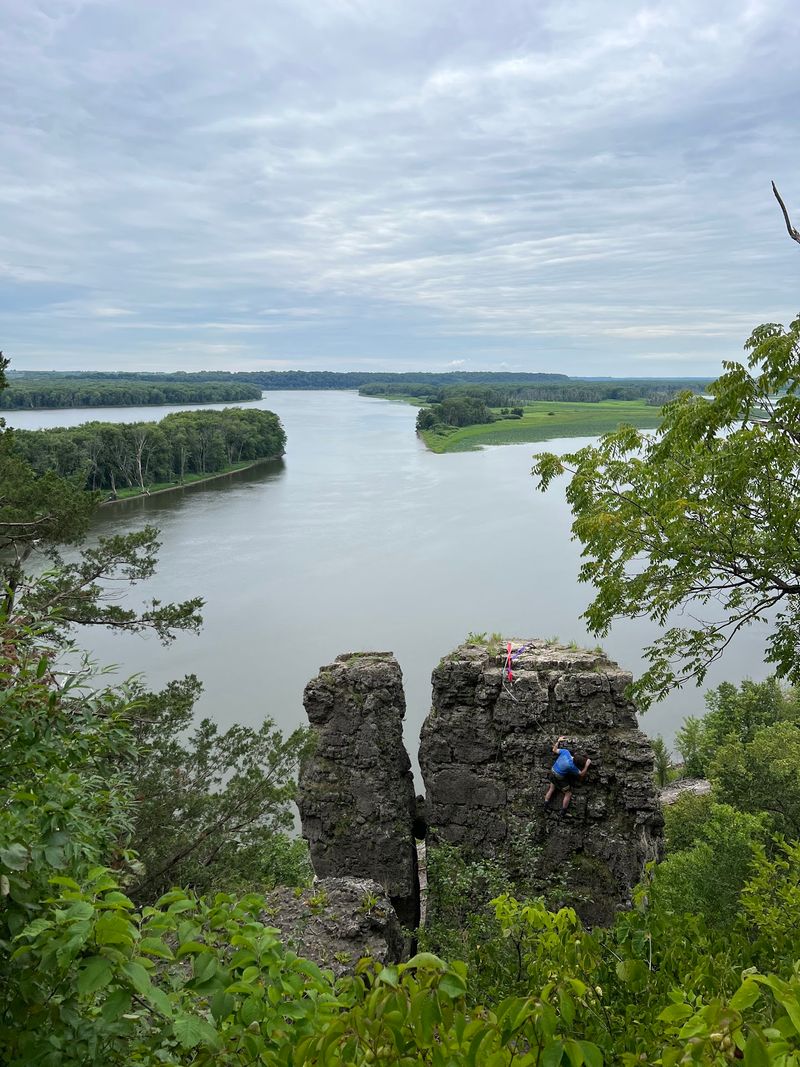
Turning south on Illinois Route 84 after Hanover, the landscape begins to shift in a way that feels almost abrupt. The road follows the Mississippi River corridor, and the terrain rises as you approach Mississippi Palisades State Park near Savanna.
This is where the drive earns its most dramatic scenery.
The Illinois Department of Natural Resources describes the park as approximately 2,500 acres situated near the confluence of the Mississippi and Apple rivers, with steep cliffs, wooded ravines, limestone rock formations, and designated overlooks that frame the river far below. In autumn, the hardwood canopy covering the bluffs turns orange, red, and gold in a display that looks very different from the open farm-field color you passed earlier in the day.
The elevation change and the river backdrop make the foliage feel more concentrated and vivid.
Safety at the park deserves clear attention. The DNR specifically identifies dangerous sinkholes associated with the park’s limestone cave system.
These sinkholes are not always visible from the surface, and the ground near them can be unstable. Stay on designated trails, obey all posted warnings, and keep children and pets on marked paths.
Approaching bluff edges or leaving established trails is genuinely hazardous, not just inadvisable.
The park’s overlooks are positioned to give you the river views safely, and the marked trail network covers enough ground to fill an afternoon without any need to improvise. Use the designated parking areas rather than pulling off on Route 84.
The combination of steep bluffs, wooded ravines, and autumn color at Mississippi Palisades is the visual payoff this entire corridor has been building toward.
Plan around two different fall calendars

One of the most common planning mistakes on a drive like this is assuming that apples and autumn color peak at the same time. They usually do not, and understanding why helps you choose a departure date that matches what you actually want to see.
Dittmar Farms advertises a late-August opening, which means pick-your-own apples can be available weeks before northern Illinois reaches its foliage peak. Illinois Extension confirms that different cultivars ripen week by week across the season, so early-season visitors get earlier varieties while mid-October visitors find later ones.
Apple harvest and foliage peak are two separate events that may or may not overlap in a given year.
On the foliage side, Illinois DNR notes that northern Illinois normally reaches peak color around mid-October, but weather can shift that window noticeably. The National Weather Service explains that warm sunny days and cool, but not freezing, nights tend to produce the strongest color, while early hard frosts can cause leaves to wither and drop before they fully color.
The underlying process is worth understanding briefly. Shorter daylight hours trigger chlorophyll breakdown, which unmasks the yellow and orange pigments already present in leaves, while red pigments develop from sugars trapped in the leaf after the tree seals off its connection to the branch.
Temperature, sunlight, soil moisture, and tree species all shape how vivid the result looks.
One more thing to watch for: if you notice widespread color appearing unusually early in August or very early September, that is not necessarily a sign of a spectacular fall ahead. Illinois Extension warns that early widespread color can indicate drought stress or other tree health issues rather than a preview of peak beauty.
Stressed trees may drop their leaves earlier than healthy ones, cutting the display short. Check orchard harvest calendars and current foliage reports close to your planned departure date to make the most informed choice.
Check roads, wildlife, and trail conditions before leaving

A few practical checks before departure can prevent the kind of surprises that turn a good day trip into a frustrating one. Start with road conditions: Illinois’ interactive road map and IDOT’s work-zone information both update regularly and can flag construction, closures, or detours on the rural highways and county roads this route uses.
Conditions on U.S. 20 and Illinois Route 84 can change, and finding out about a closure at home is far easier than discovering it at a detour sign in Jo Daviess County.
Fall driving on rural roads in Illinois carries a specific wildlife risk. IDOT warns that deer activity increases significantly in autumn, particularly around dawn and dusk, and that rural roads through wooded and agricultural areas see higher deer crossing frequency.
Slow down during those hours, scan the road edges continuously, and remember that deer often travel in groups, so if one crosses, others are likely to follow. If a collision becomes unavoidable, hold your course rather than swerving, because a sudden lane change at speed can cause a more serious accident than the deer strike itself.
At the orchard, use the picking technique that protects both the fruit and the tree: roll or twist the apple gently so it separates with the stem intact rather than pulling straight down. Illinois Extension’s storage guidance recommends refrigerating picked apples promptly, since cold temperatures slow the ripening process and preserve crunch and flavor significantly longer than room-temperature storage.
At Mississippi Palisades, the trail and sinkhole warnings mentioned in the park section are not optional reading. The DNR’s posted warnings exist because the hazards are real and not always visible.
Use designated parking areas for all scenic stops, and plan your time at the park so you are not hiking in low light near the bluff edges.
The corridor’s appeal comes from its changing scenery
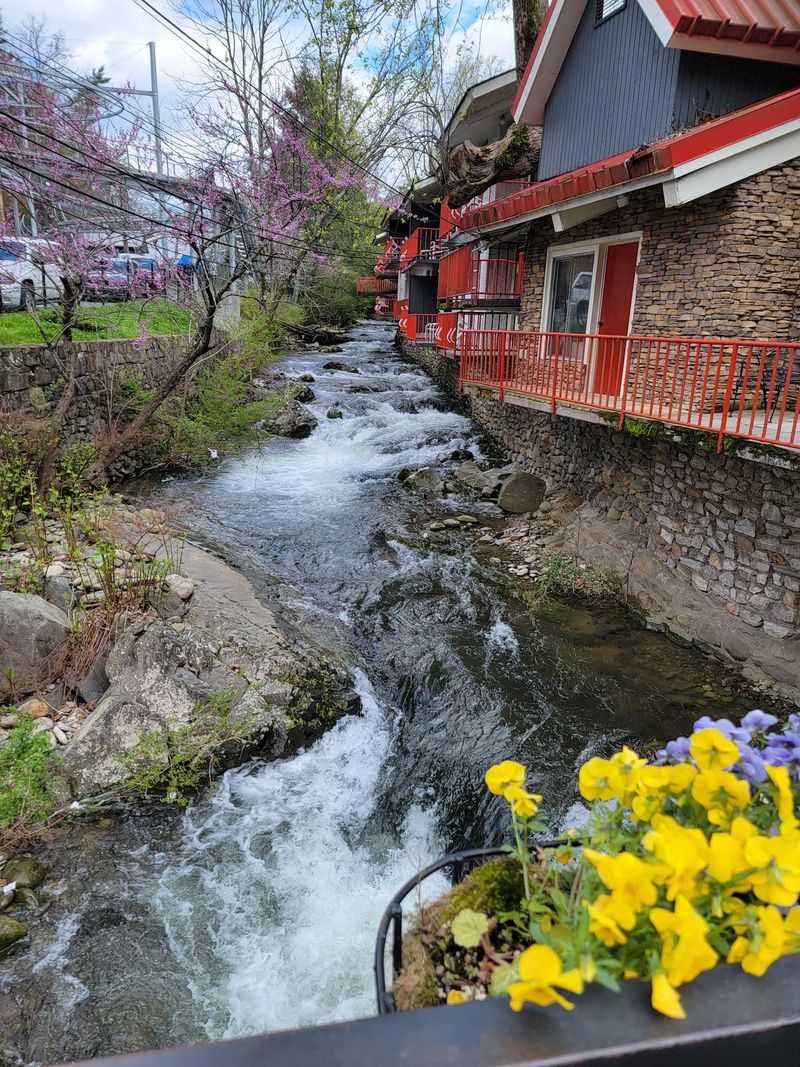
What makes the Galena-to-Savanna sequence work as a day trip is the progression itself. Starting in Galena’s historic downtown grounds the drive in a real place with walkable character.
Long Hollow Scenic Overlook provides the first wide view, revealing the rolling inland countryside of Jo Daviess County rather than a riverside panorama. The Elizabeth and Hanover stops at Dittmar Farms and Orchard Landing shift the experience from visual to tactile, putting harvest-season agriculture directly in your hands.
The finale at Mississippi Palisades State Park delivers the landscape shift the whole drive has been building toward, with steep river bluffs and wooded ravines replacing the open farmland of the morning. This northern Great River Road corridor is a strong autumn option, but its best version depends on checking current foliage conditions and orchard availability before you go.
A well-timed departure turns a good route into a genuinely memorable one.