
This Illinois Fen Is One Of The Rarest Wetlands In America And You Can Walk Right Through It
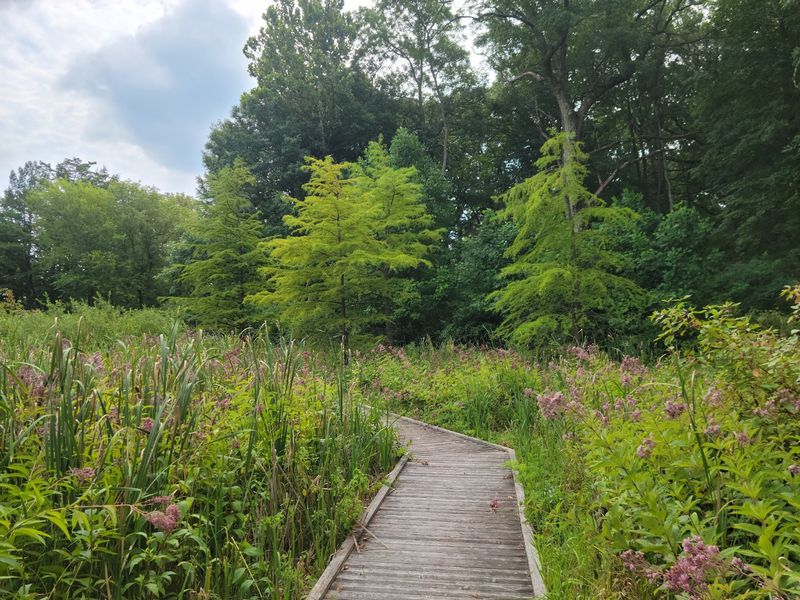
Tucked along Cherry Valley Road in McHenry County, a 38-acre preserve called Boger Bog holds one of Illinois’s rarest wetland types, and most people roll right past it without a second glance.
Despite the name, the site is not a bog at all, but an alkaline, grass-dominated graminoid fen fed by mineral-rich groundwater and spring-run streams.
Calcareous fens like this one rank among the rarest wetland types in North America, yet Boger Bog is open to the public and accessible via a one-mile nature trail with a boardwalk. A short walk here offers a surprisingly close look at a habitat that took thousands of years to form.
Boger Bog offers a short walk into an unusual Illinois wetland
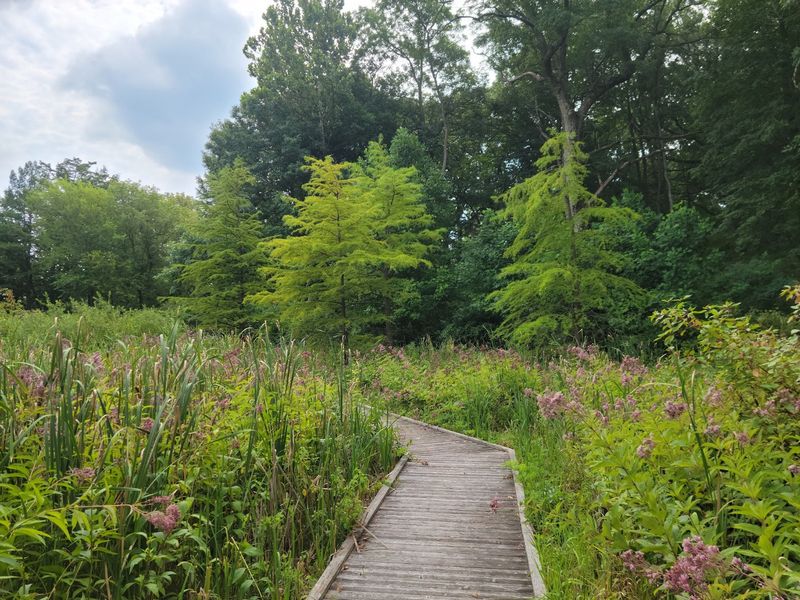
Somewhere along Cherry Valley Road in Bull Valley, Illinois, a small brown sign marks the entrance to a place that rewards the curious traveler willing to slow down. Openlands describes Boger Bog as a 38-acre public conservation area featuring a one-mile nature trail with a boardwalk, a small picnic shelter, and a council fire ring, all managed by McHenry County Conservation District.
The official address is 2100 Cherry Valley Road, Bull Valley, Illinois, and the site is dedicated as an Illinois Nature Preserve.
Calling it a hidden gem feels like an editorial impression rather than a documented fact, but the preserve does sit in a part of McHenry County where farmland and subdivisions dominate the view. Visitors who do stop find a landscape that looks and feels genuinely different from a municipal park or a typical forest preserve trail.
The terrain is low and wet, the grasses are dense, and the air carries the mineral coolness of groundwater close to the surface.
The experience of visiting Boger Bog is defined by its designated route. The Illinois Nature Preserves Commission records the site as dedicated in February 2011 and identifies McHenry County Conservation District as the owner.
Visitors walk through the preserve by following the trail and boardwalk, not by wandering across the wetland substrate, and that distinction matters both for the safety of the habitat and for the visitor’s own footing on saturated ground.
The name says bog, but the habitat is a fen
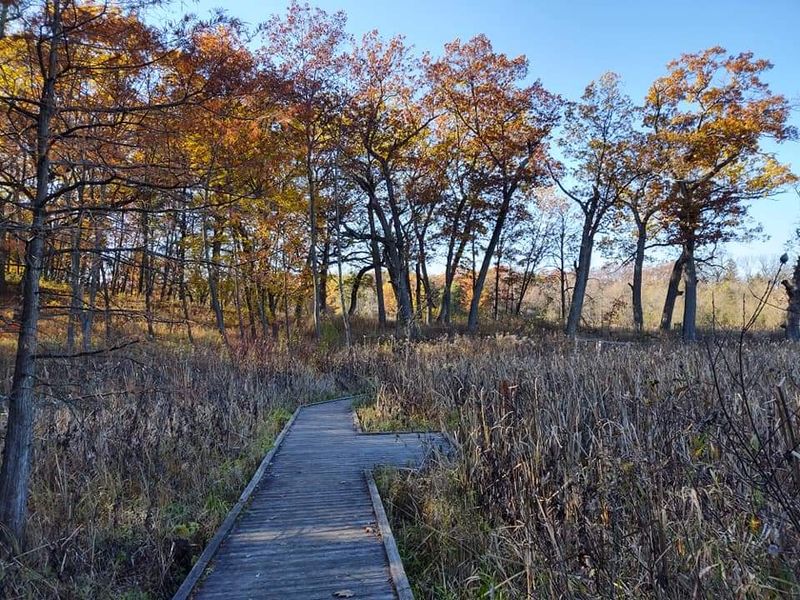
The word “bog” conjures images of dark, spongy, acidic peat soaked by rainwater, the kind of place where carnivorous plants trap insects and sphagnum moss forms floating mats. Boger Bog shares none of those characteristics.
Openlands identifies the wetland as an alkaline, grass-dominated graminoid fen, which is essentially the chemical opposite of an acidic bog. The name “Boger Bog” is the site’s proper name, not its technical habitat classification.
A fen forms where groundwater carrying dissolved minerals, particularly calcium and magnesium, moves upward through the soil and emerges at or near the surface. That mineral load makes the water alkaline rather than acidic, and the resulting chemistry filters out many common wetland plants while creating a foothold for specialized species adapted to those conditions.
Illinois DNR explains that fen soils contain abundant calcium and magnesium, producing the alkaline environment that separates a fen sharply from a precipitation-fed bog.
The 38-acre preserve is not a single uniform wetland. Openlands documents six natural communities within the property, including mesic silt-loam prairie, oak woodland, and sedge meadow, alongside the graminoid fen itself.
Visitors moving along the boardwalk and trail pass through several of these communities, which means the landscape shifts character as the route progresses. Understanding that variety helps explain why Boger Bog feels richer and more textured than a simple wetland walk: it is a mosaic of habitats compressed into a compact and publicly accessible preserve.
Mineral-rich groundwater shapes the fen
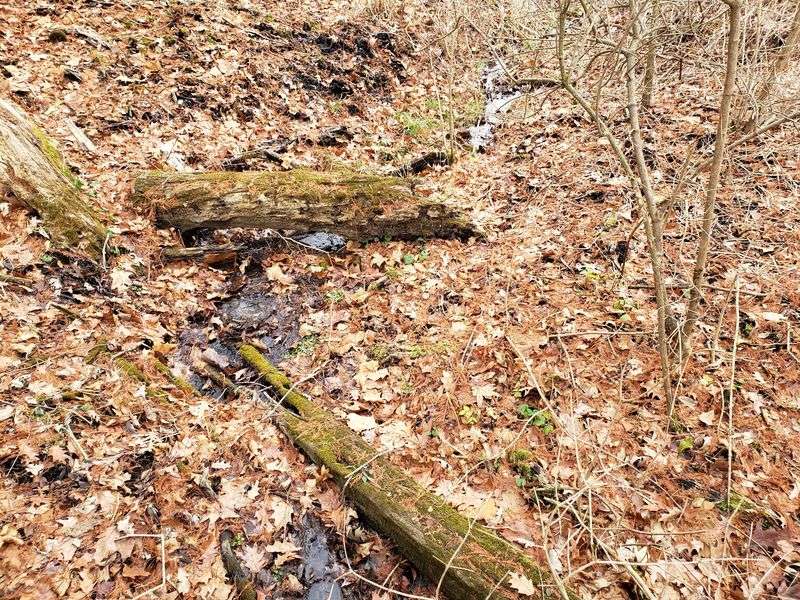
Water is the architect of every fen, and understanding how it moves through Boger Bog explains why the preserve looks and functions the way it does. Groundwater carrying calcium and magnesium travels slowly through underlying rock and soil before emerging at the surface through seeps, springs, or saturated ground.
Illinois DNR notes that fens form where mineral-rich groundwater emerges through springs or seeps, creating the alkaline conditions that define the habitat.
At Boger Bog specifically, county project documents describe the preserve as containing fen wetlands and spring-run streams, which connects the site’s hydrology to that broader process. A McHenry County project description references Boger Bog’s fen wetlands and spring-run streams in the context of a documented hydrologic-restoration proposal, suggesting that the relationship between groundwater movement and surface water is an active management concern.
That does not mean a single dramatic spring visibly bubbles up from the center of the preserve; groundwater-fed hydrology is often subtle, showing itself through saturated soils, slow seeps, and the distinctive plant communities that only those conditions can support.
Water movement in a fen also carries practical consequences for the surrounding landscape. Wetlands can slow runoff, support infiltration, and contribute to water quality, though describing any individual fen as a guaranteed filter for every pollutant overstates what the science supports.
The county’s documentation frames the restoration work in terms of stabilizing stream channels and restoring wetland hydrology, which reflects a more precise understanding of what groundwater-fed systems actually do. For a visitor, the most visible evidence of that hydrology is simply the feel of the place: damp air, saturated soils close to the trail edge, and plant communities that would vanish without the steady mineral-rich water moving beneath the surface.
Fens are rare in Illinois and across North America
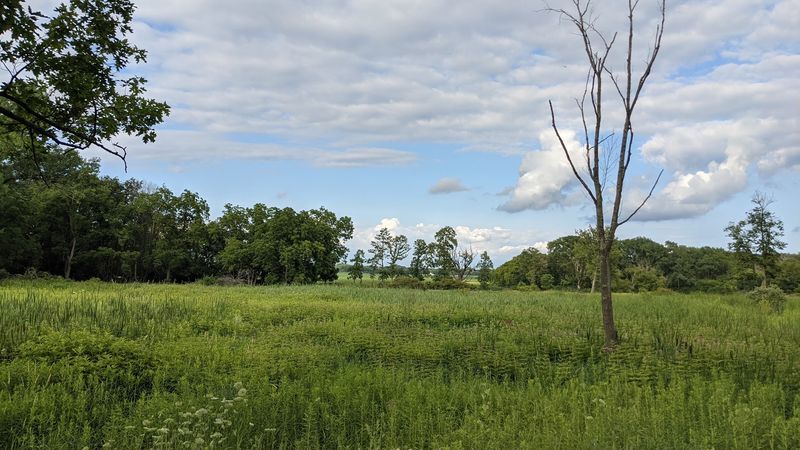
Calcareous fens depend on a combination of factors, alkaline groundwater, specific soil chemistry, and consistent mineral seepage, that simply do not occur in most places. Research on calcareous fens across North America recognizes them as among the rarest wetland types on the continent, a designation that reflects how narrowly their formation requirements must align.
Fens do exist in other parts of the world, so the rarity claim belongs specifically to the North American context rather than a global superlative.
In Illinois, graminoid fens are particularly uncommon because the state’s landscape has been heavily altered by agriculture and development, which can disrupt the groundwater flows that fens require. Illinois DNR describes graminoid fens as rare wetland communities tied to the specific groundwater and alkaline soil conditions that most of the state no longer provides in sufficient quantity or quality.
The plants that colonize a fen are often specialists with no tolerance for the acidic or nutrient-enriched conditions that dominate more common wetland types.
The regional concentration of what remains is striking. The Illinois DNR’s Fox River Basin inventory reports that approximately 119 acres of graminoid fen acreage in that regional survey, representing about 90 percent of the inventory’s total, occur in the Fox River area, which includes McHenry County.
That figure reflects the scope of one regional inventory and should not be read as the total acreage of all Illinois fens or as the size of Boger Bog itself. What it does show is that the Fox River area, including the landscape around Boger Bog, holds a disproportionate share of the graminoid fen habitat that survives in Illinois.
Boger Bog sits at the center of that concentration, which gives the preserve a conservation significance that extends well beyond its 38 acres.
The boardwalk brings specialized plant life into view
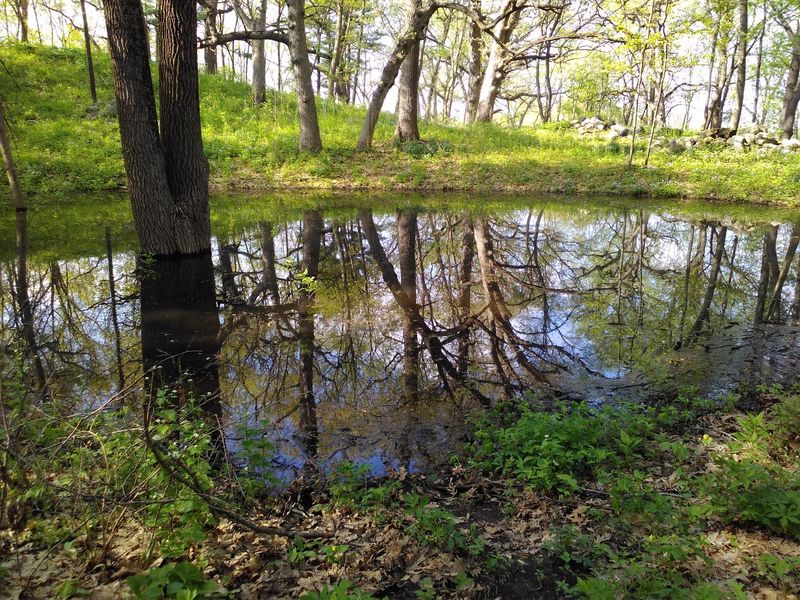
Walking the boardwalk at Boger Bog puts visitors at eye level with a plant community that most people never encounter. Openlands confirms that the preserve contains six natural communities, including mesic silt-loam prairie, oak woodland, and sedge meadow alongside the graminoid fen itself, so the boardwalk route moves through a sequence of distinct habitats rather than a single monotonous stretch of wetland.
Each community has its own texture, color palette, and set of plants adapted to its particular conditions.
The alkaline chemistry of a fen filters the plant community down to specialists that thrive where other plants cannot. Sedges, grasses, and low-growing forbs dominate the fen zone, and the open, mineral-rich conditions also create habitat for some of Illinois’s rarest plant species.
Orchids are among the plants that occur in Illinois fens and similar wetland habitats. Illinois DNR documents 50 orchid species in the state, 49 of them native, and notes that they grow in habitats ranging from fens and bogs to swamps, prairies, and moist soils.
Whether a particular orchid species will be blooming at Boger Bog on any given visit is not something the sources reviewed can confirm, so treat any orchid sighting as a genuine bonus rather than a guarantee.
Photography is the best way to record what you observe along the boardwalk. Bring a camera or a phone with a good macro setting, move slowly, and look at the ground as well as the horizon.
The most interesting plants in a fen are often small and close to the water’s surface, easy to miss at a normal walking pace but remarkable when you stop to look. Patience and careful observation are the skills that make a fen walk memorable.
Plan for a one-mile wetland walk
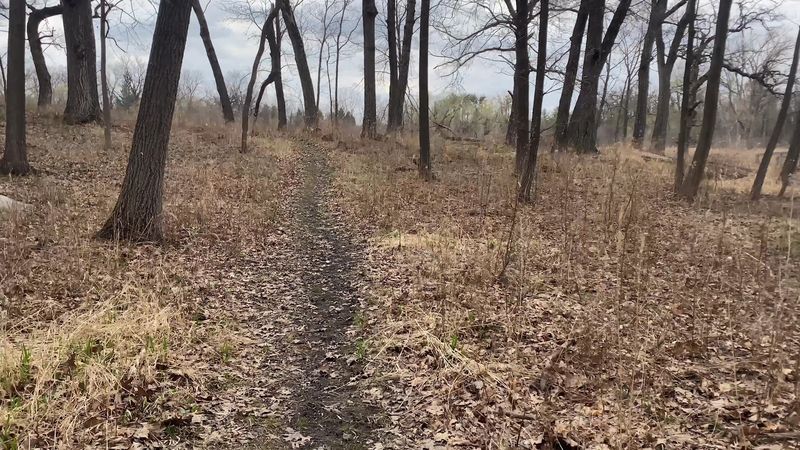
Getting to Boger Bog is straightforward. The preserve is at 2100 Cherry Valley Road in Bull Valley, McHenry County, and the Illinois Nature Preserves Commission listing confirms the address and identifies McHenry County Conservation District as the managing agency.
The district’s phone number is 815-338-6223, and calling ahead is genuinely useful because the sources reviewed do not establish current operating hours, seasonal closures, or whether the boardwalk is open and in good condition on any particular day.
Openlands confirms a one-mile nature trail with a boardwalk, a small picnic shelter, and a council fire ring on site, which makes Boger Bog a manageable half-day outing for most visitors. The trail length is short enough for children and casual walkers, but the wetland setting calls for practical preparation.
Sturdy, waterproof footwear is a sensible choice because soils near a boardwalk can be saturated and muddy, especially after rain or during spring snowmelt.
Insect precautions are equally worth planning ahead. Wetland environments support mosquito populations, particularly in warm months, so long sleeves, long pants, and an effective repellent will make the walk more comfortable.
Ticks are present in McHenry County, so checking clothing and skin after the visit is a reasonable habit. Restrooms, ADA accessibility, current boardwalk surface conditions, and policies on seasonal flooding are details that the sources reviewed do not confirm for Boger Bog specifically.
Contact McHenry County Conservation District at 815-338-6223 before your visit to get current, accurate information on all of those points. Arriving informed makes the experience better for you and reduces the risk of an unpleasant surprise at the trailhead.
Protect the fen by staying on the designated route
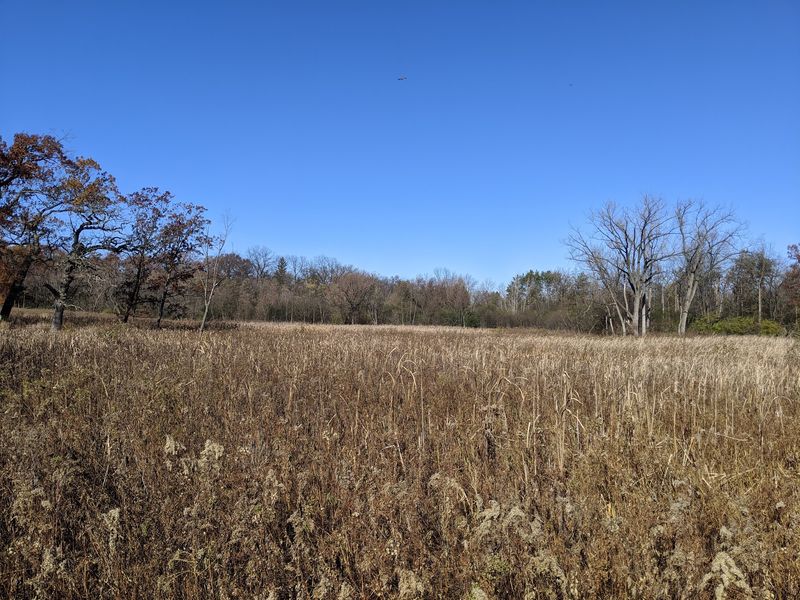
Staying on the designated trail and boardwalk is not just a suggestion at Boger Bog; it is the condition that makes public access possible without degrading the habitat. Stepping off the boardwalk onto fen soils compresses the substrate, damages root systems, and can introduce invasive species through soil and seeds carried on footwear.
The rare plants adapted to alkaline fen conditions are often slow-growing and intolerant of physical disturbance, so a single misstep can cause damage that takes years to reverse.
Illinois Administrative Code regulations governing dedicated nature preserves generally prohibit removing plants, flowers, soil, water, or other natural objects from the preserve. That means orchids, sedges, interesting mosses, and even rocks or pieces of wood are protected in place.
Photography is the right way to take something home from Boger Bog: a well-framed image of a fen plant or a sedge-filled clearing costs nothing, harms nothing, and lasts indefinitely.
Pets require a separate check before your visit. Illinois Nature Preserve rules generally prohibit pets in dedicated preserves unless the site’s approved management plan specifically authorizes them.
Whether dogs are currently permitted at Boger Bog is a question for McHenry County Conservation District, not an assumption visitors should make at the trailhead. Calling ahead with that question, along with questions about hours and current trail conditions, takes about two minutes and prevents a frustrating or rule-breaking situation on arrival.
The fen’s long-term survival depends on visitors who treat the access they have been given as a privilege rather than an open invitation to roam.
A rare fen worth visiting without the hype
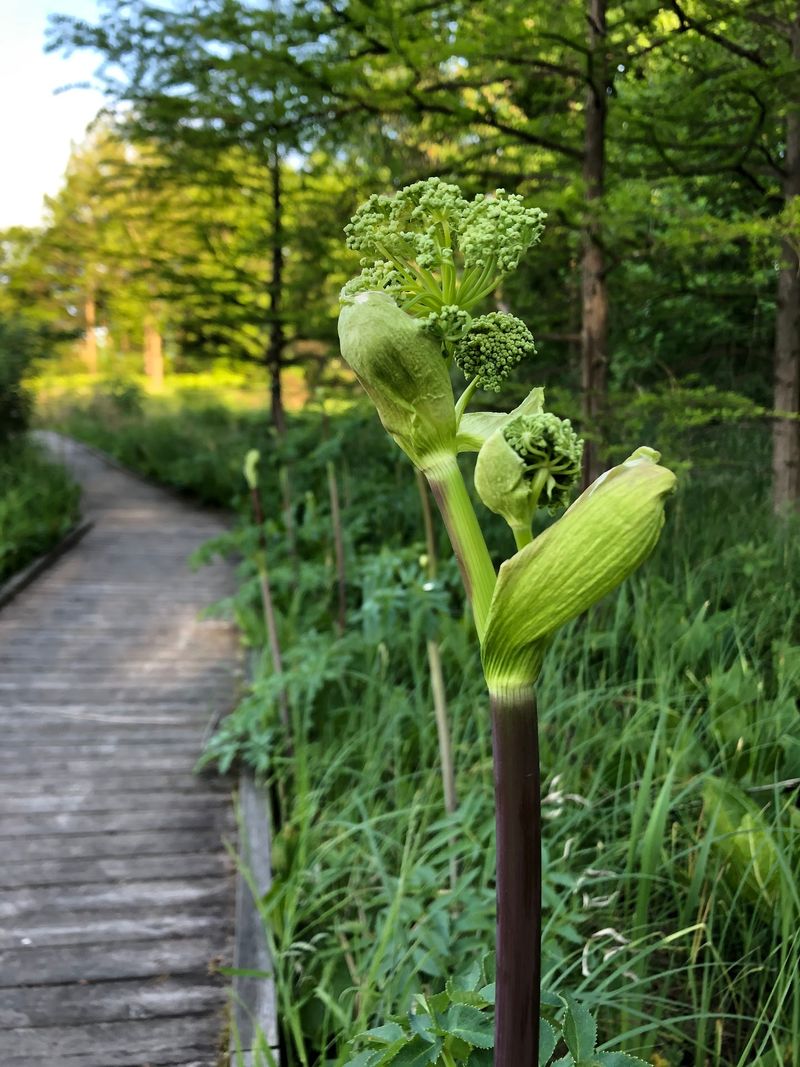
Boger Bog is not one of America’s rarest individual wetlands, but it is a publicly accessible example of a wetland type, the alkaline graminoid fen, that is genuinely uncommon in Illinois and rare across North America. Openlands describes the site as an alkaline, grass-dominated graminoid fen within a 38-acre preserve that also includes prairie, oak woodland, and sedge meadow.
That combination, rare habitat type, multiple natural communities, and a designated one-mile trail with boardwalk, makes Boger Bog an unusually accessible conservation destination for the Chicago region.
The preserve’s hydrology, sustained by groundwater and spring-run streams, is the foundation of everything visitors come to see. Illinois DNR’s fen documentation and McHenry County project records both point to a documented or proposed hydrologic-restoration effort at the site, reflecting how seriously land managers take the groundwater connections that keep the fen alive.
Whether that work is currently underway is something to confirm with the district before citing it as active restoration.
McHenry County Conservation District at 815-338-6223 is the right first call for current hours, trail conditions, and access rules. A fen that took thousands of years to form is worth a two-minute phone call before the drive north.