
This Illinois Nature Center Lets You Wander Boardwalks Through Wetlands Teeming With Herons And Turtles
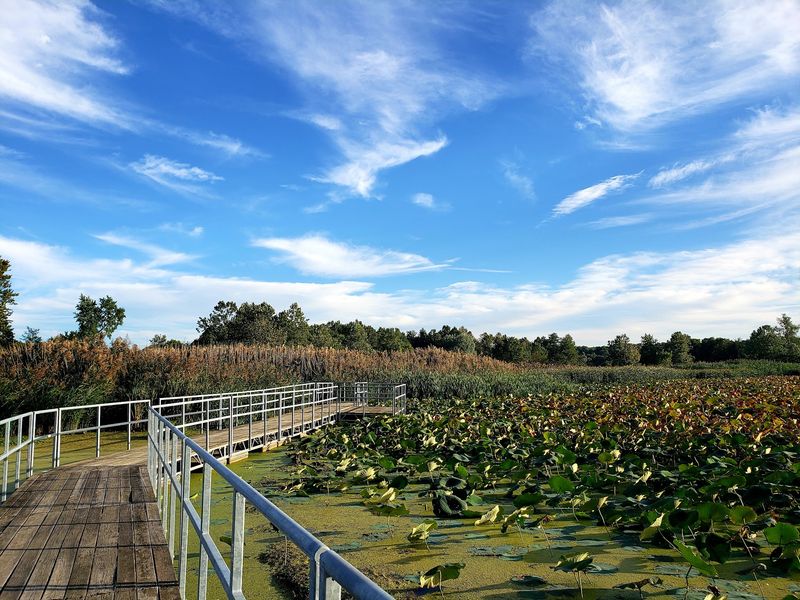
Tucked along the north end of Lake Vermilion in Danville, Illinois, Heron County Park gives families a rare chance to walk through a living wetland without ever sinking into the mud. The park’s floating boardwalk stretches nearly a thousand feet over open water, putting great blue herons, waterfowl, and other wildlife within viewing distance from a solid, elevated walkway.
Managed by the Vermilion County Conservation District, this county park punches well above its weight as a wildlife-watching destination for anyone willing to slow down, look carefully, and let the marsh come to them.
Heron County Park Is the Verified Wetland Destination
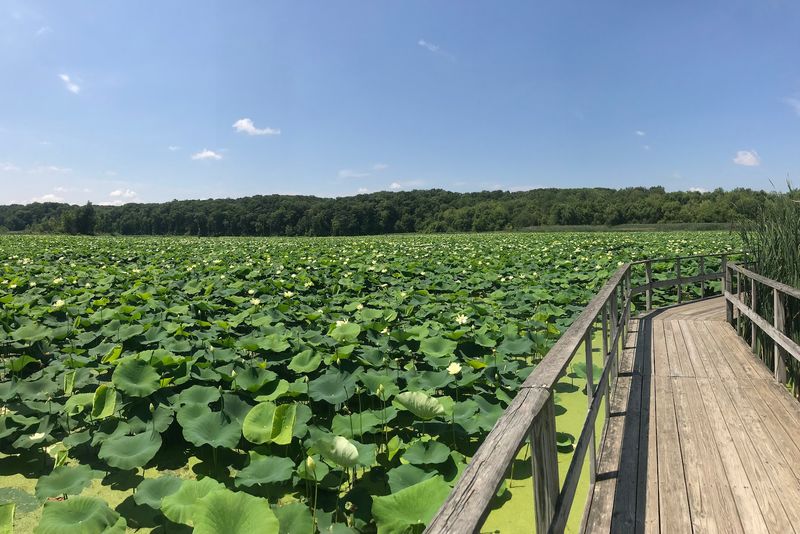
Heron County Park sits at the north end of Lake Vermilion in Danville, Illinois, and it is the real destination behind the viral promise of boardwalk wandering through a wildlife-rich marsh. The Vermilion County Conservation District manages the property, and while the title above calls it a nature center, the official designation is a county park with a floating wetland boardwalk.
That distinction matters for setting the right expectations, but it does not diminish the appeal one bit.
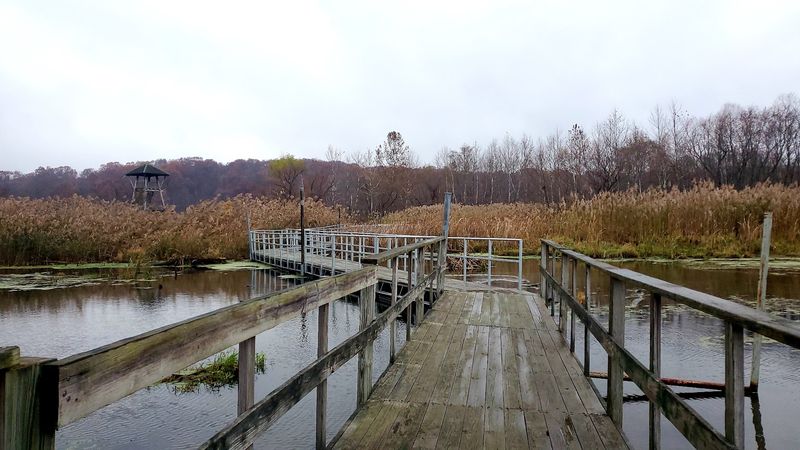
The park’s central draw is a single 950-foot boardwalk that floats across wetland habitat, giving visitors a structured way to experience the marsh without stepping directly onto saturated ground. The Vermilion County Conservation District’s park page describes the boardwalk as handicapped accessible and notes the presence of a large great blue heron rookery nearby, which is a genuine and documented wildlife feature rather than promotional shorthand.
Calling the outing “mud-free” is accurate mainly for the elevated boardwalk itself. The parking area, surrounding grounds, and a separate half-mile trail on the other side of West Newell Road can have different footing depending on recent rain and seasonal conditions.
Visitors who plan around the boardwalk experience will find the clean-footed premise holds up well; those who explore beyond it should dress accordingly.
What the Single 950-Foot Boardwalk Offers
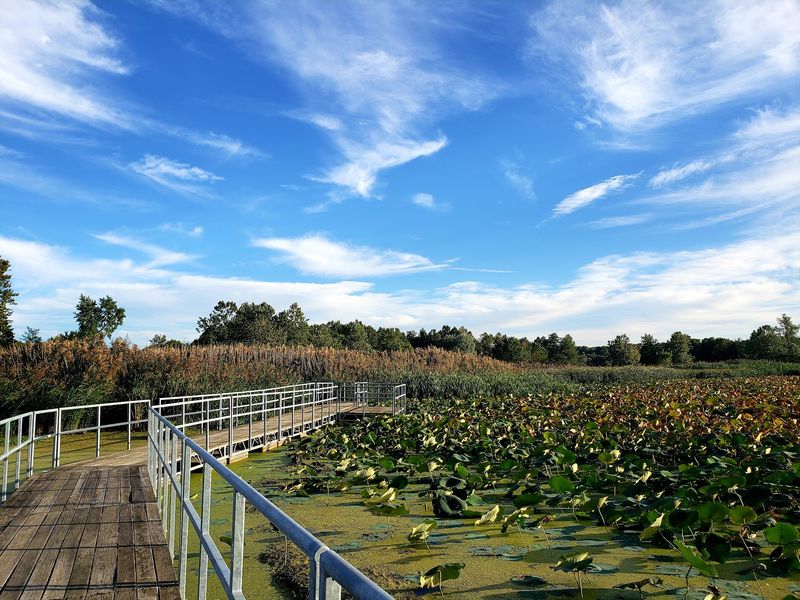
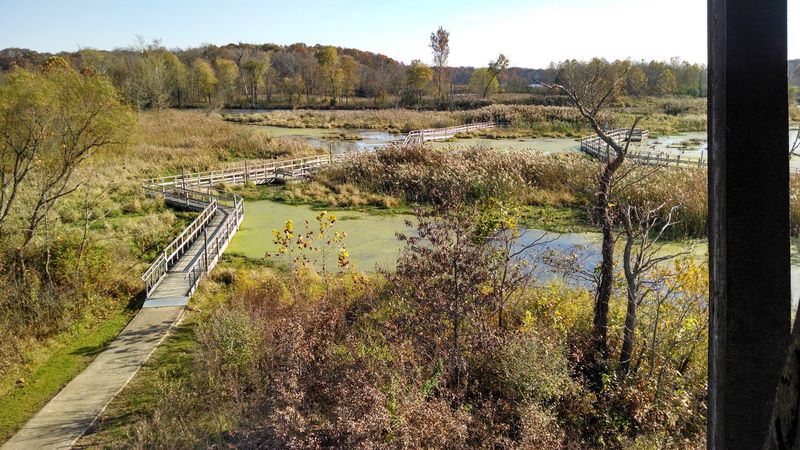
Nine hundred and fifty feet sounds like a number on a spec sheet, but walk it slowly and it feels like a full immersion in a living marsh. The boardwalk floats on the water’s surface rather than standing on fixed pilings, which means it moves gently with water levels and gives the whole experience a subtle, connected-to-the-wetland quality you do not get from a paved path above a culvert.
According to the Vermilion County Conservation District, the boardwalk includes three observation areas with benches spaced along its length. Those spots are worth using deliberately: stop, sit, and let the marsh settle around you for a few minutes.
Birds that flushed when you first arrived often drift back into view once you go still, and the benches make it easy for kids, older adults, or anyone who needs a rest to keep pace with the group without feeling rushed.
The district describes the boardwalk as handicapped accessible, which is a meaningful feature for families with strollers, visitors using mobility aids, or anyone who finds uneven terrain difficult. That accessibility description applies specifically to the boardwalk itself.
The separate trail across West Newell Road, the parking area approach, and other park surfaces have not been described with the same standard, so visitors with specific access needs should contact the district directly before planning a trip around features beyond the main walkway.
Footwear on the boardwalk can be fairly casual since the elevated surface keeps feet off the saturated ground below. Closed-toe shoes with decent grip are still a sensible choice, especially if the boards are damp from morning dew or recent rain.
The boardwalk is not a controlled indoor exhibit; weather, insects, and the natural variability of a working wetland are all part of the visit.
Herons Anchor a Varied, Unpredictable Wildlife Experience
The great blue heron rookery near Heron County Park is the headline act, and it earns that billing. Rookeries are active nesting colonies where dozens or even hundreds of herons return year after year, and the sheer scale of a functioning one – birds arriving, departing, and calling from their stick nests high in the trees – is genuinely striking even for visitors who do not consider themselves birders.
The Vermilion County Conservation District’s recreational opportunities listing documents a wide supporting cast alongside the herons: Canada geese, mallards, wood ducks, kingfishers, green herons, American egrets, songbirds, seasonal migrants, and occasional bald eagles. Each of those species brings something different to a visit.
A kingfisher’s rattling call and sudden dive, a wood duck’s improbably vivid plumage, or a bald eagle drifting overhead can make a morning on the boardwalk memorable even on a day when the herons are staying out of view.
Beavers, muskrats, groundhogs, rabbits, and river otters have also been associated with the broader park area, though these mammals are typically less predictable and less visible than the waterbirds. Sightings of any wildlife depend on season, time of day, water levels, weather, and how much disturbance has occurred recently.
A quiet weekday morning in spring or early fall tends to offer more activity than a crowded summer afternoon.
Turtles fit naturally into an Illinois wetland setting. Illinois is home to numerous turtle species that use marshes, ponds, and lake edges as habitat, and some visitors to the park have reported spotting them.
The district’s primary park information does not specifically list turtles among the guaranteed wildlife at Heron County Park, so treat any turtle sighting as a welcome bonus rather than a sure thing.
Watch Wildlife Without Leaving the Walkway

One of the boardwalk’s quiet strengths is that it keeps everyone in one place. The observation areas and benches create fixed vantage points where the marsh comes to you rather than the other way around, and that arrangement actually improves wildlife sightings.
Animals that would flush from a moving group of hikers sometimes ignore or return to visitors who have settled quietly onto a bench and stopped moving.
Binoculars make a genuine difference here. The heron rookery and many of the waterfowl species tend to maintain a comfortable distance from human activity, and National Park Service hiking etiquette guidance recommends using binoculars or camera zoom rather than closing the gap between yourself and a wild animal.
That advice is especially relevant near a nesting colony. Approaching a rookery too closely can cause adult birds to flush from nests, leaving eggs or young exposed to weather and predators.
Staying on the boardwalk and marked trails is the single most important rule for both visitor safety and wildlife welfare. The floating walkway is surrounded by open water and soft, unstable wetland substrate.
Stepping off the edge to get a better angle on a turtle or a duck creates real risks for the person who steps and real stress for the animal being pursued. Patience, a low voice, and slow movements will consistently produce better results than any attempt to close the distance.
Wildlife visibility is genuinely variable. Some mornings the boardwalk feels like the middle of a nature documentary; others, the marsh is quiet and the best sighting is a single kingfisher perched on a distant snag.
Both kinds of visits are real wetland experiences, and accepting that unpredictability is part of what makes a morning at Heron County Park feel earned rather than scripted.
The Separate Trail and Tower Follow Different Rules
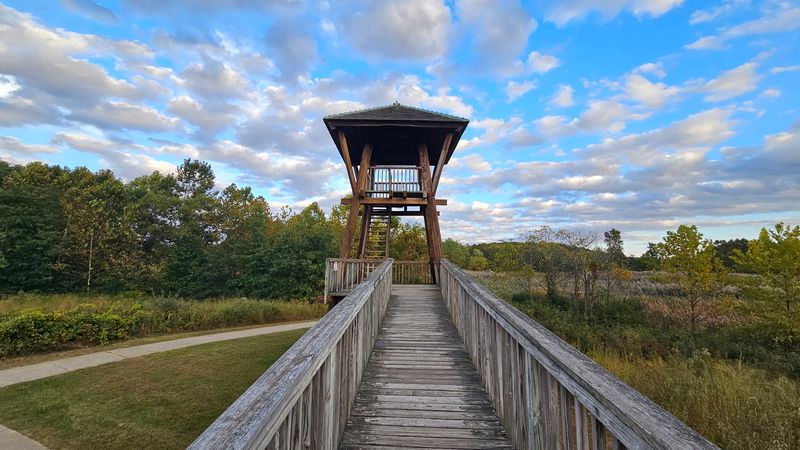
Beyond the boardwalk, Heron County Park offers two additional features that operate under meaningfully different conditions. Knowing those differences before you arrive keeps the trip from turning into an unexpected detour or a disappointment.
The half-mile self-guided trail sits across West Newell Road on the north side of the park, following the boundary of an open field near an oxbow wetland. The district’s recreational opportunities page describes this trail separately from the boardwalk, and the distinction is practical as well as geographic.
The trail crosses grass and field-edge habitat rather than floating above open water, which means footing can vary considerably with the weather. After rain, sections of the trail near the oxbow wetland may be soft or wet, and the elevated, clean-footed experience of the boardwalk does not automatically extend to this route.
Hunting adds another variable. Waterfowl hunting is permitted in designated walk-in areas of the park during the season, and the district notes that signs may close the separate hiking trail to general visitors during designated hunting periods.
The boardwalk area and the trail across the road should not be treated as having identical rules or identical access at all times of year. If a fall or early-winter visit is on the agenda, checking with the district about current trail status before heading out is worth the extra step.
The 30-foot timber observation tower gives a broader view of the surrounding landscape, but its access is more limited than the boardwalk. The ADA ramp reaches the first level, which provides an elevated sightline without requiring any climbing.
The upper level of the tower is normally closed to the public and may open only during special events when district personnel are present to supervise. Visitors should not expect the upper platform to be available on a standard drop-in visit, and the tower should not be described or planned around as a routinely open overlook.
Plan Around Access, Hours, and Changing Conditions
Getting to Heron County Park is straightforward once you know what to look for. The park is accessed from West Newell Road in Danville, Illinois, at the north end of Lake Vermilion.
A parking lot serves the boardwalk entrance, and the Vermilion County Conservation District describes daily hours running from early morning to dusk. Arriving early in the morning tends to reward visitors with calmer conditions, more active birds, and fewer other people on the walkway.
Boardwalk conditions are not static. District board records document past boardwalk repairs and replacement of handrails and decking, which is a normal part of maintaining a floating structure in a wetland environment.
Before making a special trip, especially one involving visitors with mobility considerations or young children, calling the Vermilion County Conservation District or checking their website for any posted closures or maintenance notices is a practical precaution. A brief phone call can prevent a wasted drive.
Packing for the visit beyond the boardwalk surface means thinking about footwear for the parking area and any ground-level approaches, which may be uneven or soft depending on recent weather. Binoculars are the single most useful piece of gear for the wildlife-viewing experience and are worth bringing even if you own only a basic pair.
A water bottle, sunscreen, and a hat round out a sensible kit for a warm-season visit.
Expect the outing to run at an unhurried pace. The boardwalk is not a loop with a destination at the end; it rewards slow movement and deliberate stops at the observation areas.
Families who plan for 45 minutes to an hour on the boardwalk, with optional time for the separate trail if conditions allow, tend to leave with a fuller experience than those who rush through and wonder what they missed.
Protect Children, Wildlife, and Yourself From Ticks
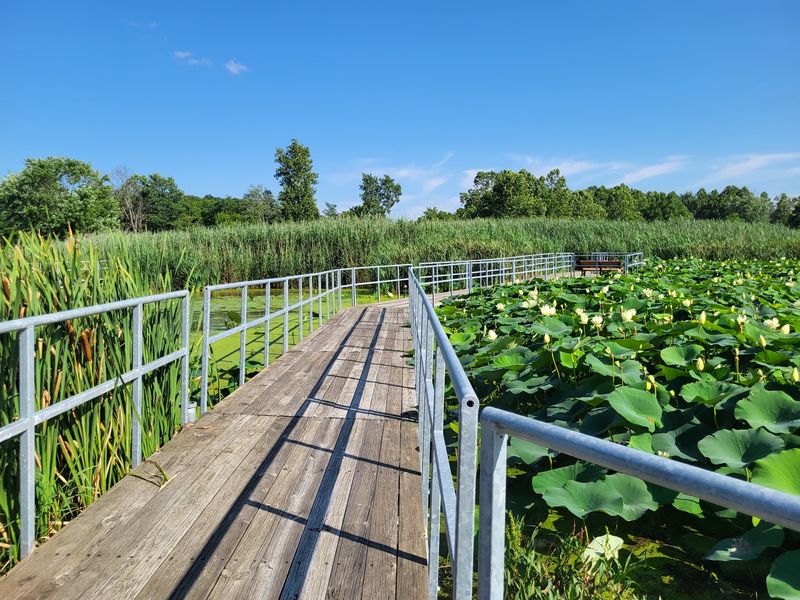
An open wetland is genuinely wild, and that wildness calls for a few straightforward safety habits. Adults should keep children within arm’s reach near open water and make sure everyone understands that the boardwalk edge is a boundary, not a suggestion.
The floating structure sits directly above water, and there are no lifeguards or safety nets below. A district-organized sunset program at the park required children under 16 to be accompanied by an adult, which reflects the kind of supervision that makes sense for any family visit near open water.
Wildlife contact of any kind should be avoided. National Park Service guidance on trail and wildlife etiquette is clear: do not feed animals, do not attempt to handle them, and do not approach nesting areas.
Feeding wildlife disrupts natural foraging behavior and can make animals dependent on human food sources or aggressive toward visitors. Handling a turtle, chasing a duck, or approaching a heron rookery too closely causes real harm to the animals involved, even when the intention is curiosity rather than cruelty.
Binoculars and camera zoom are the right tools for closing that visual distance.
Ticks are a practical concern at wetland edges, in grassy areas, and along trail margins, and Heron County Park’s surrounding habitat fits that description. CDC guidance on preventing tick bites recommends walking near the center of trails rather than brushing through vegetation on the edges, applying an EPA-registered insect repellent to exposed skin, and considering permethrin-treated clothing or gear for added protection.
After returning to the car or indoors, check clothing and exposed skin carefully, and shower as soon as reasonably possible. These steps are standard practice for any outdoor visit involving grass, brush, or trail edges and do not reflect a specific or unusual risk at this park.
None of these precautions are meant to discourage a visit. They are the ordinary habits that make outdoor time comfortable and repeatable, the kind of preparation that lets a family return to a place like Heron County Park season after season without incident.
The Boardwalk Delivers the Strongest Version of the Promise

Heron County Park’s floating boardwalk is the feature that makes the original promise worth keeping. Walking nearly a thousand feet over open wetland, pausing at bench-equipped observation areas, and scanning the marsh for herons, egrets, and waterfowl is a genuinely rewarding outing for families, casual birders, and anyone who wants a close look at Illinois wetland habitat without wading through it.
The Vermilion County Conservation District describes the boardwalk as handicapped accessible, which broadens the audience considerably.
The limits are real and worth remembering. Wildlife sightings vary with season and conditions, turtles are possible but not guaranteed, the separate trail across West Newell Road may be muddy or seasonally restricted, and the observation tower’s upper level is normally closed.
Confirming current conditions with the district before visiting is always the right call.
What the boardwalk reliably delivers is perspective: a quiet, elevated vantage point over a wetland that most people never get to stand inside. That alone makes the trip worth the drive.