
This Illinois Nature Preserve Hides A Bog Where Carnivorous Plants Grow Wild
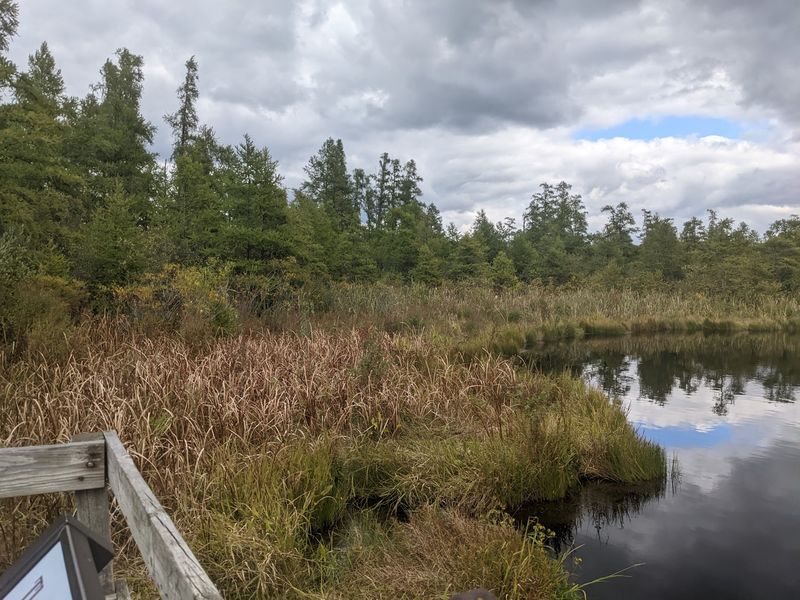
About 56 miles northwest of Chicago, a quiet nature preserve in Ingleside holds something most Illinois residents never knew existed: a living, floating bog. Volo Bog State Natural Area contains the only open-water quaking bog in the state, a rare glacial wetland where native carnivorous plants have been documented growing wild.
A floating interpretive boardwalk carries visitors directly over the bog’s spongy mat, putting them face-to-face with one of the most unusual ecosystems in the Midwest.
A Floating Wetland Waits Northwest of Chicago
Tucked into Lake County at 28478 West Brandenburg Road, Ingleside, Illinois, Volo Bog State Natural Area sits roughly 56 miles northwest of downtown Chicago, close enough for a half-day trip but far enough to feel genuinely removed from city life. The preserve protects a glacial wetland that has no close equivalent anywhere else in the state.
The Illinois Department of Natural Resources identifies Volo Bog as Illinois’ only open-water quaking bog, a distinction that makes it a destination for botanists, naturalists, families, and curious travelers alike.
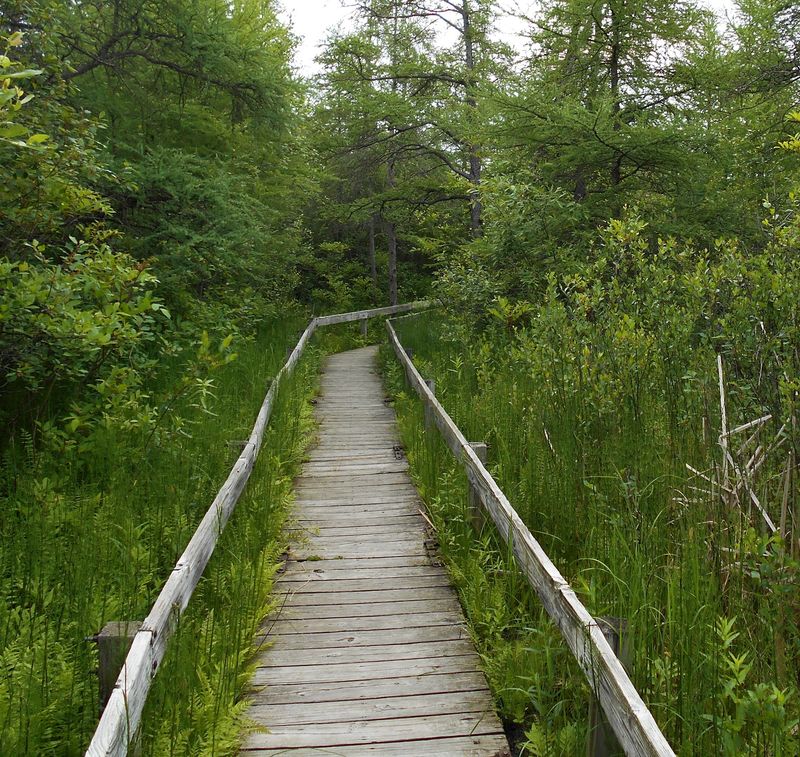
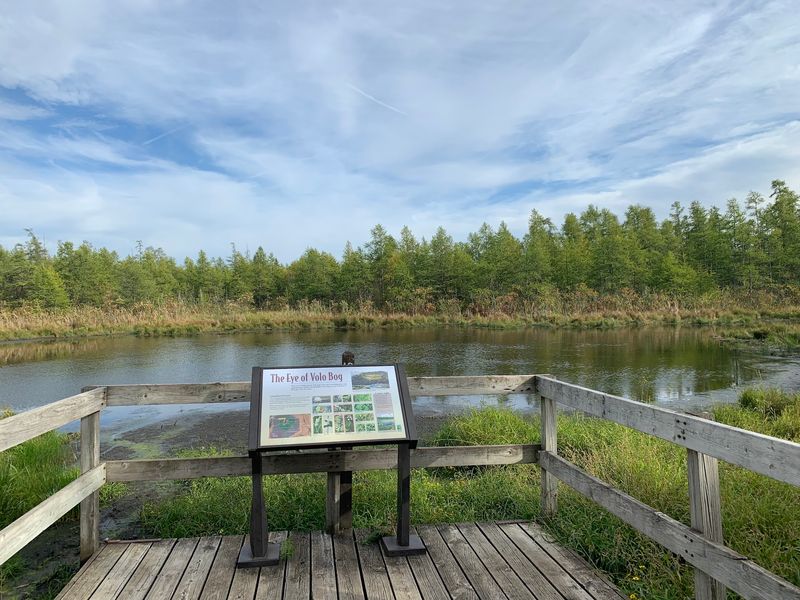
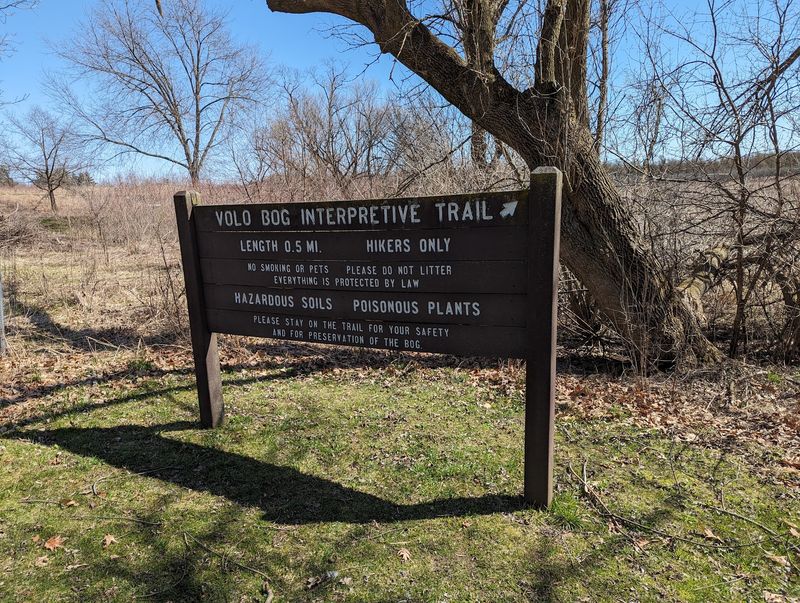
The centerpiece of any visit is the interpretive boardwalk, a floating structure that carries walkers out over the bog’s living mat and toward the open-water center, sometimes called the “eye” of the bog. The trail is approximately half a mile in length, and the Illinois Nature Preserves Commission describes the route as an interpretive trail with boardwalks through wet areas, giving visitors an unusually close look at a habitat that would otherwise be inaccessible on foot.
Walking the boardwalk is less like visiting a typical forest preserve and more like crossing a living surface that shifts subtly underfoot. Visitors may look for native pitcher plants along the route, though sightings depend on season, plant growth, and conditions on any given day.
The experience rewards patience and careful observation rather than a checklist mentality, making Volo Bog a rare kind of outdoor destination where the habitat itself is the spectacle.
What Makes a Bog Quake?
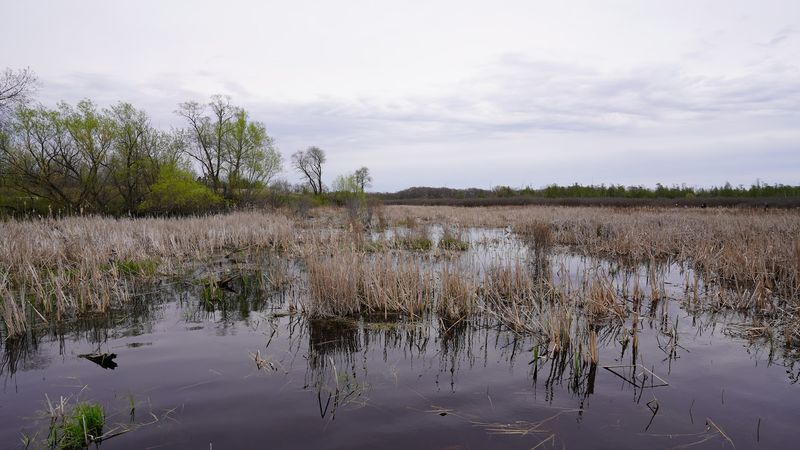
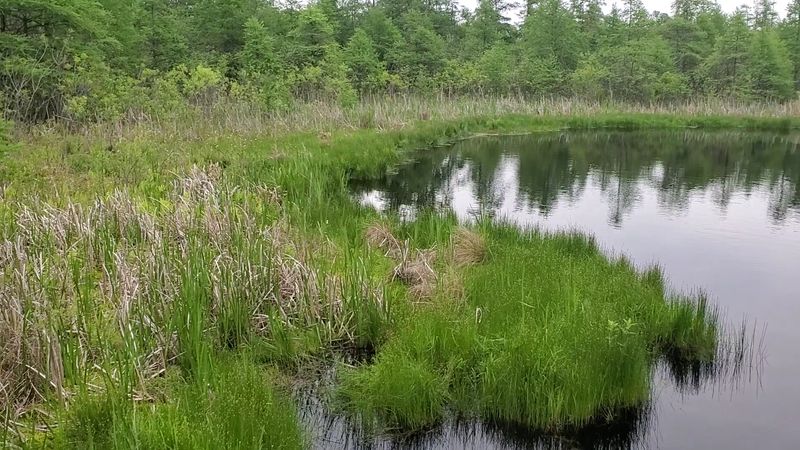
Thousands of years ago, a retreating glacier left behind a deep, bowl-shaped depression in the landscape. Water filled the hollow, and over centuries a slow ecological process began: sphagnum moss, cattails, sedges, and other wetland plants colonized the water’s edge and gradually extended outward, building a floating mat of living and decomposing vegetation over the open pool.
That mat, layered with peat and anchored loosely to the water beneath, is the foundation of what scientists call a quaking bog.
The “quaking” part is literal. Illinois DNR peatland habitat materials explain that the floating mat can move or tremble under pressure, a result of its position over open water rather than solid ground.
Step near the edge of the mat and the surface ripples outward like a slow wave. That instability is precisely why public access at Volo Bog is concentrated on the designated boardwalk rather than spread freely across the wetland.
The open-water center of the bog, visible from the boardwalk, remains largely undisturbed. Volo Bog ecology materials produced by IDNR describe the floating soils and fragile hydrology that make the bog’s chemistry so unusual: the water is cold, acidic, and low in dissolved oxygen, conditions that slow decomposition and allow peat to accumulate over time.
The mat you walk beside may be hundreds or even thousands of years in the making.
None of this means the preserve itself is dangerous to visit on the boardwalk. The quaking quality belongs to the floating mat, not to the trails or the parking areas.
Staying on the designated route keeps both the bog and the visitor safe, and it keeps the fragile hydrology intact for the plants and animals that depend on it.
Why Carnivorous Plants Thrive in Poor Soil
Bog soils look lush from a distance, but they are nutritionally impoverished. Sphagnum moss acidifies the water around it, cold temperatures slow the breakdown of organic matter, and the resulting peat holds very little of the nitrogen and phosphorus that most plants need to grow.
Ordinary roots and leaves are poorly suited to these conditions, which is exactly where carnivorous plants found their evolutionary opening.
National Park Service carnivorous plant materials explain that these plants still photosynthesize, using sunlight and carbon dioxide to produce energy just as other plants do. Captured insects do not replace photosynthesis; they supplement it by supplying nitrogen and other nutrients that the soil cannot provide in sufficient quantities.
A pitcher plant without any insect prey can still survive, but one growing in nutrient-poor peat benefits measurably from each small meal.
The purple pitcher plant, Sarracenia purpurea, uses a passive pitfall strategy. Its modified leaves form hollow, upright tubes that fill with rainwater and digestive fluids.
Insects attracted to the plant’s color, nectar, or scent crawl or fly inside, lose their footing on downward-pointing hairs, and drown in the fluid below. The plant then absorbs the nutrients released as the prey breaks down.
It is a slow, elegant trap rather than a fast-moving one.
Round-leaved sundews take a different approach. Their small leaves are covered in gland-tipped tentacles that glisten with a sticky mucilage, resembling dew drops.
Insects that land on the leaf adhere to the mucilage and cannot pull free; the tentacles then curl inward and the plant digests its catch. Illinois DNR peatland resources note that these specialized adaptations are closely tied to the nutrient-poor conditions that define bog habitats across the state and region.
The Pitcher Plant Offers a Cautious Search
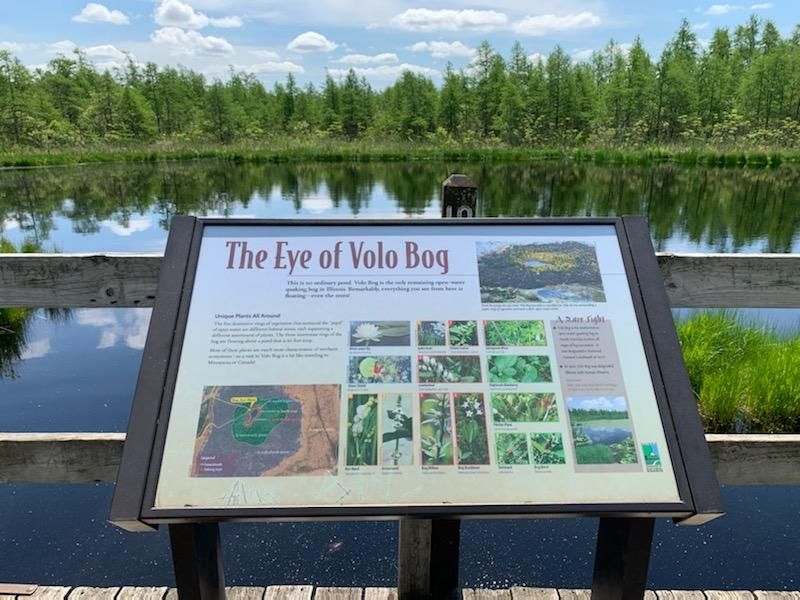
Sarracenia purpurea, the northern or purple pitcher plant, is the carnivorous species most closely associated with Volo Bog. A 1995 Illinois DNR plant survey documented Sarracenia purpurea at Volo Bog, and current visitor-facing materials from the site continue to highlight pitcher plants as a feature of the bog ecosystem.
That combination of historical records and current programming makes pitcher plants the most credible target for visitors hoping to spot a carnivorous plant.
Even so, a documented species is not a guaranteed sighting. Plant populations shift with season, water levels, management activity, and years of natural variation.
Friends of Volo Bog regularly scheduled educational programs spotlight pitcher plants as part of the bog experience, but no current source commits to a specific abundance or promises that a visitor will see one on any particular day. Treat the pitcher plant as something worth searching for rather than something guaranteed to appear.
Practically speaking, pitcher plants are not large or dramatically colored in all seasons. Their tubular leaves blend into the surrounding sphagnum, and viewing conditions from the boardwalk depend on how close the plants are growing to the walkway’s edge, how much surrounding vegetation has grown up, and what time of year you visit.
The IDNR Volo Bog page recommends guided tours as a way to learn about the bog’s ecology, and a knowledgeable guide is likely your best help in spotting plants that a solo visitor might walk right past.
Sundews Tell a More Complicated Story
Any article about carnivorous plants at Volo Bog has to be honest about sundews, because the story there is more complicated than a simple “yes, you can see them.” Friends of Volo Bog state plainly that round-leaved sundew formerly occurred at the site but was collected out of the bog decades ago. That is not a minor footnote; it means the plant’s current presence at Volo is unverified, and visitors should not arrive expecting to find sundews growing along the boardwalk.
Older records do place the round-leaved sundew, Drosera rotundifolia, at Volo Bog. The same 1995 IDNR plant survey that documented pitcher plants also recorded Drosera rotundifolia at the site.
But a survey from the mid-1990s describes conditions as they were then, not as they are today, and the Friends of Volo Bog account of collecting pressure suggests the population may have declined or disappeared in the intervening decades.
The stakes of this distinction are higher than they might seem. Illinois lists round-leaved sundew as an endangered species, which means the plant has very limited remaining populations in the state and is legally protected from collection or disturbance.
The history at Volo Bog is, in part, a cautionary tale about what happens when curious visitors remove rare plants from the wild rather than observe them in place.
Sundews belong in any broader conversation about Illinois bog ecology and about what Volo Bog once supported. Framing them as part of the preserve’s botanical history, rather than as a current attraction, is both accurate and worthwhile.
If sundews ever return to Volo, it will be because the habitat is protected and left undisturbed, not because visitors went looking for souvenirs.
The Boardwalk Makes a Fragile Habitat Viewable
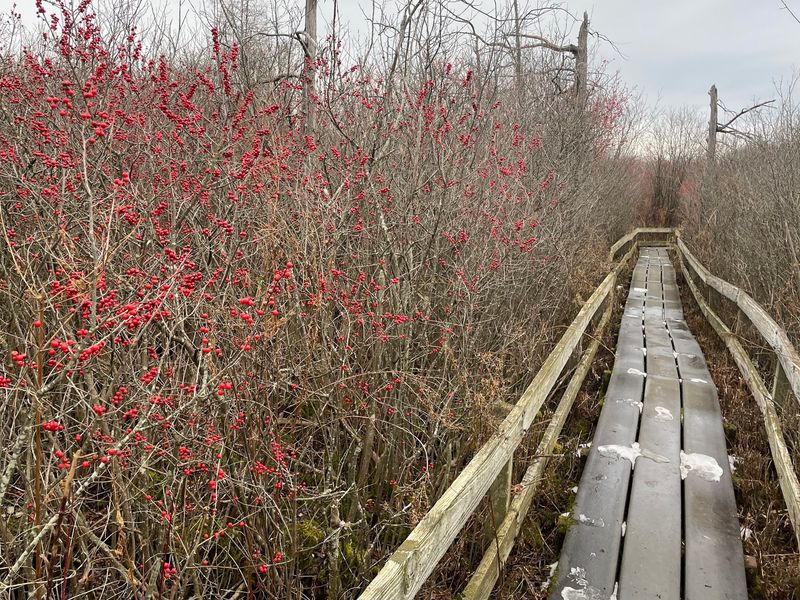
Before the boardwalk existed, the bog’s interior was essentially off-limits to most visitors. The floating mat is too unstable and too ecologically sensitive for open foot traffic, and the acidic hydrology that supports carnivorous plants is easily disrupted by soil compaction, introduced nutrients, or physical disturbance.
The Illinois Nature Preserves Commission describes the approximately half-mile interpretive trail as the designated path for exploring the wetland, with boardwalks carrying visitors through the wet areas where walking on solid ground would be impossible.
Staying on the boardwalk is more than a suggestion. IDNR ecology materials for Volo Bog explain that the bog’s floating soils and fragile hydrology are the reason visitors are directed to the designated route rather than allowed to wander freely across the mat.
Stepping off the boardwalk compresses the peat, damages the moss, and can alter the water chemistry in ways that harm the very plants people came to see. Responsible visitors stay on the path, resist the urge to reach out and touch plants along the edge, and treat every organism in the bog as something to observe rather than handle.
Collecting anything from the preserve is a separate matter entirely. Illinois administrative rules governing dedicated nature preserves prohibit removing plants, flowers, soil, water, rocks, or other natural objects except under narrowly defined written-permit or management exceptions.
That prohibition applies to pitcher plants, sphagnum moss, peat, and anything else a visitor might be tempted to pocket. The sundew’s disappearance from Volo Bog is a reminder that even small-scale collecting, repeated across many visitors over many years, can eliminate a species from a site entirely.
The boardwalk itself is the preserve’s most important piece of infrastructure, and it deserves some practical honesty: it has received temporary repairs and a full replacement is planned. Treat it as a working trail, not a polished attraction, and move carefully on any sections that feel uneven underfoot.
Plan Around Conditions Before You Go
Volo Bog State Natural Area is located at 28478 West Brandenburg Road, Ingleside, Illinois. According to IDNR, site gates generally open at 8 a.m. and close at a seasonal time posted at the entrance; visitors are asked to return to the parking lot at least 30 minutes before sunset.
The preserve is closed on Christmas Day and New Year’s Day, and weather can cause delayed or limited openings on other days. Calling ahead at 815-344-1294 is the most reliable way to confirm current access before making the drive.
The visitor center is generally open Wednesday through Sunday, 9 a.m. to 3 p.m., though staffing and hours are subject to change. Guided one-hour bog tours are generally offered most Saturdays and Sundays at 11 a.m. and 1 p.m., and registering or confirming availability in advance is strongly recommended.
A guided tour adds ecological context that makes the plants and habitat much easier to understand and locate.
The boardwalk’s condition is worth knowing before you arrive. IDNR notes that the interpretive boardwalk has received temporary repairs and that a full replacement is planned; the current structure should not be assumed to be in pristine condition.
Check for any posted closures at the IDNR current site closures page before heading out, especially after heavy rain or winter weather.
Mobility considerations matter here. The IDNR accessibility page for Volo Bog states that the interpretive boardwalk has varied surfaces, a slight incline at the entrance, and is not wide enough to accommodate a wheelchair.
Visitors who use wheelchairs or have significant mobility limitations should contact the site directly to discuss what portions of the preserve may be workable for them. Pets are not permitted on the interpretive boardwalk because of the wetland’s sensitive chemistry, though they are allowed on other trails when leashed to no more than six feet.
The state also notes that service animals are not permitted on the interpretive boardwalk due to endangered species and fragile hydrology concerns, so service-animal users should call ahead to understand their options before visiting.
Volo Bog Rewards Careful Looking
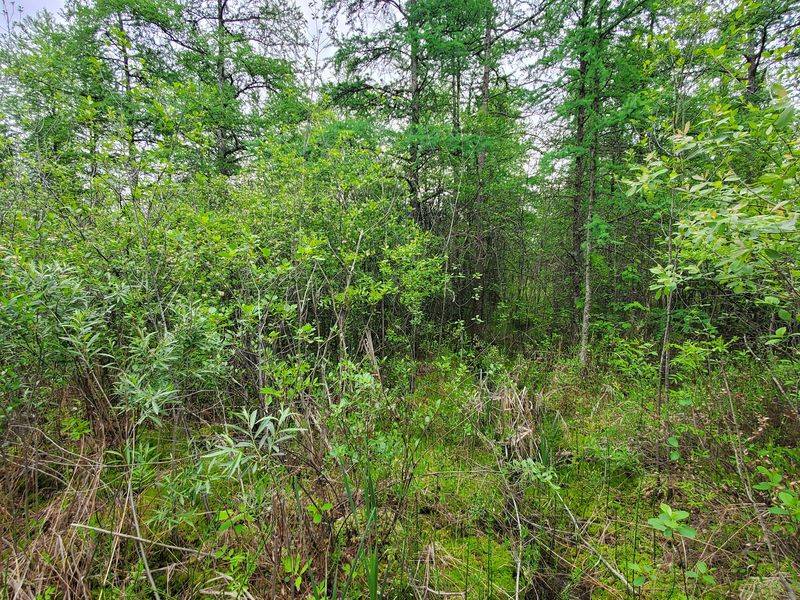
Volo Bog does not promise a dramatic wildlife show. What it offers is rarer: an honest, close-up look at a wetland type that has nearly vanished from Illinois, accessible from a floating boardwalk that few other destinations in the Midwest can match.
The IDNR site page frames Volo Bog as a place to encounter Illinois’ only open-water quaking bog and to learn about the ecology that makes it work.
Pitcher plants are worth searching for along the boardwalk, with the understanding that a sighting depends on season and conditions rather than being guaranteed. Sundews are part of the bog’s history and a reason to care about protecting what remains.
Friends of Volo Bog describe the ecosystem honestly, including its losses, and that honesty is a good model for how to visit. Verify hours and boardwalk conditions before you go, stay on the designated route, leave every plant and handful of moss exactly where you found it, and let the bog remain the kind of place future visitors can discover for themselves.