
This Illinois Route 66 Museum Will Take You On A Trip Down Memory Lane
After miles of open highway, Litchfield feels like the kind of place where the road finally exhales. The pace slows, roadside details sharpen, and the long story of Route 66 starts to feel close enough to touch.
The highway through this stretch of Illinois has a way of feeling personal, marked by the people and places that grew up beside it. A local museum and welcome center gathers those memories under one roof, where polished chrome, weathered photographs, and hand-told stories share the same space.
Nothing feels staged or distant. The atmosphere carries the easy warmth of a place shaped by people who care deeply about the road running through their town.
Take your time while you’re there. The displays are best enjoyed slowly, and it’s often the smallest details that stay with you long after you leave.
A First Glimpse That Feels Like Ignition
The moment you step through the doors, the space feels like a friendly handshake from the past. Light spills across polished floors, catching chrome edges and glass display cases, while vintage service-station memorabilia helps set the scene.
You catch the hum of conversation from a volunteer who sounds like they have known this road their whole life, and suddenly the drive that brought you here feels like prelude.
Big bold maps float on the walls, inviting you to trace the old ribbon of Route 66 with your finger. Classic roadside artifacts and period displays tug at your gaze, and the scent of aged paper, rubber, and a hint of dust gives everything a gentle, lived in honesty.
There is no pretense here, just hometown pride and careful curation.
Start with the overview panels to anchor your bearings, then wander slow. You will notice names and dates that stitch Litchfield into the national road story, and that sense of belonging sinks in fast.
If you arrive near opening hours, the rooms feel calm and welcoming.
Later in the day, expect a livelier buzz that adds friendly color.
Stories In Steel, Rubber, And Neon
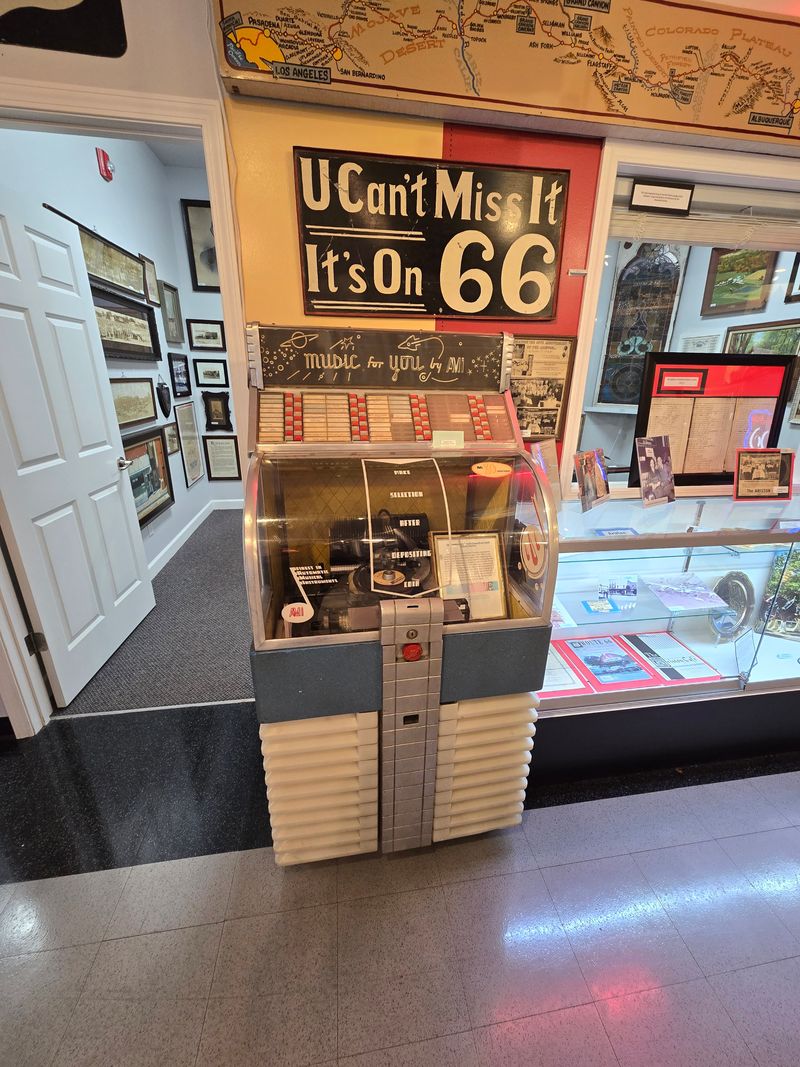
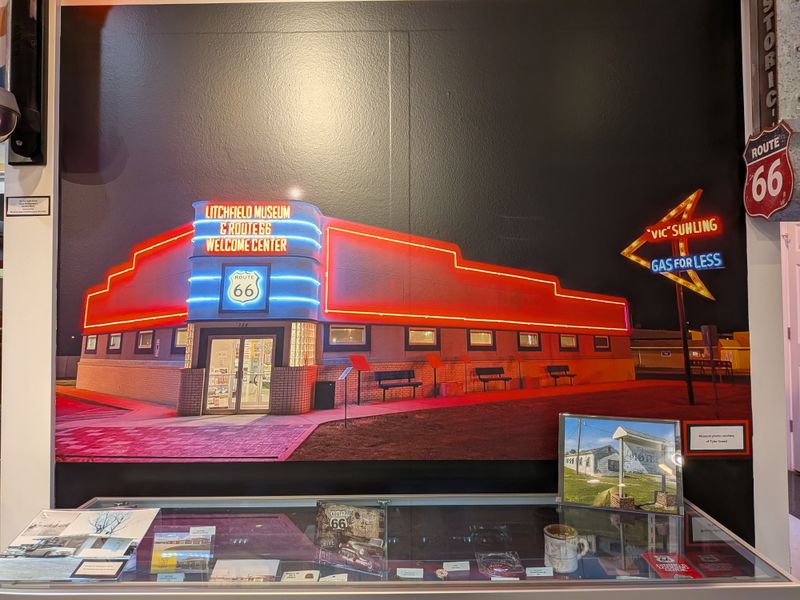
The glow of vintage signage is one of the first things that draws you in. Inside the Litchfield Museum & Route 66 Welcome Center, the lighting feels warm rather than theatrical, letting each sign settle into the space the way it might have along the roadside decades ago.
A classic Route 66 shield hangs prominently, its familiar shape grounding the room while nearby chrome details catch the light in soft reflections.
Spend a few minutes with the displays and the craftsmanship starts to stand out, hand-bent neon tubing, layered paint, lettering styles that once had the job of pulling tired drivers off the road for the night.
Panels walk through how highway advertising evolved, back when color, size, and a clever name did all the convincing.
The museum sits at 334 Historic Old Route 66 North in Litchfield, Illinois, and the location feels fitting once you’re inside. Volunteers are often happy to share backstories about specific signs, adding context you wouldn’t get from labels alone.
Photographs nearby show these pieces in their original settings, glowing above diners, motels, and service stations, which makes the whole experience feel grounded and personal rather than staged.
The Ariston Cafe Connection
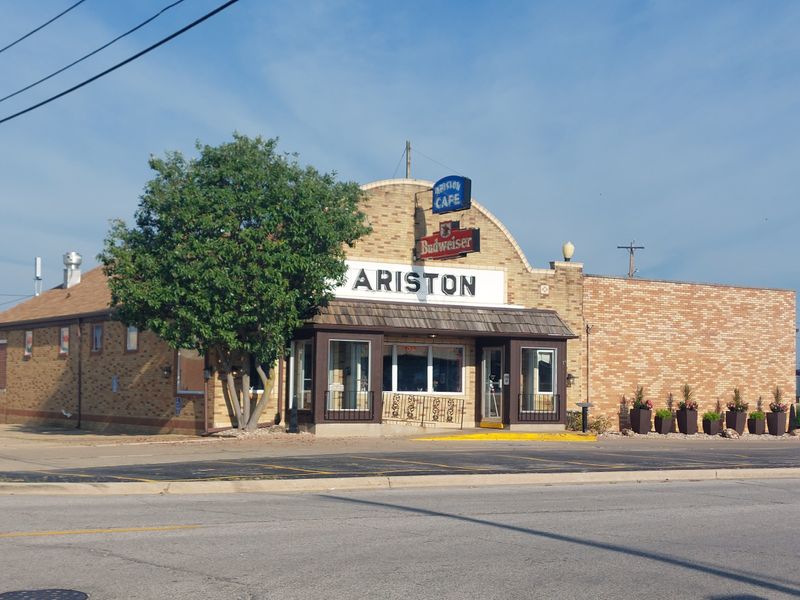
If Route 66 is a long conversation, the Ariston Cafe is one of its best punchlines. Nearby landmarks like the Ariston Cafe deepen the Route 66 story, and many visitors pair a museum visit with a stop there.
You will see faces frozen in laughter, roadside clothes that never go out of style, and a sign that has learned the art of patience.
The panels explain how the Ariston built loyalty the old fashioned way, with hospitality traveling by word of mouth and the occasional magazine mention.
There is a rhythm to the display that mirrors a meal: appetizer of early history, main course of community, dessert of nostalgia that lingers. You can almost hear silverware clink and a bell ring from the kitchen.
It is a perfect reminder that Route 66 was never only about cars.
It was about people meeting halfway and deciding to return. Before you leave town, mark the cafe on your mental map for post-museum plans.
The museum does not serve meals, but it serves up great hunger for the kind of place that still remembers your name.
Wheels, Fenders, And The Art Of Going
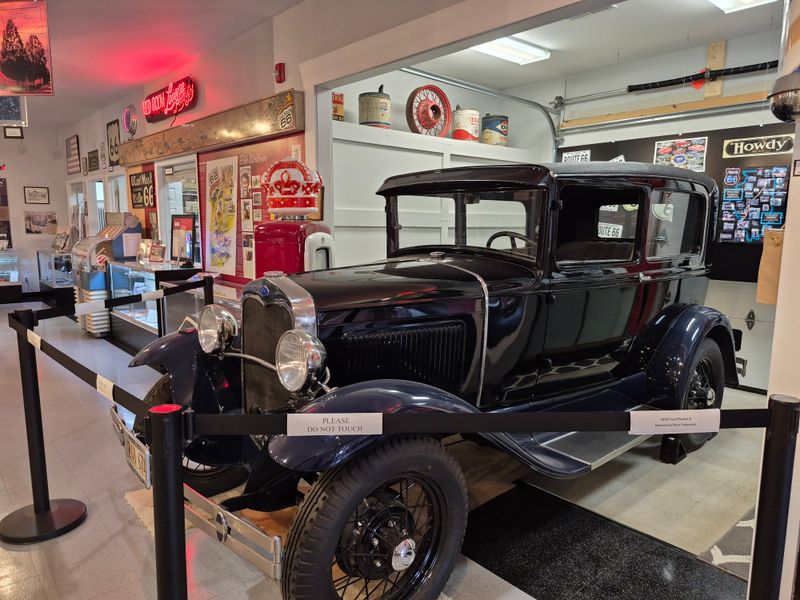
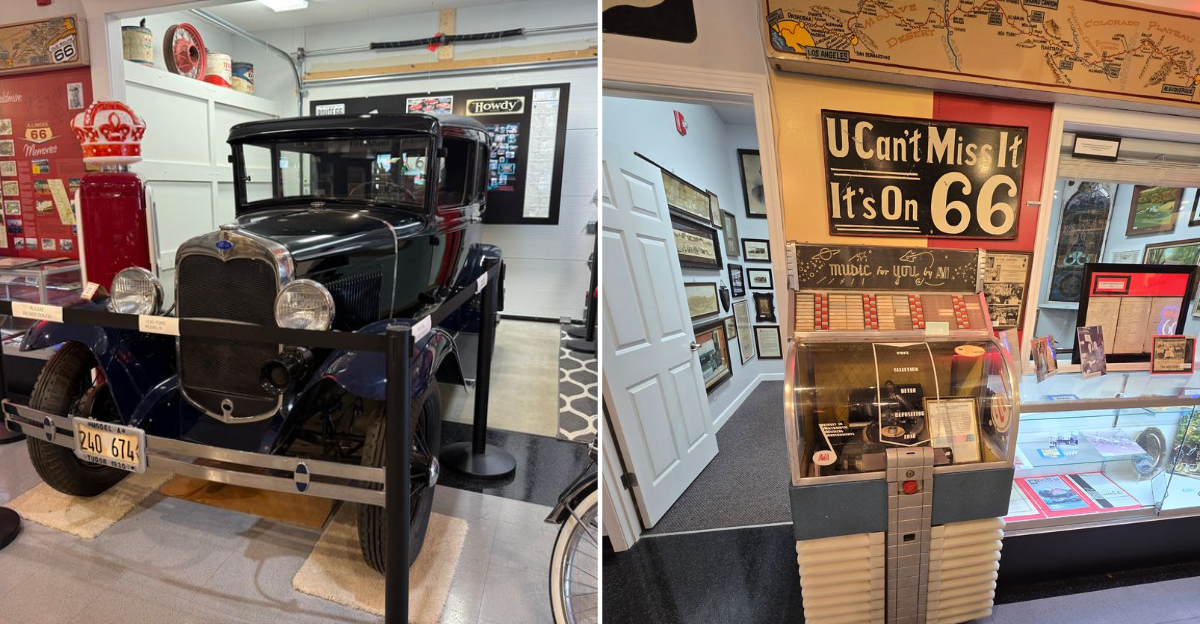
There is a point where a curve of fender stops being metal and becomes sculpture. That feeling shows up here in vintage automotive displays and restored vehicle details.
You will find license plates marching by year, small rectangles that carry an entire season of wind and weather in their scuffs.
Automotive exhibits and vehicle displays invite slow gazing, making the mechanics feel like choreography. The signage stays friendly, translating torque and timing into something you can hold in your head.
It helps to crouch down for a low angle look, where reflections layer up and the car’s silhouette reads like a skyline.
Stories beside the vehicles connect them to families, road trips, and local parades. The point is not horsepower bragging but the feeling of going with purpose.
You may catch yourself planning a drive that follows the old road, just to hear the tires sing at 40 miles an hour.
Take a photo near the display, but do it after studying the details. The beauty here will not rush you, and you will not want it to.
Small Town Legends And Roadside Lore
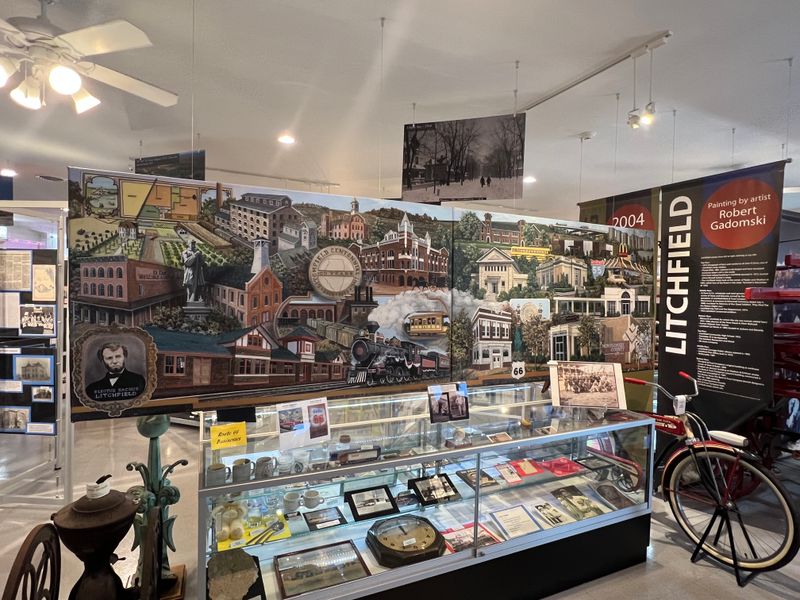
This corner feels like a scrapbook blew open in the best possible way. Postcards sit beside matchbooks, and each one nudges a story to the surface.
You will see travel stamps and scribbled notes that sound like quick hellos to future selves, proof that the road was always both map and mirror.
Read the captions and you will meet local characters who turned hospitality into art. There are tales of roadside fix it know how, of families who could read the sky better than any forecast.
The museum connects those vignettes to broader history, keeping the tone light while making the point that ordinary days add up to something extraordinary.
Photographs in black and white slow your pace. A motel’s shade trees, a station dog sleeping in the doorway, a kid with a paper cone of fries, all of it lands soft and true.
You walk away holding a few lines you will repeat later in the car. That is the power of lore: it follows you, hitching a ride without asking.
Practical Magic: How To Visit Well
Here is the game plan that keeps your visit smooth and happy. From April through October, the museum is open Monday through Saturday from 10 AM to 4 PM and Sunday from 1 PM to 4 PM.
From November through March, it operates Tuesday through Saturday from 10 AM to 4 PM, with seasonal and holiday closures.
Check the official website or call ahead before you set out, as the museum observes several holiday closures throughout the year. Admission is free, though donations are welcomed to support the museum’s programs and preservation work.
Parking is straightforward, with ample free parking available near the entrance. The building is visitor-friendly, and accessibility features appear to be available, though calling ahead is recommended for specific mobility needs.
Bring a light sweater if you tend to get chilly in climate controlled spaces. Snap photos, but be mindful of signs that limit flash near delicate artifacts.
Best timing tip: arrive near opening for quiet browsing, then circle back to favorite exhibits once more visitors arrive. If you are road tripping, the Welcome Center has maps and advice that sharpen a whole day of exploring.
Ask about current Route 66 happenings, because you might catch an event that adds extra sparkle. Leave room in your schedule for a nearby bite afterward.
Architecture With A Wink To The Road
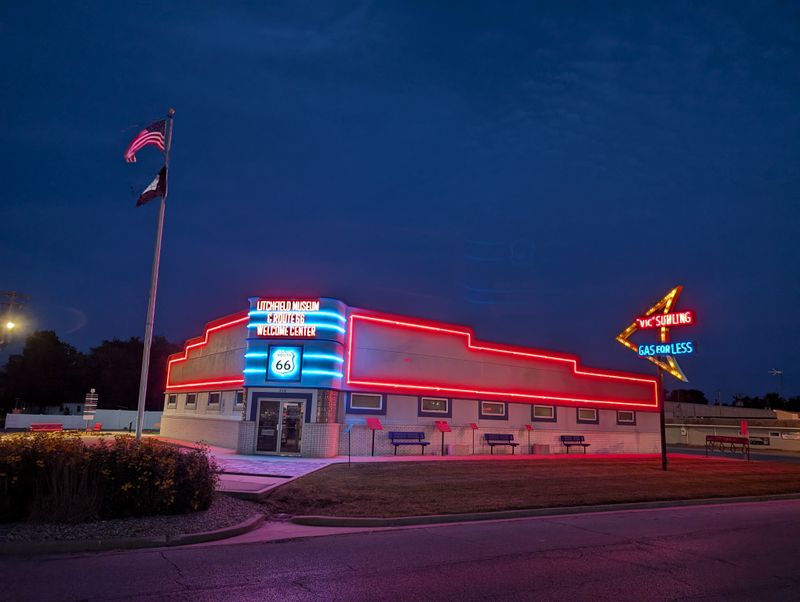
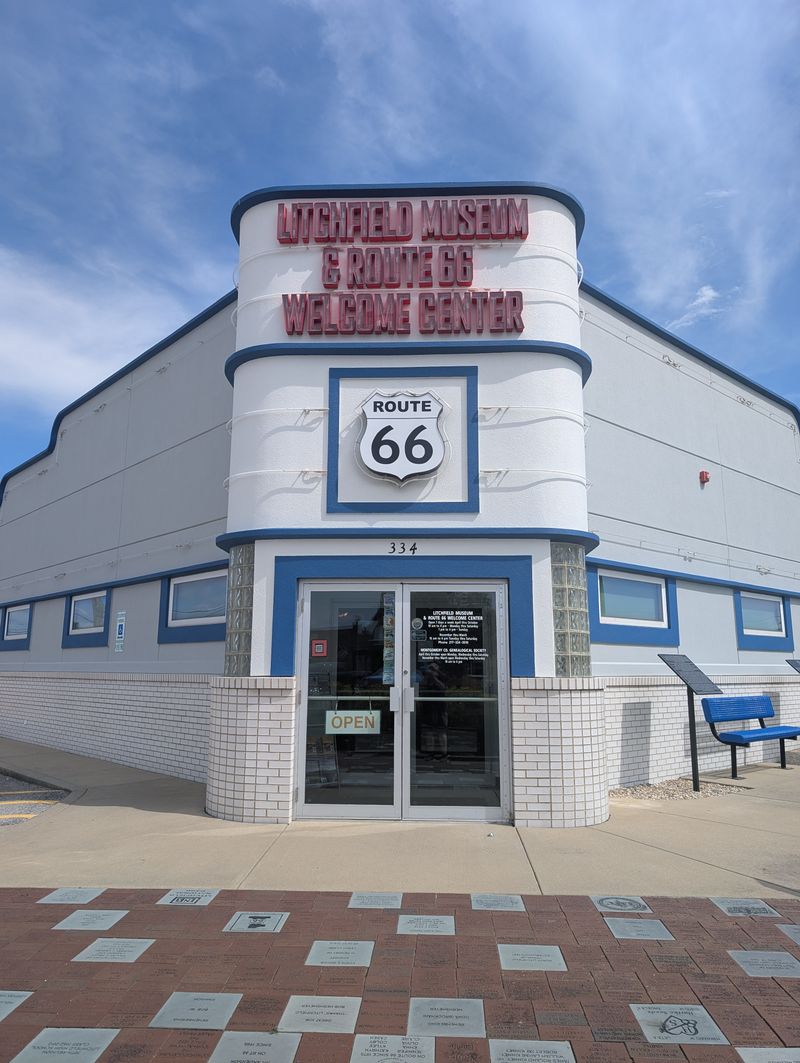
From the outside, the building plays it cool and confident, like a traveler who knows the route by heart. Clean lines meet retro cues, and the famous shield assures you you are in the right place.
The entrance sits ready for photos, a frame where families, friends, and solo wanderers set their smiles to cruise control.
Stand back across the lot to take in how the museum fits the town. Grain elevators in the middle distance, a ribbon of old road nearby, and the Midwest sky making everything feel possible.
It is an easy stop, not fussy or hidden, which suits the spirit of a highway that always aimed to welcome.
Look for exterior details and signage that nod to the spirit of Route 66 travel. The building is not pretending to be an artifact.
It is a good neighbor, purpose built to keep stories alive. That balance feels right the second you notice it.
Before you go inside, take a breath. The road energy is already in motion.
Hands-On Moments That Stick
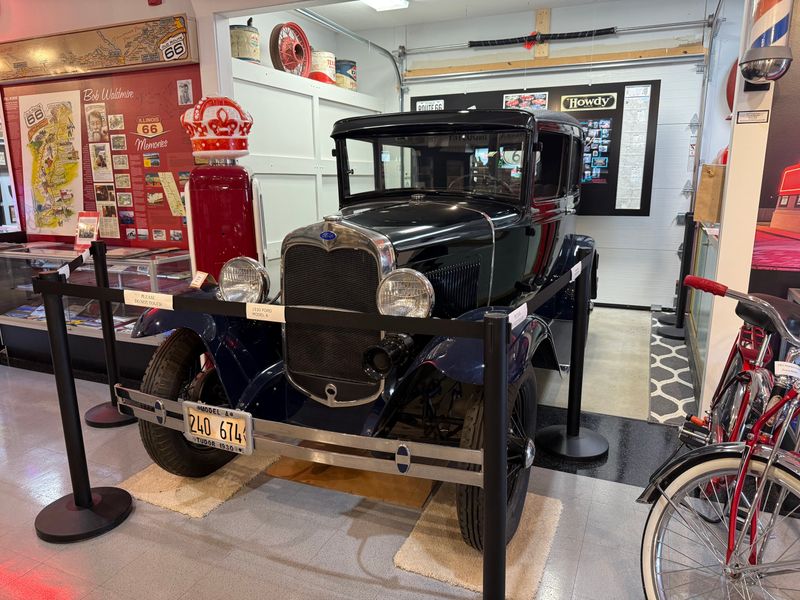
Even without pressing a single button, you feel invited to participate. Interpretive displays and maps help visitors trace the route and discover notable stops along the way.
Kids get wide eyed, adults turn into kids, and suddenly everyone is swapping ideas for the next roadside detour.
There are tactile cues everywhere, from textures in display design to the way captions guide your gaze. You will not find carnival gimmicks here.
Instead, simple, thoughtful prompts that reward curiosity. The tone stays conversational, which makes every fact easier to keep.
If a volunteer offers a quick demo or a story that pairs with a display, take it. These docents are local memory keepers, and they know what makes a detail click.
You leave with practical knowledge and a head full of possibilities.
Later, when the car clock blinks 2:17 and the highway hums steady, something you learned here will slide back into focus. That is when you realize the museum is still riding shotgun.
Why This Place Feels Personal
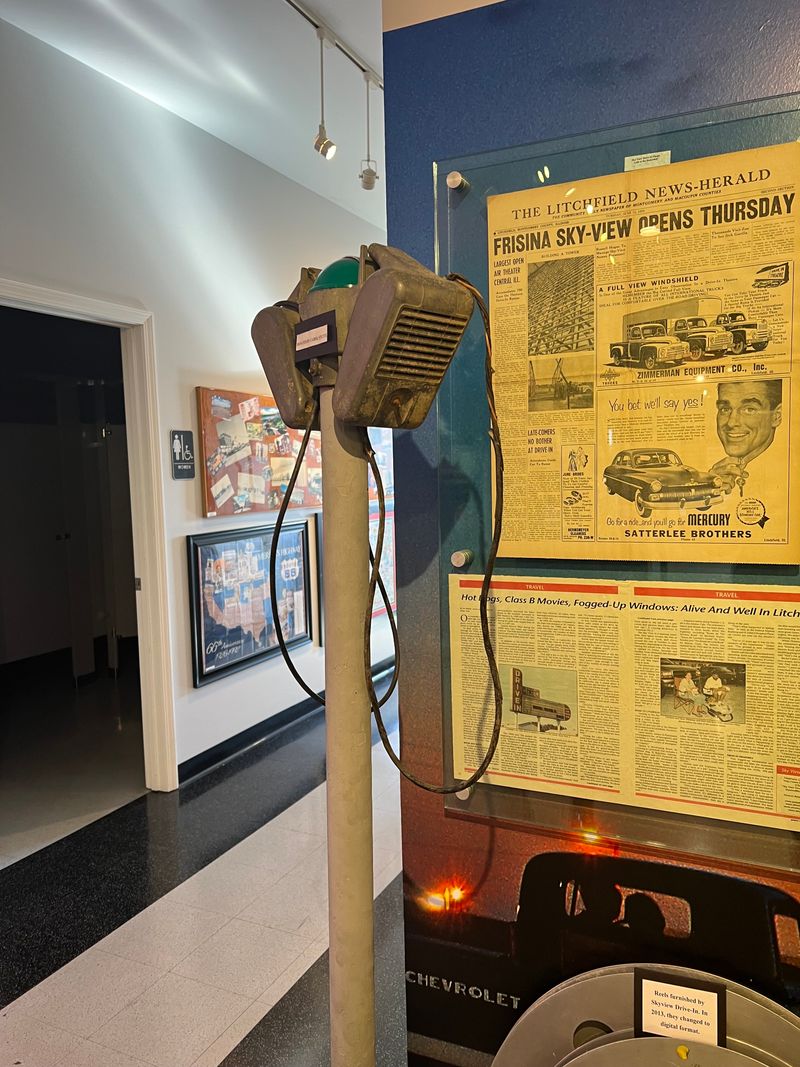
Some museums can feel a little distant, like places you pass through quietly. This one feels more personal, closer to visiting someone who genuinely wants you there.
The space is approachable, the stories are rooted in the community, and the exhibits are arranged in a way that makes you feel included rather than talked at. You’re not just reading history, you’re connecting to it.
The emotional moments tend to catch you off guard.
It might be an old photograph of a couple saying goodbye beside their car, or a worn map tracing a route through a town you once drove past without a second thought. You’re aware you’re looking at the past, but it still feels immediate, almost familiar.
Before you head out, it’s worth slowing down for the smaller details, a handwritten receipt, a well-used road atlas, a toolbox showing years of honest wear. Find a place to pause for a minute and watch other visitors take it all in, especially when they first notice the glowing signs.
There’s something satisfying about seeing that same spark of recognition you felt when you walked in. That’s when the visit settles in and becomes something you carry with you.
Your Route 66 Launchpad In Litchfield
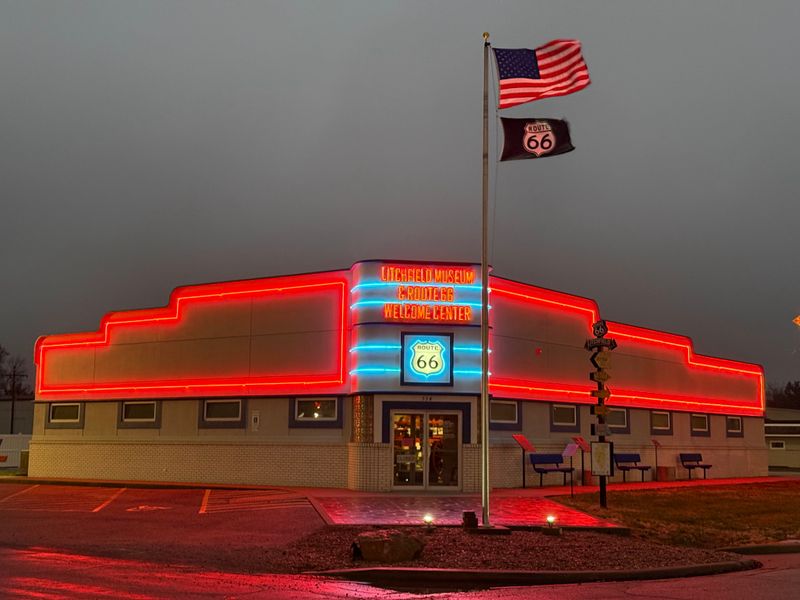
Think of this museum as your starting line for the miles ahead. The Welcome Center offers brochures, maps, and travel tips to help plan your Route 66 journey.
You can ask about construction, scenic detours, local eats, seasonal quirks, or which time of day gives you the prettiest light for photos. No hard sell, just neighborly guidance with a smile.
Hours are consistent but can shift around holidays, so plan a quick check before arrival. If you are corralling kids, the staff will steer you toward short, rewarding stretches that save energy and patience.
Visitor amenities are available on site, making it a comfortable stop along the route.
When you roll out, you will carry more than a stack of pamphlets. You will have a storyline for the rest of your day, maybe even your week.
The old road runs close, and you can take it at a humane pace that leaves room for surprise.
That is the secret here: you get direction without losing the joy of discovery. The highway thanks you for that.