
This Illinois State Park Has Incredible Bluffs That Will Leave You Speechless
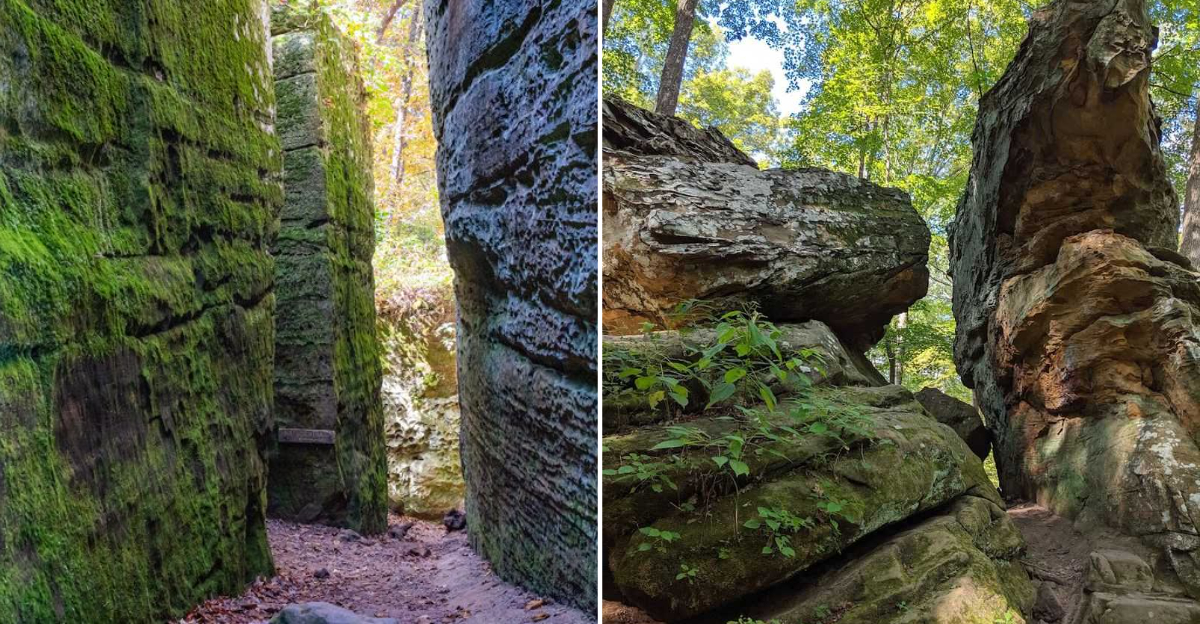
I still remember rounding a bend on a quiet trail in southern Illinois and suddenly stopping in my tracks. A towering wall of sandstone rose straight up ahead, high enough to block out the afternoon sun and make everything feel hushed and small.
This place lives up to its larger-than-life reputation without trying too hard. Spread over roughly 4,000 acres of forest, rugged bluffs, and protected land, it packs an incredible amount of geological drama into a part of Illinois that often flies under the radar.
It’s the kind of landscape that shifts your perspective in an instant. One minute you’re walking through the woods, the next you’re dwarfed by rock formations that feel almost architectural.
For anyone craving that sense of awe you don’t expect in Illinois, this spot delivers in a big way.
The Sandstone Bluffs That Gave the Park Its Name
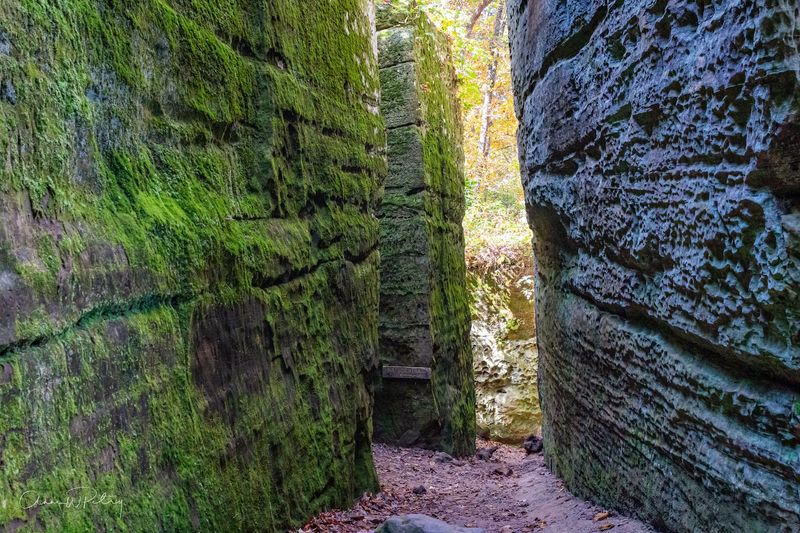
It doesn’t take long on the Giant City Nature Trail to see why early settlers thought it felt like walking through city streets.
Massive sandstone walls rise up on both sides of you, tall, straight, and close enough in places that it really does feel like you’re moving through a stone corridor.
These formations took shape over an incredibly long time, shaped by shifting layers, erosion, and water working its way through the rock. The result is something that feels a little unreal, especially when sunlight filters down through the trees and throws shadows across the walls.
One of the best parts is that the whole loop is only about a mile long, so it’s doable for just about anyone. You could walk it in under an hour, but most people don’t.
Once you’re in there, you naturally slow down, looking up, running your hand along the rock, taking it all in. It’s the kind of place that quietly demands your attention.
A Forest That Sits Inside A National Forest
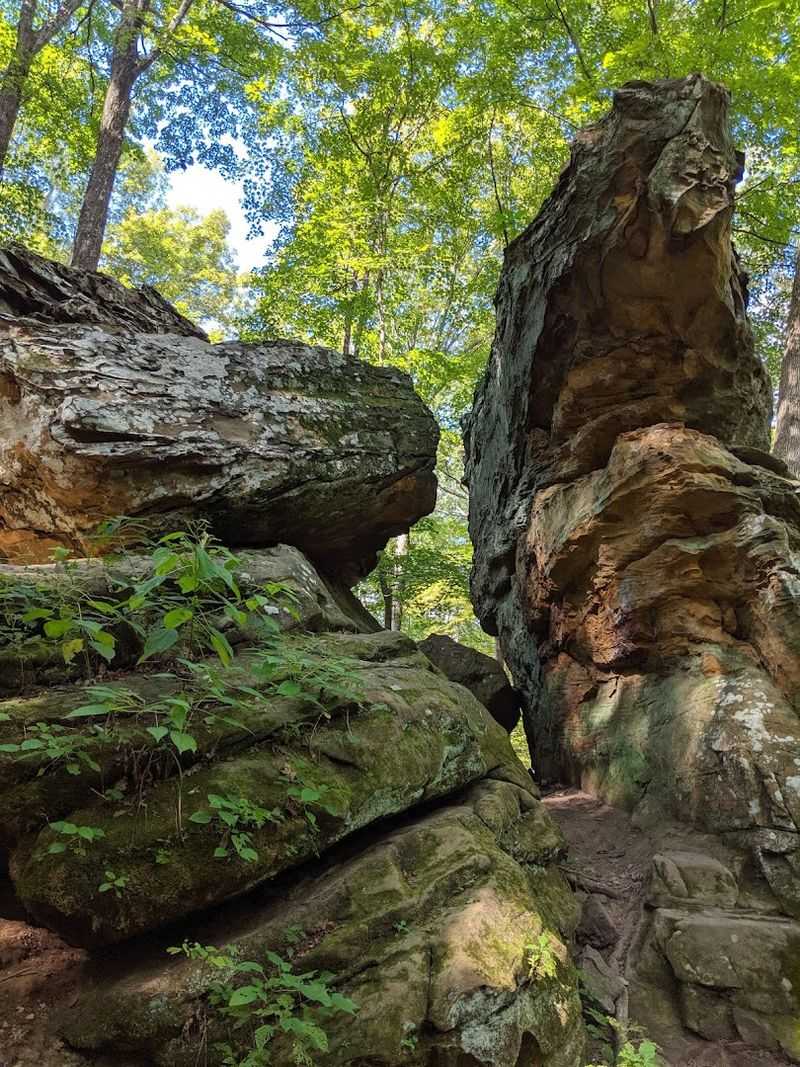
Here is something that surprises a lot of first-time visitors: Giant City State Park sits within the boundaries of the Shawnee National Forest. That means you are essentially getting a park within a park, a layered natural experience that extends well beyond the state park boundaries in every direction.
The surrounding Shawnee forest adds a sense of true wilderness to the visit. The trees are dense, the terrain is hilly and rugged, and the biodiversity is remarkable for a state more commonly associated with flat farmland.
Hardwood species like oak, hickory, and maple create a canopy that shifts dramatically with the seasons. Fall visits reward you with a rich tapestry of color, while spring brings wildflowers pushing up through the leaf litter.
Even winter has its charm, when bare branches reveal rock formations that stay hidden during warmer months. The forest feels pristine, and the trails reflect that care throughout every season you choose to visit.
Hiking Trails For Every Skill Level
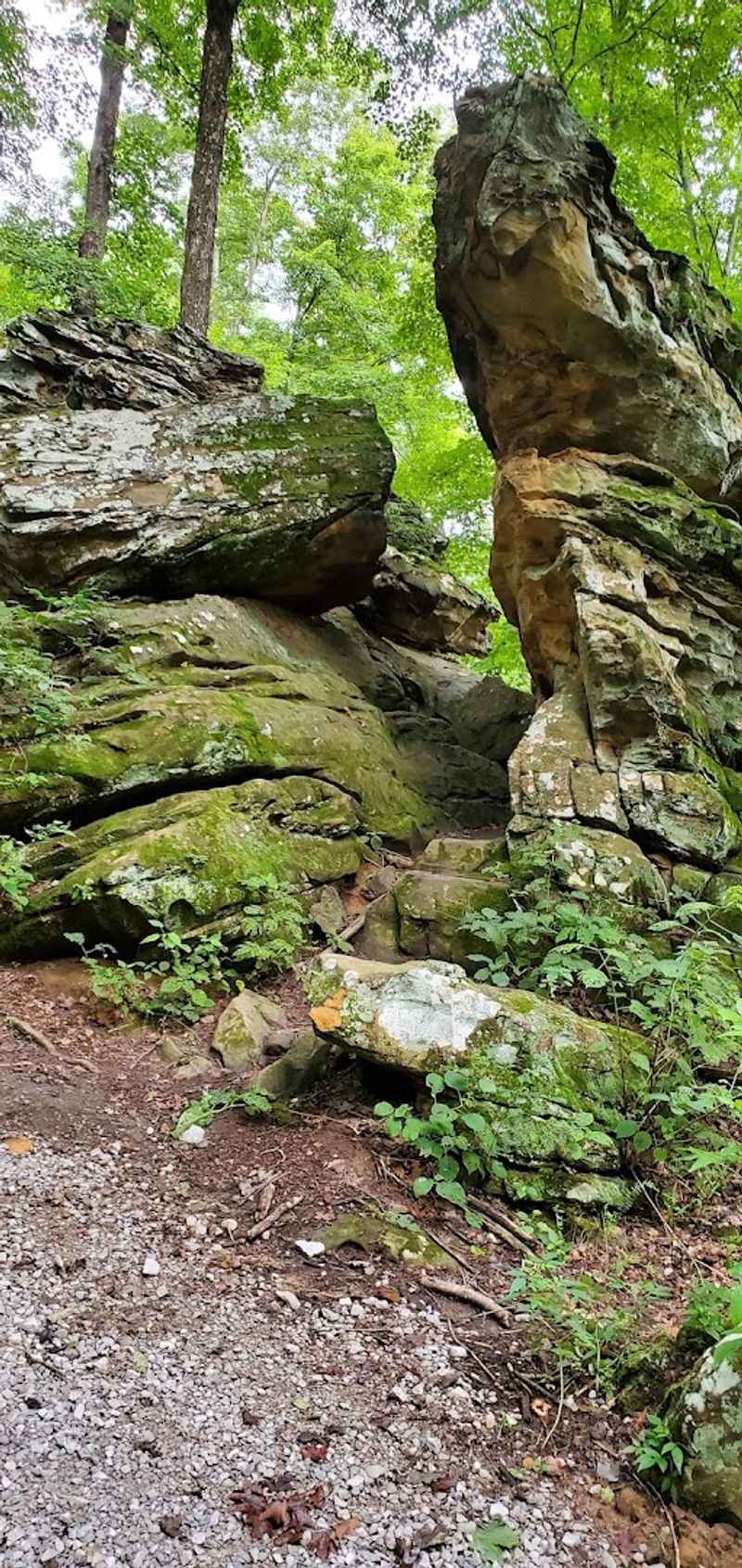
One of the most practical things about this park is that it does not cater exclusively to seasoned trail runners or casual Sunday strollers.
It genuinely has something for both, and everyone in between. The trail system covers a range of distances and difficulty levels, so you can plan your visit around exactly how much energy you want to spend.
The Giant City Nature Trail is the most famous and runs about one mile through the iconic rock formations. The Devil’s Stand Table Trail is a bit more adventurous, leading hikers to a dramatic freestanding sandstone table formation at the top of a ridge.
The Post Oak Trail is a short, easy, partially paved loop designed for accessibility and a relaxed walk through the forest.
Families with younger kids tend to stick to the shorter, flatter paths near the picnic areas, while more experienced hikers head for the rugged terrain closer to the bluffs.
Bringing sturdy shoes is strongly recommended regardless of which trail you choose, since the ground is frequently uneven and rocky throughout the park.
The Historic Giant City Lodge
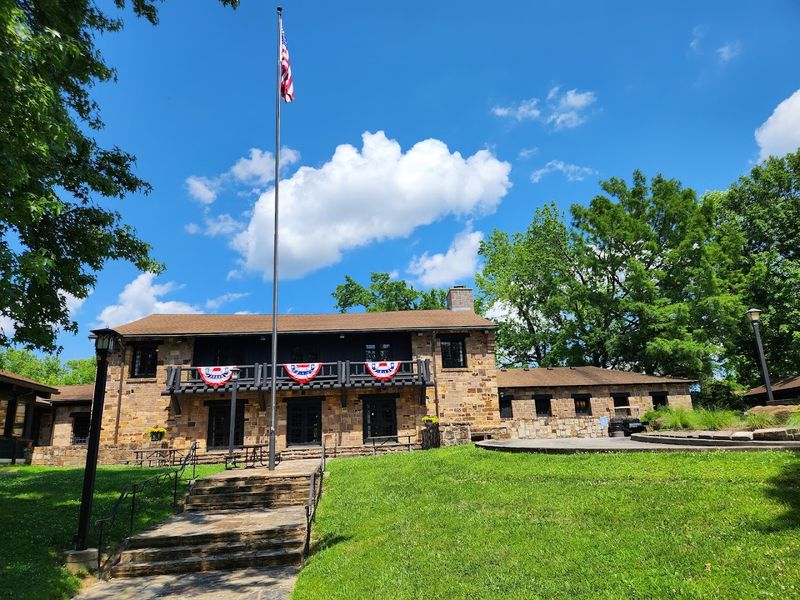
Built in the 1930s by the Civilian Conservation Corps, the Giant City Lodge is one of the most visually striking structures in any Illinois state park.
The building uses massive native stone and heavy timber construction that blends seamlessly into the surrounding forest, giving it a look that feels both grand and completely at home in the landscape.
The lodge houses a full-service restaurant that has become a destination in its own right. Weekend family-style dinners featuring fried chicken and homestyle sides have drawn visitors from across the region for decades.
The dining room itself, with its stone fireplace and wooden beams, adds a warmth to the meal that no ordinary restaurant can replicate.
Beyond the restaurant, the lodge offers cabin accommodations that allow guests to extend their stay overnight. Waking up in the middle of that forest, with birdsong replacing the usual morning traffic noise, is an experience worth planning around.
The lodge is located at 460 Giant City Lodge Rd, Makanda, IL 62958.
Rock Carvings Dating Back To The 1800s
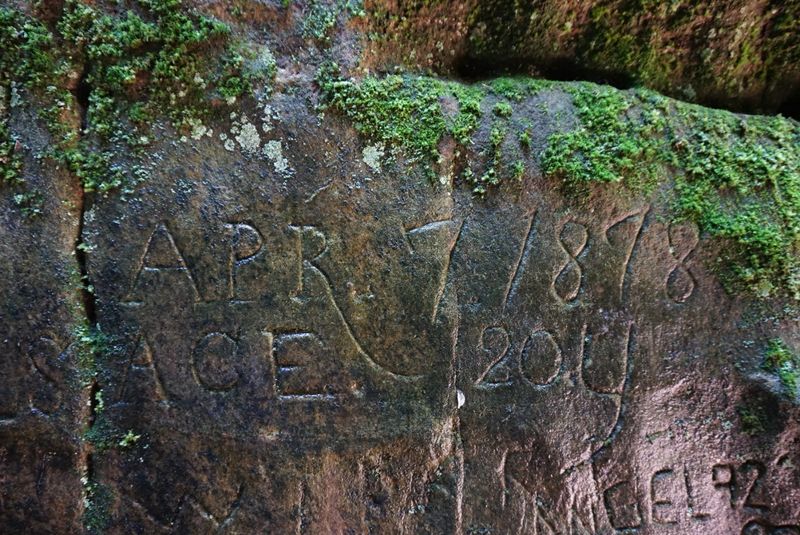
Scattered along the sandstone walls of the park, visitors who look closely will find carvings etched into the rock by people who passed through more than a century ago.
Some of these inscriptions date back to the Civil War era, including an 1862 carving, turning the trail into an unplanned open-air history exhibit that adds a human layer to all that geological drama.
Seeing a date from 1892 scratched into stone that was already millions of years old puts time in a fascinating perspective. These were ordinary people, travelers, settlers, and curious explorers, who wanted to leave a mark in a place that clearly moved them.
Modern visitors are encouraged to look but not add their own names, since preserving the existing carvings is part of protecting the park’s cultural record.
The Visitor Center near the trailhead provides helpful context about the park’s human history alongside its natural one. Staff there are knowledgeable and enthusiastic, and they can point you toward specific spots along the trail where the oldest carvings are most visible and well-preserved.
The Observation Tower

The park’s observation platform above the forest canopy offers one of the most satisfying payoffs in the entire park. The structure is part of a water tower with a viewing platform, rather than a native-stone CCC-era tower.
It looks almost sculptural against the surrounding trees.
Climbing to the top rewards you with wide, unobstructed views across the rolling hills and dense forest of the Shawnee region.
On a clear day, the perspective is genuinely breathtaking, stretching far beyond the park boundaries into a landscape that looks almost untouched by development. It is the kind of view that makes you reach for your camera before you even realize you are doing it.
Visiting the tower in the early morning or late afternoon gives you the best light for photography and the best chance of spotting wildlife in the canopy below. The observation platform is located near the lodge area and is best incorporated into a visit that includes that section of the park.
The Gnome Walk
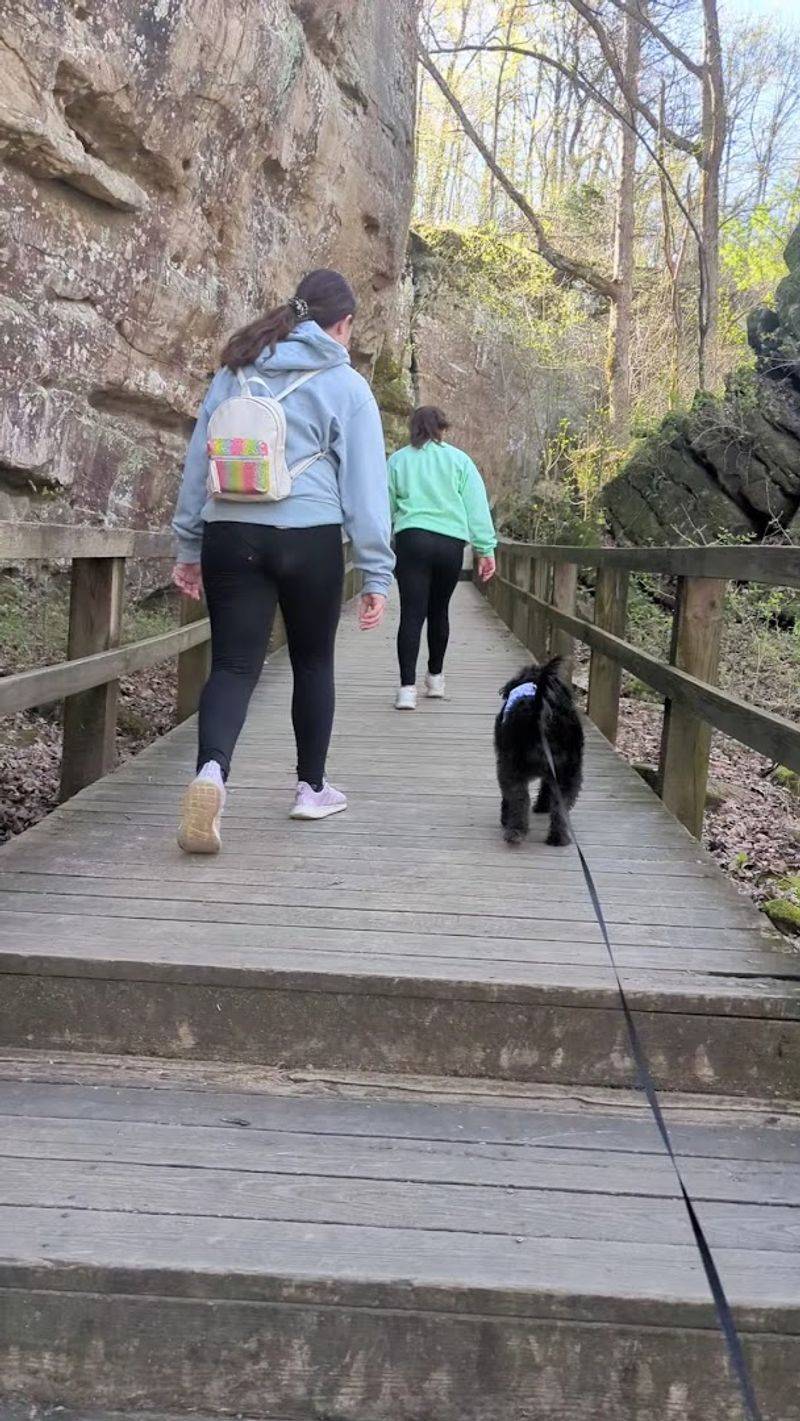
If you have kids in tow, or simply appreciate a touch of whimsy in your outdoor adventures, the seasonal Gnome Roam at Giant City State Park is worth seeking out.
During the winter months, hidden gnome figures are placed along multiple trails, and spotting them becomes an engaging scavenger hunt that keeps younger hikers moving and motivated.
The gnomes are painted and placed with genuine creativity, some peeking out from under tree roots, others perched on rock ledges or nestled in hollow stumps.
The hunt works because the trail itself is beautiful regardless of the gnomes, so even adults who are nominally just along for the ride end up genuinely enjoying the walk.
After participating in the activity, stopping by the Giant City Visitor Center with proof of completion to pick up a commemorative patch is a popular tradition during the event season.
The patches serve as a tangible souvenir that kids and adults alike seem to genuinely treasure as a reminder of the day spent exploring this surprisingly magical corner of Illinois.
The Park’s Most Dramatic Feature
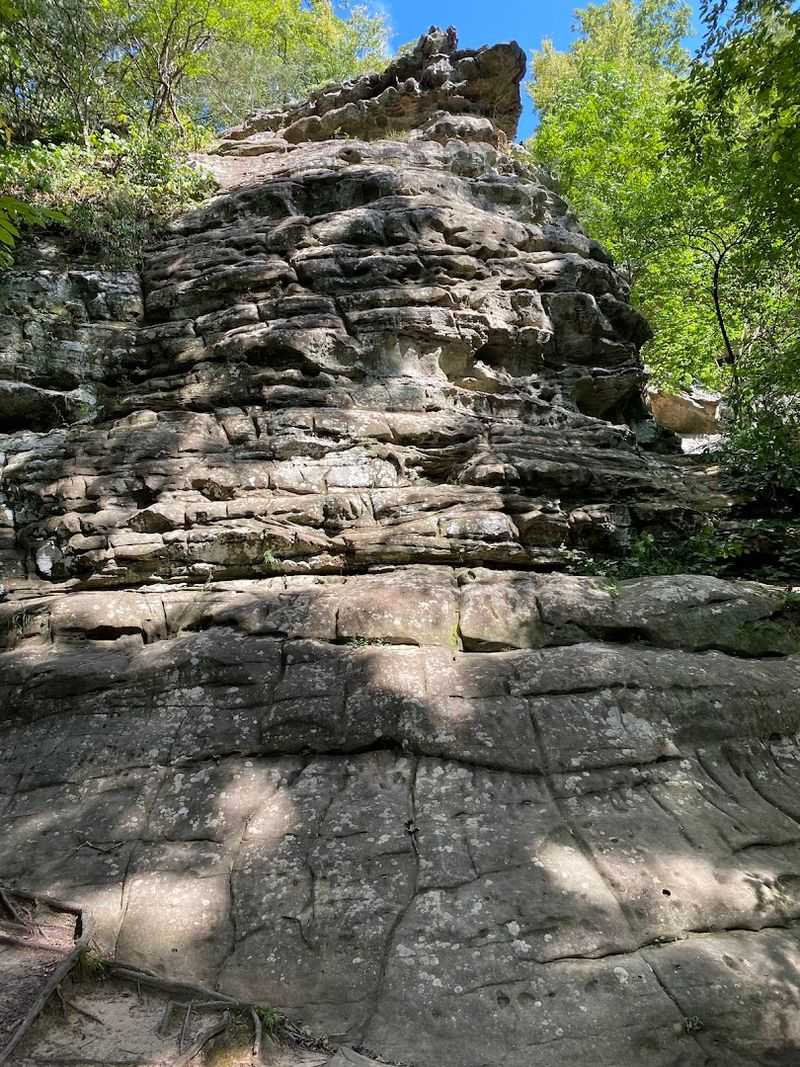
Of all the geological features scattered across the park, Devil’s Stand Table might be the most theatrical. This freestanding sandstone formation sits at the end of the Pin Oak Trail, rising above the surrounding forest like a natural pedestal that time and erosion shaped into something almost architectural in appearance.
Reaching it requires a bit more effort than the main nature trail, but the payoff is significant. The formation sits at a height that offers impressive views of the surrounding ridgeline, and its sheer, flat top creates a visual drama that photographs extremely well in any season.
The trail leading to it winds through quieter sections of the park, adding to the sense of discovery when you finally arrive.
The challenge of actually jumping across to the top of the stand table is something a handful of thrill-seeking visitors attempt each year, though it is genuinely not recommended for safety reasons.
Admiring it from the trail edge is satisfying enough, and the formation looks most impressive from a slight distance where its full scale becomes clear.
Wildlife And Plant Life Worth Watching For
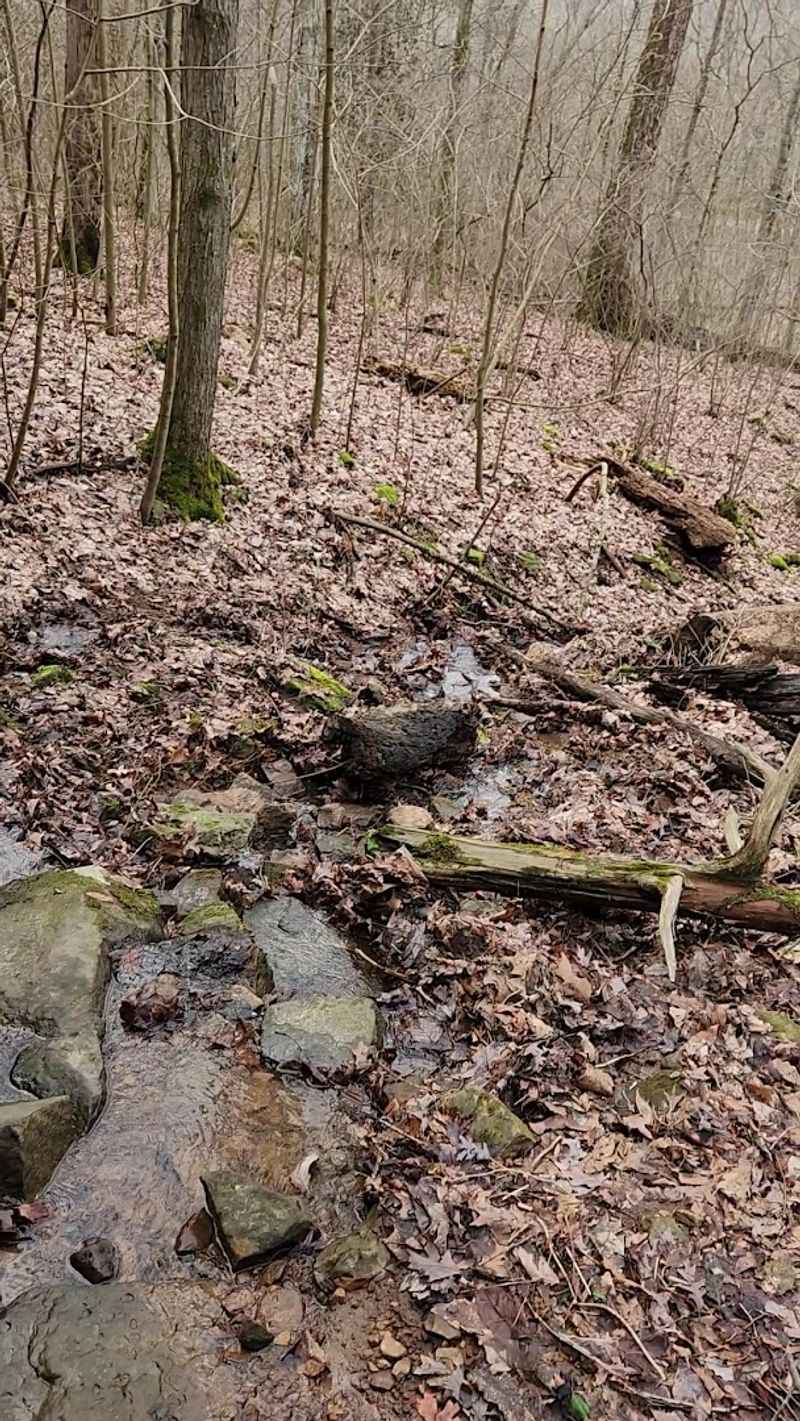
The biodiversity packed into this park’s 4,000 acres goes well beyond the rock formations that draw most visitors. White-tailed deer are frequently spotted near the trail edges, particularly in the early morning hours before the park fills with foot traffic.
Wild turkey, various hawk species, and a rotating cast of songbirds make the park a rewarding destination for anyone who enjoys wildlife watching alongside their hiking.
The forest floor is equally interesting at a slower pace. Mushroom varieties pop up after rainfall, and spring brings a wave of native wildflowers including trillium and wild ginger that carpet the ground beneath the hardwoods.
The park sits in a botanically rich region of Illinois that benefits from the unique soil conditions created by the sandstone geology.
Bringing binoculars and a field guide adds a whole new dimension to any visit here. The park’s location within the Shawnee National Forest means wildlife corridors extend in every direction, giving animals plenty of room to roam freely through the surrounding landscape without pressure from development nearby.
Practical Tips For Planning Your Visit
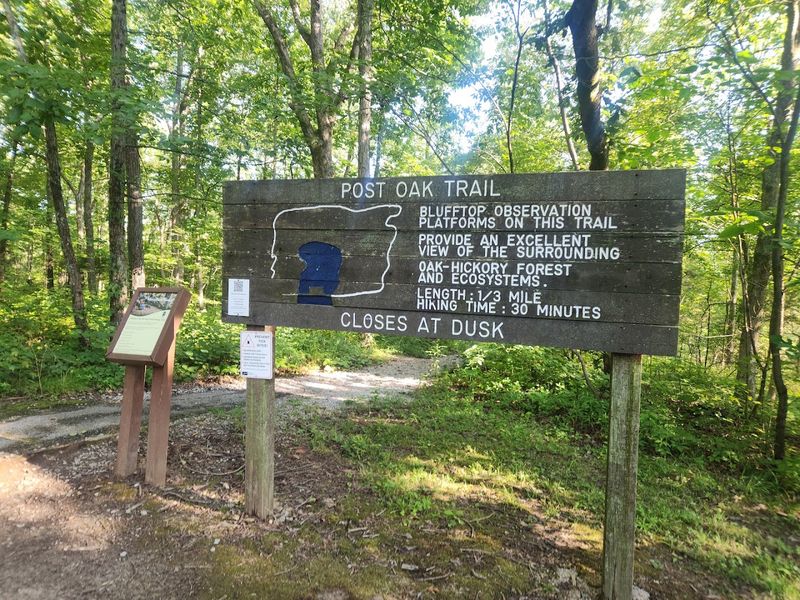
The park is open daily from 7 AM to 10 PM, but the trails themselves close at dusk, so it’s best to plan your hikes earlier in the day or aim for that golden-hour window before sunset.
Parking is spread out near different trailheads, which makes it easy to drive between spots instead of retracing your steps if you want to see more in one visit.
You’ll find restrooms in several areas, especially near the main trailhead and picnic spots. It’s worth stopping by the Visitor Center first for maps, trail updates, and advice from staff who know the park well.
They can also fill you in on any seasonal events or programs happening during your visit.
If you’re thinking about staying overnight, cabin reservations go through the Illinois DNR system and tend to book up fast, especially during fall foliage season.
You can also call ahead at +1 618-457-4836 if you have questions. And no matter when you visit, it’s a good idea to dress in layers and bring plenty of water, since trail conditions and temperatures can shift more than you might expect.