
This Illinois Trolley Museum Lets You Ride Historic Electric Railway Cars Down Original Tracks
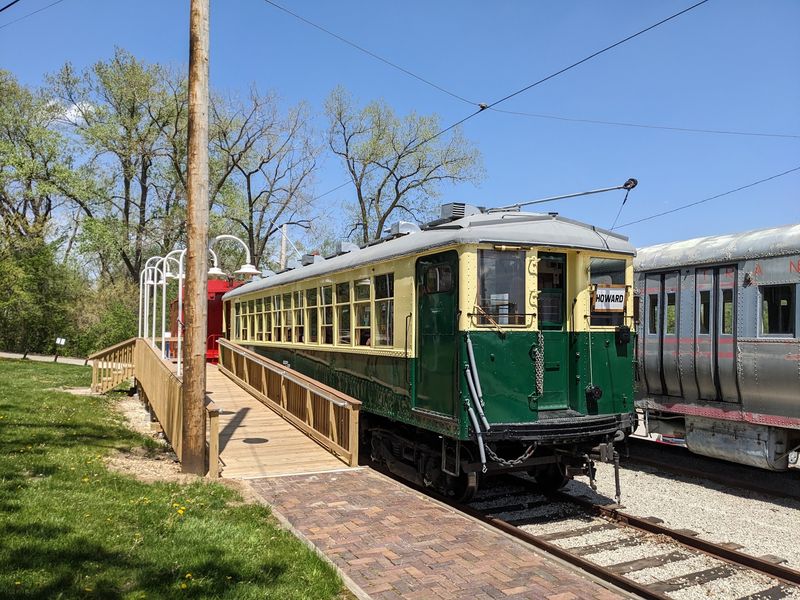
Just west of Chicago, a small museum in South Elgin offers something you can’t find at most history exhibits: a ride on a real electric railway car over tracks that have been in use for more than a century. The Fox River Trolley Museum operates on a surviving section of the old Aurora, Elgin and Fox River Electric route, giving visitors a genuine taste of how people once traveled through the Fox River Valley.
Families, transit fans, and curious day-trippers can board a historic car, listen to the conductor explain what they’re rolling through, and even step off at a forest preserve stop before catching the next train back.
The Fox River Trolley Museum preserves part of an interurban route
Tucked along the Fox River in South Elgin, Illinois, the Fox River Trolley Museum sits at 365 S. LaFox Street and operates on a piece of railroad history that most people drive past without realizing it exists.
The museum’s location is no coincidence: the corridor it uses began as part of the Aurora, Elgin and Fox River Electric Company line, a regional interurban railway that opened in 1896 and once carried passengers between communities along the Fox River Valley.
Passenger service on that line ended March 31, 1935, but a 3.5-mile segment survived for freight use rather than being torn out. The museum later acquired and restored part of that remaining corridor, which is why visitors today can ride over infrastructure that predates World War II.
The museum’s mission centers on preserving that heritage and making it accessible to the public, not on rebuilding the former 40-mile regional network that once linked Elgin, Aurora, and communities in between.
That distinction matters for setting expectations. Historical records show the original line ran along the Fox River between Carpentersville and Yorkville and connected with streetcar systems in Elgin and Aurora.
Most of that network was removed after passenger service ended. What the museum offers is a heritage excursion over a surviving slice of that old route, which is a genuinely rare thing, even if it covers only a fraction of the former line.
Visitors arrive at the Castlemuir depot and board historic electric railway cars that operate on the same railroad corridor freight trains once used after passenger service was gone. Riding over that trackage connects you to a specific chapter of Midwestern transportation history in a way that a photograph or a museum placard simply cannot.
What the two-mile trolley excursion feels like
Boarding at Castlemuir, the museum’s main depot, feels unhurried in the best way. Trains generally depart about every 45 minutes, so there’s time to look around the grounds before the car rolls out.
Once underway, the conductor narrates the trip, explaining the history of the cars, the railroad corridor, and the communities the line once served, so even first-time visitors leave knowing more than they arrived with.
The round trip covers approximately two miles and takes about 30 to 45 minutes, including a 5- to 10-minute stop at Blackhawk Station inside the Jon J. Duerr Forest Preserve.
That pause gives riders a moment to step off, breathe the river air, and decide whether to reboard immediately or stay and explore. Because tickets are valid all day, visitors who want more time at the preserve can catch a later departure back to Castlemuir without paying again.
One detail that surprises many riders: on the return leg, passing beneath Stearns Road, passengers may get a turn blowing the whistle. It’s a small touch, but it shifts the experience from observation to participation in a way that kids and adults both remember.
The car moves at a moderate pace suited to preservation and safety, not the speeds these interurbans once reached in regular service, but the rhythm of the ride over old trackage carries its own quiet appeal.
What the excursion is not is a recreation of the former Chicago-area commuter run. The original line once connected Fox River Valley towns to Chicago’s broader electric railway network, and the trip from Castlemuir to Blackhawk covers only a small portion of what that system once spanned.
Riders should arrive thinking of it as a heritage rail experience on a surviving corridor, which is exactly what it is, and a worthwhile one at that.
The collection includes interurbans as well as streetcars
Calling the museum’s cars “streetcars” works well enough as shorthand for a general audience, but the collection is actually more varied and more interesting than that label suggests. Urban streetcars were relatively small electric vehicles that ran on city streets alongside traffic.
Many of the cars at Fox River are interurbans, larger electric railway cars built for regional routes between towns, with more seating, higher speeds, and a design meant for longer distances rather than city blocks.
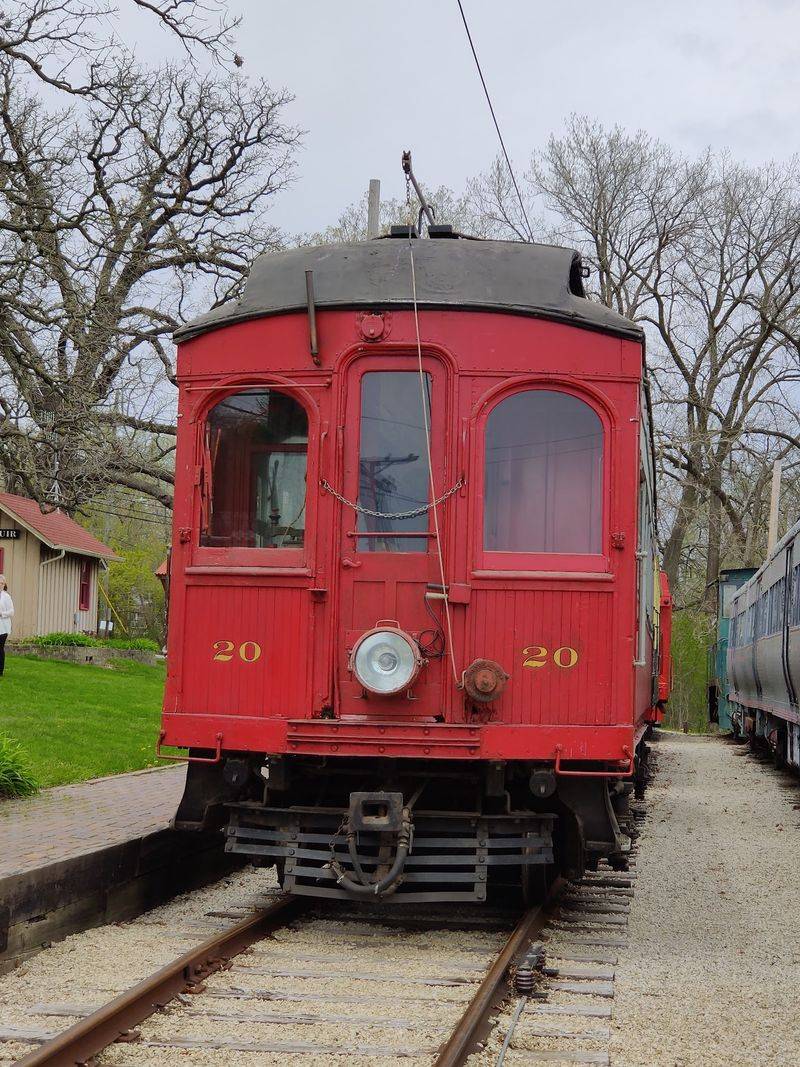
The museum’s roster spans wood interurban passenger cars, lightweight interurban cars, rapid-transit equipment, freight cars, and street-railway vehicles, giving the collection genuine range. Among the most historically notable is Chicago Aurora and Elgin car 20, built in 1902, which is capable of 65 mph but currently needs replacement wheels before returning to service.
Visitors should not count on riding it during a standard visit.
CA&E car 316, built in 1913, is listed as in regular service and represents the kind of century-old equipment that may be operating on a given visit. Aurora, Elgin and Fox River Electric car 304, built in 1923, adds another layer of local history to the roster.
Other cars on the property are listed as occasionally operating, awaiting restoration, or actively under restoration, so the collection is a working preservation program rather than a finished museum display.
Equipment rotates, and the specific car running on any given day is not guaranteed in advance. Checking the museum’s current roster before visiting gives the most accurate picture of what may be operating.
Supporting the museum through donations or membership directly funds the work that keeps these historic cars running at all.
Blackhawk Station turns the ride into a flexible outing
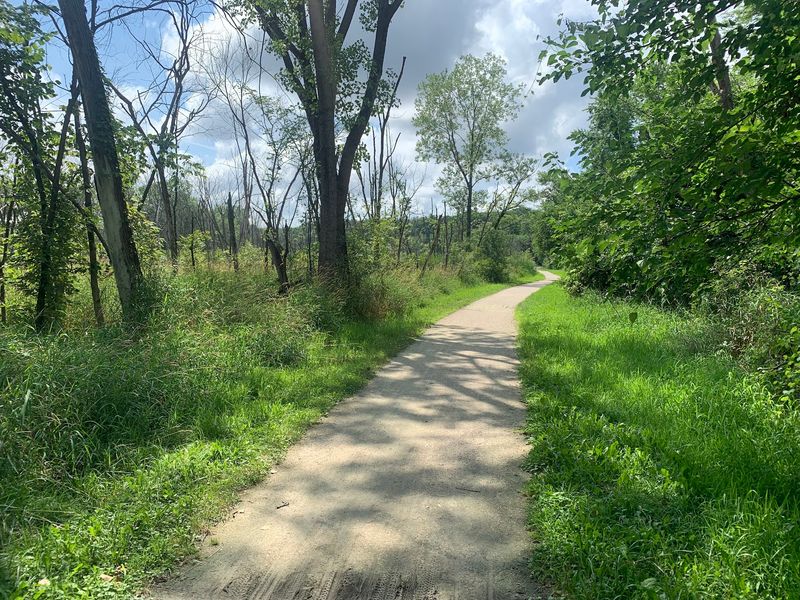
Arriving at Blackhawk Station feels like stepping into a different kind of afternoon. The stop sits inside the Jon J.
Duerr Forest Preserve, and the contrast between boarding an electric railway car in a museum yard and stepping off into a wooded river preserve is part of what makes the outing memorable. Picnic areas, hiking trails, river access, and outdoor recreation options are all available within the preserve, giving families a genuine reason to extend their time at this end of the line.
All-day tickets let visitors disembark at Blackhawk, explore the preserve at their own pace, and board a later train back without any additional cost. A family could ride out, have a picnic lunch along the Fox River, let the kids run a trail, and still make it back to Castlemuir on an afternoon departure.
That flexibility turns a 30-minute ride into a half-day outing without requiring a second ticket purchase.
Trains stop at Blackhawk for roughly 5 to 10 minutes on a standard run, so riders who want to stay longer simply let the car go and wait for the next one. Checking the 2026 operating calendar before the visit helps with timing, since trains run approximately every 45 minutes and knowing the schedule makes planning a preserve stop much easier.
The preserve itself is the museum’s natural complement, not a competing attraction, and treating them as a connected experience gets the most out of the trip.
The museum grounds display a depot, caboose, and outdoor equipment
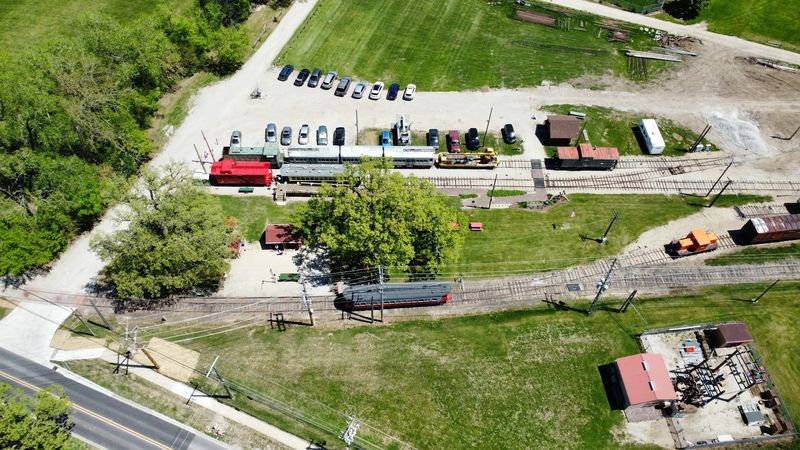
Before or after the ride, the main site at Castlemuir gives visitors plenty to look at without boarding a car. The grounds include the authentic Chicago, Aurora and Elgin Wayne Depot, a restored structure that once served actual commuters on the CA&E line and now anchors the museum’s sense of place.
Standing next to it, you get a concrete sense of the scale at which these electric railways once operated across the Chicago region.
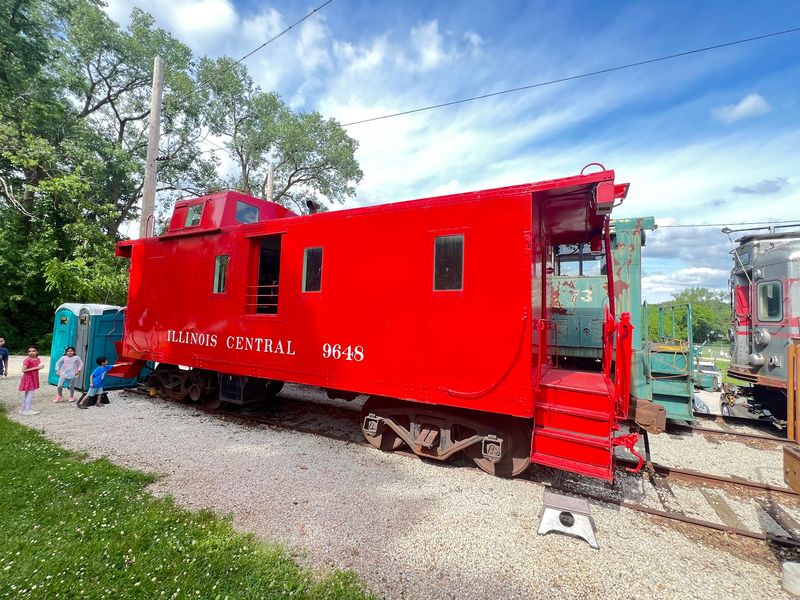
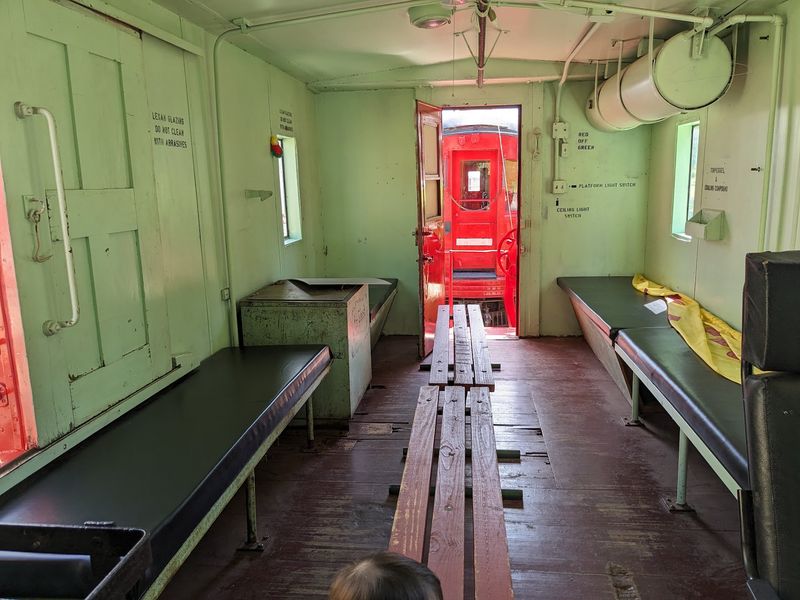
A restored Illinois Central caboose is also on display, along with a collection of trolley cars, freight equipment, and locomotive equipment spread across the outdoor grounds. Many of the cars in the collection are parked outside and visible to visitors walking the property, which means the outdoor display functions as a rolling exhibit of preservation work in various stages.
Some cars are operational, others are awaiting their turn in the restoration queue, and seeing that range up close gives the museum a working quality that a polished indoor gallery would not.
Visitors should arrive with realistic expectations about access. Walking the grounds and viewing outdoor equipment is part of the standard experience, but not every vehicle is open for interior inspection, and access to specific spaces can vary by day and event.
The outdoor displays reward a slow, curious walk rather than a rushed pass-through, and reading the placards alongside the equipment adds context that makes the hardware more interesting.
The Wayne Depot in particular is worth a few extra minutes. As a physical remnant of the CA&E commuter network, it connects the museum’s electric railway cars to the broader story of how suburban Chicago once moved, before highways and automobiles reshaped the region entirely.
The car barn supports ongoing restoration
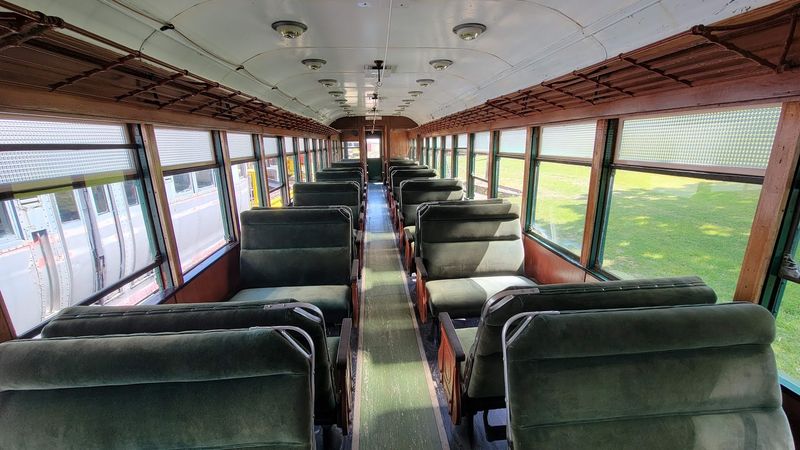
Behind the public-facing side of the museum, the car barn does the heavy work of keeping a heritage railway alive. Storage and active restoration happen there year-round, and the facility is central to the museum’s long-term preservation goals rather than a side operation.
A 2025 extension added space for three more cars, and another expansion was planned for 2026, reflecting a collection that continues to grow even as existing equipment moves through the restoration pipeline.
Standard visitors on a regular operating day are not guaranteed access to the barn. The museum’s regular visitor information focuses on the outdoor equipment, the depot, the caboose, and the ride, and does not present barn tours as a routine part of daily admission.
Describing the barn as a place visitors freely wander through would overstate what most people experience on a typical Saturday.
Members Day events have included barn tours that show restorations in progress, giving members a closer look at cars in various stages of work. That kind of access is a meaningful benefit for people who want to see the preservation process firsthand rather than just the finished product rolling past them on the tracks.
Cars inside the barn range from those nearly ready to return to service to those still waiting for major work, so calling the entire collection “restored” would give the wrong impression.
Membership and donations fund the restoration work directly, and the barn expansion shows that the program is growing. For visitors who find themselves wanting more than a single afternoon of electric railway history, membership is a practical way to stay involved between operating seasons.
Check the 2026 schedule and access details before visiting
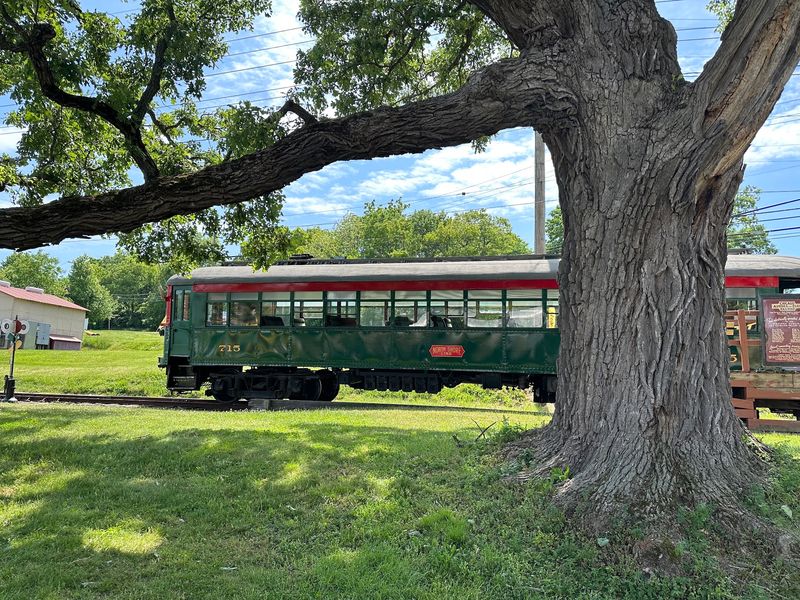
Planning ahead saves frustration at a seasonal museum with specific operating windows. The Fox River Trolley Museum’s listed 2026 regular season runs Saturdays, Sundays, and holidays from May 10 through October 25, generally 11 a.m. to 5 p.m.
Outside that window, the museum is closed to the public except for special events. Confirming hours and dates before making the drive is always worth the two minutes it takes, since schedules can shift.
Current listed admission is $10 for adults, $5 for children ages 3 to 11, $8 for seniors 65 and older and for first responders, active military, and veterans, and free for children ages 2 and under. Tickets are valid all day, which supports the ride-out, explore, ride-back format described earlier.
Accessibility at the museum is partial: at least one platform at each end of the line has an accessible ramp, but some historic cars have narrow doors, interior steps, or a platform-to-car gap that prevents wheelchair access. Anyone with mobility needs should call the museum in advance so staff can arrange an accessible train and platform rather than arriving and discovering a barrier on the day.
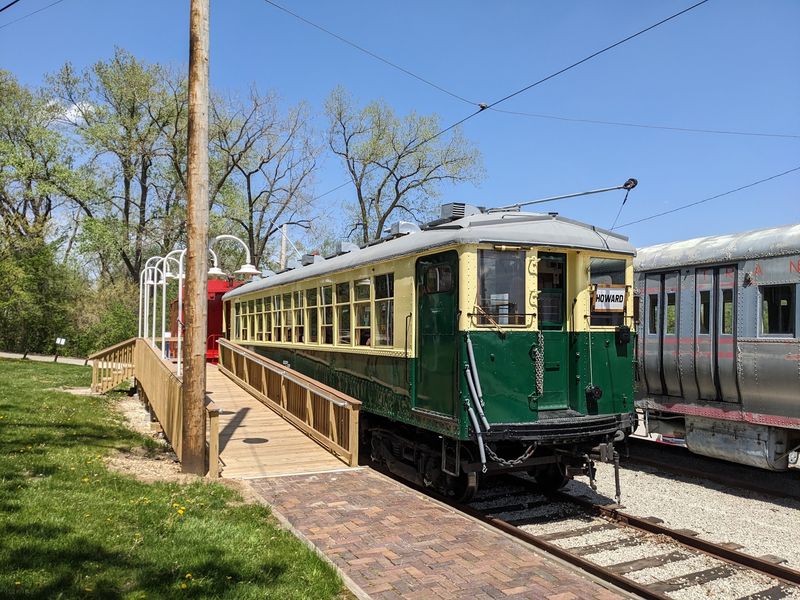
All Aboard Days on June 14, July 12, and August 9, 2026 include sensory-friendly accommodations: a quiet train, a sensory-friendly area, and a plan to use CTA car 4451, which offers level boarding. Equipment is always subject to availability, so families attending for sensory-friendly access should confirm details closer to the event date.
Trains have no onboard restrooms. Portable restrooms are available at the main site and near Blackhawk Station, and a full-service restroom at adjacent SEBA Park is accessible during warmer months.
Knowing that in advance lets visitors plan accordingly, especially with young children. The museum’s address is 365 S.
LaFox Street, South Elgin, Illinois 60177.
Expect a focused heritage ride, not a full commuter reenactment
What the Fox River Trolley Museum offers is specific and honest: a ride on historic electric railway equipment over a surviving portion of a route that dates to 1896, paired with outdoor displays, a working restoration program, and a forest preserve stop that extends the afternoon. The two-mile excursion uses real infrastructure from the original Aurora, Elgin and Fox River Electric corridor, which makes it a genuine piece of transportation history rather than a replica.
It is not a recreation of the old Chicago-area interurban commute. The former network spanned roughly 40 miles and connected multiple communities to Chicago’s broader electric railway system.
The current public trip covers about two miles and is best understood as a heritage excursion on a preserved corridor, which is a rarer thing than most people realize and worth experiencing on its own terms.
The equipment roster changes, restoration work is ongoing, and the specific car operating on any visit is not guaranteed. Checking current details before the trip, arriving with an open sense of curiosity rather than a fixed checklist, and giving the grounds a slow walk will get the most out of an afternoon in South Elgin.
Few places in Illinois let you ride over century-old electric railway infrastructure, and that quiet fact is reason enough to go.