
This Indiana Main Street Lines Up Brick Facades, Broad Porches, And Perfect Little Shopfronts
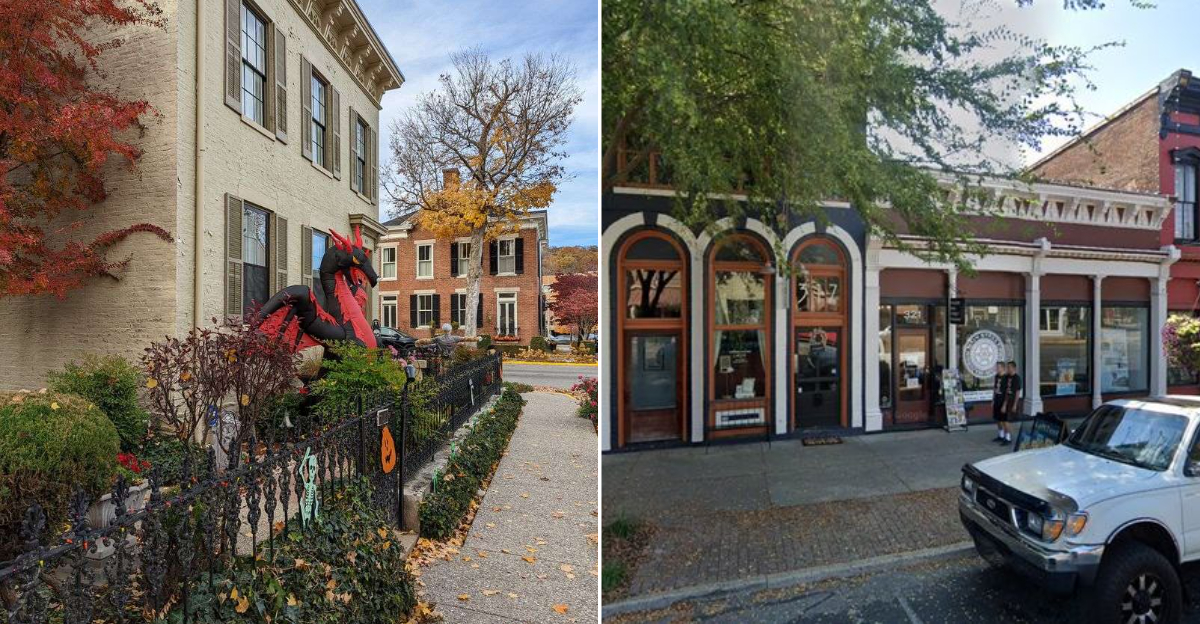
Main Street in Madison, Indiana feels like a long, unhurried inhale, the kind you take without realizing you needed it, followed by a quiet sense that you have stepped into a place that knows exactly who it is.
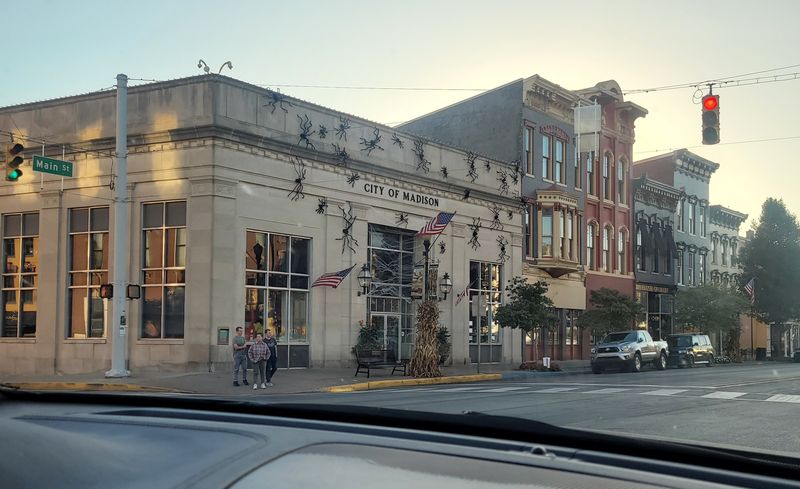
Brick storefronts line the street with a confidence earned over centuries, not renovated into existence, and the porches, cornices, and painted signs seem to hold themselves upright out of habit rather than performance.
Walking here, you notice how the town moves at a conversational pace, with shop doors opening softly, footsteps echoing just enough, and windows offering glimpses of books, antiques, and café tables mid-morning.
The Ohio River never announces itself loudly, yet its presence is felt in the air, in the light, and in the way the street gently slopes, like a reminder of why this town grew here in the first place.
Main Street rewards attention rather than speed, inviting you to slow down, look up at second-story details, and catch the small gestures that make a place feel lived in rather than staged.
This is not a street you rush through to reach an attraction. It is the attraction, best experienced by wandering without an agenda, letting history, routine, and everyday life overlap until the walk itself becomes the point.
Start At Broadway Fountain And Let The Street Unfold
The Broadway Fountain does not demand attention, yet its steady splash against iron and stone sets a tone of civic patience that gently recalibrates your senses before you take more than a few steps in either direction.
Cast in 1886, the fountain functions less as a monument than as a hinge, quietly organizing the street east and west while reminding you that this was once a practical piece of public infrastructure meant to serve bodies as much as eyes.
The surrounding storefronts seem to fall into alignment once you pause here, brickwork tightening into legibility as if the street prefers to be read from this point outward rather than approached at random.
Local foot traffic flows around it without ceremony, a sign of long familiarity rather than indifference, and that easy coexistence between use and preservation sets the emotional register for everything that follows.
Morning light reflects softly off the iron details, and the nearby scent of coffee drifting from open doors blends with river air in a way that feels specific to towns that grew up beside water.
Standing here for a minute longer than necessary allows the street to reveal its rhythm before you interrupt it with movement.
Starting east along Main after this pause gives the walk a narrative shape rather than turning it into a checklist.
Read The Brickwork Between Jefferson And West Streets
The brickwork along this stretch rewards attention in layers, where Flemish bond patterns sit beside running bond stretches, and the mortar lines record decades of weather, repair, and careful restraint rather than cosmetic perfection.
Madison’s prosperity in the nineteenth century shows up not in excess but in consistency, with materials chosen to last and proportions held steady across multiple buildings rather than competing for prominence.
Since gaining federal historic district protection in 1973, restoration here has favored conservation over correction, allowing patched sections and tonal variation to remain visible rather than sanding history into uniformity.
Walking slowly along the north side in late afternoon allows sunlight to rake across the facades, pulling depth out of shallow relief and turning ordinary brick into something quietly expressive.
The sidewalks themselves participate in this reading, with subtle changes in elevation and curb height reminding you that this street was shaped for horses, carts, and early automobiles rather than uninterrupted smoothness.
Pausing occasionally reveals how windows align across buildings, suggesting a shared commercial logic that survives even as tenants change.
This is the stretch where Madison’s Main Street stops being charming and starts being legible.
Window Shopping With Purpose Near Mulberry Street
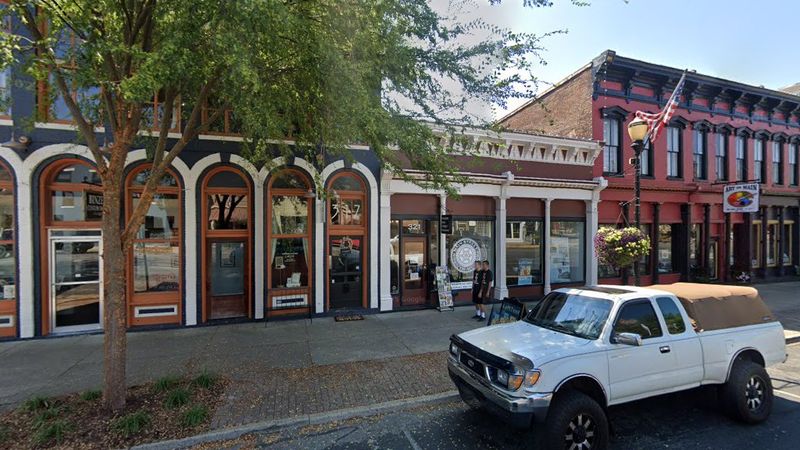
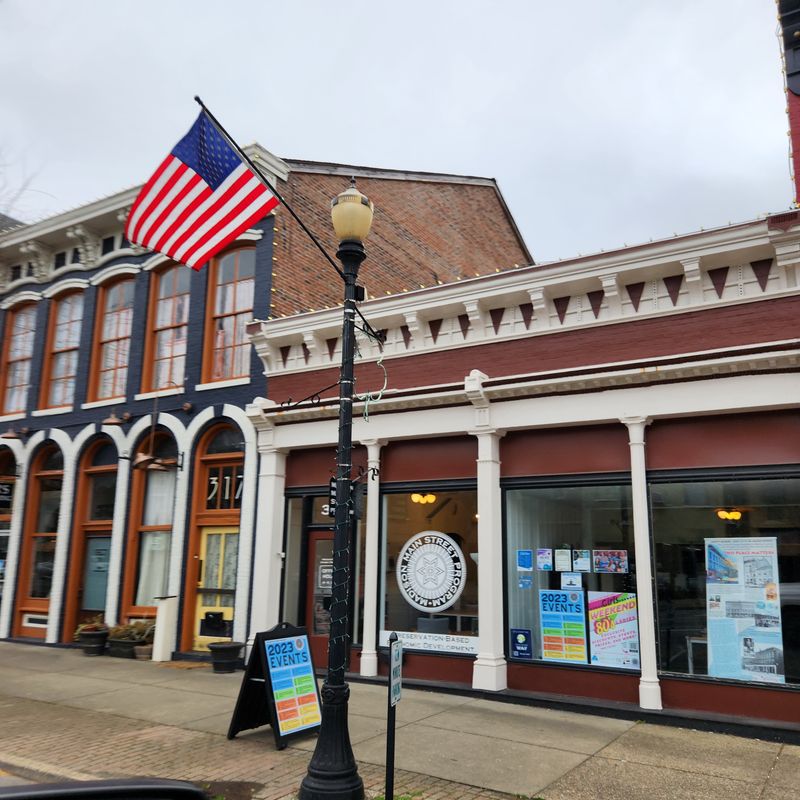
Storefront windows near Mulberry Street favor clarity over spectacle, allowing light to fall naturally on pottery, textiles, books, and antiques arranged with enough confidence to resist over-curation.
Many of these shops occupy commercial buildings dating back to the early and mid-1800s, and their transoms, cast-iron columns, and preserved proportions still do quiet architectural work even when unnoticed.
Ownership here tends to align with stewardship, where preservation easements and local pride keep signage scaled appropriately and interiors adapted without erasing their bones.
Browsing becomes less about acquisition and more about conversation, especially when owners step forward with an ease that suggests continuity rather than salesmanship.
Hours can shift with seasons and festivals, which makes asking feel less like inconvenience and more like participation in the street’s rhythm.
The most meaningful objects here often fit in the palm rather than the trunk, carrying the weight of craft instead of volume.
Window shopping along this stretch feels purposeful because the street itself seems to reward attention with coherence rather than novelty.
Coffee Stop: North Side Sun, South Side Shade
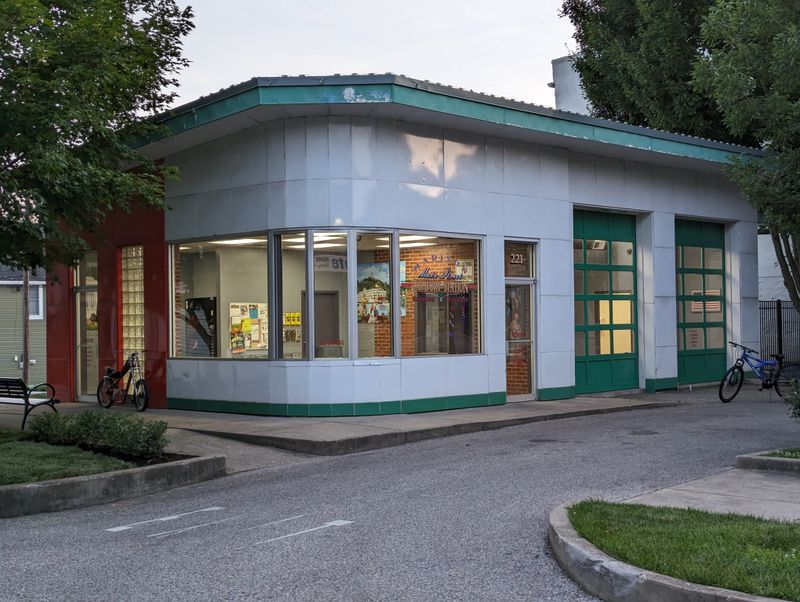
Choosing where to sit for coffee on Main Street becomes an act of light-reading rather than preference, because the north side receives morning sun that slides through storefront glass and warms benches just enough to invite lingering, while the south side offers shade shaped by awnings and porch overhangs that soften glare as the day advances.
Madison’s cafés tend to inhabit historic rooms whose floors still creak underfoot and whose walls absorb sound rather than bounce it, creating spaces where conversation settles naturally and the urge to open a laptop feels slightly out of place.
The coffee itself is straightforward, brewed for repetition rather than performance, which suits a street where mornings belong equally to locals, travelers, and shop owners easing into the day.
Sitting still for a few minutes allows you to notice how light shifts across brickwork and signage, turning ordinary storefronts into quiet studies in contrast and proportion.
Moving from sun to shade mid-cup becomes a way to experience the street’s changing temperature rather than a search for comfort.
Cash is appreciated, thresholds can be high, and doors sometimes swing heavier than expected, small reminders that these buildings were shaped before convenience became a design priority.
A coffee stop here works best when treated as a pause rather than a destination, letting the street continue unfolding around you.
Listen For The River Between Ferry And West
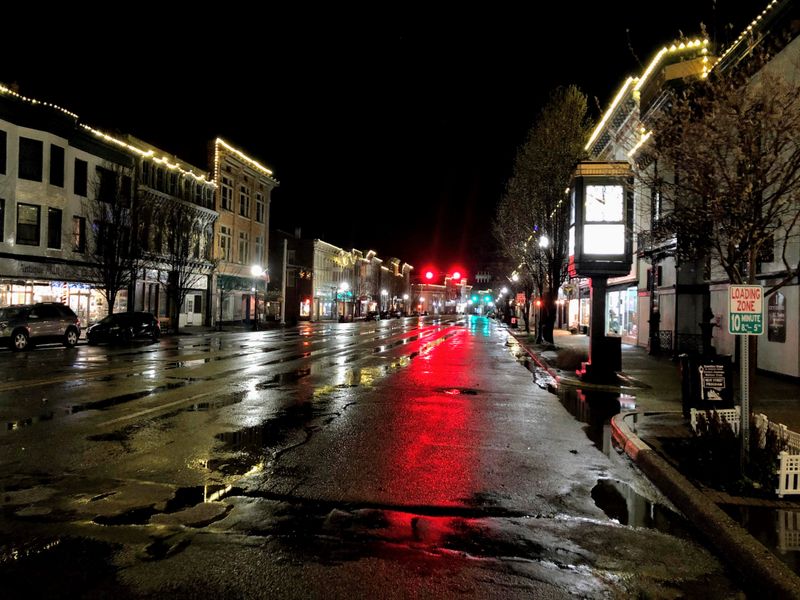
Somewhere between Ferry Street and West Street, the Ohio River announces itself not visually but sonically, folding a low, steady presence into the background hum of tires, footsteps, and distant conversation, as if reminding the street why it exists at all.
The air changes subtly in this stretch, carrying a faint mineral note that anchors Main Street’s architectural order to the working reality of river trade that once sustained it.
Madison developed with the river as its economic spine, and although freight traffic has long since retreated, the spatial logic remains, with Main Street running parallel like a composed companion rather than a rival.
Festivals and foot traffic have replaced wagons and warehouses, yet the rhythm of arrival and departure persists in gentler form.
Detouring south at Ferry Street offers a brief, direct glimpse of the water before returning to Main, reinforcing how close the river remains to the street’s identity.
The incline is modest but noticeable, and brick underfoot can turn slick with leaves or mist, especially in shoulder seasons.
Listening for the river rather than seeking it sharpens awareness of how geography continues to shape daily experience here.
Porches That Host Without Speaking, East Of Jefferson
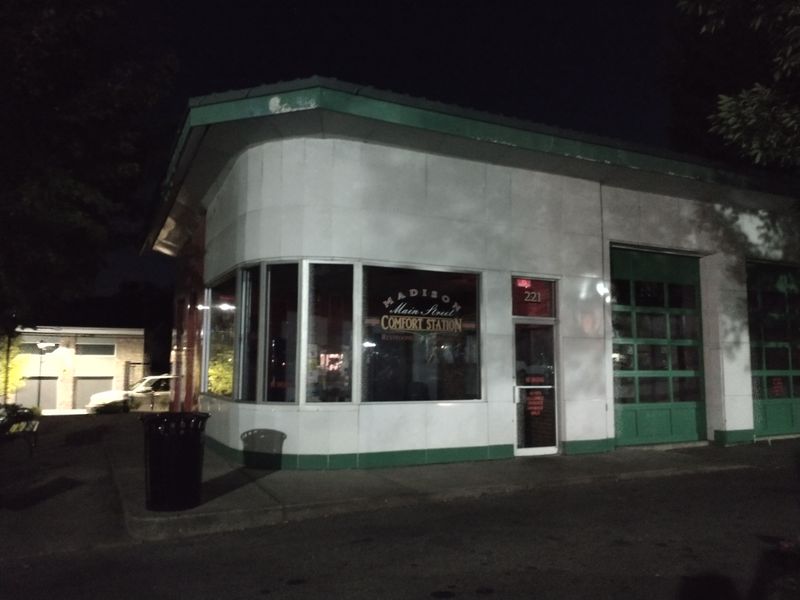
East of Jefferson Street, porches extend outward like architectural gestures of restraint, creating a soft threshold between public sidewalk and private interior that invites presence without requiring participation.
Wicker chairs, painted floors, and square posts drawn from Greek Revival and Federal traditions adapt formality to Midwestern weather, offering shade, ventilation, and an unspoken social contract of mutual respect.
Preservation guidelines encourage maintaining original rail heights and proportions, which keeps these spaces legible as porches rather than decorative platforms.
Standing nearby feels acceptable, lingering too long does not, and that boundary is understood without signage or enforcement.
The street here feels gently watched rather than surveilled, held together by familiarity rather than control.
Late afternoon light settles into paint textures and floorboards, especially after rain, when colors deepen and surfaces reflect just enough to reveal wear without gloss.
Photographs work best from the sidewalk, where the porch reads as part of the street’s rhythm rather than an isolated subject.
Cast-Iron Columns And Honest Light Near Walnut
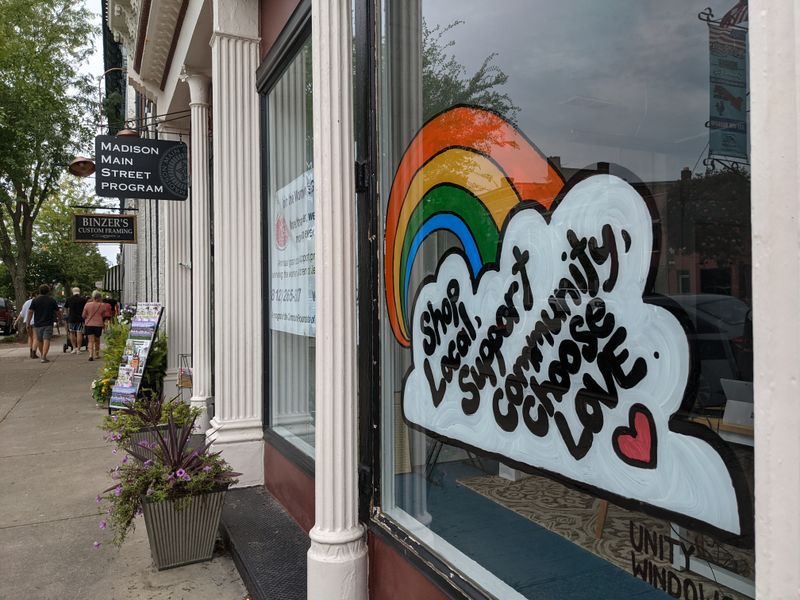
Near Walnut Street, cast-iron columns announce themselves through temperature before detail, cooling the air beside them and grounding storefronts with a weight that speaks to nineteenth-century optimism in material and method.
These columns allowed wider windows and deeper interiors, shaping a commercial culture that valued display and daylight long before electricity standardized illumination.
Many survive today in patched but serviceable condition, protected within the National Historic Landmark District and maintained through rust treatment and historically matched paint rather than replacement.
Light enters differently here, refracting through older glass that subtly distorts reflections and reveals interiors without glare when timed carefully.
Standing at the curb provides the cleanest view of these façades, though light traffic requires attention.
Sketching rewards patience, as lines reveal themselves gradually rather than through sharp contrast.
This stretch reads as a lesson in how technology once expanded possibility without abandoning craft.
Seasonal Windowboxes And Quiet Choreography

Windowboxes along Main Street operate like punctuation marks, changing from petunias in early summer to mums in autumn, and signaling seasonal shifts without fanfare or excess.
After morning sprinklers, the scent of damp soil briefly overtakes brick and coffee, reminding you that maintenance here is continuous rather than ornamental.
Business owners and residents treat planting as a shared civic habit, supported by guidelines that allow variation while protecting architectural sightlines.
Color choices tend toward coordination rather than contrast, allowing buildings to remain primary while plantings soften edges.
Early morning visits capture dew-bright leaves, while dusk reveals how storefront lamps interact with foliage.
Careful footing matters beneath dripping planters.
Compliments offered aloud tend to circulate quickly, encouraging continuity from season to season.
Festival Days: Crowds, Music, And Brick Underfoot
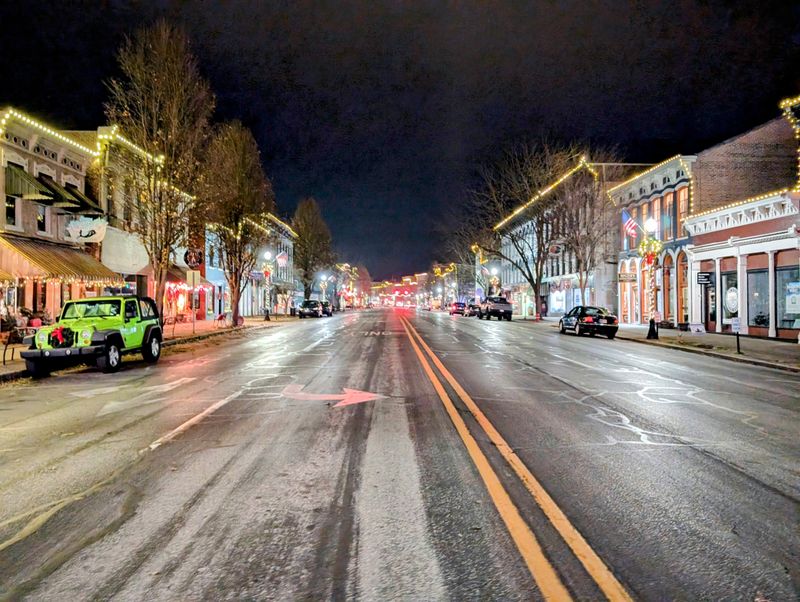
On festival days, Main Street absorbs sound differently, with music threading through conversation and footsteps tapping brick like percussion rather than disruption.
Food aromas drift democratically across blocks, while historic façades hold steady as dignified backdrops rather than themed scenery.
Events are staged within the National Historic Landmark District with careful attention to pedestrian flow and emergency access, allowing activity without sacrificing structure.
Side streets offer breathing room when crowds thicken, preserving the option of retreat without leaving the district.
Footwear matters more than itinerary, as brick underfoot demands forgiveness over time.
Patience becomes a shared resource, especially near intersections.
The street accommodates celebration without losing coherence, which may be its greatest strength.
Evening Walk From Jefferson Toward Mill
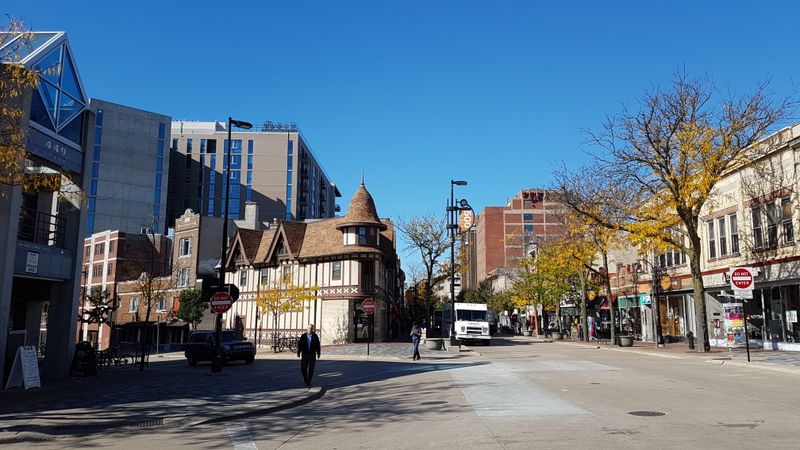
As dusk settles, upper-story windows catch violet tones while streetlamps warm to amber, and the street exhales heat gathered throughout the day.
Cornices and parapets become more legible against the sky, revealing how additions have respected original rooflines rather than overwriting them.
Evening quiet sharpens architectural awareness, thinning conversation into threads rather than noise.
Walking from Jefferson toward Mill feels unhurried, guided more by light than destination.
Photography benefits from higher ISO and restraint rather than flash, preserving mood over clarity.
Traffic hum softens but does not vanish, keeping the street grounded.
Ending the walk here reinforces that Main Street is not a museum piece, but a lived corridor that holds continuity through use rather than display.