
This Is Nevada’s Most Underrated National Park And It’s Absolutely Stunning
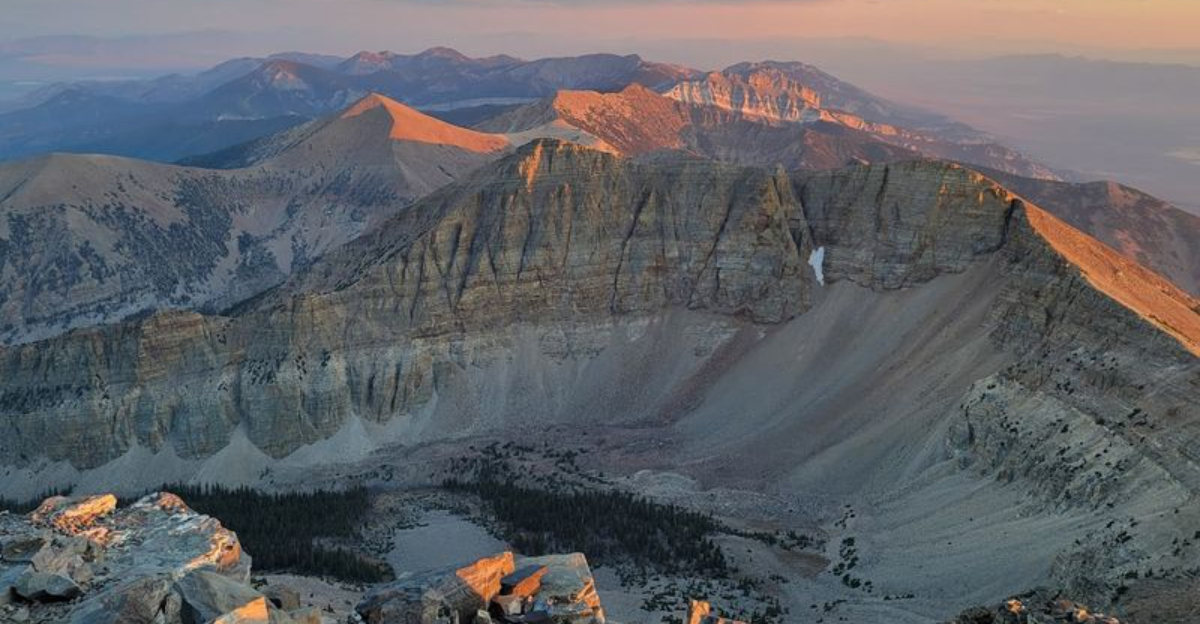
We all know the big names. Yellowstone, Yosemite, the parks that dominate postcards and travel lists.
But sometimes, the most unforgettable places are the ones quietly sitting in the background, waiting for you to look past the obvious. In Nevada, there’s a national park that doesn’t chase attention.
It doesn’t need to. Rising out of the desert floor, it shifts from dry basin to alpine peaks in a matter of miles, almost like the landscape can’t decide what it wants to be. And ends up being everything at once.
Here, silence feels deeper. The mountains feel older.
And the sky, especially at night, seems impossibly close. There are no endless crowds here, no rush to the next famous viewpoint.
Just raw, unfiltered wilderness that rewards anyone willing to take the road less traveled. And maybe that’s the real secret. Some of the most stunning places aren’t the ones everyone talks about, but the ones that still feel like they’re waiting to be discovered.
Nevada’s Sky-High Crown Jewel
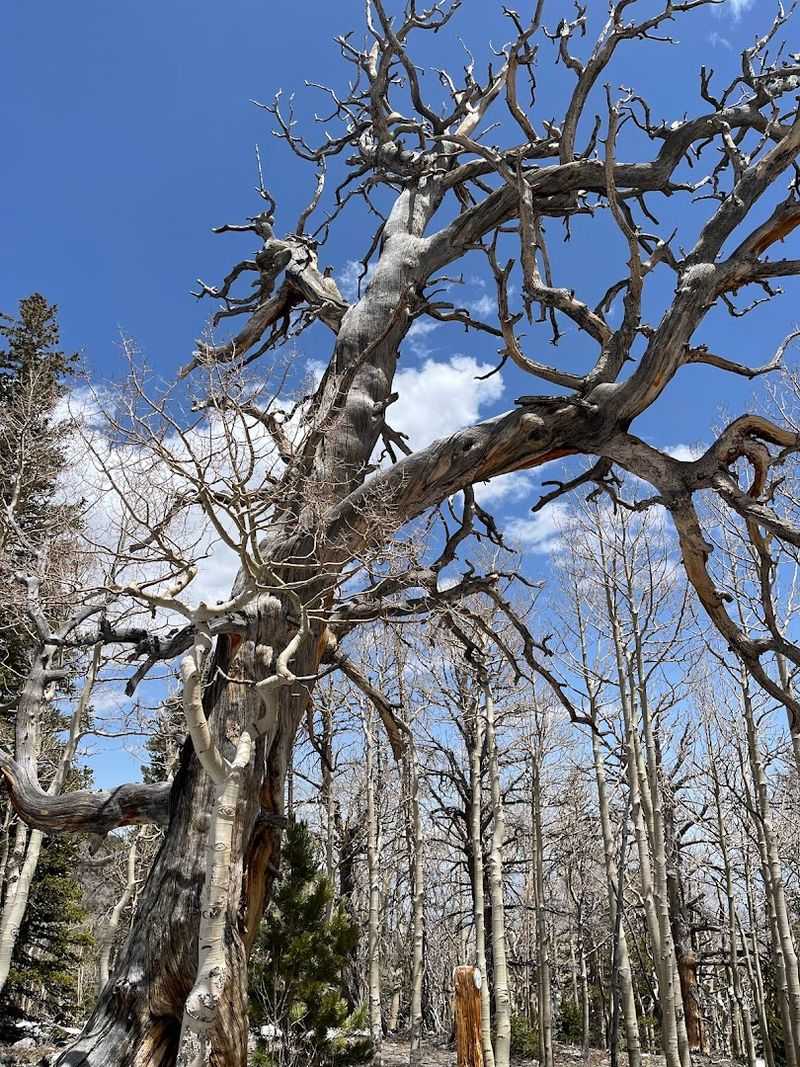
Standing at 13,063 feet, Wheeler Peak is the kind of mountain that makes you feel like you have earned something just by looking at it.
It is the second-tallest peak in all of Nevada, and hiking to its summit rewards you with panoramic views stretching over 50 miles in every direction.
The trail covers roughly 8.7 miles round trip with nearly 3,000 feet of elevation gain, so your legs will absolutely know they worked.
The upper section gets steep and rocky, and the final push feels nearly vertical. But reaching the top and seeing the Great Basin desert spread out below you like a giant living map is genuinely breathtaking.
Bring plenty of water and start early because afternoon thunderstorms can roll in fast at high elevation.
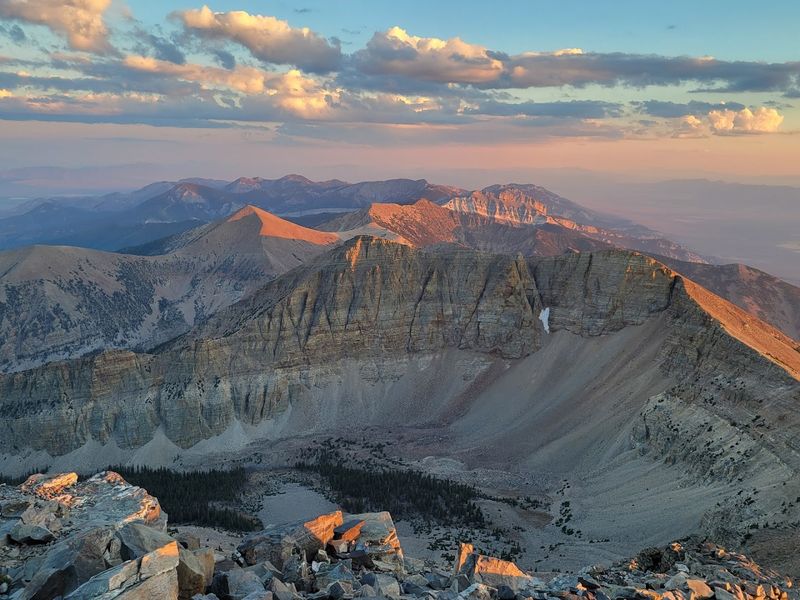
What makes Wheeler Peak even more fascinating is the glacial cirque carved into its north face.
This dramatic bowl-shaped feature frames Nevada’s only remaining active glacier, a rare and remarkable sight. The mountain is not just a hiking destination.
It is a geological story written in ancient rock and ice that keeps unfolding the higher you climb.
An Underground World Like No Other
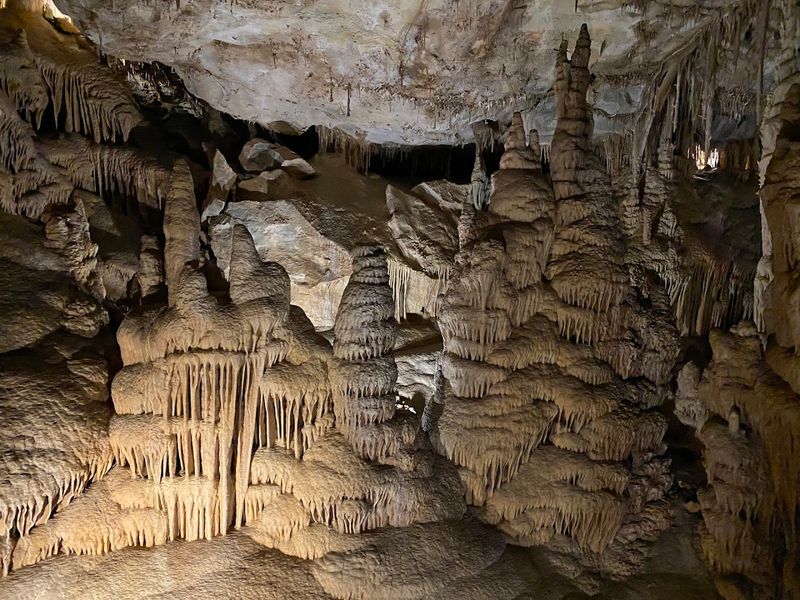
Somewhere beneath the desert floor at 100 Great Basin National Park Road, Baker, NV 89311, an entire marble palace has been quietly forming for millions of years.
Lehman Caves is a world-class limestone cave system first discovered in the 1880s, and it holds more than 300 rare shield formations, a number that blows most other cave systems completely out of the water.
Shields are disc-shaped formations that jut from cave walls at unexpected angles, and nobody fully understands how they grow.
Access is exclusively through ranger-guided tours, and booking in advance is strongly recommended because spots fill up fast.
The cave tours typically run about 60 to 90 minutes and wind through beautifully lit chambers packed with helictites, stalactites, and formations that look like frozen waterfalls of stone.
Lehman Caves is also home to some genuinely unique residents, including the Great Basin cave pseudoscorpion and the Snake Range millipede, both found nowhere else on Earth.
The constant temperature inside hovers around 50 degrees Fahrenheit year-round, making it a refreshing underground escape on a hot summer day. This cave earns its legendary status every single tour.
Trees That Watched Empires Rise And Fall
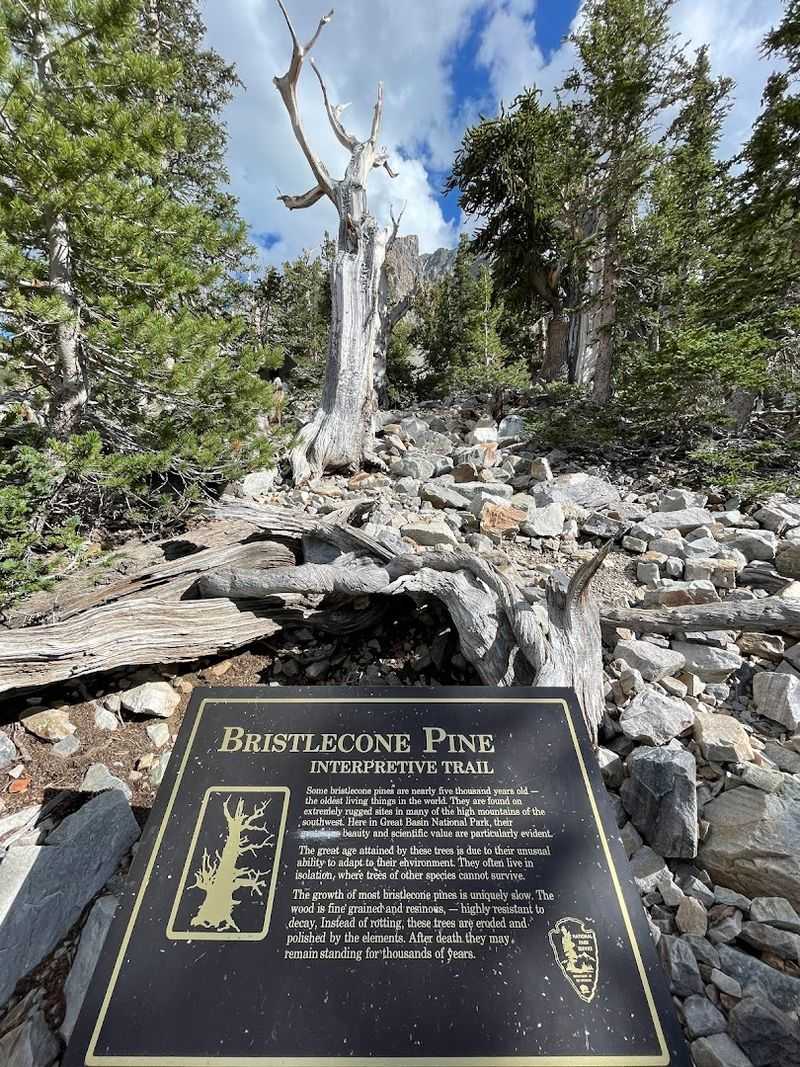
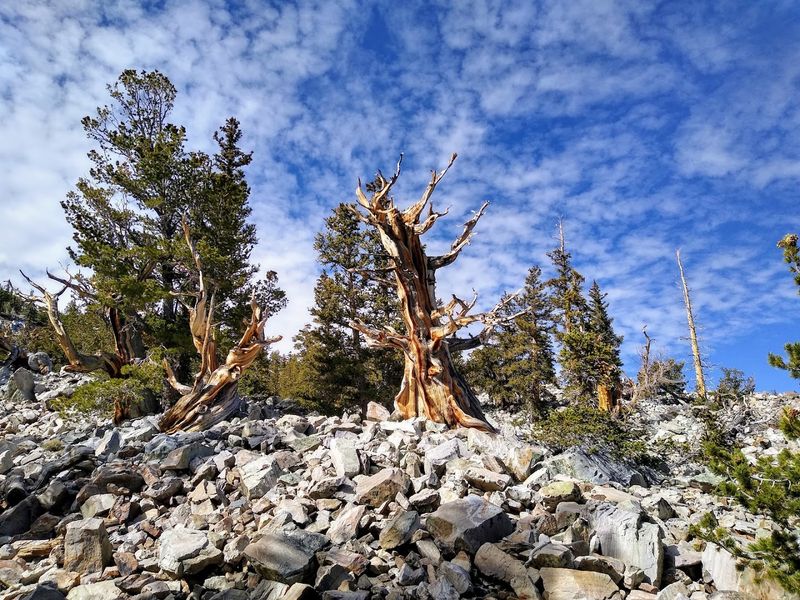
Forget redwoods. The bristlecone pines at Great Basin National Park are the real ancient ones, with some living trees clocking in at over 4,000 years old.
To put that in perspective, these trees were already middle-aged when the pyramids of Egypt were being built. They grow slowly in harsh, rocky, high-elevation soil, which is exactly what makes them so incredibly durable and long-lasting.
The Wheeler Peak Grove is the most accessible bristlecone grove in the park, reached via a well-maintained trail that winds through subalpine terrain.
The trees look almost alien, with dense, twisted trunks and sparse but resilient branches that have survived thousands of winters, droughts, and lightning strikes.
What scientists find most remarkable is that the harsh conditions these trees endure actually protect them. The cold temperatures and poor soil slow down decomposition, meaning even fallen deadwood can persist for over 5,000 years.
Walking among these trees feels less like a hike and more like stepping into a living time capsule. No other grove in Nevada delivers quite this level of quiet, humbling awe.
Standing next to something older than most recorded history changes your perspective completely.
Gold Tier Dark Skies
Great Basin National Park earned its Gold Tier International Dark Sky Park designation in 2016, and the night sky here is something that genuinely stops people in their tracks.
The park sits far from any major city light pollution, perched at high elevation with dry, crystal-clear air that acts like a natural telescope. On a clear night, the Milky Way stretches overhead in a thick, luminous band that looks almost too beautiful to be real.
The park hosts an annual Astronomy Festival that draws enthusiasts from across the country, complete with telescopes, ranger-led programs, and guided sky tours.
Even outside the festival, ranger astronomy programs run regularly throughout summer and early fall, offering an educational and awe-inspiring experience under the stars.
For astrophotography fans, the combination of high elevation, minimal humidity, and near-zero light pollution creates near-perfect shooting conditions.
Bring warm layers because temperatures drop significantly after sunset even in summer.
The Wheeler Peak Scenic Drive pullouts offer some of the best vantage points for watching the sky transform after dark. This is honestly one of those rare experiences where no photograph fully captures what your eyes actually see in person.
The Most Rewarding Road Trip You’ll Take
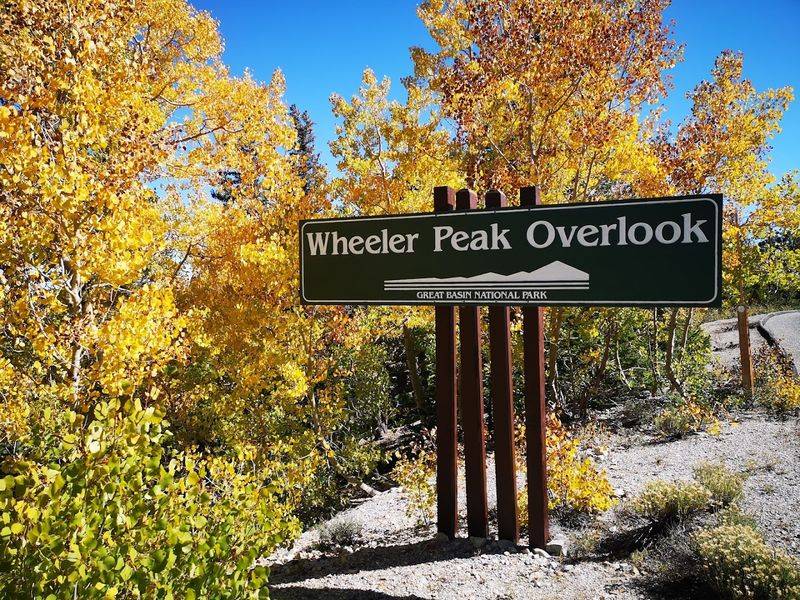
Some roads exist purely to get you somewhere. The Wheeler Peak Scenic Drive exists to make the journey the entire point.
This paved road climbs from about 6,800 feet at the visitor center all the way up to 10,000 feet at the Wheeler Peak campground, weaving through forests of aspen, spruce, and pine that transform into a blaze of gold and orange every autumn.
Along the way, a series of scenic pullouts offer sweeping views across the Great Basin desert that stretch seemingly forever.
The contrast between the alpine forest you are driving through and the vast desert floor far below creates a visual drama that is hard to describe but impossible to forget.
Sunset from these overlooks is particularly spectacular, painting the desert in deep reds and warm purples.
The drive takes about 35 minutes one way without stops, but most visitors spend significantly longer exploring the overlooks and trailheads along the route.
The road is typically open from late spring through early fall, depending on snowfall. Even if you never leave your car, this drive alone justifies the trip to one of Nevada’s most underappreciated natural treasures.
Stella And Teresa Hide Pure Mountain Magic
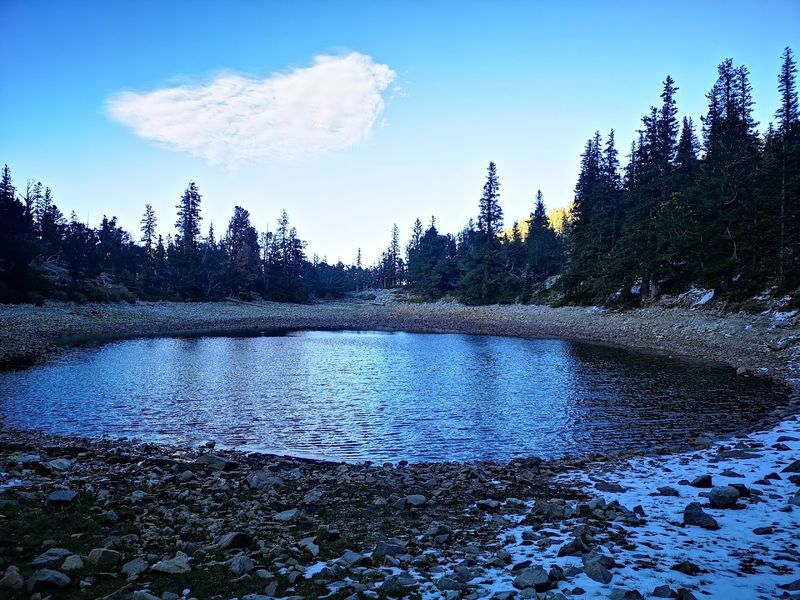
Nestled at around 10,000 feet elevation, Stella Lake and Teresa Lake are two of the most serene and photogenic spots in the entire park.
These subalpine gems sit in granite basins carved by ancient glacial activity, surrounded by rocky peaks and scattered pine trees that frame the water like a painting you would hang in every room of your house.
The Alpine Lakes Loop Trail connects both lakes in a relatively easy hike of about three miles, making it accessible for most fitness levels.
The trail passes through meadows dotted with wildflowers in summer and offers consistent views of Wheeler Peak looming overhead. Wildlife sightings along this route are common, with mule deer frequently spotted grazing near the lakeshores.
Teresa Lake sits slightly lower and tends to be a bit larger, while Stella Lake feels more intimate and tucked away. Both are worth visiting, and the loop trail connects them efficiently.
The reflected mountains on calm mornings create mirror-like scenes that look almost digitally enhanced.
Pack a lunch, find a flat rock by the water, and just sit with it for a while. Some places do not need an itinerary, just your full attention.
Nevada’s Only Glacier
Nevada is not exactly the first state that comes to mind when you think of glaciers, which is exactly what makes this one so wildly unexpected.
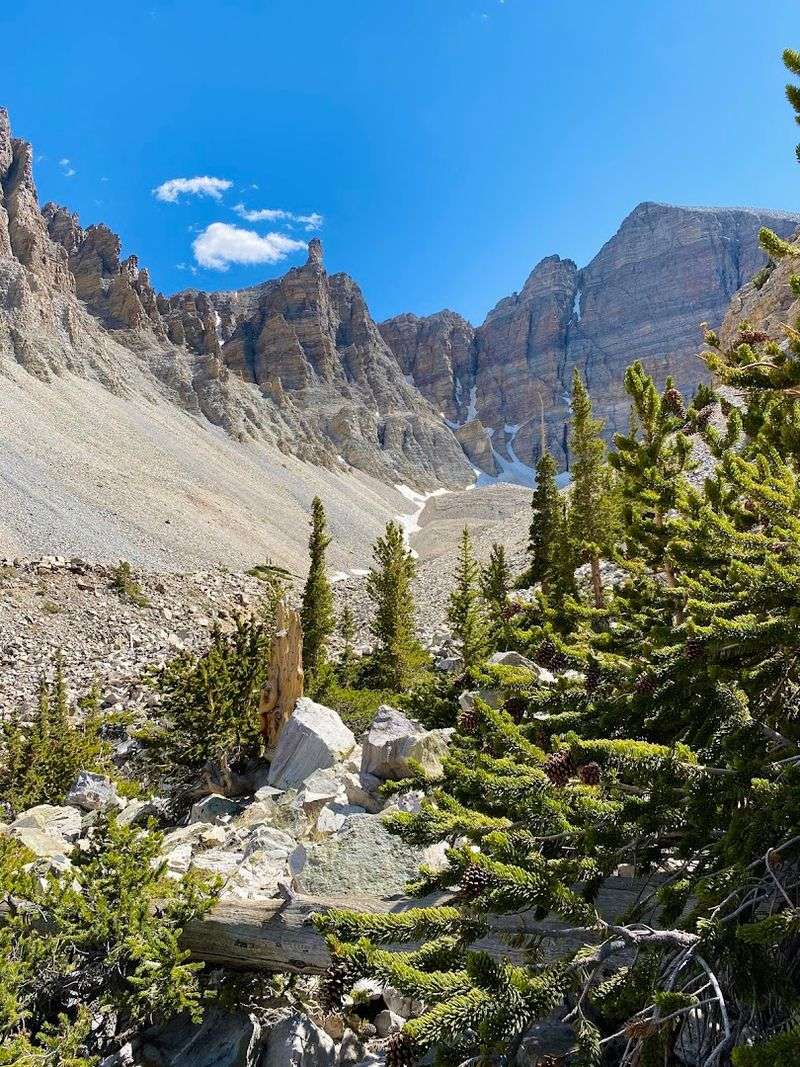
Tucked into the north-facing glacial cirque of Wheeler Peak, the Wheeler Peak Glacier is the only true active glacier in Nevada, a genuine moving body of ice with a bergschrund and all the classic glacial features that separate it from simple snowfields.
Reaching the glacier requires a moderately strenuous hike of about four miles round trip from the trailhead near Wheeler Peak campground.
The trail passes through the bristlecone pine grove before climbing into rocky alpine terrain above the tree line. Views from the cirque are dramatic, with the glacier sitting below towering walls of ancient rock.
Scientists monitor this glacier closely because it is shrinking, making every visit feel both privileged and timely.
The surrounding cirque walls show classic glacial erosion patterns, telling the story of a much larger ice mass that shaped this landscape thousands of years ago. Carrying extra water and wearing sturdy footwear with ankle support is highly recommended for this trail.
Seeing actual glacier ice in the Nevada desert is the kind of thing that makes you question everything you thought you knew about this state.
More Creatures Than You Ever Expected
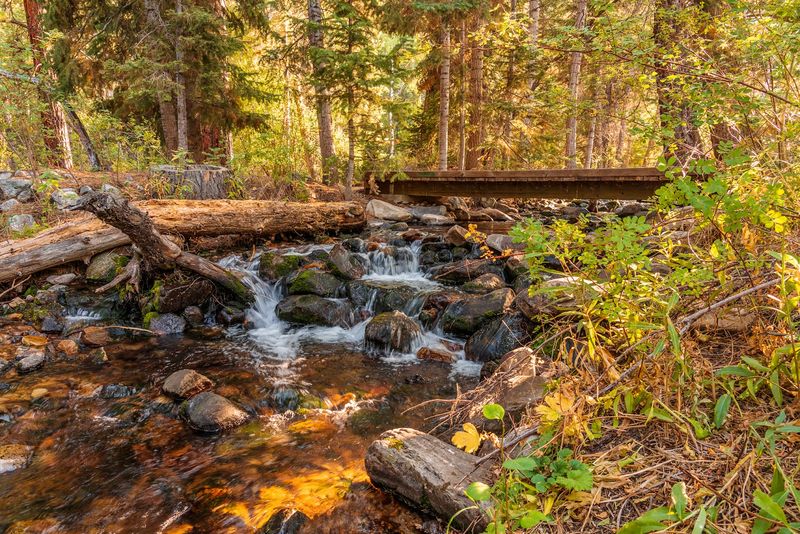
Great Basin National Park supports a staggering variety of wildlife, and the sheer range of species here reflects the park’s dramatic elevation changes.
With 73 mammal species calling the park home, encounters with mule deer, elk, bighorn sheep, and even mountain lions are all possible depending on where and when you explore.
Bats are particularly abundant, with multiple species hunting insects along forest edges at dusk.
Bird enthusiasts will find 238 documented bird species within the park, ranging from high-alpine species near Wheeler Peak to desert-adapted birds in the lower shrublands.
The park’s streams and lakes support the native Bonneville cutthroat trout, a fish species with deep ties to the Great Basin’s ancient water systems.
The key to spotting wildlife here is timing. Early morning and late afternoon are the golden hours when animals are most active.
The transition zones between desert shrubland and montane forest are especially productive for sightings. Bring binoculars and move quietly along the trails.
The park’s relative solitude compared to more crowded destinations means wildlife here behaves more naturally and less cautiously around visitors.
Great Basin rewards the patient observer with moments that feel genuinely wild and unscripted.
Solitude Is The Real Attraction
Getting to Great Basin National Park is part of the entire experience, and that is not a consolation prize statement.
The drive through central Nevada on US Route 50, famously nicknamed the Loneliest Road in America, sets the tone perfectly. Miles of open desert, dramatic sky, and almost no traffic create a mental reset that begins long before you reach the park entrance.
The nearest town of any size is Ely, Nevada, roughly 70 miles away. The tiny gateway community of Baker, Nevada sits just outside the park and offers basic supplies.
This remoteness is precisely why the park sees a fraction of the visitors that flood places like Zion or Yellowstone. On a busy summer weekend, you can still find solitude on trails that would be shoulder-to-shoulder at more famous parks.
That sense of having a place largely to yourself is genuinely rare in the national park system. No shuttle lines, no reservation lotteries for parking, no crowds overwhelming the viewpoints.
Just you, the landscape, and an overwhelming feeling that you found something most people drove right past. Great Basin does not advertise itself loudly, but that quiet confidence is exactly what makes it unforgettable.
Some secrets are worth keeping, until now.