
This Kentucky Café Keeps The Hot Brown A Beloved Local Classic
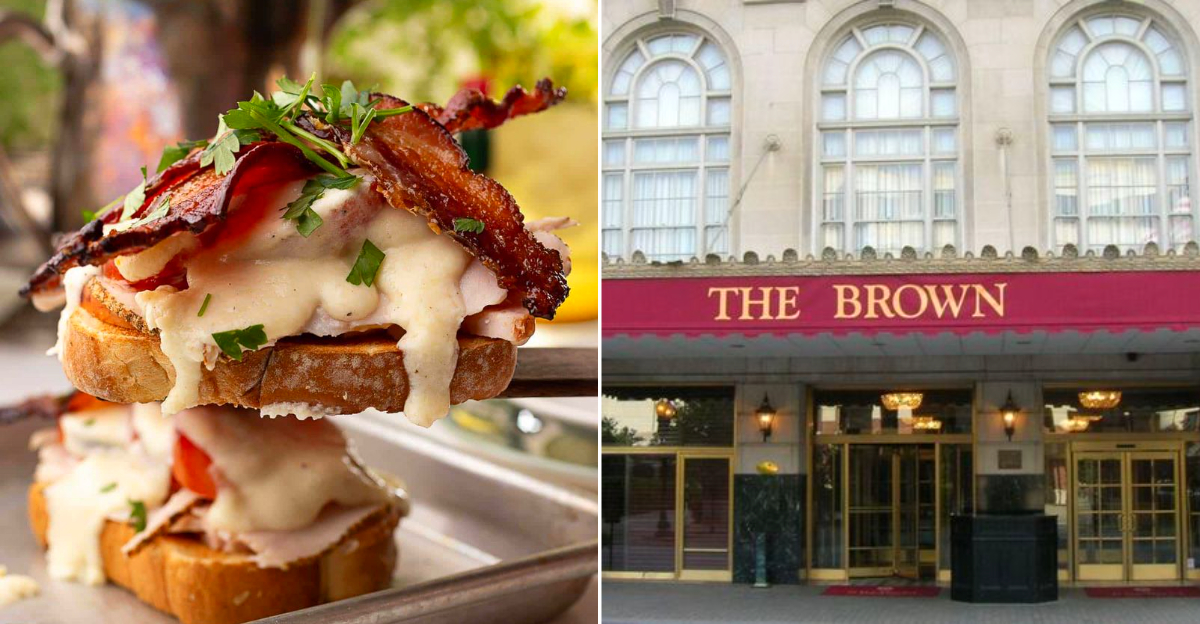
If you’re wandering downtown Louisville and hunger nudges you toward something legendary, follow it straight to The Brown Hotel. This is the birthplace of the Hot Brown, a dish that’s part comfort, part ceremony.
Inside the hotel’s grand spaces, the scent of toasted bread and bubbling sauce drifts through marble halls. Thick slices of turkey rest on Texas toast under a blanket of creamy Mornay, finished with bacon and tomatoes that sizzle until golden.
Whether you settle into the lobby’s glow or the café’s cozier corners, every plate feels tied to the city’s story. This list takes you behind the doors and into the kitchens where Louisville’s most enduring recipe continues to earn its fame.
Historic Beginnings
The Brown Hotel feels like it’s humming with old stories. Even before you taste anything, the place gives you that sense of Louisville legend in motion. It’s warm, polished, and faintly theatrical, the perfect stage for a dish born from late-night cravings.
Chef Fred K. Schmidt invented the Hot Brown here in 1926 to feed post-dance guests who wanted something heartier than ham and eggs. His creation, open-faced turkey on toast with Mornay and bacon, became a sensation almost overnight.
I like imagining that first crowd in tuxedos and gowns, eating something so decadent it practically rewrote local history.
Culinary Craftsmanship
At J. Graham’s Café, the Hot Brown doesn’t just happen, it’s constructed with the precision of a sculptor. Each layer matters: toast first, then sliced turkey, then a careful pour of Mornay, bacon, tomato, broil. The process has barely changed in a century.
This dedication to ritual keeps the flavors balanced: salty meets creamy, soft meets crisp. The chefs guard that balance as if it were a family secret.
Tip: go at lunchtime when the kitchen’s in full rhythm; the sauce comes out silkier and the crust just a little more golden.
The Perfect Sauce
That first bite always catches you, the sauce hits before anything else. It’s rich, glossy, and almost too perfect, coating the turkey like velvet. The scent of cheese and butter rises in slow waves.
The Mornay sauce is the heart of the Hot Brown, whipped to that exact consistency where it clings but never clots. It’s indulgent without being heavy.
I swear it’s what makes the whole experience addictive. I could skip the bacon, the toast, even the view, but not that sauce.
Crisp And Savory
The first crunch comes from the bacon, it’s loud enough to cut through the café’s soft clatter of plates. That sound sets the tone: crisp on top, creamy below. The contrast defines the dish.
Each strip is cooked to just shy of brittle, balancing the sauce’s richness without overpowering it. It’s less garnish and more punctuation.
I always look forward to this moment, the point where the savory snap meets the silk of Mornay. It’s the Hot Brown’s exclamation mark.
Tomato Topping
You notice the tomato before you taste it. It glows like a ruby under the broiler, edges just singed, flesh still juicy. That visual brightness breaks up the sea of gold and cream.
The kitchen chars it lightly, drawing out a smoky tang that pulls the whole dish back into balance. Without it, the plate would lean too rich, too heavy.
If you make the mistake of removing the tomato slice, you lose the rhythm. It’s the palate’s reset button, small but essential.
Toast Points
Every masterpiece needs a foundation, and here it’s the toast, cut into triangles crisp enough to hold their shape under heat and sauce. You can hear the faint scrape of a knife on their surface before the first bite.
History says Schmidt used thick-cut white bread for strength, and J. Graham’s still follows that rule. It’s a detail that keeps structure beneath the decadence.
Visitors quickly learn not to linger; let it cool too long, and the toast softens. Eat it while it still sings.
Pecorino Romano Finish
There’s a soft snowfall moment before the broiler does its work, grated Pecorino Romano drifting over the sauce. The smell alone announces what’s coming.
This cheese adds edge and character, giving the Mornay a sharper, nutty finish. Once it melts, it forms a faint crust that crackles with the first forkful.
I’ve tried imitations elsewhere, but none hit that same note. It’s proof that even a sprinkle can make something feel both elegant and humble at once.
Elegant Setting
Walk into The Brown Hotel and the air itself feels steeped in history. Light bounces off marble floors, the chandeliers shimmer faintly, and the echo of jazz seems to linger somewhere high above.
This setting changes the meal, it turns it into an event. The Hot Brown feels at home in such surroundings, equal parts comfort and ceremony.
Some cafés serve nostalgia. J. Graham’s serves continuity, wrapped in linen napkins. Eating here feels like stepping inside Louisville’s living memory, one bite at a time.
English Grill Alternative
Few hotels offer choices this charming. Across the hall from J. Graham’s, the English Grill gives the same Hot Brown a different kind of stage, polished wood, low lights, a hush that invites slower eating.
The chefs share the same recipe but add a touch more refinement to presentation, treating the dish like fine art. Each plate gleams beneath its browned top.
I’d say go there when you want the ritual to feel formal, same flavors, but dressed in evening wear instead of café light.
City Landmark
From the outside, The Brown Hotel rises like a storybook version of Louisville’s past, an ornate sentinel at Fourth and Broadway, humming quietly with elegance.
Its façade gleams, and inside, time folds neatly between crystal chandeliers and the shuffle of hotel staff who seem part of the building’s pulse. The Hot Brown didn’t just give the hotel fame; it gave the city an identity.
Every forkful feels like participating in civic memory, a ritual that’s lasted through generations of guests, travelers, and locals alike.
Café’s Origin Story
Menus don’t often read like love letters, but at J. Graham’s Café, the words “Home of the Original Hot Brown” carry that energy. The café doesn’t try to reinvent history, it preserves it, almost reverently.
Each meal here feels like a conversation between past and present, between invention and inheritance. It’s where a nearly century-old recipe meets the hum of a modern dining room.
If you pay attention, you’ll notice that the servers mention the Hot Brown with pride, not routine. It’s their anthem, and it plays in every plated story.
Media Acclaim
Southern Living has sung its praises, as have countless travelers who cross Kentucky just to eat this sandwich that’s not really a sandwich. It’s more like a ceremony wrapped in cheese and memory.
That national recognition hasn’t made it lose its soul; instead, it’s anchored The Brown Hotel even more firmly as Louisville’s table of record. Every feature and headline adds another layer to its legend.
I’ll admit it, I first came because of the hype. I stayed because it turned out the hype was right.
Available Anywhere
It’s not every day you can order a city’s signature dish in slippers. At The Brown Hotel, the Hot Brown goes beyond the café, it’s also served at the lobby bar and through room service.
That accessibility makes it strangely intimate; you can have this storied dish while watching the city lights flicker from your window. The hotel ensures quality never slips, whether it’s on linen or a tray.
There’s something delightful about tasting Louisville’s legend without even leaving your robe.
Golden Brown Perfection
What catches the eye first is the color, bronze and bubbling, a surface kissed by the broiler until it glows. The scent alone could stop you mid-sentence.
That final bake is an art: the sauce tightens, the edges caramelize, and the Pecorino melts into a delicate crust. The kitchen knows precisely when to pull it.
When I watched mine emerge from the oven, it looked like sunlight trapped in a dish. It’s not just cooked; it’s composed.
Chef’s Expert Tips
Ask the chefs how they keep the Hot Brown perfect, and they’ll smile before saying, “Keep the toast crisp.” That’s the golden rule.
Soggy bread ruins the architecture, so they use thick toast points that can bear the weight of sauce and heat. The technique is simple but sacred.
It’s advice worth stealing for home cooking, balance your textures and your patience. Louisville may have invented the Hot Brown, but that crispness is what makes it eternal.
Traveler’s Choice
Recognition tends to follow authenticity, and J. Graham’s Café wears its Traveler’s Choice badge with quiet pride. It’s not about awards framed on walls, it’s about the steady stream of guests who finish their meal smiling, maybe a little awed.
That kind of consistency only comes from love for the craft. Each dish served feels like a reaffirmation of what Louisville does best: hospitality with flavor.
When I left, I caught myself glancing back at the sign outside. Some places feed you; others, like this one, linger.