
This Kentucky Cavern Hides Miles Of Otherworldly Passages
Mammoth Cave doesn’t just sit as the world’s longest cave, it stretches, shifts, and surprises, adding new miles whenever surveyors squeeze deeper into the limestone. Standing at an entrance feels like leaning over the edge of another planet.
Rivers carve silently below, chambers echo with a chill that carries centuries, and each layer of rock whispers ancient seas. Above, hardwood forests and winding trails remind you Kentucky is still here, but underground history swells larger.
Enslaved guides once mapped these passages, scientists still chase them, and Mammoth Cave keeps proving its story is far from finished.
426 Miles With Recent Additions
Step into the world’s longest cave, and the numbers themselves start to feel unreal. Four hundred and twenty-six miles have been mapped so far, and that figure keeps growing.
Survey teams still push forward, crawling through tight spaces, marking every new turn. Each added mile is another reminder that the system isn’t finished.
Standing above ground, it’s impossible to imagine that vast network right under your shoes. The idea that more will be discovered tomorrow makes today’s visit feel like only chapter one.
Lantern Lit Tours
Picture a winding line of lanterns, each one flickering against limestone walls that suddenly seem alive with shadows. The cave breathes differently in that dim light.
Rangers design these tours to echo 1800s exploration, guiding small groups into the dark without the modern glow of electricity. Stories float between steps, carried by the hush.
I joined one of these tours, and the effect was startling. The darkness pressed close, the light felt fragile, and the cave revealed itself in ways floodlights never could.
Historic Graffiti
Scratched names and dates stare back from the walls, carved by hands centuries ago. They aren’t polished inscriptions but hurried marks left behind by explorers and visitors.
This graffiti has endured, giving historians a record of presence inside Mammoth long before it became a park. Some are faint, some bold, but all still visible.
The effect is intimate. You’re not just looking at limestone; you’re reading human stories etched into stone, traces of people who stepped into the dark and wanted to be remembered.
Green River’s Influence
The Green River may look like any calm Kentucky stream, but underground it writes the script for Mammoth Cave. Its flow sets the base level, carving and shaping every chamber.
Over thousands of years, it etched limestone into a labyrinth, creating passageways and supporting strange species that thrive in the dark.
I remember standing by its banks above ground and realizing it was the same current moving silently below. That connection made the cave feel less hidden and more alive.
UNESCO World Heritage Site
Few places carry both a World Heritage designation and Biosphere Reserve status, but Mammoth Cave holds both. These labels aren’t ceremonial, they signal global importance.
The recognitions protect forests, rivers, and underground networks, while also encouraging careful tourism. People travel from around the world to step into the darkness here.
For visitors, that status translates into a responsibility. Walking through, you’re reminded this isn’t just Kentucky’s story—it’s part of Earth’s shared archive, and you’re only borrowing it for a moment.
Kentucky Cave Shrimp
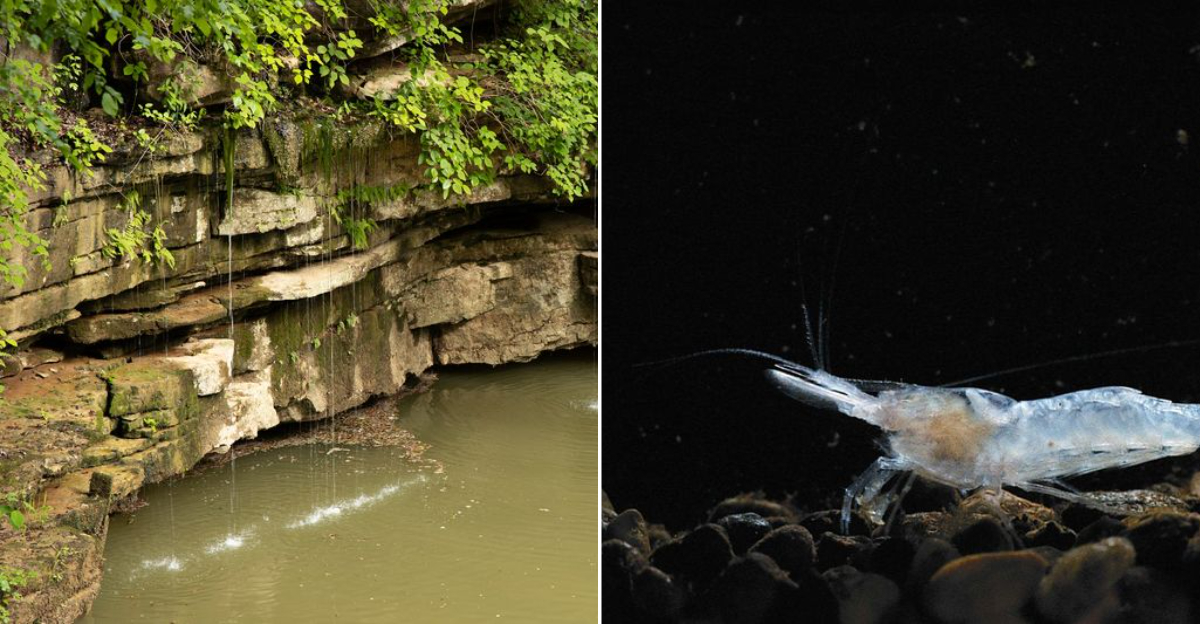
In the lowest passages, something almost invisible drifts through pools: the Kentucky cave shrimp. It’s eyeless, translucent, and found nowhere else on Earth.
Its survival depends on the fragile underground water system, which makes it a barometer for the cave’s health. Conservation efforts work to keep its habitat stable.
Spotting one felt like stumbling into a secret. I leaned over the pool, caught the faintest motion, and realized life finds a way even in total darkness.
Stephen Bishop’s Legacy
Stephen Bishop walked into Mammoth Cave in the 1800s with little more than a lantern and curiosity, yet he mapped miles that still guide visitors today.
As an enslaved man, his achievements carried both brilliance and tragedy. He named passages, drew maps with stunning accuracy, and shared stories with early tourists.
Learning his story on-site changed the cave for me. Every turn felt tied to his footsteps, a reminder that exploration is always human before it becomes history.
Visitor Center Excellence
Perched above the Historic Entrance, the visitor center isn’t just a ticket booth, it’s a starting point designed with care.
Inside, exhibits explain fossils, history, and the strange ecology below. LEED Gold certification underscores its sustainability, pairing modern responsibility with ancient wonder.
It’s worth lingering before a tour. Reading maps and displays primes you for what’s ahead, so when you step into the cave you’re not just surprised by sights, you’re ready to connect them.
Surface Adventures
Eighty miles of trails weave across the park’s surface, leading through forests, meadows, and riverbanks. The cave may dominate, but the land above sings its own song.
Paddling routes along the Green and Nolin Rivers offer another angle, letting you drift along the same waters shaping passages underground.
I hiked a trail after my first tour and loved how the forest air cleared the cave’s chill from my bones. Above ground or below, the park feels endless.
Fossilized Echoes
Shark teeth and other marine fossils peek from the limestone walls, silent evidence that this land once lay beneath an ancient sea.
Researchers have cataloged these finds, revealing a world hundreds of millions of years gone, now locked in stone for anyone to see.
It’s jarring in the best way: you come expecting caverns, but leave with a mental picture of sharks swimming where you just walked with a flashlight.
Geology Walks
Rangers lead geology-focused tours that peel back the mystery of Mammoth Cave’s structure. Instead of spectacle, they give you science.
The talks highlight Girkin, Ste. Genevieve, and St. Louis limestones, plus the sandstone cap that keeps dry passages from collapsing.
What starts as a stroll turns into revelation. Suddenly walls aren’t just walls, they’re time itself, layered and explained. Once you’ve seen it that way, you never unsee it.
Continuous Discovery
Mapping never ends here. Surveyors still crawl into the unknown, measuring, sketching, and expanding the official record year after year.
Technology helps, but much of the work is still human endurance, squeezing through places tourists will never walk.
I love that the cave refuses to be finished. Every visit feels like you’re stepping into a story that’s still being written, with new chapters waiting in the dark.
Historic Entrance
The Historic Entrance yawns wide, its cool breath drifting out even on a hot Kentucky afternoon. It’s both invitation and warning.
Tours begin here on set schedules, from easy walks to intense spelunking routes, each tailored to curiosity and stamina.
The predictability of the schedule feels like balance against the cave’s mystery. You know when your group will start, but you can’t know exactly how the underground will change you.
Tours And Schedules
Mammoth Cave offers a variety of tours to suit every adventurer’s interests and abilities. From easy walks to challenging spelunking adventures, there’s something for everyone.
Tours operate on set schedules, allowing visitors to plan their exploration efficiently. Knowledgeable guides lead the way, sharing fascinating insights and stories.
Each tour offers a unique perspective on the cave’s natural and historical wonders. Whether exploring the River Styx or venturing into deeper geological realms, these tours provide unforgettable experiences.