
This Legendary New York Steakhouse Serves Ribeye You’ll Never Forget
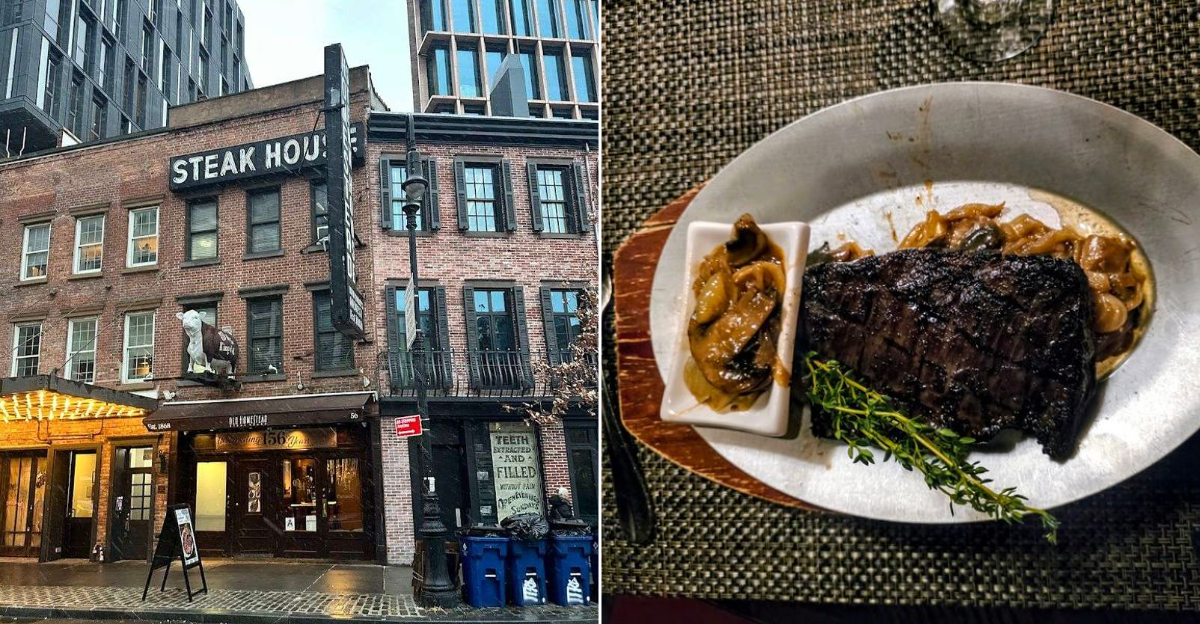
I had no idea one of New York’s most legendary steakhouses has been quietly serving ribeye since before most of the city even looked the way it does today.
Tucked into a neighborhood that’s seen it all, this place has been perfecting steak for well over a century. And somehow, it still flies under the radar if you’re not in the know.
I walked in curious, but one bite of that ribeye changed everything. Rich, buttery, cooked with the kind of confidence only time can teach… it instantly made sense why this spot has lasted this long.
Let’s just say, I left wondering how I hadn’t heard about it sooner. And planning my next visit before I even got outside.
The Cut That Built A Reputation
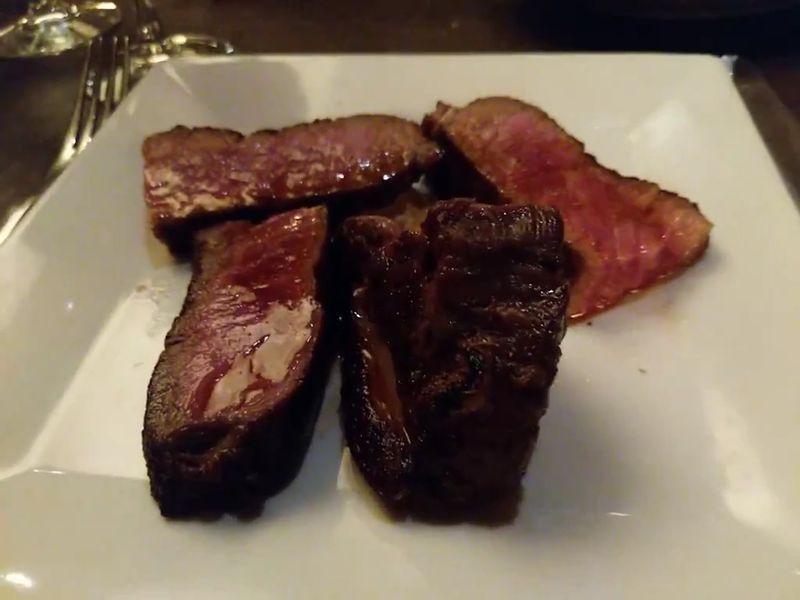
There are steaks, and then there is the Old Homestead Legendary Ribeye, a cut so perfectly executed that I genuinely sat in silence for a full thirty seconds after my first bite.
No dramatic music played, but honestly, it should have. The crust on this ribeye had that deep mahogany char that only comes from a kitchen that truly understands high heat and patience, two things I personally lack but deeply respect.
What hit me first was the fat cap, rendered down beautifully, pooling into the meat in a way that felt almost too good to be real.
Each slice was buttery without being greasy, bold without being overpowering, and seasoned with the kind of confidence that only 150-plus years of practice can buy. This isn’t a steak trying to impress you with tricks or sauces.
It stands completely on its own.
The portion size alone made me feel like royalty, which is fitting because Old Homestead has been feeding New York’s elite since before most modern cities existed. The ribeye is aged in-house, and you can taste exactly why that process matters.
Every bite carried this deep, complex beefy richness that lingered long after the plate was cleared. I kept thinking about it on the subway home, and honestly, I’m still thinking about it now.
Some meals feed your stomach, but this one fed something deeper.
A Historic Address That Tells Its Own Story
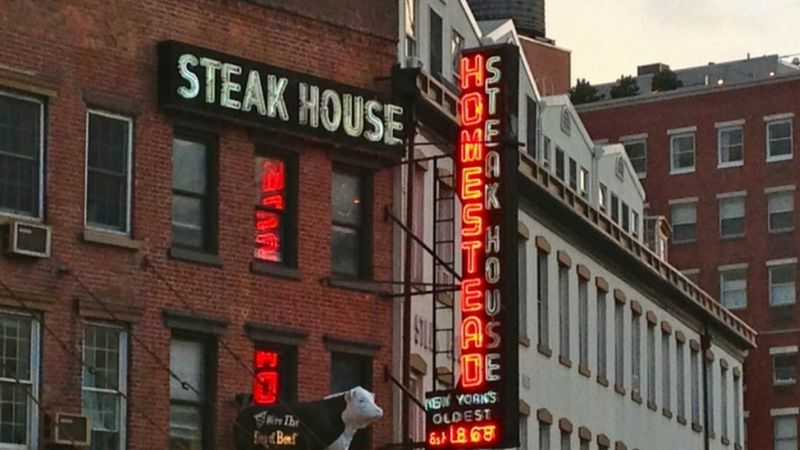
Walking up to 56 9th Ave, New York, NY 10011 for the first time felt like stepping onto a movie set, except the movie had been running since 1868 and nobody had bothered to call cut.
The building sits right in the heart of the Meatpacking District, which, if you think about it, is the most perfectly poetic location for the oldest continuously operating steakhouse in the United States. The neighborhood has transformed dramatically around it, but Old Homestead stands exactly where it always has, unbothered and iconic.
There’s something deeply grounding about eating in a place that watched New York City grow up around it. The Meatpacking District used to be exactly what its name suggests, a working industrial hub where the city’s meat supply passed through daily.
Old Homestead was literally in the middle of all that history, sourcing from its surroundings before farm-to-table became a trendy hashtag.
Standing outside before I walked in, I noticed the classic signage and the warm glow spilling from the windows onto the sidewalk. It felt lived-in and honest, without any of the self-conscious cool that newer restaurants in the neighborhood lean heavily into.
This address isn’t trying to be part of New York history. It IS New York history, carved right into the cobblestone streets of one of Manhattan’s most storied neighborhoods.
Knowing that made every bite taste even richer.
The Dry-Aging Process That Makes All the Difference
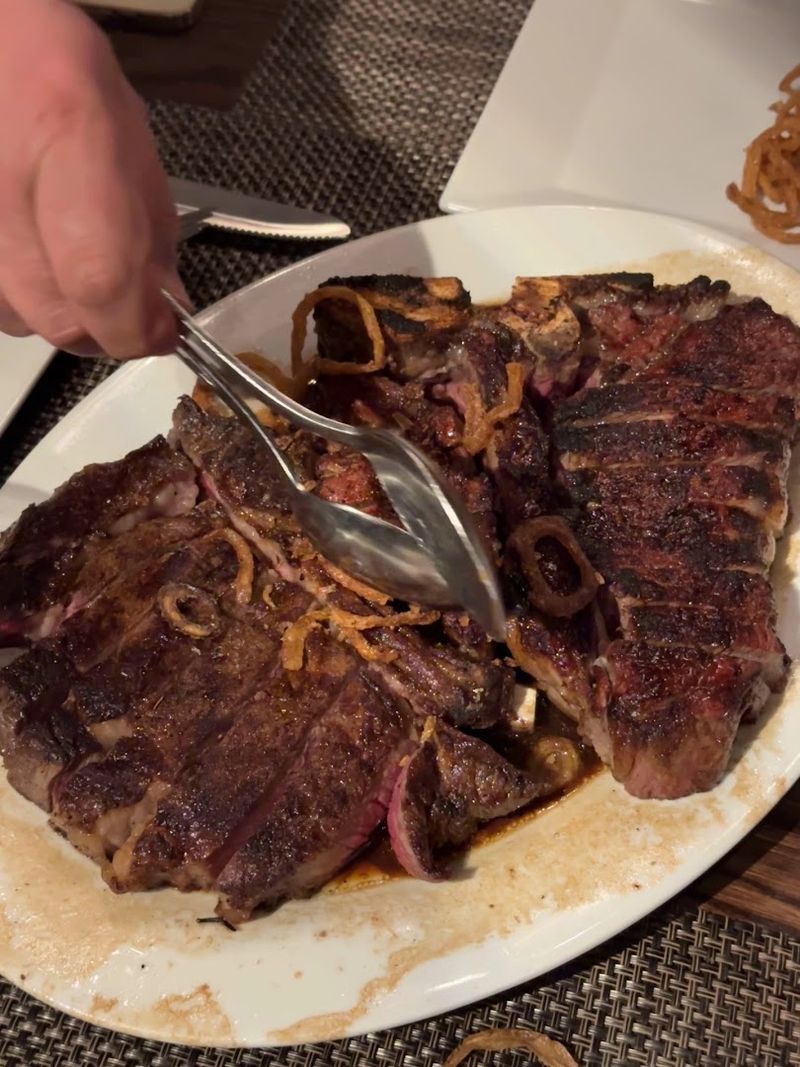
Before I visited Old Homestead, I thought dry-aging was one of those fancy food terms restaurants throw around to justify higher prices. After tasting the result, I owe every dry-aged steak in existence a sincere apology.
The process of dry-aging beef concentrates the natural flavors by allowing moisture to evaporate slowly over weeks, and what you’re left with is something that tastes like beef turned all the way up to eleven.
Old Homestead has been perfecting their aging process for generations, and the ribeye is the clearest proof.
The flavor is nutty, rich, and layered in a way that feels almost impossible for something that comes from a single cut of meat. There’s a slight funkiness to it, in the best possible sense, like how a really good aged cheese has that complex depth that fresh cheese simply cannot replicate.
I asked about the process because I genuinely couldn’t figure out how something could taste this intentional.
The answer came back simply: time and quality. Great beef, handled with patience, in a place that has never once felt the need to rush anything.
That philosophy shows up in every single bite.
Dry-aging isn’t a gimmick here. It’s a commitment to doing things the right way, even when the right way takes weeks longer than the easy way.
That kind of dedication is rare, and you can absolutely taste the difference on your plate.
The Meatpacking District Atmosphere You Can’t Manufacture
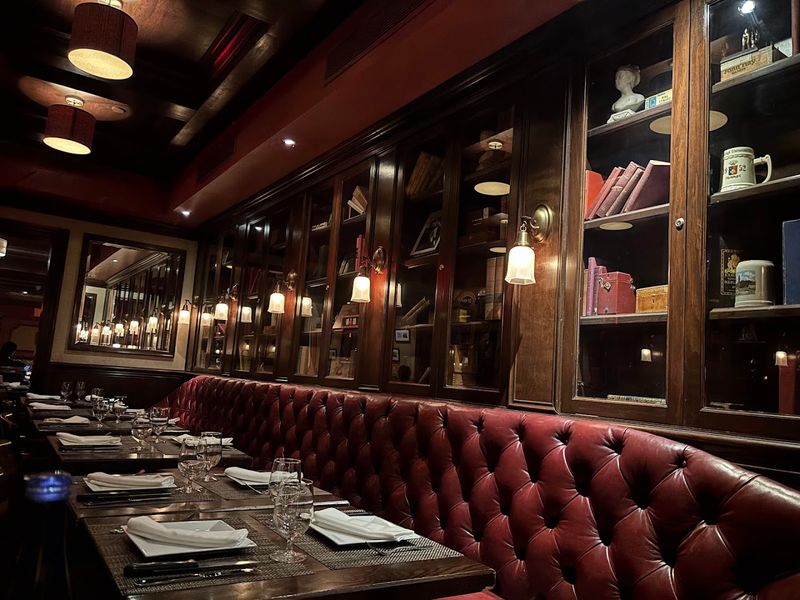
Some restaurants spend millions trying to create atmosphere, and you can always tell. Old Homestead doesn’t manufacture its vibe because it doesn’t have to.
The place has been accumulating character since Ulysses S. Grant was in office, and every inch of the interior reflects that weight of history without feeling stuffy or museum-like.
It feels alive in a way that newer spaces just cannot fake.
The dining room has this wonderful warmth to it, dark wood, white tablecloths, and lighting that makes everyone look like they’re in a 1970s drama in the absolute best way. I sat down and immediately felt like I was supposed to be there, which is a rare gift for a first-time visitor.
The energy in the room was focused and purposeful. People were there to eat seriously and enjoy themselves seriously, two things that are not mutually exclusive.
What really got me was the contrast between the neighborhood outside and the room inside. The Meatpacking District is now full of sleek rooftop bars and fashion boutiques, all glass and Instagram-ready angles.
Then you step into Old Homestead and suddenly you’re somewhere that has absolutely no interest in being trendy because it transcends trend entirely. It exists on its own timeline.
I found that genuinely refreshing in a city that sometimes moves so fast it forgets to look back at what made it great in the first place.
The Sides That Deserve Their Own Fan Club
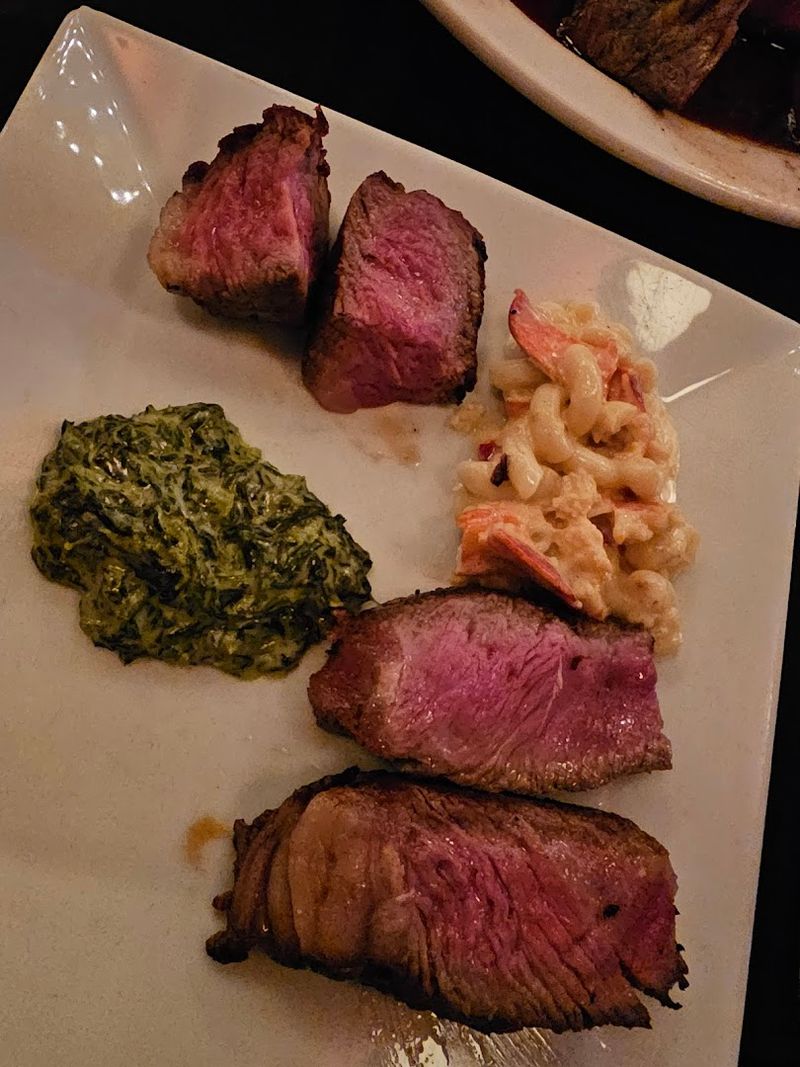
Ordering only the ribeye would be like watching a concert and leaving before the encore. Technically you got the main event, but you missed something important.
The sides at this place are not afterthoughts. They are fully realized supporting characters in a meal that earns its standing ovation from start to finish.
I ordered the creamed spinach because it’s practically a requirement at any classic New York steakhouse, and Old Homestead’s version reminded me why that tradition exists.
Rich, velvety, and deeply savory, it was the kind of side dish that makes you reconsider every sad salad you’ve ever eaten. The hash browns were golden and crisp on the outside with a tender, almost fluffy center that I was absolutely not prepared for.
What surprised me most was how the sides didn’t compete with the ribeye but instead built a whole conversation around it.
Each component on the table had its own personality and purpose, and together they created this complete, satisfying meal.
This place clearly applies the same care to the supporting cast as it does to the star of the show. That kind of consistency is what separates a great steakhouse from a legendary one, and after that meal, I understood completely why this place has been packing tables for over 150 years.
A Legacy Built On Beef And Bragging Rights
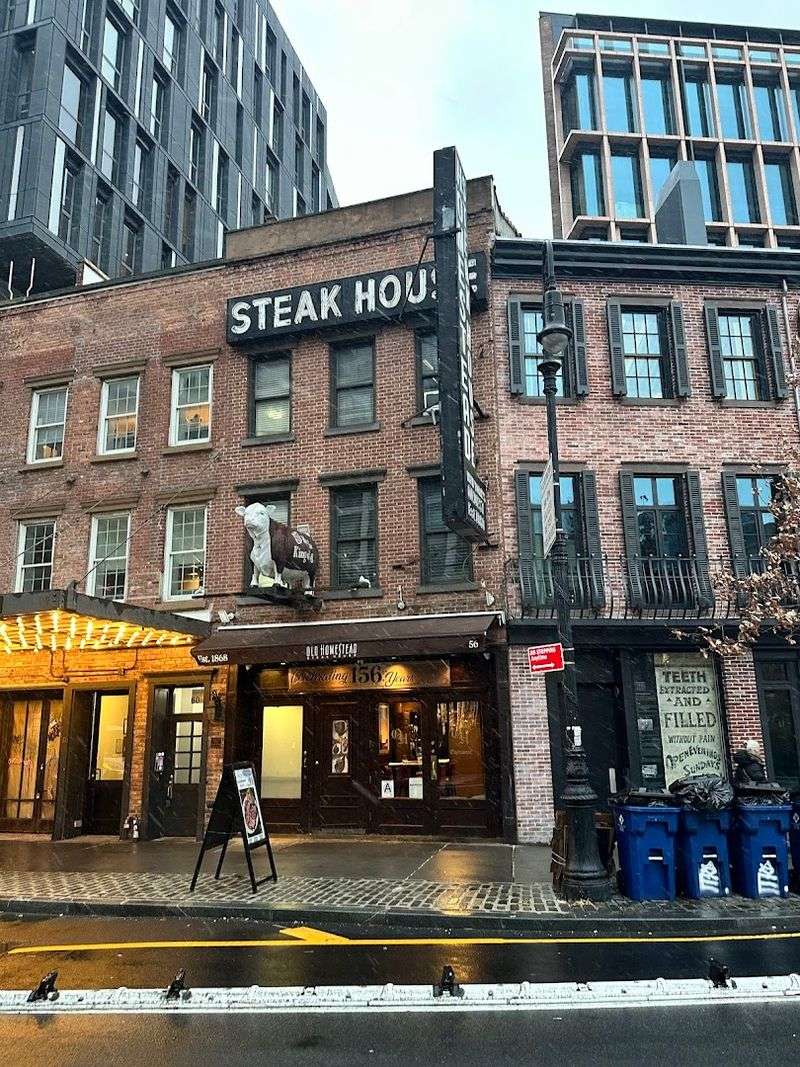
Founded in 1868, Old Homestead Steakhouse holds the title of the oldest continuously operating steakhouse in the United States, and it wears that title with zero arrogance and complete confidence. That combination is surprisingly hard to pull off.
Most places with that kind of legacy either coast on their history or become self-parody. Old Homestead just keeps cooking, which is honestly the most impressive flex of all.
To put the timeline in perspective: when this steakhouse first opened its doors, the Brooklyn Bridge hadn’t been built yet, and the Statue of Liberty was still being assembled in France.
The fact that a restaurant from that era is still not just operating but genuinely thriving in one of the world’s most competitive food cities is extraordinary. New York has eaten and forgotten thousands of restaurants in that same span of time.
What I kept thinking about during my meal was the sheer weight of all the people who had sat in similar chairs and ordered similar steaks across those 150-plus years.
Politicians, artists, athletes, everyday New Yorkers celebrating life milestones, all of them fed by the same kitchen operating on the same core principle: great beef, handled with respect. Legacy in the restaurant world is usually a warning sign that a place is living in the past.
At this place, legacy is simply proof that they’ve been getting it right longer than anyone else.
This Ribeye Will Live In Your Memory Forever
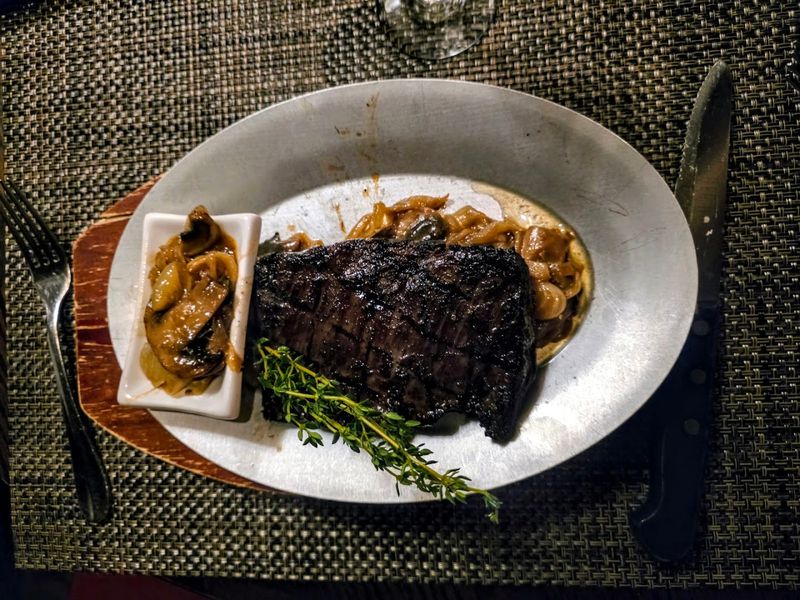
There are meals you eat and meals you remember, and then there is a very small, very sacred category of meals that actually change the way you think about food going forward.
The Old Homestead ribeye belongs firmly in that third group. Walking out of that restaurant, I felt like I had been given new information about what beef could actually be when it’s treated with genuine respect and expertise.
The memory of that steak has a texture to it, which sounds strange but makes complete sense if you’ve experienced something similar.
I can still recall the exact moment the crust gave way and the interior revealed itself, pink and glistening and perfectly rested. It’s the kind of sensory memory that food writers try to describe and usually fail, because some things really do have to be experienced to be believed.
Old Homestead doesn’t advertise itself as a bucket list destination, but that’s exactly what it is. It’s the kind of place that deserves to be on your list not because it’s trendy or because some influencer told you to go, but because it represents something genuinely rare.
A restaurant that has earned its reputation every single day for over 150 years. So if you’re in New York and you’re even slightly serious about steak, the question isn’t whether you should go to Old Homestead.
The real question is what took you so long?