
This Legendary Western Highway Runs From Utah To Montana Through 7 National Parks
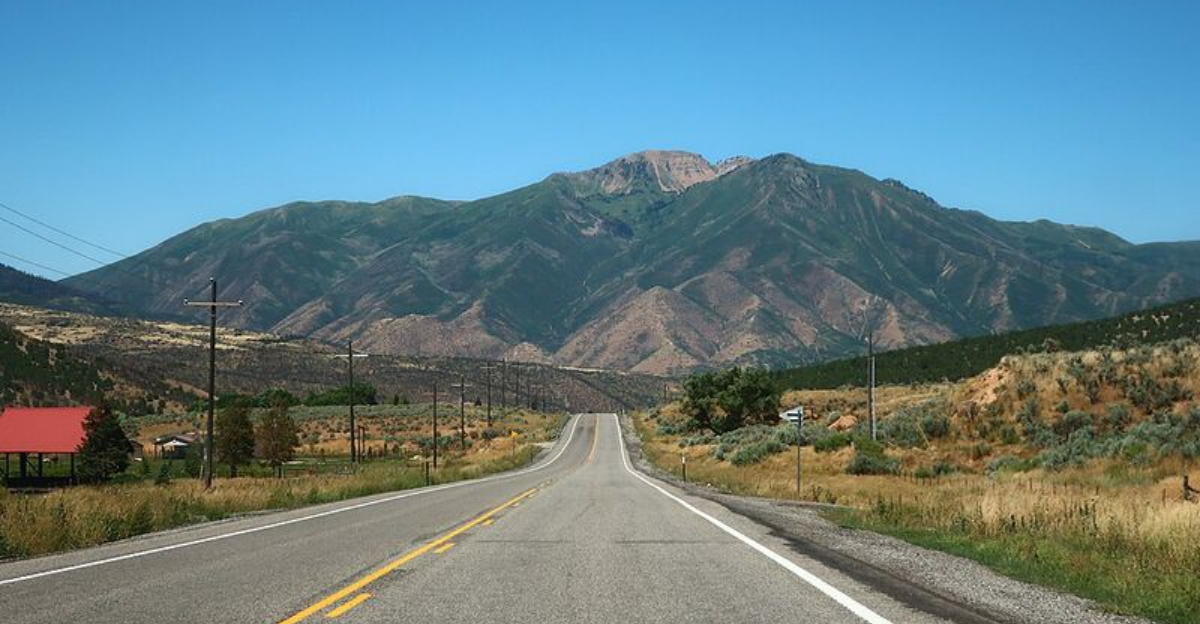
If roads could talk, U.S. Route 89 would spill secrets you’re not ready for.
This isn’t just a drive. It’s a full-blown Western, and you’re the main character.
No horse, just horsepower. Named the #1 driver’s drive by National Geographic (yeah, that’s a big deal), this 1,400-mile stretch hits different.
Arizona to Montana, Utah to Wyoming, zero boring moments. Red rock canyons, wild alpine views, neon-blue lakes that look fake, but aren’t.
Seven national parks. Around 150 towns. Stories in every mile. Honestly? This road doesn’t just take you places. It changes how you travel.
Snacks ready. Camera charged. Let’s go.
Zion National Park, Utah
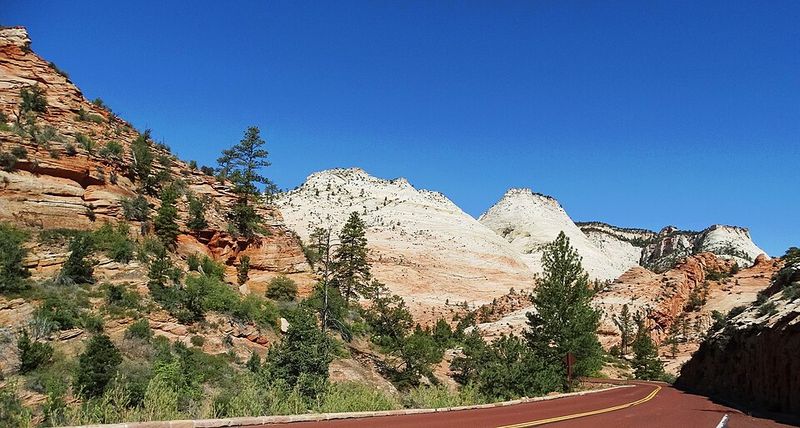
Zion National Park is where the road trip magic truly begins. Situated in southwestern Utah, this park greets you with walls of red and orange Navajo sandstone that rise nearly 3,000 feet straight into the sky.
It is the kind of scenery that makes you pull over just to stare for a while.
The park covers about 229 square miles and welcomes more than 4.5 million visitors each year, making it one of the most visited national parks in the country.
Angels Landing is probably the most famous hike here, offering a nerve-tingling ridge walk with chains bolted into the rock for support. The Narrows, where you wade through the Virgin River between slot canyon walls, is equally unforgettable.
Beyond the big-name trails, Zion has quieter corners worth exploring. Emerald Pools Trail leads to hanging gardens and small waterfalls tucked into the canyon walls.
Kolob Canyons, a less-visited section of the park, offers dramatic finger canyons without the crowds. Wildlife like mule deer, California condors, and wild turkeys roam freely throughout.
Route 89 connects directly to Zion via State Route 9, making it a seamless stop on your northbound journey. Springtime brings wildflowers and rushing rivers, while fall turns the canyon walls golden with cottonwood trees.
Zion does not just welcome you into the West. It pulls you in completely and refuses to let go.
Bryce Canyon National Park, Utah
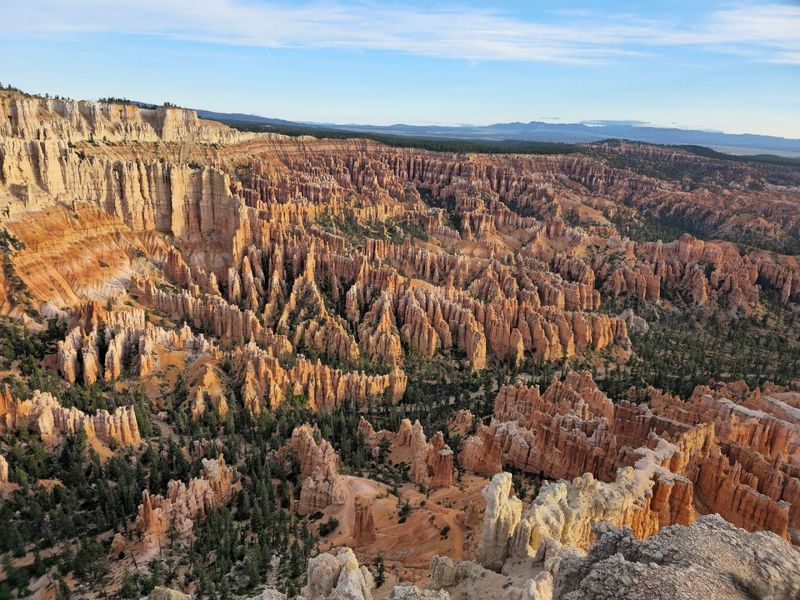
Bryce Canyon looks like something straight out of a fantasy novel. Thousands of spire-shaped rock formations called hoodoos rise from the canyon floor in shades of orange, red, and white, creating a landscape that genuinely looks like it belongs on another planet.
It sits at an elevation of around 8,000 to 9,000 feet, which means the air is crisp and the views are absolutely massive.
Technically, Bryce Canyon is not a canyon at all. It is a series of natural amphitheaters carved by frost, rain, and time into the edge of the Paunsaugunt Plateau.
The Paiute people who originally lived here called it the place where red rocks stand like men in a bowl-shaped canyon, and honestly, that description is hard to beat.
Sunrise and sunset at Inspiration Point are legendary. The hoodoos glow in warm tones of amber and crimson as the light shifts across the sky.
The Navajo Loop Trail drops you right into the heart of the formations, weaving between towering walls of eroded limestone. It is a moderate hike that packs an enormous visual punch.
Bryce Canyon also holds the title of one of the darkest skies in the continental United States, making it a top-tier destination for stargazing.
On a clear night, the Milky Way stretches from horizon to horizon in breathtaking clarity. Route 89 runs right through this region, putting Bryce within easy reach of any traveler heading north.
Grand Staircase-Escalante National Monument, Utah
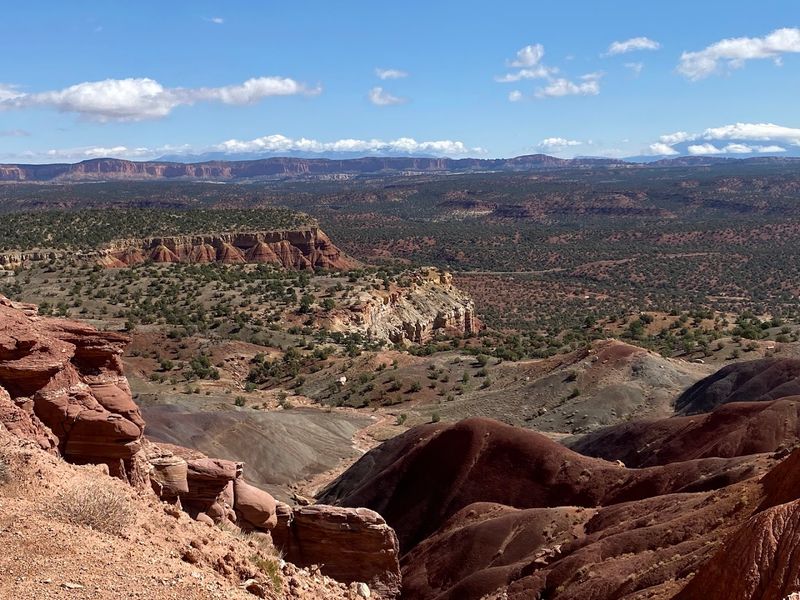
Not every legendary stretch of Route 89 comes with a national park sign. Grand Staircase-Escalante National Monument is proof that some of the most spectacular places in the West fly completely under the radar.
This enormous monument covers nearly 1.9 million acres of high desert terrain in southern Utah, making it one of the largest national monuments in the lower 48 states.
Route 89 cuts right through the heart of this monument, and the drive itself is the attraction. The road reveals layer after layer of ancient geological history, from the Grand Staircase of colorful rock layers to the labyrinthine slot canyons of the Escalante River drainage.
The region preserves some of the most significant paleontological sites in North America, with dinosaur fossils still being discovered here regularly.
Hiking into the monument feels like stepping into a world untouched by time. Coyote Gulch offers a multi-day backpacking route through arches, natural bridges, and hanging gardens fed by hidden springs.
Slot canyons like Peek-a-Boo and Spooky are narrow enough in places to require you to turn sideways to pass through.
Because the monument is so remote and so vast, it rewards travelers who slow down and pay attention. There are no shuttle buses or crowded visitor centers here.
Just wide open wilderness, ancient rock, and the kind of silence that reminds you how big the world actually is. This is Route 89 at its most raw and honest.
Grand Teton National Park, Wyoming
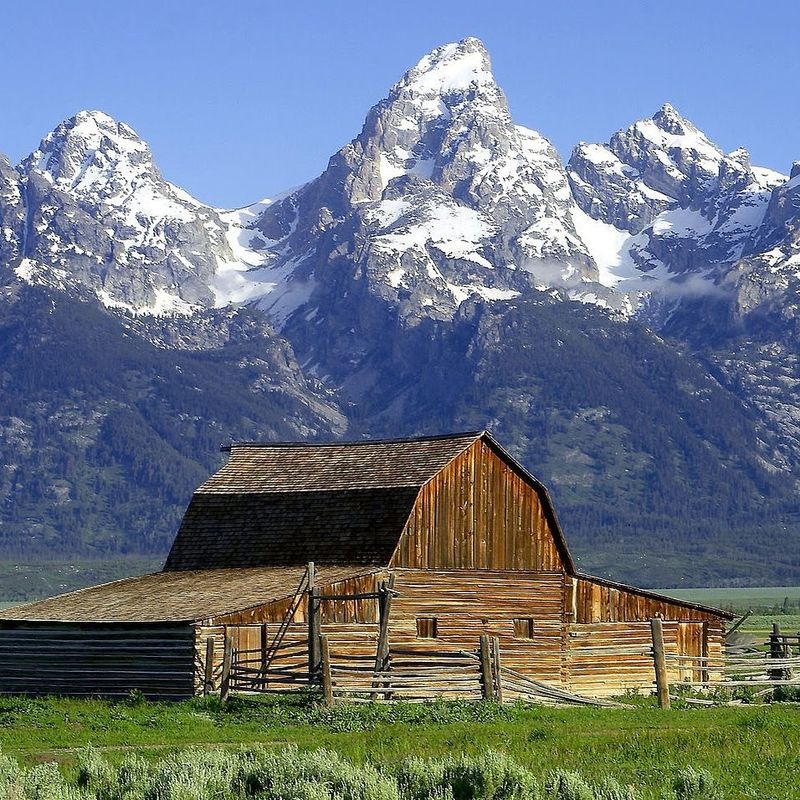
There is a moment on Route 89 in Wyoming when the Teton Range suddenly appears on the horizon, and it genuinely stops your breath. No foothills ease you into it.
The mountains just explode upward from the flat valley floor in one dramatic, jagged wall of granite. It is one of the most iconic views in all of American travel.
Grand Teton National Park protects this incredible range and the surrounding Jackson Hole valley. The tallest peak, Grand Teton itself, reaches 13,775 feet.
The park covers about 310,000 acres of glacially carved terrain, including dozens of pristine alpine lakes, wildflower meadows, and dense forests of lodgepole pine and Engelmann spruce.
Jenny Lake is the crown jewel of the park. A short boat ride across the lake leads to Hidden Falls and Inspiration Point, where the views of the Tetons are nothing short of extraordinary.
Schwabacher Landing along the Snake River is another must-stop, especially in the early morning when moose wade through the water and the mountains reflect perfectly on the glassy surface.
Wildlife watching in Grand Teton is world-class. Bison, pronghorn, black bears, and grizzly bears all call this park home.
Route 89 runs directly through the park, meaning you experience the full grandeur of the Tetons right from your car window. Some road trips make you work for the reward.
Grand Teton hands it to you before you even stop the engine.
Yellowstone National Park, Wyoming And Montana
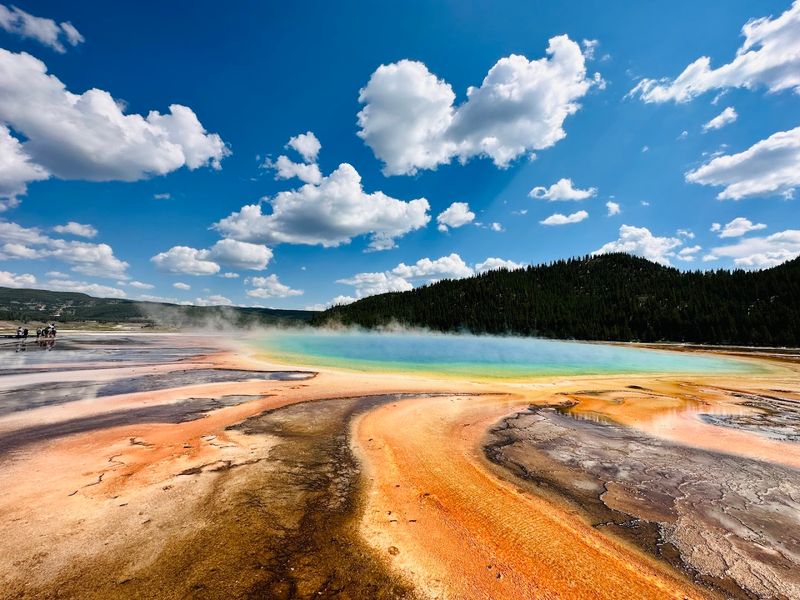
Yellowstone is not just a national park. It is a living, breathing supervolcano that has been putting on a geological show for millions of years.
Sitting on top of one of the largest volcanic hotspots on Earth, the park is home to more than 10,000 hydrothermal features, including geysers, hot springs, mud pots, and fumaroles. No other place on the planet concentrates this kind of geothermal activity in one spot.
Old Faithful is the park’s most famous geyser, erupting roughly every 90 minutes to heights between 100 and 185 feet.
The Grand Prismatic Spring is equally mesmerizing, with rings of vivid blue, green, yellow, and orange that look like something painted by a wildly talented artist. The colors come from heat-loving bacteria called thermophiles that thrive in the scalding water.
Yellowstone also carries serious wildlife credentials. The park supports the largest concentration of free-roaming wildlife in the lower 48 states, including bison herds, gray wolves, grizzly bears, and elk.
The Lamar Valley is often called the Serengeti of North America for its extraordinary animal sightings at any time of day.
Route 89 enters Yellowstone through the southern entrance and travels north through the park, connecting seamlessly to Montana. The Grand Loop Road lets you experience the park’s greatest hits in a single long drive.
Yellowstone rewards patience and curiosity in equal measure, and it never delivers the same experience twice.
Glacier National Park, Montana
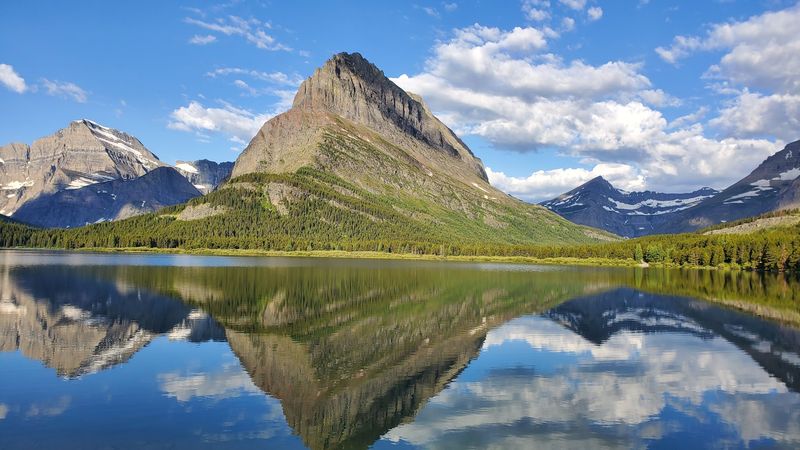
By the time Route 89 reaches Glacier National Park in northwestern Montana, you have already seen an extraordinary amount of beauty. And then Glacier shows up and raises the bar all over again.
Known as the Crown of the Continent, this park protects over a million acres of pristine wilderness along the Continental Divide and the Canadian border.
The Going-to-the-Sun Road is the centerpiece of any Glacier visit. This 50-mile mountain highway climbs through glacially carved valleys, past cascading waterfalls, and over Logan Pass at 6,646 feet.
It is one of the most scenic drives in North America and a genuine engineering marvel, carved into near-vertical cliff faces during the 1920s and 1930s.
Glacier gets its name from the glaciers that shaped its dramatic landscape over thousands of years. The park still contains about 26 named glaciers, though they have shrunk significantly over the past century due to climate change.
Grinnell Glacier and Sperry Glacier are the most accessible and offer sobering, beautiful reminders of the forces that built this landscape.
Wildlife in Glacier is abundant and surprisingly approachable. Mountain goats perch on cliff ledges with total confidence.
Grizzly bears roam the high meadows in summer. Bighorn sheep block the road without a single apology.
Route 89 runs along the eastern edge of the park, offering sweeping views of the Rocky Mountain Front that feel almost too cinematic to be real. Glacier is where Route 89 earns its legendary reputation once and for all.
Small Towns And Wide-Open Stretches
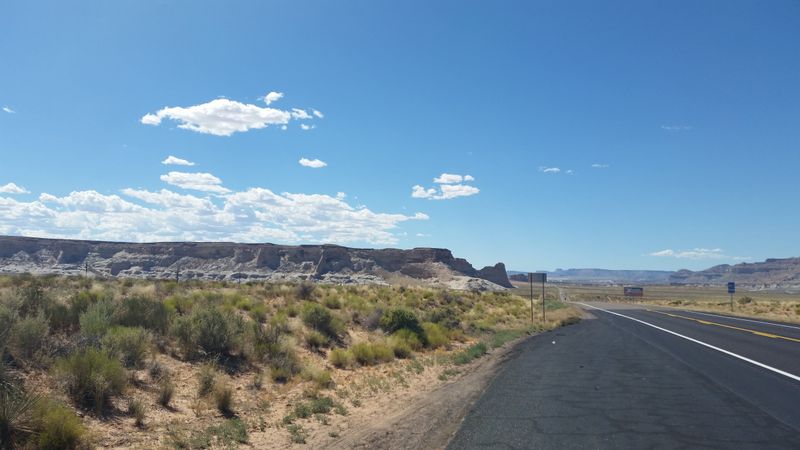
Here is something the highlight reels never quite capture. The stretches of Route 89 between the national parks are just as memorable as the parks themselves.
The highway threads through tiny Western towns, wide-open plains, and landscapes so quiet you can almost hear the earth breathing. This is where the real soul of the road lives.
Towns like Kanab, Utah, have a deep history as a filming location for classic Western movies and television shows. Dubbed the Little Hollywood of Utah, Kanab served as a backdrop for hundreds of productions from the 1930s through the 1970s.
Driving through feels like flipping through the pages of American history with a cinematic filter.
Further north, the highway crosses through the Wind River Range country in Wyoming, where sagebrush flats stretch for miles and pronghorn antelope sprint alongside the road. These animals are the fastest land mammals in the Western Hemisphere, reaching speeds of up to 60 miles per hour.
Watching them run across the open plain is one of those unexpected Route 89 moments that stays with you long after the trip is over.
In Montana, the highway passes through Blackfeet Nation lands, where the Rocky Mountain Front rises dramatically from the prairie in one of the most striking geological transitions in the country. The open stretches of Route 89 are not empty spaces between destinations.
They are destinations in their own right, full of character, history, and the kind of wide-open freedom that only the American West can deliver. Have you ever felt more alive than when the road ahead is completely open?