
This Magical Waterfall Trail In Washington Deserves A Spot On Your Bucket List
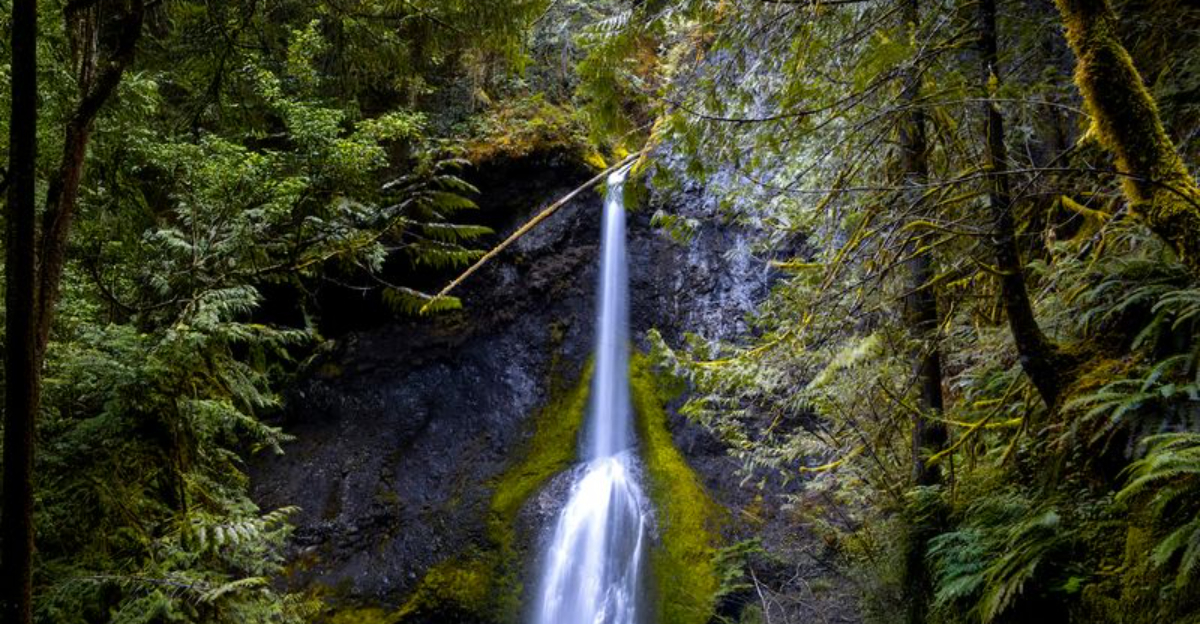
When someone tells you about a trail that feels like walking through a fairy tale, you naturally raise an eyebrow-but then you actually experience it, and suddenly you’re the one telling everyone they need to go.
The Pacific Northwest holds many wonders, yet this particular spot in Washington manages to stand out even among the region’s legendary natural beauty.
My journey to this waterfall began with a seemingly ordinary hiking app recommendation and ended with me standing slack-jawed before a 90-foot cascade that looks like it belongs on a postcard from paradise.
What makes this place truly special isn’t just the waterfall itself (though it is spectacular), but the entire experience-the moss-draped forests, the wooden boardwalks, the way the trail builds anticipation with every twist and turn.
By the time you reach the viewpoint, you’re already in love. Just off Highway 101 about 20 miles from Port Angeles, this 90-foot horsetail waterfall delivers one of the most rewarding short hikes in the entire Pacific Northwest.
The Trail That Starts With A Tunnel
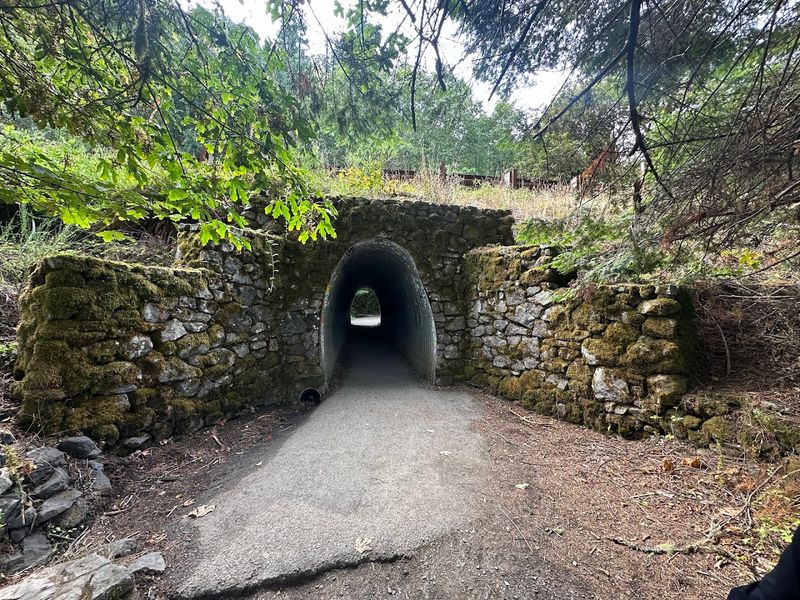
Right from the start, this trail does something most hikes never do: it sends you underground. Just past the Storm King Ranger Station, the path leads through a narrow tunnel bored beneath Highway 101, and stepping through it feels like crossing a threshold into a completely different world.
The tunnel is short but memorable, and kids especially love that unexpected twist. Once you emerge on the other side, the forest closes in around you in the best possible way.
Towering Douglas firs and western red cedars arch overhead, and the ground is carpeted with ferns and luminous green moss. The air smells clean and earthy, the kind of freshness that city parks simply cannot replicate.
The trail is well-maintained and clearly marked, making navigation easy even for first-time visitors. Starting near the Lake Crescent Lodge parking area, the path sets a calm and welcoming tone right away.
That tunnel moment alone is worth pulling out your phone for a quick photo before the real magic begins. It is such a simple beginning, but it instantly makes the hike feel more like an adventure than a regular walk in the woods.
Walking Through An Old-Growth Forest
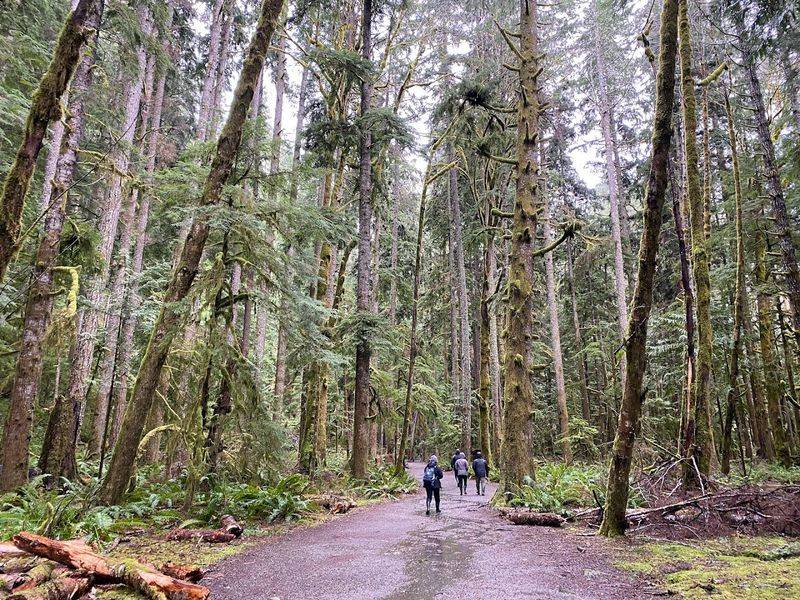
Few things in nature are as humbling as standing next to a tree that has been growing for hundreds of years.
The Marymere Falls trail is lined with exactly those kinds of trees, including Douglas fir, western hemlock, red alder, and towering cedar, all draped in layers of vibrant moss that make the whole forest glow a soft, otherworldly green.
Walking this trail feels less like a hike and more like a slow, peaceful wander through a living museum. The old-growth canopy filters the sunlight into soft beams that fall across the trail at just the right angles, especially on clear mornings.
Photographers tend to stop every few steps, and honestly, it is hard to blame them. The forest floor is equally captivating, with ferns, fallen logs covered in lichen, and the occasional glimpse of a small creek threading through the undergrowth.
This section of the hike alone justifies the drive to Olympic National Park, even before you catch your first sight of the falls. The quiet here is part of the magic, broken only by birdsong, footsteps, and the soft movement of water somewhere nearby.
Two Wooden Bridges Over Babbling Creeks
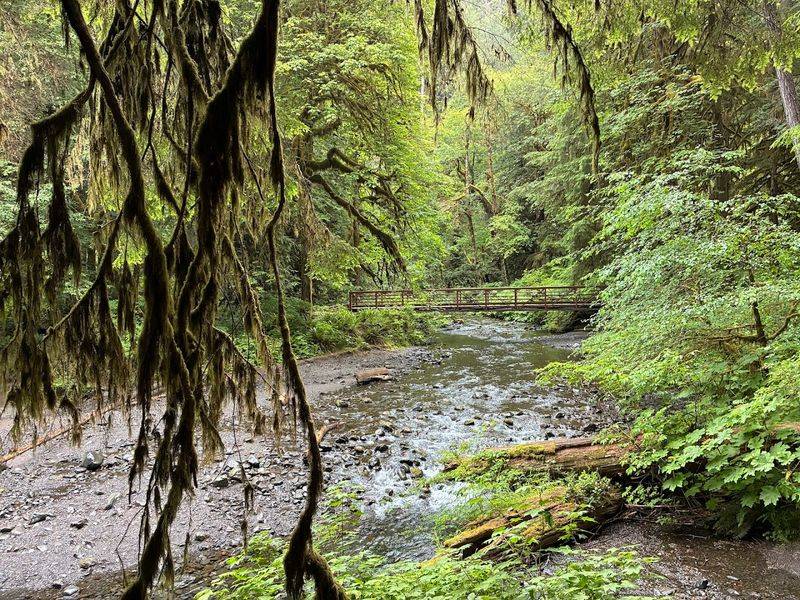
There is something quietly charming about crossing a wooden bridge over a forest creek, and the Marymere Falls trail gives you that pleasure not once but twice.
The path crosses both Barnes Creek and Falls Creek on simple but sturdy wooden bridges that feel perfectly at home in this lush, green setting.
Both crossings offer a chance to pause and look down into clear, cold water rushing over smooth stones below. In spring, the creeks run full and fast, their sound mixing with birdsong overhead to create a genuinely soothing soundtrack for your hike.
Even in summer, when water levels drop a bit, the creeks stay lively and photogenic. These bridge moments are natural rest stops, especially for families with younger kids who want to spot fish or toss a leaf into the current and watch it float away.
They also mark your progress along the trail in a satisfying way, letting you know that the waterfall is getting closer with every step you take.
The Short But Steep Climb To The Viewpoints
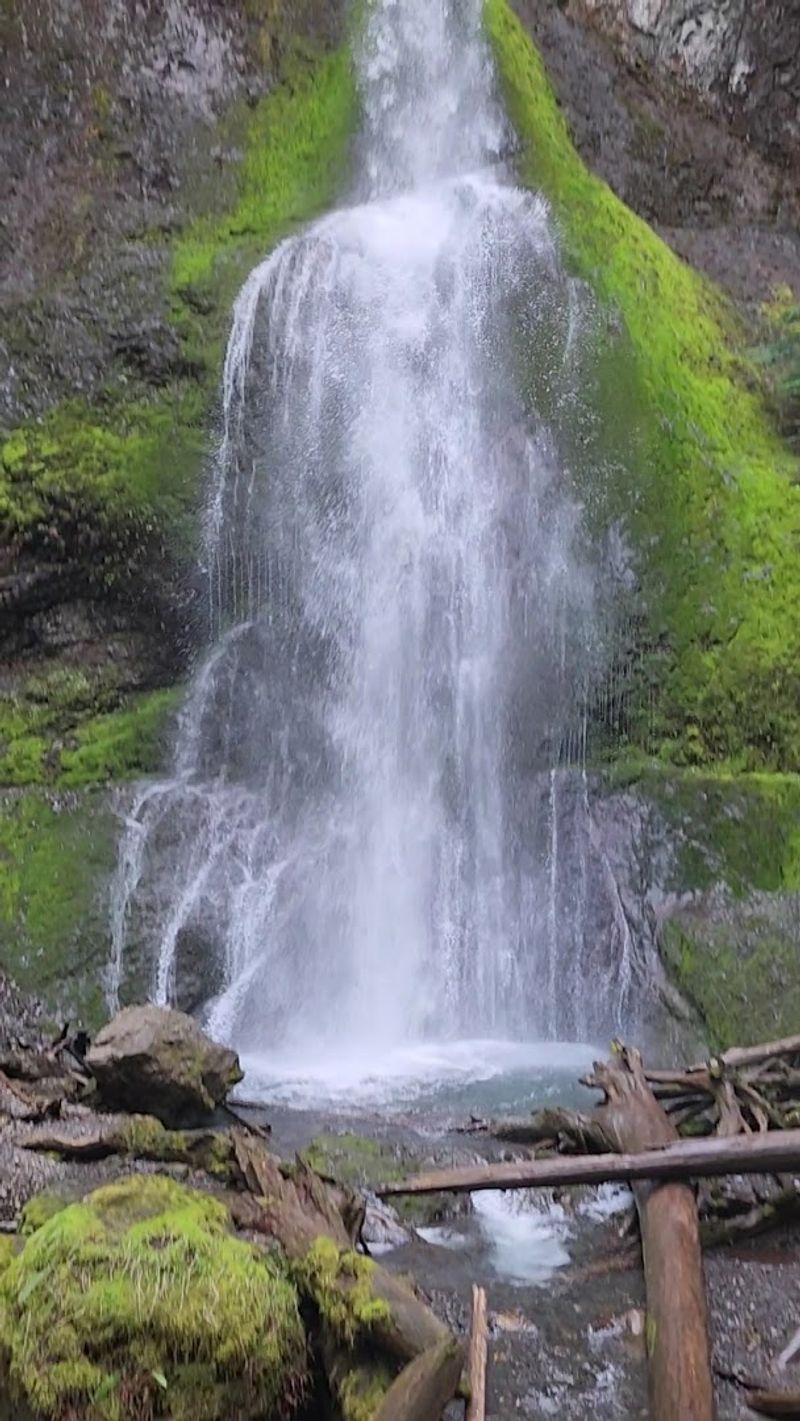
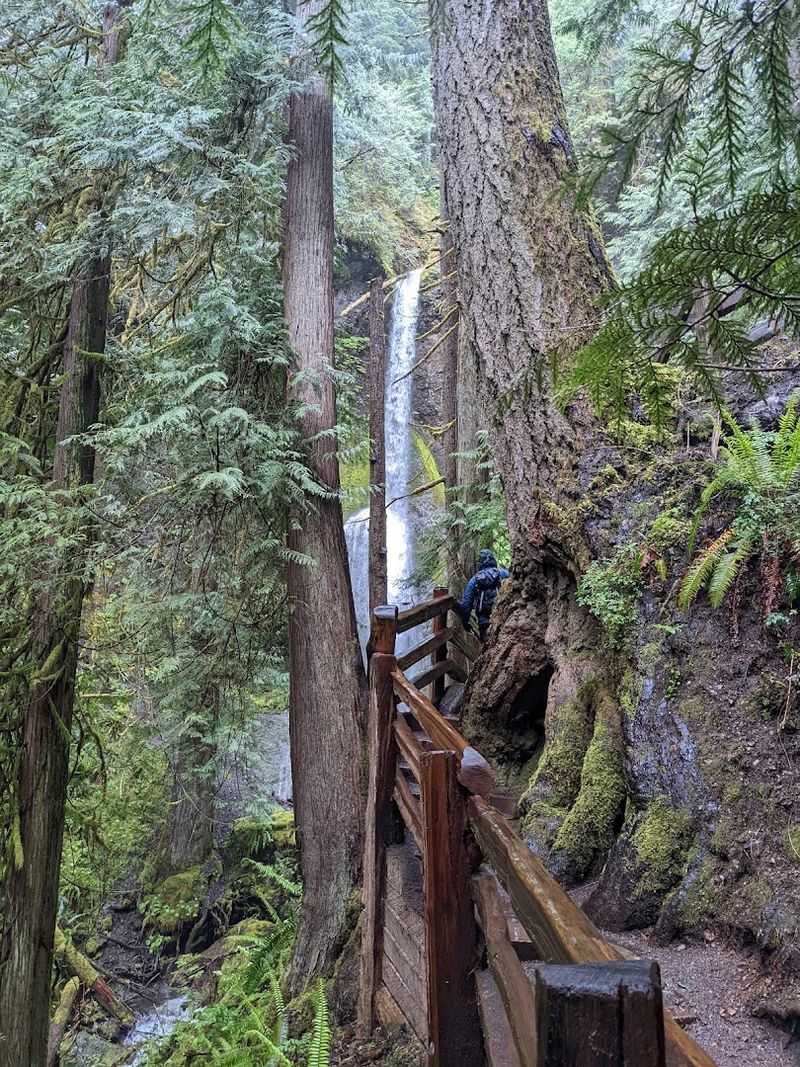
Most of the Marymere Falls trail is gentle and flat, which makes the final push to the viewpoints feel like a fun little surprise rather than a grueling challenge. Near the end of the route, the path shifts into a short but noticeably steep climb, aided by a series of nature stairs carved from stone and wood that wind upward through the trees.
The climb is manageable for most hikers, including older kids and adults of average fitness, though it does require some attention to footing on uneven surfaces. Trekking poles can be helpful here, particularly if the ground is wet or muddy from recent rain.
The stairs add a sense of anticipation as you ascend, because you can hear the falls growing louder with every step.
At the top of the climb, you are rewarded with both a lower and an upper viewpoint of Marymere Falls, each offering a slightly different perspective. The upper viewpoint tends to give you the most dramatic full view of the cascade, and the payoff feels completely worth the burn in your legs.
Marymere Falls Itself: A 90-Foot Curtain Of Water
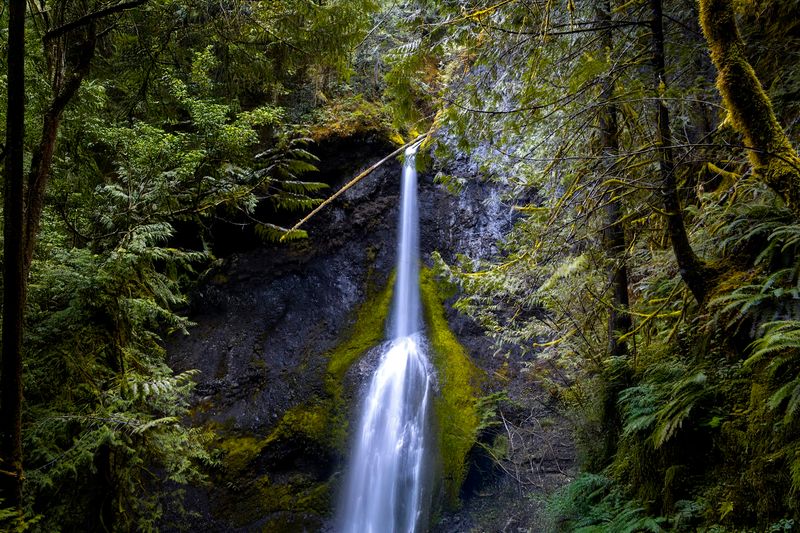
After all the mossy trees, babbling creeks, and wooden bridges, the moment you round the final bend and see Marymere Falls for the first time genuinely stops you in your tracks.
The waterfall drops approximately 90 feet down a sheer basalt rock face, sending a slender but powerful curtain of white water into the pool below. The surrounding rock is thick with dark green moss, and the whole scene has an almost dreamlike quality.
The falls are classified as a horsetail cascade, meaning the water maintains contact with the rock as it descends, which gives it a graceful, flowing appearance rather than a freefall plunge.
Spring visits reward you with the fullest flow, when snowmelt and rain send the water rushing down with impressive force and volume.
Even in late summer, when flow is lighter, the falls remain strikingly beautiful against the dark mossy backdrop.
Standing at the viewpoint and simply listening to the sound of the water echoing off the surrounding canyon walls is one of those travel moments that stays with you long after you have returned home.
It is a beautiful payoff for such an easy trail, and the kind of view that makes the whole forest walk feel even more special.
Best Times To Visit And What To Expect Each Season
Timing your visit to Marymere Falls can make a real difference in what you experience. Spring, roughly March through May, is widely considered the best season for waterfall chasers.
Snowmelt and Pacific rainfall combine to push the falls to their fullest and most dramatic flow, though expect muddy trail conditions and the possibility of rain during your hike.
Summer brings reliable dry weather and is the busiest season by far. The parking lot near the Lake Crescent Lodge trailhead fills up fast, sometimes by mid-morning on weekends.
Arriving early, ideally before 9 a.m., is strongly recommended if you want to avoid the crowds and snag a parking spot without circling the lot.
Fall is a wonderful sweet spot, offering fewer visitors, colorful foliage along the trail, and comfortable hiking temperatures.
Winter visits are possible but come with unpredictable conditions, and microspikes may be necessary if snow or ice has settled on the upper sections of the trail near the viewpoints.
No matter the season, it is worth checking Olympic National Park alerts before you go so trail, road, and weather surprises do not catch you off guard.
Planning Your Visit: Passes, Parking, And Nearby Stops
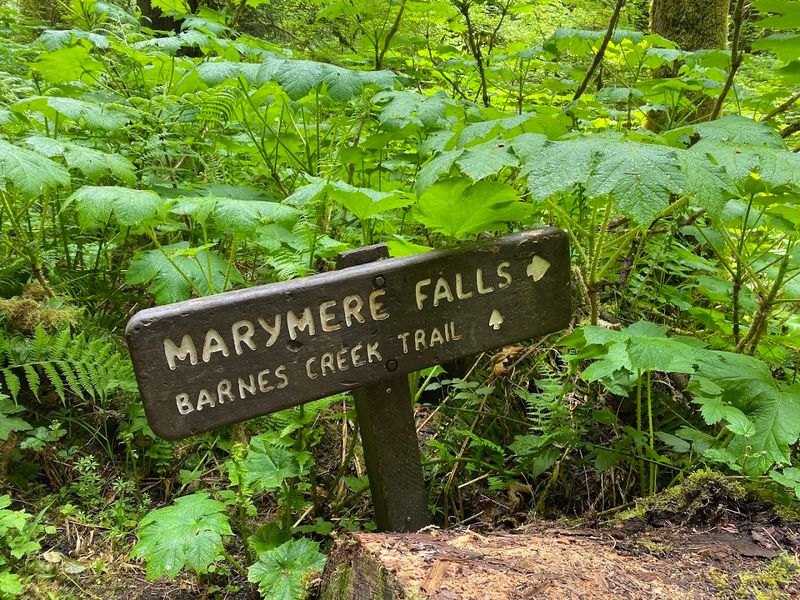
A little planning goes a long way when visiting Marymere Falls, and the logistics are refreshingly straightforward.
The trailhead sits near the Lake Crescent Lodge off Highway 101, roughly 20 miles west of Port Angeles, Washington. Since the trail is inside Olympic National Park, you will need a valid America the Beautiful National Parks Pass or be prepared to pay the park entrance fee at the gate.
Restrooms are available near the trailhead at the Storm King Ranger Station, which is a genuine convenience before hitting the trail. The large parking area accommodates quite a few vehicles, but it fills up quickly on summer weekends, so an early start is your best strategy for a stress-free experience.
After your hike, the surrounding area offers plenty of reasons to linger.
Lake Crescent is stunningly clear and perfect for a lakeside picnic or a short paddle. The Moments in Time Trail nearby offers an easy, accessible stroll, and the Storm King Trail challenges stronger hikers with steep switchbacks and rewarding ridge views above the lake.