
This Maine Bridge Still Sways The Same Way It Did In The 1800s
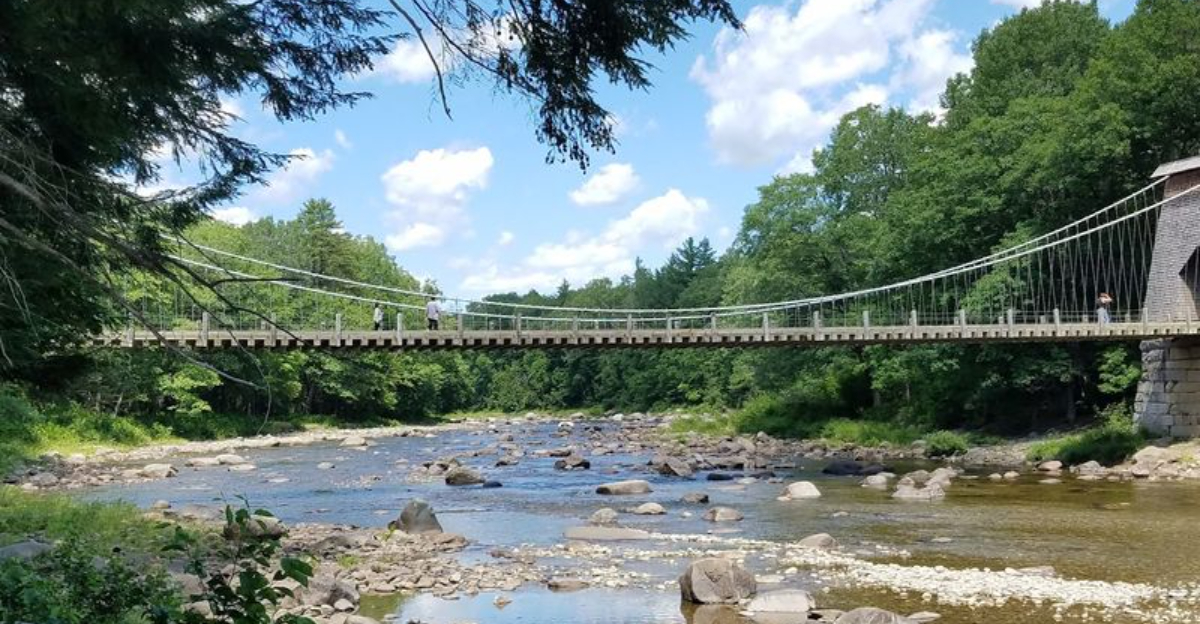
Some bridges feel alive. In rural Maine, one narrow 19th-century suspension bridge still creaks, sways, and carries travelers over the Carrabassett River more than a century and a half after its 1866 completion.
This rare one-lane landmark is considered one of the only surviving bridges of its specific kind still in use in the United States, with original main cables and historic timber framing still part of its story.
Step onto the wooden deck or ease a small car over the planks, and the bridge answers back with a gentle, unmistakable motion underfoot.
The setting adds even more magic: quiet woods, rocky river water, and a peaceful western Maine backdrop that makes the whole stop feel discovered rather than promoted. This is not just a crossing. It is a living piece of engineering history.
Built To Last Since 1866
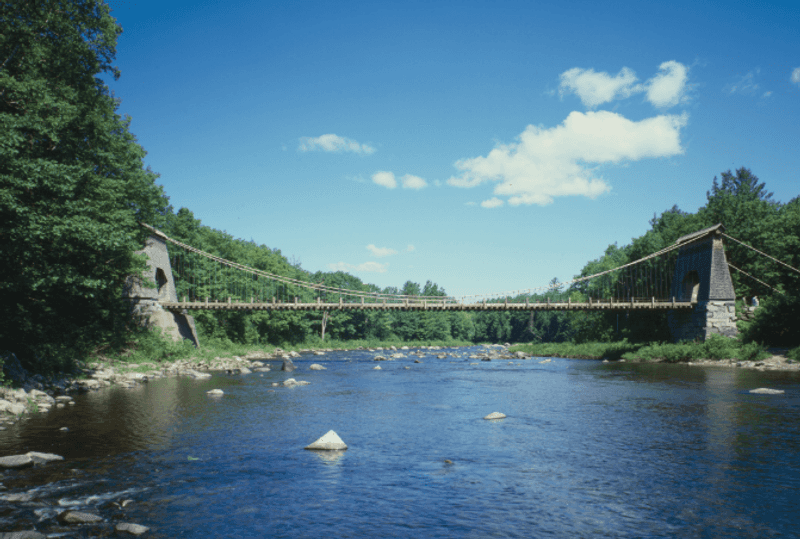
Not many structures from the 1860s are still doing their original job today. The Wire Bridge on Wire Bridge Rd in New Portland, Maine is a rare exception.
Completed in 1866, this suspension bridge has been quietly serving the community for about 160 years while retaining much of its historic character.
The original main support cables and tower framing timbers are still in place, making this bridge a rare living artifact of 19th-century engineering.
The wooden deck and several other components have been rehabilitated over time, but key original materials, including the main support cables and tower framing timbers, remain. That kind of preservation is almost unheard of in modern infrastructure.
Standing at the edge of the bridge and looking at the original cables, it is hard not to feel a connection to the craftsmen who built it. They had no computers, no modern tools, and yet their work has outlasted almost every bridge built in the same era across the country.
America’s Rare Wire Bridge
There is something quietly extraordinary about visiting a structure that has almost no equal left in the country.
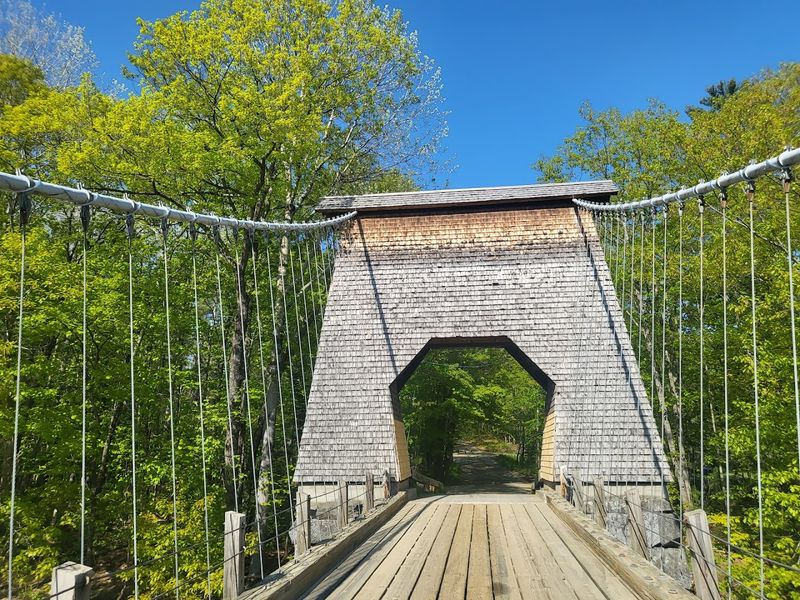
The Wire Bridge in New Portland is widely recognized as probably the only surviving bridge of its specific type in the United States: an early wire suspension bridge with covered wooden towers. That distinction alone makes the trip worthwhile.
Most bridges like this were replaced long ago as towns modernized and traffic demands grew. New Portland kept theirs, and that decision turned a simple river crossing into a piece of American engineering history.
The bridge uses a distinctive wire cable design that was innovative for its time and is rarely seen anywhere today.
Visiting a place that holds such a singular status in the country gives the experience a weight that goes beyond sightseeing. You are not just crossing a river.
You are crossing a bridge that most Americans will never have the chance to see, and that makes every step across it feel a little more meaningful.
The Deck Moves Beneath You
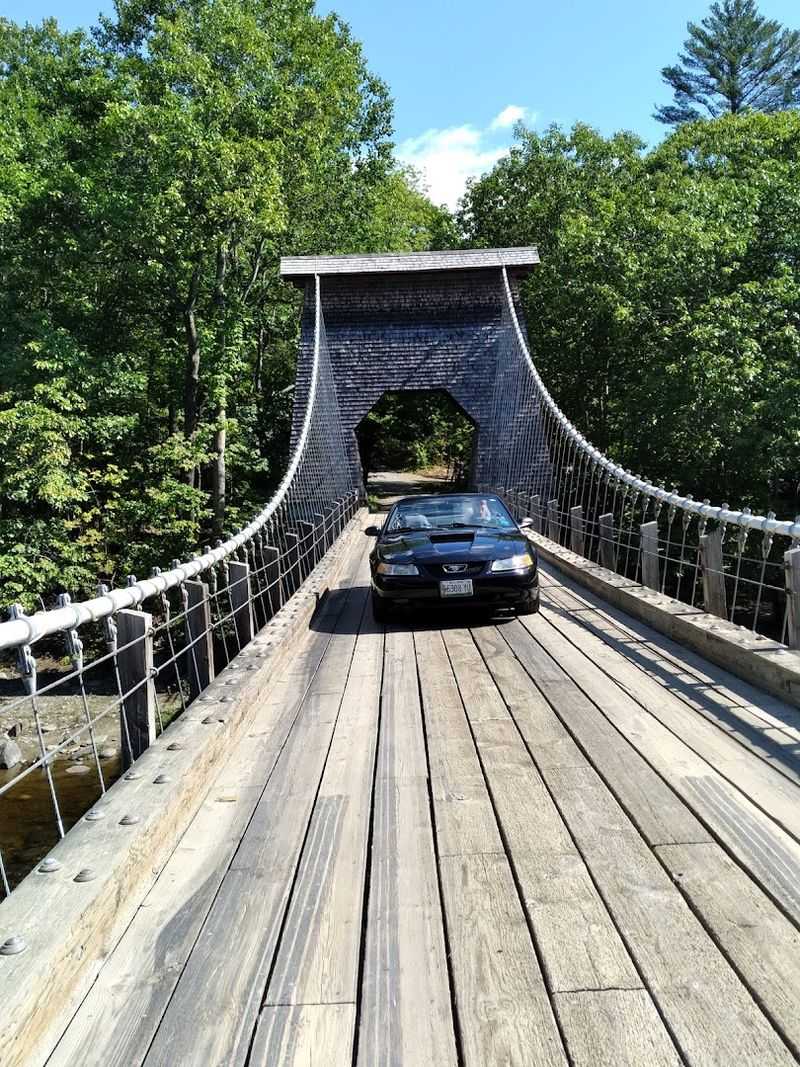
Here is something that surprises almost every first-time visitor: when a vehicle drives onto one end of the Wire Bridge, the opposite end rises.
The suspended deck is flexible by design, which allows visitors to feel movement as weight shifts across the bridge. It hangs entirely from the suspension cables, which means the whole bridge responds to weight and movement in a very visible way.
When a car moves across the wooden planks, a traveling wave rolls through the entire length of the bridge deck. If you are standing on it while this happens, you feel it under your feet in a way that is equal parts thrilling and unexpected.
The bridge was actually engineered to flex and sway laterally, so this motion is not a sign of damage but a feature of the original design.
Structural engineers who have visited the bridge describe the deck deflection as a textbook example of suspension bridge physics in action. For everyone else, it is simply one of the most memorable moments of any road trip through western Maine.
The Original Suspension Cables
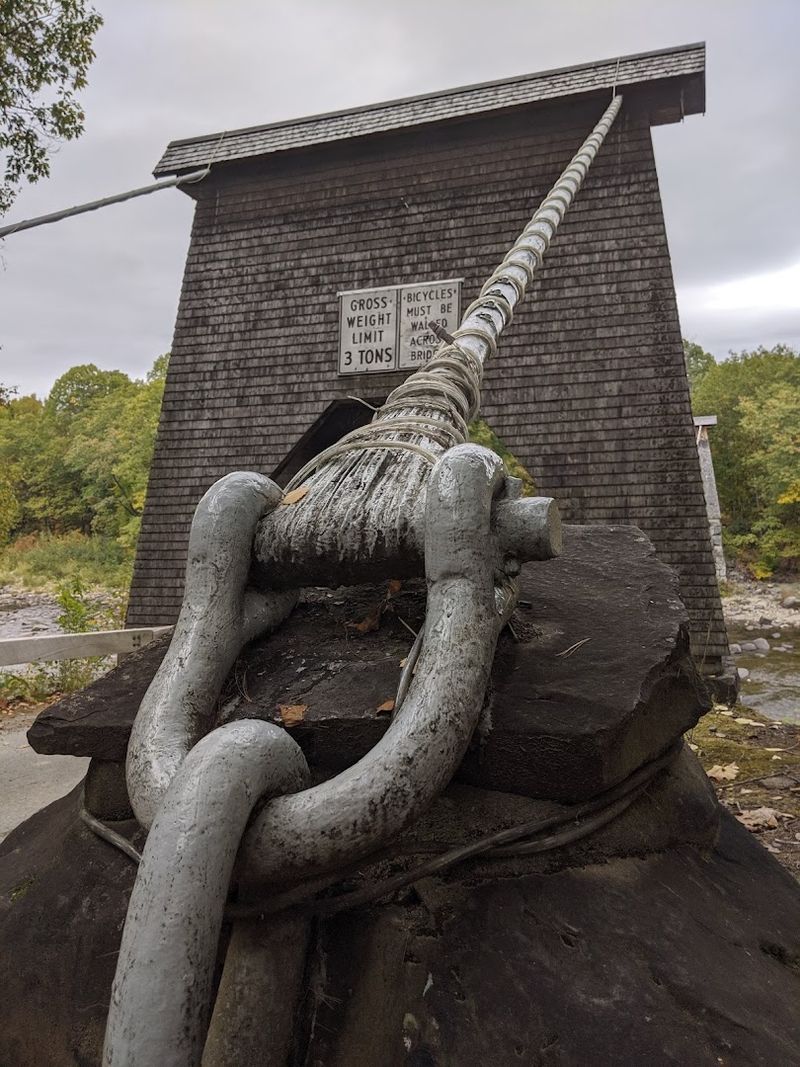
Most historic bridges that survive into the modern era do so because they have been heavily restored or replaced piece by piece.
The Wire Bridge tells a different story. The suspension cables and the wooden towers that hold them are the same ones installed when the bridge was first built in 1866, which is a remarkable fact by any measure.
The cables are made from twisted wire, a technique that was cutting-edge engineering in the mid-1800s. Looking at them up close, you can see the texture and age in the metal, and yet they continue to do exactly what they were designed to do.
The wooden towers show their years as well, with a weathered quality that no restoration project could replicate.
Preserving original materials at a working bridge for over 160 years requires consistent maintenance and a community that values what it has. New Portland has clearly taken that responsibility seriously, and the result is a structure that feels genuinely historic rather than simply old.
The Carrabassett River View
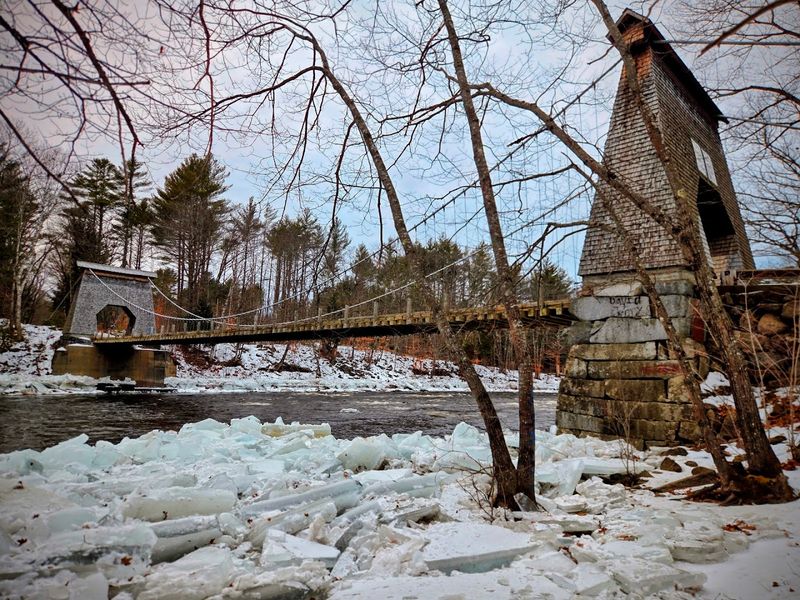
The setting around the Wire Bridge is just as impressive as the bridge itself. The Carrabassett River runs below with clear water moving over rocky beds, and the surrounding landscape shifts dramatically depending on the time of year.
Fall visits reward you with a wall of color on both banks that makes the whole scene look almost too perfect to be real.
In winter, the river takes on a quieter mood. Ice forms along the edges and sometimes stretches across sections of the water, creating a still and silvery scene that feels completely removed from the noise of modern life.
Spring brings rushing water and the sound of the current moving fast after snowmelt in the mountains upstream.
Summer softens everything into shades of green, with sunlight filtering through the trees and reflecting off the river surface. No matter when you visit, the view from the bridge itself or from the small beach area nearby is the kind that stays with you long after the drive home.
Picnic Beside A Landmark
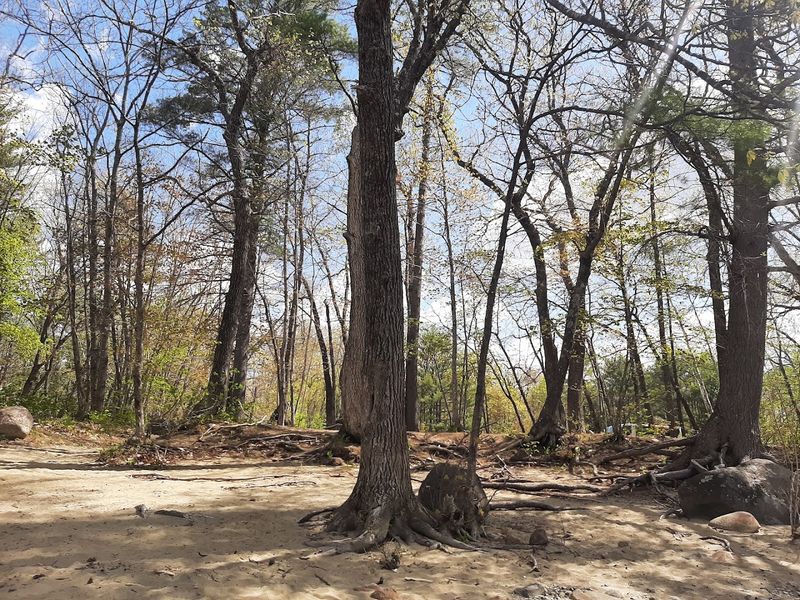
A visit to the Wire Bridge is not just a quick look-and-leave experience. On the south side of the bridge, there is a small picnic area with tables, a portable restroom, and a sandy beach area where the river is easily accessible.
It is the kind of spot that turns a short detour into a proper afternoon outing.
The beach area is shallow and calm enough in the warmer months for wading, and the river bottom is full of interesting rocks.
Some visitors spend time pan for gold along the riverbank, which adds a fun and unexpected activity to the visit. The grassy area nearby is open enough for lawn games if you bring your own.
Parking is most convenient on the south side, where the amenities are located. The north side has more limited space, so arriving prepared with that knowledge saves some frustration.
Pack a lunch, bring the kids, and plan to stay a while because the setting makes it easy to lose track of time.
Respect The 3-Ton Rule
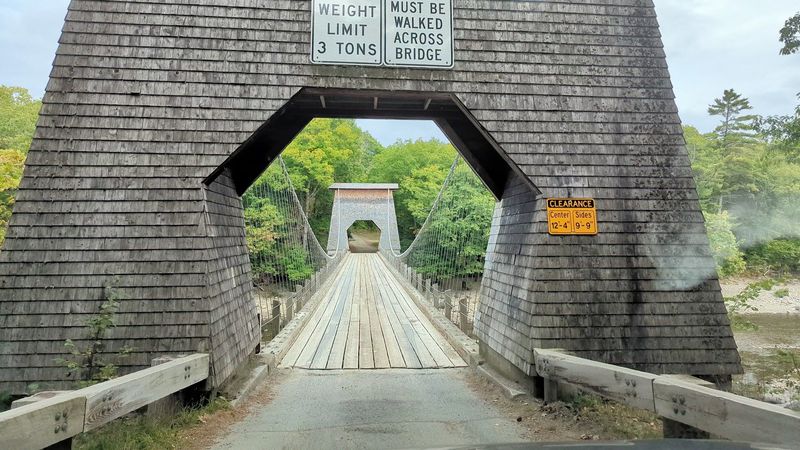
The Wire Bridge is a functioning historic structure, and that means it comes with real limits that visitors need to take seriously. The bridge has a posted weight limit of 3 tons, and that limit exists for a very important reason.
The suspension cables and deck, though impressively preserved, were designed for the traffic demands of the 1800s, not modern heavy vehicles.
Ignoring weight limits on historic bridges has caused serious damage to similar structures in other parts of New England. A covered bridge in New Hampshire collapsed after a vehicle far exceeding the weight limit drove across it.
The Wire Bridge deserves the same respect that any irreplaceable historical landmark does, and that starts with following the posted guidelines.
Passenger cars and light vehicles cross without issue, and the experience of driving across is genuinely fun.
Just leave the heavy trucks and oversized vehicles on the main road. Protecting the bridge now means future generations get to feel that same sway under their tires and wonder how something so old still works so well.
Whitten Woods Adds A Bonus Stop
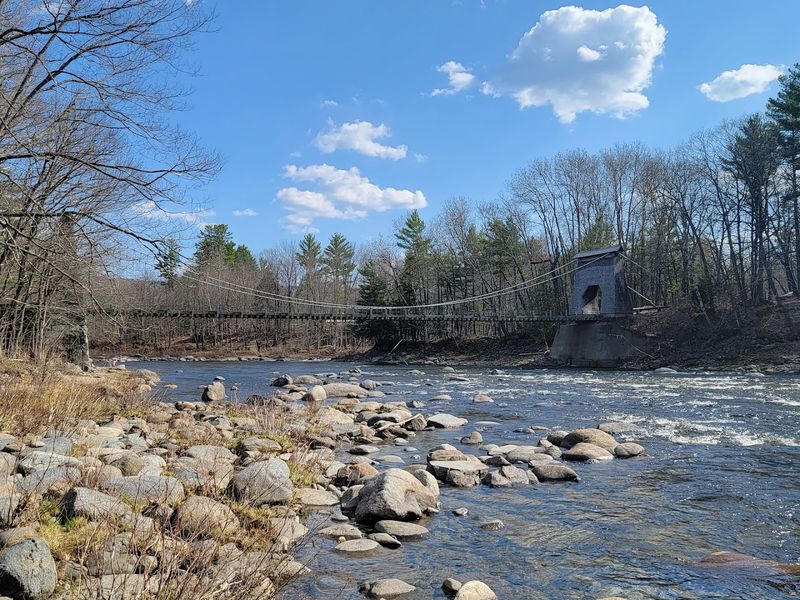
On the east side of the Wire Bridge, a large conservation area called Whitten Woods stretches along the Carrabassett River.
This protected woodland offers a natural extension to any visit, with paths that wind through the trees and follow the water at a gentle pace. It is a quiet place where the sounds of the forest replace everything else.
Families with young children will find the story walk feature particularly appealing. Story walk installations place pages of a children’s book along a trail path, so kids read as they walk, turning a nature outing into a reading adventure at the same time.
It is a creative and engaging way to explore the outdoors without needing any special gear or preparation.
The conservation area also provides habitat for local wildlife, and patient walkers sometimes spot birds, deer, or other animals along the trail edges.
Combined with the bridge itself and the river beach, Whitten Woods makes the entire stop feel like a full outdoor experience rather than a single roadside attraction.
Hidden In Rural Maine
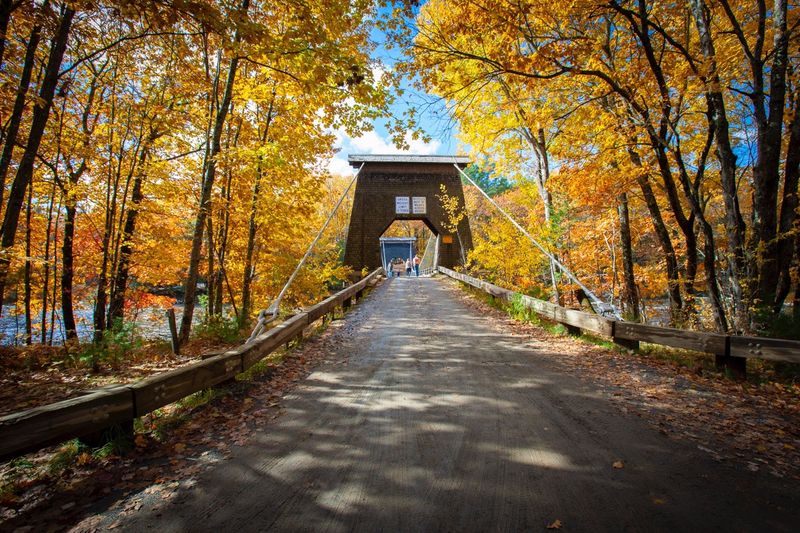
Getting to the Wire Bridge is part of the experience. The bridge sits along Wire Bridge Rd in New Portland, Maine, a quiet rural community in Somerset County in western Maine.
The drive there takes you through countryside that feels genuinely unhurried, with fields, tree lines, and the occasional farmhouse marking the way.
New Portland is a small town, and the bridge fits naturally into its character. There are no tourist crowds or commercial developments nearby, just the bridge, the river, and the surrounding woodland.
That simplicity is part of what makes the visit feel so refreshing. You are not fighting for a parking spot or waiting in line for anything.
The bridge is accessible from Route 27, and local signage helps guide visitors in the right direction. The rural setting means the bridge rewards those who seek it out, and arriving there after a scenic country drive makes the whole thing feel like a proper adventure.
More Than A Bridge Stop
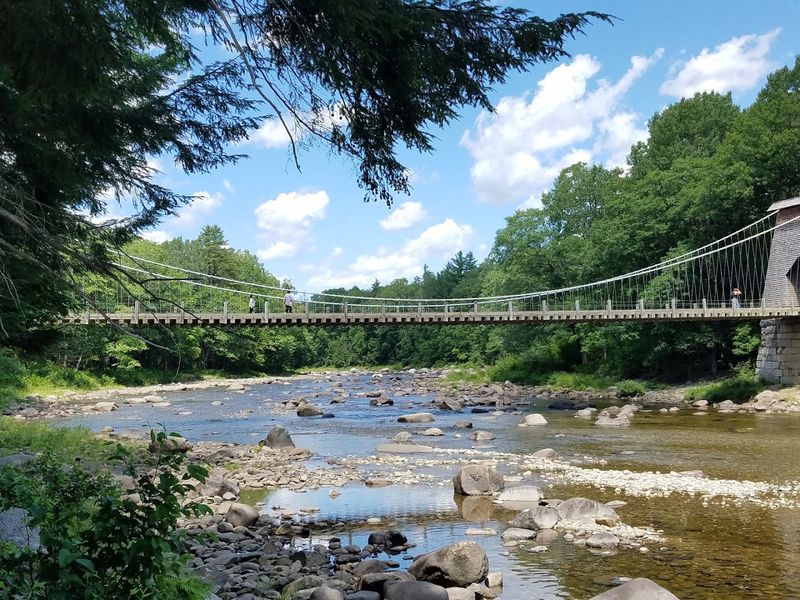
The Wire Bridge is the centerpiece of the stop, but the Carrabassett River around it offers its own lineup of activities for visitors who want to stay longer.
Gold panning is a genuinely popular pastime along the riverbank here, and the sandy and rocky bottom of the river makes it an ideal spot to try your luck with a pan.
Fishing is another draw, with the river providing a pleasant setting for casting a line in a spot that does not feel crowded or commercialized.
The river also features whitewater sections near the bridge that attract canoeists looking for a lively paddle through the rapids. It is not a beginner stretch, but experienced paddlers find it worth the effort.
Rock climbing along the boulders upstream from the bridge gives adventurous visitors another way to engage with the landscape.
There are also larger climbing rocks further upriver that extend into the water. The combination of history, scenery, river access, paddling, and nearby conserved land makes the Wire Bridge area a stop that offers far more than its modest reputation might suggest.