
This Maine Lighthouse Is So Dreamy, It Feels Straight Out Of A Nicholas Sparks Novel
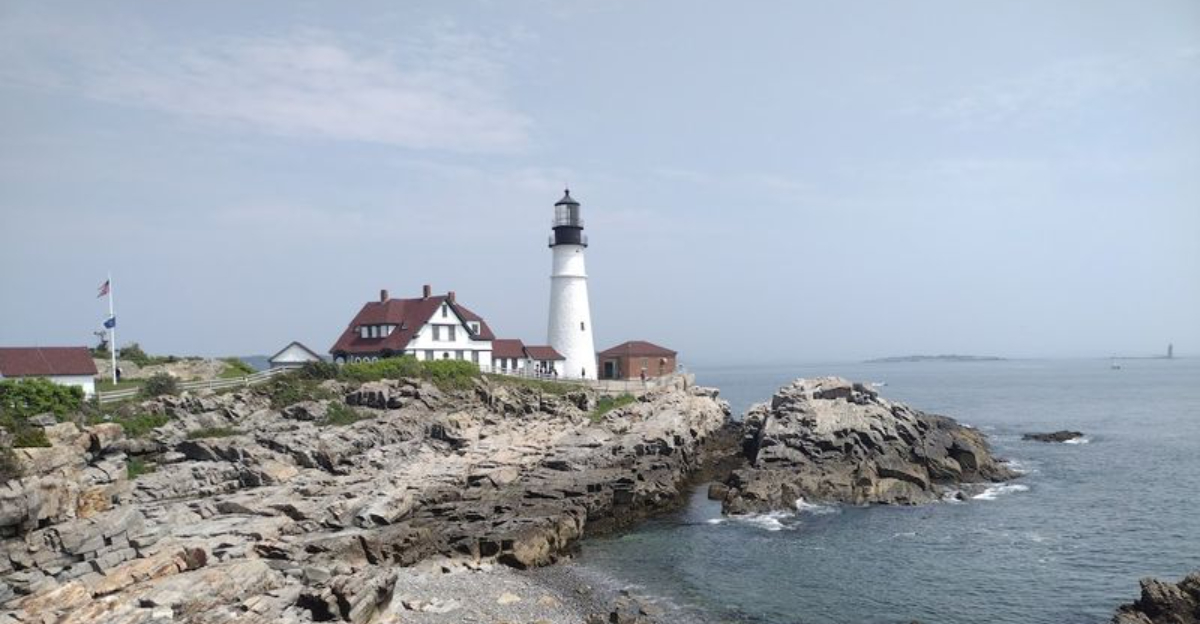
Some places look like they were designed for postcards, but this rocky Maine landmark somehow feels even better in person. A white lighthouse rises above wave-battered cliffs, with the Atlantic stretching behind it in a scene that feels dramatic, peaceful, and deeply historic all at once.
First lit in 1791, this coastal beacon carries ties to George Washington’s era and has helped guide ships near the mouth of Portland Harbor for more than two centuries.
The setting inside a scenic public park adds even more to the experience, with ocean paths, old military ruins, and views that stop you in your tracks.
It is the kind of Maine place that feels romantic, rugged, and unforgettable before you even take your first photo.
Where Maine’s Lighthouse Story Began
After Congress funded the project in 1790, Alexander Hamilton’s Treasury Department authorized completion of Portland Head Light during George Washington’s presidency. That fact alone makes this lighthouse feel like a piece of living American history.
Authorized by the very first Congress of the United States in 1790, the lighthouse was completed and lit for the first time on January 10, 1791.
The original tower was built using rubblestone, a material gathered locally and stacked by hand. Workers did not have modern equipment or machinery, so every stone was placed carefully by human effort.
The result was a sturdy, 72-foot tower that has stood through centuries of fierce Atlantic storms without collapsing.
Standing at the base of the tower today, knowing it was built more than two centuries ago with such basic tools, gives you a deep sense of respect for the craftsmen who made it happen. History never felt so close.
The 90-Acre Park Around the Beacon
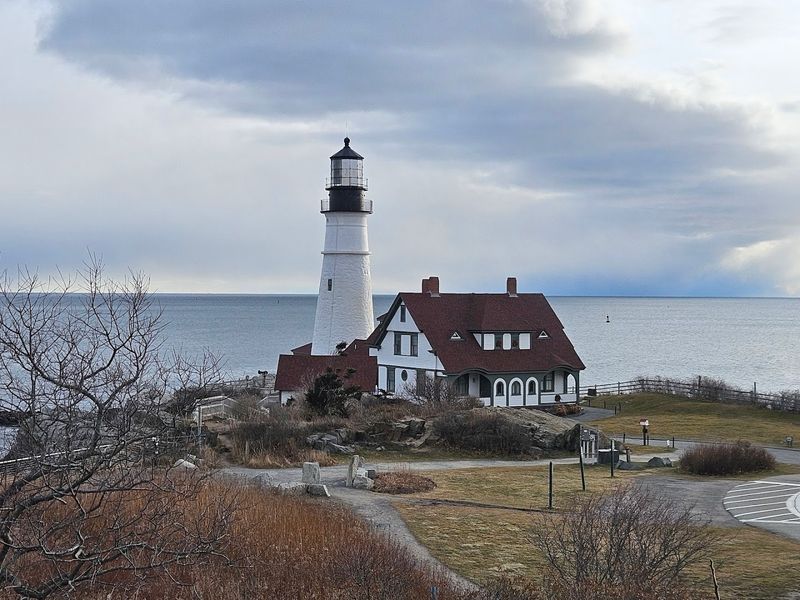
The lighthouse does not stand alone. It sits inside Fort Williams Park, a 90-acre public park in Cape Elizabeth that wraps around the rocky shoreline with walking trails, open green fields, and the crumbling ruins of an old military fort.
The combination of history, nature, and coastal scenery makes this park feel like three destinations in one.
Fort Williams itself was an active military installation used during both World Wars. You can still walk through the remains of old gun batteries, barracks, and storage bunkers scattered across the grounds.
These ruins add a fascinating layer of history that goes beyond just the lighthouse itself.
Visiting the park means you can spend a few relaxed hours exploring without feeling rushed. Families spread out on the grass, photographers chase the perfect angle, and couples wander the cliff paths hand in hand.
The park is free to enter, though parking does require a small fee on most days.
Inside the Keepers’ House Museum
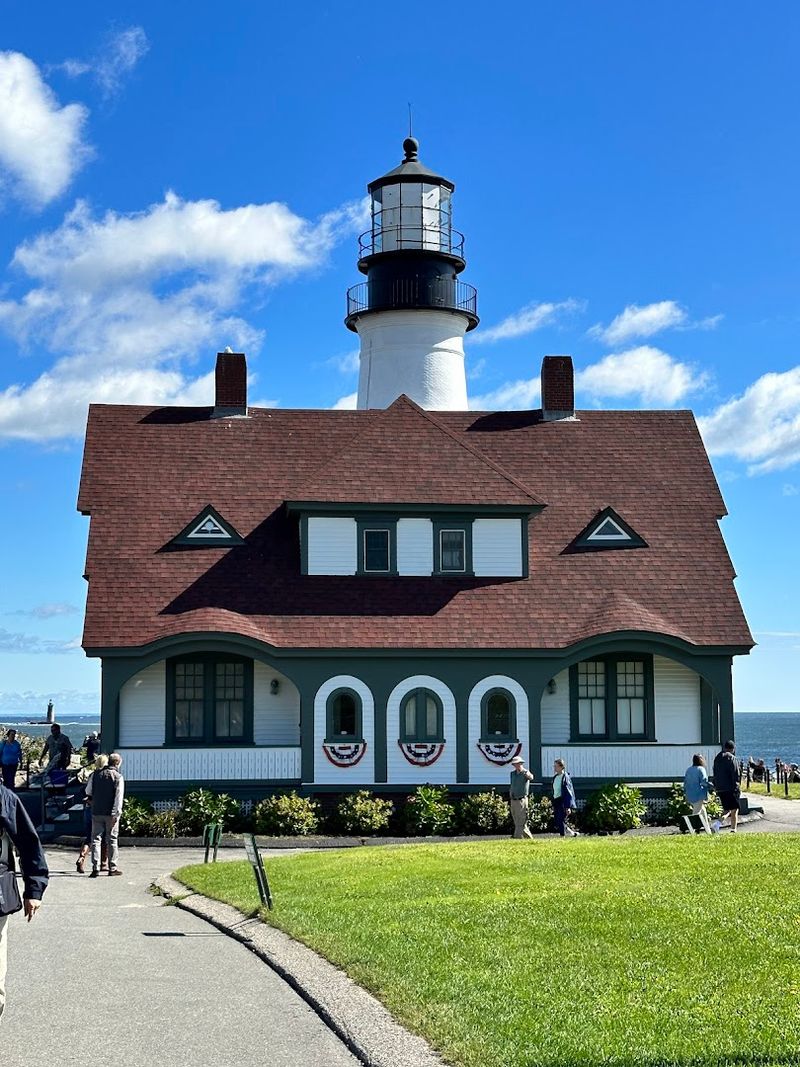
Right beside the lighthouse tower sits the former keepers’ house, an 1891 duplex that has been converted into a fascinating museum.
Known officially as the Museum at Portland Head Light, it gives visitors an up-close look at the lives of the lighthouse keepers who lived and worked here for generations.
Inside, you will find navigation instruments, historical photographs, ship models, and exhibits that explain how lighthouse technology evolved over the decades.
One of the most interesting displays covers the Fresnel lens system, which dramatically improved the brightness and range of lighthouse beams in the 19th century.
The museum is open seasonally, primarily on weekends during the off-season and more regularly during summer months, so checking the schedule before your visit is a smart move.
Admission is affordable, and the experience adds real depth to what might otherwise be just a scenic photo stop. It transforms a beautiful view into a genuinely meaningful visit.
Rocky Cliffs That Steal The Show
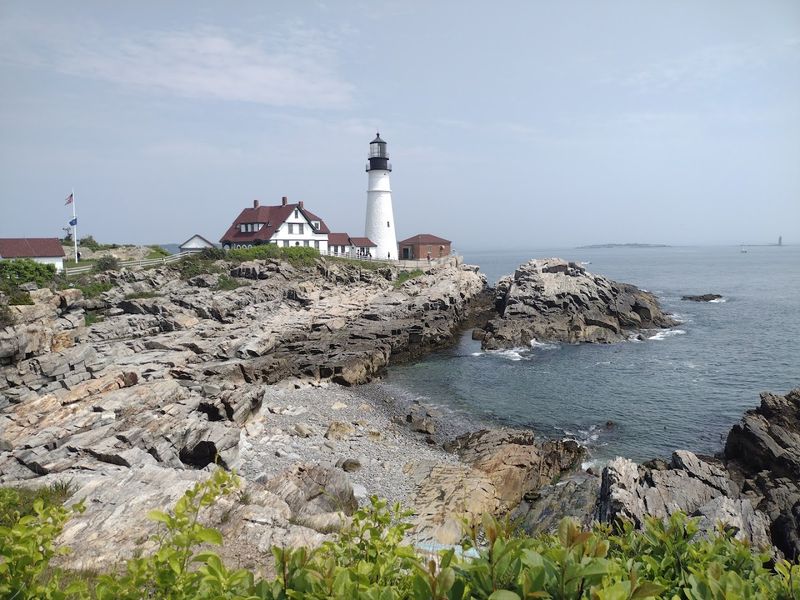
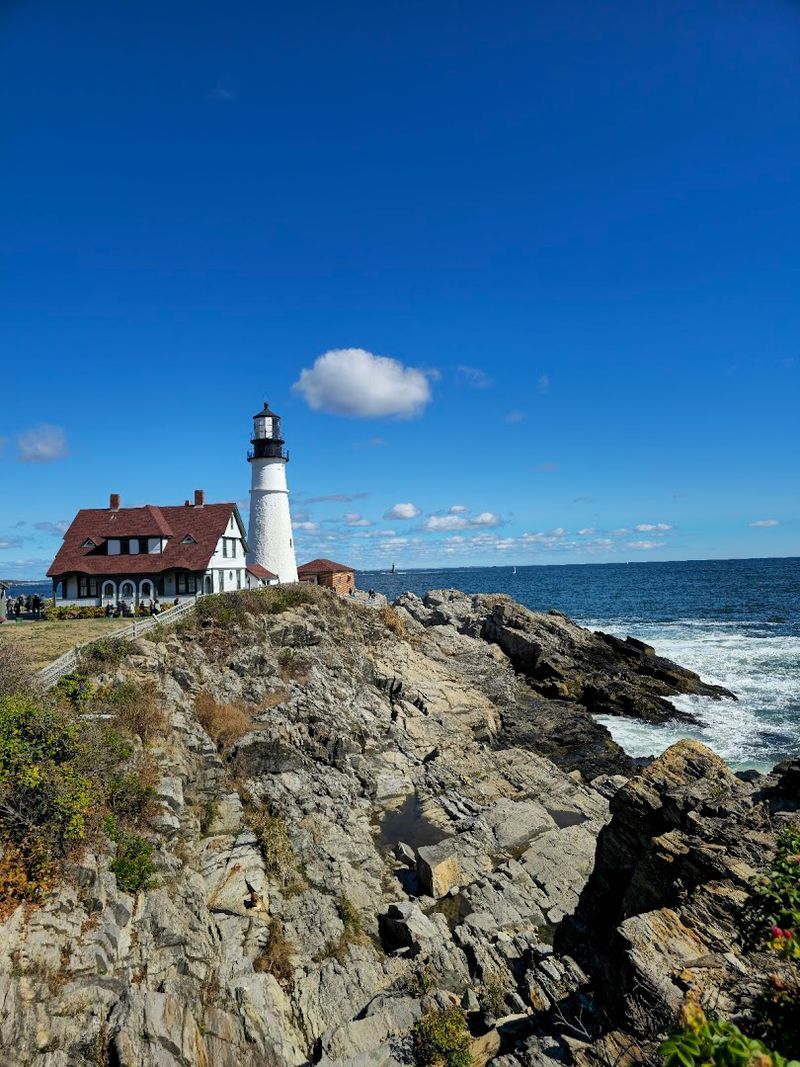
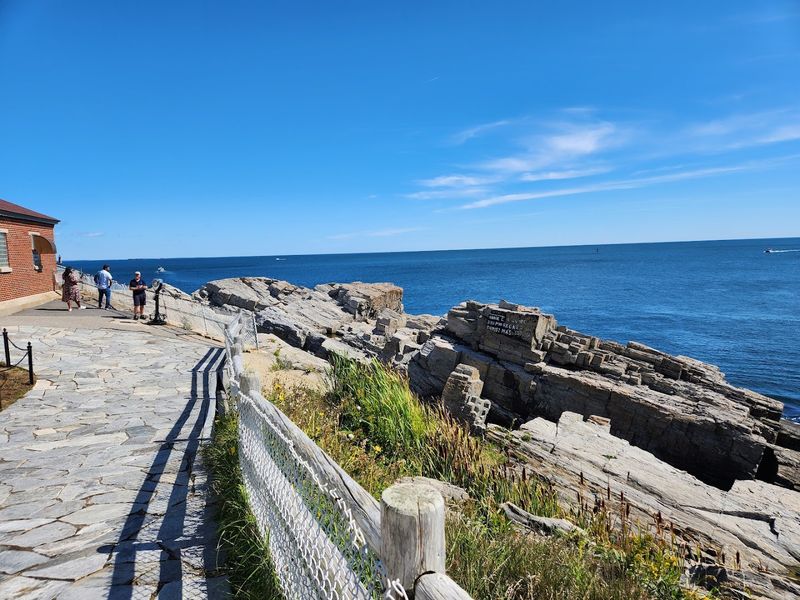
Honestly, the lighthouse shares the spotlight with the cliffs. The rugged, dark rocks that line the shoreline at Portland Head Light are the kind of geological drama that makes you stop mid-step just to stare.
Waves crash and foam against the jagged edges with a force that you can feel in your chest on a windy day.
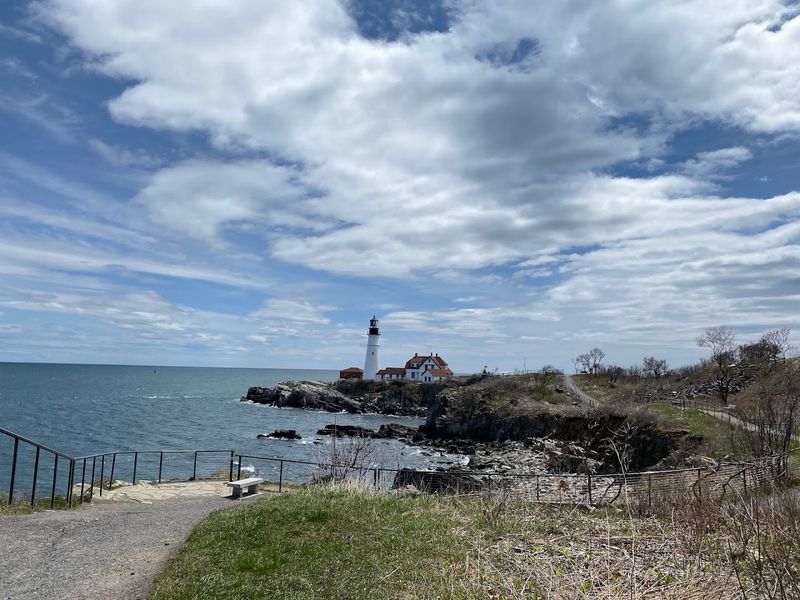
Walking along the cliff paths gives you multiple vantage points that each feel completely different. From one angle, the lighthouse towers above you against the sky.
From another, you are looking down at the churning Atlantic far below. The contrast between the white tower and the dark, textured rock is visually striking from almost every direction.
Safety railings are in place along the most exposed sections, which is a practical touch even if it slightly interrupts the raw, untamed feel of the landscape. Bring good walking shoes because some of the paths near the cliffs can be uneven and slippery, especially after rain or fog rolls in off the water.
Sunsets That Look Absolutely Unreal
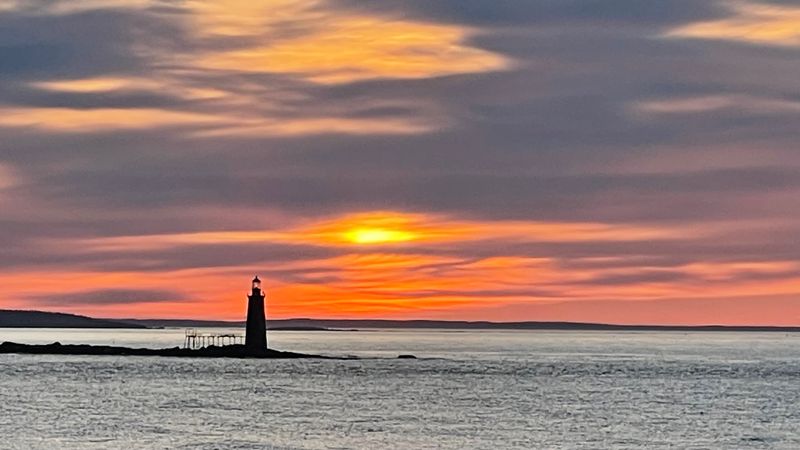
If you can time your visit for the hour before sunset, do it without hesitation. The light that falls on Portland Head Light during golden hour transforms the entire scene into something that looks almost too beautiful to be real.
The white tower catches warm orange and pink tones while the ocean below shimmers with reflected color.
October sunsets here are particularly stunning because the air is crisp and clear, giving the sky a depth of color that summer haze sometimes dulls. Photographers who visit in the fall often say it is the best time of year to capture the lighthouse in truly dramatic light.
Arriving about an hour before closing time also has a practical bonus. The crowds tend to thin out as the day winds down, leaving the grounds feeling quieter and more personal.
You get the scenery mostly to yourself, which makes the whole experience feel far more intimate and special than a midday visit typically allows.
A Foggy Day Has Its Own Kind Of Magic
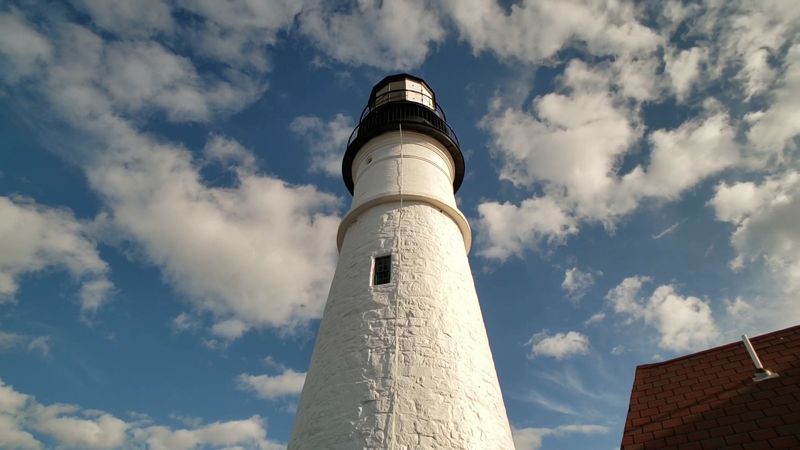
Most people hope for clear skies when they plan a lighthouse visit, but fog at Portland Head Light is an experience that deserves its own appreciation.
When a blanket of Maine mist rolls in off the Atlantic, the lighthouse disappears and reappears through the haze like something out of a ghost story, while the working fog signal reminds visitors that this is still an active aid to navigation.
Fog softens every edge and mutes every color, turning the rocky coastline into a moody, painterly scene that feels completely different from a sunny day visit.
The lighthouse beam becomes visible even in daylight, sweeping slowly through the grey air as it was designed to do when visibility drops for passing ships.
Visiting on a rainy or foggy December day, as some visitors have done, gives you a version of Portland Head Light that most tourists never see. The grounds are quieter, the atmosphere is thicker, and the lighthouse feels more alive and purposeful than it ever does under a bright blue sky.
The View Is Always Moving
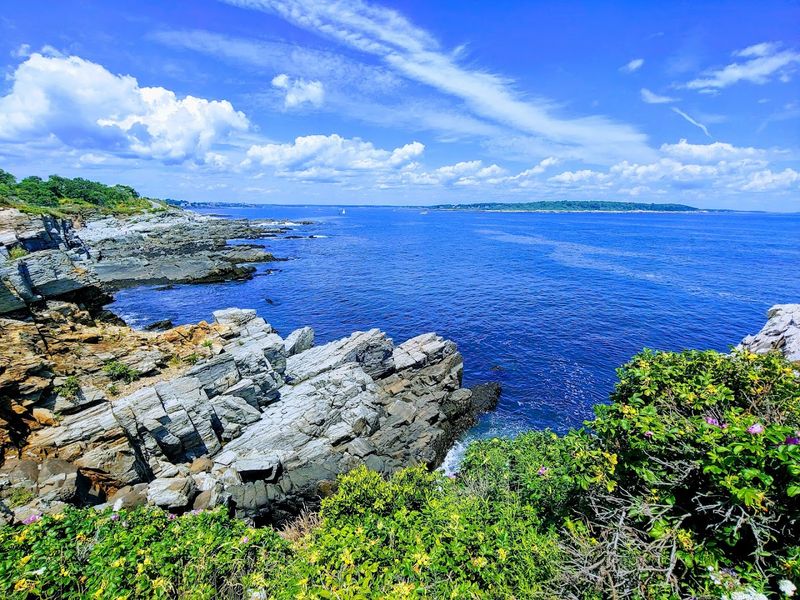
Standing at the edge of the grounds with binoculars is one of the most rewarding ways to spend time at Portland Head Light. The open Atlantic stretches out in every direction, and on clear days you can spot other lighthouses on nearby islands sitting just above the waterline in the distance.
Fishing boats, tugboats, and larger cargo vessels move through the shipping channel regularly, making the water feel active and alive.
Watching a tugboat guide a massive ship toward Portland Harbor is a surprisingly gripping piece of free entertainment. Seabirds ride the coastal winds overhead, and if you scan the water carefully, harbor seals occasionally pop up near the rocks below.
For wildlife enthusiasts, bringing a camera with a zoom lens or a good pair of binoculars makes a significant difference. The park itself also offers enough open space and natural landscape to feel like a proper nature outing, not just a quick sightseeing stop.
Every visit reveals something slightly different on the water.
Lobster Rolls With A Lighthouse View
Few things pair better with a stunning ocean view than a fresh Maine lobster roll, and Portland Head Light delivers on that front too. Food vendors and trucks operate near the lighthouse grounds during the warmer months, offering classic New England bites just steps away from the water.
Picnic tables are scattered around the park, making it easy to grab a bite and settle in with a view of the lighthouse and the ocean at the same time. During summer, a gelato and coffee stand operates near the lighthouse, which is a genuinely welcome sight after a long walk along the cliff paths.
The park does not have a full restaurant on site, so bringing your own snacks and a blanket for a proper picnic is always a solid plan, especially if you are visiting with kids.
Pack something easy to carry, find a grassy patch with a clear sightline to the lighthouse, and let the afternoon stretch out at its own relaxed pace.
The Details That Make The Visit Smoother
Portland Head Light is located at 1000 Shore Road in Cape Elizabeth, Maine 04107, and it sits within Fort Williams Park, which is easy to reach by car from downtown Portland in about 15 minutes.
Parking is available in multiple lots throughout the park, and you pay by the hour, so planning for at least two hours gives you enough time to explore comfortably without feeling rushed.
The grounds are open year-round, though the museum operates on a seasonal schedule. Winter visits offer a quieter, more personal experience, while summer brings larger crowds but also food vendors, warmer weather, and the full energy of a busy coastal park.
The paths around the lighthouse are paved in many sections, making the site reasonably accessible for strollers and visitors with mobility needs.
Dogs are welcome on leash, and the park has portable restroom facilities near the parking areas. You can reach the park office at +1 207-799-2661 or visit the website for current hours and museum schedules.
Why This Beacon Sticks With You
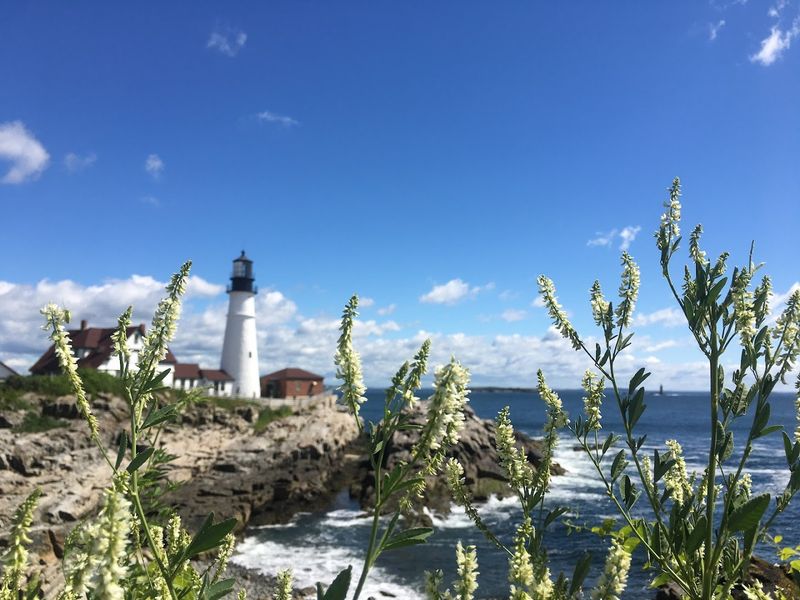
There is something genuinely hard to shake about Portland Head Light once you have stood at its base and looked out at the Atlantic. It is not just the scenery, though the scenery is extraordinary.
It is the combination of age, purpose, and setting that makes the place feel meaningful in a way that a lot of famous landmarks simply do not.
The lighthouse has been doing its job continuously since 1791, guiding ships through one of the busiest stretches of the New England coast.
Knowing that the same tower you are looking at has been flashing its signal through storms, fog, and clear nights for over two centuries makes the moment feel strangely connected to something much larger than a single afternoon visit.
Whether you visit in peak summer sunshine or on a quiet winter morning with snow dusting the rocks, Portland Head Light has a way of making you feel exactly where you are supposed to be. That feeling is rare, and it is worth every mile of the drive to Cape Elizabeth.