
This Maryland Old School Italian Gem Locals Keep To Themselves
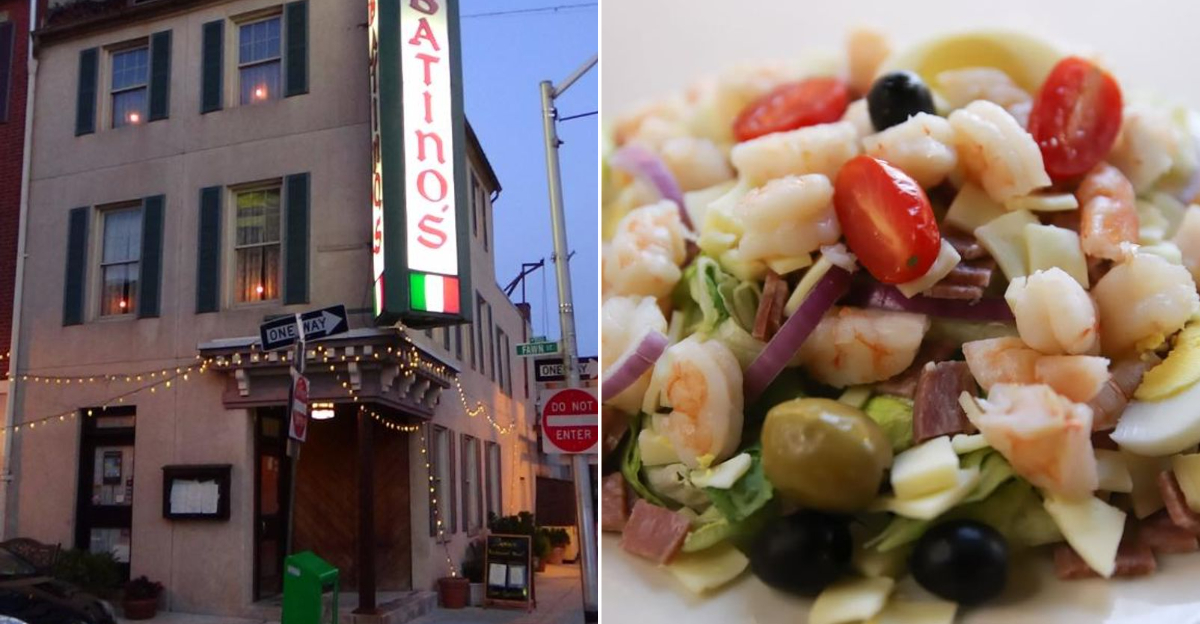
In Baltimore’s Little Italy, Sabatino’s has been a steady landmark for generations. Step inside and the rowhouse walls are lined with framed photographs that feel like extensions of family gatherings. The dining room carries a sense of tradition, built from years of meals shared and recipes that rarely change.
Regulars speak of it with affection, recommending it as though passing along a secret. Plates arrive generous and familiar: rich sauces ladled over pasta, veal served with care, and the house salad that has earned a reputation of its own.
By evening, the neon sign glows over Fawn Street, casting its light on those who walk in looking not for novelty, but for comfort rooted in memory.
901 Fawn Street In Little Italy
On Fawn Street, Sabatino’s holds its ground like it always has, a landmark in the heart of Baltimore’s Little Italy. The red brick exterior is modest but instantly recognizable.
Step inside and you’re met with rowhouse dining rooms, booths lining the walls, and the low hum of conversations layered over clinking silverware.
I liked how the space balanced comfort and history. Sitting there felt less like dining out and more like being welcomed into a living tradition.
Famous Bookmaker Salad Bowls
The Bookmaker Salad arrives in deep bowls, brimming with crisp lettuce, olives, shrimp, Genoa salami, provolone, and hard-boiled eggs. Its size makes sharing the natural choice.
This salad has become a calling card over decades, an order that regulars pass down like a family recommendation. The recipe hasn’t shifted much, and that’s the point.
You should get the large bowl if you’re with a group. Watching it land on the table feels like the meal has truly begun.
Signature House Dressing On The Salad
The dressing that ties the Bookmaker together is the real secret, an herby, garlicky mix that clings to every bite. Tangy but smooth, it makes the salad more than the sum of its parts.
Servers pour it with confidence, knowing diners will likely ask for extra before long. The taste lingers, balancing richness with brightness.
It was addictive. Halfway through my plate I found myself tilting the bowl just to catch more of that dressing on my fork.
Veal Parmigiana Baked Crisp
A generous cutlet arrives coated in golden breading, smothered with marinara, and finished under a blanket of melted mozzarella. The crisp edges stay intact even under the sauce.
This preparation has been a staple at Sabatino’s for decades, one of those dishes that regulars order without glancing at the menu. The kitchen executes it with consistency.
The first bite balances crunch and softness so well that it feels like a perfect representation of red-sauce comfort, hearty and deeply satisfying.
Spaghetti And Meatballs Classic
Few plates capture tradition like spaghetti and meatballs, and here it’s done with clear devotion to simplicity. The noodles come firm, coated lightly in tomato sauce.
The meatballs are generous in size, tender inside, and seasoned with a balance of herbs that echoes home-cooked style. It’s a plate that feels timeless.
There’s something grounding about twirling spaghetti in a dining room filled with families. It connects the past and present, reminding you why this combination endures.
Garlic Bread From The Oven
The scent of garlic butter drifts through the dining room long before the basket lands on the table. Slices arrive warm, crisp on the outside and soft within.
Baked fresh in-house, the bread is brushed generously with butter and herbs. It’s the kind of side that disappears quickly, sometimes before the entrées arrive.
There’s a reason it’s always ordered alongside pasta. The bread serves as both appetizer and tool, perfect for chasing every bit of sauce from the plate.
Homemade Pasta Plates
Pasta made in-house has a different presence on the plate, with a texture that holds sauce more fully than boxed versions. At Sabatino’s, the difference is unmistakable.
Generations of family cooks kept the practice alive, ensuring that each batch carries the same balance of tenderness and bite. It’s a link to their culinary heritage.
Try a simple marinara with it first. The purity of the noodles is easiest to appreciate without distractions, letting the quality of the craft show through.
Shrimp Renato Broiled Specialty
The Shrimp Renato is distinct, broiled in butter and garlic until the edges caramelize and the flavors deepen. Served sizzling, it draws attention the moment it leaves the kitchen.
This specialty dates back decades, named for a family member who wanted seafood to share the spotlight with heavier pasta and veal dishes.
The richness of the butter and the sweetness of the shrimp combine into a plate that feels celebratory, a standout even among the many red-sauce classics.
Rowhouse Dining Rooms And Booths
The interior still shows its rowhouse roots, with narrow dining rooms strung together and booths pressed against brick walls. It feels cozy, almost like eating in someone’s home.
That setup forces intimacy, conversations mingle, silverware clinks echo, and the rooms buzz even on quieter nights. The layout is part of the restaurant’s identity.
Meals eaten here aren’t just private experiences; they connect you to the hum of Baltimore life, a reminder that Little Italy has always thrived on community.
Red Neon Sabatino’s Sign At Night
After dark, the neon sign blazes over Fawn Street in bright red script. It’s an unmistakable beacon that tells you where to turn.
The sign has been photographed countless times, becoming both landmark and invitation. Locals remember it from childhood car rides, glowing through the windows on the way downtown.
If you’re walking Little Italy after dinner, glance back. The neon glow reflects on the pavement, turning an ordinary street corner into something cinematic.
Private Party Rooms Upstairs
Upstairs, beyond the bustle of the main floor, sit private rooms designed for gatherings. Wooden chairs and long tables line the space, ready for celebrations or family dinners.
Staff handle these events with ease, moving trays of pasta and salad between rooms while keeping service brisk downstairs. The logistics never seem to falter.
These rooms allow the restaurant to serve both intimate dinners and large groups, proof that Sabatino’s understands how deeply food and family overlap in Baltimore culture.
Open Daily For Lunch And Dinner
Few restaurants keep a schedule as steady as this one. Doors open daily for lunch and dinner, giving locals a reliable place to gather whenever the craving hits.
This routine has built loyalty, making Sabatino’s part of weekly rhythms and family traditions. Consistency has become one of its strongest draws.
The comfort of knowing it’s always open adds to the appeal. Meals aren’t rushed or occasional, they’re woven into the everyday lives of Little Italy regulars.
Long-Running Family Operation
Ownership has stayed in the family, and that continuity shows. Recipes pass down, staff know the history, and the culture feels rooted rather than managed.
This family-driven approach has helped Sabatino’s maintain a reputation through shifting food trends. While others reinvent, this kitchen chooses steadiness.
The result is a restaurant that feels trustworthy. Guests return not just for dishes but for the reassurance that a place so tied to Baltimore tradition still runs on the same values.