
This Massachusetts Glass Globe Lets You Stand Inside A 1935 Map Of The World

“The world is a book, and those who do not travel read only one page”… but what if you could step inside the whole thing? In Massachusetts, there’s a glass globe that doesn’t just show the world.
It wraps it around you. A 1935 map, frozen in time, curved into a sphere you can literally stand inside. Suddenly, geography isn’t something you study on paper.
It’s something you walk through, like you’ve shrunk yourself down and slipped into an old atlas. Countries curve above your head.
Oceans stretch beneath your feet. It feels a bit like stepping into a time capsule that forgot to stay flat.
Almost like Indiana Jones found the world’s most elegant snow globe and decided not to shake it. Is it art?
Is it history? Or is it just a quiet reminder that the world has always been bigger, and stranger, than we think?
Either way, standing inside it makes “global perspective” feel a lot more literal.
A Globe You Can Actually Walk Into
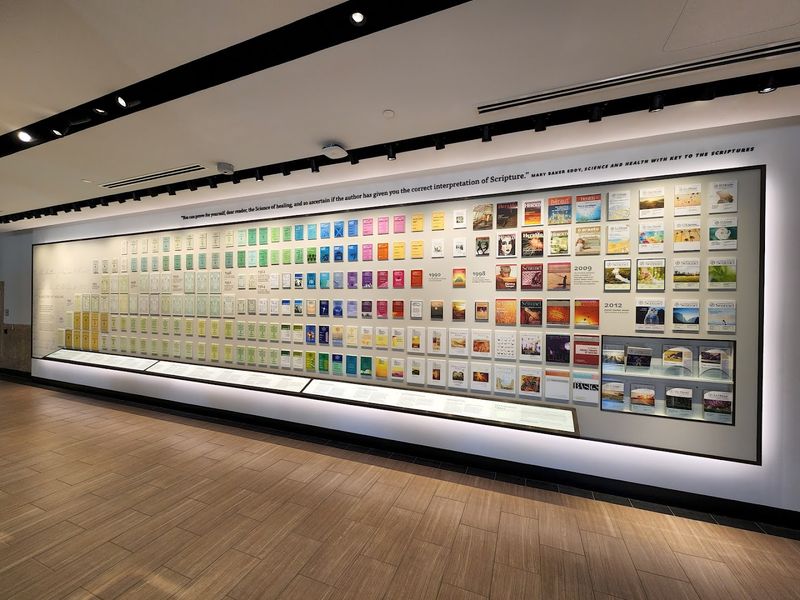
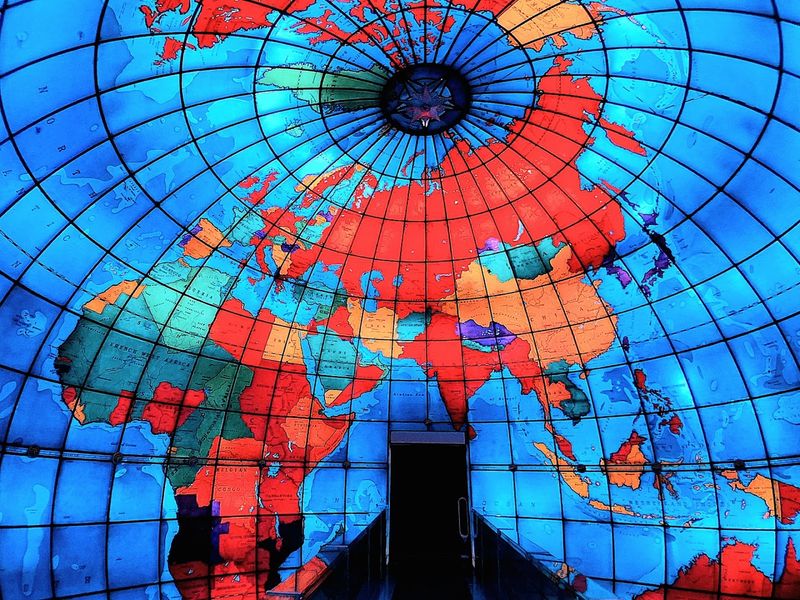
Most people have seen a globe sitting on a desk, small enough to spin with one finger. The Mapparium flips that idea completely on its head.
Here, you are the tiny figure standing inside the globe itself, surrounded by the whole world glowing in vivid stained glass color.
Walking across the 30-foot glass bridge feels genuinely surreal. The panels curve around you in every direction, creating a full sphere of geography that stretches from floor to ceiling.
It is one of those rare moments where you genuinely feel small in the best possible way.
What makes it even more special is the accuracy of the perspective. Because your eye sits equidistant from every single point on the map, there is virtually no distortion.
You see the true size of every continent without the usual stretching that flat maps create. Africa looks enormous.
Greenland looks properly sized.
Your entire understanding of the world quietly shifts. The Mapparium is not just a cool photo opportunity, it is a full-on perspective correction that most people never knew they needed.
608 Stained Glass Panels That Tell A Story
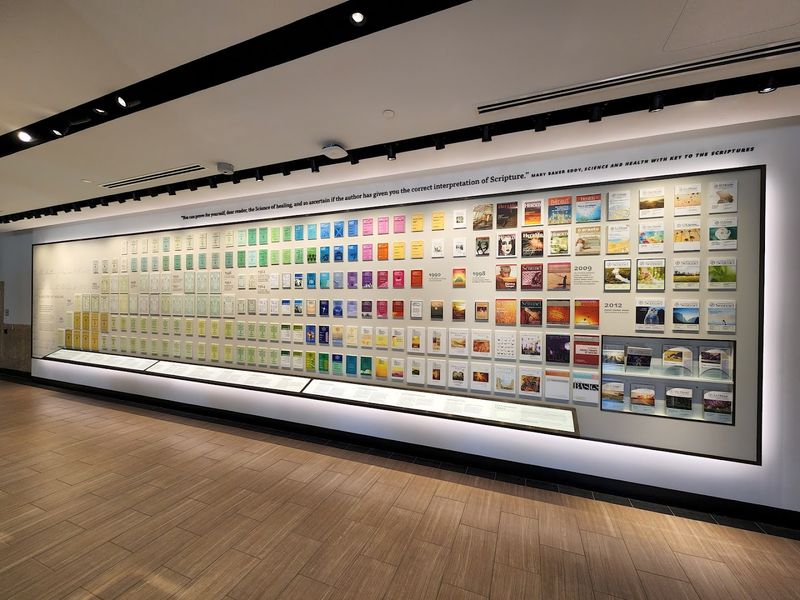
Every single panel inside the Mapparium was crafted with the kind of care that would make any artist a little emotional.
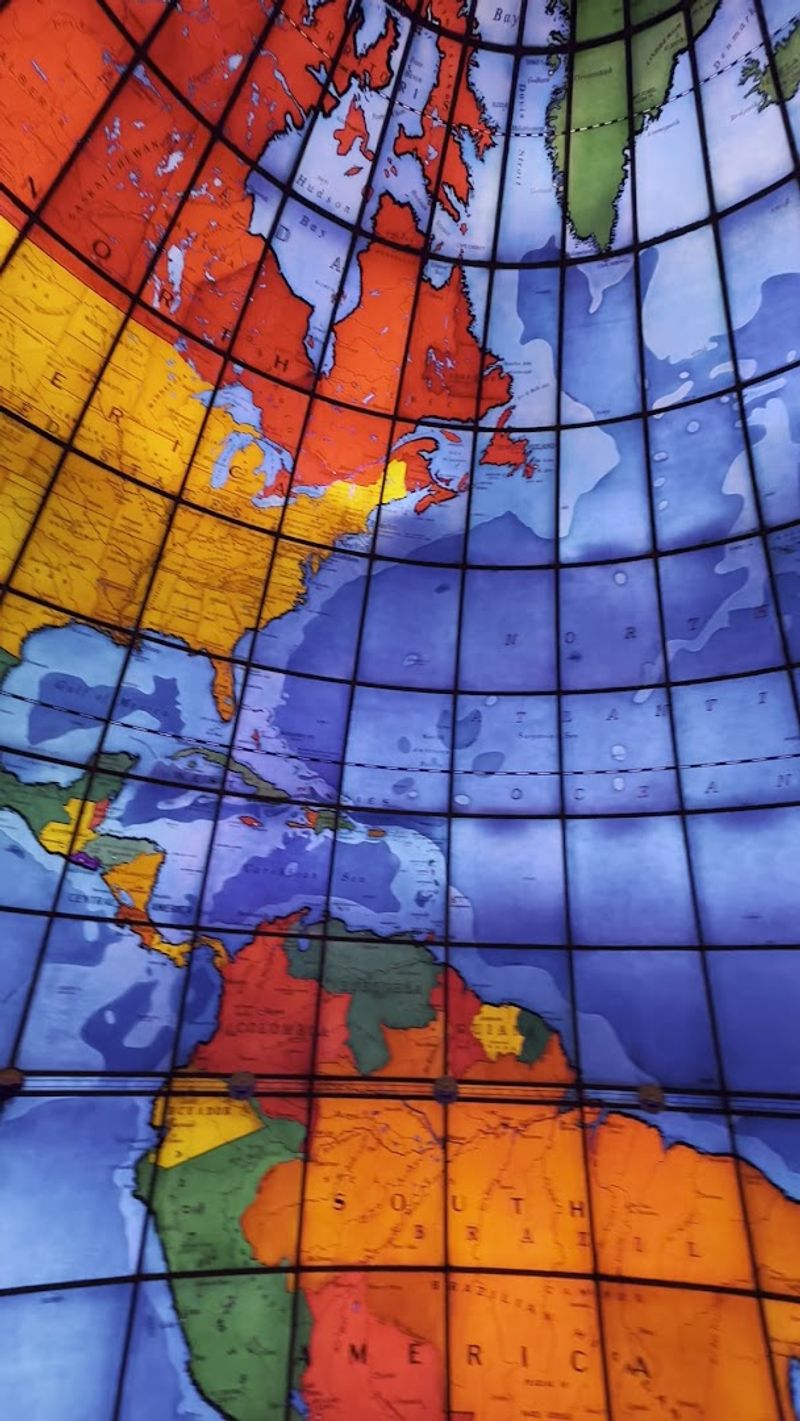
There are 608 individual stained glass pieces making up this globe, and together they paint a portrait of the world as it looked in 1935. That is a lot of glass, a lot of color, and a lot of history packed into one stunning sphere.
The panels were based on Rand McNally political maps from 1934, which means every border, every country name, and every territorial label reflects that specific moment in time.
You will spot names like Siam, Italian East Africa, and Tanganyika, places that have since transformed into entirely different nations.
Stained glass is usually associated with cathedrals and quiet reverence, and honestly, standing inside the Mapparium carries a similar feeling. The light filtering through each panel creates a warm, almost sacred glow that fills the entire space.
Craftspeople spent enormous effort making sure every seam and color transition was precise. The result is something that feels both ancient and alive, a glowing time capsule built entirely from light and glass.
Boston’s Most Unexpected Hidden Gem
Boston is packed with famous landmarks. The Freedom Trail, Fenway Park, the Public Garden.
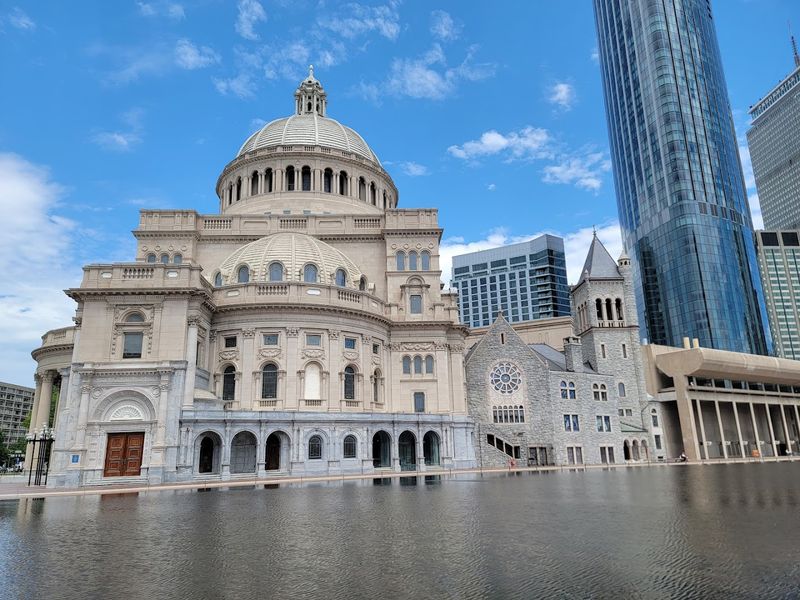
But tucked at 200 Massachusetts Avenue sits something that many visitors walk right past without realizing what is inside. The Mapparium, housed within the Mary Baker Eddy Library, is genuinely one of the city’s best-kept secrets.
What makes it feel so unexpected is the contrast. From the outside, you see an elegant, dignified building that blends into the Back Bay neighborhood beautifully.
Nothing about the exterior hints at the glowing three-story globe waiting inside. That surprise factor alone makes the visit feel like discovering a cheat code to Boston tourism.
Timed tickets are required, and tours typically run every 20 minutes, keeping each group intimate and unhurried.
The admission fee is remarkably affordable, especially considering how genuinely unique the experience is. Boston Public Library cardholders can even access group discounts, making it accessible for nearly everyone.
For a city full of world-class attractions, the Mapparium somehow manages to feel like a personal discovery every single time someone walks through that door.
The Year 1935 Frozen In Glass Forever
Imagine the world hitting pause on a single year and never pressing play again. That is essentially what the Mapparium did in 1935.
The map has not been updated since it was completed, and that deliberate choice is what makes it so fascinating.
Every border, every name, every territorial claim reflects the political reality of that exact moment in history.
Countries that no longer exist appear with full confidence across the glass panels. The Soviet Union stretches across an enormous swath of the map.
European colonial territories cover vast portions of Africa and Asia. Siam sits where Thailand now stands.
It is a visual history lesson that no textbook can fully replicate.
The decision to keep the map unchanged was not careless. It was intentional preservation.
The Mapparium exists as a permanent record of how humanity organized itself at a very specific and turbulent point in history.
The light-and-sound show added during the 2002 renovation does a thoughtful job of bridging that 1935 snapshot with the world as it exists today. Watching those two realities overlap inside the globe is genuinely moving in a way that is hard to put into words.
The Whispering Gallery Effect That Will Blow Your Mind
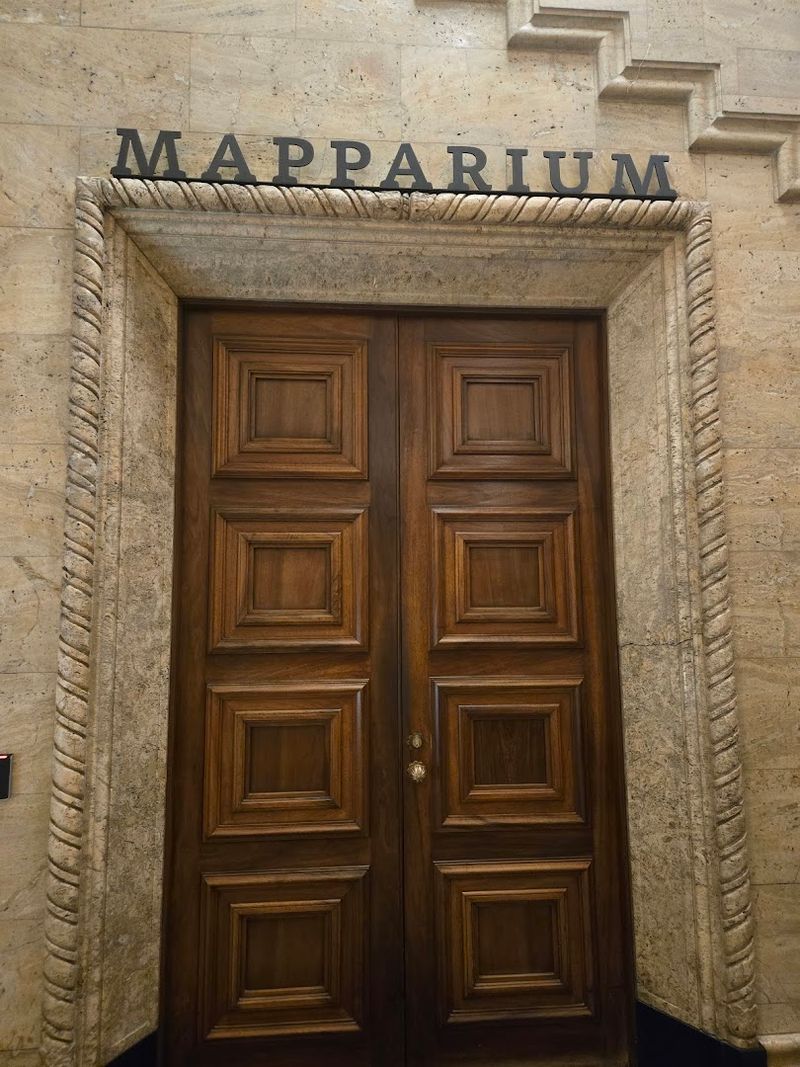
Here is something that absolutely nobody warns you about before you walk into the Mapparium. If you stand at one end of the 30-foot glass bridge and whisper, the person standing at the opposite end can hear you crystal clearly.
Not kind of hear you. Hear you like you are standing right next to them.
This phenomenon happens because the perfectly concave glass surface reflects sound waves in a way that concentrates them directly across the sphere. It is the same principle behind famous whispering galleries in St. Paul’s Cathedral in London and Grand Central Terminal in New York.
The Mapparium just happens to do it inside a glowing globe, which makes it significantly more dramatic.
The effect catches first-time visitors completely off guard every single time. You whisper something silly, fully expecting it to disappear into the air, and instead it arrives at the other end of the bridge with startling clarity.
It transforms the space from a visual experience into a full sensory one.
Sound bounces around you the same way light does, making the Mapparium feel less like a museum exhibit and more like stepping inside a living, breathing wonder of physics.
The Light And Sound Show That Brings History To Life
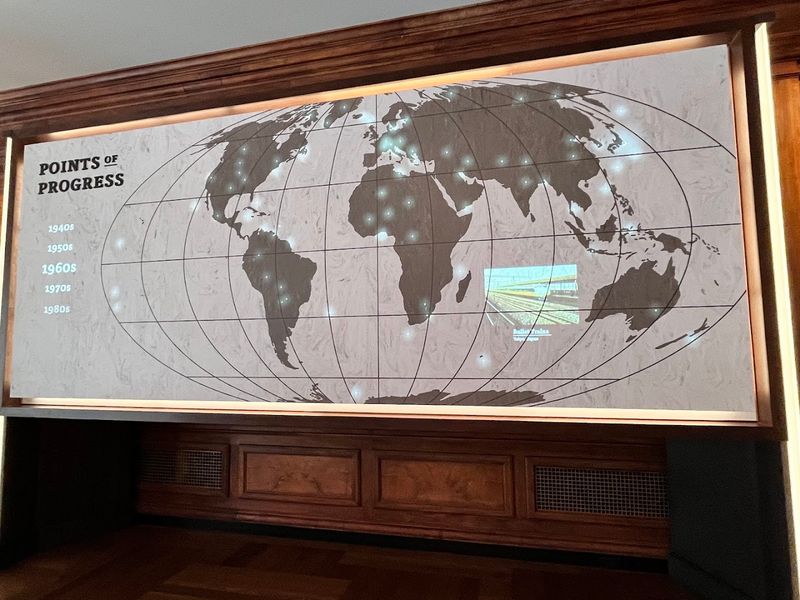
When the lights shift and the narration begins, the Mapparium transforms into something else entirely. The light-and-sound show uses computer-controlled LED lighting to highlight different regions of the globe while a narration walks visitors through how dramatically the world has changed since 1935.
It is genuinely theatrical in the best way.
The show was introduced when the Mapparium reopened in 2002 after a four-year renovation. Before that update, the globe was simply lit from within, beautiful but static.
The addition of dynamic lighting gave the experience a narrative arc, turning a passive viewing moment into something that actually tells a story with real emotional weight.
Watching borders dissolve and reform through shifting light is a surprisingly powerful experience. Regions that were once colonies bloom into independent nations.
Territories that were once vast empires shrink and fragment.
All of it happens while you stand at the center of the globe, literally surrounded by the story. The show runs for approximately ten minutes, which sounds brief but feels perfectly paced.
It leaves you wanting to ask questions rather than simply walk away satisfied, and that is exactly the mark of great storytelling.
Geography Without The Distortion
Flat maps have a dirty little secret. They lie.
Every flat map distorts the size and shape of countries because wrapping a sphere onto a flat surface is mathematically impossible without some kind of compromise. Greenland looks bigger than Africa on most standard maps.
It is not even close in reality. Africa is actually about 14 times larger.
The Mapparium fixes all of that in one elegant solution. Because you stand at the center of a perfectly spherical globe, your eye is equidistant from every single point on the surface.
No stretching. No compression.
No Mercator-projection trickery. Every continent appears in its true, proportional size for the first time for most visitors.
That moment of geographic recalibration hits differently than reading about it in a book. Seeing Africa dominate the globe the way it actually should, or watching how compact Europe really is compared to Asia, rewires something in your brain.
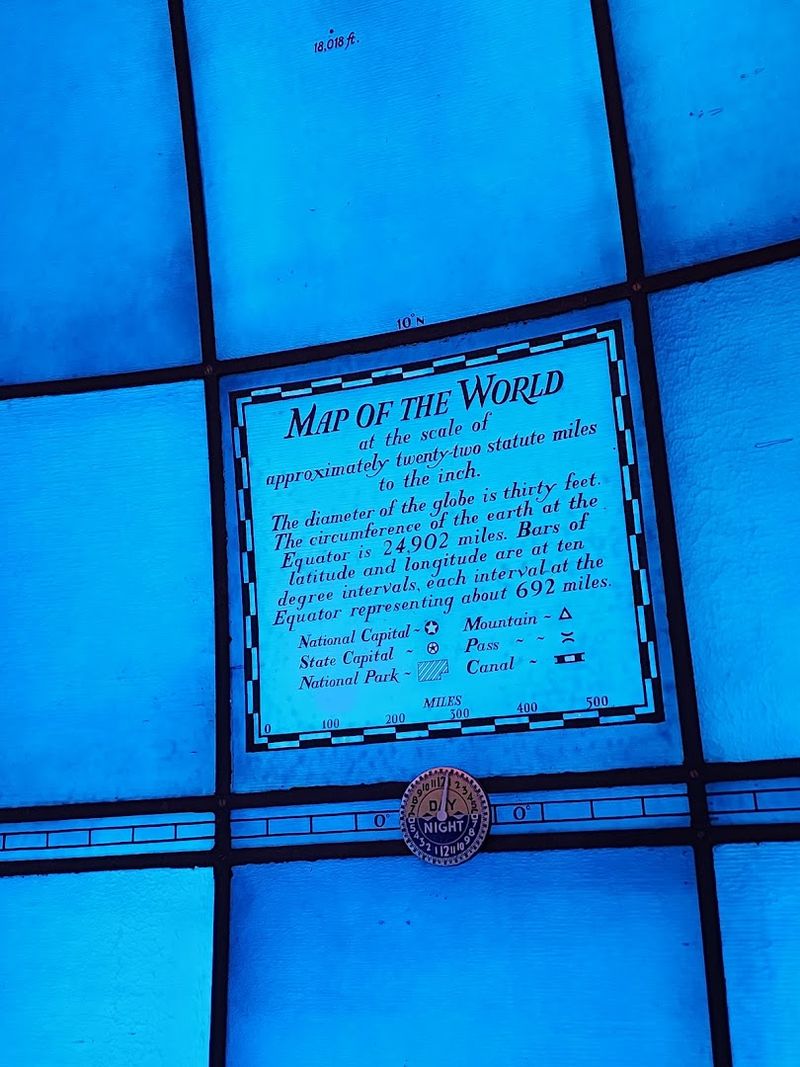
The Mapparium was designed with one inch on its surface representing approximately 22 miles of real-world distance. That kind of precision, built in 1935 without modern computers, is an achievement that deserves a standing ovation on its own.
The Architect Behind The Globe
Not many architects can say they designed something that is still making people gasp nearly a century later. Chester Lindsay Churchill was the mind behind the Mapparium, and his vision was rooted in something bigger than just creating a cool attraction.
The globe was designed to symbolize the Christian Science Monitor’s global awareness and commitment to worldwide journalism.
Building a three-story glass sphere in 1935 was no small engineering challenge. Churchill had to figure out how to support 608 individual stained glass panels in a perfectly spherical configuration without any of the modern structural tools available today.
The fact that the globe is still standing, still intact, and still stunning is a testament to the quality of that original design.
The renovation completed in 2002 preserved the original structure while adding modern lighting technology, a balance that required enormous care. Changing anything about the glass itself was never an option.
Churchill’s framework was simply too precise and too historically significant to alter. Walking into the Mapparium today means walking into the exact space he imagined in the mid-1930s, which adds a layer of architectural reverence to the whole experience.
Why The Mapparium Deserves A Spot On Every Boston Itinerary
Boston has no shortage of things to do. The city practically overflows with history, culture, food, and architecture at every turn.
But the Mapparium occupies a completely unique category that nothing else in the city can touch. It is educational without feeling like homework, artistic without being inaccessible, and historically rich without being dry or distant.
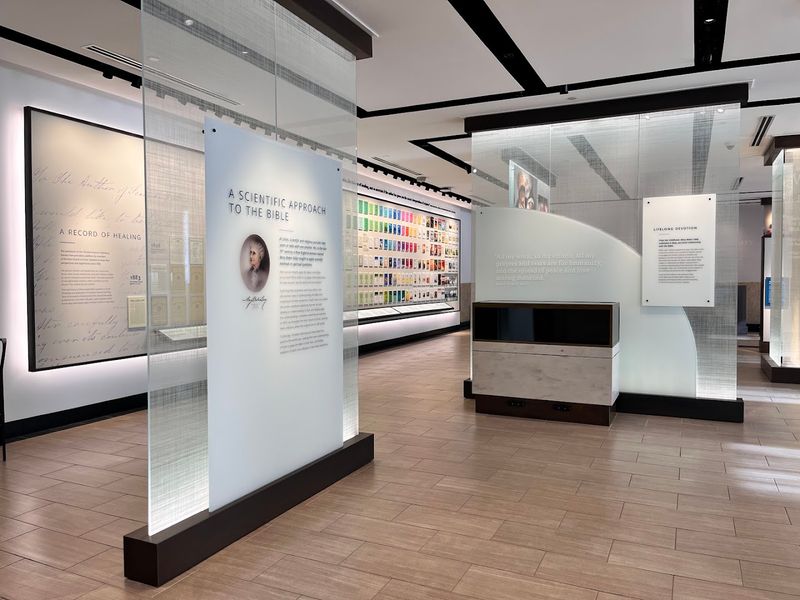
The entire experience, from the lobby exhibits to the globe itself, fits comfortably into a morning or afternoon without overwhelming a packed itinerary.
Tours run every 20 minutes, Monday through Saturday from 10 AM to 5 PM and Sunday from 11 AM to 5 PM. The admission price remains one of the most reasonable in the city for what you actually get.
What sticks with you after leaving is not just the visual spectacle, though that is absolutely unforgettable. It is the quiet shift in perspective that happens when you stand at the center of the world and realize how much has changed in less than a century.
The Mapparium does not just show you a map. It makes you think differently about where you stand in the world.
Is there a better souvenir than that?